S2 Search · Reading list

S2 Actual reading list

Books from S2 Actual on Goodreads, organized by his shelves and topic buckets (intel lists, military history, logistics, etc.). Metadata filled via Open Library.

Not official S2 Underground. Independent fan index — not affiliated with or endorsed by S2. Official hub: linktr.ee/S2_underground. S2 materials are CC BY-NC-SA 4.0.

S2 topic buckets (Goodreads)

Subjects & genres

71 books · All shelves · subject Cold War · page 2 of 3

No cover · Amazon

Weaving the Tangled Web: Military Deception in Large-Scale Combat Operations (Large-Scale Combat Operations Series Book 1)

Christopher M. Rein

★★★★★
Read Basic intel Military history Intel history WWII Korea Cold War GWOT Guerrilla / COIN China Russia / USSR Middle East Intel history Strategy / theory

This book is from Army University Press and is Volume 1 in it's Large-Scale Combat Operations Series. It has footnotes, maps, and pictures, and was originally published in 2018. “Since the Soviet Union’s fall in 1989, the specter of large-scale ground combat against a peer adversary was remote. During the years following, the US Army found itself increasingly called upon to lead multinational operations in the lower to middle tiers of the range of military operations and conflict continuum. The events of 11 September 2001 led to more than 15 years of intense focus on counterterrorism, counterinsurgency, and stability operations in Iraq and Afghanistan. An entire generation of Army leaders and Soldiers were culturally imprinted by this experience. We emerged as an Army more capable in limited contingency operations than at any time in our nation’s history, but the geopolitical landscape continues to shift and the risk of great power conflict is no longer a remote possibility. “While our Army focused on limited contingency operations in the Middle East and Southwest Asia, other regional and peer adversaries scrutinized US military processes and methods and adapted their own accordingly. As technology has proliferated and become accessible in even the most remote corners of the world, the US military’s competitive advantage is being challenged across all of the warfighting domains. In the last decade, we have witnessed an emergent China, a revanchist and aggressive Russia, a menacing North Korea, and a cavalier Iranian regime. Each of these adversaries seeks to change the world order in their favor and contest US strategic interests abroad. The chance for war against a peer or regional near-peer adversary has increased exponentially, and we must rapidly shift our focus to successfully compete in all domains and across the full range of military operations." Includes: Introduction: Multi-Domain Deception (Christopher M. Rein, General Editor); Chapter 1: The Belfort Ruse the American Deception plan for the battle of st. Mihiel, 1918 (Mark E. Grotelueschen); Chapter 2: From Beersheba To Megiddo British Deception Operations During The Palestine Campaign, 1917-1918; (Major Brian J. Drohan); Chapter 3: Operation Bertram British Deception At El Alamein (Gary W. Linhart); Chapter 4: Operations Barclay, Cascade, And Mincemeat Allied Deception In The Mediterranean, 1943 (Gregory S. Hospodor); Chapter 5: Operation Kreml German Strategic Deception On The Eastern Front In 1942 (Alan P. Donohue); Chapter 6: Red Star Resurgent Soviet Deception Operations At Stalingrad, 1942-1943 (First Lieutenant Kyle B. Vautrinot); Chapter 7: Operation Bagration Maskirovka At Its Height, Summer 1944 (Curtis S. King); Chapter 8: Deceive, Divert, And Delay Operation Fortitude In Support Of D-Day (Scott C. Farquhar); Chapter 9: Chinese Deception And The 1950 Intervention In The Korean War (Joseph G.D. Babb); Chapter 10: From Maneuvers To War The Egyptian Deception Plan On The Eve Of The Yom-Kippur War (Tal Tovy); Chapter 11: Target San Carlos British Deception During The Repossession Of The Falkland Islands (Steven Paget); Chapter 12: Deception In The Desert Deceiving Iraq In Operation Desert Storm (Donald P. Wright); Conclusion: The Future Of Military Deception Operations (Conrad C. Crane)

When Titans Clashed: How the Red Army Stopped Hitler (Modern War Studies)

David M. Glantz

★★★★★
Read Military history WWII Cold War Russia / USSR Intel history Strategy / theory Economics ISBN 0700608990

University of Kansas · 1998

By the time Pearl Harbor had ripped apart America's peacetime pretensions, the German blitzkrieg had already blasted the Red Army back to the gates of Moscow. Yet, less than four years later, the Soviet hammer-and-sickle flew above the ruins of Berlin, stark symbol of a miraculous comeback that destroyed the German army and shattered Hitler's imperial designs. Told in swift stirring prose, When Titans Clashed provides the first full account of this epic struggle from the Soviet perspective. David Glantz, one of the world's foremost authorities on the Soviet military, and Jonathan House present a fundamentally new interpretation of what the Russians called the "Great Patriotic War." Based on unprecedented access to formerly classified Soviet sources, they counter the German perspective that has dominated previous accounts and radically revise our understanding of the Soviet experience during World War II. Placing the war within its wider political, economic, and social contexts, the authors recount how the determined Soviets overcame their initial disasters to defeat the most powerful army ever assembled. As they vividly show, this truly was war waged on a titanic scale, sweeping across a half-million square miles from Moscow to Berlin, featuring monumental offensives and counteroffensives, and ultimately costing both sides combined a staggering forty million casualties. Their work offers new revelations on Soviet strategy and tactics, Stalin's role as supreme commander of the Red Army, the emergence of innovative and courageous commanders in the crucible of combat, numerous previously concealed or neglected military operations, German miscalculations on the road to the Red capital, the effect of D-Day and the "second front" on the Soviet effort, and the war's devastating impact on the Soviet economy and civilian population. An essential volume for anyone interested in World War II or Soviet history, When Titans Clashed will change forever how we look at one of the greatest military confrontations in world history.

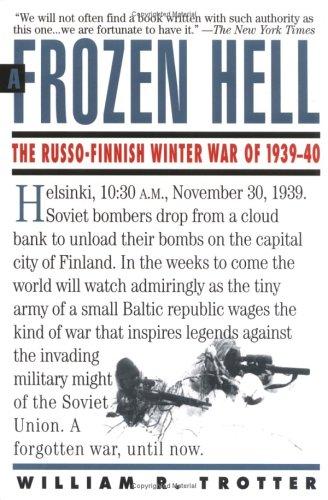
A Frozen Hell: The Russo-Finnish Winter War of 1939-1940

William R. Trotter

★★★★
Read Advanced intel Military history Technical warfare Cold War Guerrilla / COIN Russia / USSR ISBN 9781565122499

Algonquin Books of Chapel Hill, a division of Workman Publishing · January 2000

In 1939, tiny Finland waged war - the kind of war that spawns legends - against the mighty Soviet Union, and yet their epic struggle has been largely ignored. Guerrillas on skis, heroic single-handed attacks on tanks, unfathomable endurance, and the charismatic leadership of one of this century's true military geniuses - these are the elements of both the Finnish victory and a gripping tale of war.

Agent Sonya: Moscow's Most Daring Wartime Spy

Ben Macintyre

★★★★
Read Basic intel Intel history Cold War Espionage Nuclear Russia / USSR ISBN 9780593136300

Crown · Sep 15, 2020

Kui üks elegantne koduperenaine 1942. aastal vaikses Inglise linnakeses kodust väljus, teadsid naabrid, et pr Burton võiks minna näiteks perele toitu ostma. Tegelikult oli ta aga üks ajaloo suurimaid naisspioone, sünnipäraselt Ursula Kuczynski, koodnimega Sonja. Saksamaa juut, veendunud kommunist, Punaarmee polkovnik ja ülimalt osav luuraja, kes osales mitmes 20. sajandi ohtlikumas operatsioonis Mandžuuriast Šveitsini. „Agent Sonja” on põnev ülevaade ühe naise elust, mis liikus samas rütmis kommunismi tõusu ja langusega. Tunnustatud ajaloolase Ben Macintyre’i sulest on varem eesti keeles ilmunud „Spioon ja reetur”.

No cover · Amazon

Barren SEAD: USAF Defense Suppression Doctrine, 1953-1972

James L. Young Jr.

★★★★
Read Basic intel Military history Intel history Technical warfare Vietnam Cold War Special ops Naval Air power Cyber Biography Strategy / theory

Since 1972, the United States Air Force has argued that its operations against North Vietnam were unsuccessful primarily through a combination of civilian interference and poor strategic choices. Often citing the “success” of Operation Linebacker II as an example of what might have been had its leaders been given free rein, for almost fifty years the Air Force has maintained that its proper employment is the key to winning America’s wars. In Barren SEAD, award winning historian James L. Young Jr. propagates a different Instead of being a sign of what the Air Force was capable of, Linebacker II was a bitter failure that starkly outlined the USAF’s limitations. Furthermore, the meddling of the Johnson and Nixon Administrations played a minor role in this outcome. The USAF's defeat was not brought about by civilian meddling, but resulted from Air Force leaders’ refusal to develop a Suppression of Enemy Air Defenses (SEAD) doctrine from 1953-1972. Relying primarily on Air Force archival documents, memoirs, and contemporary doctrinal publications, Dr. Young illustrates just how dangerous the Air Force’s inability to nurture its SEAD capability was during this period of the Cold War. James L. Young Jr. holds a doctorate in U.S. History from Kansas State University and is a graduate of the United States Military Academy. Barren SEAD is his first non-fiction book. Previously he has won the United States Naval Institute's 2016 Cyberwarfare Essay Contest, runner up in the 2011 James Adams Cold War Essay Contest, and has had an essay selected by the U.S. Naval Heritage Command for its professional reading list. Dr. Young's other professional articles can be found in Armor Magazine, The Journal of Military History, and Proceedings. For those who prefer fiction, Dr. Young also writes alternate history (Usurper's War series / Phases of Mars anthologies) and military science fiction (Vergassy Universe).

No cover · Amazon

Enduring the Whirlwind: The German Army and the Russo-German War 1941-1943 (Wolverhampton Military Studies Book 21)

Gregory Liedtke

★★★★
Read Advanced intel Military history Logistics WWII Cold War Russia / USSR Logistics

Despite the best efforts of a number of historians, many aspects of the ferocious struggle between Nazi Germany and the Soviet Union during the Second World War remain obscure or shrouded in myth. One of the most persistent of these is the notion - largely created by many former members of its own officer corps in the immediate postwar period - that the German Army was a paragon of military professionalism and operational proficiency whose defeat on the Eastern Front was solely attributable to the amateurish meddling of a crazed former Corporal and the overwhelming numerical superiority of the Red Army. A key pillar upon which the argument of German numerical-weakness vis-à-vis the Red Army has been constructed is the assertion that Germany was simply incapable of providing its army with the necessary quantities of men and equipment needed to replace its losses. In consequence, as their losses outstripped the availability of replacements, German field formations became progressively weaker until they were incapable of securing their objectives or, eventually, of holding back the swelling might of the Red Army. This work seeks to address the notion of German numerical-weakness in terms of Germany's ability to replace its losses and regenerate its military strength, and assess just how accurate this argument was during the crucial first half of the Russo-German War (June 1941-June 1943). Employing a host of primary documents and secondary literature, it traces the development and many challenges of the German Army from the prewar period until the invasion of the Soviet Union in June 1941. It continues on to chart the first two years of the struggle between Germany and the Soviet Union, with a particular emphasis upon the scale of German personnel and equipment losses, and how well these were replaced. It also includes extensive examinations into the host of mitigating factors that both dictated the course of Germany's campaign in the East and its replacement and regeneration capabilities. In contrast to most accounts of the conflict, this study finds that numerical-weakness being the primary factor in the defeat of the Ostheer - specifically as it relates to the strength and condition of the German units involved - has been overemphasized and frequently exaggerated. In fact, Germany was actually able to regenerate its forces to a remarkable degree with a steady flow of fresh men and equipment, and German field divisions on the Eastern Front were usually far stronger than the accepted narratives of the war would have one believe.

Enemy at the Gates: The Battle for Stalingrad

William Craig

★★★★
Read Military history Logistics WWII Cold War Russia / USSR Logistics Intel history Orthodox / theology ISBN 9780760746776

Barnes & Noble Books · 2003

Stalingrad, the bloodiest battle in the history of warfare, cost the lives of nearly two million men and women. It signaled the beginning of the end for the Third Reich of Adolf Hitler; it foretold the Russian juggernaut that would destroy Berlin and make the Soviet Union a superpower. As Winston Churchill characterized the result of the conflict at Stalingrad: " the hinge of fate had turned." William Craig, author and historian, has painstakingly recreated the details of this great battle: from the hot summer of August 1942, when the German armies smashed their way across southern Russia toward the Volga River, through the struggle for Stalingrad-a city Hitler had never meant to capture and Stalin never meant to defend-on to the destruction of the supposedly invincible German Sixth Army and the terror of the Russian prison camps in frozen Siberia. Craig has interviewed hundreds of survivors of the battle-both Russian and German soldiers and civilians-and has woven their incredible experiences into the fabric of hitherto unknown documents. The resulting mosaic is epic in scope, and the human tragedy that unfolds is awesome.

Finland at War: The Continuation and Lapland Wars 1941–45 (General Military)

Vesa Nenye

★★★★
Read Military history Technical warfare WWII Cold War Russia / USSR ISBN 9781472815262

Bloomsbury Publishing Plc · 2016

Having foiled the Soviet invasion of the Winter War, the Finns found themselves embroiled in an ongoing conflict to maintain their borders as the Soviets recovered from the initial advances made by the Germans during the Barbarossa campaign. Yet as the red tide of Soviet forces pushed back the German army, the Finnish forces--despite their lack of equipment, obsolete machinery and miniscule manpower--held firm against the Soviets throughout the continuation of the war, ensuring their post-war independence on the Western side of the Iron curtain. But that was not the end of hostilities for the exhausted Finnish nation as they turned their attentions to the Nazi forces embedded within their territory, calling up brigades populated with teenagers to force German forces inexorably back. Featuring some incredible, never-before-seen photographs and firsthand accounts, this is the history of one of the most incredible moments in modern military history.

Finland's War Of Choice: The Troubled German-Finnish Coalition in World War II

Henrik O. Lunde

★★★★
Read Advanced intel Military history Logistics WWII Cold War Russia / USSR Logistics ISBN 9781935149484

Casemate Publishers and Book Distributors · 2011

This book describes the odd coalition between Germany and Finland in World War II, and their joint military operations from 1941 to 1945. This is a topic often missing in English, though in stark contrast to the numerous books on the shorter and less bloody Winter War. That conflict represented a gallant fight of a democratic "David" against a totalitarian "Goliath" that caught the imagination of the world. The story of Finland fighting alongside a "Goliath" of its own has not brought pride to that nation and was a period many Finns would rather forget. The prologue of this book brings the reader up to speed by briefly examining the difficult history of Finland, from its separation from the Soviet Union in 1917 to its isolation after being bludgeoned in 1939-40. It then examines both Finnish and German motives for forming a coalition against the USSR, and how--as logical as a common enemy would seem--the lack of true planning and preparation would doom the alliance.

Gulag: A History

Anne Applebaum

★★★★
Read WWII Cold War Russia / USSR Biography Economics Revolution ISBN 0767900561

Doubleday · 2003

The Gulag—the vast array of Soviet concentration camps—was a system of repression and punishment whose rationalized evil and institutionalized inhumanity were rivaled only by the Holocaust. The Gulag entered the world's historical consciousness in 1972, with the publication of Alexander Solzhenitsyn's epic oral history of the Soviet camps, The Gulag Archipelago. Since the collapse of the Soviet Union, dozens of memoirs and new studies covering aspects of that system have been published in Russia and the West. Using these new resources as well as her own original historical research, Anne Applebaum has now undertaken, for the first time, a fully documented history of the Soviet camp system, from its origins in the Russian Revolution to its collapse in the era of glasnost. It is an epic feat of investigation and moral reckoning that places the Gulag where it belongs: at the center of our understanding of the troubled history of the twentieth century. Anne Applebaum first lays out the chronological history of the camps and the logic behind their creation, enlargement, and maintenance. The Gulag was first put in place in 1918 after the Russian Revolution. In 1929, Stalin personally decided to expand the camp system, both to use forced labor to accelerate Soviet industrialization and to exploit the natural resources of the country's barely habitable far northern regions. By the end of the 1930s, labor camps could be found in all twelve of the Soviet Union's time zones. The system continued to expand throughout the war years, reaching its height only in the early 1950s. From 1929 until the death of Stalin in 1953, some 18 million people passed through this massive system. Of these 18 million, it is estimated that 4.5 million never returned. But the Gulag was not just an economic institution. It also became, over time, a country within a country, almost a separate civilization, with its own laws, customs, literature, folklore, slang, and morality. Topic by topic, Anne Applebaum also examines how life was lived within this shadow country: how prisoners worked, how they ate, where they lived, how they died, how they survived. She examines their guards and their jailers, the horrors of transportation in empty cattle cars, the strange nature of Soviet arrests and trials, the impact of World War II, the relations between different national and religious groups, and the escapes, as well as the extraordinary rebellions that took place in the 1950s. She concludes by examining the disturbing question why the Gulag has remained relatively obscure, in the historical memory of both the former Soviet Union and the West. Gulag: A History will immediately be recognized as a landmark work of historical scholarship and an indelible contribution to the complex, ongoing, necessary quest for truth.

Midnight in Chernobyl: The Untold Story of the World's Greatest Nuclear Disaster

Adam Higginbotham

★★★★
Read Cold War Nuclear Russia / USSR Biography Economics ISBN 9781501134616

2019

The story of Chernobyl is more complex, more human, and more terrifying than the Soviet myth. Adam Higginbotham has written a harrowing and compelling narrative which brings the 1986 disaster to life through the eyes of the men and women who witnessed it firsthand. Drawing on hundreds of hours of interviews conducted over the course of more than ten years, as well as letters, unpublished memoirs, and documents from recently-declassified archives, this book makes for a masterful non-fiction thriller. Chernobyl has become lodged in the collective nightmares of the world: shorthand for the spectral horrors of radiation poisoning, for a dangerous technology slipping its leash, for ecological fragility, and for what can happen when a dishonest and careless state endangers not only its own citizens, but all of humanity. It is a story that has long remained in dispute, clouded from the beginning in secrecy, propaganda, and misinformation. Midnight In Chernobyl is an indelible portrait of history's worst nuclear disaster, of human resilience and ingenuity and the lessons learned when mankind seeks to bend the natural world to his will - lessons which, in the face of climate change and other threats - remain not just vital but necessary. Now, Higginbotham brings us closer to the truth behind this colossal tragedy.

Operation Barbarossa and Germany's Defeat in the East

David Stahel

★★★★
Read Military history WWII Cold War Armor Russia / USSR ISBN 9780521768474

Cambridge University Press · 2009

Operation Barbarossa, the German invasion of the Soviet Union, began the largest and most costly campaign in military history. Its failure was a key turning point of the Second World War. The operation was planned as a Blitzkrieg to win Germany its Lebensraum in the East, and the summer of 1941 is well-known for the German army's unprecedented victories and advances. Yet the German Blitzkrieg depended almost entirely upon the motorised Panzer groups, particularly those of Army Group Centre. Using previously unpublished archival records, David Stahel presents a new history of Germany's summer campaign from the perspective of the two largest and most powerful Panzer groups on the Eastern front. Stahel's research provides a fundamental reassessment of Germany's war against the Soviet Union, highlighting the prodigious internal problems of the vital Panzer forces and revealing that their demise in the earliest phase of the war undermined the whole German invasion.

Penalty Strike (Stackpole Military History Series)

Alexander V. Pyl'cyn

★★★★
Read Military history WWII Cold War Russia / USSR Biography ISBN 9780811735995

Stackpole Books · 2009

- Extremely rare (possibly the only) book-length account of a Soviet penal unit in World War II - Gritty, intense style conveys the brutality of war on the Eastern Front Composed of convicts--soldiers who conducted "unauthorized retreats," former Soviet POWs deemed untrustworthy, and Gulag prisoners--the Red Army's penal units received the most difficult, dangerous assignments, such as breaking through the enemy's defenses. So punishing was life in these units that officers in regular formations threatened to send recalcitrant troops to penal battalions. Alexander Pyl'cyn led his penal unit through the Soviets' massive offensive in the summer of 1944, the Vistula-Oder operation into eastern Germany, and the bitter assault on Berlin in 1945. He survived the war, but 80 percent of his men did not.

Red Famine: Stalin's War on Ukraine

Anne Applebaum

★★★★
Read Advanced intel Military history Cold War Russia / USSR ISBN 9780771009303

Signal · Oct 10, 2017

The momentous new book from the Pulitzer Prize-winning author of Gulag and Iron Curtain. In 1932-33, nearly four million Ukrainians died of starvation, having been deliberately deprived of food. It is one of the most devastating episodes in the history of the twentieth century. With unprecedented authority and detail, Red Famine investigates how this happened, who was responsible, and what the consequences were. It is the fullest account yet published of these terrible events. The book draws on a mass of archival material and first-hand testimony only available since the end of the Soviet Union, as well as the work of Ukrainian scholars all over the world. It includes accounts of the famine by those who survived it, describing what human beings can do when driven mad by hunger. It shows how the Soviet state ruthlessly used propaganda to turn neighbours against each other in order to expunge supposedly 'anti-revolutionary' elements. It also records the actions of extraordinary individuals who did all they could to relieve the suffering. The famine was rapidly followed by an attack on Ukraine's cultural and political leadership - and then by a denial that it had ever happened at all. Census reports were falsified and memory suppressed. Some western journalists shamelessly swallowed the Soviet line; others bravely rejected it, and were undermined and harassed. The Soviet authorities were determined not only that Ukraine should abandon its national aspirations, but that the country's true history should be buried along with its millions of victims. Red Famine, a triumph of scholarship and human sympathy, is a milestone in the recovery of those memories and that history. At a moment of crisis between Russia and Ukraine, it also shows how far the present is shaped by the past.

Spymaster: Startling Cold War Revelations of a Soviet KGB Chief

Tennent H. Bagley

★★★★
Read WWII Cold War Espionage Russia / USSR Biography ISBN 9781626360655

Skyhorse · 2013

From the dark days of World War II through the Cold War, Sergey A. Kondrashev was a major player in Russia’s notorious KGB espionage apparatus. Rising through its ranks through hard work and keen understanding of how the spy and political games are played, he “handled” American and British defectors, recruited Western operatives as double agents, served as a ranking officer at the East Berlin and Vienna KGB bureaus, and tackled special assignments from the Kremlin. During a 1994 television program about former spymasters, Kondrashev met and began a close friendship with a former foe, ex–CIA officer Tennent H. “Pete” Bagley, whom the Russian asked to help write his memoirs. Because Bagley knew so about much of Kondrashev’s career (they had been on opposite sides in several operations), his penetrating questions and insights reveal slices of never-revealed espionage history that rival anything found in the pages of Ian Fleming, Len Deighton, or John le Carré: chilling tales of surviving Stalin’s purges while superiors and colleagues did not, of plotting to reveal the Berlin Tunnel, of quelling the Hungarian Revolution and “Prague Spring” independence movements, and of assisting in arranging the final disposition of the corpses of Adolf Hitler and Eva Braun. Kondrashev also details equally fascinating KGB propaganda and disinformation efforts that shaped Western attitudes throughout the Cold War. Because publication of these memoirs was banned by Putin’s regime, Bagley promised Kondrashev to have them published in the West. They are now available to all who are fascinated by vivid tales of international intrigue.

Stasiland: Stories from Behind the Berlin Wall

Anna Funder

★★★★
Read Advanced intel Intel history Military history Cold War ISBN 1862076553

GRANTA

Anna Funder’s Samuel Johnson Prize-winning Stasiland is an Australian classic, the definitive account of tyranny and resistance in the former East Germany. In 1989, the Berlin Wall fell; shortly afterwards the two Germanies reunited and East Germany ceased to exist. Anna Funder’s best-selling Stasiland brings us extraordinary tales of real lives in the former East Germany. She meets Miriam, who tried to escape to West Berlin as a 16-year-old; hears the heartbreaking story of Frau Paul, who was separated from her young baby by the Berlin Wall; and gets drunk with the legendary ‘Mik Jegger’ of the East, once declared by the authorities - to his face - ‘no longer to exist’. And she meets the Stasi men themselves, still proud of their surveillance methods. Funder’s powerful account of that brutal world has become a contemporary classic.

Stealth: The Secret Contest to Invent Invisible Aircraft

Peter Westwick

★★★★
Read Advanced intel Military history Intel history Cold War Russia / USSR Middle East Strategy / theory ISBN 9780190677442

Oxford University Press, Incorporated · 2020

The story behind the technology that revolutionized both aeronautics, and the course of history On a moonless night in January 1991, a dozen airplanes appeared in the skies over Baghdad. Or, rather, didn't appear. They arrived in the dark, their black outlines cloaking them from sight. More importantly, their odd, angular shapes, which made them look like flying origami, rendered them undetectable to Iraq's formidable air defenses. Stealth technology, developed during the decades before Desert Storm, had arrived. To American planners and strategists at the outset of the Cold War, this seemingly ultimate way to gain ascendance over the USSR was only a question. What if the United States could defend its airspace while at the same time send a plane through Soviet skies undetected? A craft with such capacity would have to be essentially invisible to radar - an apparently miraculous feat of physics and engineering. In Stealth, Peter Westwick unveils the process by which the impossible was achieved. At heart, Stealth is a tale of two aerospace companies, Lockheed and Northrop, and their fierce competition - with each other and with themselves - to obtain what was estimated one of the largest procurement contracts in history. Westwick's book fully explores the individual and collective ingenuity and determination required to make these planes and in the process provides a fresh view of the period leading up to the end of the Soviet Union. Taking into account the role of technology, as well as the art and science of physics and engineering, Westwick offers an engaging narrative, one that immerses readers in the race to produce a weapon that some thought might save the world, and which certainly changed it.

Tank Rider: Into the Reich With the Red Army

Evgeni Bessonov

★★★★
Read WWII Cold War Armor Russia / USSR Biography ISBN 1853675547

Stackpole Books · 2003

Tank Rider is the atmospheric memoir of Evgeni Bessonov telling of his years of service in the vanguard of the Red Army and daily encounters with the German foe. He brings large-scale battles alive, recounts the sniping and skirmishing which tried and tested soldiers on both sides and narrates the overwhelming tragedy and horror of apocalyptic warfare on the Eastern Front.

The Mannerheim Line 1920–39: Finnish Fortifications of the Winter War (Fortress, 88)

Bair Irincheev

★★★★
Read Advanced intel Military history Logistics Technical warfare Cold War Armor Russia / USSR Logistics Intel history US Civil War ISBN 9781846033841

Osprey · 2009

In the wake of the bloody civil war that followed Finland's independence from Russia in 1917, the border between the two countries was established across the Karelian Isthmus, an area long fought over by Russia, Finland and Sweden in their attempts to dominate the northern tip of Europe. Neither the Soviets nor the Finnish were comfortable with such a divide, which provided an open route for a potential invader to Helsinki on the Finnish side, and was only 32km from the important military and industrial city of Petrograd in Russia. As such, both sides began an intensive period of fortification and defensive planning. As the Winter War broke out in November 1939, the complex and heavily defended Mannerheim Line suffered intense bombardment and armored assaults. The armistice of May 1940 saw Finland cede control of the entire Karelian Isthmus to the USSR however, and a propaganda war ensued; the Russians emphasizing the strength of the line, and the Finnish downplaying its importance, accentuating instead the heroism and bravery of the common Finnish soldier. Through a detailed analysis of the background, design and operational history of the Mannerheim Line, Bair Irincheev attempts to dispel such myths and provide an accurate assessment of its immense historical importance.

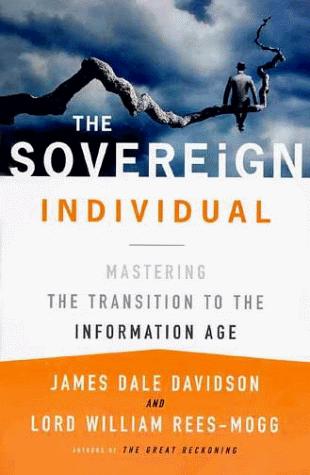
The Sovereign Individual: Mastering the Transition to the Information Age

James Dale Davidson

★★★★
Read Advanced intel Logistics Technical warfare Cold War Russia / USSR Logistics Economics US Civil War ISBN 9780684832722

Touchstone · 1999-08-26

Two renowned investment advisors and authors of the bestseller The Great Reckoning bring to light both currents of disaster and the potential for prosperity and renewal in the face of radical changes in human history as we move into the next century. The Sovereign Individual details strategies necessary for adapting financially to the next phase of Western civilization. Few observers of the late twentieth century have their fingers so presciently on the pulse of the global political and economic realignment ushering in the new millennium as do James Dale Davidson and Lord William Rees-Mogg. Their bold prediction of disaster on Wall Street in Blood in the Streets was borne out by Black Tuesday. In their ensuing bestseller, The Great Reckoning, published just weeks before the coup attempt against Gorbachev, they analyzed the pending collapse of the Soviet Union and foretold the civil war in Yugoslavia and other events that have proved to be among the most searing developments of the past few years. In The Sovereign Individual, Davidson and Rees-Mogg explore the greatest economic and political transition in centuries—the shift from an industrial to an information-based society. This transition, which they have termed "the fourth stage of human society," will liberate individuals as never before, irrevocably altering the power of government. This outstanding book will replace false hopes and fictions with new understanding and clarified values.

War In The Shadows: The Guerrilla in History

Robert B. Asprey

★★★★
Read Intel history Advanced intel Vietnam Cold War Guerrilla / COIN Russia / USSR Middle East Strategy / theory Economics Revolution ISBN 9780595225934

Backinprint.com · May 2002

Ranging from Alexander the Great's battles with Asiatic Scythians, through the Russian Revolution, and on up to the turmoil in the Middle East and the battle in Northern Ireland, War in the Shadows is a book of monumental sweep and singular perspective. It also contains a comprehensive and hard-hitting strategic evaluation of the Vietnam War-one of the most significant analyses of "the war that won't go away." War in the Shadows tells the story of the countries currently torn by armed insurgencies and clarifies the causes of each conflict. It provides the broad viewpoint necessary for understanding them in the historical terms of guerilla warfare. With the collapse of the Soviet Union, the end of the Cold War, and a highly unstable "new world order," this brand of rebellion has never been more powerful and potentially disruptive. As the author states in his Foreword, "For a number of reasons guerilla warfare has evolved into an ideal instrument for the realization of social-political-economic aspirations of underprivileged peoples. This is so patently true as to allow one to suggest that we may be witnessing a transition to a new era in warfare, an era as radically different as those of which followed the writings of Sun Tzu, Machiavelli, Clausewitz, and Mahan." War in the Shadows is crucial to understanding the complex challenges of our new and dangerous era.

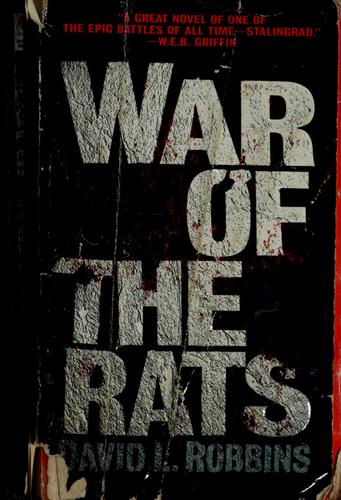
War of the Rats (WWII, #1)

David L. Robbins

★★★★
Read Biographies Military history Technical warfare WWII Cold War Russia / USSR ISBN 9780553581355

Bantam · 2000

For six months in 1942, Stalingrad is the center of a titanic struggle between the Russian and German armies—the bloodiest campaign in mankind's long history of warfare. The outcome is pivotal. If Hitler's forces are not stopped, Russia will fall. And with it, the world.... German soldiers call the battle Rattenkrieg, War of the Rats . The combat is horrific, as soldiers die in the smoking cellars and trenches of a ruined city. Through this twisted carnage stalk two men—one Russian, one German—each the top sniper in his respective army. These two marksmen are equally matched in both skill and tenacity. Each man has his own to find his counterpart—and kill him. But an American woman trapped in Russia complicates this extraordinary duel. Joining the Russian sniper's cadre, she soon becomes one of his most talented assassins—and perhaps his greatest weakness. Based on a true story, this is the harrowing tale of two adversaries enmeshed in their own private war—and whose fortunes will help decide the fate of the world.

Legacy of Ashes: The History of the CIA

Tim Weiner

★★★☆☆
Read Military history Intel history WWII Cold War Espionage GWOT Intel history ISBN 9780385514453

Doubleday · 2007

For the last sixty years, the CIA has managed to maintain a formidable reputation in spite of its terrible record, burying its blunders in top-secret archives. Its mission was to know the world. When it did not succeed, it set out to change the world. Its failures have handed us, in the words of President Eisenhower, “a legacy of ashes.” Now Pulitzer Prize–winning author Tim Weiner offers the first definitive history of the CIA—and everything is on the record. LEGACY OF ASHES is based on more than 50,000 documents, primarily from the archives of the CIA itself, and hundreds of interviews with CIA veterans, including ten Directors of Central Intelligence. It takes the CIA from its creation after World War II, through its battles in the cold war and the war on terror, to its near-collapse after September 11th, 2001. Tim Weiner’s past work on the CIA and American intelligence was hailed as “impressively reported” and “immensely entertaining” in The New York Times. The Wall Street Journal called it “truly extraordinary . . . the best book ever written on a case of espionage.” Here is the hidden history of the CIA: why eleven presidents and three generations of CIA officers have been unable to understand the world; why nearly every CIA director has left the agency in worse shape than he found it; and how these failures have profoundly jeopardized our national security.

PAVN: People's Army of Vietnam

Douglas Pike

★★★☆☆
Read Advanced intel Military history Vietnam Cold War China Russia / USSR ISBN 0306804328

Da Capo Press · 1991

From the original 34-man Armed Propaganda Team of the 1930s, headed by Vo Nguyen Giap and managed by Ho Chi Minh, the People's Army of Vietnam has grown into the third largest military force in the world, exceeded only by the armies of the USSR and China. When viewed in terms of military capability and success, it is a phenomenon. Since its inception, the PAVN has taken on two major powers - France and the United States - and won decisive victories. It is this phenomenon that Douglas Pike describes in this work. At the same time, there also appears a picture of the use of force in politics, the nature of organizations and the limits of both technology and ideology. The book is aimed at those interested in the inner workings of the army that won the Vietnam War.