S2 Search · Reading list

S2 Actual reading list

Books from S2 Actual on Goodreads, organized by his shelves and topic buckets (intel lists, military history, logistics, etc.). Metadata filled via Open Library.

Not official S2 Underground. Independent fan index — not affiliated with or endorsed by S2. Official hub: linktr.ee/S2_underground. S2 materials are CC BY-NC-SA 4.0.

S2 topic buckets (Goodreads)

Subjects & genres

71 books · All shelves · subject Intel history · page 2 of 3

Enemy at the Gates: The Battle for Stalingrad

William Craig

★★★★
Read Military history Logistics WWII Cold War Russia / USSR Logistics Intel history Orthodox / theology ISBN 9780760746776

Barnes & Noble Books · 2003

Stalingrad, the bloodiest battle in the history of warfare, cost the lives of nearly two million men and women. It signaled the beginning of the end for the Third Reich of Adolf Hitler; it foretold the Russian juggernaut that would destroy Berlin and make the Soviet Union a superpower. As Winston Churchill characterized the result of the conflict at Stalingrad: " the hinge of fate had turned." William Craig, author and historian, has painstakingly recreated the details of this great battle: from the hot summer of August 1942, when the German armies smashed their way across southern Russia toward the Volga River, through the struggle for Stalingrad-a city Hitler had never meant to capture and Stalin never meant to defend-on to the destruction of the supposedly invincible German Sixth Army and the terror of the Russian prison camps in frozen Siberia. Craig has interviewed hundreds of survivors of the battle-both Russian and German soldiers and civilians-and has woven their incredible experiences into the fabric of hitherto unknown documents. The resulting mosaic is epic in scope, and the human tragedy that unfolds is awesome.
No cover · Amazon

Ghost on the Throne: The Death of Alexander the Great and the War for Crown and Empire

James Romm

★★★★
Read Advanced intel Intel history

Alexander the Great, perhaps the most commanding leader in history, united his empire and his army by the titanic force of his will. His death at the age of thirty-two spelled the end of that unity. The story of Alexander's conquest of the Persian empire is known to many readers, but the dramatic and consequential saga of the empire's collapse remains virtually untold. It is a tale of loss that begins with the greatest loss of all, the death of the Macedonian king who had held the empire together. With his demise, it was as if the sun had disappeared from the solar system, as if planets and moons began to spin crazily in new directions, crashing into one another with unimaginable force. Alexander bequeathed his power, legend has it, 'to the strongest,' leaving behind a mentally damaged half brother and a posthumously born son as his only heirs. In a strange compromise, both figures, Philip III and Alexander IV, were elevated to the kingship, quickly becoming prizes, pawns, fought over by a half-dozen Macedonian generals. Each successor could confer legitimacy on whichever general controlled him. At the book's center is the monarch's most vigorous defender; Alexander's former Greek secretary, now transformed into a general himself. He was a man both fascinating and entertaining, a man full of tricks and connivances, like the enthroned ghost of Alexander that gives the book its title, and becomes the determining factor in the precarious fortunes of the royal family. James Romm, brilliant classicist and storyteller, tells the galvanizing saga of the men who followed Alexander and found themselves incapable of preserving his empire. The result was the undoing of a world, formerly united in a single empire, now ripped apart into a nightmare of warring nation-states struggling for domination, the template of our own times.

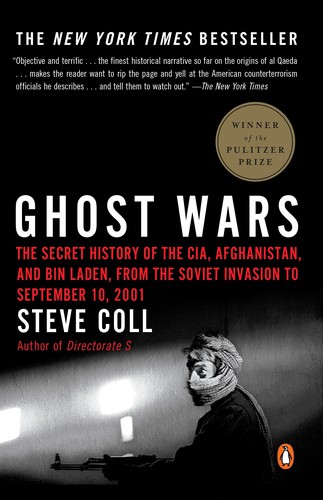
Ghost Wars: The Secret History of the CIA, Afghanistan, and Bin Laden from the Soviet Invasion to September 10, 2001

Steve Coll

★★★★
Read Basic intel Intel history Espionage GWOT Russia / USSR Middle East Intel history ISBN 0143034669

Penguin Books · 2005

The news-breaking book that has sent shockwaves through the Bush White House, Ghost Wars is the most accurate and revealing account yet of the CIA's secret involvement in al-Qaeda's evolution. It won the Pulitzer Prize in 2005.Prize-winning journalist Steve Coll has spent years reporting from the Middle East, accessed previously classified government files and interviewed senior US officials and foreign spymasters. Here he gives the full inside story of the CIA's covert funding of an Islamic jihad against Soviet forces in Afghanistan, explores how this sowed the seeds of Bin Laden's rise, traces how he built his global network and brings to life the dramatic battles within the US government over national security. Above all, he lays bare American intelligence's continual failure to grasp the rising threat of terrorism in the years leading to 9/11 - and its devastating consequences.

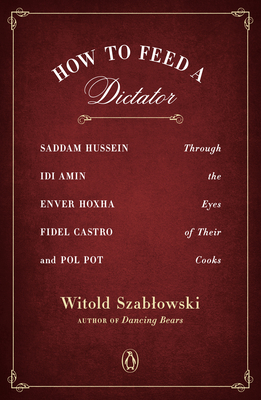
How to Feed a Dictator: Saddam Hussein, Idi Amin, Enver Hoxha, Fidel Castro, and Pol Pot Through the Eyes of Their Cooks

Witold Szabłowski

★★★★
Read Military history Middle East Intel history Biography Economics ISBN 9780143129752

Penguin Publishing Group · 2020

Anthony Bourdain meets Kapuściński in this chilling look from within the kitchen at the appetites of five of the twentieth century’s most infamous dictators, by the acclaimed author of Dancing Bears. What was Pol Pot eating while two million Cambodians were dying of hunger? Did Idi Amin really eat human flesh? And why was Fidel Castro obsessed with one particular cow? Traveling across four continents, from the ruins of Iraq to the savannahs of Kenya, Witold Szabłowski tracked down the personal chefs of five dictators known for the oppression and massacre of their own citizens—Iraq’s Saddam Hussein, Uganda’s Idi Amin, Albania’s Enver Hoxha, Cuba’s Fidel Castro, and Cambodia’s Pol Pot—and listened to their stories over sweet-and-sour soup, goat-meat pilaf, bottles of rum, and games of gin rummy. Dishy, deliciously readable, and dead serious, How to Feed a Dictator provides a knife’s-edge view of life under tyranny.

No cover · Amazon

I Am Juden: Undercover in the SS

Stephen Uzzell

★★★★
Read Military history WWII Russia / USSR Intel history

An alternative cover edition for this ASIN can be found here. "An auspicious debut... One of the more impressive books based on the horrors of WW2. I AM JUDEN is an extraordinary reading experience... Stephen Uzzell has woven facts with the skill of a documentarian and enhanced those facts with the burnish of a thriller. Highly recommended." The San Francisco Review of Books Inspired by the life of forgotten hero Haim Michael Klar, I Am Juden is the triumphant, epic tale of one man's incredible courage and resistance during the twentieth century's darkest days. Jozef Siegler leads a perilous double life as an SS officer in Krakow and ultimately Auschwitz. His life is a tightrope walk through the Holocaust unlike any other. Nazi by day and resistance agent by night, any false move would result in certain death and exposure of the Jewish underground. Kiel, Germany, 1938. Jozef Siegler has been a pacifist since his father died fighting in the anti-Jewish pogroms of the Russian Empire. Jozef now leads a quiet life as a university professor, but his days of innocence are numbered. With the final tightening of the Nuremberg Race Laws, he loses his job and flees Germany with his younger sister Shoshana. Aided by their Aryan looks and gift for languages, they are recruited into the Jewish resistance to transport orphans across the border into neutral Lithuania. But war soon envelops the continent. Brother and sister become separated. Jozef's quest to find Shoshana begins. Constantly on the move, never certain who to trust, it is his inventive ingenuity, the kindness of strangers, and the most hair-raising strokes of luck that ensure his survival. When Jozef stumbles upon the dead body of SS Oberfuhrer Harry Mohnke, he faces the biggest decision of his life. If he can bring himself to wear the hated uniform and impersonate a Nazi, how many lives could he save ? Fans of Schindler's List, All The Light We Cannot See and The Tattooist of Auschwitz are gripped by this riveting saga of history, suspense and heroism.

Mussolini

Nicholas Farrell

★★★★
Read Biographies Military history WWII Russia / USSR Intel history Biography Orthodox / theology ISBN 9781731426970

Independently Published · 2003

‘The question of whether Italians had to pay too much in terms of loss of liberty has been answered by Farrell in a passionate and thought-provoking way...This highly spirited, opinionated and rather remarkable book.’ – Andrew Roberts, Daily Telegraph In his own time, the fascist dictator Benito Mussolini was one of the most admired figures of his age. Winston Churchill called him ‘the Roman Genius’ and Pope Pius XI said he was ‘sent by providence’ to save Italy. Yet Mussolini has gone down in history as nothing more than a grotesque buffoon. Drawing on freshly discovered material - including correspondence previously unavailable outside academia - this a revelatory biography of the Italian fascist leader and dictator puts him in a fresh light. How did Mussolini manage to take power and hold on to it for two decades? And how did he successfully curtail democracy without using mass murder to stay in command? Farrell answers these questions and more, focusing particularly on Mussolini's fatal error: his alliance with Hitler, whom he despised. Anyone interested in history, politics, and World War II will encounter an intriguing and startling picture of one of the 20th century's key figures. ‘A fascinating and at times wilfully revisionist work...Farrell’s account of Mussolini’s last days — his betrayal and his pitiful death — is masterly and surprisingly moving...In many ways a fine, thought-provoking book.’ – Glasgow Herald ‘What [Farrell] shows is what so many liberals want to suppress: that just because a dictator is Right-wing does not mean that he is as bad as Hitler, and that no dictator so far, apart from Hitler, was as bad as Stalin, for whom many a liberal was an apologist. Farrell has written much the most plausible biography of Mussolini.’ – Daily Telegraph ‘Nicholas Farrell has produced a fascinating biography of Mussolini which is bound to be controversial...It is inevitable that Farrell will have the adjective “revisionist” attached to his name, although surely the alternative to “revisionist” history is plagiarism?...Farrell’s greatest contribution is to ground [Mussolini] in his context as a very Italian phenomenon...The questions Mussolini was trying to answer are, Farrell makes clear, as pertinent now as they were then...this mammoth but highly readable work.’ – Spectator Nicholas Farrell read history at Cambridge University (Gonville and Caius College) and was for many years on the staff of the Sunday Telegraph.

Operation Fortitude: The Greatest Hoax of the Second World War

Joshua Levine

★★★★
Read WWII Espionage Intel history ISBN 9780007395873

Collins · 2012

'Operation Fortitude' was the ingenious web of deception spun by the Allies to mislead the Nazis as to how and where the D-Day landings were to be mounted.

No cover · Amazon

The Crucible of War Book 1: Wavell's Command

Barrie Pitt

★★★★
Read Military history Logistics WWII Middle East Logistics Intel history Strategy / theory Orthodox / theology

The Crucible of War: Book 1 ‘The definitive work on the Desert War.’ Manchester Evening News Wavell’s Command is the first of the three volumes of The Crucible of War. Volume 1 of The Crucible of War trilogy covers General Wavell’s command, a period that began triumphantly with the rout of the Italian Army and ended in catastrophe with the devastating entry of Rommel into the conflict. On 11th June 1940, Mussolini declared war on Britain and France. From their colony in Libya, the Italians began invading Egypt in an attempt to expand their African Empire. Thus began the Desert War – a battle to secure critical Middle East oil supplies which would last for three years. Commander-in-Chief of the Middle East was General Sir Archibald Wavell. By 1940, and with limited resources, he was responsible for all British land forces in Egypt, the Sudan, Palestine, Transjordan and Cyprus, as well as the Army formations in British Somaliland, Aden, Iraq and along the shores of the Persian Gulf. The area for which he had accepted military command thus included nine different countries in two continents. In December 1940 in Libya, Wavell’s Western Desert Force of 36,000 men attacked the Italians across desolate and inhospitable terrain in order to keep Egypt from falling to the Axis and shield access to the Red Sea, the Persian Gulf and possibly even India from Hitler. Attack was the only form of defense and under field commander General Richard O’Connor, an immensely successful and exhilarating campaign was carried out against Marshal Graziani’s forces. The Italians were pushed back hundreds of miles and 130,000 prisoners were taken. By February 1941 nearly all Axis forces had been expelled from North Africa. It was a remarkable triumph in one of the most dramatic theatres of the Second World War which paved the way for later victories, but not immediately – as Rommel’s Afrika Korps meant Wavell, with a now weakened Western Desert Force, was ordered to send men to Greece, despite his conviction that victory was close. The tide of war was about to turn once more. PRAISE FOR THE CRUCIBLE OF WAR TRILOGY: ‘A magnificent book, Barrie Pitt has almost a novelist’s skill and perception of character.’ Daily Telegraph ‘Totally readable, Mr Pitt’s study depicts equally well the broad outlines of strategy, the confusions and hazards of the battlefield and the personalities of the generals or private soldiers fighting there.’ Oxford Times Barrie Pitt (1918-2006) was well known as a military historian and editor of Purnell’s History of the Second World War and History of the First World War. His publications include Coronel and Falkland, Churchill and the Generals and The Crucible of War, a trilogy covering the North African campaign of the Second World War. He was born in Galway and later lived near Ilminster in Somerset.

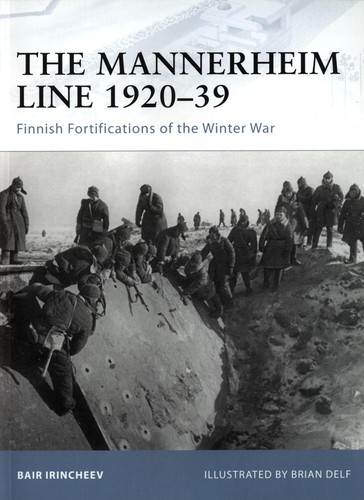
The Mannerheim Line 1920–39: Finnish Fortifications of the Winter War (Fortress, 88)

Bair Irincheev

★★★★
Read Advanced intel Military history Logistics Technical warfare Cold War Armor Russia / USSR Logistics Intel history US Civil War ISBN 9781846033841

Osprey · 2009

In the wake of the bloody civil war that followed Finland's independence from Russia in 1917, the border between the two countries was established across the Karelian Isthmus, an area long fought over by Russia, Finland and Sweden in their attempts to dominate the northern tip of Europe. Neither the Soviets nor the Finnish were comfortable with such a divide, which provided an open route for a potential invader to Helsinki on the Finnish side, and was only 32km from the important military and industrial city of Petrograd in Russia. As such, both sides began an intensive period of fortification and defensive planning. As the Winter War broke out in November 1939, the complex and heavily defended Mannerheim Line suffered intense bombardment and armored assaults. The armistice of May 1940 saw Finland cede control of the entire Karelian Isthmus to the USSR however, and a propaganda war ensued; the Russians emphasizing the strength of the line, and the Finnish downplaying its importance, accentuating instead the heroism and bravery of the common Finnish soldier. Through a detailed analysis of the background, design and operational history of the Mannerheim Line, Bair Irincheev attempts to dispel such myths and provide an accurate assessment of its immense historical importance.

The Old Man and the Sea

Ernest Hemingway

★★★★
Read Intel history ISBN 0684830493

Scribner · 1996

Librarian's note: An alternate cover edition can be found here The last novel Ernest Hemingway saw published, The Old Man and the Sea has proved itself to be one of the most enduring works of American fiction. It is the story of an old Cuban fisherman, down on his luck, and his supreme ordeal: a relentless, agonizing battle with a giant marlin far out in the Gulf Stream. Using the simple, powerful language of a fable, Hemingway takes the timeless themes of courage in the face of defeat and personal triumph won from loss and transforms them into a magnificent twentieth-century classic. Written in 1952, this hugely successful novel confirmed his power and presence in the literary world and played a large part in his winning the 1954 Nobel Prize for Literature.

The Wages of Destruction: The Making and Breaking of the Nazi Economy

Adam Tooze

★★★★
Read Advanced intel Logistics WWII Russia / USSR Logistics Intel history Economics ISBN 9780670038268

Viking · 2006

The idea that Nazi Germany was an unstoppable juggernaut, backed by an efficient, highly industrialized economy, has been central to all accounts of World War II. But what if this was not the case? What if the war had its roots in Germany's weakness, not its strength? This is the radical argument in this pathbreaking book, the first account of the Nazi era for the twenty-first century and our globalized world. There was no aspect of Nazi power untouched by economics, yet Adam Tooze is the first to place economics alongside race and politics at the heart of the story of the Third Reich. And America, in Tooze's view, is the true pivot for Hitler's epic challenge to a shift in the world order. Hitler intuitively understood how Germany's relative poverty in the 1930s was the result not just of global depression, but also of Germany's limited resources. He predicted the dawning of a globalized world in which Europe would be crushed by America's overwhelming power, against which he saw only one last chance: a German super-state dominating Europe. Doing what Europeans had done for three centuries, he sought to carve out an imperial hinterland through one last land grab to the east, to give him the self-sufficiency to prevail in the coming superpower competition. With the odds stacked against him, he launched his underresourced armies on their unprecedented and ultimately futile rampage across Europe. Hitler knew by the summer of 1939 that his efforts to prepare for a long war with the West were doomed to failure. Ideology drove him forward. Hitler became convinced that Jewish elements in Washington, London, and Paris were circling round him, and from 1938, the international "Jewish question: was synonymous with America in his mind. Even in the summer of 1940, at the moment of Germany's greatest triumphs, Hitler was still haunted by the looming threat of Anglo-American air and sea power, orchestrated by, he believed, the world Jewish conspiracy. Tooze also casts a stark new light on Albert Speer's role in sustaining the Third Reich to its bloody end, after the catastrophe of the Soviet invasion. Speer, Tooze proposes, was no apolitical agent of technocratic efficiency but a Hitler loyalist who would stop at nothing to continue a hopeless battle of attrition, at the cost of tens of millions of lives. The Wages of Destruction is a chilling work of originality and tremendous scholarship that will fundamentally change the way in which we view Nazi Germany and the Second World War.

No cover · Amazon

Black Flags: The Rise of ISIS

Joby Warrick

★★★☆☆
Read Basic intel Intel history Espionage GWOT Guerrilla / COIN Middle East Intel history US Civil War

Pulitzer Prize-winning reporter Joby Warrick reveals how the strain of militant Islam now raising its banner across Iraq and Syria spread from a remote Jordanian prison with the unwitting aid of American military intervention.      When he succeeded his father in 1999, King Abdullah of Jordan released a batch of political prisoners in the hopes of smoothing his transition to power. Little did he know that among those released was Abu Musab al-Zarqawi, a man who would go on to become a terrorist mastermind too dangerous even for al-Qaeda and give rise to an Islamist movement bent on dominating the Middle East.      Zarqawi began by directing hotel bombings and assassinations in Jordan from a base in northern Iraq, but it was the American invasion of that country in 2003 that catapulted him to the head of a vast insurgency. By identifying him as the link between Saddam and bin Laden, the CIA inadvertently created a monster. Like-minded radicals saw him as a hero resisting the infidel occupiers and rallied to his cause. Their wave of brutal beheadings and suicide bombings continued for years until Jordanian intelligence provided the Americans with the crucial intelligence needed to eliminate Zarqawi in a 2006 airstrike.      But his movement endured, first called al-Qaeda in Iraq, then renamed Islamic State of Iraq and Syria, or ISIS, seeking refuge in unstable, ungoverned pockets on the Iraq-Syria border. And as the Syrian civil war broke out in 2011, ISIS seized its chance to pursue Zarqawi's dream of a sweeping, ultra-conservative Islamic caliphate.       Drawing on unique access to CIA and Jordanian sources, Joby Warrick weaves together heart-pounding, moment-by-moment operational details with overarching historical perspectives to reveal the long trajectory of today's most dangerous Islamic extremist threat. From the Hardcover edition.

Call Sign Chaos: Learning to Lead

Jim Mattis

★★★☆☆
Read Biographies Middle East Intel history Biography Strategy / theory ISBN 9780812996838

Random House · 2019

#1 NEW YORK TIMES BESTSELLER - A clear-eyed account of learning how to lead in a chaotic world, by General Jim Mattis--the former Secretary of Defense and one of the most formidable strategic thinkers of our time--and Bing West, a former assistant secretary of defense and combat Marine. "A four-star general's five-star memoir."--The Wall Street Journal Call Sign Chaos is the account of Jim Mattis's storied career, from wide-ranging leadership roles in three wars to ultimately commanding a quarter of a million troops across the Middle East. Along the way, Mattis recounts his foundational experiences as a leader, extracting the lessons he has learned about the nature of warfighting and peacemaking, the importance of allies, and the strategic dilemmas--and short-sighted thinking--now facing our nation. He makes it clear why America must return to a strategic footing so as not to continue winning battles but fighting inconclusive wars. Mattis divides his book into three parts: Direct Leadership, Executive Leadership, and Strategic Leadership. In the first part, Mattis recalls his early experiences leading Marines into battle, when he knew his troops as well as his own brothers. In the second part, he explores what it means to command thousands of troops and how to adapt your leadership style to ensure your intent is understood by your most junior troops so that they can own their mission. In the third part, Mattis describes the challenges and techniques of leadership at the strategic level, where military leaders reconcile war's grim realities with political leaders' human aspirations, where complexity reigns and the consequences of imprudence are severe, even catastrophic. Call Sign Chaos is a memoir of a life of warfighting and lifelong learning, following along as Mattis rises from Marine recruit to four-star general. It is a journey about learning to lead and a story about how he, through constant study and action, developed a unique leadership philosophy, one relevant to us all.

No cover · Amazon

Extreme Ownership: How U.S. Navy SEALs Lead and Win

Jocko Willink

★★★☆☆
Read Basic intel Military history Special ops Naval Middle East Intel history

The #1 New York Times bestseller Sent to the most violent battlefield in Iraq, Jocko Willink and Leif Babin’s SEAL task unit faced a seemingly impossible help U.S. forces secure Ramadi, a city deemed “all but lost.” In gripping firsthand accounts of heroism, tragic loss, and hard-won victories in SEAL Team Three’s Task Unit Bruiser, they learned that leadership―at every level―is the most important factor in whether a team succeeds or fails.Willink and Babin returned home from deployment and instituted SEAL leadership training that helped forge the next generation of SEAL leaders. After departing the SEAL Teams, they launched Echelon Front, a company that teaches these same leadership principles to businesses and organizations. From promising startups to Fortune 500 companies, Babin and Willink have helped scores of clients across a broad range of industries build their own high-performance teams and dominate their battlefields. Now, detailing the mind-set and principles that enable SEAL units to accomplish the most difficult missions in combat, Extreme Ownership shows how to apply them to any team, family or organization. Each chapter focuses on a specific topic such as Cover and Move, Decentralized Command, and Leading Up the Chain, explaining what they are, why they are important, and how to implement them in any leadership environment. A compelling narrative with powerful instruction and direct application, Extreme Ownership revolutionizes business management and challenges leaders everywhere to fulfill their ultimate lead and win.

Legacy of Ashes: The History of the CIA

Tim Weiner

★★★☆☆
Read Military history Intel history WWII Cold War Espionage GWOT Intel history ISBN 9780385514453

Doubleday · 2007

For the last sixty years, the CIA has managed to maintain a formidable reputation in spite of its terrible record, burying its blunders in top-secret archives. Its mission was to know the world. When it did not succeed, it set out to change the world. Its failures have handed us, in the words of President Eisenhower, “a legacy of ashes.” Now Pulitzer Prize–winning author Tim Weiner offers the first definitive history of the CIA—and everything is on the record. LEGACY OF ASHES is based on more than 50,000 documents, primarily from the archives of the CIA itself, and hundreds of interviews with CIA veterans, including ten Directors of Central Intelligence. It takes the CIA from its creation after World War II, through its battles in the cold war and the war on terror, to its near-collapse after September 11th, 2001. Tim Weiner’s past work on the CIA and American intelligence was hailed as “impressively reported” and “immensely entertaining” in The New York Times. The Wall Street Journal called it “truly extraordinary . . . the best book ever written on a case of espionage.” Here is the hidden history of the CIA: why eleven presidents and three generations of CIA officers have been unable to understand the world; why nearly every CIA director has left the agency in worse shape than he found it; and how these failures have profoundly jeopardized our national security.

No cover · Amazon

My Commando Operations: The Memoirs of Hitler's Most Daring Commando

Otto Skorzeny

★★★☆☆
Read Advanced intel Biographies Intel history Military history WWII Special ops Russia / USSR Intel history Biography

The memoirs of the legendary Skorzeny appear here in its first unabridged English edition. Skorzeny's fame began with the successful raid to free Benito Mussolini from the Gran Sasso, Italy in 1943. His elite commandos surprised Italian guards in a daring daytime raid. Hitler presented Skorzeny with the Knight's Cross for this operation. Not only is this raid explained in minute detail, many of Skorzeny's previously unknown operations in all European and Russian theatres of World War II are given in detailed accounts. Operation Griffin - the innovative use of German Kommandos dressed as American soldiers working behind enemy lines - during the Ardennes Offensive in 1944 is given in-depth coverage, as is Skorzeny's rememberances on the Malmedy massacre. Skorzeny also offers his insights into the mysterious Rudolf Hess mission to England in May 1941, and offers a behind the scenes look at German and Russian secret military intelligence, and the workings of Canaris and Gehlen. ***This 1997 Schiffer edition has the same ISBN (0887407188. 9780887407185) as the 1995 edition from the same publisher, though the dust-jacket is completely different.***

The White Sniper: Simo Häyhä

Tapio Saarelainen

★★★☆☆
Read Biographies Technical warfare Russia / USSR Intel history Biography ISBN 9781612004297

Casemate · Oct 19, 2016

Simo Häyhä (1905 - 2002) is the most famous sniper in the world. During the Winter War fought between Russia and Finland in 1939 - 1940 he had 542 confirmed kills with iron sights, a record that still stands today. He has been a role model for snipers all over the world and paved the way for them by demonstrating their significance on the battlefield. Simo Häyhä was a man of action who spoke very little, but he was hugely respected by his men and his superiors and given many difficult missions, including taking out specific targets. Able to move silently and swiftly through the landscape, melting into the snowbound surroundings in his white camouflage fatigues, his aim was deadly and his quarry rarely escaped. The Russians learned of his reputation as a marksman and tried several times to kill him by indirect fire. He was promoted from corporal to second lieutenant and he was awarded the Cross of Kollaa. For sniping Simo Häyhä only ever used his own m/28-30 rifle. Eventually his luck ran out and Simo received a serious head wound on March 6 1940, though he subsequently recovered. After the war Simo Häyhä lead a quiet, unassuming life in farming and forestry. His roots were deep in the Finnish soil and he loved life in rural Finland. A true patriot, he epitomized the traits of a professional soldier, performing his duty and setting an example of bravery that personified the Finnish spirit when confronted by the Russian onslaught. The White Sniper fully explores Simo Häyhä's life, his exploits in the Winter War, the secrets behind his success including character and technique, and also includes a detailed look at his rifle itself. There are appendices on the basics of shooting, the impact of fire on the battlefield, battles on the Kollaa Front during the Winter War and a list of ranked snipers of the world.

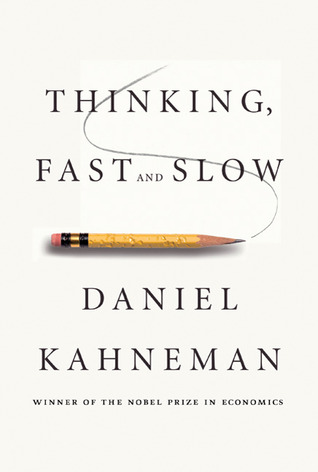
Thinking, Fast and Slow

Daniel Kahneman

★★★☆☆
Read Intel history ISBN 9780374275631

Farrer, Straus and Giroux · 2011

In the highly anticipated Thinking, Fast and Slow, Kahneman takes us on a groundbreaking tour of the mind and explains the two systems that drive the way we think. System 1 is fast, intuitive, and emotional; System 2 is slower, more deliberative, and more logical. Kahneman exposes the extraordinary capabilities—and also the faults and biases—of fast thinking, and reveals the pervasive influence of intuitive impressions on our thoughts and behavior. The impact of loss aversion and overconfidence on corporate strategies, the difficulties of predicting what will make us happy in the future, the challenges of properly framing risks at work and at home, the profound effect of cognitive biases on everything from playing the stock market to planning the next vacation—each of these can be understood only by knowing how the two systems work together to shape our judgments and decisions. Engaging the reader in a lively conversation about how we think, Kahneman reveals where we can and cannot trust our intuitions and how we can tap into the benefits of slow thinking. He offers practical and enlightening insights into how choices are made in both our business and our personal lives—and how we can use different techniques to guard against the mental glitches that often get us into trouble. Thinking, Fast and Slow will transform the way you think about thinking.

Out of the Mountains: The Coming Age of the Urban Guerrilla

David Kilcullen

★★☆☆☆
Read Basic intel GWOT Guerrilla / COIN Middle East Intel history Strategy / theory ISBN 9780199737505

Oxford University Press · 2013

When Americans think of modern warfare, what comes to mind is the US army skirmishing with terrorists and insurgents in the mountains of Afghanistan. But the face of global conflict is ever-changing. In Out of the Mountains , David Kilcullen, one of the world's leading experts on current and future conflict, offers a groundbreaking look at what may happen after today's wars end. This is a book about future conflicts and future cities, and about the challenges and opportunities that four powerful megatrends--population, urbanization, coastal settlement, and connectedness--are creating across the planet. And it is about what cities, communities and businesses can do to prepare for a future in which all aspects of human society--including, but not limited to, conflict, crime and violence--are changing at an unprecedented pace. Kilcullen argues that conflict is increasingly likely to occur in sprawling coastal cities, in peri-urban slum settlements that are enveloping many regions of the Middle East, Africa, Latin America and Asia, and in highly connected, electronically networked settings. He suggests that cities, rather than countries, are the critical unit of analysis for future conflict and that resiliency, not stability, will be the key objective. Ranging across the globe--from Kingston to Mogadishu to Lagos to Benghazi to Mumbai--he offers a unified theory of "competitive control" that explains how non-state armed groups such as drug cartels, street gangs, and warlords draw their strength from local populations, providing useful ideas for dealing with these groups and with diffuse social conflicts in general. His extensive fieldwork on the ground in a series of urban conflicts suggests that there will be no military solution for many of the struggles we will face in the future. We will need to involve local people deeply to address problems that neither outsiders nor locals alone can solve, drawing on the insight only locals can bring, together with outsider knowledge from fields like urban planning, systems engineering, renewable energy, conflict resolution and mediation. This deeply researched and compellingly argued book provides an invaluable roadmap to a future that will increasingly be crowded, urban, coastal, connected--and dangerous.

To Kill a Mockingbird

Harper Lee

☆☆☆☆
Read Intel history ISBN 0060935464

HarperPerennial ModernClassics · 2016

"Shoot all the bluejays you want, if you can hit 'em, but remember it's a sin to kill a mockingbird." A lawyer's advice to his children as he defends the real mockingbird of Harper Lee's classic novel - a black man charged with the rape of a white girl. Through the young eyes of Scout and Jem Finch, Harper Lee explores with exuberant humour the irrationality of adult attitudes to race and class in the Deep South of the 1930s. The conscience of a town steeped in prejudice, violence and hypocrisy is pricked by the stamina of one man's struggle for justice. But the weight of history will only tolerate so much. "To Kill A Mockingbird" became both an instant bestseller and a critical success when it was first published in 1960. It went on to win the Pulitzer Prize in 1961 and was later made into an Academy Award-winning film.

No cover · Amazon

Alamein: War Without Hate

Colin Smith

unrated
Read Intel history Logistics Technical warfare Logistics Intel history

For the British, the battle fought at El Alamein in October 1942 became the turning point of the Second World War. In this study of the desert war, John Bierman and Colin Smith show why it is remembered by its survivors as a 'war without hate'. Through extensive research the authors provide a compellingly fresh perspective on the see-saw campaign in which the two sides chased each other back and forth across the unforgiving North African landscape.

No cover · Amazon

Behind the battle: Intelligence in the war with Germany, 1939-45

Ralph Bennett

unrated
Read Advanced intel Intel history WWII Espionage Naval Air power Intel history

By the end of 1942, Ultra had become the richest and most reliable of the many different sources of intelligence, however, the relation between their individual contributions requires analysis. Ralph Bennett's study aims to present a succinct survey and analysis of the military intelligence available to Britain and her allies during World War II. When war began, Britain was as ill-prepared in intelligence as in armaments. Civilian scientists had discovered the principle of radar in the mid-1930s, but everything else had to be learned from scratch in the heat of emergency. In 1939, all three armed services lacked staff trained to appraise and distribute intelligence. Because it had so often been unreliable in the past, field commanders were reluctant to accept it and had to learn new ways. First signs of improvement came in mid-1941, when Ultra targeted naval vessels and bomber aircraft onto so many of Rommel's supply ships that the Afrika Korps almost withered on the vine. From then on intelligence played an increasingly indispensable part in final victory. Ultra won the Battle of the Atlantic, driving the U-boats back to coastal waters by June 1943. A lower grade code gave Montgomery the vital first news of the whereabouts of the German tanks as he planned the breakthrough at Alamein. Only "Bomber" Harris refused to give intelligence the credit it deserved, for reasons investigated in "Behind the Battle".

No cover · Amazon

Beyond Band of Brothers: The War Memoirs of Major Dick Winters

Dick Winters

unrated
To read WWII Korea Intel history Biography

They were called Easy Company—but their mission was never easy. Immortalized as the Band of Brothers, they suffered 150% casualties while liberating Europe—an unparalleled record of bravery under fire. Dick Winters was their commander—"the best combat leader in World War II" to his men. This is his story—told in his own words for the first time.On D-Day, Dick Winters parachuted into France and assumed leadership of the Band of Brothers when their commander was killed. He led them through the Battle of the Bulge and into Germany, by which time each member had been wounded. They liberated an S.S. death camp from the horrors of the Holocaust and captured Berchtesgaden, Hitler's alpine retreat. After briefly serving during the Korean War, Winters was a highly successful businessman. Made famous by Stephen Ambrose's book Band of Brothers—and the subsequent award-winning HBO miniseries—he is the object of worldwide adulation, Beyond Band of Brothers is Winters's memoir—based on his wartime diary—but it also includes his comrades' untold stories. Virtually all this material is being released for the first time. Only Winters was present from the activation of Easy Company until the war's end. Winner of the Distinguished Service Cross, only he could pen this moving tribute to the human spirit.

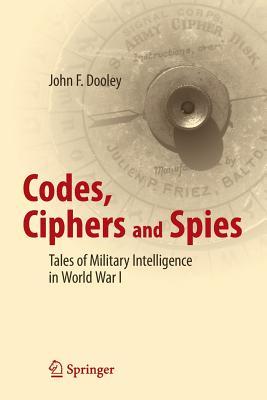
Codes, Ciphers and Spies: Tales of Military Intelligence in World War I

John F. Dooley

unrated
Read Cryptography WWI Espionage Intel history ISBN 9783319294148

Springer · 2016

When the United States declared war on Germany in April 1917, it was woefully unprepared to wage a modern war. Whereas their European counterparts already had three years of experience in using code and cipher systems in the war, American cryptologists had to help in the building of a military intelligence unit from scratch. This book relates the personal experiences of one such character, providing a uniquely American perspective on the Great War. It is a story of spies, coded letters, plots to blow up ships and munitions plants, secret inks, arms smuggling, treason, and desperate battlefield messages. Yet it all begins with a college English professor and Chaucer scholar named John Mathews Manly. In 1927, John Manly wrote a series of articles on his service in the Code and Cipher Section (MI-8) of the U.S. Army’s Military Intelligence Division (MID) during World War I. Published here for the first time, enhanced with references and annotations for additional context, these articles form the basis of an exciting exploration of American military intelligence and counter-espionage in 1917-1918. Illustrating the thoughts of prisoners of war, draftees, German spies, and ordinary Americans with secrets to hide, the messages deciphered by Manly provide a fascinating insight into the state of mind of a nation at war.