S2 Search · Reading list

S2 Actual reading list

Books from S2 Actual on Goodreads, organized by his shelves and topic buckets (intel lists, military history, logistics, etc.). Metadata filled via Open Library.

Not official S2 Underground. Independent fan index — not affiliated with or endorsed by S2. Official hub: linktr.ee/S2_underground. S2 materials are CC BY-NC-SA 4.0.

S2 topic buckets (Goodreads)

Subjects & genres

31 books · Intel history · subject Russia / USSR · page 2 of 2

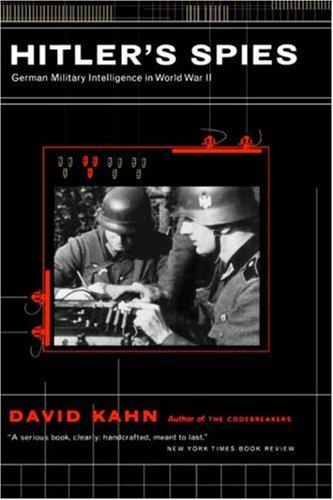
Hitler's Spies: German Military Intelligence In World War II

David Kahn

unrated
Read Intel history WWII Espionage Air power Russia / USSR Intel history ISBN 0306809494

Da Capo Press · 2000

A German patrol wiggles through Russian lines to return with details of Soviet defenses. An expert Luftwaffe interrogator teases secret information from downed Allied airmen. Two spies steal ashore in Maine and make their way into New York City. Filled with episodes of intrigue and adventure, Hitler's Spies reveals the workings of German intelligence—the famed Abwehr, the dreaded SD, the codebreakers, the spies, and the intelligence gatherers of the Foreign Office—and explains its failure to best the Allies. Draws on original documents and extensive interviews.

Japanese Intelligence in World War II (General Military)

Ken Kotani

unrated
Read Advanced intel Intel history WWII Espionage Naval China Russia / USSR Intel history ISBN 9781846034251

Osprey · 2009

In the eyes of history, Japanese intelligence in World War II has fared very poorly. However, these historians have most often concentrated on the later years of the war, when Japan was fighting a multi-front war against numerous opponents. In this groundbreaking new study, Japanese scholar Ken Kotani re-examines the Japanese Intelligence department, beginning with the early phase of the war. He points out that without the intelligence gathered by the Japanese Army and Navy they would have been unable to achieve their long string of victories against the forces of Russia, China, and Great Britain. Notable in these early campaigns were the successful strikes against both Singapore and Pearl Harbor. Yet as these victories expanded the sphere of Japanese control, they also made it harder for the intelligence services to gather accurate information about their growing list of adversaries. At the battle of Midway in 1942, Japanese intelligence suffered its worst mishap when the Americans broke their code and tricked the Japanese into revealing the target of their attack. It was a mistake from which they would never recover. As the military might of Japan was forced to retreat and her forces deteriorated, so too did her intelligence services.

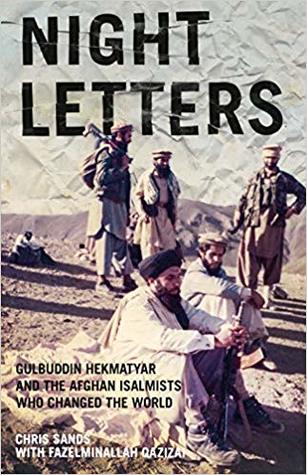
Night Letters: Gulbuddin Hekmatyar and the Afghan Islamists Who Changed the World

Chris Sands

unrated
Read Advanced intel Basic intel Biographies Intel history Military history GWOT Guerrilla / COIN Russia / USSR Intel history Biography Strategy / theory ISBN 9781787381964

C. Hurst and Company (Publishers) Limited · 2019

In 1969, several young men met on a rainy night in Kabul to form an Islamist student group. Their aim was laid out in a simple typewritten statement: to halt the spread of Soviet and American influence in Afghanistan. They went on to change the world. 'Night Letters' tells the extraordinary story of the group’s most notorious member, Gulbuddin Hekmatyar, and the guerrilla organisation he came to lead, Hizb-e Islami. By the late 1980s, tens of thousands were drawn to Hekmatyar’s vision of a radical Islamic state that would sow unrest from Kashmir to Jerusalem. His doctrine of violent global jihad culminated in 9/11 and the birth of ISIS, yet he never achieved his dream of ruling Afghanistan. The peace deal he signed with Kabul in 2016 was yet another controversial twist in an astonishing life. Sands and Qazizai delve into the secret history of Hekmatyar and Hizb-e Islami: their wars against Russian and American troops, and their bloody and bitter feuds with domestic enemies. Based on hundreds of exclusive interviews carried out across the region and beyond, this is the definitive account of the most important, yet poorly understood, international Islamist movement of the last fifty years.

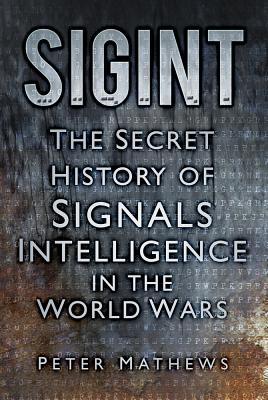
SIGINT: The Secret History of Signals Intelligence in the World Wars

Peter F. Matthews

unrated
Read Intel history WWII WWI Espionage Russia / USSR Intel history ISBN 9780752487342

The History Press · 2013

From MORSE to ENIGMA, ULTRA to PURPLE, Room 40 to Bletchley—the story of secret signals in both of the World Wars Communicating in the chaos of war is complicated, but vital. Signals intelligence makes it possible. In World War I, a vast network of signals rapidly expanded across the globe, spawning a new breed of spies and intelligence operatives to code, decode, and analyze thousands of messages. Signalers and cryptographers in the Admiralty's famous Room 40 paved the way for the code breakers of Bletchley Park during World War II. In the ensuing war years, the world battled against a web of signals intelligence that gave birth to ENIGMA and ULTRA, and saw agents from Britain, France, Germany, Russia, America, and Japan race to outwit each other through infinitely complex codes. For the first time, the secret history of global signals intelligence in the world wars is revealed.

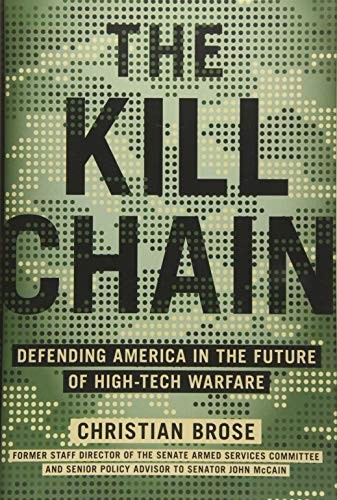
The Kill Chain: Defending America in the Future of High-Tech Warfare

Christian Brose

unrated
Read Advanced intel Intel history China Russia / USSR Orthodox / theology ISBN 9780316533539

Hachette Books · Apr 21, 2020

For generations of Americans, our country has been the world's dominant military power. How the US military fights, and the systems and weapons that it fights with, have been uncontested. That old reality, however, is rapidly deteriorating. America's traditional sources of power are eroding amid the emergence of new technologies and the growing military threat posed by rivals such as China. America is at grave risk of losing a future war. As Christian Brose reveals in this urgent wake-up call, the future will be defined by artificial intelligence, autonomous systems, and other emerging technologies that are revolutionizing global industries and are now poised to overturn the model of American defense. This fascinating, if disturbing, book confronts the existential risks on the horizon, charting a way for America's military to adapt and succeed with new thinking as well as new technology. America must build a battle network of systems that enables people to rapidly understand threats, make decisions, and take military actions, the process known as "the kill chain." Examining threats from China, Russia, and elsewhere, The Kill Chain offers hope and, ultimately, insights on how America can apply advanced technologies to prevent war, deter aggression, and maintain peace

The Spy in Moscow Station: A Counterspy's Hunt for a Deadly Cold War Threat

Eric Haseltine

unrated
Read Advanced intel Biographies Cryptography Intel history Cold War Espionage Russia / USSR Orthodox / theology ISBN 9781250301161

Thomas Dunne Books · Apr 30, 2019

The thrilling, true story of the race to find a leak in the United States Embassy in Moscow--before more American assets are rounded up and killed. Foreword by Gen. Michael V. Hayden (Retd.), Former Director of NSA & CIA In the late 1970s, the National Security Agency still did not officially exist--those in the know referred to it dryly as the No Such Agency. So why, when NSA engineer Charles Gandy filed for a visa to visit Moscow, did the Russian Foreign Ministry assert with confidence that he was a spy? Outsmarting honey traps and encroaching deep enough into enemy territory to perform complicated technical investigations, Gandy accomplished his mission in Russia, but discovered more than State and CIA wanted him to know. Eric Haseltine's The Spy in Moscow Station tells of a time when--much like today--Russian spycraft had proven itself far beyond the best technology the U.S. had to offer. The perils of American arrogance mixed with bureaucratic infighting left the country unspeakably vulnerable to ultra-sophisticated Russian electronic surveillance and espionage. This is the true story of unorthodox, underdog intelligence officers who fought an uphill battle against their own government to prove that the KGB had pulled off the most devastating penetration of U.S. national security in history. If you think The Americans isn't riveting enough, you'll love this toe-curling nonfiction thriller.

Victims of Yalta

Nikolai Tolstoy

unrated
Read Intel history Military history Economics Logistics Basic intel WWII Russia / USSR Logistics Economics ISBN 0684156350

Gorgi Books · 1979

Stalinova "vojevůdcovská" nezpůsobilost vehnala v průběhu druhé světové války do německého zajetí miliony vojáků. Jeho nelítostná decimace všech vrstev národa, dokonce celých komunit, vedla generála Vlasova k rozhodnutí vytvořit armádu, která by ze dvou zel - Stalin a Hitler - porazila nejprve to větší, kterým se mu jevil Stalin. Stalin například po celou válku nepřistoupil k haagským konvencím o zacházení s válečnými zajatci a svým odmítavým postojem tak nepřímo způsobil tragický osud zajatců. Kromě vlasovců se proti bolševismu postavil také národ kozáků. Další skupinou stojící proti Stalinovi byli někteří příslušníci rozsáhlé bílé emigrace, jejichž potomci se mnohdy narodili již na Západě. Vedle nich se na konci války ocitlo v britském zajetí mnoho protikomunistických Jugoslávců. Více než dva miliony těchto lidí byly v letech 1944-1947 násilně navráceny do Sovětského svazu - podle dohod, jež Britové a Američané se Stalinem stvrdili na konferenci v Jaltě - v rozporu s řadou britských zákonů a ustanovení mezinárodního práva. Osudem těchto ubožáků byla buď okamžitá smrt zastřelením po návratu, či pomalejší umírání v táborech Gulagu. Vyvázli jen nemnozí......