S2 Search · Reading list

S2 Actual reading list

Books from S2 Actual on Goodreads, organized by his shelves and topic buckets (intel lists, military history, logistics, etc.). Metadata filled via Open Library.

Not official S2 Underground. Independent fan index — not affiliated with or endorsed by S2. Official hub: linktr.ee/S2_underground. S2 materials are CC BY-NC-SA 4.0.

S2 topic buckets (Goodreads)

Subjects & genres

31 books · Intel history · subject Strategy / theory · page 2 of 2

No cover · Amazon

Huế 1968: A Turning Point of the American War in Vietnam

Mark Bowden

unrated
Read Advanced intel Basic intel Military history Intel history WWII Vietnam Intel history Strategy / theory

In the early hours of January 31, 1968, the North Vietnamese launched over one hundred attacks across South Vietnam in what would become known as the Tet Offensive. The lynchpin of Tet was the capture of Hue, Vietnam?s intellectual and cultural capital, by 10,000 National Liberation Front troops who descended from hidden camps and surged across the city of 140,000. Within hours the entire city was in their hands save for two small military outposts. American commanders refused to believe the size and scope of the Front?s presence, ordering small companies of marines against thousands of entrenched enemy troops. After several futile and deadly days, Lieutenant Colonel Ernie Cheatham would finally come up with a strategy to retake the city, block by block and building by building, in some of the most intense urban combat since World War II. With unprecedented access to war archives in the U.S. and Vietnam and interviews with participants from both sides, Bowden narrates each stage of this crucial battle through multiple viewpoints. Played out over 24 days and ultimately costing 10,000 lives, the Battle of Hue was by far the bloodiest of the entire war. When it ended, the American debate was never again about winning, only about how to leave. Hue 1968 is a gripping and moving account of this pivotal moment.

Invisible Armies: An Epic History of Guerrilla Warfare from Ancient Times to the Present

Max Boot

unrated
Read Basic intel Intel history Military history Vietnam GWOT Naval Guerrilla / COIN Middle East Strategy / theory ISBN 9780871404244

Liveright Pub. Corporation · 2012

As fitting for the twenty-first century as von Clausewitz’s On War was in its own time, Invisible Armies is a complete global history of guerrilla uprisings through the ages. Beginning with the first insurgencies in the ancient world―when Alexander the Great discovered that fleet nomads were harder to defeat than massive conventional armies―Max Boot, best-selling author and military advisor in Iraq and Afghanistan, masterfully guides us from the Jewish rebellion against the Roman Empire up through the horrors of the French-Indochina War and the shadowy, post-9/11 battlefields of today. Relying on a diverse cast of unforgettable characters―not only Mao and Che but also the legendary Italian nationalist Giuseppe Garibaldi, the archaeologist-turned–military commander T. E. Lawrence, and the “Quiet American” Edward Lansdale, among others―Boot explodes everything we thought we knew about unconventional combat. The result is both an enthralling read and our most important work on nontraditional warfare. 70 illustrations; 8 maps

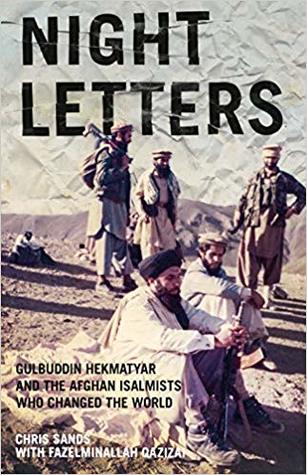
Night Letters: Gulbuddin Hekmatyar and the Afghan Islamists Who Changed the World

Chris Sands

unrated
Read Advanced intel Basic intel Biographies Intel history Military history GWOT Guerrilla / COIN Russia / USSR Intel history Biography Strategy / theory ISBN 9781787381964

C. Hurst and Company (Publishers) Limited · 2019

In 1969, several young men met on a rainy night in Kabul to form an Islamist student group. Their aim was laid out in a simple typewritten statement: to halt the spread of Soviet and American influence in Afghanistan. They went on to change the world. 'Night Letters' tells the extraordinary story of the group’s most notorious member, Gulbuddin Hekmatyar, and the guerrilla organisation he came to lead, Hizb-e Islami. By the late 1980s, tens of thousands were drawn to Hekmatyar’s vision of a radical Islamic state that would sow unrest from Kashmir to Jerusalem. His doctrine of violent global jihad culminated in 9/11 and the birth of ISIS, yet he never achieved his dream of ruling Afghanistan. The peace deal he signed with Kabul in 2016 was yet another controversial twist in an astonishing life. Sands and Qazizai delve into the secret history of Hekmatyar and Hizb-e Islami: their wars against Russian and American troops, and their bloody and bitter feuds with domestic enemies. Based on hundreds of exclusive interviews carried out across the region and beyond, this is the definitive account of the most important, yet poorly understood, international Islamist movement of the last fifty years.

On War

Carl von Clausewitz

unrated
Read Basic intel Intel history Military history Strategy / theory Revolution ISBN 0691018545

Princeton U.P. · 1992

Carl von Clausewitz’s On War is the most significant attempt in Western history to understand war, both in its internal dynamics and as an instrument of policy. Since the work’s first appearance in 1832, it has been read throughout the world, and has stimulated generations of soldiers, political leaders, and intellectuals. First published in 1976 and revised in 1984, Michael Howard and Peter Paret’s Princeton edition of Clausewitz’s classic work has itself achieved classic status and is widely regarded as the best translation and standard edition of On War in English. This feature-rich edition includes an essay by Paret on the genesis of Clausewitz’s book, an essay by Howard on Clausewitz’s influence, and an essay by Bernard Brodie on the continuing relevance of On War. In addition, Brodie provides a lengthy and detailed commentary on and guide to reading On War, and the edition also includes a comprehensive index.

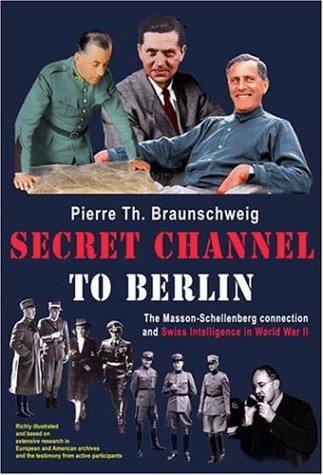
Secret Channel to Berlin: The Masson-Schellenberg Connection and Swiss Intelligence in World War II

Pierre-Th. Braunschweig

unrated
Read Intel history Advanced intel WWII Espionage Strategy / theory ISBN 1932033394

Casemate · 2004

This book focuses on the delicate connection between the head of Swiss Intelligence, Colonel Roger Masson, and the German Chief of Espionage, SS General Walter Schellenberg. The author had access to hitherto inaccessible documents, including newly discovered material in American archives, to fully illuminate this secret connection for the first time. The book also includes surprising new details about the alarming military threats Switzerland faced in March 1943. Masson's extraordinary secret channel to Berlin was not, of course, the only Swiss intelligence operation during the war. Braunschweig outlines in detail the gradual buildup, tasks and functions of Swiss Intelligence during World War II. He furthermore describes conflicts between Swiss Intelligence and the Federal government in Bern and within the Intelligence service itself. During World War II, Switzerland was famous as a center of spies and espionage fielded by Allies and Axis alike. Less has been known, however, about Switzerland's own Intelligence activities, including its secret sources in Hitler's councils and its counterespionage program at home. With this intensely researched, scholarly, yet exciting book, that gap in the history of wartime Intelligence operations has been filled. PIERRE-TH. BRAUNSCHWEIG earned a Ph.D. in history from the University of Bern and later served as an assistant to Hans Senn, the Chief of Staff of the Swiss Army. He is a member of the United States Strategic Institute in Washinton DC, the International Institute for Strategic Studies in London, and the National Intelligence Study Center in Washington.

Spying for Wellington: British Military Intelligence in the Peninsular War

Huw J. Davies

unrated
Read Intel history Advanced intel Espionage Intel history Strategy / theory ISBN 9780806161730

University of Oklahoma Press · Nov 08, 2018

Intelligence is often the critical factor in a successful military campaign. This was certainly the case for Arthur Wellesley, the Duke of Wellington, in the Peninsular War. In this book, author Huw J. Davies offers the first full account of the scope, complexity, and importance of Wellington’s intelligence department, describing a highly organized, multifaceted series of networks of agents and spies throughout Spain and Portugal—an organization that is at once a microcosm of British intelligence at the time and a sophisticated forebear to intelligence developments in the twentieth century. Spying for Wellington shows us an organization that was, in effect, two parallel networks: one made up of Foreign Office agents “run” by British ambassadors in Spain and Portugal, the other comprising military spies controlled by Wellington himself. The network of agents supplied strategic intelligence, giving the British army advance warning of the arrival, destinations, and likely intentions of French reinforcements. The military network supplied operational intelligence, which confirmed the accuracy of the strategic intelligence and provided greater detail on the strengths, arms, and morale of the French forces. Davies reveals how, by integrating these two forms of intelligence, Wellington was able to develop an extremely accurate and reliable estimate of French movements and intentions not only in his own theater of operations but also in other theaters across the Iberian Peninsula. The reliability and accuracy of this intelligence, as Davies demonstrates, was central to Wellington’s decision-making and, ultimately, to his overall success against the French. Correcting past, incomplete accounts, this is the definitive book on Wellington’s use of intelligence. As such, it contributes to a clearer, more comprehensive understanding of Wellington at war and of his place in the history of British military intelligence.

The Art and Science of Military Deception (Artech House Intelligence and Information Operations)

Hy Rothstein

unrated
Read Basic intel Advanced intel Military history Intel history Technical warfare Strategy / theory ISBN 9781608075515

Artech House Publishers · 2013

It is said that deception among people in a civilized society is something to be loathed even though it seems to be part of human nature; but deception in war is a virtue. This title provides the reader with sufficient knowledge to pursue General Eisenhower's vision for the proper role of deception in support of the national interest.