S2 Search · Reading list

S2 Actual reading list

Books from S2 Actual on Goodreads, organized by his shelves and topic buckets (intel lists, military history, logistics, etc.). Metadata filled via Open Library.

Not official S2 Underground. Independent fan index — not affiliated with or endorsed by S2. Official hub: linktr.ee/S2_underground. S2 materials are CC BY-NC-SA 4.0.

S2 topic buckets (Goodreads)

Subjects & genres

60 books · Read · subject Espionage · page 2 of 3

Between Silk and Cyanide: A Codemaker's War, 1941-1945

Leo Marks

★★★★
Read Advanced intel Cryptography WWII Espionage Special ops Intel history Biography ISBN 9780684867809

Free Press · September 12, 2000

In 1942, Leo Marks left his father's famous bookshop, 84 Charing Cross Road, and went off to fight the war. He was twenty-two. Soon recognized as a cryptographer of genius, he became head of communications at the Special Operations Executive (SOE), where he revolutionized the codemaking techniques of the Allies and trained some of the most famous agents dropped into occupied Europe, including "the White Rabbit" and Violette Szabo. As a top codemaker, Marks had a unique perspective on one of the most fascinating and, until now, little-known aspects of the Second World War. Writing with the narrative flair and vivid characterization of his famous screenplays, Marks gives free rein to his keen sense of the absurd and his wry wit, resulting in a thrilling and poignant memoir that celebrates individual courage and endeavor, without losing sight of the human cost and horror of war.
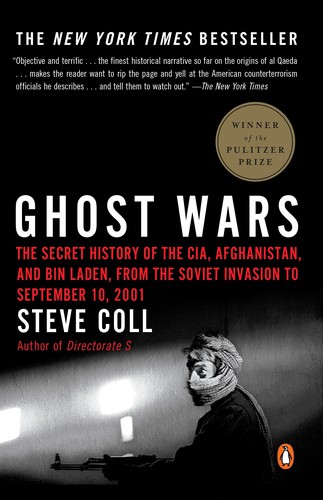
Ghost Wars: The Secret History of the CIA, Afghanistan, and Bin Laden from the Soviet Invasion to September 10, 2001

Steve Coll

★★★★
Read Basic intel Intel history Espionage GWOT Russia / USSR Middle East Intel history ISBN 0143034669

Penguin Books · 2005

The news-breaking book that has sent shockwaves through the Bush White House, Ghost Wars is the most accurate and revealing account yet of the CIA's secret involvement in al-Qaeda's evolution. It won the Pulitzer Prize in 2005.Prize-winning journalist Steve Coll has spent years reporting from the Middle East, accessed previously classified government files and interviewed senior US officials and foreign spymasters. Here he gives the full inside story of the CIA's covert funding of an Islamic jihad against Soviet forces in Afghanistan, explores how this sowed the seeds of Bin Laden's rise, traces how he built his global network and brings to life the dramatic battles within the US government over national security. Above all, he lays bare American intelligence's continual failure to grasp the rising threat of terrorism in the years leading to 9/11 - and its devastating consequences.

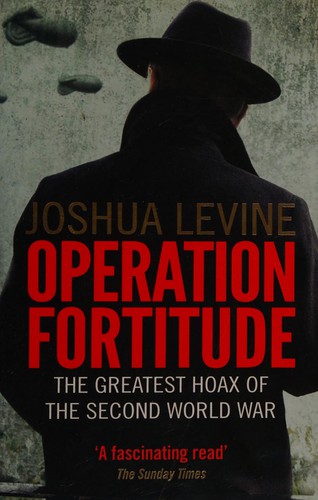
Operation Fortitude: The Greatest Hoax of the Second World War

Joshua Levine

★★★★
Read WWII Espionage Intel history ISBN 9780007395873

Collins · 2012

'Operation Fortitude' was the ingenious web of deception spun by the Allies to mislead the Nazis as to how and where the D-Day landings were to be mounted.

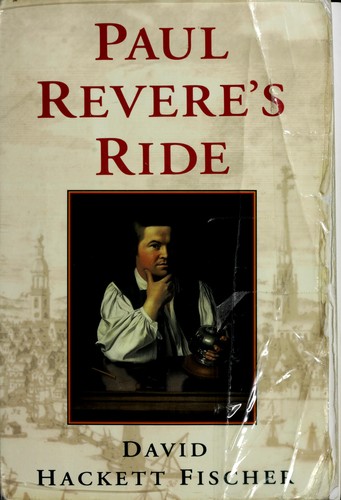
Paul Revere's Ride

David Hackett Fischer

★★★★
Read Basic intel Advanced intel Military history Intel history Logistics Technical warfare Espionage Cyber Logistics Revolution ISBN 0195098315

Oxford University Press · 1995

Paul Revere's midnight ride is a legendary event in American history - yet it has been largely ignored by scholars, and left to patriotic writers and debunkers. Now one of the foremost American historians offers the first serious study of this event - what led to it, what really happened, what followed - uncovering a truth more remarkable than the many myths it has inspired. In Paul Revere's Ride, David Hackett Fischer has created an exciting narrative that offers new insight into the coming of the American Revolution. From research in British and American archives, the author unravels a plot that no novelist would dare invent - a true story of high drama and deep suspense, of old-fashioned heroes and unvarnished villains, of a beautiful American spy who betrayed her aristocratic British husband, of violent mobs and marching armies, of brave men dying on their doorsteps, of high courage, desperate fear, and the destiny of nations. The narrative is constructed around two thematic lines. One story centers on the American patriot Paul Revere; the other, on British General Thomas Gage. Both were men of high principle who played larger roles than recent historiography has recognized. Thomas Gage was not the Tory tyrant of patriot legend, but an English Whig who believed in liberty and the rule of law. In 1774 and 1775, General Gage's advice shaped the fatal choices of British leaders, and his actions guided the course of American events. Paul Revere was more than a "simple artizan, " as his most recent biographer described him fifty years ago. The author presents new evidence that revolutionary Boston was a world of many circles - more complex than we have known. Paul Revere and his friend Joseph Warren ranged more widely through those circles than any other leaders. They became the linchpins of the Whig movement. On April 18th, 1775, Paul Revere played that role in a manner that has never been told before. He and William Dawes were not the only midnight riders to ca

Perfect Spy: The Incredible Double Life of Pham Xuan An - Time Magazine Reporter and Vietnamese Communist Agent

Larry Berman

★★★★
Read Advanced intel Biographies Intel history Vietnam Espionage Biography Strategy / theory ISBN 9780060888381

Collins · April 24, 2007

During the Vietnam War, Time reporter Pham Xuan An befriended everyone who was anyone in Saigon, including American journalists such as David Halberstam and Neil Sheehan, the CIA's William Colby, and the legendary Colonel Edward Lansdale—not to mention the most influential members of the South Vietnamese government and army. None of them ever guessed that he was also providing strategic intelligence to Hanoi, smuggling invisible ink messages into the jungle inside egg rolls. His early reports were so accurate that General Giap joked, "We are now in the U.S. war room." For more than twenty years, An lived a dangerous lie—and no one knew it because he was a master of both his jobs. After the war, An was named a Hero of the People's Army and was promoted to general—one of only two intelligence officers to ever achieve that rank. In Perfect Spy, Larry Berman, who An considered his official American biographer, chronicles the extraordinary life of one of the twentieth century's most fascinating spies. In doing so, he offers a new perspective on a war that continues to haunt us.

Spymaster: Startling Cold War Revelations of a Soviet KGB Chief

Tennent H. Bagley

★★★★
Read WWII Cold War Espionage Russia / USSR Biography ISBN 9781626360655

Skyhorse · 2013

From the dark days of World War II through the Cold War, Sergey A. Kondrashev was a major player in Russia’s notorious KGB espionage apparatus. Rising through its ranks through hard work and keen understanding of how the spy and political games are played, he “handled” American and British defectors, recruited Western operatives as double agents, served as a ranking officer at the East Berlin and Vienna KGB bureaus, and tackled special assignments from the Kremlin. During a 1994 television program about former spymasters, Kondrashev met and began a close friendship with a former foe, ex–CIA officer Tennent H. “Pete” Bagley, whom the Russian asked to help write his memoirs. Because Bagley knew so about much of Kondrashev’s career (they had been on opposite sides in several operations), his penetrating questions and insights reveal slices of never-revealed espionage history that rival anything found in the pages of Ian Fleming, Len Deighton, or John le Carré: chilling tales of surviving Stalin’s purges while superiors and colleagues did not, of plotting to reveal the Berlin Tunnel, of quelling the Hungarian Revolution and “Prague Spring” independence movements, and of assisting in arranging the final disposition of the corpses of Adolf Hitler and Eva Braun. Kondrashev also details equally fascinating KGB propaganda and disinformation efforts that shaped Western attitudes throughout the Cold War. Because publication of these memoirs was banned by Putin’s regime, Bagley promised Kondrashev to have them published in the West. They are now available to all who are fascinated by vivid tales of international intrigue.

The Longest War: A History of the War on Terror and the Battles with Al Qaeda Since 9/11

Peter L. Bergen

★★★★
Read Advanced intel Military history Intel history Espionage GWOT Middle East Strategy / theory ISBN 9780743278935

Free Press · 2011

TEN YEARS HAVE PASSED since the shocking attacks on the World Trade Center, and after seven years of conflict, the last U.S. combat troops left Iraq—only to move into Afghanistan, where the ten-year-old fight the war on terror rages with no clear end in sight. In The Longest War Peter Bergen offers a comprehensive history of this war and its evolution, from the strategies devised in the wake of the 9/11 attacks to the fighting in Afghanistan, Pakistan, and beyond. Unlike any other book on this subject, here Bergen tells the story of this shifting war’s failures and successes from the perspectives of both the United States and al-Qaeda and its allies. He goes into the homes of al-Qaeda members, rooting into the source of their devotion to terrorist causes, and spends time in the offices of the major players shaping the U.S. strategic efforts in the region. At a time when many are frustrated or fatigued with what has become an enduring multigenerational conflict, this book will provide an illuminating narrative that not only traces the arc of the fight but projects its likely future. Weaving together internal documents from al-Qaeda and the U.S. offices of counterterrorism, first-person interviews with top-level jihadists and senior Washington officials, along with his own experiences on the ground in the Middle East, Bergen balances the accounts of each side, revealing how al-Qaeda has evolved since 9/11 and the specific ways the U.S. government has responded in the ongoing fight. Bergen also uncovers the strategic errors committed on both sides—the way that al-Qaeda’s bold attack on the United States on 9/11 actually undermined its objective and caused the collapse of the Taliban and the destruction of the organization’s safe haven in Afghanistan, and how al-Qaeda is actually losing the war of ideas in the Muslim world. The book also shows how the United States undermined its moral position in this war with its actions at Guantánamo and coercive interrogations—including the extraordinary rendition of Abu Omar, who was kidnapped by the CIA in Milan in 2003 and was tortured for four years in Egyptian prisons; his case represents the first and only time that CIA officials have been charged and convicted of the crime of kidnapping. In examining other strategic blunders the United States has committed, Bergen offers a scathing critique of the Clinton and Bush administrations’ inability to accurately assess and counter the al-Qaeda threat, Bush’s deeply misguided reasons for invading Iraq—including the story of how the invasion was launched based, in part, on the views of an obscure academic who put forth theories about Iraq’s involvement with al-Qaeda—and the Obama administration’s efforts in Afghanistan. At a critical moment in world history The Longest War provides the definitive account of the ongoing battle against terror.

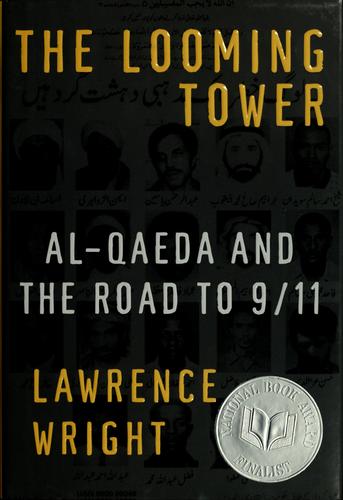
The Looming Tower: Al-Qaeda and the Road to 9/11

Lawrence Wright

★★★★
Read Military history Intel history Basic intel Espionage GWOT Middle East ISBN 037541486X

Knopf · 2006

A sweeping narrative history of the events leading to 9/11, a groundbreaking look at the people and ideas, the terrorist plans and the Western intelligence failures that culminated in the assault on America. Lawrence Wright's remarkable book is based on five years of research and hundreds of interviews that he conducted in Egypt, Saudi Arabia, Pakistan, Afghanistan, Sudan, England, France, Germany, Spain, and the United States. The Looming Tower achieves an unprecedented level of intimacy and insight by telling the story through the interweaving lives of four men: the two leaders of al-Qaeda, Osama bin Laden and Ayman al-Zawahiri; the FBI's counterterrorism chief, John O'Neill; and the former head of Saudi intelligence, Prince Turki al-Faisal. As these lives unfold, we see revealed: the crosscurrents of modern Islam that helped to radicalize Zawahiri and bin Laden . . . the birth of al-Qaeda and its unsteady development into an organization capable of the American embassy bombings in Kenya and Tanzania and the attack on the USS Cole . . . O'Neill's heroic efforts to track al-Qaeda before 9/11, and his tragic death in the World Trade towers . . . Prince Turki's transformation from bin Laden's ally to his enemy . . . the failures of the FBI, CIA, and NSA to share intelligence that might have prevented the 9/11 attacks. The Looming Tower broadens and deepens our knowledge of these signal events by taking us behind the scenes. Here is Sayyid Qutb, founder of the modern Islamist movement, lonely and despairing as he meets Western culture up close in 1940s America; the privileged childhoods of bin Laden and Zawahiri; family life in the al-Qaeda compounds of Sudan and Afghanistan; O'Neill's high-wire act in balancing his all-consuming career with his equally entangling personal life--he was living with three women, each of them unaware of the others' existence--and the nitty-gritty of turf battles among U.S. intelligence agencies. Brilliantly conceived and written, The Looming Tower draws all elements of the story into a galvanizing narrative that adds immeasurably to our understanding of how we arrived at September 11, 2001. The richness of its new information, and the depth of its perceptions, can help us deal more wisely and effectively with the continuing terrorist threat.

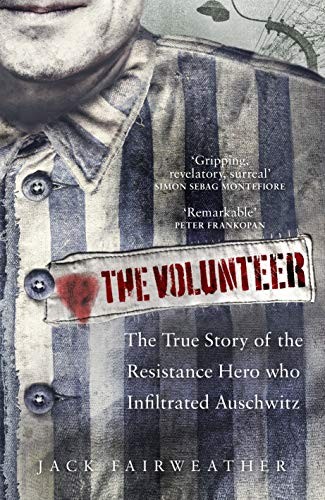
The Volunteer: The True Story of the Resistance Hero who Infiltrated Auschwitz

Jack Fairweather

★★★★
Read Advanced intel Military history Logistics WWII Espionage Logistics Biography ISBN 9780753545164

WH Allen · Mar 21, 2019

How do you keep fighting in the face of unimaginable horror? This is untold story of one of the greatest heroes of the Second World War. In the Summer of 1940, after the Nazi occupation of Poland, an underground operative called Witold Pilecki accepted a mission to uncover the fate of thousands of people being interred at a new concentration camp on the border of the Reich. His mission was to report on Nazi crimes and raise a secret army to stage an uprising. The name of the detention centre -- Auschwitz. It was only after arriving at the camp that he started to discover the Nazi’s terrifying designs. Over the next two and half years, Witold forged an underground army that smuggled evidence of Nazi atrocities to the West, culminating in the mass murder of over a million Jews. His reports from the camp were to shape the Allies response to the Holocaust - yet his story was all but forgotten for decades. This is the first major account of his amazing journey, drawing on exclusive family papers and recently declassified files as well as unpublished accounts from the camp’s fighters to show how he saved hundreds of thousands of lives. The result is a enthralling story of resistance and heroism against the most horrific circumstances, and one man’s attempt to change the course of history.

No cover · Amazon

Tinker, Tailor, Soldier, Spy (George Smiley, #5; Karla Trilogy, #1)

John le Carré

★★★★
Read Intel history Espionage Russia / USSR

A modern classic in which John le Carré expertly creates a total vision of a secret world, Tinker, Tailor, Soldier, Spy begins George Smiley's chess match of wills and wits with Karla, his Soviet counterpart. It is now beyond a doubt that a mole, implanted decades ago by Moscow Centre, has burrowed his way into the highest echelons of British Intelligence. His treachery has already blown some of its most vital operations and its best networks. It is clear that the double agent is one of its own kind. But which one? George Smiley is assigned to identify him. And once identified, the traitor must be destroyed.

1984

George Orwell

★★★☆☆
Read Espionage ISBN 9781405862417

Pearson Education ESL · 2003

1984 tells us about a world ruled by a totalitarian in the novel, society is dominated by "Big Brother," a mysterious character whom no one has ever met in person and who constantly spies on citizens' lives through the use of special telescreens. In this world where freedom has been completely abolished, the protagonist of the novel, Winston Smith, decides to rebel and, although aware that this is considered a highly subversive activity, begins to write a diary. And when Winston falls in love with Julia, he must choose whether to submit to power or fight for a different world, one in which history is not rewritten by the ruling Party and in which even people's thoughts are controlled. 1984 is one of the greatest political novels of the last century, capable of shaking our conscience with its visionary nature. It is both a denunciation of totalitarianism and a strenuous defense of individual integrity. The entire novel focuses on the contradictions of power, the conflict between the individual and society, and the deceptions of utopia. Never before, in the age of the Internet, has it been so surprisingly relevant.

No cover · Amazon

Black Flags: The Rise of ISIS

Joby Warrick

★★★☆☆
Read Basic intel Intel history Espionage GWOT Guerrilla / COIN Middle East Intel history US Civil War

Pulitzer Prize-winning reporter Joby Warrick reveals how the strain of militant Islam now raising its banner across Iraq and Syria spread from a remote Jordanian prison with the unwitting aid of American military intervention.      When he succeeded his father in 1999, King Abdullah of Jordan released a batch of political prisoners in the hopes of smoothing his transition to power. Little did he know that among those released was Abu Musab al-Zarqawi, a man who would go on to become a terrorist mastermind too dangerous even for al-Qaeda and give rise to an Islamist movement bent on dominating the Middle East.      Zarqawi began by directing hotel bombings and assassinations in Jordan from a base in northern Iraq, but it was the American invasion of that country in 2003 that catapulted him to the head of a vast insurgency. By identifying him as the link between Saddam and bin Laden, the CIA inadvertently created a monster. Like-minded radicals saw him as a hero resisting the infidel occupiers and rallied to his cause. Their wave of brutal beheadings and suicide bombings continued for years until Jordanian intelligence provided the Americans with the crucial intelligence needed to eliminate Zarqawi in a 2006 airstrike.      But his movement endured, first called al-Qaeda in Iraq, then renamed Islamic State of Iraq and Syria, or ISIS, seeking refuge in unstable, ungoverned pockets on the Iraq-Syria border. And as the Syrian civil war broke out in 2011, ISIS seized its chance to pursue Zarqawi's dream of a sweeping, ultra-conservative Islamic caliphate.       Drawing on unique access to CIA and Jordanian sources, Joby Warrick weaves together heart-pounding, moment-by-moment operational details with overarching historical perspectives to reveal the long trajectory of today's most dangerous Islamic extremist threat. From the Hardcover edition.

No cover · Amazon

Brother Number One: A Political Biography of Pol Pot

David P. Chandler

★★★☆☆
Read Biographies WWII Vietnam Espionage Guerrilla / COIN Biography US Civil War

In the tragic recent history of Cambodia—a past scarred by a long occupation by Vietnamese forces and by the preceding three-year reign of terror by the brutal Khmer Rouge—no figure looms larger or more ominously than that of Pol Pot. As secretary of the Central Committee of the Communist Party of Kampuchea (CPK) since 1962 and as prime minister of Democratic Kampuchea (DK), he has been widely blamed for trying to destroy Cambodian society. By implementing policies whose effects were genocidal, he oversaw the deaths of more than one million of his nation’s people.The political career of Saloth Sar, better known by his nom de guerre Pol Pot, forms a critical but largely inaccessible portion of twentieth-century Cambodian history. What we know about his life is sketchy: a comfortable childhood, three years of study in France, and a short career as a schoolteacher preceded several years—spent mostly in hiding—as a guerrilla and the commander of the victorious army in Cambodia’s civil war. His career reached a climax when he and his associates, coming to power, attempted to transform their country along lines more radical than any attempted by a modern regime. Driven into hiding in 1979 by invading Vietnamese forces, Pol Pot maintained his leadership of a Khmer Rouge guerrilla army in exile, remaining a power and a threat.In this political biography, David P. Chandler throws light on the shadowy figure of Pol Pot. Basing his study on interviews and on a wide range of sources in English, Cambodian, and French, the author illuminates the ideas and behavior of this enigmatic man and his entourage against the background of post–World War II events, providing a key to understanding this horrific, pivotal period of Cambodian history. In this revised edition, Chandler provides new information on the state of Cambodia and the Khmer Rouge following the death of Pol Pot in 1997.

Legacy of Ashes: The History of the CIA

Tim Weiner

★★★☆☆
Read Military history Intel history WWII Cold War Espionage GWOT Intel history ISBN 9780385514453

Doubleday · 2007

For the last sixty years, the CIA has managed to maintain a formidable reputation in spite of its terrible record, burying its blunders in top-secret archives. Its mission was to know the world. When it did not succeed, it set out to change the world. Its failures have handed us, in the words of President Eisenhower, “a legacy of ashes.” Now Pulitzer Prize–winning author Tim Weiner offers the first definitive history of the CIA—and everything is on the record. LEGACY OF ASHES is based on more than 50,000 documents, primarily from the archives of the CIA itself, and hundreds of interviews with CIA veterans, including ten Directors of Central Intelligence. It takes the CIA from its creation after World War II, through its battles in the cold war and the war on terror, to its near-collapse after September 11th, 2001. Tim Weiner’s past work on the CIA and American intelligence was hailed as “impressively reported” and “immensely entertaining” in The New York Times. The Wall Street Journal called it “truly extraordinary . . . the best book ever written on a case of espionage.” Here is the hidden history of the CIA: why eleven presidents and three generations of CIA officers have been unable to understand the world; why nearly every CIA director has left the agency in worse shape than he found it; and how these failures have profoundly jeopardized our national security.

Surveillance Valley: The Rise of the Military-Digital Complex

Yasha Levine

★★★☆☆
Read Intel history Military history Vietnam Espionage GWOT Guerrilla / COIN ISBN 9781610398022

PublicAffairs · 2018

The internet is the most effective weapon the government has ever built. In this fascinating book, investigative reporter Yasha Levine uncovers the secret origins of the internet, tracing it back to a Pentagon counterinsurgency surveillance project. A visionary intelligence officer, William Godel, realized that the key to winning the war in Vietnam was not outgunning the enemy, but using new information technology to understand their motives and anticipate their movements. This idea--using computers to spy on people and groups perceived as a threat, both at home and abroad--drove ARPA to develop the internet in the 1960s, and continues to be at the heart of the modern internet we all know and use today. As Levine shows, surveillance wasn't something that suddenly appeared on the internet; it was woven into the fabric of the technology. But this isn't just a story about the NSA or other domestic programs run by the government. As the book spins forward in time, Levine examines the private surveillance business that powers tech-industry giants like Google, Facebook, and Amazon, revealing how these companies spy on their users for profit, all while doing double duty as military and intelligence contractors. Levine shows that the military and Silicon Valley are effectively inseparable: a military-digital complex that permeates everything connected to the internet, even coopting and weaponizing the antigovernment privacy movement that sprang up in the wake of Edward Snowden. With deep research, skilled storytelling, and provocative arguments, Surveillance Valley will change the way you think about the news--and the device on which you read it.

No cover · Amazon

Behind the battle: Intelligence in the war with Germany, 1939-45

Ralph Bennett

unrated
Read Advanced intel Intel history WWII Espionage Naval Air power Intel history

By the end of 1942, Ultra had become the richest and most reliable of the many different sources of intelligence, however, the relation between their individual contributions requires analysis. Ralph Bennett's study aims to present a succinct survey and analysis of the military intelligence available to Britain and her allies during World War II. When war began, Britain was as ill-prepared in intelligence as in armaments. Civilian scientists had discovered the principle of radar in the mid-1930s, but everything else had to be learned from scratch in the heat of emergency. In 1939, all three armed services lacked staff trained to appraise and distribute intelligence. Because it had so often been unreliable in the past, field commanders were reluctant to accept it and had to learn new ways. First signs of improvement came in mid-1941, when Ultra targeted naval vessels and bomber aircraft onto so many of Rommel's supply ships that the Afrika Korps almost withered on the vine. From then on intelligence played an increasingly indispensable part in final victory. Ultra won the Battle of the Atlantic, driving the U-boats back to coastal waters by June 1943. A lower grade code gave Montgomery the vital first news of the whereabouts of the German tanks as he planned the breakthrough at Alamein. Only "Bomber" Harris refused to give intelligence the credit it deserved, for reasons investigated in "Behind the Battle".

Bitskrieg: The New Challenge of Cyberwarfare

John Arquilla

unrated
Read Cryptography Espionage Nuclear Cyber Strategy / theory ISBN 9781509543649

Polity Press · 2021

New technologies are changing how we protect our citizens and wage our wars. Among militaries, everything taken for granted about the ability to maneuver and fight is now undermined by vulnerability to “weapons of mass disruption”: cutting-edge computer worms, viruses, and invasive robot networks. At home, billions of household appliances and other “smart” items that form the Internet of Things risk being taken over, then added to the ranks of massive, malicious “zombie” armies. The age of Bitskrieg is here, bringing vexing threats that range from the business sector to the battlefield. In this new book, world-renowned cybersecurity expert John Arquilla looks unflinchingly at the challenges posed by cyberwarfare – which he argues have been neither met nor mastered. He offers fresh solutions for protecting against enemies that are often anonymous, unpredictable, and capable of projecting force and influence vastly disproportionate to their size, strength, or wealth. The changes called for require radical rethinking of military and security affairs, diplomacy, and even the routines of our daily lives.

Codes, Ciphers and Spies: Tales of Military Intelligence in World War I

John F. Dooley

unrated
Read Cryptography WWI Espionage Intel history ISBN 9783319294148

Springer · 2016

When the United States declared war on Germany in April 1917, it was woefully unprepared to wage a modern war. Whereas their European counterparts already had three years of experience in using code and cipher systems in the war, American cryptologists had to help in the building of a military intelligence unit from scratch. This book relates the personal experiences of one such character, providing a uniquely American perspective on the Great War. It is a story of spies, coded letters, plots to blow up ships and munitions plants, secret inks, arms smuggling, treason, and desperate battlefield messages. Yet it all begins with a college English professor and Chaucer scholar named John Mathews Manly. In 1927, John Manly wrote a series of articles on his service in the Code and Cipher Section (MI-8) of the U.S. Army’s Military Intelligence Division (MID) during World War I. Published here for the first time, enhanced with references and annotations for additional context, these articles form the basis of an exciting exploration of American military intelligence and counter-espionage in 1917-1918. Illustrating the thoughts of prisoners of war, draftees, German spies, and ordinary Americans with secrets to hide, the messages deciphered by Manly provide a fascinating insight into the state of mind of a nation at war.

Countdown to Zero Day: Stuxnet and the Launch of the World's First Digital Weapon

Kim Zetter

unrated
Read Cryptography Espionage Nuclear Cyber Middle East ISBN 9780770436179

Crown Publishers · 2014

In January 2010, inspectors with the International Atomic Energy Agency noticed that centrifuges at a uranium enrichment plant in Iran were failing and being replaced at an unprecedented rate. The cause of their failure was a complete mystery. Five months later, a seemingly unrelated event occurred. A computer security firm in Belarus was called in to troubleshoot some computers in Iran that were caught in a reboot loop—crashing and rebooting repeatedly. At first, technicians with the firm believed the malicious code they found on the machines was a simple, routine piece of malware. But as they and other experts around the world investigated, they discovered a virus of unparalleled complexity and mysterious provenance and intent. They had, they soon learned, stumbled upon the world’s first digital weapon. Stuxnet, as it came to be known, was unlike any other virus or worm built before: It was the first attack that reached beyond the computers it targeted to physically destroy the equipment those computers controlled. It was an ingenious attack, jointly engineered by the United States and Israel, that worked exactly as planned, until the rebooting machines gave it all away. And the discovery of Stuxnet was just the beginning: Once the digital weapon was uncovered and deciphered, it provided clues to other tools lurking in the wild. Soon, security experts found and exposed not one but three highly sophisticated digital spy tools that came from the same labs that created Stuxnet. The discoveries gave the world its first look at the scope and sophistication of nation-state surveillance and warfare in the digital age. Kim Zetter, a senior reporter at Wired, has covered hackers and computer security since 1999 and is one of the top journalists in the world on this beat. She was among the first reporters to cover Stuxnet after its discovery and has authored many of the most comprehensive articles about it. In COUNTDOWN TO ZERO DAY: Stuxnet and the Launch of the World’s First Digital Weapon, Zetter expands on this work to show how the code was designed and unleashed and how its use opened a Pandora’s Box, ushering in an age of digital warfare in which any country’s infrastructure—power grids, nuclear plants, oil pipelines, dams—is vulnerable to the same kind of attack with potentially devastating results. A sophisticated digital strike on portions of the power grid, for example, could plunge half the U.S. into darkness for weeks or longer, having a domino effect on all other critical infrastructures dependent on electricity.

German Military Intelligence in World War II: The Abwehr

Lauran Paine

unrated
Read Advanced intel WWII Cold War Espionage Russia / USSR Intel history ISBN 0812829662

Stein and Day · 1984

The astonishing true story of the German military intelligence organization dedicated to Nazi victory - commanded by a man who was dedicated to Nazi defeat. It was primarily from the Abwehr that Hitler and his top generals got the information they used in planning the subjugation of Europe. But to this day few people know the full story of how the commander of that organization, Admiral Wilhelm Canaris, and some of his trusted subordinates, deliberately and secretly contributed to the downfall of Nazi Germany. high treason against Hitler's government originated within the Abwehr; at least three attempts on the Fuhrer's life were secretly planned, ordered, and carried out by its personnel. From 1938 until the last months of the war, Abwehr officers balanced on the sword's edge and did it so well that detection and terrible retribution came only when the armies of America and the Soviet Union were approaching Berlin. After peace came, strict orders were issued against revealing much that is now detailed in this book. Lauran Paine was associated with U.S. intelligence operations for over thirty years. He was also the author of "The CIA At Work" and several other books on intelligence matters.

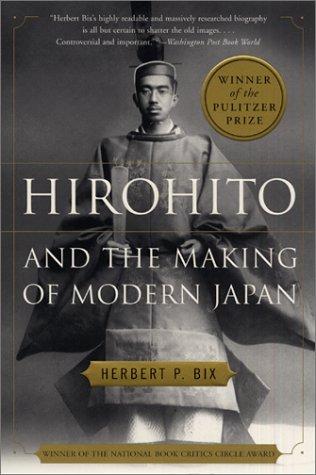
Hirohito and the Making of Modern Japan

Herbert P. Bix

unrated
Read Biographies Military history WWII Espionage China Russia / USSR Biography Strategy / theory ISBN 9780060931308

Harper Perennial · September 4, 2001

Winner of the Pulitzer PrizeIn this groundbreaking biography of the Japanese emperor Hirohito, Herbert P. Bix offers the first complete, unvarnished look at the enigmatic leader whose sixty-three-year reign ushered Japan into the modern world. Never before has the full life of this controversial figure been revealed with such clarity and vividness. Bix shows what it was like to be trained from birth for a lone position at the apex of the nation's political hierarchy and as a revered symbol of divine status. Influenced by an unusual combination of the Japanese imperial tradition and a modern scientific worldview, the young emperor gradually evolves into his preeminent role, aligning himself with the growing ultranationalist movement, perpetuating a cult of religious emperor worship, resisting attempts to curb his power, and all the while burnishing his image as a reluctant, passive monarch. Here we see Hirohito as he truly was: a man of strong will and real authority. Supported by a vast array of previously untapped primary documents, Hirohito and the Making of Modern Japan is perhaps most illuminating in lifting the veil on the mythology surrounding the emperor's impact on the world stage. Focusing closely on Hirohito's interactions with his advisers and successive Japanese governments, Bix sheds new light on the causes of the China War in 1937 and the start of the Asia-Pacific War in 1941. And while conventional wisdom has had it that the nation's increasing foreign aggression was driven and maintained not by the emperor but by an elite group of Japanese militarists, the reality, as witnessed here, is quite different. Bix documents in detail the strong, decisive role Hirohito played in wartime operations, from the takeover of Manchuria in 1931 through the attack on Pearl Harbor and ultimately the fateful decision in 1945 to accede to an unconditional surrender. In fact, the emperor stubbornly prolonged the war effort and then used the horrifying bombings of Hiroshima and Nagasaki, together with the Soviet entrance into the war, as his exit strategy from a no-win situation. From the moment of capitulation, we see how American and Japanese leaders moved to justify the retention of Hirohito as emperor by whitewashing his wartime role and reshaping the historical consciousness of the Japanese people. The key to this strategy was Hirohito's alliance with General MacArthur, who helped him maintain his stature and shed his militaristic image, while MacArthur used the emperor as a figurehead to assist him in converting Japan into a peaceful nation. Their partnership ensured that the emperor's image would loom large over the postwar years and later decades, as Japan began to make its way in the modern age and struggled -- as it still does -- to come to terms with its past. Until the very end of a career that embodied the conflicting aims of Japan's development as a nation, Hirohito remained preoccupied with politics and with his place in history. Hirohito and the Making of Modern Japan provides the definitive account of his rich life and legacy. Meticulously researched and utterly engaging, this book is proof that the history of twentieth-century Japan cannot be understood apart from the life of its most remarkable and enduring leader.

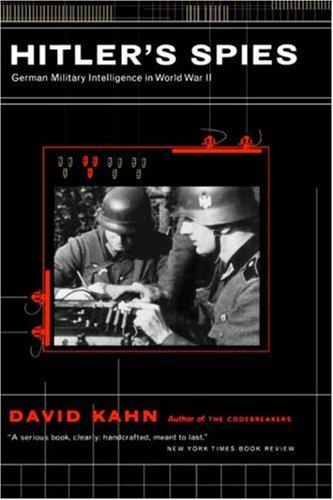
Hitler's Spies: German Military Intelligence In World War II

David Kahn

unrated
Read Intel history WWII Espionage Air power Russia / USSR Intel history ISBN 0306809494

Da Capo Press · 2000

A German patrol wiggles through Russian lines to return with details of Soviet defenses. An expert Luftwaffe interrogator teases secret information from downed Allied airmen. Two spies steal ashore in Maine and make their way into New York City. Filled with episodes of intrigue and adventure, Hitler's Spies reveals the workings of German intelligence—the famed Abwehr, the dreaded SD, the codebreakers, the spies, and the intelligence gatherers of the Foreign Office—and explains its failure to best the Allies. Draws on original documents and extensive interviews.