S2 Search · Reading list

S2 Actual reading list

Books from S2 Actual on Goodreads, organized by his shelves and topic buckets (intel lists, military history, logistics, etc.). Metadata filled via Open Library.

Not official S2 Underground. Independent fan index — not affiliated with or endorsed by S2. Official hub: linktr.ee/S2_underground. S2 materials are CC BY-NC-SA 4.0.

S2 topic buckets (Goodreads)

Subjects & genres

71 books · All shelves · subject Intel history · page 3 of 3

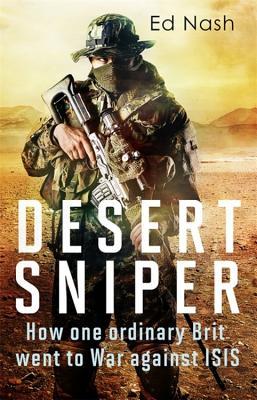
Desert Sniper: How One Ordinary Brit Went to War Against ISIS

Ed Nash

unrated
Read Advanced intel Military history Technical warfare Biographies GWOT Air power Middle East Intel history ISBN 9781408711330

Little, Brown Book Group Limited · 2018

What makes an ordinary but highly educated Englishman, with no previous military training, decide to travel and fight in one of the most brutal conflicts on the planet? Desert Sniper is an extraordinary, true account of one man's journey from well-meaning volunteer to battle-scarred combat sniper, placing himself daily in the line of fire to fight one of the greatest evils of this new century. Ed Nash has travelled across the globe, and is working with refugees in Burma, when he first becomes aware of the terrible atrocities being committed under ISIS's newly established 'Caliphate', covering vast tracts of Iraq and Syria. In June 2015, he chooses to undertake the hazardous journey, via Northern Iraq, to Syria, to join ill-equipped and poorly trained but battle-hardened Kurdish forces as they attempt to halt Daesh's relentless advance. Nash is an articulate, insightful and refreshingly honest companion as he unpacks the shifting complexities of the political and military situation in which he finds himself. As one of a motley band of foreign volunteer fighters - veterans of other conflicts, adventurers and misfits, from many different countries - we follow him through his rudimentary training and early combat operations as he and his companions slowly gain the trust and respect of their Kurdish colleagues. Nash shows us the realities of the war on the ground in Syria in fascinating detail; the privations of the ordinary Kurdish soldiers, the terrible price paid by civilians caught in the cross-fire, the ever-present danger of lethal suicide bombers and occasional moments of striking beauty in amongst the carnage. A modern classic in the making, Desert Sniper will prove to be one of the most unforgettable accounts to emerge from the war against ISIS.
German Military Intelligence in World War II: The Abwehr

Lauran Paine

unrated
Read Advanced intel WWII Cold War Espionage Russia / USSR Intel history ISBN 0812829662

Stein and Day · 1984

The astonishing true story of the German military intelligence organization dedicated to Nazi victory - commanded by a man who was dedicated to Nazi defeat. It was primarily from the Abwehr that Hitler and his top generals got the information they used in planning the subjugation of Europe. But to this day few people know the full story of how the commander of that organization, Admiral Wilhelm Canaris, and some of his trusted subordinates, deliberately and secretly contributed to the downfall of Nazi Germany. high treason against Hitler's government originated within the Abwehr; at least three attempts on the Fuhrer's life were secretly planned, ordered, and carried out by its personnel. From 1938 until the last months of the war, Abwehr officers balanced on the sword's edge and did it so well that detection and terrible retribution came only when the armies of America and the Soviet Union were approaching Berlin. After peace came, strict orders were issued against revealing much that is now detailed in this book. Lauran Paine was associated with U.S. intelligence operations for over thirty years. He was also the author of "The CIA At Work" and several other books on intelligence matters.

Hitler's Spies: German Military Intelligence In World War II

David Kahn

unrated
Read Intel history WWII Espionage Air power Russia / USSR Intel history ISBN 0306809494

Da Capo Press · 2000

A German patrol wiggles through Russian lines to return with details of Soviet defenses. An expert Luftwaffe interrogator teases secret information from downed Allied airmen. Two spies steal ashore in Maine and make their way into New York City. Filled with episodes of intrigue and adventure, Hitler's Spies reveals the workings of German intelligence—the famed Abwehr, the dreaded SD, the codebreakers, the spies, and the intelligence gatherers of the Foreign Office—and explains its failure to best the Allies. Draws on original documents and extensive interviews.

No cover · Amazon

Huế 1968: A Turning Point of the American War in Vietnam

Mark Bowden

unrated
Read Advanced intel Basic intel Military history Intel history WWII Vietnam Intel history Strategy / theory

In the early hours of January 31, 1968, the North Vietnamese launched over one hundred attacks across South Vietnam in what would become known as the Tet Offensive. The lynchpin of Tet was the capture of Hue, Vietnam?s intellectual and cultural capital, by 10,000 National Liberation Front troops who descended from hidden camps and surged across the city of 140,000. Within hours the entire city was in their hands save for two small military outposts. American commanders refused to believe the size and scope of the Front?s presence, ordering small companies of marines against thousands of entrenched enemy troops. After several futile and deadly days, Lieutenant Colonel Ernie Cheatham would finally come up with a strategy to retake the city, block by block and building by building, in some of the most intense urban combat since World War II. With unprecedented access to war archives in the U.S. and Vietnam and interviews with participants from both sides, Bowden narrates each stage of this crucial battle through multiple viewpoints. Played out over 24 days and ultimately costing 10,000 lives, the Battle of Hue was by far the bloodiest of the entire war. When it ended, the American debate was never again about winning, only about how to leave. Hue 1968 is a gripping and moving account of this pivotal moment.

Japanese Intelligence in World War II (General Military)

Ken Kotani

unrated
Read Advanced intel Intel history WWII Espionage Naval China Russia / USSR Intel history ISBN 9781846034251

Osprey · 2009

In the eyes of history, Japanese intelligence in World War II has fared very poorly. However, these historians have most often concentrated on the later years of the war, when Japan was fighting a multi-front war against numerous opponents. In this groundbreaking new study, Japanese scholar Ken Kotani re-examines the Japanese Intelligence department, beginning with the early phase of the war. He points out that without the intelligence gathered by the Japanese Army and Navy they would have been unable to achieve their long string of victories against the forces of Russia, China, and Great Britain. Notable in these early campaigns were the successful strikes against both Singapore and Pearl Harbor. Yet as these victories expanded the sphere of Japanese control, they also made it harder for the intelligence services to gather accurate information about their growing list of adversaries. At the battle of Midway in 1942, Japanese intelligence suffered its worst mishap when the Americans broke their code and tricked the Japanese into revealing the target of their attack. It was a mistake from which they would never recover. As the military might of Japan was forced to retreat and her forces deteriorated, so too did her intelligence services.

Lone Survivor: The Eyewitness Account of Operation Redwing and the Lost Heroes of SEAL Team 10

Marcus Luttrell

unrated
Read GWOT Special ops Naval Intel history Biography ISBN 9780316067591

Little, Brown · 2007

On a clear night in late June 2005, four U.S. Navy SEALs left their base in northern Afghanistan for the mountainous Pakistani border. Their mission was to capture or kill a notorious al Qaeda leader known to be ensconced in a Taliban stronghold surrounded by a small but heavily armed force. Less then twenty-four hours later, only one of those Navy SEALs remained alive. This is the story of fire team leader Marcus Luttrell, the sole survivor of Operation Redwing, and the desperate battle in the mountains that led, ultimately, to the largest loss of life in Navy SEAL history. But it is also, more than anything, the story of his teammates, who fought ferociously beside him until he was the last one left-blasted unconscious by a rocket grenade, blown over a cliff, but still armed and still breathing. Over the next four days, badly injured and presumed dead, Luttrell fought off six al Qaeda assassins who were sent to finish him, then crawled for seven miles through the mountains before he was taken in by a Pashtun tribe, who risked everything to protect him from the encircling Taliban killers. A six-foot-five-inch Texan, Leading Petty Officer Luttrell takes us, blow-by-blow, through the brutal training of America's warrior elite and the relentless rites of passage required by the Navy SEALs. He transports us to a monstrous battle fought in the desolate peaks of Afghanistan, where the beleaguered American team plummeted headlong a thousand feet down a mountain as they fought back through flying shale and rocks. In this rich , moving chronicle of courage, honor, and patriotism, Marcus Luttrell delivers one of the most powerful narratives ever written about modern warfare-and a tribute to his teammates, who made the ultimate sacrifice for their country.

Major General George H. Sharpe and the Creation of American Military Intelligence in the Civil War

Peter G. Tsouras

unrated
Read Advanced intel Intel history Intel history Biography US Civil War ISBN 9781612006482

Casemate Publishers & Book Distributors, LLC · 2018

This biography of the Civil War officer who established the Union’s intelligence network “is an absolute treasure trove of . . . operational information” (Military History Magazine).   In this biography of George H. Sharpe, acclaimed historian Peter Tsouras recounts the significance of Sharpe’s grand contribution to the Union war the creation of an all-source intelligence operation known as the Bureau of Military Information. Tsouras contends that, under Sharpe’s leadership, the BMI was the combat multiplier that ultimately brought the Union to victory.   By early 1863, in the two-and-half months before the Chancellorsville Campaign, Sharpe had compiled a thorough and accurate Intelligence Preparation of the Battlefield. His reports identified every brigade and its location in Lee’s army, provided an order-of-battle down to the regiment level, and a complete analysis of the railroad. Beyond this, Sharpe assembled a staff of thirty to fifty scouts and support personnel to run the military intelligence operation of the Army of the Potomac. He later supported Grant’s armies operating against Richmond during the Siege of Petersburg, where the BMI played a fundamental role in the victory.   After the war, Sharpe became one of the most powerful Republican politicians in New York State, had close friendships with presidents Grant and Arthur, and was a champion of African American civil rights. With a wealth of newly discovered primary documents, including the diaries of Sharpe’s deputy John C. Babcock, Tsouras sheds significant new light on the evolution of Civil War intelligence reporting.

Networks of Rebellion: Explaining Insurgent Cohesion and Collapse (Cornell Studies in Security Affairs)

Paul Staniland

unrated
Read Technical warfare Logistics Military history Cold War GWOT Guerrilla / COIN Logistics Intel history Strategy / theory US Civil War ISBN 9780801479298

Cornell University Press · Apr 18, 2014

Insurgent cohesion is central to explaining patterns of violence, the effectiveness of counterinsurgency, and civil war outcomes. Cohesive insurgent groups produce more effective war-fighting forces and are more credible negotiators; organizational cohesion shapes both the duration of wars and their ultimate resolution. In Networks of Rebellion , Paul Staniland explains why insurgent leaders differ so radically in their ability to build strong organizations and why the cohesion of armed groups changes over time during conflicts. He outlines a new way of thinking about the sources and structure of insurgent groups, distinguishing among integrated, vanguard, parochial, and fragmented groups. Staniland compares insurgent groups, their differing social bases, and how the nature of the coalitions and networks within which these armed groups were built has determined their discipline and internal control. He examines insurgent groups in Afghanistan, 1975 to the present day, Kashmir (1988–2003), Sri Lanka from the 1970s to the defeat of the Tamil Tigers in 2009, and several communist uprisings in Southeast Asia during the Cold War. The initial organization of an insurgent group depends on the position of its leaders in prewar political networks. These social bases shape what leaders can and cannot do when they build a new insurgent group. Counterinsurgency, insurgent strategy, and international intervention can cause organizational change. During war, insurgent groups are embedded in social ties that determine they how they organize, fight, and negotiate; as these ties shift, organizational structure changes as well.

Night Letters: Gulbuddin Hekmatyar and the Afghan Islamists Who Changed the World

Chris Sands

unrated
Read Advanced intel Basic intel Biographies Intel history Military history GWOT Guerrilla / COIN Russia / USSR Intel history Biography Strategy / theory ISBN 9781787381964

C. Hurst and Company (Publishers) Limited · 2019

In 1969, several young men met on a rainy night in Kabul to form an Islamist student group. Their aim was laid out in a simple typewritten statement: to halt the spread of Soviet and American influence in Afghanistan. They went on to change the world. 'Night Letters' tells the extraordinary story of the group’s most notorious member, Gulbuddin Hekmatyar, and the guerrilla organisation he came to lead, Hizb-e Islami. By the late 1980s, tens of thousands were drawn to Hekmatyar’s vision of a radical Islamic state that would sow unrest from Kashmir to Jerusalem. His doctrine of violent global jihad culminated in 9/11 and the birth of ISIS, yet he never achieved his dream of ruling Afghanistan. The peace deal he signed with Kabul in 2016 was yet another controversial twist in an astonishing life. Sands and Qazizai delve into the secret history of Hekmatyar and Hizb-e Islami: their wars against Russian and American troops, and their bloody and bitter feuds with domestic enemies. Based on hundreds of exclusive interviews carried out across the region and beyond, this is the definitive account of the most important, yet poorly understood, international Islamist movement of the last fifty years.

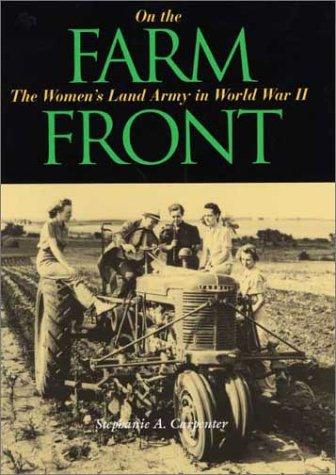
On the Farm Front: The Women's Land Army in World War II

Stephanie A. Carpenter

unrated
Read Economics Military history Logistics WWII Logistics Intel history Economics ISBN 0875803148

Northern Illinois University Press · 2003

Rosie the Riveter is an icon for women's industrial contribution to World War II, but history has largely overlooked the three million women who served on America's agricultural front. The Women's Land Army sent volunteers to farms, canneries, and dairies across the country, accounting for the majority of wartime agricultural labor. On the Farm Front tells for the first time the remarkable story of these women who worked to ensure both "Freedom from Want" at home and victory abroad. Formed in 1943 as part of the Emergency Farm Labor Program, the WLA placed its workers in areas where American farmers urgently needed assistance. Many farmers in even the most desperate areas, however, initially opposed women working their land. Rural administrators in the Midwest and the South yielded to necessity and employed several hundred thousand women as farm laborers by the end of the war, but those in the Great Plains and eastern Rocky Mountains remained hesitant, suffering serious agricultural and financial losses as a consequence. Carpenter reveals for the first time how the WLA revolutionized the national view of farming. By accepting all available women as agricultural workers, farmers abandoned traditional labor and stereotypical social practices. When the WLA officially disbanded in 1945, many of its women chose to remain in their agricultural jobs rather than return to a full-time home life or prewar employment. On the Farm Front illuminates the Women's Land Army's unique contribution to prosperity and victory, showing how this landmark organization changed the role of women in American society.

No cover · Amazon

Panzer Commander: The Memoirs of Colonel Hans von Luck

Hans von Luck

unrated
To read WWII Armor Russia / USSR Intel history Biography

A stunning look at World War II from the other side... From the turret of a German tank, Colonel Hans von Luck commanded Rommel's 7th and then 21st Panzer Division. El Alamein, Kasserine Pass, Poland, Belgium, Normandy on D-Day, the disastrous Russian front--von Luck fought there with some of the best soldiers in the world. German soldiers. Awarded the German Cross in Gold and the Knight's Cross, von Luck writes as an officer and a gentleman. Told with the vivid detail of an impassioned eyewitness, his rare and moving memoir has become a classic in the literature of World War II, a first-person chronicle of the glory--and the inevitable tragedy--of a superb soldier fighting Hitler's war.

Paths to Victory: Lessons from Modern Insurgencies

Christopher Paul

unrated
Read Technical warfare Military history Intel history Advanced intel WWII GWOT Guerrilla / COIN Intel history ISBN 9780833080547

RAND CORPORATION · 2013

Building on a 2010 RAND study of the 30 insurgencies begun and completed between 1978 and 2008, this study added 41 new cases to the data set, allowing comparisons across all 71 insurgencies begun and completed worldwide since World War II to distill the paths to victory. With many more cases to compare, the study was able to more rigorously test the previous findings and address several critical questions that the earlier study could not.

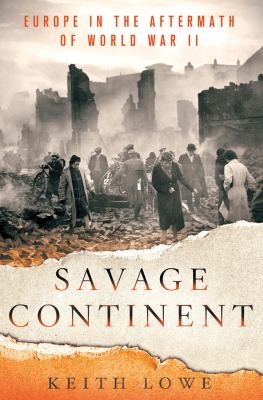
Savage Continent: Europe in the Aftermath of World War II

Keith Lowe

unrated
Read Advanced intel Military history Logistics WWII Logistics Intel history Economics US Civil War ISBN 9781250000200

St. Martin's Press · 2012

The Second World War might have officially ended in May 1945, but in reality it rumbled on for another ten years... The end of the Second World War in Europe is one of the twentieth century’s most iconic moments.  It is fondly remembered as a time when cheering crowds filled the streets, danced, drank and made love until the small hours.  These images of victory and celebration are so strong in our minds that the period of anarchy and civil war that followed has been forgotten.  Across Europe, landscapes had been ravaged, entire cities razed and more than thirty million people had been killed in the war. The institutions that we now take for granted - such as the police, the media, transport, local and national government - were either entirely absent or hopelessly compromised. Crime rates were soaring, economies collapsing, and the European population was hovering on the brink of starvation.  In Savage Continent, Keith Lowe describes a continent still racked by violence, where large sections of the population had yet to accept that the war was over.  Individuals, communities and sometimes whole nations sought vengeance for the wrongs that had been done to them during the war. Germans and collaborators everywhere were rounded up, tormented and summarily executed.  Concentration camps were reopened and filled with new victims who were tortured and starved.  Violent anti-Semitism was reborn, sparking murders and new pogroms across Europe.  Massacres were an integral part of the chaos and in some places – particularly Greece, Yugoslavia and Poland, as well as parts of Italy and France – they led to brutal civil wars. In some of the greatest acts of ethnic cleansing the world has ever seen, tens of millions were expelled from their ancestral homelands, often with the implicit blessing of the Allied authorities. Savage Continent is the story of post WWII Europe, in all its ugly detail, from the end of the war right up until the establishment of an uneasy stability across Europe towards the end of the 1940s.  Based principally on primary sources from a dozen countries, Savage Continent is a frightening and thrilling chronicle of a world gone mad, the standard history of post WWII Europe for years to come.

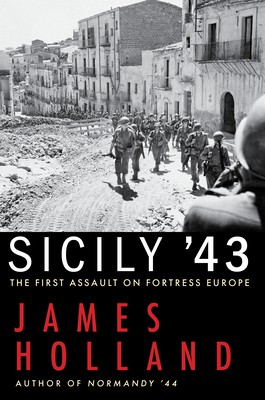
Sicily '43: The First Assault on Fortress Europe

James Holland

unrated
To read WWII Naval Air power Intel history ISBN 9780802157188

Atlantic Monthly Press · November 3, 2020

On July 10, 1943, the largest amphibious invasion ever mounted took place, larger even than the Normandy invasion eleven months later: 160,000 American, British, and Canadian troops came ashore or were parachuted onto Sicily, signaling the start of the campaign to defeat Nazi Germany on European soil. Operation HUSKY, as it was known, was enormously complex, involving dramatic battles on land, in the air, and at sea. Yet, despite its paramount importance to ultimate Allied victory, and its drama, very little has been written about the 38-day Battle for Sicily. Based on his own battlefield studies in Sicily and on much new research, James Holland's Sicily '43 offers a vital new perspective on a major turning point in World War II and a chronicle of a multi-pronged campaign in a uniquely diverse and contained geographical location. The characters involved--Generals George Patton and Bernard Montgomery among many--were as colorful as the air and naval battles and the fighting on the ground across the scorching plains and mountaintop of Sicily were brutal. But among Holland's great skills is incorporating the experience of on-the-ground participants on all sides--from American privates Tom and Dee Bowles and Tuskegee fighter pilot Charlie Dryden to British major Hedley Verity and Canadian lieutenant Farley Mowat (later a celebrated author), to German and Italian participants such as Wilhelm Schmalz, brigade commander in the Hermann G�ring Division, or Luftwaffe fighter pilot major Johannes "Macky" Steinhoff and to Italian combatants, civilians and mafiosi alike--which gives readers an intimate sense of what occurred in July and August 1943. Emphasizing the significance of Allied air superiority, Holland overturns conventional narratives that have criticized the Sicily campaign for the vacillations over the plan, the slowness of the Allied advance and that so many German and Italian soldiers escaped to the mainland; rather, he shows that clearing the island in 38 days against geographical challenges and fierce resistance was an impressive achievement. A powerful and dramatic account by a master military historian, Sicily '43 fills a major gap in the narrative history of World War II.

SIGINT: The Secret History of Signals Intelligence in the World Wars

Peter F. Matthews

unrated
Read Intel history WWII WWI Espionage Russia / USSR Intel history ISBN 9780752487342

The History Press · 2013

From MORSE to ENIGMA, ULTRA to PURPLE, Room 40 to Bletchley—the story of secret signals in both of the World Wars Communicating in the chaos of war is complicated, but vital. Signals intelligence makes it possible. In World War I, a vast network of signals rapidly expanded across the globe, spawning a new breed of spies and intelligence operatives to code, decode, and analyze thousands of messages. Signalers and cryptographers in the Admiralty's famous Room 40 paved the way for the code breakers of Bletchley Park during World War II. In the ensuing war years, the world battled against a web of signals intelligence that gave birth to ENIGMA and ULTRA, and saw agents from Britain, France, Germany, Russia, America, and Japan race to outwit each other through infinitely complex codes. For the first time, the secret history of global signals intelligence in the world wars is revealed.

Soldier Spies: Israeli Military Intelligence

Samuel M. Katz

unrated
Read Advanced intel Espionage Middle East Intel history ISBN 089141357X

Presidio Press · 1992

Chronicling the spectacular successes of Israel's often overlooked military intelligence service, the first full length history of A'man discusses the agency's role in Israel's history, from the War of Independence to the present. 10,000 first printing.

Spying for Wellington: British Military Intelligence in the Peninsular War

Huw J. Davies

unrated
Read Intel history Advanced intel Espionage Intel history Strategy / theory ISBN 9780806161730

University of Oklahoma Press · Nov 08, 2018

Intelligence is often the critical factor in a successful military campaign. This was certainly the case for Arthur Wellesley, the Duke of Wellington, in the Peninsular War. In this book, author Huw J. Davies offers the first full account of the scope, complexity, and importance of Wellington’s intelligence department, describing a highly organized, multifaceted series of networks of agents and spies throughout Spain and Portugal—an organization that is at once a microcosm of British intelligence at the time and a sophisticated forebear to intelligence developments in the twentieth century. Spying for Wellington shows us an organization that was, in effect, two parallel networks: one made up of Foreign Office agents “run” by British ambassadors in Spain and Portugal, the other comprising military spies controlled by Wellington himself. The network of agents supplied strategic intelligence, giving the British army advance warning of the arrival, destinations, and likely intentions of French reinforcements. The military network supplied operational intelligence, which confirmed the accuracy of the strategic intelligence and provided greater detail on the strengths, arms, and morale of the French forces. Davies reveals how, by integrating these two forms of intelligence, Wellington was able to develop an extremely accurate and reliable estimate of French movements and intentions not only in his own theater of operations but also in other theaters across the Iberian Peninsula. The reliability and accuracy of this intelligence, as Davies demonstrates, was central to Wellington’s decision-making and, ultimately, to his overall success against the French. Correcting past, incomplete accounts, this is the definitive book on Wellington’s use of intelligence. As such, it contributes to a clearer, more comprehensive understanding of Wellington at war and of his place in the history of British military intelligence.

The Accidental Guerrilla: Fighting Small Wars in the Midst of a Big One

David Kilcullen

unrated
Read Advanced intel GWOT Guerrilla / COIN Middle East Intel history Strategy / theory ISBN 9780195368345

Oxford University Press · 2009

David Kilcullen is one of the world's most influential experts on counterinsurgency and modern warfare. A Senior Counterinsurgency Advisor to General David Petraeus in Iraq, his vision of war dramatically influenced America's decision to rethink its military strategy in Iraq and implement "the surge." Now, in The Accidental Guerrilla , Kilcullen provides a remarkably fresh perspective on the War on Terror. Kilcullen takes us "on the ground" to uncover the face of modern warfare, illuminating both the big global war (the "War on Terrorism") and its relation to the associated "small wars" across the Iraq, Afghanistan, the Philippines, Indonesia, Thailand, Chechnya, Pakistan and North Africa. Kilcullen sees today's conflicts as a complex pairing of contrasting local social networks and worldwide movements; traditional and postmodern culture; local insurgencies seeking autonomy and a broader pan-Islamic campaign. He warns that America's actions in the war on terrorism have tended to conflate these trends, blurring the distinction between local and global struggles and thus enormously complicating our challenges. Indeed, the US had done a poor job of applying different tactics to these very different situations, continually misidentifying insurgents with limited aims and legitimate grievances (whom he calls "accidental guerrillas") as part of a coordinated worldwide terror network. We must learn how to disentangle these strands, develop strategies that deal with global threats, avoid local conflicts where possible, and win them where necessary. Colored with gripping battlefield experiences that range from the jungles and highlands of Southeast Asia to the mountains of the Afghanistan-Pakistan border to the dusty towns of the Middle East, The Accidental Guerrilla will, quite simply, change the way we think about war. This much anticipated book will be a must read for everyone concerned about the war on terror.

The Fighting Bunch: The Battle of Athens and How World War II Veterans Won the Only Successful Armed Rebellion Since the Revolution

Chris DeRose

unrated
Read Basic intel Military history Technical warfare WWII Guerrilla / COIN Intel history ISBN 9781250266194

St. Martin's Press · Nov 03, 2020

The incredible, untold story of the WWII veterans who destroyed a corrupt political machine―the only successful armed rebellion on US soil since the War of Independence. They fought for freedom abroad and returned to find that they had lost it at home. A corrupt political machine was in charge, kept in power by violence and stolen elections - the worst allegations of vote fraud ever brought to the attention of the Department of Justice, according to the Attorney General. The GIs formed a nonpartisan, all-veteran ticket. On Election Day, the GIs and their supporters found themselves assaulted, intimidated, arrested, and even shot. A small band of veterans - the Fighting Bunch - armed themselves and marched on the jail to demand an honest count. The sheriff and his men refused. These men who thought they had seen the last of war returned to the battlefield, one last time. This episode in U.S. history has never been more relevant, but has never been fully told. At the time of the rebellion, national news outlets jammed the phone lines into town, asking questions before the shooting had stopped. Journalists beat a path to Athens from across the country. Hollywood came calling, but the people of McMinn County had moved on. After years of research, including exclusive interviews with the remaining witnesses, archival radio broadcast and interview tapes, scrapbooks, letters, and diaries, author Chris DeRose has reconstructed one of the seminal―yet untold―events in American election history.

No cover · Amazon

The Rise of Theodore Roosevelt (Theodore Roosevelt, #1)

Edmund Morris

unrated
Read Biographies Cold War GWOT Naval Guerrilla / COIN Intel history Biography

Selected by The Modern Library as one of the 100 best nonfiction books of all time This classic biography is the story of seven men—a naturalist, a writer, a lover, a hunter, a ranchman, a soldier, and a politician—who merged at age forty-two to become the youngest President in history. The Rise of Theodore Roosevelt begins at the apex of his international prestige. That was on New Year’s Day, 1907, when TR, who had just won the Nobel Peace Prize, threw open the doors of the White House to the American people and shook 8,150 hands. One visitor remarked afterward, “You go to the White House, you shake hands with Roosevelt and hear him talk—and then you go home to wring the personality out of your clothes.” The rest of this book tells the story of TR’s irresistible rise to power. During the years 1858–1901, Theodore Roosevelt transformed himself from a frail, asthmatic boy into a full-blooded man. Fresh out of Harvard, he simultaneously published a distinguished work of naval history and became the fist-swinging leader of a Republican insurgency in the New York State Assembly. He chased thieves across the Badlands of North Dakota with a copy of Anna Karenina in one hand and a Winchester rifle in the other. Married to his childhood sweetheart in 1886, he became the country squire of Sagamore Hill on Long Island, a flamboyant civil service reformer in Washington, D.C., and a night-stalking police commissioner in New York City. As assistant secretary of the navy, he almost single-handedly brought about the Spanish-American War. After leading “Roosevelt’s Rough Riders” in the famous charge up San Juan Hill, Cuba, he returned home a military hero, and was rewarded with the governorship of New York. In what he called his “spare hours” he fathered six children and wrote fourteen books. By 1901, the man Senator Mark Hanna called “that damned cowboy” was vice president. Seven months later, an assassin’s bullet gave TR the national leadership he had always craved. His is a story so prodigal in its variety, so surprising in its turns of fate, that previous biographers have treated it as a series of haphazard episodes. This book, the only full study of TR’s pre-presidential years, shows that he was an inevitable chief executive. “It was as if he were subconsciously aware that he was a man of many selves,” the author writes, “and set about developing each one in turn, knowing that one day he would be President of all the people.”

The Secret War For The Union: The Untold Story of Military Intelligence in the Civil War – How Intelligence Shaped Victory, Defeat, and the Decisions of Commanders

Edwin C. Fishel

unrated
Read Basic intel Intel history Espionage Intel history US Civil War ISBN 9780395901366

Mariner Books · June 22, 1998

Most histories of the Civil War explain victory and defeat in terms of the skill of commanders and their troops. Intelligence records disappeared after the war, and thus a critically important element has largely been ignored. Fishel has unearthed substantial collections of such records, and his "intelligence explanation" radically alters history's understanding of the campaigns. The Secret War for the Union is one of the most important Civil War works ever published.

Unmanned: Drones, Data, and the Illusion of Perfect Warfare

William M. Arkin

unrated
Read Basic intel Cryptography Intel history Espionage Intel history ISBN 9780316323352

Little, Brown and Company · 2015

Unmanned is an in-depth examination of why seemingly successful wars never seem to end. The problem centers on drones, now accumulated in the thousands, the front end of a spying and killing machine that is disconnected from either security or safety. Drones, however, are only part of the problem. William Arkin shows that security is actually undermined by an impulse to gather as much data as possible, the appetite and the theory both skewed towards the notion that no amount is too much. And yet the very endeavor of putting fewer human in potential danger places everyone in greater danger. Wars officially end, but the Data Machine lives on forever. Throughout his career, Arkin has exposed powerful secrets of so-called national security and intelligence. Now he continues that tradition. The most alarming book about warfare in years, Unmanned is essential reading for anyone who cares about the future of mankind.