S2 Search · Reading list

S2 Actual reading list

Books from S2 Actual on Goodreads, organized by his shelves and topic buckets (intel lists, military history, logistics, etc.). Metadata filled via Open Library.

Not official S2 Underground. Independent fan index — not affiliated with or endorsed by S2. Official hub: linktr.ee/S2_underground. S2 materials are CC BY-NC-SA 4.0.

S2 topic buckets (Goodreads)

Subjects & genres

54 books · Read · subject Economics · page 3 of 3

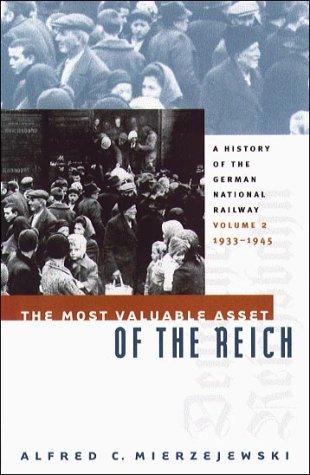
The Most Valuable Asset of the Reich: A History of the German National Railway, Volume 2, 1933-1945

Alfred C. Mierzejewski

unrated
Read Military history Logistics WWII Logistics Economics ISBN 9780807825747

The University of North Carolina Press · November 29, 2000

The largest enterprise in the capitalist world between 1920 and 1945, the Deutsche Reichsbahn (German National Railway) was at the center of events in a period of great turmoil in Germany. In this, the second volume of his comprehensive history of the Reichsbahn, Alfred Mierzejewski offers the first complete account of the national railway under Hitler's regime. Mierzejewski uses sources that include Nazi Party membership records and Reichsbahn internal memoranda to explore the railway's operations, finances, and political and social roles from 1933 to 1945. He examines the Reichsbahn's role in German rearmament, its own lack of preparations for war, and its participation in Germany's military operations. He shows that despite successfully resisting Nazi efforts to politicize its internal functions, the Reichsbahn cooperated with the government's anti-Semitic policies. Indeed, the railway played a crucial role in the Holocaust by supporting the construction and operation of the Nazi death camps and by transporting Jews and other victims to them.

The Soviet Home Front, 1941-1945: A Social and Economic History of the USSR in World War II

John Barber

unrated
Read Logistics Economics WWII Cold War Russia / USSR Logistics Economics ISBN 0582009642

Longman · 1991

Nowhere else was World War II as bloody and destructive as it was in Eastern Europe, and of all nations it was the Soviet Union that paid the highest price for victory. The scale of death and destruction is hard to comprehend even today. Its consequences were to shape Soviet politics, and the shape of the postwar world, right through to our own time. How Soviet society responded to the threat, and survived the reality, of this most terrible of wars is the subject of this powerful and impressive survey.

Under the Bombs: The German Home Front, 1942-1945

Earl R. Beck

unrated
Read Economics Military history Logistics WWII Air power Logistics Economics ISBN 0813109779

University Pressof Kentucky · 1986

Under the Bombs tells the story of the civilian population of German cities devastated by Allied bombing in World War II. These people went to work, tried to keep a home (though in many cases it was just a pile of rubble where a house once stood), and attempted to live life as normally as possible amid the chaos of war. Earl Beck also looks at the food and fuel rationing the German people endured and the problems of trying to make a public complaint while living in a totalitarian state.

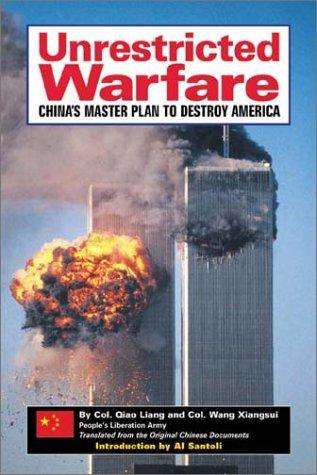
Unrestricted Warfare: China's Master Plan to Destroy America

Qiao Liang

unrated
Read Advanced intel Military history Logistics Technical warfare Espionage GWOT Cyber China Logistics Strategy / theory Economics Orthodox / theology ISBN 9780971680722

Pan American Publishing Company · August 22, 2002

As incredible as it may be to believe, three years before the Sept. 11 bombing of the World Trade Center a Chinese military manual titled Unrestricted Warfare touted such an attack – suggesting it would be difficult for the U.S. military to cope with. Here is an excerpt from Unrestricted "Whether it be the intrusions of hackers, a major explosion at the World Trade Center, or a bombing attack by bin Laden, all of these greatly exceed the frequency bandwidths understood by the American military..." Surprisingly, Osama bin Laden is mentioned frequently in this book. Now NewsMax.com is making the CIA translation of this shocking book available to all Americans. On Sept. 11, 2001, Americans and the world witnessed one of the most horrific acts ever to take place on American soil. Our media and government were quick to declare the acts of that day as simply terrorism by a nationless group known as al-Qaeda. In reading China’s military manual Unrestricted Warfare, you will learn that the events of Sept. 11 were not a random act perpetrated by independent agents. Instead, Chinese military planners believe that terrorism is just one of the many tools at the hands of nations and their terrorist allies to wage total war against the United States. You will be surprised to · The two PLA colonels who authored Unrestricted Warfare have been hailed as heroes in China since Sept. 11 · The Chinese state-run propaganda machine is cashing in on the terror attacks ... producing books, films and video games glorifying the strikes as a humbling blow against an arrogant nation. · Chinese Communist Party officials are saying that President Jiang Zemin has obsessively and gleefully watched and re-watched pictures of the aircraft crashing into the World Trade Center. · The CIA’s own translation agency reported that this book identifies the U.S. as China’s main enemy, and details how a weak nation can destroy America using unorthodox attacks – like the 9-11 attacks. · China is preparing itself and encouraging others to engage the U.S. in total war. The book is chock full of plans and strategies, from using computers, to smuggling illegal immigrants, to manipulating the stock markets, to influencing the U.S. media, to using weapons of mass destruction – all to destroy America. Recent press reports indicate that China has assisted and continues to assist militarily and economically the Taliban and al-Qaeda – even after Sept. 11. The doctrine of total war outlined in Unrestricted Warfare clearly demonstrates that the People’s Republic of China is preparing to confront the United States and our allies by conducting "asymmetrical" or multidimensional attacks on almost every aspect of our social, economic and political life. The media and Congress are keeping a lid on this book because of the implications of U.S.-China economic and trade relations. But now you can bypass them by getting a copy yourself!

Victims of Yalta

Nikolai Tolstoy

unrated
Read Intel history Military history Economics Logistics Basic intel WWII Russia / USSR Logistics Economics ISBN 0684156350

Gorgi Books · 1979

Stalinova "vojevůdcovská" nezpůsobilost vehnala v průběhu druhé světové války do německého zajetí miliony vojáků. Jeho nelítostná decimace všech vrstev národa, dokonce celých komunit, vedla generála Vlasova k rozhodnutí vytvořit armádu, která by ze dvou zel - Stalin a Hitler - porazila nejprve to větší, kterým se mu jevil Stalin. Stalin například po celou válku nepřistoupil k haagským konvencím o zacházení s válečnými zajatci a svým odmítavým postojem tak nepřímo způsobil tragický osud zajatců. Kromě vlasovců se proti bolševismu postavil také národ kozáků. Další skupinou stojící proti Stalinovi byli někteří příslušníci rozsáhlé bílé emigrace, jejichž potomci se mnohdy narodili již na Západě. Vedle nich se na konci války ocitlo v britském zajetí mnoho protikomunistických Jugoslávců. Více než dva miliony těchto lidí byly v letech 1944-1947 násilně navráceny do Sovětského svazu - podle dohod, jež Britové a Američané se Stalinem stvrdili na konferenci v Jaltě - v rozporu s řadou britských zákonů a ustanovení mezinárodního práva. Osudem těchto ubožáků byla buď okamžitá smrt zastřelením po návratu, či pomalejší umírání v táborech Gulagu. Vyvázli jen nemnozí......

What Has Government Done to Our Money? and The Case for a 100 Percent Gold Dollar

Murray N. Rothbard

unrated
Read Economics Economics ISBN 9780945466444

Ludwig Von Mises Institute · September 20, 2005

The Mises Institute is pleased to present this very beautiful hardbound edition of Rothbard's most famous monetary essay--the one that has influenced two generations of economists, investors, and business professionals. The Mises Institute has united this book with its natural complement: a detailed reform proposal for a 100 percent gold dollar. The Case for a 100 Percent Gold Dollar was written a decade before the last vestiges of the gold standard were abolished. His unique plan for making the dollar sound again still holds up. Some people have said: Rothbard tells us what is wrong with money but not what to do about it. Well, by adding this essay, the problem and the answer are united in a comprehensive whole. After presenting the basics of money and banking theory, he traces the decline of the dollar from the 18th century to the present, and provides lucid critiques of central banking, New Deal monetary policy, Nixonian fiat money, and fixed exchange rates. He also provides a blueprint for a return to a 100 percent reserve gold standard. The book made huge theoretical advances. He was the first to prove that the government, and only the government, can destroy money on a mass scale, and he showed exactly how they go about this dirty deed. But just as importantly, it is beautifully written. He tells a thrilling story because he loves the subject so much. The passion that Murray feels for the topic comes through in the prose and transfers to the reader. Readers become excited about the subject, and tell others. Students tell professors. Some, like the great Ron Paul of Texas, have even run for political office after having read it. Rothbard shows precisely how banks create money out of thin air and how the central bank, backed by government power, allows them to get away with it. He shows how exchange rates and interest rates would work in a true free market. When it comes to describing the end of the gold standard, he is not content to describe the big trends. He names names and ferrets out all the interest groups involved. Since Rothbard's death, scholars have worked to assess his legacy, and many of them agree that this little book is one of his most important. Though it has sometimes been inauspiciously packaged and is surprisingly short, its argument took huge strides toward explaining that it is impossible to understand public affairs in our time without understanding money and its destruction.