S2 Search · Reading list

S2 Actual reading list

Books from S2 Actual on Goodreads, organized by his shelves and topic buckets (intel lists, military history, logistics, etc.). Metadata filled via Open Library.

Not official S2 Underground. Independent fan index — not affiliated with or endorsed by S2. Official hub: linktr.ee/S2_underground. S2 materials are CC BY-NC-SA 4.0.

S2 topic buckets (Goodreads)

Subjects & genres

99 books · Read · subject Logistics · page 3 of 5

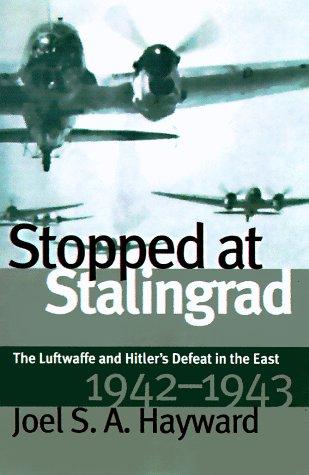
Stopped at Stalingrad: The Luftwaffe and Hitler's Defeat in the East, 1942-1943 (Modern War Studies)

Joel S.A. Hayward

★★★☆☆
Read Intel history Military history Advanced intel Logistics WWII Cold War Air power Russia / USSR Logistics Strategy / theory ISBN 9780700611461

University Press of Kansas · September 2001

By the time Hitler declared war on the Soviet Union in 1941, he knew that his military machine was running out of fuel. In response, he launched Operation Blau, a campaign designed to protect Nazi oilfields in Rumania while securing new ones in the Caucasus. All that stood in the way was Stalingrad. Most accounts of the Battle of Stalingrad have focused on the dismal fate of the German Army. Joel Hayward now chronicles Luftwaffe operations during that campaign, focusing on Hitler's use of the air force as a tactical rather than strategic weapon in close support of ground forces. He vividly details the Luftwaffe's key role as flying artillery, showing that the army relied on Luftwaffe support to a far greater degree than has been previously revealed and that its successes in the East occurred largely because of the effectiveness of that support. Hayward analyzes this major German offensive from the standpoint of cooperation between ground and air forces to attain mutually agreed objectives. He draws on diaries of both key commanders and regular airmen to recreate crucial battles and convey the drama of Hitler's frustrations and reckless leadership. Ultimately, Hayward shows, the poorly conceived strategies of Hitler, Goering, and others in Berlin doomed the efforts of air commander Wolfram von Richthofen, a courageous and resolute leader attempting to come to grips with an increasingly impossible situation. Stopped at Stalingrad is a dynamic case study in combined arms warfare that fills in many of the gaps left by other studies of the eastern war. By reconsidering the campaign in the light of a wider body of documentary sources and analyzing many previously ignored events, Hayward provides military historians and general readers a much deeper and more complete understanding of the Battle of Stalingrad and its impact on World War II.
The Dark Secrets of SHTF Survival: The Brutal Truth About Violence, Death, & Mayhem You Must Know to Survive

Selco Begovic

★★★☆☆
Read Logistics Logistics ISBN 9781792159220

Independently Published · 2019

This is not a guide that will tell you step-by-step HOW to survive. This is a reality check that will tell you that everything you have expected and planned for is probably wrong. Selco is a household name in prepping and survival circles. He survived the Balkan War in a city with no power, no running water, and no supplies. For a year, he and his family fought every single day for bare subsistence. Over the years since the war, Selco has written nearly a quarter of a million words of memories, articles, and advice. This book is a collection of his darkest moments. The first thing you must do when disaster strikes is to adapt quickly to the “new rules” that apply when the SHTF. And to do that, you need to know what it’s like so you won’t be shocked…frozen…paralyzed by the atrocities taking place right in front of you.This book is Selco’s version of tough love. There’s nothing watered down about it. It is a collection of stories, memories, and articles he has documented over the past decade. He has revisited those horrible days to give us the reality check we must have. It's a glimpse into the day-to-day events of the SHTF. It is smelly. It is dirty. It’s dark and brutal. It’s REAL. It is all the stuff that Selco rarely talks about because the memories are so ugly. This book contains graphic content. It truly gives you the terrifying reality of the SHTF and you need to know these things. in order to survive if you ever find yourself in the chaos and mayhem of an apocalyptic situation.It is not a cheery, optimistic overview of the SHTF. It’s dark, brutal, and shocking. It is the real, gritty truth about what it’s like to live in a world where everyone has become something other than an ordinary human. Where death and fear are constantly near. Where evil comes out to play. Don't say we didn't warn you. PLEASE This book is written by a person from Bosnia. English is not Selco's first language. The book is lightly edited for clarity but these stories are his and should be told in his own words.

Army Group South: The Wehrmacht in Russia 1941-1945 (Schiffer Military History)

Werner Haupt

★★☆☆☆
Read Biographies Military history Logistics WWII Russia / USSR Logistics ISBN 0764303856

Schiffer Pub. · 1998

After long years of studying sources and literature, Werner Haupt presents the military history of one of the larger theaters of World War II. The completion of the history of “Army Group South” is the result of the author’s utilization of all available German and Russian literature, as well as those combat diaries and documents of the committed troop units that are available in German archives. In addition, the author was assisted in clearing up several questions by the advice of former members of the army group – from commanders to drivers. This third and final volume of a three volume set by Werner Haupt includes a volume each on Army Group North, Army Group Center, and now Army Group South. The author served in the German Army as a soldier and officer in the northern sector of the Eastern Front during the Second World War. He is also the author of Assault on Moscow 1941 (available from Schiffer Publishing Ltd.).

Rhodesian SAS Combat Manual

Rhodesian Forces

★★☆☆☆
Read Basic intel Advanced intel Intel history Military history Logistics Special ops Guerrilla / COIN Logistics ISBN 9798610200842

Independently Published · 2020

The "Rhodesian SAS Combat Manual" is a significant historical look of the small unit tactics employed by the elite unit during the Rhodesian Bush War. Not only is it a glimpse back at how this unit operated, but a lot of the material is still relevant today fighting counter-insurgencies. This book covers tactical follow-ups, ambush tactics, infiltration methods and combat tracking and more!

Absolute War: Soviet Russia in the Second World War

Christopher Bellamy

unrated
Read Economics Military history Logistics WWII Cold War Russia / USSR Logistics Economics ISBN 9780375410864

Knopf · October 30, 2007

The battle on the Eastern Front between 1941 and 1945 was arguably the single most decisive factor of World War II, fixing the course of world history over the next half century. Now, drawing on sources newly available since the collapse of the Soviet Union and the reunification of Germany, historian and journalist Chris Bellamy presents the first full account of this deadly conflict. Bellamy outlines the lead-up to the war—in which the fragile alliance between Hitler and Stalin was unceremoniously broken—and takes us headlong into the hostilities. He presents a shocking picture of battle in which the traditional restraints of “civilized” warfare were shed. He makes clear how the Soviets quickly rallied against Hitler, choosing homegrown despotism over foreign domination in a struggle that the Russian people call the Great Patriotic War. Bellamy charts the early gains of the German army, whose advances into Soviet territory were brought to a halt in Moscow in the winter of 1941, and whose defeat was sealed in the Battle of Stalingrad, the most merciless campaign of the bloodiest front. He shows how Soviet men—and women—joined to fight a war whose casualties were later steeply underestimated by their government, and how even the true death toll, at 27 million, does not take into account the millions of lives on both sides that lay shattered in the aftermath. Finally, Bellamy examines the far-reaching consequences of the battle’s outcome—the reverberations of which are still felt today—and argues that the cost of victory was ultimately too much for the Soviet Union to bear. A magisterial study, and an essential addition to our understanding of contemporary world history.

No cover · Amazon

Alamein: War Without Hate

Colin Smith

unrated
Read Intel history Logistics Technical warfare Logistics Intel history

For the British, the battle fought at El Alamein in October 1942 became the turning point of the Second World War. In this study of the desert war, John Bierman and Colin Smith show why it is remembered by its survivors as a 'war without hate'. Through extensive research the authors provide a compellingly fresh perspective on the see-saw campaign in which the two sides chased each other back and forth across the unforgiving North African landscape.

No cover · Amazon

Book of the Blockade

Alieś Adamovič

unrated
Read Logistics Armor Russia / USSR Logistics Biography

Leningrad was under siege for almost three years, and the first winter of that siege was one of the coldest on record. The Russians had been taken by surprise by the Germans' sudden onslaught in June 1941. This book tells the story of that long, bitter siege in the words of those who were there. It vividly describes how ordinary Leningraders struggled to stay alive and to defend their beloved city in the most appalling conditions. They were bombed, shelled, starved and frozen. They dug tank-traps and trenches, built shelters and fortifications, fought fires, cleared rubble, tended the wounded and, for as long as they had strength to do so, buried their dead. Many were killed by German bombs or shells, but most of them died of hunger and cold. Based on interviews with survivors of the siege and on contemporary diaries and personal memoirs. The primary focus is on three a young mother with two small children, a boy of sixteen at the outbreak of war, and an elderly academic. We see the siege through their eyes as its horrors unfold and as they struggle to survive.

Burma: The Longest War 1941-45

Louis Allen

unrated
Read Advanced intel Military history Logistics WWII Logistics ISBN 1842122606

Phoenix Press · 2000

Charting the whole Burma war, this book flows like a novel from the high command to the sharp end setting out a myriad of facts and considerations in a clear and coherent narrative. Ranging far beyond pure military history the story is multi-layered, combining objective analysis with a sensitive account of human reaction in the face of bitter, cruel warfare, disease and an inhospitable terrain. Military events are painstakingly detailed, and set in their political and cultural context. Equal attention is paid to both sides of the conflict and the insights made into Japanese plans and responses make the book uniquely informative, exciting and moving. 'If one had to select one book about the Burma War, this fine work is the best' Dekho, magazine of the Burma Star Association 'There will be few more thorough chronicles of World War Two's most dreaded front than Louis Allen's The Longest War' The Listener

Churchill on The Home Front, 1900-1955

Paul Addison

unrated
Read Logistics Logistics Biography Orthodox / theology ISBN 0712658262

Pimlico · 1993

Winston Churchill's place in history as an orator, war leader and international statesman is secure. Far less attention has been given to his ideas about the development of our national life at home. No other politician has crossed the floor of the House of Commons twice and gone on to become Prime Minister. Yet it is the narrow view, Addison argues, to see Churchill's performance on the home front as merely that of an egoistic opportunist, employing his gift for rhetoric to keep centre stage regardless of principle. In his youth an Edwardian liberal, in middle age a supporter of the far right, few regarded him as anything but an old-fashioned figure when, unexpectedly, he returned to the centre of British politics in 1940. Yet few today can deny the impact made by his vision of Britain.

No cover · Amazon

Culture, Conflict & Crises in the Icelandic Fisheries: An Anthropological Study of People, Policy & Marine Resources in the North Atlantic Arctic (Uppsala Studies in Cultural Anthropology, 48)

Níels Einarsson

unrated
Read Logistics Logistics

This book is a contribution to studies of social and cultural change in the Icelandic fisheries and fishing communities. Such changes may be seen as a result of the interplay of internal dynamics with both national and global forces and processes, not least with regard to the impacts of fisheries governance. These changes occur also in an international context of new enviornmental ideologies and perceptions of marine mammals, with consequences for social dynamics of local resource-use. Here it is argued that the conflicts over the harvesting or conservation of cetaceans can productively be understood from a cultural perspective.

Eating for Victory: Food Rationing and the Politics of Domesticity

Amy Bentley

unrated
Read Economics Military history Logistics WWII Logistics Economics ISBN 0252024192

University of Illinois Press · 1998

      Victory gardens, ration books.         While men fought overseas, women fought the war at home, by going to work         and, more subtly, by feeding their families. Mandatory food rationing         during World War II challenged, for the first time, the image of the United         States as a land of plenty and collapsed the boundaries between women's         public and private lives by declaring home production and consumption         to be political activities.       In this fascinating cultural         history, Amy Bentley examines the food-related propaganda surrounding         rationing. She also explores the dual message purveyed by government and         the media that while mandatory rationing was necessary (enabling enough         food to be sent to the U.S. military and Allies overseas), women, black         and white, were also "required" to provide their families with nutritious         food.       Eating for Victory         explores the role of the Wartime Homemaker (media counterpart to the more         familiar Rosie the Riveter) as a pivotal component not only of World War         II but of the development of the United States into a superpower.

No cover · Amazon

Eating for Victory: Healthy Home Front Cooking on War Rations

Jill Norman

unrated
Read Logistics Economics Naval Logistics Economics

Food rationing was introduced in England in January 1940 after supply ships were attacked by German U-boats. The first food items to be rationed were butter, sugar, bacon, and ham, though restrictions were also eventually placed on meat, fish, jam, biscuits, cheese, eggs, and milk. In response, the Ministry of Food produced a series of "Eating for Victory" pamphlets that advised the general public on how to cope with these shortages. Designed to lift spirits in a time of shortage, these jolly leaflets contained a variety of recipes and cooking advice ranging from how to make steamed and boiled puddings and hints on how to reconstitute dried eggs. For all the hardship that rationing brought, the food restrictions resulted in many people eating more healthily than ever before. A nostalgic look back at one of the most difficult and yet healthiest times in history, this quaint collection is also a relevant guide to good eating today.

No cover · Amazon

Fangs of the Lone Wolf: Chechen Tactics in the Russian-Chechen War 1994-2009

Dodge Billingsley

unrated
Read Technical warfare GWOT Guerrilla / COIN Russia / USSR Middle East Logistics

Books on guerrilla war are seldom written from the tactical perspective and even less seldom from the guerrilla's perspective. Fangs of the Lone Wolf: Chechen Tactics in the Russian-Chechen Wars 1994-2009 is an exception. These are the stories of low-level guerrilla combat as told by the survivors. They cover fighting from the cities of Grozny and Argun to the villages of Bamut and Serzhen-yurt, and finally the hills, river valleys and mountains that make up so much of Chechnya. The author embedded with Chechen guerrilla forces and knows the conflict, country and culture. Yet, as a Western outsider, he is able to maintain perspective and objectivity. He traveled extensively to interview Chechen former combatants now displaced, some now in hiding or on the run from Russian retribution and justice. The military professional will appreciate the book's crisp narration, organization by type of combat, accurate color maps and insightful analysis and commentary. The civilian reader will discover the complexity of "simple guerrilla tactics" and the demands on individual perseverance and endurance that guerrilla warfare exacts.The book is organized into vignettes that provide insight on the nature of both Chechen and Russian tactics utilized during the two wars. They show the chronic problem of guerrilla logistics, the necessity of digging in fighting positions, the value of the correct use of terrain and the price paid in individual discipline and unit cohesion when guerrillas are not bound by a military code and law. Guerrilla warfare is probably as old as man, but has been overshadowed by maneuver war by modern armies and recent developments in the technology of war. As Iraq, Afghanistan, the Philippines and Chechnya demonstrate, guerrilla war is not only still viable, but is increasingly common. Fangs of the Lone Wolf provides a unique insight into what is becoming modern and future war.

Fire & Steam: How the Railways Transformed Britain

Christian Wolmar

unrated
Read Logistics Military history Logistics Economics Orthodox / theology ISBN 9781843546290

Atlantic · 2007

Now in paperback, Fire and Steam tells the dramatic story of the people and events that shaped the world’s first railway network, one of the most impressive engineering achievements in history. The opening of the pioneering Liverpool and Manchester Railway in 1830 marked the beginning of the railways’ vital role in changing the face of Britain. Fire and Steam celebrates the vision and determination of the ambitious Victorian pioneers who developed this revolutionary transport system and the navvies who cut through the land to enable a country-wide network to emerge. The rise of the steam train allowed goods and people to circulate around Britain as never before, stimulating the growth of towns and industry, as well many of the facets of modern life, from fish and chips to professional football. From the early days of steam to electrification, via the railways’ magnificent contribution in two world wars, the checkered history of British Rail, and the buoyant future of the train, Fire and Steam examines the social and economical importance of the railway and how it helped to form the Britain of today.

Food Supplies and the Japanese Occupation in South-East Asia (Studies in the Economies of East and South-East Asia)

Paul H. Kratoska

unrated
Read Logistics Military history Vietnam Logistics ISBN 0312215045

St. Martins's Press · 1998

The Japanese occupation of Southeast Asia between 1941 and 1945 brought with it severe food shortages, largely arising from organizational failures and inadequate transportation. The nine essays in this volume examine the situation in food exporting countries such as Burma, Thailand and Vietnam, in food deficit areas such as Malaya, the Philippines and Java, and in Sarawak which was largely self sufficient. Two essays examine in detail the famine that struck the Tonkin area of northern Vietnam in 1945.

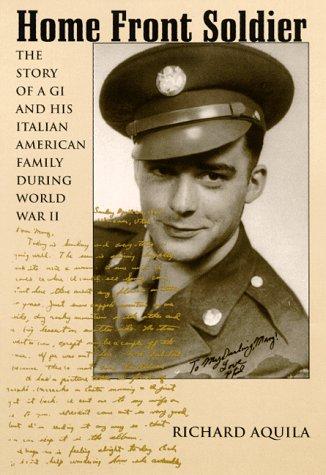
Home Front Soldier: The Story of a GI and His Italian American Family During World War II

Richard Aquila

unrated
Read Military history Logistics Biographies WWII Logistics Biography ISBN 0791440753

State University of New York Press · 1999

While other collections of letters and memoirs from World War II have dealt with upper-class individuals, officers, or college-educated people, Home Front Soldier is the first to explore the life of an ordinary, working-class, first-generation American. This gripping story of a young soldier, Philip L. Aquila, and his Italian American family during the Second World War includes a detailed introduction, providing historical context to the more than 500 letters that this sergeant wrote to his family back home in Buffalo, New York. Like an epistolary novel, the letters offer an intimate personal history of how a large immigrant family with four sons in the military coped with the daily traumas of World War II. Each of the major and minor plots relates to larger questions in American social history of the 1930s and 1940s, offering fresh insights about family history, gender relations, ethnic and immigration history, and everyday life on the home front. The book also fills a gap in military history by providing detailed information about soldiers stationed in the United States during the war.

Hunger Disease (Current concepts in nutrition, vol. 7)

Martha Osnos

unrated
Read Military history Logistics Technical warfare WWII Cold War Logistics ISBN 0471050032

Wiley · 1979

A translation from the Polish of a manuscript smuggled out of the Warsaw Ghetto that details studies performed by resident Jewish physicians on patients suffering from starvation. Topics include: clinical changes in adults and children, metabolic adaptations, circulatory changes, changes in the eye and in vision, changes in the blood and bone marrow, and pathologic anatomy.

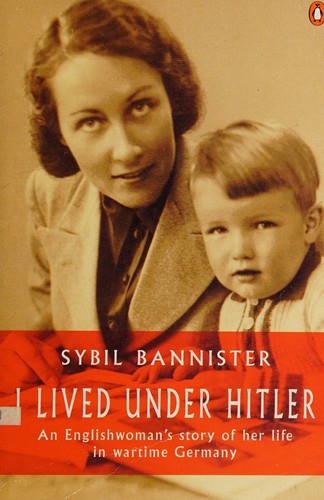
I Lived Under Hitler: An Englishwoman's Story of Her Life in Wartime Germany

Sybil Bannister

unrated
Read Biographies Military history Logistics WWII Logistics Biography ISBN 014024672X

Penguin · 1995

In 1933 Sybil Bannister, a young British woman, set up home in Danzig with her new husband, a German medical student. This is an account of the hardship of her war experience. Her marriage broke up, she was separated from her son, and endured Hamburg's bombing raids and the Wuppertal firestorm.

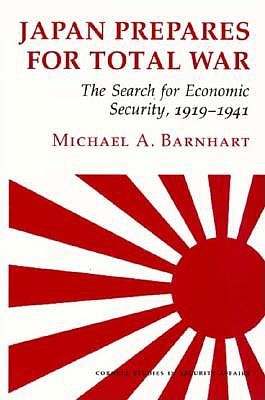
Japan Prepares for Total War: The Search for Economic Security, 1919-1941

Michael A. Barnhart

unrated
Read Logistics Military history WWII Naval Logistics Economics ISBN 0801419158

Cornell University Press · 1991

The roots of Japan's aggressive, expansionist foreign policy have often been traced to its concern over acute economic vulnerability. Historian Michael Barnhart tests this assumption by examining the events leading up to World War II in the context of Japan's quest for economic security. Drawing on a wide array of Japanese and American sources, this is the first English-language book on the war's origins to be based on research in archives on both sides of the Pacific. Barnhart focuses on the critical years from 1938 to 1941 as he investigates the development of Japan's drive for national economic self-sufficiency and independence and the way in which this drive shaped its internal and external policies. He also explores American economic pressure on Tokyo and assesses its impact on Japan's foreign policy and domestic economy. He concludes that Japan's internal political dynamics, especially the bitter rivalry between its army and navy, played a far greater role in propelling the nation into war with the United States than did its economic condition or even pressure from Washington. Japan Prepares for Total War sheds new light on prewar Japan and confirms the opinions of those in Washington who advocated economic pressure against Japan. At a time of growing interest in U.S.-Japanese economic relations, this book will be stimulating and provocative reading for scholars and students of international relations and American and Asian history.

Japan's Gestapo: Murder, Mayhem and Torture in Wartime Asia

Mark Felton

unrated
Read Military history Logistics Technical warfare Advanced intel WWII Espionage Logistics ISBN 9781844159123

Pen & Sword Military · 2009

Japan's military and secret police, the Kempetai, carried out a reign of terror against captive Asian nations, Allied POWs, and Japanese citizens throughout World War II. This history explains the origins, command structure, and role of the Kempetai apparatus, revealing their criminal and collaborationist networks. It examines biological and chemical experiments on live subjects, the gulags for POWs, and slave labor, including the so-called "comfort women," as well as their campaign of revenge after the 1942 Doolittle raid on Tokyo. Calling their actions genocide on a grand scale, the author backs up his text with firsthand testimonies from survivors.

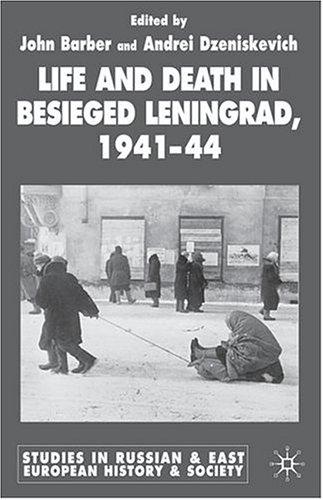
Life and Death in Besieged Leningrad, 1941-1944 (Studies in Russian and East European History and Society)

John Barber

unrated
Read Advanced intel Military history Logistics Technical warfare WWII Cold War Russia / USSR Logistics ISBN 1403901422

Palgrave Macmillan · 2005

From 1941-1944 Leningrad saw by far the largest-scale famine ever to occur in a developed society. This book examines the nature and consequences of the extreme conditions created by the German blockade of Leningrad between September 1941 and January 1944. Using declassified documents from Party and State archives in Moscow and St Petersburg and interviews with survivors, the authors have produced the most informed and detailed analysis to date of the impact of the siege on the lives and health of the people of Leningrad.

No cover · Amazon

Merchant Shipping and the Demands of War

C.B.A. Behrens

unrated
Read Economics Military history Logistics WWII Logistics Strategy / theory Economics

This book is perhaps the most little read and yet at the same time the most important official history you will read about WW2. If you really want to understand the nature of second world war an understanding of how management of merchant shipping and the control of port clearance is essential. In most areas of the war FDR relegated management to his military commanders. The only aspect of the war which he maintained direct control of was the 'War Shipping Administration, such was its importance to Allied strategy. The 'Germany First' strategy was not a choice, but something forced upon the US Army. Eisehnower pointed out in a very influential paper that a campaign in the Pacific would take 4 times as many ships as a campaign Europe and that it was the shortage of shipping load that determined strategy. Many of the highly complex tables and appedencies have been removed from this edition to make it readable on smaller, A5 size readers