S2 Search · Reading list

S2 Actual reading list

Books from S2 Actual on Goodreads, organized by his shelves and topic buckets (intel lists, military history, logistics, etc.). Metadata filled via Open Library.

Not official S2 Underground. Independent fan index — not affiliated with or endorsed by S2. Official hub: linktr.ee/S2_underground. S2 materials are CC BY-NC-SA 4.0.

S2 topic buckets (Goodreads)

Subjects & genres

110 books · Read · subject Russia / USSR · page 3 of 5

No cover · Amazon

Enduring the Whirlwind: The German Army and the Russo-German War 1941-1943 (Wolverhampton Military Studies Book 21)

Gregory Liedtke

★★★★
Read Advanced intel Military history Logistics WWII Cold War Russia / USSR Logistics

Despite the best efforts of a number of historians, many aspects of the ferocious struggle between Nazi Germany and the Soviet Union during the Second World War remain obscure or shrouded in myth. One of the most persistent of these is the notion - largely created by many former members of its own officer corps in the immediate postwar period - that the German Army was a paragon of military professionalism and operational proficiency whose defeat on the Eastern Front was solely attributable to the amateurish meddling of a crazed former Corporal and the overwhelming numerical superiority of the Red Army. A key pillar upon which the argument of German numerical-weakness vis-à-vis the Red Army has been constructed is the assertion that Germany was simply incapable of providing its army with the necessary quantities of men and equipment needed to replace its losses. In consequence, as their losses outstripped the availability of replacements, German field formations became progressively weaker until they were incapable of securing their objectives or, eventually, of holding back the swelling might of the Red Army. This work seeks to address the notion of German numerical-weakness in terms of Germany's ability to replace its losses and regenerate its military strength, and assess just how accurate this argument was during the crucial first half of the Russo-German War (June 1941-June 1943). Employing a host of primary documents and secondary literature, it traces the development and many challenges of the German Army from the prewar period until the invasion of the Soviet Union in June 1941. It continues on to chart the first two years of the struggle between Germany and the Soviet Union, with a particular emphasis upon the scale of German personnel and equipment losses, and how well these were replaced. It also includes extensive examinations into the host of mitigating factors that both dictated the course of Germany's campaign in the East and its replacement and regeneration capabilities. In contrast to most accounts of the conflict, this study finds that numerical-weakness being the primary factor in the defeat of the Ostheer - specifically as it relates to the strength and condition of the German units involved - has been overemphasized and frequently exaggerated. In fact, Germany was actually able to regenerate its forces to a remarkable degree with a steady flow of fresh men and equipment, and German field divisions on the Eastern Front were usually far stronger than the accepted narratives of the war would have one believe.

Enemy at the Gates: The Battle for Stalingrad

William Craig

★★★★
Read Military history Logistics WWII Cold War Russia / USSR Logistics Intel history Orthodox / theology ISBN 9780760746776

Barnes & Noble Books · 2003

Stalingrad, the bloodiest battle in the history of warfare, cost the lives of nearly two million men and women. It signaled the beginning of the end for the Third Reich of Adolf Hitler; it foretold the Russian juggernaut that would destroy Berlin and make the Soviet Union a superpower. As Winston Churchill characterized the result of the conflict at Stalingrad: " the hinge of fate had turned." William Craig, author and historian, has painstakingly recreated the details of this great battle: from the hot summer of August 1942, when the German armies smashed their way across southern Russia toward the Volga River, through the struggle for Stalingrad-a city Hitler had never meant to capture and Stalin never meant to defend-on to the destruction of the supposedly invincible German Sixth Army and the terror of the Russian prison camps in frozen Siberia. Craig has interviewed hundreds of survivors of the battle-both Russian and German soldiers and civilians-and has woven their incredible experiences into the fabric of hitherto unknown documents. The resulting mosaic is epic in scope, and the human tragedy that unfolds is awesome.

Finland at War: The Continuation and Lapland Wars 1941–45 (General Military)

Vesa Nenye

★★★★
Read Military history Technical warfare WWII Cold War Russia / USSR ISBN 9781472815262

Bloomsbury Publishing Plc · 2016

Having foiled the Soviet invasion of the Winter War, the Finns found themselves embroiled in an ongoing conflict to maintain their borders as the Soviets recovered from the initial advances made by the Germans during the Barbarossa campaign. Yet as the red tide of Soviet forces pushed back the German army, the Finnish forces--despite their lack of equipment, obsolete machinery and miniscule manpower--held firm against the Soviets throughout the continuation of the war, ensuring their post-war independence on the Western side of the Iron curtain. But that was not the end of hostilities for the exhausted Finnish nation as they turned their attentions to the Nazi forces embedded within their territory, calling up brigades populated with teenagers to force German forces inexorably back. Featuring some incredible, never-before-seen photographs and firsthand accounts, this is the history of one of the most incredible moments in modern military history.

Finland's War Of Choice: The Troubled German-Finnish Coalition in World War II

Henrik O. Lunde

★★★★
Read Advanced intel Military history Logistics WWII Cold War Russia / USSR Logistics ISBN 9781935149484

Casemate Publishers and Book Distributors · 2011

This book describes the odd coalition between Germany and Finland in World War II, and their joint military operations from 1941 to 1945. This is a topic often missing in English, though in stark contrast to the numerous books on the shorter and less bloody Winter War. That conflict represented a gallant fight of a democratic "David" against a totalitarian "Goliath" that caught the imagination of the world. The story of Finland fighting alongside a "Goliath" of its own has not brought pride to that nation and was a period many Finns would rather forget. The prologue of this book brings the reader up to speed by briefly examining the difficult history of Finland, from its separation from the Soviet Union in 1917 to its isolation after being bludgeoned in 1939-40. It then examines both Finnish and German motives for forming a coalition against the USSR, and how--as logical as a common enemy would seem--the lack of true planning and preparation would doom the alliance.

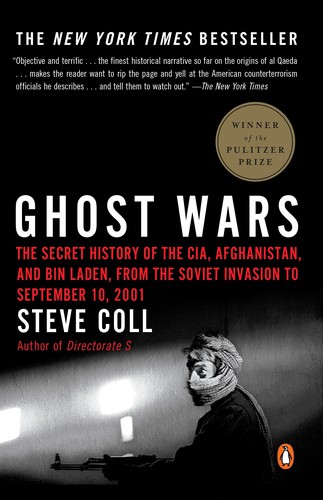
Ghost Wars: The Secret History of the CIA, Afghanistan, and Bin Laden from the Soviet Invasion to September 10, 2001

Steve Coll

★★★★
Read Basic intel Intel history Espionage GWOT Russia / USSR Middle East Intel history ISBN 0143034669

Penguin Books · 2005

The news-breaking book that has sent shockwaves through the Bush White House, Ghost Wars is the most accurate and revealing account yet of the CIA's secret involvement in al-Qaeda's evolution. It won the Pulitzer Prize in 2005.Prize-winning journalist Steve Coll has spent years reporting from the Middle East, accessed previously classified government files and interviewed senior US officials and foreign spymasters. Here he gives the full inside story of the CIA's covert funding of an Islamic jihad against Soviet forces in Afghanistan, explores how this sowed the seeds of Bin Laden's rise, traces how he built his global network and brings to life the dramatic battles within the US government over national security. Above all, he lays bare American intelligence's continual failure to grasp the rising threat of terrorism in the years leading to 9/11 - and its devastating consequences.

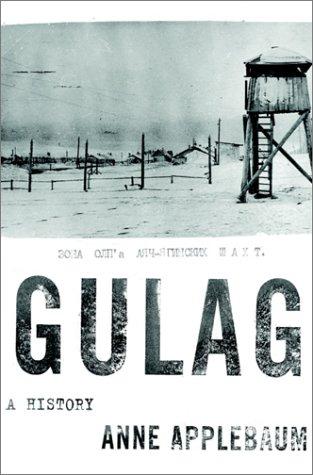
Gulag: A History

Anne Applebaum

★★★★
Read WWII Cold War Russia / USSR Biography Economics Revolution ISBN 0767900561

Doubleday · 2003

The Gulag—the vast array of Soviet concentration camps—was a system of repression and punishment whose rationalized evil and institutionalized inhumanity were rivaled only by the Holocaust. The Gulag entered the world's historical consciousness in 1972, with the publication of Alexander Solzhenitsyn's epic oral history of the Soviet camps, The Gulag Archipelago. Since the collapse of the Soviet Union, dozens of memoirs and new studies covering aspects of that system have been published in Russia and the West. Using these new resources as well as her own original historical research, Anne Applebaum has now undertaken, for the first time, a fully documented history of the Soviet camp system, from its origins in the Russian Revolution to its collapse in the era of glasnost. It is an epic feat of investigation and moral reckoning that places the Gulag where it belongs: at the center of our understanding of the troubled history of the twentieth century. Anne Applebaum first lays out the chronological history of the camps and the logic behind their creation, enlargement, and maintenance. The Gulag was first put in place in 1918 after the Russian Revolution. In 1929, Stalin personally decided to expand the camp system, both to use forced labor to accelerate Soviet industrialization and to exploit the natural resources of the country's barely habitable far northern regions. By the end of the 1930s, labor camps could be found in all twelve of the Soviet Union's time zones. The system continued to expand throughout the war years, reaching its height only in the early 1950s. From 1929 until the death of Stalin in 1953, some 18 million people passed through this massive system. Of these 18 million, it is estimated that 4.5 million never returned. But the Gulag was not just an economic institution. It also became, over time, a country within a country, almost a separate civilization, with its own laws, customs, literature, folklore, slang, and morality. Topic by topic, Anne Applebaum also examines how life was lived within this shadow country: how prisoners worked, how they ate, where they lived, how they died, how they survived. She examines their guards and their jailers, the horrors of transportation in empty cattle cars, the strange nature of Soviet arrests and trials, the impact of World War II, the relations between different national and religious groups, and the escapes, as well as the extraordinary rebellions that took place in the 1950s. She concludes by examining the disturbing question why the Gulag has remained relatively obscure, in the historical memory of both the former Soviet Union and the West. Gulag: A History will immediately be recognized as a landmark work of historical scholarship and an indelible contribution to the complex, ongoing, necessary quest for truth.

No cover · Amazon

Harvest of Despair: Life and Death in Ukraine under Nazi Rule

Karel C. Berkhoff

★★★★
Read Advanced intel Military history Logistics WWII Guerrilla / COIN Russia / USSR Logistics Revolution

"If I find a Ukrainian who is worthy of sitting at the same table with me, I must have him shot," declared Nazi commissar Erich Koch. To the Nazi leaders, the Ukrainians were Untermenschen—subhumans. But the rich land was deemed prime territory for Lebensraum expansion. Once the Germans rid the country of Jews, Roma, and Bolsheviks, the Ukrainians would be used to harvest the land for the master race. Karel Berkhoff provides a searing portrait of life in the Third Reich's largest colony. Under the Nazis, a blend of German nationalism, anti-Semitism, and racist notions about the Slavs produced a reign of terror and genocide. But it is impossible to understand fully Ukraine's response to this assault without addressing the impact of decades of repressive Soviet rule. Berkhoff shows how a pervasive Soviet mentality worked against solidarity, which helps explain why the vast majority of the population did not resist the Germans. He also challenges standard views of wartime eastern Europe by treating in a more nuanced way issues of collaboration and local anti-Semitism. Berkhoff offers a multifaceted discussion that includes the brutal nature of the Nazi administration; the genocide of the Jews and Roma; the deliberate starving of Kiev; mass deportations within and beyond Ukraine; the role of ethnic Germans; religion and national culture; partisans and the German response; and the desperate struggle to stay alive. Harvest of Despair is a gripping depiction of ordinary people trying to survive extraordinary events.

No cover · Amazon

I Am Juden: Undercover in the SS

Stephen Uzzell

★★★★
Read Military history WWII Russia / USSR Intel history

An alternative cover edition for this ASIN can be found here. "An auspicious debut... One of the more impressive books based on the horrors of WW2. I AM JUDEN is an extraordinary reading experience... Stephen Uzzell has woven facts with the skill of a documentarian and enhanced those facts with the burnish of a thriller. Highly recommended." The San Francisco Review of Books Inspired by the life of forgotten hero Haim Michael Klar, I Am Juden is the triumphant, epic tale of one man's incredible courage and resistance during the twentieth century's darkest days. Jozef Siegler leads a perilous double life as an SS officer in Krakow and ultimately Auschwitz. His life is a tightrope walk through the Holocaust unlike any other. Nazi by day and resistance agent by night, any false move would result in certain death and exposure of the Jewish underground. Kiel, Germany, 1938. Jozef Siegler has been a pacifist since his father died fighting in the anti-Jewish pogroms of the Russian Empire. Jozef now leads a quiet life as a university professor, but his days of innocence are numbered. With the final tightening of the Nuremberg Race Laws, he loses his job and flees Germany with his younger sister Shoshana. Aided by their Aryan looks and gift for languages, they are recruited into the Jewish resistance to transport orphans across the border into neutral Lithuania. But war soon envelops the continent. Brother and sister become separated. Jozef's quest to find Shoshana begins. Constantly on the move, never certain who to trust, it is his inventive ingenuity, the kindness of strangers, and the most hair-raising strokes of luck that ensure his survival. When Jozef stumbles upon the dead body of SS Oberfuhrer Harry Mohnke, he faces the biggest decision of his life. If he can bring himself to wear the hated uniform and impersonate a Nazi, how many lives could he save ? Fans of Schindler's List, All The Light We Cannot See and The Tattooist of Auschwitz are gripped by this riveting saga of history, suspense and heroism.

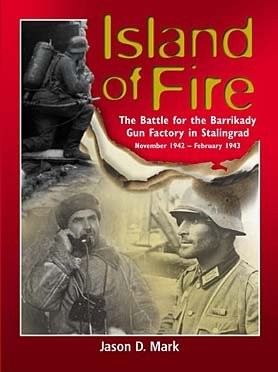
Island of Fire: The Battle for the Barrikady Gun Factory in Stalingrad

Jason D. Mark

★★★★
Read Military history Logistics Advanced intel WWII Russia / USSR Logistics ISBN 0975107631

Leaping Horseman Books · 2006

Stalingrad symbolises many the ideological clash between Nazism and Communism, the battle of wills between Hitler and Stalin, and the absolute fortitude of the Soviet people. In many people's minds, however, it represents the savagery, folly and utter waste of urban combat, a city where dozens of lives were readily exchanged for a ruined building. And nowhere did this senselessness manifest itself more than in the Barrikady Gun Factory and its housing settlement. The men of the German 305. Infanterie-Division had captured all of the factory's massive workhalls by the end of October 1942. The only obstacles standing between them and the Volga were a few battered houses and the remnants of the Soviet 138th Rifle Division. Five fresh pioneer battalions were brought in to help the Germans and the 'final' attack in Stalingrad (known erroneously as Operation 'Hubertus') was launched on 11 November, 1942. The push to the river cut off the Soviet troops and left a tiny bridgehead. Grim fighting raged around this fiery perimeter for three months. To the Soviet soldiers, this bridgehead was known as 'Lyudnikov's Island', or 'Ognenniy ostrov' - 'Island of Fire'. Painstakingly compiled from German and Russian sources such as war diaries, combat reports, published works, eyewitness accounts, letters and photos, this book presents an unbiased chronicle of the pitiless struggle from both perspectives.

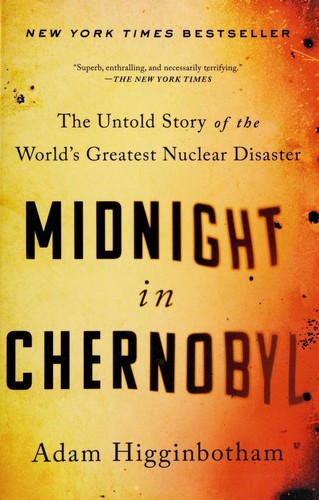
Midnight in Chernobyl: The Untold Story of the World's Greatest Nuclear Disaster

Adam Higginbotham

★★★★
Read Cold War Nuclear Russia / USSR Biography Economics ISBN 9781501134616

2019

The story of Chernobyl is more complex, more human, and more terrifying than the Soviet myth. Adam Higginbotham has written a harrowing and compelling narrative which brings the 1986 disaster to life through the eyes of the men and women who witnessed it firsthand. Drawing on hundreds of hours of interviews conducted over the course of more than ten years, as well as letters, unpublished memoirs, and documents from recently-declassified archives, this book makes for a masterful non-fiction thriller. Chernobyl has become lodged in the collective nightmares of the world: shorthand for the spectral horrors of radiation poisoning, for a dangerous technology slipping its leash, for ecological fragility, and for what can happen when a dishonest and careless state endangers not only its own citizens, but all of humanity. It is a story that has long remained in dispute, clouded from the beginning in secrecy, propaganda, and misinformation. Midnight In Chernobyl is an indelible portrait of history's worst nuclear disaster, of human resilience and ingenuity and the lessons learned when mankind seeks to bend the natural world to his will - lessons which, in the face of climate change and other threats - remain not just vital but necessary. Now, Higginbotham brings us closer to the truth behind this colossal tragedy.

Mussolini

Nicholas Farrell

★★★★
Read Biographies Military history WWII Russia / USSR Intel history Biography Orthodox / theology ISBN 9781731426970

Independently Published · 2003

‘The question of whether Italians had to pay too much in terms of loss of liberty has been answered by Farrell in a passionate and thought-provoking way...This highly spirited, opinionated and rather remarkable book.’ – Andrew Roberts, Daily Telegraph In his own time, the fascist dictator Benito Mussolini was one of the most admired figures of his age. Winston Churchill called him ‘the Roman Genius’ and Pope Pius XI said he was ‘sent by providence’ to save Italy. Yet Mussolini has gone down in history as nothing more than a grotesque buffoon. Drawing on freshly discovered material - including correspondence previously unavailable outside academia - this a revelatory biography of the Italian fascist leader and dictator puts him in a fresh light. How did Mussolini manage to take power and hold on to it for two decades? And how did he successfully curtail democracy without using mass murder to stay in command? Farrell answers these questions and more, focusing particularly on Mussolini's fatal error: his alliance with Hitler, whom he despised. Anyone interested in history, politics, and World War II will encounter an intriguing and startling picture of one of the 20th century's key figures. ‘A fascinating and at times wilfully revisionist work...Farrell’s account of Mussolini’s last days — his betrayal and his pitiful death — is masterly and surprisingly moving...In many ways a fine, thought-provoking book.’ – Glasgow Herald ‘What [Farrell] shows is what so many liberals want to suppress: that just because a dictator is Right-wing does not mean that he is as bad as Hitler, and that no dictator so far, apart from Hitler, was as bad as Stalin, for whom many a liberal was an apologist. Farrell has written much the most plausible biography of Mussolini.’ – Daily Telegraph ‘Nicholas Farrell has produced a fascinating biography of Mussolini which is bound to be controversial...It is inevitable that Farrell will have the adjective “revisionist” attached to his name, although surely the alternative to “revisionist” history is plagiarism?...Farrell’s greatest contribution is to ground [Mussolini] in his context as a very Italian phenomenon...The questions Mussolini was trying to answer are, Farrell makes clear, as pertinent now as they were then...this mammoth but highly readable work.’ – Spectator Nicholas Farrell read history at Cambridge University (Gonville and Caius College) and was for many years on the staff of the Sunday Telegraph.

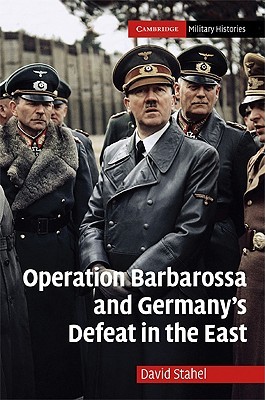
Operation Barbarossa and Germany's Defeat in the East

David Stahel

★★★★
Read Military history WWII Cold War Armor Russia / USSR ISBN 9780521768474

Cambridge University Press · 2009

Operation Barbarossa, the German invasion of the Soviet Union, began the largest and most costly campaign in military history. Its failure was a key turning point of the Second World War. The operation was planned as a Blitzkrieg to win Germany its Lebensraum in the East, and the summer of 1941 is well-known for the German army's unprecedented victories and advances. Yet the German Blitzkrieg depended almost entirely upon the motorised Panzer groups, particularly those of Army Group Centre. Using previously unpublished archival records, David Stahel presents a new history of Germany's summer campaign from the perspective of the two largest and most powerful Panzer groups on the Eastern front. Stahel's research provides a fundamental reassessment of Germany's war against the Soviet Union, highlighting the prodigious internal problems of the vital Panzer forces and revealing that their demise in the earliest phase of the war undermined the whole German invasion.

Out of Nowhere: A History of the Military Sniper

Martin Pegler

★★★★
Read Military history Technical warfare Advanced intel Basic intel Vietnam Russia / USSR US Civil War Revolution ISBN 9781846031403

Osprey Publishing · October 31, 2006

From the American Revolution to World War Two, the history of the military combat marksman is one of indifference, unpreparedness and cost cutting. Despite the proven effectiveness of the rifleman in battle, the sniper in the 20th century has been regarded as little more than a paid assassin, whose life if captured was forfeit. However, since the Vietnam War the undeniably effective use of such men in combat means that the value of the sniper has gradually become more appreciated by the military, and their prominence on the modern battlefield has increased significantly. In the 21st century they are now regarded as one of the most vital battlefield specialists. Illustrated throughout with colour and black and white photographs, this is a chronological study of snipers, detailing their evolution, training, weaponry and actions. There are also unique contributions from the men and women whose skill and extraordinary courage have made them the most greatly feared specialist in warfare. From the Foreword by Harry Furness, decorated Sniper-Sergeant, British Army Wold War II We will always need to deploy our new age warrior, that highly trained specialist, the military sniper.... Factual books on snipers are few and far between, so I find it refreshing and timely that this new book has been published which will provide the reader with the true facts about these unique soldiers; and readers of this excellent, deeply researched book will now be more knowledgeable about a rarely discussed subject. You have to dig deep to bypass the many half truths in order to reach any conclusion as to why manking continues to wage wars that kill off the cream of our young society, but it might be said that if it is the fate of a soldier to die in battle, then a sniper's swift killing bullet must be preferable to dying from devastating wounds. Chapter Heads The sniper in perspective. The rifleman emerges 1500-1854. The American Civil War and European wars 1854-1914. The First World War, the watershed 1914-16. The First World War, the fight back 1916-18. Russian sniping 1936-45. The German sniper and the war with Russia 1941-45. The war against Japan 1941-45. The war in Western Europe 1940-45. Limited wars 1945-85. Vietnam, America's nemesis. Into the 21st century.

Penalty Strike (Stackpole Military History Series)

Alexander V. Pyl'cyn

★★★★
Read Military history WWII Cold War Russia / USSR Biography ISBN 9780811735995

Stackpole Books · 2009

- Extremely rare (possibly the only) book-length account of a Soviet penal unit in World War II - Gritty, intense style conveys the brutality of war on the Eastern Front Composed of convicts--soldiers who conducted "unauthorized retreats," former Soviet POWs deemed untrustworthy, and Gulag prisoners--the Red Army's penal units received the most difficult, dangerous assignments, such as breaking through the enemy's defenses. So punishing was life in these units that officers in regular formations threatened to send recalcitrant troops to penal battalions. Alexander Pyl'cyn led his penal unit through the Soviets' massive offensive in the summer of 1944, the Vistula-Oder operation into eastern Germany, and the bitter assault on Berlin in 1945. He survived the war, but 80 percent of his men did not.

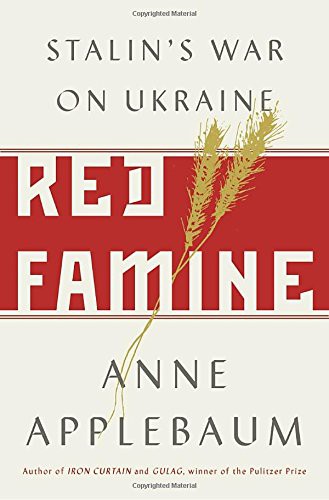
Red Famine: Stalin's War on Ukraine

Anne Applebaum

★★★★
Read Advanced intel Military history Cold War Russia / USSR ISBN 9780771009303

Signal · Oct 10, 2017

The momentous new book from the Pulitzer Prize-winning author of Gulag and Iron Curtain. In 1932-33, nearly four million Ukrainians died of starvation, having been deliberately deprived of food. It is one of the most devastating episodes in the history of the twentieth century. With unprecedented authority and detail, Red Famine investigates how this happened, who was responsible, and what the consequences were. It is the fullest account yet published of these terrible events. The book draws on a mass of archival material and first-hand testimony only available since the end of the Soviet Union, as well as the work of Ukrainian scholars all over the world. It includes accounts of the famine by those who survived it, describing what human beings can do when driven mad by hunger. It shows how the Soviet state ruthlessly used propaganda to turn neighbours against each other in order to expunge supposedly 'anti-revolutionary' elements. It also records the actions of extraordinary individuals who did all they could to relieve the suffering. The famine was rapidly followed by an attack on Ukraine's cultural and political leadership - and then by a denial that it had ever happened at all. Census reports were falsified and memory suppressed. Some western journalists shamelessly swallowed the Soviet line; others bravely rejected it, and were undermined and harassed. The Soviet authorities were determined not only that Ukraine should abandon its national aspirations, but that the country's true history should be buried along with its millions of victims. Red Famine, a triumph of scholarship and human sympathy, is a milestone in the recovery of those memories and that history. At a moment of crisis between Russia and Ukraine, it also shows how far the present is shaped by the past.

Spymaster: Startling Cold War Revelations of a Soviet KGB Chief

Tennent H. Bagley

★★★★
Read WWII Cold War Espionage Russia / USSR Biography ISBN 9781626360655

Skyhorse · 2013

From the dark days of World War II through the Cold War, Sergey A. Kondrashev was a major player in Russia’s notorious KGB espionage apparatus. Rising through its ranks through hard work and keen understanding of how the spy and political games are played, he “handled” American and British defectors, recruited Western operatives as double agents, served as a ranking officer at the East Berlin and Vienna KGB bureaus, and tackled special assignments from the Kremlin. During a 1994 television program about former spymasters, Kondrashev met and began a close friendship with a former foe, ex–CIA officer Tennent H. “Pete” Bagley, whom the Russian asked to help write his memoirs. Because Bagley knew so about much of Kondrashev’s career (they had been on opposite sides in several operations), his penetrating questions and insights reveal slices of never-revealed espionage history that rival anything found in the pages of Ian Fleming, Len Deighton, or John le Carré: chilling tales of surviving Stalin’s purges while superiors and colleagues did not, of plotting to reveal the Berlin Tunnel, of quelling the Hungarian Revolution and “Prague Spring” independence movements, and of assisting in arranging the final disposition of the corpses of Adolf Hitler and Eva Braun. Kondrashev also details equally fascinating KGB propaganda and disinformation efforts that shaped Western attitudes throughout the Cold War. Because publication of these memoirs was banned by Putin’s regime, Bagley promised Kondrashev to have them published in the West. They are now available to all who are fascinated by vivid tales of international intrigue.

Stealth: The Secret Contest to Invent Invisible Aircraft

Peter Westwick

★★★★
Read Advanced intel Military history Intel history Cold War Russia / USSR Middle East Strategy / theory ISBN 9780190677442

Oxford University Press, Incorporated · 2020

The story behind the technology that revolutionized both aeronautics, and the course of history On a moonless night in January 1991, a dozen airplanes appeared in the skies over Baghdad. Or, rather, didn't appear. They arrived in the dark, their black outlines cloaking them from sight. More importantly, their odd, angular shapes, which made them look like flying origami, rendered them undetectable to Iraq's formidable air defenses. Stealth technology, developed during the decades before Desert Storm, had arrived. To American planners and strategists at the outset of the Cold War, this seemingly ultimate way to gain ascendance over the USSR was only a question. What if the United States could defend its airspace while at the same time send a plane through Soviet skies undetected? A craft with such capacity would have to be essentially invisible to radar - an apparently miraculous feat of physics and engineering. In Stealth, Peter Westwick unveils the process by which the impossible was achieved. At heart, Stealth is a tale of two aerospace companies, Lockheed and Northrop, and their fierce competition - with each other and with themselves - to obtain what was estimated one of the largest procurement contracts in history. Westwick's book fully explores the individual and collective ingenuity and determination required to make these planes and in the process provides a fresh view of the period leading up to the end of the Soviet Union. Taking into account the role of technology, as well as the art and science of physics and engineering, Westwick offers an engaging narrative, one that immerses readers in the race to produce a weapon that some thought might save the world, and which certainly changed it.

Tank Rider: Into the Reich With the Red Army

Evgeni Bessonov

★★★★
Read WWII Cold War Armor Russia / USSR Biography ISBN 1853675547

Stackpole Books · 2003

Tank Rider is the atmospheric memoir of Evgeni Bessonov telling of his years of service in the vanguard of the Red Army and daily encounters with the German foe. He brings large-scale battles alive, recounts the sniping and skirmishing which tried and tested soldiers on both sides and narrates the overwhelming tragedy and horror of apocalyptic warfare on the Eastern Front.

The Brothers Karamazov

Fyodor Dostoevsky

★★★★
Read Russia / USSR Strategy / theory Orthodox / theology ISBN 0374528373

Farrar, Straus and Giroux · June 14, 2002

The Brothers Karamazov is a murder mystery, a courtroom drama, and an exploration of erotic rivalry in a series of triangular love affairs involving the “wicked and sentimental” Fyodor Pavlovich Karamazov and his three sons―the impulsive and sensual Dmitri; the coldly rational Ivan; and the healthy, red-cheeked young novice Alyosha. Through the gripping events of their story, Dostoevsky portrays the whole of Russian life, is social and spiritual striving, in what was both the golden age and a tragic turning point in Russian culture. This award-winning translation by Richard Pevear and Larissa Volokhonsky remains true to the verbal inventiveness of Dostoevsky’s prose, preserving the multiple voices, the humor, and the surprising modernity of the original. It is an achievement worthy of Dostoevsky’s last and greatest novel.

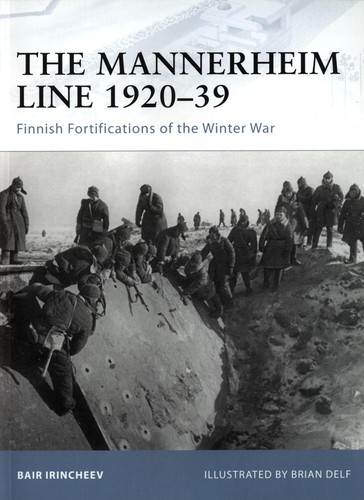
The Mannerheim Line 1920–39: Finnish Fortifications of the Winter War (Fortress, 88)

Bair Irincheev

★★★★
Read Advanced intel Military history Logistics Technical warfare Cold War Armor Russia / USSR Logistics Intel history US Civil War ISBN 9781846033841

Osprey · 2009

In the wake of the bloody civil war that followed Finland's independence from Russia in 1917, the border between the two countries was established across the Karelian Isthmus, an area long fought over by Russia, Finland and Sweden in their attempts to dominate the northern tip of Europe. Neither the Soviets nor the Finnish were comfortable with such a divide, which provided an open route for a potential invader to Helsinki on the Finnish side, and was only 32km from the important military and industrial city of Petrograd in Russia. As such, both sides began an intensive period of fortification and defensive planning. As the Winter War broke out in November 1939, the complex and heavily defended Mannerheim Line suffered intense bombardment and armored assaults. The armistice of May 1940 saw Finland cede control of the entire Karelian Isthmus to the USSR however, and a propaganda war ensued; the Russians emphasizing the strength of the line, and the Finnish downplaying its importance, accentuating instead the heroism and bravery of the common Finnish soldier. Through a detailed analysis of the background, design and operational history of the Mannerheim Line, Bair Irincheev attempts to dispel such myths and provide an accurate assessment of its immense historical importance.

The Sovereign Individual: Mastering the Transition to the Information Age

James Dale Davidson

★★★★
Read Advanced intel Logistics Technical warfare Cold War Russia / USSR Logistics Economics US Civil War ISBN 9780684832722

Touchstone · 1999-08-26

Two renowned investment advisors and authors of the bestseller The Great Reckoning bring to light both currents of disaster and the potential for prosperity and renewal in the face of radical changes in human history as we move into the next century. The Sovereign Individual details strategies necessary for adapting financially to the next phase of Western civilization. Few observers of the late twentieth century have their fingers so presciently on the pulse of the global political and economic realignment ushering in the new millennium as do James Dale Davidson and Lord William Rees-Mogg. Their bold prediction of disaster on Wall Street in Blood in the Streets was borne out by Black Tuesday. In their ensuing bestseller, The Great Reckoning, published just weeks before the coup attempt against Gorbachev, they analyzed the pending collapse of the Soviet Union and foretold the civil war in Yugoslavia and other events that have proved to be among the most searing developments of the past few years. In The Sovereign Individual, Davidson and Rees-Mogg explore the greatest economic and political transition in centuries—the shift from an industrial to an information-based society. This transition, which they have termed "the fourth stage of human society," will liberate individuals as never before, irrevocably altering the power of government. This outstanding book will replace false hopes and fictions with new understanding and clarified values.

The Wages of Destruction: The Making and Breaking of the Nazi Economy

Adam Tooze

★★★★
Read Advanced intel Logistics WWII Russia / USSR Logistics Intel history Economics ISBN 9780670038268

Viking · 2006

The idea that Nazi Germany was an unstoppable juggernaut, backed by an efficient, highly industrialized economy, has been central to all accounts of World War II. But what if this was not the case? What if the war had its roots in Germany's weakness, not its strength? This is the radical argument in this pathbreaking book, the first account of the Nazi era for the twenty-first century and our globalized world. There was no aspect of Nazi power untouched by economics, yet Adam Tooze is the first to place economics alongside race and politics at the heart of the story of the Third Reich. And America, in Tooze's view, is the true pivot for Hitler's epic challenge to a shift in the world order. Hitler intuitively understood how Germany's relative poverty in the 1930s was the result not just of global depression, but also of Germany's limited resources. He predicted the dawning of a globalized world in which Europe would be crushed by America's overwhelming power, against which he saw only one last chance: a German super-state dominating Europe. Doing what Europeans had done for three centuries, he sought to carve out an imperial hinterland through one last land grab to the east, to give him the self-sufficiency to prevail in the coming superpower competition. With the odds stacked against him, he launched his underresourced armies on their unprecedented and ultimately futile rampage across Europe. Hitler knew by the summer of 1939 that his efforts to prepare for a long war with the West were doomed to failure. Ideology drove him forward. Hitler became convinced that Jewish elements in Washington, London, and Paris were circling round him, and from 1938, the international "Jewish question: was synonymous with America in his mind. Even in the summer of 1940, at the moment of Germany's greatest triumphs, Hitler was still haunted by the looming threat of Anglo-American air and sea power, orchestrated by, he believed, the world Jewish conspiracy. Tooze also casts a stark new light on Albert Speer's role in sustaining the Third Reich to its bloody end, after the catastrophe of the Soviet invasion. Speer, Tooze proposes, was no apolitical agent of technocratic efficiency but a Hitler loyalist who would stop at nothing to continue a hopeless battle of attrition, at the cost of tens of millions of lives. The Wages of Destruction is a chilling work of originality and tremendous scholarship that will fundamentally change the way in which we view Nazi Germany and the Second World War.

No cover · Amazon

Tinker, Tailor, Soldier, Spy (George Smiley, #5; Karla Trilogy, #1)

John le Carré

★★★★
Read Intel history Espionage Russia / USSR

A modern classic in which John le Carré expertly creates a total vision of a secret world, Tinker, Tailor, Soldier, Spy begins George Smiley's chess match of wills and wits with Karla, his Soviet counterpart. It is now beyond a doubt that a mole, implanted decades ago by Moscow Centre, has burrowed his way into the highest echelons of British Intelligence. His treachery has already blown some of its most vital operations and its best networks. It is clear that the double agent is one of its own kind. But which one? George Smiley is assigned to identify him. And once identified, the traitor must be destroyed.

War In The Shadows: The Guerrilla in History

Robert B. Asprey

★★★★
Read Intel history Advanced intel Vietnam Cold War Guerrilla / COIN Russia / USSR Middle East Strategy / theory Economics Revolution ISBN 9780595225934

Backinprint.com · May 2002

Ranging from Alexander the Great's battles with Asiatic Scythians, through the Russian Revolution, and on up to the turmoil in the Middle East and the battle in Northern Ireland, War in the Shadows is a book of monumental sweep and singular perspective. It also contains a comprehensive and hard-hitting strategic evaluation of the Vietnam War-one of the most significant analyses of "the war that won't go away." War in the Shadows tells the story of the countries currently torn by armed insurgencies and clarifies the causes of each conflict. It provides the broad viewpoint necessary for understanding them in the historical terms of guerilla warfare. With the collapse of the Soviet Union, the end of the Cold War, and a highly unstable "new world order," this brand of rebellion has never been more powerful and potentially disruptive. As the author states in his Foreword, "For a number of reasons guerilla warfare has evolved into an ideal instrument for the realization of social-political-economic aspirations of underprivileged peoples. This is so patently true as to allow one to suggest that we may be witnessing a transition to a new era in warfare, an era as radically different as those of which followed the writings of Sun Tzu, Machiavelli, Clausewitz, and Mahan." War in the Shadows is crucial to understanding the complex challenges of our new and dangerous era.