S2 Search · Reading list

S2 Actual reading list

Books from S2 Actual on Goodreads, organized by his shelves and topic buckets (intel lists, military history, logistics, etc.). Metadata filled via Open Library.

Not official S2 Underground. Independent fan index — not affiliated with or endorsed by S2. Official hub: linktr.ee/S2_underground. S2 materials are CC BY-NC-SA 4.0.

S2 topic buckets (Goodreads)

Subjects & genres

99 books · Read · subject Logistics · page 4 of 5

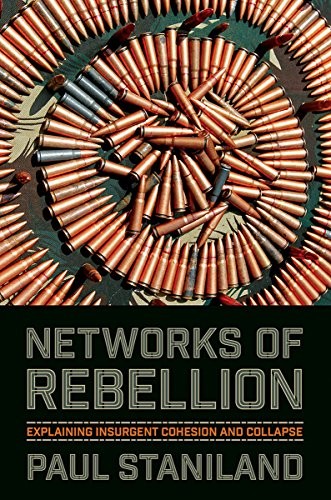
Networks of Rebellion: Explaining Insurgent Cohesion and Collapse (Cornell Studies in Security Affairs)

Paul Staniland

unrated
Read Technical warfare Logistics Military history Cold War GWOT Guerrilla / COIN Logistics Intel history Strategy / theory US Civil War ISBN 9780801479298

Cornell University Press · Apr 18, 2014

Insurgent cohesion is central to explaining patterns of violence, the effectiveness of counterinsurgency, and civil war outcomes. Cohesive insurgent groups produce more effective war-fighting forces and are more credible negotiators; organizational cohesion shapes both the duration of wars and their ultimate resolution. In Networks of Rebellion , Paul Staniland explains why insurgent leaders differ so radically in their ability to build strong organizations and why the cohesion of armed groups changes over time during conflicts. He outlines a new way of thinking about the sources and structure of insurgent groups, distinguishing among integrated, vanguard, parochial, and fragmented groups. Staniland compares insurgent groups, their differing social bases, and how the nature of the coalitions and networks within which these armed groups were built has determined their discipline and internal control. He examines insurgent groups in Afghanistan, 1975 to the present day, Kashmir (1988–2003), Sri Lanka from the 1970s to the defeat of the Tamil Tigers in 2009, and several communist uprisings in Southeast Asia during the Cold War. The initial organization of an insurgent group depends on the position of its leaders in prewar political networks. These social bases shape what leaders can and cannot do when they build a new insurgent group. Counterinsurgency, insurgent strategy, and international intervention can cause organizational change. During war, insurgent groups are embedded in social ties that determine they how they organize, fight, and negotiate; as these ties shift, organizational structure changes as well.
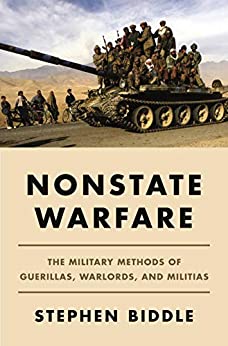

Nonstate Warfare: The Military Methods of Guerillas, Warlords, and Militias

Stephen D. Biddle

unrated
Read Advanced intel Military history Logistics Technical warfare GWOT Guerrilla / COIN Middle East Logistics ISBN 9780691207513

Princeton University Press · 2021

Since September 11th, 2001, armed nonstate actors have received increased attention and discussion from scholars, policymakers, and the military. Underlying debates about nonstate warfare and how it should be countered is one crucial assumption: that state and nonstate actors fight very differently. In Nonstate Warfare, Stephen Biddle upturns this distinction, arguing that there is actually nothing intrinsic separating state or nonstate military behavior. Through an in-depth look at nonstate military conduct, Biddle shows that many nonstate armies now fight more conventionally than many state armies. Biddle frames nonstate and state methods along a continuum, spanning Fabian-style irregular warfare to Napoleonic-style warfare involving massed armies, and he presents a systematic theory to explain any given nonstate actor's position on this spectrum. Showing that most warfare for at least a century has kept to the blended middle of the spectrum, Biddle argues that material and tribal culture explanations for nonstate warfare methods do not adequately explain observed patterns of warmaking. Investigating a range of historical examples from Lebanon and Iraq to Somalia, Croatia, and the Vietcong, Biddle demonstrates that viewing state and nonstate warfighting as mutually exclusive can lead to errors in policy and scholarship.

On the Farm Front: The Women's Land Army in World War II

Stephanie A. Carpenter

unrated
Read Economics Military history Logistics WWII Logistics Intel history Economics ISBN 0875803148

Northern Illinois University Press · 2003

Rosie the Riveter is an icon for women's industrial contribution to World War II, but history has largely overlooked the three million women who served on America's agricultural front. The Women's Land Army sent volunteers to farms, canneries, and dairies across the country, accounting for the majority of wartime agricultural labor. On the Farm Front tells for the first time the remarkable story of these women who worked to ensure both "Freedom from Want" at home and victory abroad. Formed in 1943 as part of the Emergency Farm Labor Program, the WLA placed its workers in areas where American farmers urgently needed assistance. Many farmers in even the most desperate areas, however, initially opposed women working their land. Rural administrators in the Midwest and the South yielded to necessity and employed several hundred thousand women as farm laborers by the end of the war, but those in the Great Plains and eastern Rocky Mountains remained hesitant, suffering serious agricultural and financial losses as a consequence. Carpenter reveals for the first time how the WLA revolutionized the national view of farming. By accepting all available women as agricultural workers, farmers abandoned traditional labor and stereotypical social practices. When the WLA officially disbanded in 1945, many of its women chose to remain in their agricultural jobs rather than return to a full-time home life or prewar employment. On the Farm Front illuminates the Women's Land Army's unique contribution to prosperity and victory, showing how this landmark organization changed the role of women in American society.

One Hundred Years of Sea Power: The U. S. Navy, 1890-1990

George W. Baer

unrated
Read Military history Logistics Naval Logistics Strategy / theory ISBN 9780804727945

Stanford University Press · July 1, 1996

A navy is a state's main instrument of maritime force. What it should do, what doctrine it holds, what ships it deploys, and how it fights are determined by practical political and military choices in relation to national needs. Choices are made according to the state's goals, perceived threat, maritime opportunity, technological capabilities, practical experience, and, not the least, the way the sea service defines itself and its way of war. This book is a history of the modern U.S. Navy. It explains how the Navy, in the century after 1890, was formed and reformed in the interaction of purpose, experience, and doctrine.

Ostkrieg: Hitler's War of Extermination in the East

Stephen G. Fritz

unrated
Read Basic intel Advanced intel Military history Logistics WWII Cold War Russia / USSR Logistics Economics ISBN 9780813134161

University Press of Kentucky · 2011

On June 22, 1941, Germany launched the greatest land assault in history on the Soviet Union, an attack that Adolf Hitler deemed crucial to ensure German economic and political survival. As the key theater of the war for the Germans, the eastern front consumed enormous levels of resources and accounted for 75 percent of all German casualties. Despite the significance of this campaign to Germany and to the war as a whole, few English-language publications of the last thirty-five years have addressed these pivotal events. In Ostkrieg: Hitler's War of Extermination in the East , Stephen G. Fritz bridges the gap in scholarship by incorporating historical research from the last several decades into an accessible, comprehensive, and coherent narrative. His analysis of the Russo-German War from a German perspective covers all aspects of the eastern front, demonstrating the interrelation of military events, economic policy, resource exploitation, and racial policy that first motivated the invasion. This in-depth account challenges accepted notions about World War II and promotes greater understanding of a topic that has been neglected by historians.

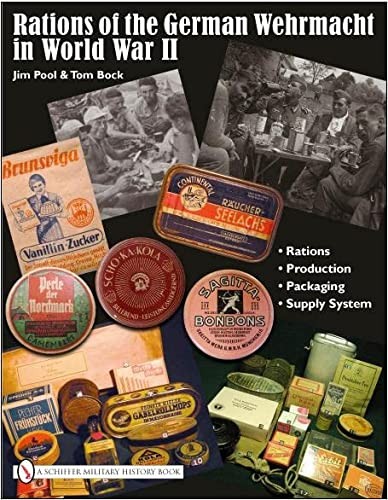
Rations of the German Wehrmacht in World War II

Jim Pool

unrated
Read Economics Military history Logistics WWII Logistics Economics ISBN 9780764335204

Schiffer Pub. · 2010

This book is the definitive reference on the topic. Lavishly illustrated with over 600 photographs and over 200 charts, wartime advertisements and other educational aids, it represents the most accurate and detailed look at the rations provided to the German soldier in World War II. Relying mainly on wartime German and American references, most unknown to the general public, this book dispels the many myths associated with German rations of World War II. Covering all the major food groups Emergency and Special rations, Scho-ka-kola, the supply system and wartime packaging materials and construction this book is a must for every serious collector and historian of the German military in World War II.

Savage Continent: Europe in the Aftermath of World War II

Keith Lowe

unrated
Read Advanced intel Military history Logistics WWII Logistics Intel history Economics US Civil War ISBN 9781250000200

St. Martin's Press · 2012

The Second World War might have officially ended in May 1945, but in reality it rumbled on for another ten years... The end of the Second World War in Europe is one of the twentieth century’s most iconic moments.  It is fondly remembered as a time when cheering crowds filled the streets, danced, drank and made love until the small hours.  These images of victory and celebration are so strong in our minds that the period of anarchy and civil war that followed has been forgotten.  Across Europe, landscapes had been ravaged, entire cities razed and more than thirty million people had been killed in the war. The institutions that we now take for granted - such as the police, the media, transport, local and national government - were either entirely absent or hopelessly compromised. Crime rates were soaring, economies collapsing, and the European population was hovering on the brink of starvation.  In Savage Continent, Keith Lowe describes a continent still racked by violence, where large sections of the population had yet to accept that the war was over.  Individuals, communities and sometimes whole nations sought vengeance for the wrongs that had been done to them during the war. Germans and collaborators everywhere were rounded up, tormented and summarily executed.  Concentration camps were reopened and filled with new victims who were tortured and starved.  Violent anti-Semitism was reborn, sparking murders and new pogroms across Europe.  Massacres were an integral part of the chaos and in some places – particularly Greece, Yugoslavia and Poland, as well as parts of Italy and France – they led to brutal civil wars. In some of the greatest acts of ethnic cleansing the world has ever seen, tens of millions were expelled from their ancestral homelands, often with the implicit blessing of the Allied authorities. Savage Continent is the story of post WWII Europe, in all its ugly detail, from the end of the war right up until the establishment of an uneasy stability across Europe towards the end of the 1940s.  Based principally on primary sources from a dozen countries, Savage Continent is a frightening and thrilling chronicle of a world gone mad, the standard history of post WWII Europe for years to come.

Strategy for Defeat: The Luftwaffe 1933-1945

Williamson Murray

unrated
Read Military history Logistics WWII Air power Logistics Strategy / theory ISBN 9780160021602

United States Government Printing Office · 1983

A penetrating and powerfully presented explanation of the successes and failures of the German air force in World War II. "Authoritative and thorough . . . an interesting and thought provoking book of real value to historians and military thinkers."--RUSI Journal.

Supplying the British Army in the First World War

Janet MacDonald

unrated
Read Military history Logistics WWI Logistics ISBN 9781526725394

Pen & Sword Books Limited · 2019

An in-depth look at the logistics of keeping the British Army fed, clothed, armed, and supplied during World War I.   Napoleon famously said that an army marches on its stomach, but it also marches in its boots and its uniforms, carrying or driving its weapons and other equipment, and all this material has to be ordered from headquarters, produced and delivered. Janet Macdonald’s detailed and scholarly new study explains how this enormously complex task of organization and labour was carried out by the British army during the First World War.   She describes the personnel who performed these tasks, from the government and military command in London to those who handled the items in the field. They were responsible for clothing, accommodation, medicine, transport, hand weapons, armament, and communications—a vast logistical network that had evolved to keep millions of men in the field.   This meticulously researched account of this important subject—one which has hitherto been neglected by military historians—will be essential reading and reference for anyone who is interested in the modern British army, in particular in its organization and performance in the First World War.

Supplying the British Army in the Second World War

Janet MacDonald

unrated
Read Military history Logistics WWII Armor Logistics ISBN 9781526725356

Pen & Sword Books Limited · 2020

The noted military historian reveals the fascinating history of British Army logistics during WWII in this scholarly study.Armies have always required large amounts of material, but by the Second World War the numbers of men involved had grown exponentially, their equipment had become mechanized, and their deployment was global. Elaborate planning and administration at every level had to ensure that items of all kinds were collected, transported and handed out in every theatre of the war. But how were these items selected, ordered, produced, and delivered? Following her previous volume, Supplying the British Army in the First World War, Janet MacDonald continues her study of how the British Army kept its soldiers fed, clothed, and ready to fight. The scale of the operation was enormous, and it had to be performed to critical timetables. Often threatened by enemy action, it was vital to the army’s success. MacDonald describes the necessity for central advanced planning for each expeditionary force as well as those engaged in home defense. She then elucidates the complex organization of personnel who performed these tasks, from the government and military command in London to those who distributed the equipment on the battlefield.

The Australian Army at War: An Official Record of Service in Two Hemispheres 1939-1944

Ray Merriam

unrated
Read Military history Logistics Special ops Middle East Logistics ISBN 9781475060843

CreateSpace Independent Publishing Platform · Mar 21, 2012

Merriam Press Military Monograph 304. Seventh Edition (March 2012). This work presents a brief but comprehensive summary of the Australian Army from 1939 to 1944, including coverage of their "battle record" in North Africa, Greece, Crete, Syria, Malaya, Java, Timor, Portuguese Timor, New Britain, New Guinea, Milne Bay, The Owen Stanleys, Wau, Markham and Ramu Valleys, and Ethiopia. Other contents * Special forces * Mainland defense * Australia's Home Guard * Army Women's Services * Manpower * Artillery * Rations * Equipment * Signals * Medical service * 56 Photos * 1 Maps * 1 Drawing.

The Battle of Guadalcanal: Land and Sea Warfare in the South Pacific (Graphic Battles of World War II)

Larry Hama

unrated
Read Military history Logistics WWII Logistics Strategy / theory ISBN 9781404274266

Rosen Publishing Group · 2006

America’s “island hopping” strategy to inch closer and closer to the Japanese mainland was kicked into high gear after the Allied victory on and around the island of Guadalcanal in the southern Solomon Islands in early 1943. The six-month campaign was the first important combined arms Allied victory in the Pacific, putting Japan on the defensive for the rest of the war, resulting in repeated victories for America and its allies, until the Japan’s surrender in August 1945.

No cover · Amazon

The Death of Hitler 1945: The Last Days in the Berlin Bunker

Mark Felton

unrated
Read Military history Logistics Biographies WWII Logistics

The death of Adolf Hitler inside his Berlin bunker on 30 April 1945 was one of the most important events of World War II. Find out what happened in the bunker in the days leading up to his suicide, the important events, personalities, betrayals and military moves as well as how the bunker was organised, protected and defended. Written by Mark Felton, the author of over 20 books on WWII subjects and an expert on Nazi Germany and the Battle of Berlin.

The Downfall of Money: Germany’s Hyperinflation and the Destruction of the Middle Class

Frederick Taylor

unrated
Read Economics Logistics Logistics Economics ISBN 9781620402368

2013

A hundred years ago, many theorists believed-just as they did at the beginning of our twenty-first century-that the world had reached a state of economic perfection, a never before seen human interdependence that would lead to universal growth and prosperity. Then, as now, the German mark was one of the most trusted currencies in the world. Yet the early years of the Weimar Republic in Germany witnessed the most calamitous meltdown of a developed economy in modern times. The Downfall of Money will tell anew the dramatic story of the hyperinflation that saw the mark-worth 4.2 to the dollar in 1914-plunge until it traded at over 4 trillion to 1 by the autumn of 1923. The story of the Weimar Republic's financial crisis clearly resonates today, when the world is again anxious about what money is, what it means, and how we can judge if its value is true. It is a trajectory of events uncomfortably relevant for our own uncertain world. Frederick Taylor-one of the leading historians of Germany writing today- explores the causes of the crisis and what the collapse meant to ordinary people and traces its connection to the dark decades that followed. Drawing on a wide range of sources and accessibly presenting vast amounts of research, The Downfall of Money is a timely and chilling exploration of a haunting episode in history.

The Eastern Front, 1941-45: German Troops and the Barbarisation of Warfare

Omer Bartov

unrated
Read Military history Logistics WWII Russia / USSR Logistics ISBN 9780333949443

Palgrave Macmillan · October 12, 2001

Based largely upon unpublished sources, Omer Bartov's study looks closely at the background of the German army on the Eastern Front during the Second World War. He describes the physical hardship, the discipline and morale at the front, and analyses the social, educational and political background of the junior officers who formed the backbone of the German army. Only with these factors in mind - together with the knowledge of the extent of National Socialist indoctrination - can we begin to explain the criminal activities of the German army in Russia and the extent of involvement of the army in the execution of Hitler's brutal policies.

The German Air War in Russia

Richard R. Muller

unrated
Read Advanced intel Military history Logistics WWII Air power Russia / USSR Logistics Strategy / theory ISBN 1877853135

Nautical & Aviation Pub. Co. of America · 1992

Dr. Richard Muller has produced a new interpretation of the longest continous air offensive waged by the Luftwaffe. He delineates the shifts in German air strategy as well as the relationship between operational art, aviation technology, and the strategy of the German air force's general staff.

The Gulag at War: Stalin's Forced Labour System in the Light of the Archives

Edwin Bacon

unrated
Read Military history Logistics WWII Cold War Russia / USSR Logistics Economics ISBN 0814712436

New York University Press · 1994

Throughout the Stalin era and after, the Gulag system of forced labor blighted the Soviet Union. Millions were incarcerated in its camps, some to be eventually released, many to die imprisoned and faceless. For decades, histories of the camp system have relied on the experiences of those who suffered within them for their main source of information. Though these accounts have been supplemented with officially sanctioned Soviet publications, the details of the forced labor system have for decades remained hidden by state secrecy. But with the collapse of the Soviet empire, the archives of the Gulag are now opening. Drawing on the archival records kept by Gulag authorities themselves, The Gulag at War traces the development of this system in the Soviet Union from 1920 through 1960. The volume describes the state's perceptions of the camps and their tasks and addresses long-held questions concerning the motives behind the system. Specific attention is given to the World War II years; the information found in the archives shows the importance of forced labor to Soviet, and therefore Allied, victory. The Gulag at War offers a close investigation of different aspects of camp life during this time, supplying data concerning the numbers and backgrounds of the prisoners, the economic tasks and achievements, the camp conditions, and the effectiveness of camp security which have previously been unavailable.

The Leaderless Economy: Why the World Economic System Fell Apart and How to Fix It

Peter Temin

unrated
Read Economics Logistics WWII Logistics Economics ISBN 9781400846641

Princeton University Press · 2013

A new way to understand financial crises--and a blueprint for tomorrow's recoveryThe Leaderless Economy reveals why international financial cooperation is the only solution to today's global economic crisis. In this timely and important book, Peter Temin and David Vines argue that our current predicament is a catastrophe rivaled only by the Great Depression. Taking an in-depth look at the history of both, they explain what went wrong and why, and demonstrate why international leadership is needed to restore prosperity and prevent future crises.Temin and Vines argue that the financial collapse of the 1930s was an "end-of-regime crisis" in which the economic leader of the nineteenth century, Great Britain, found itself unable to stem international panic as countries abandoned the gold standard. They trace how John Maynard Keynes struggled for years to identify the causes of the Great Depression, and draw valuable lessons from his intellectual journey. Today we are in the midst of a similar crisis, one in which the regime that led the world economy in the twentieth century--that of the United States--is ending. Temin and Vines show how America emerged from World War II as an economic and military powerhouse, but how deregulation and a lax attitude toward international monetary flows left the nation incapable of reining in an overleveraged financial sector and powerless to contain the 2008 financial panic. Fixed exchange rates in Europe and Asia have exacerbated the problem.The Leaderless Economy provides a blueprint for how renewed international leadership can bring today's industrial nations back into financial balance--domestically and between each other.

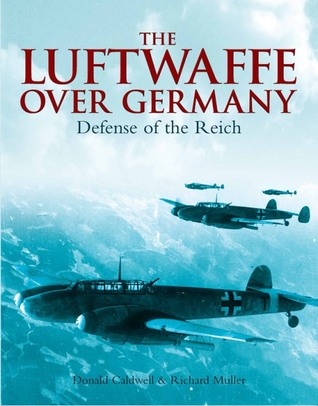
The Luftwaffe over Germany: Defense of the Reich

Donald Caldwell

unrated
Read Military history Logistics WWII Air power Russia / USSR Logistics Strategy / theory ISBN 1853677124

GREENHILL · 2007

The Luftwaffe over Germany tells the story of one of the longest and most intense air battles in history. The daylight air struggles over Germany during World War II involved thousands of aircraft, dozens of units, and hundreds of aerial engagements. Until now, there has been no single book that covers the complete story, from the highest levels of air strategy to the individual tales of Fw 190s, Bf 109s and Me 262s in air combat against the American bomber streams. This work explores the German air defense system until its collapse in 1945. It examines the detrimental effect of Luftwaffe theory and doctrine on the German air arms ability to defend the homeland once the Allied Combined Bomber Offensive began in earnest. The hard-pressed Luftwaffe leadership attempted to cobble together an air-defense network while at the same time tending to the combat fronts in Russia and the Mediterranean. Units developed specialized tactics and weapons for dealing with heavily defended bomber formations, while senior commanders sought to construct an elaborate command and control system integrating radar, observers, anti-aircraft guns, and fighters. By mid-1944, they had lost the battle - but had exacted a terrible price from the Americans in the process. The product of a ten-year collaboration between two noted Luftwaffe historians, this work fills a major gap in the literature of World War II. The authors have examined original war diaries, logbooks, doctrine manuals, after-action reports, and interviews with many combat veterans to produce a richly detailed account. Illustrated with nearly two hundred photographs, as well as new maps and diagrams, Luftwaffe Over Germany is certain to become the standard work on the subject.

The Most Valuable Asset of the Reich: A History of the German National Railway, Volume 2, 1933-1945

Alfred C. Mierzejewski

unrated
Read Military history Logistics WWII Logistics Economics ISBN 9780807825747

The University of North Carolina Press · November 29, 2000

The largest enterprise in the capitalist world between 1920 and 1945, the Deutsche Reichsbahn (German National Railway) was at the center of events in a period of great turmoil in Germany. In this, the second volume of his comprehensive history of the Reichsbahn, Alfred Mierzejewski offers the first complete account of the national railway under Hitler's regime. Mierzejewski uses sources that include Nazi Party membership records and Reichsbahn internal memoranda to explore the railway's operations, finances, and political and social roles from 1933 to 1945. He examines the Reichsbahn's role in German rearmament, its own lack of preparations for war, and its participation in Germany's military operations. He shows that despite successfully resisting Nazi efforts to politicize its internal functions, the Reichsbahn cooperated with the government's anti-Semitic policies. Indeed, the railway played a crucial role in the Holocaust by supporting the construction and operation of the Nazi death camps and by transporting Jews and other victims to them.

The Soviet Home Front, 1941-1945: A Social and Economic History of the USSR in World War II

John Barber

unrated
Read Logistics Economics WWII Cold War Russia / USSR Logistics Economics ISBN 0582009642

Longman · 1991

Nowhere else was World War II as bloody and destructive as it was in Eastern Europe, and of all nations it was the Soviet Union that paid the highest price for victory. The scale of death and destruction is hard to comprehend even today. Its consequences were to shape Soviet politics, and the shape of the postwar world, right through to our own time. How Soviet society responded to the threat, and survived the reality, of this most terrible of wars is the subject of this powerful and impressive survey.

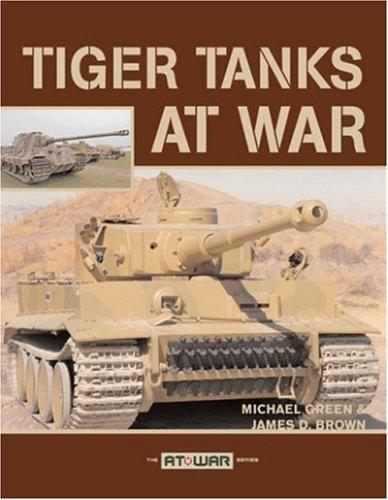
Tiger Tanks at War

Michael Green

unrated
Read Advanced intel Military history Logistics WWII Armor Russia / USSR Logistics ISBN 9780760331125

Zenith Press · February 15, 2008

The first prototype for the Tiger tank was set to be ready for Hitlers birthday on April 20, 1942. The Henschel Company, competing with Porsche, produced the superior model, and by August of that year the formidable Tiger-or Panzerkampfwagen VI Tiger Ausf. H. -was in full production. This book takes us behind the scenes with the Tiger tank, reviewing the full history, the design and mechanics, and the mixed record of this machine, which was designed to outgun its Russian counterparts. Military writer Michael Green offers a close-up account-accompanied by photographs, diagrams, and maps-of how the Tiger tank operated, how it was armed, and where it succeeded brilliantly, as well as where it failed miserably. His book fills a fascinating niche in the history of military technology, and of the impact of technology on history itself.