S2 Search · Reading list

S2 Actual reading list

Books from S2 Actual on Goodreads, organized by his shelves and topic buckets (intel lists, military history, logistics, etc.). Metadata filled via Open Library.

Not official S2 Underground. Independent fan index — not affiliated with or endorsed by S2. Official hub: linktr.ee/S2_underground. S2 materials are CC BY-NC-SA 4.0.

S2 topic buckets (Goodreads)

Subjects & genres

110 books · Read · subject Russia / USSR · page 4 of 5

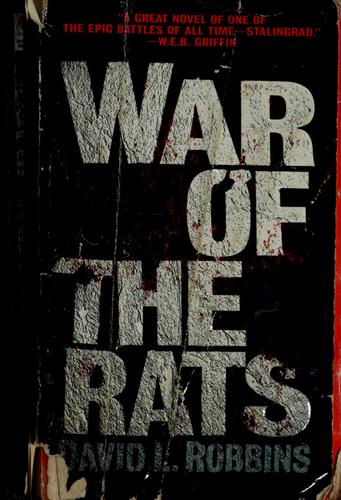
War of the Rats (WWII, #1)

David L. Robbins

★★★★
Read Biographies Military history Technical warfare WWII Cold War Russia / USSR ISBN 9780553581355

Bantam · 2000

For six months in 1942, Stalingrad is the center of a titanic struggle between the Russian and German armies—the bloodiest campaign in mankind's long history of warfare. The outcome is pivotal. If Hitler's forces are not stopped, Russia will fall. And with it, the world.... German soldiers call the battle Rattenkrieg, War of the Rats . The combat is horrific, as soldiers die in the smoking cellars and trenches of a ruined city. Through this twisted carnage stalk two men—one Russian, one German—each the top sniper in his respective army. These two marksmen are equally matched in both skill and tenacity. Each man has his own to find his counterpart—and kill him. But an American woman trapped in Russia complicates this extraordinary duel. Joining the Russian sniper's cadre, she soon becomes one of his most talented assassins—and perhaps his greatest weakness. Based on a true story, this is the harrowing tale of two adversaries enmeshed in their own private war—and whose fortunes will help decide the fate of the world.

No cover · Amazon

Military Deception: Hiding The Real - Showing The Fake - Denial Operations, Propaganda, Disinformation, Joint Doctrine, Soviet Maskirovka, Desert Storm Persian Gulf War Examples

U.S. Government

★★★☆☆
Read Advanced intel Military history Intel history Technical warfare WWII Russia / USSR Middle East Strategy / theory

Professionally converted for accurate flowing-text e-book format reproduction, this book discusses military deception techniques and history. "Military deception" is an umbrella term that includes both denial and deception. Denial hides the real and deception shows the fake. Denial and deception are operations; propaganda and disinformation are the products. Joint doctrine says that military deception, as applied by a joint force commander (JFC), targets an adversary's decision-making process. Ultimately, the intent is to shape the adversary's behavior in the JFC's favor or to cause an adversary to form an inaccurate impression of the battlespace. Consequently, planning for deception operations depends on intelligence and security for success. Obviously, a commander wants to conceal deception efforts from the enemy, but often he'll conceal all or some of his efforts from his own troops to prevent confusion and/or compromise of the plan. During the early years of Soviet involvement in World War II, mishandling of information by soldiers and planners resulted in the compromise of many maskirovka (or deception) operations. As a result, the Soviets implemented aggressive security measures to protect their deception plans. Specifically, Soviet commanders restricted the number of planners and documents involved in the deception operations and communicated to subordinates only what they needed to know, when they needed to know it. The general enjoyed his breakfast while reading his morning paper and listening to the international news channel. Hearing the Balkans mentioned—his area of responsibility—he looked up as a foreign correspondent began to comment on the aftermath of an Allied bombing mission from the day before. The gruesome details suddenly made the general's scrambled eggs a bit less appealing. The graphic pictures showed what appeared to be the remnants of an orphanage. There in the rubble lay a bloodstained, tattered doll. Those images left him wondering about the carnage that lay beneath the collapsed brick and mortar. Had his staff miscalculated and inadvertently struck an orphanage? A similar misstep had occurred a few weeks ago when another bombing mission resulted in civilian casualties in a marketplace. As the general bemoaned the potential ramifications of accidentally bombing an orphanage, a memory surfaced. Years of flying high-performance aircraft had sharpened his senses, and something about the scene seemed familiar. Could that be the same bloodstained doll he had seen in photographs of the earlier marketplace mishap? The general had been briefed on the enemy's rather low-tech yet successful use of deception. Was he, along with the rest of the world, a target of military deception? As he pondered this, his pager went off. This fictitious example illustrates both how easy it is to manipulate the media in deception operations and how a thorough understanding of deception can help prevent a military leader from falling victim to it. The U.S. military is transforming itself with technological advancements in warfighting capability. Weapon systems, force structure and training have all improved. The amount and kind of information available to the warfighter is also improving. But even a technologically advanced nation like the United States is susceptible to deception. Analysis of friendly and enemy deception techniques in Operations DESERT STORM and ALLIED FORCE shows the main U.S. vulnerabilities to include its insatiable appetite for "news," the lack of deception-detection expertise in the military, and the tendency to believe that technological advancements make a nation deception-proof. Therefore, the key to mitigating the U.S. vulnerabilities to deception lies in educating the media about the military and common deception practices, giving the military intensive deception-detection training, and abandoning the notion that technolo

No cover · Amazon

My Commando Operations: The Memoirs of Hitler's Most Daring Commando

Otto Skorzeny

★★★☆☆
Read Advanced intel Biographies Intel history Military history WWII Special ops Russia / USSR Intel history Biography

The memoirs of the legendary Skorzeny appear here in its first unabridged English edition. Skorzeny's fame began with the successful raid to free Benito Mussolini from the Gran Sasso, Italy in 1943. His elite commandos surprised Italian guards in a daring daytime raid. Hitler presented Skorzeny with the Knight's Cross for this operation. Not only is this raid explained in minute detail, many of Skorzeny's previously unknown operations in all European and Russian theatres of World War II are given in detailed accounts. Operation Griffin - the innovative use of German Kommandos dressed as American soldiers working behind enemy lines - during the Ardennes Offensive in 1944 is given in-depth coverage, as is Skorzeny's rememberances on the Malmedy massacre. Skorzeny also offers his insights into the mysterious Rudolf Hess mission to England in May 1941, and offers a behind the scenes look at German and Russian secret military intelligence, and the workings of Canaris and Gehlen. ***This 1997 Schiffer edition has the same ISBN (0887407188. 9780887407185) as the 1995 edition from the same publisher, though the dust-jacket is completely different.***

PAVN: People's Army of Vietnam

Douglas Pike

★★★☆☆
Read Advanced intel Military history Vietnam Cold War China Russia / USSR ISBN 0306804328

Da Capo Press · 1991

From the original 34-man Armed Propaganda Team of the 1930s, headed by Vo Nguyen Giap and managed by Ho Chi Minh, the People's Army of Vietnam has grown into the third largest military force in the world, exceeded only by the armies of the USSR and China. When viewed in terms of military capability and success, it is a phenomenon. Since its inception, the PAVN has taken on two major powers - France and the United States - and won decisive victories. It is this phenomenon that Douglas Pike describes in this work. At the same time, there also appears a picture of the use of force in politics, the nature of organizations and the limits of both technology and ideology. The book is aimed at those interested in the inner workings of the army that won the Vietnam War.

Russia's War: A History of the Soviet Effort, 1941-1945

Richard Overy

★★★☆☆
Read Advanced intel Military history Logistics WWII Cold War Russia / USSR Logistics ISBN 0140271694

Penguin Books · 1998

A penetrating and compassionate book on the most gigantic military struggle in world history.--The New York Times Book Review An extraordinary tale... Overy's engrossing book provides extensive details of teh slaughter, brutality, bitterness and destruction on the massive front from the White Sea to the flank of Asia.--Chicago Tribune The Russian war effort to defeat invading Axis powers, an effort that assembled the largest military force in recorded history and that cost the lives of more than 25 million Soviet soldiers and civilians, was the decisive factor for securing an Allied victory. Now with access to the wealth of film archives and interview material from Russia used to produce the ten-hour television documentary Russia's War, Richard Overy tackles the many persuasive questions surrounding this conflict. Was Stalin a military genius? Was the defense of Mother Russia a product of something greater than numbers of tanks and planes--of something deep within the Russian soul?

Stalingrad: The Fateful Siege, 1942–1943

Antony Beevor

★★★☆☆
Read Military history WWII Russia / USSR ISBN 9780140284584

Longman · 1991

The Battle of Stalingrad was not only the psychological turning point of World War II: it also changed the face of modern warfare. Historians and reviewers worldwide have hailed Antony Beevor's magisterial Stalingrad as the definitive account of World War II's most harrowing battle. In August 1942, Hitler's huge Sixth Army reached the city that bore Stalin's name. In the five-month siege that followed, the Russians fought to hold Stalingrad at any cost; then, in an astonishing reversal, encircled and trapped their Nazi enemy. This battle for the ruins of a city cost more than a million lives. Stalingrad conveys the experience of soldiers on both sides, fighting in inhuman conditions, and of civilians trapped on an urban battlefield. Antony Beevor has interviewed survivors and discovered completely new material in a wide range of German and Soviet archives, including prisoner interrogations and reports of desertions and executions. As a story of cruelty, courage, and human suffering, Stalingrad is unprecedented and unforgettable.

Stopped at Stalingrad: The Luftwaffe and Hitler's Defeat in the East, 1942-1943 (Modern War Studies)

Joel S.A. Hayward

★★★☆☆
Read Intel history Military history Advanced intel Logistics WWII Cold War Air power Russia / USSR Logistics Strategy / theory ISBN 9780700611461

University Press of Kansas · September 2001

By the time Hitler declared war on the Soviet Union in 1941, he knew that his military machine was running out of fuel. In response, he launched Operation Blau, a campaign designed to protect Nazi oilfields in Rumania while securing new ones in the Caucasus. All that stood in the way was Stalingrad. Most accounts of the Battle of Stalingrad have focused on the dismal fate of the German Army. Joel Hayward now chronicles Luftwaffe operations during that campaign, focusing on Hitler's use of the air force as a tactical rather than strategic weapon in close support of ground forces. He vividly details the Luftwaffe's key role as flying artillery, showing that the army relied on Luftwaffe support to a far greater degree than has been previously revealed and that its successes in the East occurred largely because of the effectiveness of that support. Hayward analyzes this major German offensive from the standpoint of cooperation between ground and air forces to attain mutually agreed objectives. He draws on diaries of both key commanders and regular airmen to recreate crucial battles and convey the drama of Hitler's frustrations and reckless leadership. Ultimately, Hayward shows, the poorly conceived strategies of Hitler, Goering, and others in Berlin doomed the efforts of air commander Wolfram von Richthofen, a courageous and resolute leader attempting to come to grips with an increasingly impossible situation. Stopped at Stalingrad is a dynamic case study in combined arms warfare that fills in many of the gaps left by other studies of the eastern war. By reconsidering the campaign in the light of a wider body of documentary sources and analyzing many previously ignored events, Hayward provides military historians and general readers a much deeper and more complete understanding of the Battle of Stalingrad and its impact on World War II.

Taliban: Militant Islam, Oil and Fundamentalism in Central Asia

Ahmed Rashid

★★★☆☆
Read Basic intel Intel history GWOT Russia / USSR Middle East US Civil War ISBN 0300089023

Yale Nota Bene · 2001

Shrouding themselves and their aims in deepest secrecy, the leaders of the Taliban movement control Afghanistan with an inflexible, crushing fundamentalism. The most extreme and radical of all Islamic organizations, the Taliban inspires fascination, controversy, and especially fear in both the Muslim world and the West. Correspondent Ahmed Rashid brings the shadowy world of the Taliban into sharp focus in this enormously interesting and revealing book. It is the only authoritative account of the Taliban and modern day Afghanistan available to English language readers. Based on his experiences as a journalist covering the civil war in Afghanistan for twenty years, traveling and living with the Taliban, and interviewing most of the Taliban leaders since their emergence to power in 1994, Rashid offers unparalleled firsthand information. He explains how the growth of Taliban power has already created severe instability in Russia, Iran, Pakistan, and five Central Asian republics. He describes the Taliban's role as a major player in a new "Great Game"—a competition among Western countries and companies to build oil and gas pipelines from Central Asia to Western and Asian markets. The author also discusses the controversial changes in American attitudes toward the Taliban—from early support to recent bombings of Osama Bin Laden's hideaway and other Taliban-protected terrorist bases—and how they have influenced the stability of the region.

The Crisis of Islam: Holy War and Unholy Terror

Bernard Lewis

★★★☆☆
Read Cold War GWOT Air power Russia / USSR Middle East ISBN 9780812967852

Random House Trade Paperbacks · March 2, 2004

In his first book since What Went Wrong? Bernard Lewis examines the historical roots of the resentments that dominate the Islamic world today and that are increasingly being expressed in acts of terrorism. He looks at the theological origins of political Islam and takes us through the rise of militant Islam in Iran, Egypt, and Saudi Arabia, examining the impact of radical Wahhabi proselytizing, and Saudi oil money, on the rest of the Islamic world. The Crisis of Islam ranges widely through thirteen centuries of history, but in particular it charts the key events of the twentieth century leading up to the violent confrontations of today: the creation of the state of Israel, the Cold War, the Iranian Revolution, the Soviet defeat in Afghanistan, the Gulf War, and the September 11th attacks on the United States. While hostility toward the West has a long and varied history in the lands of Islam, its current concentration on America is new. So too is the cult of the suicide bomber. Brilliantly disentangling the crosscurrents of Middle Eastern history from the rhetoric of its manipulators, Bernard Lewis helps us understand the reasons for the increasingly dogmatic rejection of modernity by many in the Muslim world in favor of a return to a sacred past. Based on his George Polk Award–winning article for The New Yorker , The Crisis of Islam is essential reading for anyone who wants to know what Usama bin Ladin represents and why his murderous message resonates so widely in the Islamic world.

The White Sniper: Simo Häyhä

Tapio Saarelainen

★★★☆☆
Read Biographies Technical warfare Russia / USSR Intel history Biography ISBN 9781612004297

Casemate · Oct 19, 2016

Simo Häyhä (1905 - 2002) is the most famous sniper in the world. During the Winter War fought between Russia and Finland in 1939 - 1940 he had 542 confirmed kills with iron sights, a record that still stands today. He has been a role model for snipers all over the world and paved the way for them by demonstrating their significance on the battlefield. Simo Häyhä was a man of action who spoke very little, but he was hugely respected by his men and his superiors and given many difficult missions, including taking out specific targets. Able to move silently and swiftly through the landscape, melting into the snowbound surroundings in his white camouflage fatigues, his aim was deadly and his quarry rarely escaped. The Russians learned of his reputation as a marksman and tried several times to kill him by indirect fire. He was promoted from corporal to second lieutenant and he was awarded the Cross of Kollaa. For sniping Simo Häyhä only ever used his own m/28-30 rifle. Eventually his luck ran out and Simo received a serious head wound on March 6 1940, though he subsequently recovered. After the war Simo Häyhä lead a quiet, unassuming life in farming and forestry. His roots were deep in the Finnish soil and he loved life in rural Finland. A true patriot, he epitomized the traits of a professional soldier, performing his duty and setting an example of bravery that personified the Finnish spirit when confronted by the Russian onslaught. The White Sniper fully explores Simo Häyhä's life, his exploits in the Winter War, the secrets behind his success including character and technique, and also includes a detailed look at his rifle itself. There are appendices on the basics of shooting, the impact of fire on the battlefield, battles on the Kollaa Front during the Winter War and a list of ranked snipers of the world.

Why Nations Fail: The Origins of Power, Prosperity, and Poverty

Daron Acemoğlu

★★★☆☆
Read Basic intel Korea Cold War China Russia / USSR Economics ISBN 9780307719218

Crown Publishers · 2012

Brilliant and engagingly written, Why Nations Fail answers the question that has stumped the experts for centuries: Why are some nations rich and others poor, divided by wealth and poverty, health and sickness, food and famine? Is it culture, the weather, geography? Perhaps ignorance of what the right policies are? Simply, no. None of these factors is either definitive or destiny. Otherwise, how to explain why Botswana has become one of the fastest growing countries in the world, while other African nations, such as Zimbabwe, the Congo, and Sierra Leone, are mired in poverty and violence? Daron Acemoglu and James Robinson conclusively show that it is man-made political and economic institutions that underlie economic success (or lack of it). Korea, to take just one of their fascinating examples, is a remarkably homogeneous nation, yet the people of North Korea are among the poorest on earth while their brothers and sisters in South Korea are among the richest. The south forged a society that created incentives, rewarded innovation, and allowed everyone to participate in economic opportunities. The economic success thus spurred was sustained because the government became accountable and responsive to citizens and the great mass of people. Sadly, the people of the north have endured decades of famine, political repression, and very different economic institutions—with no end in sight. The differences between the Koreas is due to the politics that created these completely different institutional trajectories. Based on fifteen years of original research Acemoglu and Robinson marshall extraordinary historical evidence from the Roman Empire, the Mayan city-states, medieval Venice, the Soviet Union, Latin America, England, Europe, the United States, and Africa to build a new theory of political economy with great relevance for the big questions of today, including:    - China has built an authoritarian growth machine. Will it continue to grow at such high speed and overwhelm the West?    - Are America’s best days behind it? Are we moving from a virtuous circle in which efforts by elites to aggrandize power are resisted to a vicious one that enriches and empowers a small minority?    - What is the most effective way to help move billions of people from the rut of poverty to prosperity? More philanthropy from the wealthy nations of the West? Or learning the hard-won lessons of Acemoglu and Robinson’s breakthrough ideas on the interplay between inclusive political and economic institutions? Why Nations Fail will change the way you look at—and understand—the world.

Army Group South: The Wehrmacht in Russia 1941-1945 (Schiffer Military History)

Werner Haupt

★★☆☆☆
Read Biographies Military history Logistics WWII Russia / USSR Logistics ISBN 0764303856

Schiffer Pub. · 1998

After long years of studying sources and literature, Werner Haupt presents the military history of one of the larger theaters of World War II. The completion of the history of “Army Group South” is the result of the author’s utilization of all available German and Russian literature, as well as those combat diaries and documents of the committed troop units that are available in German archives. In addition, the author was assisted in clearing up several questions by the advice of former members of the army group – from commanders to drivers. This third and final volume of a three volume set by Werner Haupt includes a volume each on Army Group North, Army Group Center, and now Army Group South. The author served in the German Army as a soldier and officer in the northern sector of the Eastern Front during the Second World War. He is also the author of Assault on Moscow 1941 (available from Schiffer Publishing Ltd.).

Beginning of the Road

Vasily Chuikov

★★☆☆☆
Read Biographies Military history WWII Russia / USSR ISBN 0586029478

Panther · 1970

1970. No Edition Remarks. 384 pages. Paperback book with pictorial cover. Pages and binding are presentable with no major defects. Minor issues present such as mild cracking, inscriptions, inserts, light foxing, tanning and thumb marking. Overall a good condition item. Paper cover has mild edge-wear with light rubbing and creasing. Some light marking and tanning.

A Writer at War: Vasily Grossman with the Red Army

Vasily Grossman

unrated
Read Military history WWII Cold War Armor Russia / USSR Biography ISBN 9780676978117

Vintage Canada · March 13, 2007

Edited and translated from the Russian by Antony Beevor and Luba Vinogradova Knopf Canada is proud to present a masterpiece of the Second World War, never before published in English, from one of the great Russian writers of the 20th century – a vivid eyewitness account of the Eastern Front and “the ruthless truth of war.” When the Germans invaded Russia in 1941, Vasily Grossman became a special correspondent for the Red Star, the Red Army’s newspaper. A Writer at War – based on the notebooks in which Grossman gathered raw material for his articles – depicts the crushing conditions on the Eastern Front, and the lives and deaths of soldiers and civilians alike. It also includes some of the earliest reportage on the Holocaust. In the three years he spent on assignment, Grossman witnessed some of the most savage fighting of the war: the appalling defeats of the Red Army, the brutal street fighting in Stalingrad, the Battle of Kursk (the largest tank engagement in history), the defense of Moscow, the battles in Ukraine, and much more. Historian Antony Beevor has taken Grossman’s raw notebooks, and fashioned them into a narrative providing one of the most even-handed descriptions – at once unflinching and sensitive – we have ever had of what he called “the ruthless truth of war.” From the Hardcover edition.

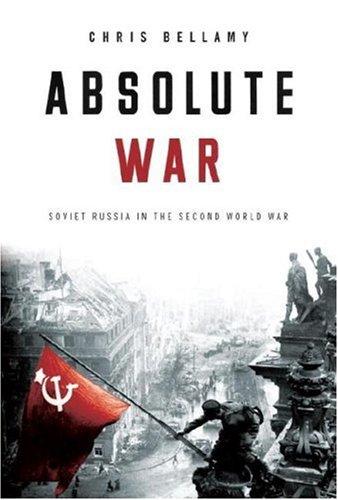
Absolute War: Soviet Russia in the Second World War

Christopher Bellamy

unrated
Read Economics Military history Logistics WWII Cold War Russia / USSR Logistics Economics ISBN 9780375410864

Knopf · October 30, 2007

The battle on the Eastern Front between 1941 and 1945 was arguably the single most decisive factor of World War II, fixing the course of world history over the next half century. Now, drawing on sources newly available since the collapse of the Soviet Union and the reunification of Germany, historian and journalist Chris Bellamy presents the first full account of this deadly conflict. Bellamy outlines the lead-up to the war—in which the fragile alliance between Hitler and Stalin was unceremoniously broken—and takes us headlong into the hostilities. He presents a shocking picture of battle in which the traditional restraints of “civilized” warfare were shed. He makes clear how the Soviets quickly rallied against Hitler, choosing homegrown despotism over foreign domination in a struggle that the Russian people call the Great Patriotic War. Bellamy charts the early gains of the German army, whose advances into Soviet territory were brought to a halt in Moscow in the winter of 1941, and whose defeat was sealed in the Battle of Stalingrad, the most merciless campaign of the bloodiest front. He shows how Soviet men—and women—joined to fight a war whose casualties were later steeply underestimated by their government, and how even the true death toll, at 27 million, does not take into account the millions of lives on both sides that lay shattered in the aftermath. Finally, Bellamy examines the far-reaching consequences of the battle’s outcome—the reverberations of which are still felt today—and argues that the cost of victory was ultimately too much for the Soviet Union to bear. A magisterial study, and an essential addition to our understanding of contemporary world history.

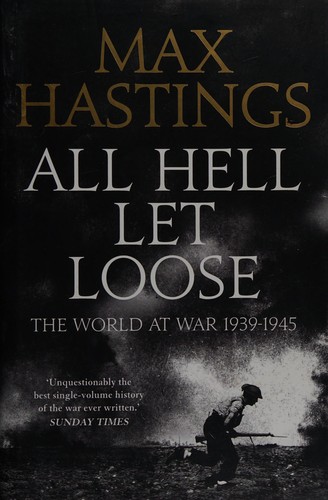
All Hell Let Loose: The World at War, 1939-1945

Max Hastings

unrated
Read Technical warfare WWII Russia / USSR ISBN 9780007338092

HarperPress · 2011

HardCover. Pub Date :2011-09-29 768 English HarperPress A magisterial history of the greatest and most terrible event in history. from one of the finest historians of the Second World War A book which shows the impact. of war upon hundreds of millions of people around the world-soldiers. sailors and airmen; housewives. farm workers and children.Reflecting Max Hastingss thirty-five years of research on World War II. All Hell Let Loose describes the course of events. but focuses chiefly upon human experience. which varied immensely from campaign to campaign. continent to continent.The author emphasises the Russian front. where more than 90% of all German soldiers who perished met their fate. He argues that. while Hitlers army often fought its battles brilliantly well. the Nazis conducted their war effort with stunning incompetence. He suggests that ...

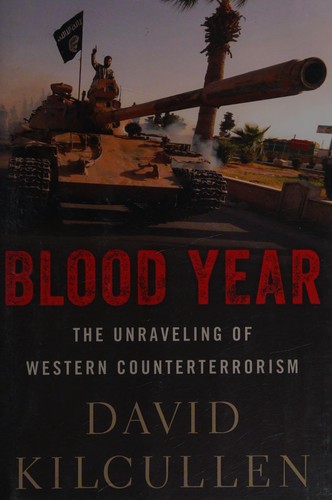
Blood Year: The Unraveling of Western Counterterrorism

David Kilcullen

unrated
Read Advanced intel Cold War GWOT Russia / USSR Middle East Strategy / theory US Civil War ISBN 9780190600549

Oxford University Press · 2016

2014 has the potential to go down as a crucial year in modern world history. A resurgent and bellicose Russia took over Crimea and fueled a civil war in Eastern Ukraine. Post-Saddam Iraq, in many respects a creature of the United States because of the war that began in 2003, lost a third of its territory to an army of hyper-violent millennialists. The peace process in Israel seemed to completely collapse. Finally, after coalescing in Syria as a territorial entity, the Islamic State swept into northern Iraq and through northeastern Syria, attracting legions of recruits from Europe and the Middle East. In short, the post-Cold War security order that the US had constructed after 1991 seemed to be coming apart at the seams. David Kilcullen was one of the architects of America's strategy in the late phases of the second Gulf War, and also spent time in Afghanistan and other hotspots. In Blood Year, he provides a wide-angle view of the current situation in the Middle East and analyzes how America and the West ended up in such dire circumstances. Whereas in 2008 it appeared that the U.S. might pull a modest stalemate from the jaws of defeat in Iraq, six years later the situation had reversed. After America pulled out of Iraq completely in 2011, the Shi'ite president cut Sunnis out of the power structure and allowed Iranian influence to grow. And from the debris of Assad's Syria arose an extremist Sunni organization even more radical than Al Qaeda. Unlike Al Qaeda, ISIS was intent on establishing its own state, and within a remarkably short time they did. Interestingly, Kilcullen highlights how embittered former Iraqi Ba'athist military officers were key contributors to ISIS's military successes. Kilcullen lays much of the blame on Bush's initial decision to invade Iraq (which had negative secondary effects in Afghanistan), but also takes Obama to task for simply withdrawing and adopting a "leading from behind" strategy. As events have proven, Kilcullen contends, withdrawal was a fundamentally misguided plan. The U.S. had uncorked the genie, and it had a responsibility to at least attempt to keep it under control. Instead, the U.S. is at a point where administration officials state that the losses of Ramadi and Palmyra are manageable setbacks. Kilcullen argues that the U.S. needs to re-engage in the region, whether it wants to or not, because it is largely responsible for the situation that is now unfolding. Blood Year is an essential read for anyone interested in understanding not only why the region that the U.S. invaded a dozen years ago has collapsed into utter chaos, but also what it can do to alleviate the grim situation.

No cover · Amazon

Book of the Blockade

Alieś Adamovič

unrated
Read Logistics Armor Russia / USSR Logistics Biography

Leningrad was under siege for almost three years, and the first winter of that siege was one of the coldest on record. The Russians had been taken by surprise by the Germans' sudden onslaught in June 1941. This book tells the story of that long, bitter siege in the words of those who were there. It vividly describes how ordinary Leningraders struggled to stay alive and to defend their beloved city in the most appalling conditions. They were bombed, shelled, starved and frozen. They dug tank-traps and trenches, built shelters and fortifications, fought fires, cleared rubble, tended the wounded and, for as long as they had strength to do so, buried their dead. Many were killed by German bombs or shells, but most of them died of hunger and cold. Based on interviews with survivors of the siege and on contemporary diaries and personal memoirs. The primary focus is on three a young mother with two small children, a boy of sixteen at the outbreak of war, and an elderly academic. We see the siege through their eyes as its horrors unfold and as they struggle to survive.

No cover · Amazon

Fangs of the Lone Wolf: Chechen Tactics in the Russian-Chechen War 1994-2009

Dodge Billingsley

unrated
Read Technical warfare GWOT Guerrilla / COIN Russia / USSR Middle East Logistics

Books on guerrilla war are seldom written from the tactical perspective and even less seldom from the guerrilla's perspective. Fangs of the Lone Wolf: Chechen Tactics in the Russian-Chechen Wars 1994-2009 is an exception. These are the stories of low-level guerrilla combat as told by the survivors. They cover fighting from the cities of Grozny and Argun to the villages of Bamut and Serzhen-yurt, and finally the hills, river valleys and mountains that make up so much of Chechnya. The author embedded with Chechen guerrilla forces and knows the conflict, country and culture. Yet, as a Western outsider, he is able to maintain perspective and objectivity. He traveled extensively to interview Chechen former combatants now displaced, some now in hiding or on the run from Russian retribution and justice. The military professional will appreciate the book's crisp narration, organization by type of combat, accurate color maps and insightful analysis and commentary. The civilian reader will discover the complexity of "simple guerrilla tactics" and the demands on individual perseverance and endurance that guerrilla warfare exacts.The book is organized into vignettes that provide insight on the nature of both Chechen and Russian tactics utilized during the two wars. They show the chronic problem of guerrilla logistics, the necessity of digging in fighting positions, the value of the correct use of terrain and the price paid in individual discipline and unit cohesion when guerrillas are not bound by a military code and law. Guerrilla warfare is probably as old as man, but has been overshadowed by maneuver war by modern armies and recent developments in the technology of war. As Iraq, Afghanistan, the Philippines and Chechnya demonstrate, guerrilla war is not only still viable, but is increasingly common. Fangs of the Lone Wolf provides a unique insight into what is becoming modern and future war.

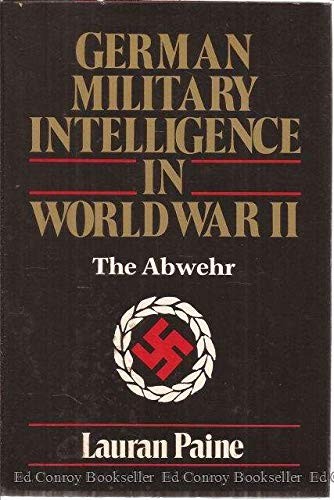
German Military Intelligence in World War II: The Abwehr

Lauran Paine

unrated
Read Advanced intel WWII Cold War Espionage Russia / USSR Intel history ISBN 0812829662

Stein and Day · 1984

The astonishing true story of the German military intelligence organization dedicated to Nazi victory - commanded by a man who was dedicated to Nazi defeat. It was primarily from the Abwehr that Hitler and his top generals got the information they used in planning the subjugation of Europe. But to this day few people know the full story of how the commander of that organization, Admiral Wilhelm Canaris, and some of his trusted subordinates, deliberately and secretly contributed to the downfall of Nazi Germany. high treason against Hitler's government originated within the Abwehr; at least three attempts on the Fuhrer's life were secretly planned, ordered, and carried out by its personnel. From 1938 until the last months of the war, Abwehr officers balanced on the sword's edge and did it so well that detection and terrible retribution came only when the armies of America and the Soviet Union were approaching Berlin. After peace came, strict orders were issued against revealing much that is now detailed in this book. Lauran Paine was associated with U.S. intelligence operations for over thirty years. He was also the author of "The CIA At Work" and several other books on intelligence matters.

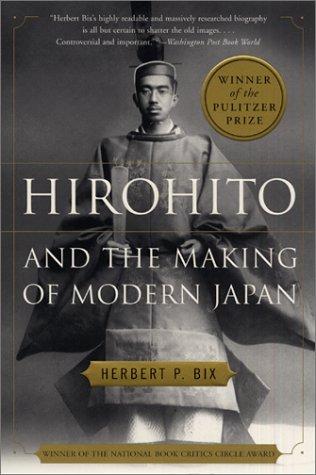
Hirohito and the Making of Modern Japan

Herbert P. Bix

unrated
Read Biographies Military history WWII Espionage China Russia / USSR Biography Strategy / theory ISBN 9780060931308

Harper Perennial · September 4, 2001

Winner of the Pulitzer PrizeIn this groundbreaking biography of the Japanese emperor Hirohito, Herbert P. Bix offers the first complete, unvarnished look at the enigmatic leader whose sixty-three-year reign ushered Japan into the modern world. Never before has the full life of this controversial figure been revealed with such clarity and vividness. Bix shows what it was like to be trained from birth for a lone position at the apex of the nation's political hierarchy and as a revered symbol of divine status. Influenced by an unusual combination of the Japanese imperial tradition and a modern scientific worldview, the young emperor gradually evolves into his preeminent role, aligning himself with the growing ultranationalist movement, perpetuating a cult of religious emperor worship, resisting attempts to curb his power, and all the while burnishing his image as a reluctant, passive monarch. Here we see Hirohito as he truly was: a man of strong will and real authority. Supported by a vast array of previously untapped primary documents, Hirohito and the Making of Modern Japan is perhaps most illuminating in lifting the veil on the mythology surrounding the emperor's impact on the world stage. Focusing closely on Hirohito's interactions with his advisers and successive Japanese governments, Bix sheds new light on the causes of the China War in 1937 and the start of the Asia-Pacific War in 1941. And while conventional wisdom has had it that the nation's increasing foreign aggression was driven and maintained not by the emperor but by an elite group of Japanese militarists, the reality, as witnessed here, is quite different. Bix documents in detail the strong, decisive role Hirohito played in wartime operations, from the takeover of Manchuria in 1931 through the attack on Pearl Harbor and ultimately the fateful decision in 1945 to accede to an unconditional surrender. In fact, the emperor stubbornly prolonged the war effort and then used the horrifying bombings of Hiroshima and Nagasaki, together with the Soviet entrance into the war, as his exit strategy from a no-win situation. From the moment of capitulation, we see how American and Japanese leaders moved to justify the retention of Hirohito as emperor by whitewashing his wartime role and reshaping the historical consciousness of the Japanese people. The key to this strategy was Hirohito's alliance with General MacArthur, who helped him maintain his stature and shed his militaristic image, while MacArthur used the emperor as a figurehead to assist him in converting Japan into a peaceful nation. Their partnership ensured that the emperor's image would loom large over the postwar years and later decades, as Japan began to make its way in the modern age and struggled -- as it still does -- to come to terms with its past. Until the very end of a career that embodied the conflicting aims of Japan's development as a nation, Hirohito remained preoccupied with politics and with his place in history. Hirohito and the Making of Modern Japan provides the definitive account of his rich life and legacy. Meticulously researched and utterly engaging, this book is proof that the history of twentieth-century Japan cannot be understood apart from the life of its most remarkable and enduring leader.

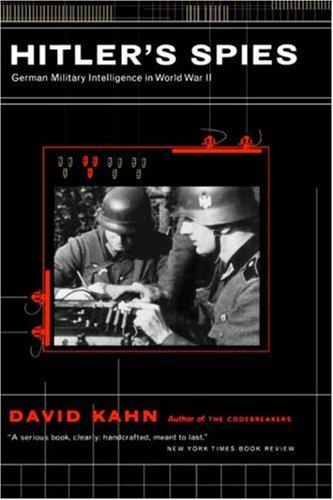
Hitler's Spies: German Military Intelligence In World War II

David Kahn

unrated
Read Intel history WWII Espionage Air power Russia / USSR Intel history ISBN 0306809494

Da Capo Press · 2000

A German patrol wiggles through Russian lines to return with details of Soviet defenses. An expert Luftwaffe interrogator teases secret information from downed Allied airmen. Two spies steal ashore in Maine and make their way into New York City. Filled with episodes of intrigue and adventure, Hitler's Spies reveals the workings of German intelligence—the famed Abwehr, the dreaded SD, the codebreakers, the spies, and the intelligence gatherers of the Foreign Office—and explains its failure to best the Allies. Draws on original documents and extensive interviews.

Japanese Intelligence in World War II (General Military)

Ken Kotani

unrated
Read Advanced intel Intel history WWII Espionage Naval China Russia / USSR Intel history ISBN 9781846034251

Osprey · 2009

In the eyes of history, Japanese intelligence in World War II has fared very poorly. However, these historians have most often concentrated on the later years of the war, when Japan was fighting a multi-front war against numerous opponents. In this groundbreaking new study, Japanese scholar Ken Kotani re-examines the Japanese Intelligence department, beginning with the early phase of the war. He points out that without the intelligence gathered by the Japanese Army and Navy they would have been unable to achieve their long string of victories against the forces of Russia, China, and Great Britain. Notable in these early campaigns were the successful strikes against both Singapore and Pearl Harbor. Yet as these victories expanded the sphere of Japanese control, they also made it harder for the intelligence services to gather accurate information about their growing list of adversaries. At the battle of Midway in 1942, Japanese intelligence suffered its worst mishap when the Americans broke their code and tricked the Japanese into revealing the target of their attack. It was a mistake from which they would never recover. As the military might of Japan was forced to retreat and her forces deteriorated, so too did her intelligence services.