S2 Search · Reading list

S2 Actual reading list

Books from S2 Actual on Goodreads, organized by his shelves and topic buckets (intel lists, military history, logistics, etc.). Metadata filled via Open Library.

Not official S2 Underground. Independent fan index — not affiliated with or endorsed by S2. Official hub: linktr.ee/S2_underground. S2 materials are CC BY-NC-SA 4.0.

S2 topic buckets (Goodreads)

Subjects & genres

22 books · All shelves · subject China

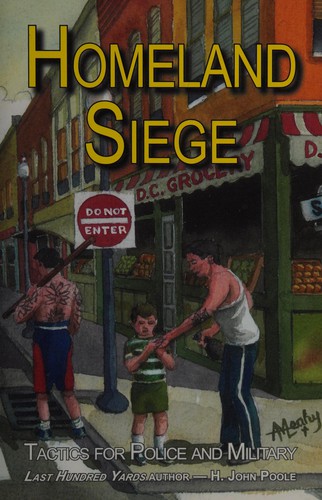
Homeland Siege: Tactics for Police and Military

H. John Poole

★★★★★
Read Advanced intel GWOT China ISBN 9780981865911

Posterity Press · 2009

America is still in serious trouble. There's no way all of her internal problems have been self-inflicted. Yet, many still (1) ISIS and al-Qaeda are her only foes; (2) her intelligence agencies see every threat coming; and (3) her military is the best in the world at all things. This book reassesses the breakdown from a "bottom-up" perspective, as that's how Islamists, Communists, and criminals like to take over. Such "qualitative research" is regularly used by U.S. police departments. After detailing the subversion, this book (1) the most extensive study of hostage rescue ever attempted; (2) a safer way for grunts and SWATs to quickly seize any contested building; and (3) how Nepal was finally taken over by China at the ballot box.

Militant Tricks: Battlefield Ruses of the Islamic Insurgent

H. John Poole

★★★★★
Read Advanced intel GWOT Guerrilla / COIN China Middle East Strategy / theory ISBN 9780963869586

Posterity Press · October 17, 2005

THIS BOOK WAS ON THE U.S. ARMY'S MOST PRESTIGIOUS READING LIST. Since 9/11, our deployed troops have learned many things. Though the war in Afghanistan has just ended, many of their hard-won lessons have yet to be assimilated by the Stateside bureaucracy. To help, "Militant Tricks" has recounted America's progress in Iraq and Afghanistan from the standpoint of East Asian BATTLEFIELD DECEPTION. Both countries were part of the Mongol Empire for over 200 years and thus prone to every sort of ancient Chinese illusion. "Militant Tricks" also contains the TACTICAL TECHNIQUES WITH WHICH TO COUNTER AN ISLAMIC EXTREMIST'S URBAN OFFENSIVE. While some of these nontraditional techniques were risked during the Baghdad Surge, they may soon be forgotten.

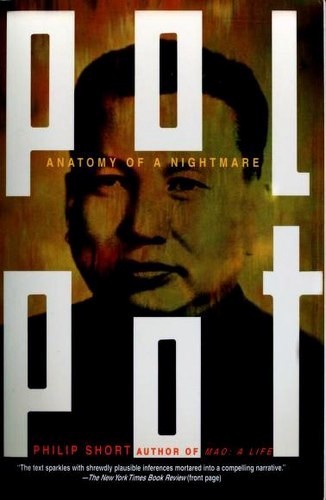
Pol Pot: Anatomy of a Nightmare

Philip Short

★★★★★
Read Military history Cold War Espionage China Biography ISBN 9780805080063

Henry Holt and Company · 2006

Philip Short observed Pol Pot at close quarters during the one and only official visit Pol ever made abroad, to China in 1975. He was struck by Pol Pot's charm and charisma, yet, soon after, the leader would emerge as the architect of one of the most radical and ruthless experiments in social engineering ever undertaken. His egalitarian utopia released a reign of terror that would result in one in every five Cambodians - more than a million people - perishing in the killing fields or from hunger. Why did it happen? How did an idealistic dream of justice and prosperity mutate into one of humanity's worst nightmares? To answer these questions, Short traveled through Cambodia, interviewing former Khmer Rouge leaders and sifting through previously closed archives around the world. Key figures, including Khlen Samphan and Ieng Sary, Pol Pot's brother-in-law and foreign minister, speak here for the first time. Philip Short's masterly narrative reveals how Pol Pot engineered his country's desolation, fashioning the definitive portrait of the man who headed one of the most enigmatic and terrifying regimes of modern times.

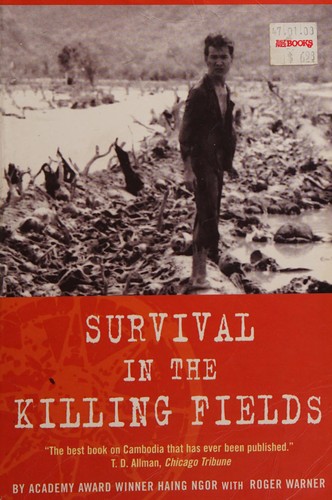
Survival in the Killing Fields

Haing Ngor

★★★★★
Read Military history WWII China Biography ISBN 0786713151

Carroll & Graf · 1987

Nothing has shaped my life as much as surviving the Pol Pot regime. I am a survivor of the Cambodian holocaust. That's who I am. He became famous through his academy award-winning performance as Dith Pran in the film The Killing Fields, but the key to Haing Ngor's screen success was the terrible truth of his own experiences in the rice paddies and labour camps of revolutionary Cambodia. Here, in a gripping memoir of life under the communist Khmer Rouge regime, he reveals the country's descent into a hell beyond our imaginings: a world of war slaves and senseless brutality, where family life simply ceases to be. But with the pain he also gives us hope and an illuminating example of how the best sort of love can actually be strengthened through the shared experience of a life-threatening ordeal. An eyewitness account of the real killing fields by an extraordinary survivor, this book is both a reminder of the horrors of war and a testament to the resilience of the human spirit.

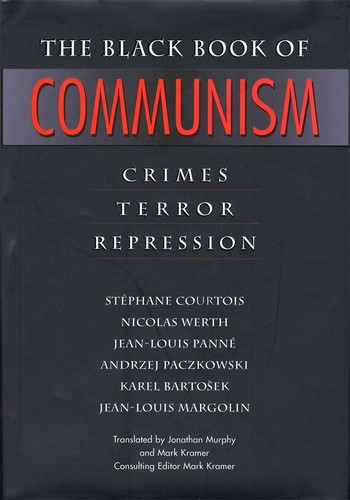
The Black Book of Communism: Crimes, Terror, Repression

Stéphane Courtois

★★★★★
Read Military history Advanced intel Vietnam Korea Cold War GWOT Guerrilla / COIN China Russia / USSR Orthodox / theology ISBN 0674076087

Harvard University Press · 1999

Already famous throughout Europe, this international bestseller plumbs recently opened archives in the former Soviet bloc to reveal the actual, practical accomplishments of Communism around the terror, torture, famine, mass deportations, and massacres. Astonishing in the sheer detail it amasses, the book is the first comprehensive attempt to catalogue and analyze the crimes of Communism over seventy years. "Revolutions, like trees, must be judged by their fruit," Ignazio Silone wrote, and this is the standard the authors apply to the Communist experience―in the China of "the Great Helmsman," Kim Il Sung's Korea, Vietnam under "Uncle Ho" and Cuba under Castro, Ethiopia under Mengistu, Angola under Neto, and Afghanistan under Najibullah. The authors, all distinguished scholars based in Europe, document Communist crimes against humanity, but also crimes against national and universal culture, from Stalin's destruction of hundreds of churches in Moscow to Ceausescu's leveling of the historic heart of Bucharest to the widescale devastation visited on Chinese culture by Mao's Red Guards. As the death toll mounts―as many as 25 million in the former Soviet Union, 65 million in China, 1.7 million in Cambodia, and on and on―the authors systematically show how and why, wherever the millenarian ideology of Communism was established, it quickly led to crime, terror, and repression. An extraordinary accounting, this book amply documents the unparalleled position and significance of Communism in the hierarchy of violence that is the history of the twentieth century.

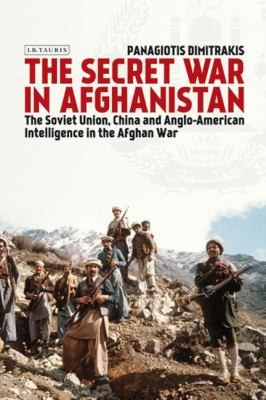
The Secret War in Afghanistan: The Soviet Union, China and Anglo-American Intelligence in the Afghan War (Library of Middle East History)

Panagiotis Dimitrakis

★★★★★
Read Basic intel Intel history Cold War Espionage GWOT China Russia / USSR Middle East Intel history ISBN 9781780764191

I.B.Tauris & Co Ltd · 2013

The Soviet invasion of Afghanistan, in support of a Marxist-Leninist government, and the subsequent nine-year conflict with the indigenous Afghan Mujahedeen was one of the bloodiest conflicts of the Cold War. Key details of the circumstances surrounding the invasion and its ultimate conclusion only months before the fall of the Berlin Wall in November 1989 have long remained unclear; it is a confidential narrative of clandestine correspondence, covert operations and failed intelligence. The Secret War in Afghanistan undertakes a full analysis of recently declassified intelligence archives in order to asses Anglo-American secret intelligence and diplomacy relating to the invasion of Afghanistan and unveil the Cold War realities behind the rhetoric. Rooted at every turn in close examination of the primary evidence, it outlines the secret operations of the CIA, MI6 and the KGB, and the full extent of the aid and intelligence from the West which armed and trained the Afghan fighters. Drawing from US, UK and Russian archives, Panagiotis Dimitrakis analyses the Chinese arms deals with the CIA, the multiple recorded intelligence failures of KGB intelligence and secret letters from the office of Margaret Thatcher to Jimmy Carter. In so doing, this study brings a new scholarly perspective to some of the most controversial events of Cold War history. Dimitrakis also outlines the full extent of China's involvement in arming the Mujahedeen, which led to the PRC effectively fighting the Soviet Union by proxy. This will be essential reading for scholars and students of the Cold War, American History and the Modern Middle East.

No cover · Amazon

Weaving the Tangled Web: Military Deception in Large-Scale Combat Operations (Large-Scale Combat Operations Series Book 1)

Christopher M. Rein

★★★★★
Read Basic intel Military history Intel history WWII Korea Cold War GWOT Guerrilla / COIN China Russia / USSR Middle East Intel history Strategy / theory

This book is from Army University Press and is Volume 1 in it's Large-Scale Combat Operations Series. It has footnotes, maps, and pictures, and was originally published in 2018. “Since the Soviet Union’s fall in 1989, the specter of large-scale ground combat against a peer adversary was remote. During the years following, the US Army found itself increasingly called upon to lead multinational operations in the lower to middle tiers of the range of military operations and conflict continuum. The events of 11 September 2001 led to more than 15 years of intense focus on counterterrorism, counterinsurgency, and stability operations in Iraq and Afghanistan. An entire generation of Army leaders and Soldiers were culturally imprinted by this experience. We emerged as an Army more capable in limited contingency operations than at any time in our nation’s history, but the geopolitical landscape continues to shift and the risk of great power conflict is no longer a remote possibility. “While our Army focused on limited contingency operations in the Middle East and Southwest Asia, other regional and peer adversaries scrutinized US military processes and methods and adapted their own accordingly. As technology has proliferated and become accessible in even the most remote corners of the world, the US military’s competitive advantage is being challenged across all of the warfighting domains. In the last decade, we have witnessed an emergent China, a revanchist and aggressive Russia, a menacing North Korea, and a cavalier Iranian regime. Each of these adversaries seeks to change the world order in their favor and contest US strategic interests abroad. The chance for war against a peer or regional near-peer adversary has increased exponentially, and we must rapidly shift our focus to successfully compete in all domains and across the full range of military operations." Includes: Introduction: Multi-Domain Deception (Christopher M. Rein, General Editor); Chapter 1: The Belfort Ruse the American Deception plan for the battle of st. Mihiel, 1918 (Mark E. Grotelueschen); Chapter 2: From Beersheba To Megiddo British Deception Operations During The Palestine Campaign, 1917-1918; (Major Brian J. Drohan); Chapter 3: Operation Bertram British Deception At El Alamein (Gary W. Linhart); Chapter 4: Operations Barclay, Cascade, And Mincemeat Allied Deception In The Mediterranean, 1943 (Gregory S. Hospodor); Chapter 5: Operation Kreml German Strategic Deception On The Eastern Front In 1942 (Alan P. Donohue); Chapter 6: Red Star Resurgent Soviet Deception Operations At Stalingrad, 1942-1943 (First Lieutenant Kyle B. Vautrinot); Chapter 7: Operation Bagration Maskirovka At Its Height, Summer 1944 (Curtis S. King); Chapter 8: Deceive, Divert, And Delay Operation Fortitude In Support Of D-Day (Scott C. Farquhar); Chapter 9: Chinese Deception And The 1950 Intervention In The Korean War (Joseph G.D. Babb); Chapter 10: From Maneuvers To War The Egyptian Deception Plan On The Eve Of The Yom-Kippur War (Tal Tovy); Chapter 11: Target San Carlos British Deception During The Repossession Of The Falkland Islands (Steven Paget); Chapter 12: Deception In The Desert Deceiving Iraq In Operation Desert Storm (Donald P. Wright); Conclusion: The Future Of Military Deception Operations (Conrad C. Crane)

Animal Farm

George Orwell

★★★★
Read China Russia / USSR ISBN 0451526341

Signet Classics · 1996

Librarian's note: There is an Alternate Cover Edition for this edition of this book here. A farm is taken over by its overworked, mistreated animals. With flaming idealism and stirring slogans, they set out to create a paradise of progress, justice, and equality. Thus the stage is set for one of the most telling satiric fables ever penned –a razor-edged fairy tale for grown-ups that records the evolution from revolution against tyranny to a totalitarianism just as terrible. When Animal Farm was first published, Stalinist Russia was seen as its target. Today it is devastatingly clear that wherever and whenever freedom is attacked, under whatever banner, the cutting clarity and savage comedy of George Orwell’s masterpiece have a meaning and message still ferociously fresh.

The Art of War

Sun Tzu

★★★★
Read Basic intel Military history Intel history China Strategy / theory ISBN 9781533142467

Pearson Education Asia · 1900

Twenty-Five Hundred years ago, Sun Tzu wrote this classic book of military strategy based on Chinese warfare and military thought. Since that time, all levels of military have used the teaching on Sun Tzu to warfare and civilization have adapted these teachings for use in politics, business and everyday life. The Art of War is a book which should be used to gain advantage of opponents in the boardroom and battlefield alike.

Collapse: How Societies Choose to Fail or Succeed

Jared Diamond

★★★☆☆
Read Basic intel Military history China ISBN 0143036556

Penguin Books · 2006

Brilliant, illuminating, and immensely absorbing, Collapse is destined to take its place as one of the essential books of our time, raising the urgent question: How can our world best avoid committing ecological suicide? In his million-copy bestseller Guns, Germs, and Steel, Jared Diamond examined how and why Western civilizations developed the technologies and immunities that allowed them to dominate much of the world. Now in this brilliant companion volume, Diamond probes the other side of the equation: What caused some of the great civilizations of the past to collapse into ruin, and what can we learn from their fates? As in Guns, Germs, and Steel, Diamond weaves an all-encompassing global thesis through a series of fascinating historical-cultural narratives. Moving from the Polynesian cultures on Easter Island to the flourishing American civilizations of the Anasazi and the Maya and finally to the doomed Viking colony on Greenland, Diamond traces the fundamental pattern of catastrophe. Environmental damage, climate change, rapid population growth, and unwise political choices were all factors in the demise of these societies, but other societies found solutions and persisted. Similar problems face us today and have already brought disaster to Rwanda and Haiti, even as China and Australia are trying to cope in innovative ways. Despite our own society's apparently inexhaustible wealth and unrivaled political power, ominous warning signs have begun to emerge even in ecologically robust areas like Montana. Brilliant, illuminating, and immensely absorbing, Collapse is destined to take its place as one of the essential books of our time, raising the urgent question: How can our world best avoid committing ecological suicide?

PAVN: People's Army of Vietnam

Douglas Pike

★★★☆☆
Read Advanced intel Military history Vietnam Cold War China Russia / USSR ISBN 0306804328

Da Capo Press · 1991

From the original 34-man Armed Propaganda Team of the 1930s, headed by Vo Nguyen Giap and managed by Ho Chi Minh, the People's Army of Vietnam has grown into the third largest military force in the world, exceeded only by the armies of the USSR and China. When viewed in terms of military capability and success, it is a phenomenon. Since its inception, the PAVN has taken on two major powers - France and the United States - and won decisive victories. It is this phenomenon that Douglas Pike describes in this work. At the same time, there also appears a picture of the use of force in politics, the nature of organizations and the limits of both technology and ideology. The book is aimed at those interested in the inner workings of the army that won the Vietnam War.

Why Nations Fail: The Origins of Power, Prosperity, and Poverty

Daron Acemoğlu

★★★☆☆
Read Basic intel Korea Cold War China Russia / USSR Economics ISBN 9780307719218

Crown Publishers · 2012

Brilliant and engagingly written, Why Nations Fail answers the question that has stumped the experts for centuries: Why are some nations rich and others poor, divided by wealth and poverty, health and sickness, food and famine? Is it culture, the weather, geography? Perhaps ignorance of what the right policies are? Simply, no. None of these factors is either definitive or destiny. Otherwise, how to explain why Botswana has become one of the fastest growing countries in the world, while other African nations, such as Zimbabwe, the Congo, and Sierra Leone, are mired in poverty and violence? Daron Acemoglu and James Robinson conclusively show that it is man-made political and economic institutions that underlie economic success (or lack of it). Korea, to take just one of their fascinating examples, is a remarkably homogeneous nation, yet the people of North Korea are among the poorest on earth while their brothers and sisters in South Korea are among the richest. The south forged a society that created incentives, rewarded innovation, and allowed everyone to participate in economic opportunities. The economic success thus spurred was sustained because the government became accountable and responsive to citizens and the great mass of people. Sadly, the people of the north have endured decades of famine, political repression, and very different economic institutions—with no end in sight. The differences between the Koreas is due to the politics that created these completely different institutional trajectories. Based on fifteen years of original research Acemoglu and Robinson marshall extraordinary historical evidence from the Roman Empire, the Mayan city-states, medieval Venice, the Soviet Union, Latin America, England, Europe, the United States, and Africa to build a new theory of political economy with great relevance for the big questions of today, including:    - China has built an authoritarian growth machine. Will it continue to grow at such high speed and overwhelm the West?    - Are America’s best days behind it? Are we moving from a virtuous circle in which efforts by elites to aggrandize power are resisted to a vicious one that enriches and empowers a small minority?    - What is the most effective way to help move billions of people from the rut of poverty to prosperity? More philanthropy from the wealthy nations of the West? Or learning the hard-won lessons of Acemoglu and Robinson’s breakthrough ideas on the interplay between inclusive political and economic institutions? Why Nations Fail will change the way you look at—and understand—the world.

China in the Anti-Japanese War, 1937-1945: Politics, Culture, and Society

David P. Barrett

unrated
Read China Economics Privacy Military history China Economics ISBN 9780820445564

Peter Lang Publishing · November 1, 2000

This book is a collection of eleven articles written by scholars of international repute that specializes in the history of China during her long war against Japan from 1937 to 1945. The topics addressed include political, economic, social, and diplomatic issues related to wartime China based on materials newly opened for research. They give strong evidence that the Sino-Japanese War was of a complexity and magnitude that must be understood in terms that go far beyond those solely of its military dimensions.

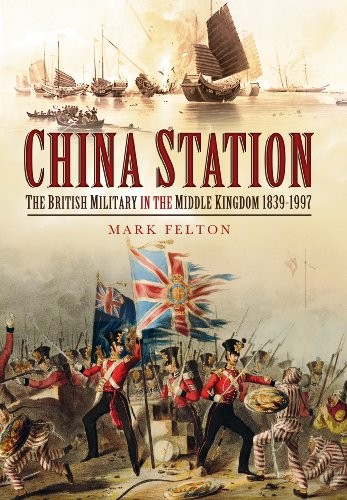
China Station: The British Military in the Middle Kingdom 1839 – 1997

Mark Felton

unrated
Read Military history Naval China Economics US Civil War ISBN 9781781590690

Pen and Sword Military · Oct 19, 2013

The author, who lives in Shanghai, sets out to demonstrate that the British military has been at the forefront of many of the great changes that have swept China over the last two centuries. The author, who lives in Shanghai, sets out to demonstrate that the British military has been at the forefront of many of the great changes that have swept China over the last two centuries. He devotes chapters to the various wars, military adventures and rebellions that regularly punctuated Sino/British relationships since the 1st Opium War 1839-1842. This classic example of Imperial intervention saw the establishment of Hong Kong and Shanghai as key trading centers. The Second Opium War and the Taiping and Boxer Rebellions saw the advancement of British influence despite determined but unsuccessful efforts by the Chinese to loosen the grip of Western domination. The Royal Navy's might ensured that, by gunboat diplomacy, trading rights and new posts were established and great fortunes made. But in the 1940s the British grossly underestimated Japanese military might and intentions with disastrous results. After the Second World War the British returned to find that the Americans had supplanted them. The Communists victory in the Civil War sealed British and Western fates and, while Hong Kong remained under British control until 1997, the end of British rule was almost inevitable. But the handover was a masterly piece of pragmatic capitalism and the former Colony remains an economic powerhouse with strong British influence.

From Troy to Entebbe

John Arquilla

unrated
Read Advanced intel Intel history Military history WWII WWI Special ops China Strategy / theory US Civil War ISBN 9780761801863

Univ.P.of America · 1996

Special operations, though most commonly associated with the period from the Second World War to the present, have played a key role throughout the history of conflict from the Trojan War to the great arms struggles of the 20th century. This volume introduces the reader to the broad sweep of the history of special operations, and also includes several excerpts from the classic literature on the subject. Contents: Origins: Robert Graves, 'The Wooden Horse', 'The Sack of Troy'; Raiding in the Age of Sail: G.M. Thomson, 'The Damage Done by this Corsair', 'The Wind Commands Me Away'; Ian Grimble, 'The Imp,^Rrieuse'; The Early American Tradition: Kenneth Roberts, 'The Raid on St. Francis'; Fred Cook, 'Struggle for the South'; R.E. Dupuy and W.H. Baumer, 'Wars With the Barbary Pirates'; 19th Century Colonial Warfare; Leo Tolstoy, The Raid; Wyatt Blassingame, 'How the Legion Began', 'The Legion Fights in Algeria'; The Civil War: Archer Hines, 'Military Means, Political Ends'; Bruce Catton, 'Total War and an Election'; World War I: Lowell Thomas, 'Trapped by a G-Ship..'; T.E. Lawrence, 'The Raid Upon the Bridges'; World War II in Western Europe and North Africa: Cajus Bekker, 'The Coup de Main at Eben Emael', 'The Blood-Bath of Crete'; Paul Carell, 'A British Commando Attempt to Capture Rommel', 'The British Raid on Tobruk', 'Brandenburgers in Action Behind the Front'; John Lodwick, Raiders from the Sea, Chapters 16-18; The Pacific War: Walter Lord, 'A Very Private War';Ronald Spector, 'The Road to Myitkyina'; Milton E. Miles, 'Chinese Pirates and the SACO Dragon'; Algeria, Round II: Jean Lart,^Rguy, 'The Leap of Leucadia'; The Ultimate Rescue: Chaim Herzog, 'Entebbe'; Bibliography; Index.

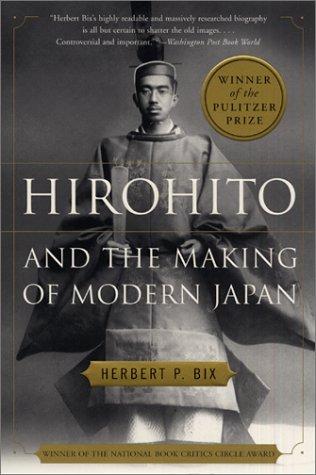
Hirohito and the Making of Modern Japan

Herbert P. Bix

unrated
Read Biographies Military history WWII Espionage China Russia / USSR Biography Strategy / theory ISBN 9780060931308

Harper Perennial · September 4, 2001

Winner of the Pulitzer PrizeIn this groundbreaking biography of the Japanese emperor Hirohito, Herbert P. Bix offers the first complete, unvarnished look at the enigmatic leader whose sixty-three-year reign ushered Japan into the modern world. Never before has the full life of this controversial figure been revealed with such clarity and vividness. Bix shows what it was like to be trained from birth for a lone position at the apex of the nation's political hierarchy and as a revered symbol of divine status. Influenced by an unusual combination of the Japanese imperial tradition and a modern scientific worldview, the young emperor gradually evolves into his preeminent role, aligning himself with the growing ultranationalist movement, perpetuating a cult of religious emperor worship, resisting attempts to curb his power, and all the while burnishing his image as a reluctant, passive monarch. Here we see Hirohito as he truly was: a man of strong will and real authority. Supported by a vast array of previously untapped primary documents, Hirohito and the Making of Modern Japan is perhaps most illuminating in lifting the veil on the mythology surrounding the emperor's impact on the world stage. Focusing closely on Hirohito's interactions with his advisers and successive Japanese governments, Bix sheds new light on the causes of the China War in 1937 and the start of the Asia-Pacific War in 1941. And while conventional wisdom has had it that the nation's increasing foreign aggression was driven and maintained not by the emperor but by an elite group of Japanese militarists, the reality, as witnessed here, is quite different. Bix documents in detail the strong, decisive role Hirohito played in wartime operations, from the takeover of Manchuria in 1931 through the attack on Pearl Harbor and ultimately the fateful decision in 1945 to accede to an unconditional surrender. In fact, the emperor stubbornly prolonged the war effort and then used the horrifying bombings of Hiroshima and Nagasaki, together with the Soviet entrance into the war, as his exit strategy from a no-win situation. From the moment of capitulation, we see how American and Japanese leaders moved to justify the retention of Hirohito as emperor by whitewashing his wartime role and reshaping the historical consciousness of the Japanese people. The key to this strategy was Hirohito's alliance with General MacArthur, who helped him maintain his stature and shed his militaristic image, while MacArthur used the emperor as a figurehead to assist him in converting Japan into a peaceful nation. Their partnership ensured that the emperor's image would loom large over the postwar years and later decades, as Japan began to make its way in the modern age and struggled -- as it still does -- to come to terms with its past. Until the very end of a career that embodied the conflicting aims of Japan's development as a nation, Hirohito remained preoccupied with politics and with his place in history. Hirohito and the Making of Modern Japan provides the definitive account of his rich life and legacy. Meticulously researched and utterly engaging, this book is proof that the history of twentieth-century Japan cannot be understood apart from the life of its most remarkable and enduring leader.

Japanese Intelligence in World War II (General Military)

Ken Kotani

unrated
Read Advanced intel Intel history WWII Espionage Naval China Russia / USSR Intel history ISBN 9781846034251

Osprey · 2009

In the eyes of history, Japanese intelligence in World War II has fared very poorly. However, these historians have most often concentrated on the later years of the war, when Japan was fighting a multi-front war against numerous opponents. In this groundbreaking new study, Japanese scholar Ken Kotani re-examines the Japanese Intelligence department, beginning with the early phase of the war. He points out that without the intelligence gathered by the Japanese Army and Navy they would have been unable to achieve their long string of victories against the forces of Russia, China, and Great Britain. Notable in these early campaigns were the successful strikes against both Singapore and Pearl Harbor. Yet as these victories expanded the sphere of Japanese control, they also made it harder for the intelligence services to gather accurate information about their growing list of adversaries. At the battle of Midway in 1942, Japanese intelligence suffered its worst mishap when the Americans broke their code and tricked the Japanese into revealing the target of their attack. It was a mistake from which they would never recover. As the military might of Japan was forced to retreat and her forces deteriorated, so too did her intelligence services.

On Desperate Ground: The Marines at The Reservoir, the Korean War's Greatest Battle

Hampton Sides

unrated
Read Military history Korea Guerrilla / COIN China ISBN 9780385541152

Doubleday · 2018

From the New York Times bestselling author of Ghost Soldiers and In the Kingdom of Ice, a chronicle of the extraordinary feats of heroism by Marines called on to do the impossible during the greatest battle of the Korean War On October 15, 1950, the vainglorious General Douglas MacArthur, Supreme Commander of U.N. troops in Korea, convinced President Harry Truman that the communist forces would be utterly defeated by Thanksgiving. The Chinese, he said with near certainty, would not intervene in the war. As he was speaking, 300,000 Chinese soldiers began crossing the border. Led by the 13,000 men of the 1st Marine Division, the Americans moved far north into the trap Mao had set for the arrogant MacArthur at the Chosin Reservoir. What followed was one of the most heroic - and harrowing - operations in American military history. Faced with annihilation, and temperatures plunging to 20 degrees below zero, the surrounded Marines fought through the enemy forces with ferocity, ingenuity and nearly unimaginable courage. Hampton Sides's superb account of the battle relies on years of archival research and interviews with scores of Marines and Koreans who survived the siege. While expertly chronicling the follies of the American leaders, this is an immediate, grunt's-eye view of history, enthralling in its narrative pace and powerful in its portrayal of what ordinary men are capable of in the most extreme circumstances.

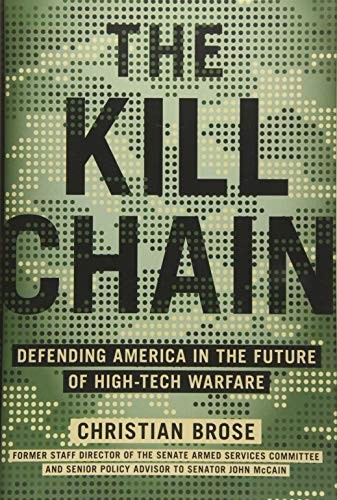
The Kill Chain: Defending America in the Future of High-Tech Warfare

Christian Brose

unrated
Read Advanced intel Intel history China Russia / USSR Orthodox / theology ISBN 9780316533539

Hachette Books · Apr 21, 2020

For generations of Americans, our country has been the world's dominant military power. How the US military fights, and the systems and weapons that it fights with, have been uncontested. That old reality, however, is rapidly deteriorating. America's traditional sources of power are eroding amid the emergence of new technologies and the growing military threat posed by rivals such as China. America is at grave risk of losing a future war. As Christian Brose reveals in this urgent wake-up call, the future will be defined by artificial intelligence, autonomous systems, and other emerging technologies that are revolutionizing global industries and are now poised to overturn the model of American defense. This fascinating, if disturbing, book confronts the existential risks on the horizon, charting a way for America's military to adapt and succeed with new thinking as well as new technology. America must build a battle network of systems that enables people to rapidly understand threats, make decisions, and take military actions, the process known as "the kill chain." Examining threats from China, Russia, and elsewhere, The Kill Chain offers hope and, ultimately, insights on how America can apply advanced technologies to prevent war, deter aggression, and maintain peace

The Korean War

Max Hastings

unrated
To read WWII Vietnam Korea Cold War China ISBN 9780330392884

Pan Books · January 7, 2000

It was the first war we could not win. At no other time since World War II have two superpowers met in battle. Now Max Hastings, preeminent military historian, takes us back to the bloody, bitter, struggle to restore South Korean independence after the Communist invasion of June 1950. Using personal accounts from interviews with more than 200 vets - including the Chinese - Hasting follows real officers and soldiers through the battles. He brilliantly captures the Cold War crisis at home - the strategies and politics of Truman, Acheson, Marshall, MacArthur, Ridgeway, and Bradley - and shows what we should have learned in the war that was the prelude to Vietnam.

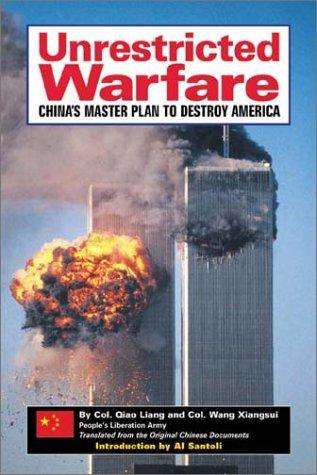
Unrestricted Warfare: China's Master Plan to Destroy America

Qiao Liang

unrated
Read Advanced intel Military history Logistics Technical warfare Espionage GWOT Cyber China Logistics Strategy / theory Economics Orthodox / theology ISBN 9780971680722

Pan American Publishing Company · August 22, 2002

As incredible as it may be to believe, three years before the Sept. 11 bombing of the World Trade Center a Chinese military manual titled Unrestricted Warfare touted such an attack – suggesting it would be difficult for the U.S. military to cope with. Here is an excerpt from Unrestricted "Whether it be the intrusions of hackers, a major explosion at the World Trade Center, or a bombing attack by bin Laden, all of these greatly exceed the frequency bandwidths understood by the American military..." Surprisingly, Osama bin Laden is mentioned frequently in this book. Now NewsMax.com is making the CIA translation of this shocking book available to all Americans. On Sept. 11, 2001, Americans and the world witnessed one of the most horrific acts ever to take place on American soil. Our media and government were quick to declare the acts of that day as simply terrorism by a nationless group known as al-Qaeda. In reading China’s military manual Unrestricted Warfare, you will learn that the events of Sept. 11 were not a random act perpetrated by independent agents. Instead, Chinese military planners believe that terrorism is just one of the many tools at the hands of nations and their terrorist allies to wage total war against the United States. You will be surprised to · The two PLA colonels who authored Unrestricted Warfare have been hailed as heroes in China since Sept. 11 · The Chinese state-run propaganda machine is cashing in on the terror attacks ... producing books, films and video games glorifying the strikes as a humbling blow against an arrogant nation. · Chinese Communist Party officials are saying that President Jiang Zemin has obsessively and gleefully watched and re-watched pictures of the aircraft crashing into the World Trade Center. · The CIA’s own translation agency reported that this book identifies the U.S. as China’s main enemy, and details how a weak nation can destroy America using unorthodox attacks – like the 9-11 attacks. · China is preparing itself and encouraging others to engage the U.S. in total war. The book is chock full of plans and strategies, from using computers, to smuggling illegal immigrants, to manipulating the stock markets, to influencing the U.S. media, to using weapons of mass destruction – all to destroy America. Recent press reports indicate that China has assisted and continues to assist militarily and economically the Taliban and al-Qaeda – even after Sept. 11. The doctrine of total war outlined in Unrestricted Warfare clearly demonstrates that the People’s Republic of China is preparing to confront the United States and our allies by conducting "asymmetrical" or multidimensional attacks on almost every aspect of our social, economic and political life. The media and Congress are keeping a lid on this book because of the implications of U.S.-China economic and trade relations. But now you can bypass them by getting a copy yourself!