S2 Search · Reading list

S2 Actual reading list

Books from S2 Actual on Goodreads, organized by his shelves and topic buckets (intel lists, military history, logistics, etc.). Metadata filled via Open Library.

Not official S2 Underground. Independent fan index — not affiliated with or endorsed by S2. Official hub: linktr.ee/S2_underground. S2 materials are CC BY-NC-SA 4.0.

S2 topic buckets (Goodreads)

Subjects & genres

19 books · Basic intel · subject GWOT

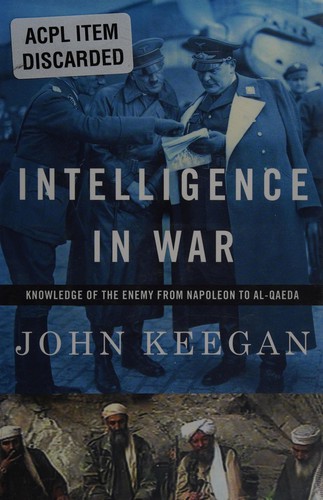
Intelligence in War: Knowledge of the Enemy from Napoleon to Al-Qaeda

John Keegan

★★★★★
Read Basic intel Intel history WWII Espionage GWOT Naval Air power Intel history Biography ISBN 0375400532

Knopf · 2003

In fiction, the spy is a glamorous figure whose secrets make or break peace, but, historically, has intelligence really been a vital step to military victories? In this breakthrough study, the preeminent war historian John Keegan goes to the heart of a series of important conflicts to develop a powerful argument about military intelligence. In his characteristically wry and perceptive prose, Keegan offers us nothing short of a new history of war through the prism of intelligence. He brings to life the split-second decisions that went into waging war before the benefit of aerial surveillance and electronic communications. The English admiral Horatio Nelson was hot on the heels of Napoleon’s fleet in the Mediterranean and never knew it, while Stonewall Jackson was able to compensate for the Confederacy’s disadvantage in firearms and manpower with detailed maps of the Appalachians. In the past century, espionage and decryption have changed the face of the Japanese surprise attack at the Battle of the Midway was thwarted by an early warning. Timely information, however, is only the beginning of the surprising and disturbing aspects of decisions that are made in war, where brute force is often more critical. Intelligence in War is a thought-provoking work that ranks among John Keegan’s finest achievements.

Relentless Strike: The Secret History of Joint Special Operations Command

Sean Naylor

★★★★★
Read Basic intel Advanced intel Military history Intel history Technical warfare GWOT Special ops Naval Air power Nuclear Middle East ISBN 9781250014542

St. Martin's Press · 2015

The New York Times Bestseller and Winner of the 2015 Army Historical Foundation Distinguished Writing Award for Unit History Since the attacks of September 11, one organization has been at the forefront of America's military response. Its efforts turned the tide against al-Qaida in Iraq, killed Bin Laden and Zarqawi, rescued Captain Phillips and captured Saddam Hussein. Its commander can direct cruise missile strikes from nuclear submarines and conduct special operations raids anywhere in the world. Relentless Strike tells the inside story of Joint Special Operations Command, the secret military organization that during the past decade has revolutionized counterterrorism, seamlessly fusing intelligence and operational skills to conduct missions that hit the headlines, and those that have remained in the shadows-until now. Because JSOC includes the military's most storied special operations units-Delta Force, SEAL Team 6, the 75th Ranger Regiment-as well as America's most secret aviation and intelligence units, this is their story, too. Relentless Strike reveals tension-drenched meetings in war rooms from the Pentagon to Iraq and special operations battles from the cabin of an MH-60 Black Hawk to the driver's seat of Delta Force's Pinzgauer vehicles as they approach their targets. Through exclusive interviews, reporter Sean Naylor uses his unique access to reveal how an organization designed in the 1980s for a very limited mission set transformed itself after 9/11 to become the military's premier weapon in the war against terrorism and how it continues to evolve today.

Tactics of the Crescent Moon: Militant Muslim Combat Methods

H. John Poole

★★★★★
Read Basic intel Intel history GWOT Guerrilla / COIN Middle East ISBN 9780963869579

Posterity Press · November 2004

This book focuses on how Iran and its various proxies fight. It is on the most prestigious pre-deployment reading lists for both the U.S. Army and the U.S. Marine Corps, because it fully details the Islamists' yet-to-be-defeated 4GW method. That method is best countered by "truly light" infantry tactics, but America has had only "line" infantry since 1943. Its members travel mostly by truck and fight mostly with supporting arms. That's because the Pentagon is still practicing a "higher-tech" version of 2GW (killing as many enemy as possible). How to operate the latest equipment takes up so much of the young infantryman's day that he never learns how to sneak up on an expert defender. He and his buddies don't become any less visible by donning advanced electronics, so their traditional small-unit maneuvers remain as predictable as before. All Posterity Press books should be viewed as instruments of long-overdue change.

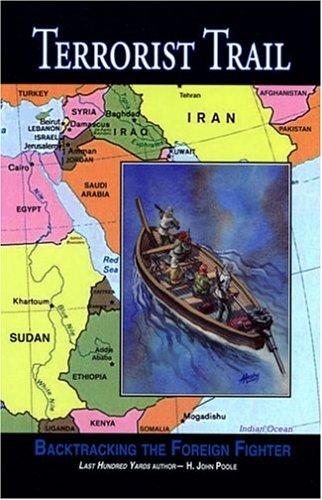
Terrorist Trail: Backtracking the Foreign Fighter

H. John Poole

★★★★★
Read Basic intel GWOT Guerrilla / COIN Middle East Strategy / theory ISBN 9780963869593

Posterity Press (NC); Illustrate · September 20, 2006

This book is about covertly penetrating the enemy heartland along the ground. At the height of the Iraq War, it was selling to Marines in the Euphrates Valley at a rate of 200 per month. That's because it helped them to seize the initiative. First, it describes the West's most effective counter-guerrilla force. This was not the British in Malaysia, but Rhodesia's Selous Scouts. Their ability to operate safely as tiny teams deep in enemy territory is the model to which all U.S. special operators should aspire. Never fond of apartheid, they regularly converted former foes into loyal members. Then, it shows how to follow enemy footprints in urban terrain. Finally, it provides a spellbinding history of "terrorism" in Africa--the most recent arena for Islamist and Communist expansion.

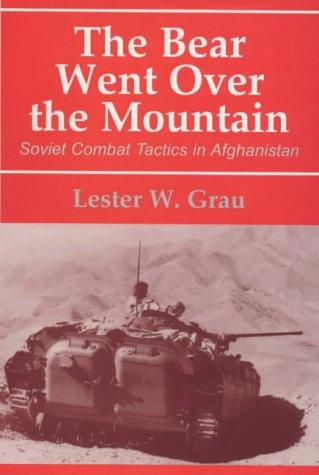
The Bear Went Over the Mountain: Soviet Combat Tactics in Afghanistan

Lester W. Grau

★★★★★
Read Basic intel Cold War GWOT Guerrilla / COIN Russia / USSR ISBN 0714648574

Frank Cass · 1998

This collection of vignettes was written by Soviet junior officers describing their experiences fighting the Mujahideen guerillas. It is not a history of the Soviet-Afghan war, but snapshots of combat as seen by young platoon leaders, company commanders, battalion commanders and military advisers.

The Iraq War

John Keegan

★★★★★
Read Basic intel GWOT Middle East Strategy / theory ISBN 1400079209

Vintage Books · 2005

The 2003 Iraq war remains among the most mysterious armed conflicts of modernity. In The Iraq War , John Keegan offers a sharp and lucid appraisal of the military campaign, explaining just how the coalition forces defeated an Iraqi army twice its size and addressing such questions as whether Saddam Hussein ever possessed weapons of mass destruction and how it is possible to fight a war that is not, by any conventional measure, a war at all. Drawing on exclusive interviews with Donald Rumsfeld and General Tommy Franks, Keegan retraces the steps that led to the showdown in Iraq, from the highlights of Hussein’s murderous rule to the diplomatic crossfire that preceded the invasion. His account of the combat in the desert is unparalleled in its grasp of strategy and tactics. The result is an urgently needed and up-to-date book that adds immeasurably to our understanding of those twenty-one days of war and their long, uncertain aftermath.

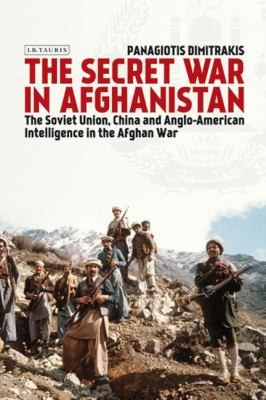
The Secret War in Afghanistan: The Soviet Union, China and Anglo-American Intelligence in the Afghan War (Library of Middle East History)

Panagiotis Dimitrakis

★★★★★
Read Basic intel Intel history Cold War Espionage GWOT China Russia / USSR Middle East Intel history ISBN 9781780764191

I.B.Tauris & Co Ltd · 2013

The Soviet invasion of Afghanistan, in support of a Marxist-Leninist government, and the subsequent nine-year conflict with the indigenous Afghan Mujahedeen was one of the bloodiest conflicts of the Cold War. Key details of the circumstances surrounding the invasion and its ultimate conclusion only months before the fall of the Berlin Wall in November 1989 have long remained unclear; it is a confidential narrative of clandestine correspondence, covert operations and failed intelligence. The Secret War in Afghanistan undertakes a full analysis of recently declassified intelligence archives in order to asses Anglo-American secret intelligence and diplomacy relating to the invasion of Afghanistan and unveil the Cold War realities behind the rhetoric. Rooted at every turn in close examination of the primary evidence, it outlines the secret operations of the CIA, MI6 and the KGB, and the full extent of the aid and intelligence from the West which armed and trained the Afghan fighters. Drawing from US, UK and Russian archives, Panagiotis Dimitrakis analyses the Chinese arms deals with the CIA, the multiple recorded intelligence failures of KGB intelligence and secret letters from the office of Margaret Thatcher to Jimmy Carter. In so doing, this study brings a new scholarly perspective to some of the most controversial events of Cold War history. Dimitrakis also outlines the full extent of China's involvement in arming the Mujahedeen, which led to the PRC effectively fighting the Soviet Union by proxy. This will be essential reading for scholars and students of the Cold War, American History and the Modern Middle East.

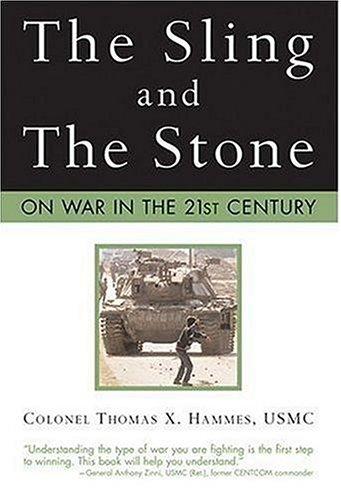
The Sling and the Stone: On War in the 21st Century

Thomas X. Hammes

★★★★★
Read Basic intel Advanced intel Military history Intel history Vietnam Cold War GWOT Guerrilla / COIN Russia / USSR Middle East Strategy / theory ISBN 9780760324073

Zenith Press · February 17, 2006

4GW (Fourth Generation Warfare) is the only kind of war America has ever lost. And we have done so three times - in Vietnam, Lebanon, and Somalia. This form of warfare has also defeated the French in Vietnam and Algeria, and the USSR in Afghanistan.As the only Goliath left in the world, we should be worried that the world's Davids have found a sling and stone that work." - Chapter 1, The Sling and the Stone: On War in the 21st Century. The War in Iraq. The War on Terror. These types of "asymmetrical" warfare are the conflicts of the 21st century - and show how difficult it is for the world's remaining superpower to battle insurgents and terrorists who will fight unconventionally in the face of superior military power. This change in military conflict may seem sudden.

No cover · Amazon

Weaving the Tangled Web: Military Deception in Large-Scale Combat Operations (Large-Scale Combat Operations Series Book 1)

Christopher M. Rein

★★★★★
Read Basic intel Military history Intel history WWII Korea Cold War GWOT Guerrilla / COIN China Russia / USSR Middle East Intel history Strategy / theory

This book is from Army University Press and is Volume 1 in it's Large-Scale Combat Operations Series. It has footnotes, maps, and pictures, and was originally published in 2018. “Since the Soviet Union’s fall in 1989, the specter of large-scale ground combat against a peer adversary was remote. During the years following, the US Army found itself increasingly called upon to lead multinational operations in the lower to middle tiers of the range of military operations and conflict continuum. The events of 11 September 2001 led to more than 15 years of intense focus on counterterrorism, counterinsurgency, and stability operations in Iraq and Afghanistan. An entire generation of Army leaders and Soldiers were culturally imprinted by this experience. We emerged as an Army more capable in limited contingency operations than at any time in our nation’s history, but the geopolitical landscape continues to shift and the risk of great power conflict is no longer a remote possibility. “While our Army focused on limited contingency operations in the Middle East and Southwest Asia, other regional and peer adversaries scrutinized US military processes and methods and adapted their own accordingly. As technology has proliferated and become accessible in even the most remote corners of the world, the US military’s competitive advantage is being challenged across all of the warfighting domains. In the last decade, we have witnessed an emergent China, a revanchist and aggressive Russia, a menacing North Korea, and a cavalier Iranian regime. Each of these adversaries seeks to change the world order in their favor and contest US strategic interests abroad. The chance for war against a peer or regional near-peer adversary has increased exponentially, and we must rapidly shift our focus to successfully compete in all domains and across the full range of military operations." Includes: Introduction: Multi-Domain Deception (Christopher M. Rein, General Editor); Chapter 1: The Belfort Ruse the American Deception plan for the battle of st. Mihiel, 1918 (Mark E. Grotelueschen); Chapter 2: From Beersheba To Megiddo British Deception Operations During The Palestine Campaign, 1917-1918; (Major Brian J. Drohan); Chapter 3: Operation Bertram British Deception At El Alamein (Gary W. Linhart); Chapter 4: Operations Barclay, Cascade, And Mincemeat Allied Deception In The Mediterranean, 1943 (Gregory S. Hospodor); Chapter 5: Operation Kreml German Strategic Deception On The Eastern Front In 1942 (Alan P. Donohue); Chapter 6: Red Star Resurgent Soviet Deception Operations At Stalingrad, 1942-1943 (First Lieutenant Kyle B. Vautrinot); Chapter 7: Operation Bagration Maskirovka At Its Height, Summer 1944 (Curtis S. King); Chapter 8: Deceive, Divert, And Delay Operation Fortitude In Support Of D-Day (Scott C. Farquhar); Chapter 9: Chinese Deception And The 1950 Intervention In The Korean War (Joseph G.D. Babb); Chapter 10: From Maneuvers To War The Egyptian Deception Plan On The Eve Of The Yom-Kippur War (Tal Tovy); Chapter 11: Target San Carlos British Deception During The Repossession Of The Falkland Islands (Steven Paget); Chapter 12: Deception In The Desert Deceiving Iraq In Operation Desert Storm (Donald P. Wright); Conclusion: The Future Of Military Deception Operations (Conrad C. Crane)

Counterinsurgency Warfare: Theory and Practice (PSI Classics of the Counterinsurgency Era)

David Galula

★★★★
Read Basic intel Vietnam GWOT Guerrilla / COIN Middle East Strategy / theory ISBN 9780275993030

Praeger Security International Paperback · August 30, 2006

This volume in the Praeger Security International (PSI) series Classics of the Counterinsurgency Era defines the laws of insurgency and outlines the strategy and tactics to combat such threats. Drawn from the observations of a French officer, David Galula, who witnessed guerrilla warfare on three continents, the book remains relevant today as American policymakers, military analysts, and members of the public look to the counterinsurgency era of the 1960s for lessons to apply to the current situation in Iraq and Afghanistan. With a new foreword by John A. Nagl, author of Counterinsurgency Lessons from Malaya and Vietnam (Praeger, 2002).

Ghost Wars: The Secret History of the CIA, Afghanistan, and Bin Laden from the Soviet Invasion to September 10, 2001

Steve Coll

★★★★
Read Basic intel Intel history Espionage GWOT Russia / USSR Middle East Intel history ISBN 0143034669

Penguin Books · 2005

The news-breaking book that has sent shockwaves through the Bush White House, Ghost Wars is the most accurate and revealing account yet of the CIA's secret involvement in al-Qaeda's evolution. It won the Pulitzer Prize in 2005.Prize-winning journalist Steve Coll has spent years reporting from the Middle East, accessed previously classified government files and interviewed senior US officials and foreign spymasters. Here he gives the full inside story of the CIA's covert funding of an Islamic jihad against Soviet forces in Afghanistan, explores how this sowed the seeds of Bin Laden's rise, traces how he built his global network and brings to life the dramatic battles within the US government over national security. Above all, he lays bare American intelligence's continual failure to grasp the rising threat of terrorism in the years leading to 9/11 - and its devastating consequences.

One Bullet Away: The Making of a Marine Officer

Nathaniel Fick

★★★★
Read Basic intel Military history Vietnam GWOT Middle East Biography ISBN 9780618773435

Mariner Books · September 7, 2006

If the Marines are “the few, the proud,” Recon Marines are the fewest and the proudest. Nathaniel Fick’s career begins with a hellish summer at Quantico, after his junior year at Dartmouth. He leads a platoon in Afghanistan just after 9/11 and advances to the pinnacle—Recon— two years later, on the eve of war with Iraq. His vast skill set puts him in front of the front lines, leading twenty-two Marines into the deadliest conflict since Vietnam. He vows to bring all his men home safely, and to do so he’ll need more than his top-flight education. Fick unveils the process that makes Marine officers such legendary leaders and shares his hard-won insights into the differences between military ideals and military practice, which can mock those ideals. In this deeply thoughtful account of what it’s like to fight on today’s front lines, Fick reveals the crushing pressure on young leaders in combat. Split-second decisions might have national consequences or horrible immediate repercussions, but hesitation isn’t an option. One Bullet Away never shrinks from blunt truths, but ultimately it is an inspiring account of mastering the art of war.

The Looming Tower: Al-Qaeda and the Road to 9/11

Lawrence Wright

★★★★
Read Military history Intel history Basic intel Espionage GWOT Middle East ISBN 037541486X

Knopf · 2006

A sweeping narrative history of the events leading to 9/11, a groundbreaking look at the people and ideas, the terrorist plans and the Western intelligence failures that culminated in the assault on America. Lawrence Wright's remarkable book is based on five years of research and hundreds of interviews that he conducted in Egypt, Saudi Arabia, Pakistan, Afghanistan, Sudan, England, France, Germany, Spain, and the United States. The Looming Tower achieves an unprecedented level of intimacy and insight by telling the story through the interweaving lives of four men: the two leaders of al-Qaeda, Osama bin Laden and Ayman al-Zawahiri; the FBI's counterterrorism chief, John O'Neill; and the former head of Saudi intelligence, Prince Turki al-Faisal. As these lives unfold, we see revealed: the crosscurrents of modern Islam that helped to radicalize Zawahiri and bin Laden . . . the birth of al-Qaeda and its unsteady development into an organization capable of the American embassy bombings in Kenya and Tanzania and the attack on the USS Cole . . . O'Neill's heroic efforts to track al-Qaeda before 9/11, and his tragic death in the World Trade towers . . . Prince Turki's transformation from bin Laden's ally to his enemy . . . the failures of the FBI, CIA, and NSA to share intelligence that might have prevented the 9/11 attacks. The Looming Tower broadens and deepens our knowledge of these signal events by taking us behind the scenes. Here is Sayyid Qutb, founder of the modern Islamist movement, lonely and despairing as he meets Western culture up close in 1940s America; the privileged childhoods of bin Laden and Zawahiri; family life in the al-Qaeda compounds of Sudan and Afghanistan; O'Neill's high-wire act in balancing his all-consuming career with his equally entangling personal life--he was living with three women, each of them unaware of the others' existence--and the nitty-gritty of turf battles among U.S. intelligence agencies. Brilliantly conceived and written, The Looming Tower draws all elements of the story into a galvanizing narrative that adds immeasurably to our understanding of how we arrived at September 11, 2001. The richness of its new information, and the depth of its perceptions, can help us deal more wisely and effectively with the continuing terrorist threat.

No cover · Amazon

Black Flags: The Rise of ISIS

Joby Warrick

★★★☆☆
Read Basic intel Intel history Espionage GWOT Guerrilla / COIN Middle East Intel history US Civil War

Pulitzer Prize-winning reporter Joby Warrick reveals how the strain of militant Islam now raising its banner across Iraq and Syria spread from a remote Jordanian prison with the unwitting aid of American military intervention.      When he succeeded his father in 1999, King Abdullah of Jordan released a batch of political prisoners in the hopes of smoothing his transition to power. Little did he know that among those released was Abu Musab al-Zarqawi, a man who would go on to become a terrorist mastermind too dangerous even for al-Qaeda and give rise to an Islamist movement bent on dominating the Middle East.      Zarqawi began by directing hotel bombings and assassinations in Jordan from a base in northern Iraq, but it was the American invasion of that country in 2003 that catapulted him to the head of a vast insurgency. By identifying him as the link between Saddam and bin Laden, the CIA inadvertently created a monster. Like-minded radicals saw him as a hero resisting the infidel occupiers and rallied to his cause. Their wave of brutal beheadings and suicide bombings continued for years until Jordanian intelligence provided the Americans with the crucial intelligence needed to eliminate Zarqawi in a 2006 airstrike.      But his movement endured, first called al-Qaeda in Iraq, then renamed Islamic State of Iraq and Syria, or ISIS, seeking refuge in unstable, ungoverned pockets on the Iraq-Syria border. And as the Syrian civil war broke out in 2011, ISIS seized its chance to pursue Zarqawi's dream of a sweeping, ultra-conservative Islamic caliphate.       Drawing on unique access to CIA and Jordanian sources, Joby Warrick weaves together heart-pounding, moment-by-moment operational details with overarching historical perspectives to reveal the long trajectory of today's most dangerous Islamic extremist threat. From the Hardcover edition.

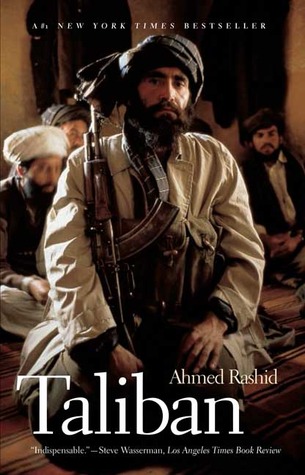
Taliban: Militant Islam, Oil and Fundamentalism in Central Asia

Ahmed Rashid

★★★☆☆
Read Basic intel Intel history GWOT Russia / USSR Middle East US Civil War ISBN 0300089023

Yale Nota Bene · 2001

Shrouding themselves and their aims in deepest secrecy, the leaders of the Taliban movement control Afghanistan with an inflexible, crushing fundamentalism. The most extreme and radical of all Islamic organizations, the Taliban inspires fascination, controversy, and especially fear in both the Muslim world and the West. Correspondent Ahmed Rashid brings the shadowy world of the Taliban into sharp focus in this enormously interesting and revealing book. It is the only authoritative account of the Taliban and modern day Afghanistan available to English language readers. Based on his experiences as a journalist covering the civil war in Afghanistan for twenty years, traveling and living with the Taliban, and interviewing most of the Taliban leaders since their emergence to power in 1994, Rashid offers unparalleled firsthand information. He explains how the growth of Taliban power has already created severe instability in Russia, Iran, Pakistan, and five Central Asian republics. He describes the Taliban's role as a major player in a new "Great Game"—a competition among Western countries and companies to build oil and gas pipelines from Central Asia to Western and Asian markets. The author also discusses the controversial changes in American attitudes toward the Taliban—from early support to recent bombings of Osama Bin Laden's hideaway and other Taliban-protected terrorist bases—and how they have influenced the stability of the region.

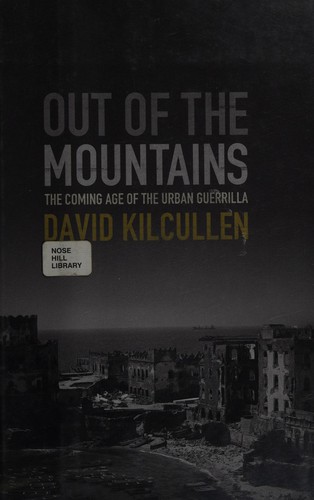
Out of the Mountains: The Coming Age of the Urban Guerrilla

David Kilcullen

★★☆☆☆
Read Basic intel GWOT Guerrilla / COIN Middle East Intel history Strategy / theory ISBN 9780199737505

Oxford University Press · 2013

When Americans think of modern warfare, what comes to mind is the US army skirmishing with terrorists and insurgents in the mountains of Afghanistan. But the face of global conflict is ever-changing. In Out of the Mountains , David Kilcullen, one of the world's leading experts on current and future conflict, offers a groundbreaking look at what may happen after today's wars end. This is a book about future conflicts and future cities, and about the challenges and opportunities that four powerful megatrends--population, urbanization, coastal settlement, and connectedness--are creating across the planet. And it is about what cities, communities and businesses can do to prepare for a future in which all aspects of human society--including, but not limited to, conflict, crime and violence--are changing at an unprecedented pace. Kilcullen argues that conflict is increasingly likely to occur in sprawling coastal cities, in peri-urban slum settlements that are enveloping many regions of the Middle East, Africa, Latin America and Asia, and in highly connected, electronically networked settings. He suggests that cities, rather than countries, are the critical unit of analysis for future conflict and that resiliency, not stability, will be the key objective. Ranging across the globe--from Kingston to Mogadishu to Lagos to Benghazi to Mumbai--he offers a unified theory of "competitive control" that explains how non-state armed groups such as drug cartels, street gangs, and warlords draw their strength from local populations, providing useful ideas for dealing with these groups and with diffuse social conflicts in general. His extensive fieldwork on the ground in a series of urban conflicts suggests that there will be no military solution for many of the struggles we will face in the future. We will need to involve local people deeply to address problems that neither outsiders nor locals alone can solve, drawing on the insight only locals can bring, together with outsider knowledge from fields like urban planning, systems engineering, renewable energy, conflict resolution and mediation. This deeply researched and compellingly argued book provides an invaluable roadmap to a future that will increasingly be crowded, urban, coastal, connected--and dangerous.

Guerrilla Strategies: An Historical Anthology from the Long March to Afghanistan

Gérard Chaliand

unrated
Read Advanced intel Technical warfare Basic intel GWOT Guerrilla / COIN ISBN 0520044444

University of California Press · 1982

This unique anthology of writings on revolutionary warfare and counterinsurgency covers almost all the major struggles of the modern world. Chaliand, who has had firsthand experience with guerrilla movements in Afghanistan, Africa, and Latin America, provides a concise yet panoramic overview of political and military strategies in revolutionary warfare, noting their strengths, limitations, and pathologies.

Invisible Armies: An Epic History of Guerrilla Warfare from Ancient Times to the Present

Max Boot

unrated
Read Basic intel Intel history Military history Vietnam GWOT Naval Guerrilla / COIN Middle East Strategy / theory ISBN 9780871404244

Liveright Pub. Corporation · 2012

As fitting for the twenty-first century as von Clausewitz’s On War was in its own time, Invisible Armies is a complete global history of guerrilla uprisings through the ages. Beginning with the first insurgencies in the ancient world―when Alexander the Great discovered that fleet nomads were harder to defeat than massive conventional armies―Max Boot, best-selling author and military advisor in Iraq and Afghanistan, masterfully guides us from the Jewish rebellion against the Roman Empire up through the horrors of the French-Indochina War and the shadowy, post-9/11 battlefields of today. Relying on a diverse cast of unforgettable characters―not only Mao and Che but also the legendary Italian nationalist Giuseppe Garibaldi, the archaeologist-turned–military commander T. E. Lawrence, and the “Quiet American” Edward Lansdale, among others―Boot explodes everything we thought we knew about unconventional combat. The result is both an enthralling read and our most important work on nontraditional warfare. 70 illustrations; 8 maps

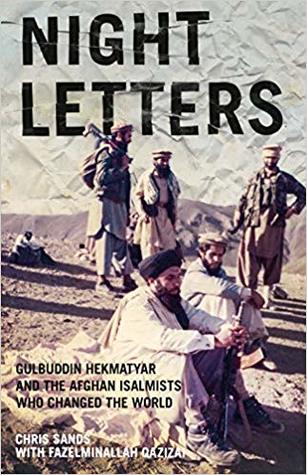
Night Letters: Gulbuddin Hekmatyar and the Afghan Islamists Who Changed the World

Chris Sands

unrated
Read Advanced intel Basic intel Biographies Intel history Military history GWOT Guerrilla / COIN Russia / USSR Intel history Biography Strategy / theory ISBN 9781787381964

C. Hurst and Company (Publishers) Limited · 2019

In 1969, several young men met on a rainy night in Kabul to form an Islamist student group. Their aim was laid out in a simple typewritten statement: to halt the spread of Soviet and American influence in Afghanistan. They went on to change the world. 'Night Letters' tells the extraordinary story of the group’s most notorious member, Gulbuddin Hekmatyar, and the guerrilla organisation he came to lead, Hizb-e Islami. By the late 1980s, tens of thousands were drawn to Hekmatyar’s vision of a radical Islamic state that would sow unrest from Kashmir to Jerusalem. His doctrine of violent global jihad culminated in 9/11 and the birth of ISIS, yet he never achieved his dream of ruling Afghanistan. The peace deal he signed with Kabul in 2016 was yet another controversial twist in an astonishing life. Sands and Qazizai delve into the secret history of Hekmatyar and Hizb-e Islami: their wars against Russian and American troops, and their bloody and bitter feuds with domestic enemies. Based on hundreds of exclusive interviews carried out across the region and beyond, this is the definitive account of the most important, yet poorly understood, international Islamist movement of the last fifty years.