S2 Search · Reading list

S2 Actual reading list

Books from S2 Actual on Goodreads, organized by his shelves and topic buckets (intel lists, military history, logistics, etc.). Metadata filled via Open Library.

Not official S2 Underground. Independent fan index — not affiliated with or endorsed by S2. Official hub: linktr.ee/S2_underground. S2 materials are CC BY-NC-SA 4.0.

S2 topic buckets (Goodreads)

Subjects & genres

19 books · Basic intel · subject Strategy / theory

No cover · Amazon

Crusade: The Untold Story of the Persian Gulf War

Rick Atkinson

★★★★★
Read Basic intel Advanced intel Technical warfare Logistics Intel history Military history Middle East Logistics Strategy / theory

A definitive account of the Gulf War told by Pulitzer Prize–winning correspondent Rick Atkinson. This previously untold story of the US war with Iraq in the early 1990s, Atkinson follows the 42-day war from the first night to the final day, providing vivid accounts of bombing runs, White House strategy sessions, firefights, and bitter internal conflicts.
No cover · Amazon

Fast Tanks and Heavy Bombers: Innovation in the U.S. Army, 1917-1945

David E. Johnson

★★★★★
Read Basic intel Military history Intel history Logistics WWII Air power Armor Guerrilla / COIN Logistics Strategy / theory

The U.S. Army entered World War II unprepared. In addition, lacking Germany's blitzkrieg approach of coordinated armor and air power, the army was organized to fight two wars: one on the ground and one in the air. Previous commentators have blamed Congressional funding and public apathy for the army's unprepared state. David E. Johnson believes instead that the principal causes were internal: army culture and bureaucracy, and their combined impact on the development of weapons and doctrine. Johnson examines the U.S. Army's innovations for both armor and aviation between the world wars, arguing that the tank became a captive of the conservative infantry and cavalry branches, while the airplane's development was channeled by air power insurgents bent on creating an independent air force. He maintains that as a consequence, the tank's potential was hindered by the traditional arms, while air power advocates focused mainly on proving the decisiveness of strategic bombing, neglecting the mission of tactical support for ground troops. Minimal interaction between ground and air officers resulted in insufficient cooperation between armored forces and air forces. Fast Tanks and Heavy Bombers makes a major contribution to a new understanding of both the creation of the modern U.S. Army and the Army's performance in World War II. The book also provides important insights for future military innovation.

Terrorist Trail: Backtracking the Foreign Fighter

H. John Poole

★★★★★
Read Basic intel GWOT Guerrilla / COIN Middle East Strategy / theory ISBN 9780963869593

Posterity Press (NC); Illustrate · September 20, 2006

This book is about covertly penetrating the enemy heartland along the ground. At the height of the Iraq War, it was selling to Marines in the Euphrates Valley at a rate of 200 per month. That's because it helped them to seize the initiative. First, it describes the West's most effective counter-guerrilla force. This was not the British in Malaysia, but Rhodesia's Selous Scouts. Their ability to operate safely as tiny teams deep in enemy territory is the model to which all U.S. special operators should aspire. Never fond of apartheid, they regularly converted former foes into loyal members. Then, it shows how to follow enemy footprints in urban terrain. Finally, it provides a spellbinding history of "terrorism" in Africa--the most recent arena for Islamist and Communist expansion.

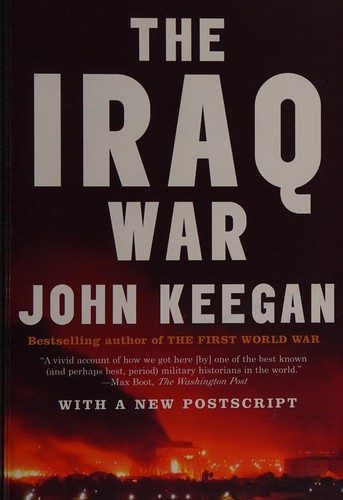
The Iraq War

John Keegan

★★★★★
Read Basic intel GWOT Middle East Strategy / theory ISBN 1400079209

Vintage Books · 2005

The 2003 Iraq war remains among the most mysterious armed conflicts of modernity. In The Iraq War , John Keegan offers a sharp and lucid appraisal of the military campaign, explaining just how the coalition forces defeated an Iraqi army twice its size and addressing such questions as whether Saddam Hussein ever possessed weapons of mass destruction and how it is possible to fight a war that is not, by any conventional measure, a war at all. Drawing on exclusive interviews with Donald Rumsfeld and General Tommy Franks, Keegan retraces the steps that led to the showdown in Iraq, from the highlights of Hussein’s murderous rule to the diplomatic crossfire that preceded the invasion. His account of the combat in the desert is unparalleled in its grasp of strategy and tactics. The result is an urgently needed and up-to-date book that adds immeasurably to our understanding of those twenty-one days of war and their long, uncertain aftermath.

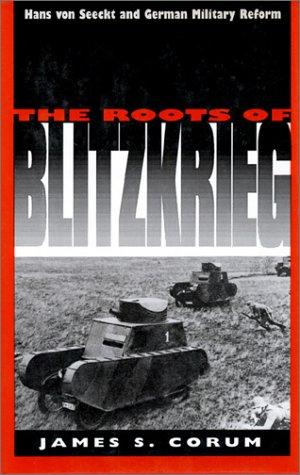
The Roots Of Blitzkrieg: Hans von Seeckt And German Military Reform

James S. Corum

★★★★★
Read Advanced intel Basic intel Military history Intel history Logistics WWII WWI Logistics Strategy / theory ISBN 9780700606283

University Press of Kansas · February 1994

Following Germany's defeat in World War I, the Germans signed the Versailles Treaty, superficially agreeing to limit their war powers. The Allies envisioned the future German army as a lightly armed border guard and international security force. The Germans had other plans. As early as 1919, James Corum contends, the tactical foundations were being laid for the Nazi Blitzkrieg. Between 1919 and 1933, German military leaders created and nurtured the Reichswehr, a new military organization built on the wreckage of the old Imperial Army. It was not being groomed for policing purposes. Focusing on Hans von Seeckt, General Staff Chief and Army Commander, Corum traces the crucial transformations in German military tactical doctrine, organization, and training that laid the foundations for fighting Germany's future wars. In doing so, he restores balance to prior assessment of von Seeckt's influence and demonstrates how the general, along with a few other "visionary" officers--including armor tactician Ernst Volckheim and air tactician Helmut Wilberg--collaborated to develop the core doctrine for what became the Blitzkrieg. The concepts of mobile war so essential to Germany's strength in World War II, Corum shows, were in place well before the tools became available. As an unforeseen consequence of the Versailles Treaty, the Germans were not saddled with a stockpile of outdated equipment as the Allies were. This, ironically, resulted in an advantage for the Germans, who were able to create doctrine first and design equipment to match it.

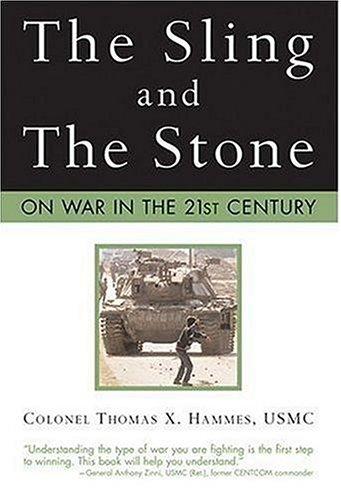
The Sling and the Stone: On War in the 21st Century

Thomas X. Hammes

★★★★★
Read Basic intel Advanced intel Military history Intel history Vietnam Cold War GWOT Guerrilla / COIN Russia / USSR Middle East Strategy / theory ISBN 9780760324073

Zenith Press · February 17, 2006

4GW (Fourth Generation Warfare) is the only kind of war America has ever lost. And we have done so three times - in Vietnam, Lebanon, and Somalia. This form of warfare has also defeated the French in Vietnam and Algeria, and the USSR in Afghanistan.As the only Goliath left in the world, we should be worried that the world's Davids have found a sling and stone that work." - Chapter 1, The Sling and the Stone: On War in the 21st Century. The War in Iraq. The War on Terror. These types of "asymmetrical" warfare are the conflicts of the 21st century - and show how difficult it is for the world's remaining superpower to battle insurgents and terrorists who will fight unconventionally in the face of superior military power. This change in military conflict may seem sudden.

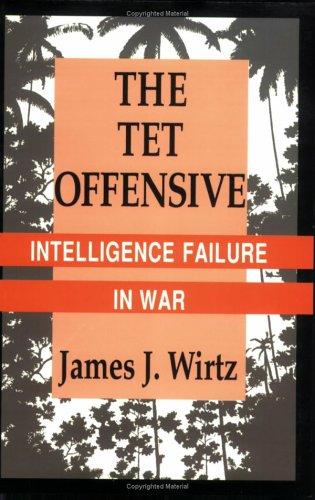
The Tet Offensive: Intelligence Failure in War

James J. Wirtz

★★★★★
Read Basic intel Vietnam Intel history Strategy / theory ISBN 9780801482090

Cornell University Press · July 1994

In this account of one of the worst intelligence failures in American history, James J. Wirtz explains why U.S. forces were surprised by the North Vietnamese Tet Offensive in 1968. Wirtz reconstructs the turning point of the Vietnam War in unprecedented detail. Drawing upon Vietcong and recently declassified U.S. sources, he is able to trace the strategy and unfolding of the Tet campaign as well as the U.S. response.

No cover · Amazon

Weaving the Tangled Web: Military Deception in Large-Scale Combat Operations (Large-Scale Combat Operations Series Book 1)

Christopher M. Rein

★★★★★
Read Basic intel Military history Intel history WWII Korea Cold War GWOT Guerrilla / COIN China Russia / USSR Middle East Intel history Strategy / theory

This book is from Army University Press and is Volume 1 in it's Large-Scale Combat Operations Series. It has footnotes, maps, and pictures, and was originally published in 2018. “Since the Soviet Union’s fall in 1989, the specter of large-scale ground combat against a peer adversary was remote. During the years following, the US Army found itself increasingly called upon to lead multinational operations in the lower to middle tiers of the range of military operations and conflict continuum. The events of 11 September 2001 led to more than 15 years of intense focus on counterterrorism, counterinsurgency, and stability operations in Iraq and Afghanistan. An entire generation of Army leaders and Soldiers were culturally imprinted by this experience. We emerged as an Army more capable in limited contingency operations than at any time in our nation’s history, but the geopolitical landscape continues to shift and the risk of great power conflict is no longer a remote possibility. “While our Army focused on limited contingency operations in the Middle East and Southwest Asia, other regional and peer adversaries scrutinized US military processes and methods and adapted their own accordingly. As technology has proliferated and become accessible in even the most remote corners of the world, the US military’s competitive advantage is being challenged across all of the warfighting domains. In the last decade, we have witnessed an emergent China, a revanchist and aggressive Russia, a menacing North Korea, and a cavalier Iranian regime. Each of these adversaries seeks to change the world order in their favor and contest US strategic interests abroad. The chance for war against a peer or regional near-peer adversary has increased exponentially, and we must rapidly shift our focus to successfully compete in all domains and across the full range of military operations." Includes: Introduction: Multi-Domain Deception (Christopher M. Rein, General Editor); Chapter 1: The Belfort Ruse the American Deception plan for the battle of st. Mihiel, 1918 (Mark E. Grotelueschen); Chapter 2: From Beersheba To Megiddo British Deception Operations During The Palestine Campaign, 1917-1918; (Major Brian J. Drohan); Chapter 3: Operation Bertram British Deception At El Alamein (Gary W. Linhart); Chapter 4: Operations Barclay, Cascade, And Mincemeat Allied Deception In The Mediterranean, 1943 (Gregory S. Hospodor); Chapter 5: Operation Kreml German Strategic Deception On The Eastern Front In 1942 (Alan P. Donohue); Chapter 6: Red Star Resurgent Soviet Deception Operations At Stalingrad, 1942-1943 (First Lieutenant Kyle B. Vautrinot); Chapter 7: Operation Bagration Maskirovka At Its Height, Summer 1944 (Curtis S. King); Chapter 8: Deceive, Divert, And Delay Operation Fortitude In Support Of D-Day (Scott C. Farquhar); Chapter 9: Chinese Deception And The 1950 Intervention In The Korean War (Joseph G.D. Babb); Chapter 10: From Maneuvers To War The Egyptian Deception Plan On The Eve Of The Yom-Kippur War (Tal Tovy); Chapter 11: Target San Carlos British Deception During The Repossession Of The Falkland Islands (Steven Paget); Chapter 12: Deception In The Desert Deceiving Iraq In Operation Desert Storm (Donald P. Wright); Conclusion: The Future Of Military Deception Operations (Conrad C. Crane)

No cover · Amazon

Barren SEAD: USAF Defense Suppression Doctrine, 1953-1972

James L. Young Jr.

★★★★
Read Basic intel Military history Intel history Technical warfare Vietnam Cold War Special ops Naval Air power Cyber Biography Strategy / theory

Since 1972, the United States Air Force has argued that its operations against North Vietnam were unsuccessful primarily through a combination of civilian interference and poor strategic choices. Often citing the “success” of Operation Linebacker II as an example of what might have been had its leaders been given free rein, for almost fifty years the Air Force has maintained that its proper employment is the key to winning America’s wars. In Barren SEAD, award winning historian James L. Young Jr. propagates a different Instead of being a sign of what the Air Force was capable of, Linebacker II was a bitter failure that starkly outlined the USAF’s limitations. Furthermore, the meddling of the Johnson and Nixon Administrations played a minor role in this outcome. The USAF's defeat was not brought about by civilian meddling, but resulted from Air Force leaders’ refusal to develop a Suppression of Enemy Air Defenses (SEAD) doctrine from 1953-1972. Relying primarily on Air Force archival documents, memoirs, and contemporary doctrinal publications, Dr. Young illustrates just how dangerous the Air Force’s inability to nurture its SEAD capability was during this period of the Cold War. James L. Young Jr. holds a doctorate in U.S. History from Kansas State University and is a graduate of the United States Military Academy. Barren SEAD is his first non-fiction book. Previously he has won the United States Naval Institute's 2016 Cyberwarfare Essay Contest, runner up in the 2011 James Adams Cold War Essay Contest, and has had an essay selected by the U.S. Naval Heritage Command for its professional reading list. Dr. Young's other professional articles can be found in Armor Magazine, The Journal of Military History, and Proceedings. For those who prefer fiction, Dr. Young also writes alternate history (Usurper's War series / Phases of Mars anthologies) and military science fiction (Vergassy Universe).

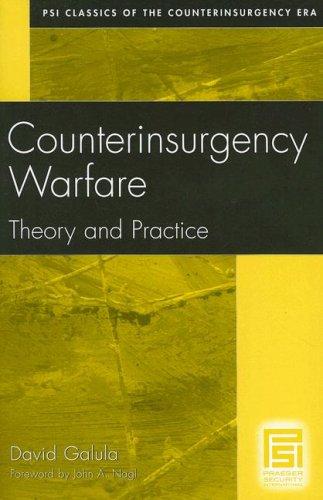
Counterinsurgency Warfare: Theory and Practice (PSI Classics of the Counterinsurgency Era)

David Galula

★★★★
Read Basic intel Vietnam GWOT Guerrilla / COIN Middle East Strategy / theory ISBN 9780275993030

Praeger Security International Paperback · August 30, 2006

This volume in the Praeger Security International (PSI) series Classics of the Counterinsurgency Era defines the laws of insurgency and outlines the strategy and tactics to combat such threats. Drawn from the observations of a French officer, David Galula, who witnessed guerrilla warfare on three continents, the book remains relevant today as American policymakers, military analysts, and members of the public look to the counterinsurgency era of the 1960s for lessons to apply to the current situation in Iraq and Afghanistan. With a new foreword by John A. Nagl, author of Counterinsurgency Lessons from Malaya and Vietnam (Praeger, 2002).

Supplying War: Logistics from Wallenstein to Patton

Martin van Creveld

★★★★
Read Basic intel Logistics Logistics Strategy / theory ISBN 0521837448

Cambridge University Press · 2004

Drawing on a very wide range of unpublished and previously unexploited sources, Martin van Creveld examines the "nuts and bolts" of war. He considers the formidable problems of movement and supply, transportation and administration, often mentioned (but rarely explored) by the vast majority of books on military history. By concentrating on logistics rather than on the more traditional tactics and strategy, van Creveld is also able to offer an original reinterpretation of military history. First Edition Hb (1977): 0-521-21730-X FIrst Edition Pb (1979): 0-521-29793-1

The Art of War

Sun Tzu

★★★★
Read Basic intel Military history Intel history China Strategy / theory ISBN 9781533142467

Pearson Education Asia · 1900

Twenty-Five Hundred years ago, Sun Tzu wrote this classic book of military strategy based on Chinese warfare and military thought. Since that time, all levels of military have used the teaching on Sun Tzu to warfare and civilization have adapted these teachings for use in politics, business and everyday life. The Art of War is a book which should be used to gain advantage of opponents in the boardroom and battlefield alike.

Out of the Mountains: The Coming Age of the Urban Guerrilla

David Kilcullen

★★☆☆☆
Read Basic intel GWOT Guerrilla / COIN Middle East Intel history Strategy / theory ISBN 9780199737505

Oxford University Press · 2013

When Americans think of modern warfare, what comes to mind is the US army skirmishing with terrorists and insurgents in the mountains of Afghanistan. But the face of global conflict is ever-changing. In Out of the Mountains , David Kilcullen, one of the world's leading experts on current and future conflict, offers a groundbreaking look at what may happen after today's wars end. This is a book about future conflicts and future cities, and about the challenges and opportunities that four powerful megatrends--population, urbanization, coastal settlement, and connectedness--are creating across the planet. And it is about what cities, communities and businesses can do to prepare for a future in which all aspects of human society--including, but not limited to, conflict, crime and violence--are changing at an unprecedented pace. Kilcullen argues that conflict is increasingly likely to occur in sprawling coastal cities, in peri-urban slum settlements that are enveloping many regions of the Middle East, Africa, Latin America and Asia, and in highly connected, electronically networked settings. He suggests that cities, rather than countries, are the critical unit of analysis for future conflict and that resiliency, not stability, will be the key objective. Ranging across the globe--from Kingston to Mogadishu to Lagos to Benghazi to Mumbai--he offers a unified theory of "competitive control" that explains how non-state armed groups such as drug cartels, street gangs, and warlords draw their strength from local populations, providing useful ideas for dealing with these groups and with diffuse social conflicts in general. His extensive fieldwork on the ground in a series of urban conflicts suggests that there will be no military solution for many of the struggles we will face in the future. We will need to involve local people deeply to address problems that neither outsiders nor locals alone can solve, drawing on the insight only locals can bring, together with outsider knowledge from fields like urban planning, systems engineering, renewable energy, conflict resolution and mediation. This deeply researched and compellingly argued book provides an invaluable roadmap to a future that will increasingly be crowded, urban, coastal, connected--and dangerous.

No cover · Amazon

Huế 1968: A Turning Point of the American War in Vietnam

Mark Bowden

unrated
Read Advanced intel Basic intel Military history Intel history WWII Vietnam Intel history Strategy / theory

In the early hours of January 31, 1968, the North Vietnamese launched over one hundred attacks across South Vietnam in what would become known as the Tet Offensive. The lynchpin of Tet was the capture of Hue, Vietnam?s intellectual and cultural capital, by 10,000 National Liberation Front troops who descended from hidden camps and surged across the city of 140,000. Within hours the entire city was in their hands save for two small military outposts. American commanders refused to believe the size and scope of the Front?s presence, ordering small companies of marines against thousands of entrenched enemy troops. After several futile and deadly days, Lieutenant Colonel Ernie Cheatham would finally come up with a strategy to retake the city, block by block and building by building, in some of the most intense urban combat since World War II. With unprecedented access to war archives in the U.S. and Vietnam and interviews with participants from both sides, Bowden narrates each stage of this crucial battle through multiple viewpoints. Played out over 24 days and ultimately costing 10,000 lives, the Battle of Hue was by far the bloodiest of the entire war. When it ended, the American debate was never again about winning, only about how to leave. Hue 1968 is a gripping and moving account of this pivotal moment.

Invisible Armies: An Epic History of Guerrilla Warfare from Ancient Times to the Present

Max Boot

unrated
Read Basic intel Intel history Military history Vietnam GWOT Naval Guerrilla / COIN Middle East Strategy / theory ISBN 9780871404244

Liveright Pub. Corporation · 2012

As fitting for the twenty-first century as von Clausewitz’s On War was in its own time, Invisible Armies is a complete global history of guerrilla uprisings through the ages. Beginning with the first insurgencies in the ancient world―when Alexander the Great discovered that fleet nomads were harder to defeat than massive conventional armies―Max Boot, best-selling author and military advisor in Iraq and Afghanistan, masterfully guides us from the Jewish rebellion against the Roman Empire up through the horrors of the French-Indochina War and the shadowy, post-9/11 battlefields of today. Relying on a diverse cast of unforgettable characters―not only Mao and Che but also the legendary Italian nationalist Giuseppe Garibaldi, the archaeologist-turned–military commander T. E. Lawrence, and the “Quiet American” Edward Lansdale, among others―Boot explodes everything we thought we knew about unconventional combat. The result is both an enthralling read and our most important work on nontraditional warfare. 70 illustrations; 8 maps

Night Letters: Gulbuddin Hekmatyar and the Afghan Islamists Who Changed the World

Chris Sands

unrated
Read Advanced intel Basic intel Biographies Intel history Military history GWOT Guerrilla / COIN Russia / USSR Intel history Biography Strategy / theory ISBN 9781787381964

C. Hurst and Company (Publishers) Limited · 2019

In 1969, several young men met on a rainy night in Kabul to form an Islamist student group. Their aim was laid out in a simple typewritten statement: to halt the spread of Soviet and American influence in Afghanistan. They went on to change the world. 'Night Letters' tells the extraordinary story of the group’s most notorious member, Gulbuddin Hekmatyar, and the guerrilla organisation he came to lead, Hizb-e Islami. By the late 1980s, tens of thousands were drawn to Hekmatyar’s vision of a radical Islamic state that would sow unrest from Kashmir to Jerusalem. His doctrine of violent global jihad culminated in 9/11 and the birth of ISIS, yet he never achieved his dream of ruling Afghanistan. The peace deal he signed with Kabul in 2016 was yet another controversial twist in an astonishing life. Sands and Qazizai delve into the secret history of Hekmatyar and Hizb-e Islami: their wars against Russian and American troops, and their bloody and bitter feuds with domestic enemies. Based on hundreds of exclusive interviews carried out across the region and beyond, this is the definitive account of the most important, yet poorly understood, international Islamist movement of the last fifty years.

On War

Carl von Clausewitz

unrated
Read Basic intel Intel history Military history Strategy / theory Revolution ISBN 0691018545

Princeton U.P. · 1992

Carl von Clausewitz’s On War is the most significant attempt in Western history to understand war, both in its internal dynamics and as an instrument of policy. Since the work’s first appearance in 1832, it has been read throughout the world, and has stimulated generations of soldiers, political leaders, and intellectuals. First published in 1976 and revised in 1984, Michael Howard and Peter Paret’s Princeton edition of Clausewitz’s classic work has itself achieved classic status and is widely regarded as the best translation and standard edition of On War in English. This feature-rich edition includes an essay by Paret on the genesis of Clausewitz’s book, an essay by Howard on Clausewitz’s influence, and an essay by Bernard Brodie on the continuing relevance of On War. In addition, Brodie provides a lengthy and detailed commentary on and guide to reading On War, and the edition also includes a comprehensive index.

The Art and Science of Military Deception (Artech House Intelligence and Information Operations)

Hy Rothstein

unrated
Read Basic intel Advanced intel Military history Intel history Technical warfare Strategy / theory ISBN 9781608075515

Artech House Publishers · 2013

It is said that deception among people in a civilized society is something to be loathed even though it seems to be part of human nature; but deception in war is a virtue. This title provides the reader with sufficient knowledge to pursue General Eisenhower's vision for the proper role of deception in support of the national interest.