
S2 Search · Reading list

S2 Actual reading list

Books from S2 Actual on Goodreads, organized by his shelves and topic buckets (intel lists, military history, logistics, etc.). Metadata filled via Open Library.

Not official S2 Underground. Independent fan index — not affiliated with or endorsed by S2. Official hub: linktr.ee/S2_underground. S2 materials are CC BY-NC-SA 4.0.

S2 topic buckets (Goodreads)

Subjects & genres

3 books · Basic intel · subject WWI

Seven Pillars of Wisdom: A Triumph

T.E. Lawrence

★★★★★
Read Intel history Basic intel WWI Espionage Middle East Biography ISBN 0385418957

Anchor Books · 1991

In his classic book, T.E. Lawrence—forever known as Lawrence of Arabia—recounts his role in the origin of the modern Arab world. At first a shy Oxford scholar and archaeologist with a facility for languages, he joined and went on to lead the Arab revolt against the Ottoman Turks while the rest of the world was enmeshed in World War I. With its richly detailed evocation of the land and the people Lawrence passionately believed in, its incisive portraits of key players, from Faisal ibn Hussein, the future Hashemite king of Syria and Iraq, to General Sir Edmund Allenby and other members of the British imperial forces, The Seven Pillars of Wisdom is an indispensible primary historical source. It helps us to understand today’s Middle East, while giving us thrilling accounts of military exploits (including the liberation of Aqaba and Damascus), clandestine activities, and human foibles.
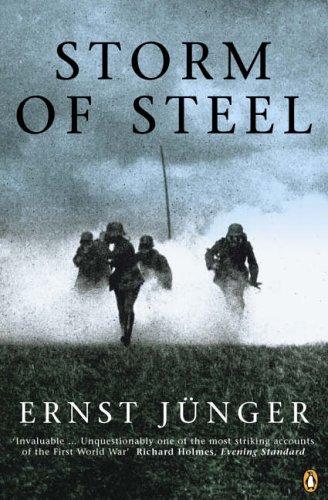
Storm of Steel

Ernst Jünger

★★★★★
Read Advanced intel Basic intel Military history WWI Biography ISBN 9780141186917

Penguin Books Ltd · June 3, 2004

A memoir of astonishing power, savagery, and ashen lyricism, 'Storm of Steel' illuminates not only the horrors but also the fascination of total war, seen through the eyes of an ordinary German soldier. Young, tough, patriotic, but also disturbingly self-aware, Jünger exulted in the Great War, which he saw not just as a great national conflict, but more importantly as a unique personal struggle. Leading raiding parties, defending trenches against murderous British incursions, simply enduring as shells tore his comrades apart, Jünger kept testing himself, braced for the death that will mark his failure. Published shortly after the war's end, 'Storm of Steel' was a worldwide bestseller and can now be rediscovered through Michael Hofmann's brilliant new translation.

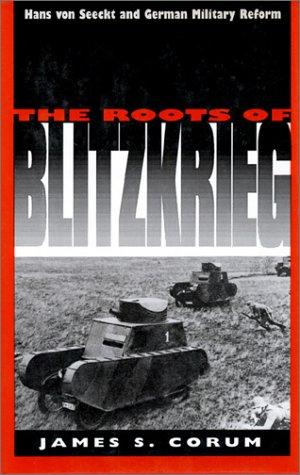
The Roots Of Blitzkrieg: Hans von Seeckt And German Military Reform

James S. Corum

★★★★★
Read Advanced intel Basic intel Military history Intel history Logistics WWII WWI Logistics Strategy / theory ISBN 9780700606283

University Press of Kansas · February 1994

Following Germany's defeat in World War I, the Germans signed the Versailles Treaty, superficially agreeing to limit their war powers. The Allies envisioned the future German army as a lightly armed border guard and international security force. The Germans had other plans. As early as 1919, James Corum contends, the tactical foundations were being laid for the Nazi Blitzkrieg. Between 1919 and 1933, German military leaders created and nurtured the Reichswehr, a new military organization built on the wreckage of the old Imperial Army. It was not being groomed for policing purposes. Focusing on Hans von Seeckt, General Staff Chief and Army Commander, Corum traces the crucial transformations in German military tactical doctrine, organization, and training that laid the foundations for fighting Germany's future wars. In doing so, he restores balance to prior assessment of von Seeckt's influence and demonstrates how the general, along with a few other "visionary" officers--including armor tactician Ernst Volckheim and air tactician Helmut Wilberg--collaborated to develop the core doctrine for what became the Blitzkrieg. The concepts of mobile war so essential to Germany's strength in World War II, Corum shows, were in place well before the tools became available. As an unforeseen consequence of the Versailles Treaty, the Germans were not saddled with a stockpile of outdated equipment as the Allies were. This, ironically, resulted in an advantage for the Germans, who were able to create doctrine first and design equipment to match it.