S2 Search · Reading list

S2 Actual reading list

Books from S2 Actual on Goodreads, organized by his shelves and topic buckets (intel lists, military history, logistics, etc.). Metadata filled via Open Library.

Not official S2 Underground. Independent fan index — not affiliated with or endorsed by S2. Official hub: linktr.ee/S2_underground. S2 materials are CC BY-NC-SA 4.0.

S2 topic buckets (Goodreads)

Subjects & genres

19 books · Basic intel · subject WWII

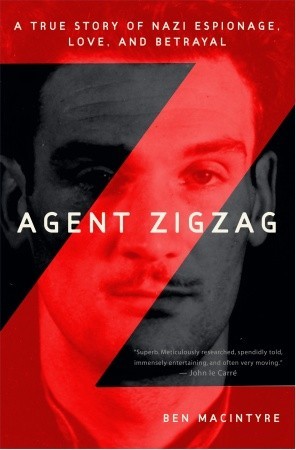
Agent Zigzag: A True Story of Nazi Espionage, Love, and Betrayal

Ben Macintyre

★★★★★
Read Basic intel Intel history WWII Espionage Intel history Biography ISBN 9780307353405

Harmony Books · 2007

Eddie Chapman was a charming criminal, a con man, and a philanderer. He was also one of the most remarkable double agents Britain has ever produced. Inside the traitor was a man of loyalty; inside the villain was a hero. The problem for Chapman, his spymasters, and his lovers was to know where one persona ended and the other began. In 1941, after training as a German spy in occupied France, Chapman was parachuted into Britain with a revolver, a wireless, and a cyanide pill, with orders from the Abwehr to blow up an airplane factory. Instead, he contacted MI5, the British Secret Service. For the next four years, Chapman worked as a double agent, a lone British spy at the heart of the German Secret Service who at one time volunteered to assassinate Hitler for his countrymen. Crisscrossing Europe under different names, all the while weaving plans, spreading disinformation, and, miraculously, keeping his stories straight under intense interrogation, he even managed to gain some profit and seduce beautiful women along the way. The Nazis feted Chapman as a hero and awarded him the Iron Cross. In Britain, he was pardoned for his crimes, becoming the only wartime agent to be thus rewarded. Both countries provided for the mother of his child and his mistress. Sixty years after the end of the war, and ten years after Chapman’s death, MI5 has now declassified all of Chapman’s files, releasing more than 1,800 pages of top secret material and allowing the full story of Agent Zigzag to be told for the first time. A gripping story of loyalty, love, and treachery, Agent Zigzag offers a unique glimpse into the psychology of espionage, with its thin and shifting line between fidelity and betrayal.
No cover · Amazon

Double Cross: The True Story of the D-Day Spies

Ben Macintyre

★★★★★
Read Basic intel Intel history WWII Espionage Intel history

In his celebrated bestsellers Agent Zigzag and Operation Mincemeat, Ben Macintyre told the dazzling true stories of a remarkable WWII double agent and of how the Allies employed a corpse to fool the Nazis and assure a decisive victory.  In Double Cross, Macintyre returns with the untold story of the grand final deception of the war and of the extraordinary spies who achieved it.    On June 6, 1944, 150,000 Allied troops landed on the beaches of Normandy and suffered an astonishingly low rate of casualties.  D-Day was a stunning military accomplishment, but it was also a masterpiece of trickery. Operation Fortitude, which protected and enabled the invasion, and the Double Cross system, which specialized in turning German spies into double agents, deceived the Nazis into believing that the Allies would attack at Calais and Norway rather than Normandy. It was the most sophisticated and successful deception operation ever carried out, ensuring that Hitler kept an entire army awaiting a fake invasion, saving thousands of lives, and securing an Allied victory at the most critical juncture in the war.    The story of D-Day has been told from the point of view of the soldiers who fought in it, the tacticians who planned it, and the generals who led it. But this epic event in world history has never before been told from the perspectives of the key individuals in the Double Cross System. These include its director (a brilliant, urbane intelligence officer), a colorful assortment of MI5 handlers (as well as their counterparts in Nazi intelligence), and the five spies who formed Double Cross’s nucleus: a dashing  Serbian playboy, a Polish fighter-pilot, a bisexual Peruvian party girl, a deeply eccentric Spaniard with a diploma in chicken farming and a volatile Frenchwoman, whose obsessive love for her pet dog very nearly wrecked the entire plan. The D-Day spies were, without question, one of the oddest military units ever assembled, and their success depended on the delicate, dubious relationship between spy and spymaster, both German and British. Their enterprise was saved from catastrophe by a shadowy sixth spy whose heroic sacrifice is revealed here for the first time.    With the same depth of research, eye for the absurd and masterful storytelling that have made Ben Macintyre an international bestseller,  Double Cross is a captivating narrative of the spies who wove a web so intricate it ensnared Hitler’s army and carried thousands of D-Day troops across the Channel in safety.

Eastern Approaches

Fitzroy Maclean

★★★★★
Read Basic intel Intel history Biographies WWII Cold War Special ops Russia / USSR Middle East Biography Orthodox / theology ISBN 9780140132717

Penguin Global · September 1, 2004

70th Anniversary Edition with a New Foreword by Sunday Times Bestselling Author Simon Sebag Montefiore 'A classic' Observer | 'A legend' Washington Post | 'The best book you will read this year' Colonel Tim Collins Posted to Moscow as a young diplomat before the Second World War, Fitzroy Maclean travelled widely, with or without permission, in some of the wildest and remotest parts of the Soviet Union, then virtually closed to foreigners. In 1942 he fought as a founder member of the SAS in North Africa. There Maclean specialised in hair-raising commando raids behind enemy lines, including the daring and outrageous kidnapping of the German Consul in Axis-controlled Iraq. In 1943 he parachuted into German-occupied Yugoslavia as Winston Churchill's personal representative to Josip Broz Tito and remained there until 1945, all enemy attempts to capture him proving unsuccessful. Eastern Approaches is Maclean's classic, gripping account of the sybaritic delights of diplomatic life, the thrill of remote travel in the then-forbidden zones of Central Asia, and the violence and adventure of world-changing tours in North Africa and Yugoslavia. Maclean is the original British action hero and this is blistering reading. 'This book literally changed my life' Simon Sebag Montefiore 'A man of daring character' Winston Churchill 'An absorbing mixture of military adventure, political judgement, urbane wit, cool humour and surprising incident' Financial Times 'One of the bravest men in the British army, and one of the funniest' Ben Macintyre 'Entertaining, important, the model for James Bond' New York Times

Enigma: The Battle for the Code

Hugh Sebag-Montefiore

★★★★★
Read Basic intel Cryptography Military history Intel history WWII Espionage Naval Air power Intel history Orthodox / theology ISBN 9780471490357

Wiley · February 12, 2004

Winston Churchill called the cracking of the German Enigma Code "the secret weapon that won the war." Now, for the first time, noted British journalist Hugh-Sebag-Montefiore reveals the complete story of the breaking of the code by the Allies--the breaking that played a crucial role in the outcome of World War II. This fascinating account relates the never-before-told, hair-raising stories of the heroic British and American sailors, spies, and secret agents who faced death in order to capture vital codebooks from sinking ships and snatch them from under the noses of Nazi officials. Sebag-Montefiore also relates new details about the genesis of the code, little-known facts about how the Poles first cracked the Luftwaffe's version of the code (and then passed it along to the British), and the feverish activities at Bletchley Park. Based in part on documents recently unearthed from American and British archives--including previously confidential government files--and in part on unforgettable, firsthand accounts of surviving witnesses, Enigma unearths the stunning truth about the brilliant piece of decryption that changed history.

No cover · Amazon

Fast Tanks and Heavy Bombers: Innovation in the U.S. Army, 1917-1945

David E. Johnson

★★★★★
Read Basic intel Military history Intel history Logistics WWII Air power Armor Guerrilla / COIN Logistics Strategy / theory

The U.S. Army entered World War II unprepared. In addition, lacking Germany's blitzkrieg approach of coordinated armor and air power, the army was organized to fight two wars: one on the ground and one in the air. Previous commentators have blamed Congressional funding and public apathy for the army's unprepared state. David E. Johnson believes instead that the principal causes were internal: army culture and bureaucracy, and their combined impact on the development of weapons and doctrine. Johnson examines the U.S. Army's innovations for both armor and aviation between the world wars, arguing that the tank became a captive of the conservative infantry and cavalry branches, while the airplane's development was channeled by air power insurgents bent on creating an independent air force. He maintains that as a consequence, the tank's potential was hindered by the traditional arms, while air power advocates focused mainly on proving the decisiveness of strategic bombing, neglecting the mission of tactical support for ground troops. Minimal interaction between ground and air officers resulted in insufficient cooperation between armored forces and air forces. Fast Tanks and Heavy Bombers makes a major contribution to a new understanding of both the creation of the modern U.S. Army and the Army's performance in World War II. The book also provides important insights for future military innovation.

Intelligence in War: Knowledge of the Enemy from Napoleon to Al-Qaeda

John Keegan

★★★★★
Read Basic intel Intel history WWII Espionage GWOT Naval Air power Intel history Biography ISBN 0375400532

Knopf · 2003

In fiction, the spy is a glamorous figure whose secrets make or break peace, but, historically, has intelligence really been a vital step to military victories? In this breakthrough study, the preeminent war historian John Keegan goes to the heart of a series of important conflicts to develop a powerful argument about military intelligence. In his characteristically wry and perceptive prose, Keegan offers us nothing short of a new history of war through the prism of intelligence. He brings to life the split-second decisions that went into waging war before the benefit of aerial surveillance and electronic communications. The English admiral Horatio Nelson was hot on the heels of Napoleon’s fleet in the Mediterranean and never knew it, while Stonewall Jackson was able to compensate for the Confederacy’s disadvantage in firearms and manpower with detailed maps of the Appalachians. In the past century, espionage and decryption have changed the face of the Japanese surprise attack at the Battle of the Midway was thwarted by an early warning. Timely information, however, is only the beginning of the surprising and disturbing aspects of decisions that are made in war, where brute force is often more critical. Intelligence in War is a thought-provoking work that ranks among John Keegan’s finest achievements.

Nancy Wake

Peter FitzSimons

★★★★★
Read Biographies Basic intel Intel history WWII Espionage Special ops Intel history Biography ISBN 9780732269197

HarperCollins Publishers · 28 January 2001

'Freedom is the only thing worth living for. While I was doing that work I used to think that it didn't matter if I died, because without freedom there was no point in living'. Nancy Wake In the early 1930's, Nancy Wake was a young woman enjoying a bohemian life in Paris. By the end of the Second World War she was the Gestapo's most wanted person. As a naive, young journalist, Nancy Wake witnessed a horrific scene of Nazi violence in a Viennese street. From that moment, she declared that she would do everything in her power to rid Europe of the Nazi presence. What began as a courier job here and there, became a highly successful escape network for Allied soldiers, perfectly camouflaged by Nancy's high-society life in Marseille. Her network was soon so successful - and so notorious - that he had to flee France to escape the Gestapo who had dubbed her 'the white mouse' for her knack of slipping through its traps. But Nancy was a passionate enemy of the Nazis and refused to stay away. She trained with the British Special Operations Executive and parachuted back into France behind enemy lines. Again, this singular woman rallied to the cause, helping to lead a powerful underground fighting force, the Maquis. Supplying weapons and training the civilian Maquis, organising Allied parachute drops, cycling four hundred kilometres across a mountain range to find a new transmitting radio - nothing seemed too difficult in her fight against the Nazis. Peter FitzSimons reveals Nancy Wake's compelling story, a tale of an ordinary woman doing extraordinary things.

Operation Mincemeat: How a Dead Man and a Bizarre Plan Fooled the Nazis and Assured an Allied Victory

Ben Macintyre

★★★★★
Read Basic intel Intel history WWII Espionage Naval Biography Orthodox / theology ISBN 9780747598688

Bloomsbury · 2010

In 1943, from a windowless London basement office, two intelligence officers conceived a plan that was both simple & complicated—Operation Mincemeat. Purpose? To deceive the Nazis into thinking the Allies were planning to attack Europe by way of Greece or Sardinia, rather than Sicily, as the Nazis had assumed & the Allies ultimately chose. Charles Cholmondeley of MI5 and the British naval intelligence officer Ewen Montagu were very different. Cholmondeley was a dreamer seeking adventure. Montagu was an aristocratic, detail-oriented barrister. A perfect team, they created an ingenious plan: equip a corpse with secret (but false) papers concerning the invasion, then drop it off the coast of Spain where German spies would hopefully take the bait. The idea was approved by British intelligence officials, including Ian Fleming (007's creator). Winston Churchill believed it might ring true to the Axis & help bring victory. Filled with spies, double agents, rogues, heroes & a corpse, the story of Operation Mincemeat reads like an international thriller. Unveiling never-before-released material, Macintyre goes into the minds of intelligence officers, their moles & spies, & the German Abwehr agents who suffered the “twin frailties of wishfulness & yesmanship.” He weaves together the eccentric personalities of Cholmondeley & Montagu & their improbable feats into an adventure that saved thousands & paved the way for the conquest of Sicily.

Rogue Heroes: The History of the SAS, Britain's Secret Special Forces Unit That Sabotaged the Nazis and Changed the Nature of War

Ben Macintyre

★★★★★
Read Basic intel Intel history Military history WWII Espionage Special ops Orthodox / theology ISBN 9781101904169

Crown · 2016

In the summer of 1941, at the height of the war in the Western Desert, a bored and eccentric young officer, David Stirling, came up with a plan that was radical and entirely against the rules: a small undercover unit that would inflict mayhem behind enemy lines. Despite intense opposition, Winston Churchill personally gave Stirling permission to recruit the toughest, brightest and most ruthless soldiers he could find. So began the most celebrated and mysterious military organisation in the world: the SAS. Now, 75 years later, the SAS has finally decided to tell its astonishing story. It has opened its secret archives for the first time, granting historian Ben Macintyre full access to a treasure trove of unseen reports, memos, diaries, letters, maps and photographs, as well as free rein to interview surviving Originals and those who knew them. The result is an exhilarating tale of fearlessness and heroism, recklessness and tragedy; of extraordinary men who were willing to take monumental risks. It is a story about the meaning of courage.

The Roots Of Blitzkrieg: Hans von Seeckt And German Military Reform

James S. Corum

★★★★★
Read Advanced intel Basic intel Military history Intel history Logistics WWII WWI Logistics Strategy / theory ISBN 9780700606283

University Press of Kansas · February 1994

Following Germany's defeat in World War I, the Germans signed the Versailles Treaty, superficially agreeing to limit their war powers. The Allies envisioned the future German army as a lightly armed border guard and international security force. The Germans had other plans. As early as 1919, James Corum contends, the tactical foundations were being laid for the Nazi Blitzkrieg. Between 1919 and 1933, German military leaders created and nurtured the Reichswehr, a new military organization built on the wreckage of the old Imperial Army. It was not being groomed for policing purposes. Focusing on Hans von Seeckt, General Staff Chief and Army Commander, Corum traces the crucial transformations in German military tactical doctrine, organization, and training that laid the foundations for fighting Germany's future wars. In doing so, he restores balance to prior assessment of von Seeckt's influence and demonstrates how the general, along with a few other "visionary" officers--including armor tactician Ernst Volckheim and air tactician Helmut Wilberg--collaborated to develop the core doctrine for what became the Blitzkrieg. The concepts of mobile war so essential to Germany's strength in World War II, Corum shows, were in place well before the tools became available. As an unforeseen consequence of the Versailles Treaty, the Germans were not saddled with a stockpile of outdated equipment as the Allies were. This, ironically, resulted in an advantage for the Germans, who were able to create doctrine first and design equipment to match it.

The Secret War: Spies, Codes and Guerrillas 1939-1945

Max Hastings

★★★★★
Read Basic intel Intel history WWII Espionage Guerrilla / COIN Russia / USSR ISBN 9780007503742

William Collins · Sep 10, 2015

Examining the espionage and intelligence stories in World War II, on a global basis, bringing together the British, American, German, Russian and Japanese histories. There were two Second World Wars: one fought on the battlefields, and another conducted by men and women few of whom ever fired a weapon in anger, but whose efforts vastly influenced the conflict. ‘The Secret War 1939-45’ examines that other war waged by British, American, German, Russian and Japanese intelligence-gathering personnel. Moving chronologically through the conflict, Max Hastings charts the successes and failures of allied and axis forces, espionage and counterespionage. Observing how the evolution of electronic communications dramatically increased the possibilities and significance of these secret battles, this is the story of intelligence beyond Bletchley to the FBI, Russia and the spies of axis dictatorships. For the first time since his best-selling ‘All Hell Let Loose’, Max Hastings returns to the Second World War, this time to chronicle its second, untold story.

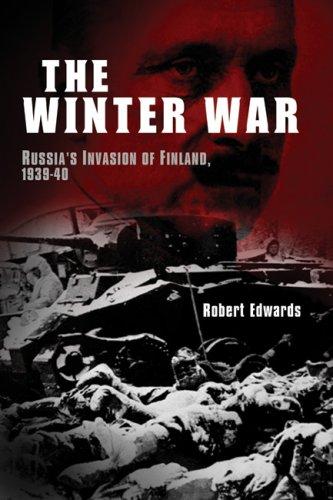
The Winter War: Russia's Invasion Of Finland, 1939-40

Robert Edwards

★★★★★
Read Advanced intel Basic intel Military history Intel history Logistics WWII Cold War Russia / USSR Logistics Economics ISBN 9781933648507

Pegasus Books · December 30, 2007

On November 30, 1939, the Soviet Union's Red Army invaded the young nation-state of Finland, in the full expectation of routing the small, ill-equipped Finnish army and annexing the former Russian territory by the end of the year. But Finland held out for 105 bitterly cold, fiercely combative days, until March 15, 1940, when a peace agreement ended the short, savage Winter War. At the stirring center of the story lie the resourcefulness and resolve of the Finnish people, who against all military odds—in want of ammunition, food, sleep, and troops—fought a blundering, ineptly commanded Red Army to a standstill. On March 15, they ceded to the Soviet 11 percent of their territory and 30 percent of their economic assets, but none of their national pride. The Russians meanwhile had markedly damaged their international standing and effectively ruined their military reputation-to such an extent, as this probing chapter in World War II history demonstrates, that Germany, with proud-blooded Finland as an ally, dared to launch its 1940 invasion of Russia. At the same time, though, the fiasco of the Winter War forced Stalin to acknowledge the shortcomings of the Red Army and to reform it: Germany would fall at Stalingrad in 1941. With authority, this skillfully narrated military history unfolds its story of the four-month Soviet-Finnish war and explores its consequences from London to Moscow, from Helsinki to Paris, to Washington, DC.

No cover · Amazon

Weaving the Tangled Web: Military Deception in Large-Scale Combat Operations (Large-Scale Combat Operations Series Book 1)

Christopher M. Rein

★★★★★
Read Basic intel Military history Intel history WWII Korea Cold War GWOT Guerrilla / COIN China Russia / USSR Middle East Intel history Strategy / theory

This book is from Army University Press and is Volume 1 in it's Large-Scale Combat Operations Series. It has footnotes, maps, and pictures, and was originally published in 2018. “Since the Soviet Union’s fall in 1989, the specter of large-scale ground combat against a peer adversary was remote. During the years following, the US Army found itself increasingly called upon to lead multinational operations in the lower to middle tiers of the range of military operations and conflict continuum. The events of 11 September 2001 led to more than 15 years of intense focus on counterterrorism, counterinsurgency, and stability operations in Iraq and Afghanistan. An entire generation of Army leaders and Soldiers were culturally imprinted by this experience. We emerged as an Army more capable in limited contingency operations than at any time in our nation’s history, but the geopolitical landscape continues to shift and the risk of great power conflict is no longer a remote possibility. “While our Army focused on limited contingency operations in the Middle East and Southwest Asia, other regional and peer adversaries scrutinized US military processes and methods and adapted their own accordingly. As technology has proliferated and become accessible in even the most remote corners of the world, the US military’s competitive advantage is being challenged across all of the warfighting domains. In the last decade, we have witnessed an emergent China, a revanchist and aggressive Russia, a menacing North Korea, and a cavalier Iranian regime. Each of these adversaries seeks to change the world order in their favor and contest US strategic interests abroad. The chance for war against a peer or regional near-peer adversary has increased exponentially, and we must rapidly shift our focus to successfully compete in all domains and across the full range of military operations." Includes: Introduction: Multi-Domain Deception (Christopher M. Rein, General Editor); Chapter 1: The Belfort Ruse the American Deception plan for the battle of st. Mihiel, 1918 (Mark E. Grotelueschen); Chapter 2: From Beersheba To Megiddo British Deception Operations During The Palestine Campaign, 1917-1918; (Major Brian J. Drohan); Chapter 3: Operation Bertram British Deception At El Alamein (Gary W. Linhart); Chapter 4: Operations Barclay, Cascade, And Mincemeat Allied Deception In The Mediterranean, 1943 (Gregory S. Hospodor); Chapter 5: Operation Kreml German Strategic Deception On The Eastern Front In 1942 (Alan P. Donohue); Chapter 6: Red Star Resurgent Soviet Deception Operations At Stalingrad, 1942-1943 (First Lieutenant Kyle B. Vautrinot); Chapter 7: Operation Bagration Maskirovka At Its Height, Summer 1944 (Curtis S. King); Chapter 8: Deceive, Divert, And Delay Operation Fortitude In Support Of D-Day (Scott C. Farquhar); Chapter 9: Chinese Deception And The 1950 Intervention In The Korean War (Joseph G.D. Babb); Chapter 10: From Maneuvers To War The Egyptian Deception Plan On The Eve Of The Yom-Kippur War (Tal Tovy); Chapter 11: Target San Carlos British Deception During The Repossession Of The Falkland Islands (Steven Paget); Chapter 12: Deception In The Desert Deceiving Iraq In Operation Desert Storm (Donald P. Wright); Conclusion: The Future Of Military Deception Operations (Conrad C. Crane)

No cover · Amazon

Huế 1968: A Turning Point of the American War in Vietnam

Mark Bowden

unrated
Read Advanced intel Basic intel Military history Intel history WWII Vietnam Intel history Strategy / theory

In the early hours of January 31, 1968, the North Vietnamese launched over one hundred attacks across South Vietnam in what would become known as the Tet Offensive. The lynchpin of Tet was the capture of Hue, Vietnam?s intellectual and cultural capital, by 10,000 National Liberation Front troops who descended from hidden camps and surged across the city of 140,000. Within hours the entire city was in their hands save for two small military outposts. American commanders refused to believe the size and scope of the Front?s presence, ordering small companies of marines against thousands of entrenched enemy troops. After several futile and deadly days, Lieutenant Colonel Ernie Cheatham would finally come up with a strategy to retake the city, block by block and building by building, in some of the most intense urban combat since World War II. With unprecedented access to war archives in the U.S. and Vietnam and interviews with participants from both sides, Bowden narrates each stage of this crucial battle through multiple viewpoints. Played out over 24 days and ultimately costing 10,000 lives, the Battle of Hue was by far the bloodiest of the entire war. When it ended, the American debate was never again about winning, only about how to leave. Hue 1968 is a gripping and moving account of this pivotal moment.

Ostkrieg: Hitler's War of Extermination in the East

Stephen G. Fritz

unrated
Read Basic intel Advanced intel Military history Logistics WWII Cold War Russia / USSR Logistics Economics ISBN 9780813134161

University Press of Kentucky · 2011

On June 22, 1941, Germany launched the greatest land assault in history on the Soviet Union, an attack that Adolf Hitler deemed crucial to ensure German economic and political survival. As the key theater of the war for the Germans, the eastern front consumed enormous levels of resources and accounted for 75 percent of all German casualties. Despite the significance of this campaign to Germany and to the war as a whole, few English-language publications of the last thirty-five years have addressed these pivotal events. In Ostkrieg: Hitler's War of Extermination in the East , Stephen G. Fritz bridges the gap in scholarship by incorporating historical research from the last several decades into an accessible, comprehensive, and coherent narrative. His analysis of the Russo-German War from a German perspective covers all aspects of the eastern front, demonstrating the interrelation of military events, economic policy, resource exploitation, and racial policy that first motivated the invasion. This in-depth account challenges accepted notions about World War II and promotes greater understanding of a topic that has been neglected by historians.

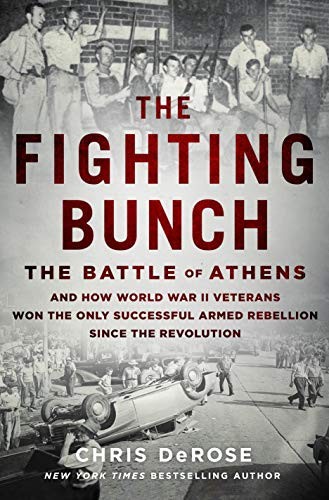
The Fighting Bunch: The Battle of Athens and How World War II Veterans Won the Only Successful Armed Rebellion Since the Revolution

Chris DeRose

unrated
Read Basic intel Military history Technical warfare WWII Guerrilla / COIN Intel history ISBN 9781250266194

St. Martin's Press · Nov 03, 2020

The incredible, untold story of the WWII veterans who destroyed a corrupt political machine―the only successful armed rebellion on US soil since the War of Independence. They fought for freedom abroad and returned to find that they had lost it at home. A corrupt political machine was in charge, kept in power by violence and stolen elections - the worst allegations of vote fraud ever brought to the attention of the Department of Justice, according to the Attorney General. The GIs formed a nonpartisan, all-veteran ticket. On Election Day, the GIs and their supporters found themselves assaulted, intimidated, arrested, and even shot. A small band of veterans - the Fighting Bunch - armed themselves and marched on the jail to demand an honest count. The sheriff and his men refused. These men who thought they had seen the last of war returned to the battlefield, one last time. This episode in U.S. history has never been more relevant, but has never been fully told. At the time of the rebellion, national news outlets jammed the phone lines into town, asking questions before the shooting had stopped. Journalists beat a path to Athens from across the country. Hollywood came calling, but the people of McMinn County had moved on. After years of research, including exclusive interviews with the remaining witnesses, archival radio broadcast and interview tapes, scrapbooks, letters, and diaries, author Chris DeRose has reconstructed one of the seminal―yet untold―events in American election history.

Victims of Yalta

Nikolai Tolstoy

unrated
Read Intel history Military history Economics Logistics Basic intel WWII Russia / USSR Logistics Economics ISBN 0684156350

Gorgi Books · 1979

Stalinova "vojevůdcovská" nezpůsobilost vehnala v průběhu druhé světové války do německého zajetí miliony vojáků. Jeho nelítostná decimace všech vrstev národa, dokonce celých komunit, vedla generála Vlasova k rozhodnutí vytvořit armádu, která by ze dvou zel - Stalin a Hitler - porazila nejprve to větší, kterým se mu jevil Stalin. Stalin například po celou válku nepřistoupil k haagským konvencím o zacházení s válečnými zajatci a svým odmítavým postojem tak nepřímo způsobil tragický osud zajatců. Kromě vlasovců se proti bolševismu postavil také národ kozáků. Další skupinou stojící proti Stalinovi byli někteří příslušníci rozsáhlé bílé emigrace, jejichž potomci se mnohdy narodili již na Západě. Vedle nich se na konci války ocitlo v britském zajetí mnoho protikomunistických Jugoslávců. Více než dva miliony těchto lidí byly v letech 1944-1947 násilně navráceny do Sovětského svazu - podle dohod, jež Britové a Američané se Stalinem stvrdili na konferenci v Jaltě - v rozporu s řadou britských zákonů a ustanovení mezinárodního práva. Osudem těchto ubožáků byla buď okamžitá smrt zastřelením po návratu, či pomalejší umírání v táborech Gulagu. Vyvázli jen nemnozí......