S2 Search · Reading list

S2 Actual reading list

Books from S2 Actual on Goodreads, organized by his shelves and topic buckets (intel lists, military history, logistics, etc.). Metadata filled via Open Library.

Not official S2 Underground. Independent fan index — not affiliated with or endorsed by S2. Official hub: linktr.ee/S2_underground. S2 materials are CC BY-NC-SA 4.0.

S2 topic buckets (Goodreads)

Subjects & genres

3 books · Biographies · subject Guerrilla / COIN

No cover · Amazon

Brother Number One: A Political Biography of Pol Pot

David P. Chandler

★★★☆☆
Read Biographies WWII Vietnam Espionage Guerrilla / COIN Biography US Civil War

In the tragic recent history of Cambodia—a past scarred by a long occupation by Vietnamese forces and by the preceding three-year reign of terror by the brutal Khmer Rouge—no figure looms larger or more ominously than that of Pol Pot. As secretary of the Central Committee of the Communist Party of Kampuchea (CPK) since 1962 and as prime minister of Democratic Kampuchea (DK), he has been widely blamed for trying to destroy Cambodian society. By implementing policies whose effects were genocidal, he oversaw the deaths of more than one million of his nation’s people.The political career of Saloth Sar, better known by his nom de guerre Pol Pot, forms a critical but largely inaccessible portion of twentieth-century Cambodian history. What we know about his life is sketchy: a comfortable childhood, three years of study in France, and a short career as a schoolteacher preceded several years—spent mostly in hiding—as a guerrilla and the commander of the victorious army in Cambodia’s civil war. His career reached a climax when he and his associates, coming to power, attempted to transform their country along lines more radical than any attempted by a modern regime. Driven into hiding in 1979 by invading Vietnamese forces, Pol Pot maintained his leadership of a Khmer Rouge guerrilla army in exile, remaining a power and a threat.In this political biography, David P. Chandler throws light on the shadowy figure of Pol Pot. Basing his study on interviews and on a wide range of sources in English, Cambodian, and French, the author illuminates the ideas and behavior of this enigmatic man and his entourage against the background of post–World War II events, providing a key to understanding this horrific, pivotal period of Cambodian history. In this revised edition, Chandler provides new information on the state of Cambodia and the Khmer Rouge following the death of Pol Pot in 1997.
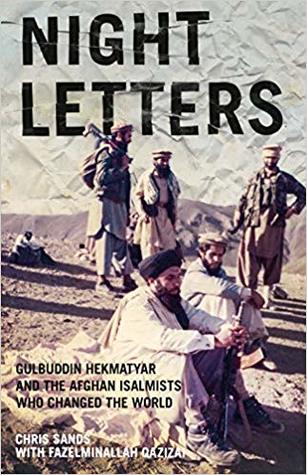
Night Letters: Gulbuddin Hekmatyar and the Afghan Islamists Who Changed the World

Chris Sands

unrated
Read Advanced intel Basic intel Biographies Intel history Military history GWOT Guerrilla / COIN Russia / USSR Intel history Biography Strategy / theory ISBN 9781787381964

C. Hurst and Company (Publishers) Limited · 2019

In 1969, several young men met on a rainy night in Kabul to form an Islamist student group. Their aim was laid out in a simple typewritten statement: to halt the spread of Soviet and American influence in Afghanistan. They went on to change the world. 'Night Letters' tells the extraordinary story of the group’s most notorious member, Gulbuddin Hekmatyar, and the guerrilla organisation he came to lead, Hizb-e Islami. By the late 1980s, tens of thousands were drawn to Hekmatyar’s vision of a radical Islamic state that would sow unrest from Kashmir to Jerusalem. His doctrine of violent global jihad culminated in 9/11 and the birth of ISIS, yet he never achieved his dream of ruling Afghanistan. The peace deal he signed with Kabul in 2016 was yet another controversial twist in an astonishing life. Sands and Qazizai delve into the secret history of Hekmatyar and Hizb-e Islami: their wars against Russian and American troops, and their bloody and bitter feuds with domestic enemies. Based on hundreds of exclusive interviews carried out across the region and beyond, this is the definitive account of the most important, yet poorly understood, international Islamist movement of the last fifty years.

No cover · Amazon

The Rise of Theodore Roosevelt (Theodore Roosevelt, #1)

Edmund Morris

unrated
Read Biographies Cold War GWOT Naval Guerrilla / COIN Intel history Biography

Selected by The Modern Library as one of the 100 best nonfiction books of all time This classic biography is the story of seven men—a naturalist, a writer, a lover, a hunter, a ranchman, a soldier, and a politician—who merged at age forty-two to become the youngest President in history. The Rise of Theodore Roosevelt begins at the apex of his international prestige. That was on New Year’s Day, 1907, when TR, who had just won the Nobel Peace Prize, threw open the doors of the White House to the American people and shook 8,150 hands. One visitor remarked afterward, “You go to the White House, you shake hands with Roosevelt and hear him talk—and then you go home to wring the personality out of your clothes.” The rest of this book tells the story of TR’s irresistible rise to power. During the years 1858–1901, Theodore Roosevelt transformed himself from a frail, asthmatic boy into a full-blooded man. Fresh out of Harvard, he simultaneously published a distinguished work of naval history and became the fist-swinging leader of a Republican insurgency in the New York State Assembly. He chased thieves across the Badlands of North Dakota with a copy of Anna Karenina in one hand and a Winchester rifle in the other. Married to his childhood sweetheart in 1886, he became the country squire of Sagamore Hill on Long Island, a flamboyant civil service reformer in Washington, D.C., and a night-stalking police commissioner in New York City. As assistant secretary of the navy, he almost single-handedly brought about the Spanish-American War. After leading “Roosevelt’s Rough Riders” in the famous charge up San Juan Hill, Cuba, he returned home a military hero, and was rewarded with the governorship of New York. In what he called his “spare hours” he fathered six children and wrote fourteen books. By 1901, the man Senator Mark Hanna called “that damned cowboy” was vice president. Seven months later, an assassin’s bullet gave TR the national leadership he had always craved. His is a story so prodigal in its variety, so surprising in its turns of fate, that previous biographers have treated it as a series of haphazard episodes. This book, the only full study of TR’s pre-presidential years, shows that he was an inevitable chief executive. “It was as if he were subconsciously aware that he was a man of many selves,” the author writes, “and set about developing each one in turn, knowing that one day he would be President of all the people.”