S2 Search · Reading list

S2 Actual reading list

Books from S2 Actual on Goodreads, organized by his shelves and topic buckets (intel lists, military history, logistics, etc.). Metadata filled via Open Library.

Not official S2 Underground. Independent fan index — not affiliated with or endorsed by S2. Official hub: linktr.ee/S2_underground. S2 materials are CC BY-NC-SA 4.0.

S2 topic buckets (Goodreads)

Subjects & genres

6 books · Biographies · subject Strategy / theory

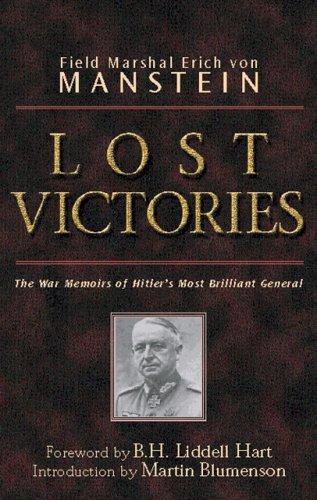
Lost Victories: The War Memoirs of Hitler's Most Brilliant General

Erich von Manstein

★★★★
Read Biographies Military history WWII Biography Strategy / theory ISBN 0760320543

Zenith Press · 2004

Originally published in Germany in 1955, and in England and the United States in 1958, this classic memoir of WWII by a man who was an acknowledged military genius and probably Germany's top WWII general, is now made available again. Field Marshal Erich von Manstein described his book as a personal narrative of a soldier, discussing only those matters that had direct bearing on events in the military field. The essential thing, as he wrote, is to "know how the main personalities thought and reacted to events." This is what he tells us in this book. His account is detailed, yet dispassionate and objective. "Nothing is certain in war, when all is said and done," But in Manstein's record, at least, we can see clearly what forces were in action. In retrospect, perhaps his book takes on an even greater significance.

Perfect Spy: The Incredible Double Life of Pham Xuan An - Time Magazine Reporter and Vietnamese Communist Agent

Larry Berman

★★★★
Read Advanced intel Biographies Intel history Vietnam Espionage Biography Strategy / theory ISBN 9780060888381

Collins · April 24, 2007

During the Vietnam War, Time reporter Pham Xuan An befriended everyone who was anyone in Saigon, including American journalists such as David Halberstam and Neil Sheehan, the CIA's William Colby, and the legendary Colonel Edward Lansdale—not to mention the most influential members of the South Vietnamese government and army. None of them ever guessed that he was also providing strategic intelligence to Hanoi, smuggling invisible ink messages into the jungle inside egg rolls. His early reports were so accurate that General Giap joked, "We are now in the U.S. war room." For more than twenty years, An lived a dangerous lie—and no one knew it because he was a master of both his jobs. After the war, An was named a Hero of the People's Army and was promoted to general—one of only two intelligence officers to ever achieve that rank. In Perfect Spy, Larry Berman, who An considered his official American biographer, chronicles the extraordinary life of one of the twentieth century's most fascinating spies. In doing so, he offers a new perspective on a war that continues to haunt us.

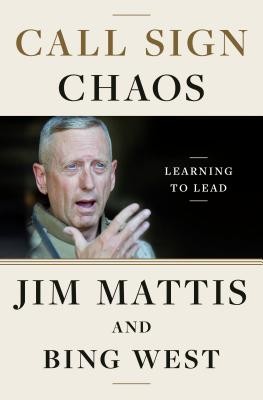
Call Sign Chaos: Learning to Lead

Jim Mattis

★★★☆☆
Read Biographies Middle East Intel history Biography Strategy / theory ISBN 9780812996838

Random House · 2019

#1 NEW YORK TIMES BESTSELLER - A clear-eyed account of learning how to lead in a chaotic world, by General Jim Mattis--the former Secretary of Defense and one of the most formidable strategic thinkers of our time--and Bing West, a former assistant secretary of defense and combat Marine. "A four-star general's five-star memoir."--The Wall Street Journal Call Sign Chaos is the account of Jim Mattis's storied career, from wide-ranging leadership roles in three wars to ultimately commanding a quarter of a million troops across the Middle East. Along the way, Mattis recounts his foundational experiences as a leader, extracting the lessons he has learned about the nature of warfighting and peacemaking, the importance of allies, and the strategic dilemmas--and short-sighted thinking--now facing our nation. He makes it clear why America must return to a strategic footing so as not to continue winning battles but fighting inconclusive wars. Mattis divides his book into three parts: Direct Leadership, Executive Leadership, and Strategic Leadership. In the first part, Mattis recalls his early experiences leading Marines into battle, when he knew his troops as well as his own brothers. In the second part, he explores what it means to command thousands of troops and how to adapt your leadership style to ensure your intent is understood by your most junior troops so that they can own their mission. In the third part, Mattis describes the challenges and techniques of leadership at the strategic level, where military leaders reconcile war's grim realities with political leaders' human aspirations, where complexity reigns and the consequences of imprudence are severe, even catastrophic. Call Sign Chaos is a memoir of a life of warfighting and lifelong learning, following along as Mattis rises from Marine recruit to four-star general. It is a journey about learning to lead and a story about how he, through constant study and action, developed a unique leadership philosophy, one relevant to us all.

The Doctrine of Fascism

Benito Mussolini

★★☆☆☆
Read Advanced intel Military history Biographies Strategy / theory ISBN 9780865274631

Howard Fertig · September 2006

“Democracy is a kingless regime infested by many kings who are sometimes more exclusive, tyrannical and destructive than one, even if he be a tyrant.” 'The Doctrine of Fascism' (Originally known as 'La dottrina del fascismo') is an essay written by Giovanni Gentile, with credit given to Benito Mussolini as a co-author. It was first published in the Enciclopedia Italiana of 1932, as the first section of a lengthy entry on "Fascismo" (Fascism). The entire entry on Fascism spans pages 847-884 of the Enciclopedia Italiana, and includes numerous photographs and graphic images. Today, it is considered the most complete articulation of Mussolini's political views. A key concept of the Mussolini essay was that fascism was a rejection of previous models: "Granted that the 19th century was the century of socialism, liberalism, democracy, this does not mean that the 20th century must also be the century of socialism, liberalism, democracy. Political doctrines pass; nations remain. We are free to believe that this is the century of authority, a century tending to the 'right', a Fascist century. If the 19th century was the century of the individual, we are free to believe that this is the 'collective' century, and therefore the century of the State." Regardless of one's political inclinations, this essay is of great curiosity to any reader with intellectual interests, and a must-read for those who seek to buttress or demolish its unwavering premises.

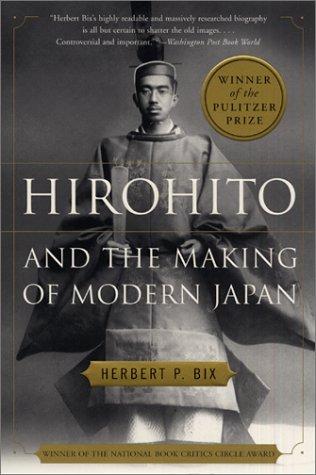
Hirohito and the Making of Modern Japan

Herbert P. Bix

unrated
Read Biographies Military history WWII Espionage China Russia / USSR Biography Strategy / theory ISBN 9780060931308

Harper Perennial · September 4, 2001

Winner of the Pulitzer PrizeIn this groundbreaking biography of the Japanese emperor Hirohito, Herbert P. Bix offers the first complete, unvarnished look at the enigmatic leader whose sixty-three-year reign ushered Japan into the modern world. Never before has the full life of this controversial figure been revealed with such clarity and vividness. Bix shows what it was like to be trained from birth for a lone position at the apex of the nation's political hierarchy and as a revered symbol of divine status. Influenced by an unusual combination of the Japanese imperial tradition and a modern scientific worldview, the young emperor gradually evolves into his preeminent role, aligning himself with the growing ultranationalist movement, perpetuating a cult of religious emperor worship, resisting attempts to curb his power, and all the while burnishing his image as a reluctant, passive monarch. Here we see Hirohito as he truly was: a man of strong will and real authority. Supported by a vast array of previously untapped primary documents, Hirohito and the Making of Modern Japan is perhaps most illuminating in lifting the veil on the mythology surrounding the emperor's impact on the world stage. Focusing closely on Hirohito's interactions with his advisers and successive Japanese governments, Bix sheds new light on the causes of the China War in 1937 and the start of the Asia-Pacific War in 1941. And while conventional wisdom has had it that the nation's increasing foreign aggression was driven and maintained not by the emperor but by an elite group of Japanese militarists, the reality, as witnessed here, is quite different. Bix documents in detail the strong, decisive role Hirohito played in wartime operations, from the takeover of Manchuria in 1931 through the attack on Pearl Harbor and ultimately the fateful decision in 1945 to accede to an unconditional surrender. In fact, the emperor stubbornly prolonged the war effort and then used the horrifying bombings of Hiroshima and Nagasaki, together with the Soviet entrance into the war, as his exit strategy from a no-win situation. From the moment of capitulation, we see how American and Japanese leaders moved to justify the retention of Hirohito as emperor by whitewashing his wartime role and reshaping the historical consciousness of the Japanese people. The key to this strategy was Hirohito's alliance with General MacArthur, who helped him maintain his stature and shed his militaristic image, while MacArthur used the emperor as a figurehead to assist him in converting Japan into a peaceful nation. Their partnership ensured that the emperor's image would loom large over the postwar years and later decades, as Japan began to make its way in the modern age and struggled -- as it still does -- to come to terms with its past. Until the very end of a career that embodied the conflicting aims of Japan's development as a nation, Hirohito remained preoccupied with politics and with his place in history. Hirohito and the Making of Modern Japan provides the definitive account of his rich life and legacy. Meticulously researched and utterly engaging, this book is proof that the history of twentieth-century Japan cannot be understood apart from the life of its most remarkable and enduring leader.

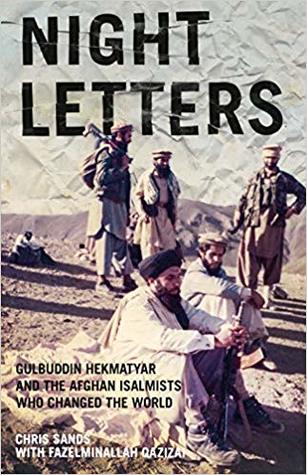
Night Letters: Gulbuddin Hekmatyar and the Afghan Islamists Who Changed the World

Chris Sands

unrated
Read Advanced intel Basic intel Biographies Intel history Military history GWOT Guerrilla / COIN Russia / USSR Intel history Biography Strategy / theory ISBN 9781787381964

C. Hurst and Company (Publishers) Limited · 2019

In 1969, several young men met on a rainy night in Kabul to form an Islamist student group. Their aim was laid out in a simple typewritten statement: to halt the spread of Soviet and American influence in Afghanistan. They went on to change the world. 'Night Letters' tells the extraordinary story of the group’s most notorious member, Gulbuddin Hekmatyar, and the guerrilla organisation he came to lead, Hizb-e Islami. By the late 1980s, tens of thousands were drawn to Hekmatyar’s vision of a radical Islamic state that would sow unrest from Kashmir to Jerusalem. His doctrine of violent global jihad culminated in 9/11 and the birth of ISIS, yet he never achieved his dream of ruling Afghanistan. The peace deal he signed with Kabul in 2016 was yet another controversial twist in an astonishing life. Sands and Qazizai delve into the secret history of Hekmatyar and Hizb-e Islami: their wars against Russian and American troops, and their bloody and bitter feuds with domestic enemies. Based on hundreds of exclusive interviews carried out across the region and beyond, this is the definitive account of the most important, yet poorly understood, international Islamist movement of the last fifty years.