S2 Search · Reading list

S2 Actual reading list

Books from S2 Actual on Goodreads, organized by his shelves and topic buckets (intel lists, military history, logistics, etc.). Metadata filled via Open Library.

Not official S2 Underground. Independent fan index — not affiliated with or endorsed by S2. Official hub: linktr.ee/S2_underground. S2 materials are CC BY-NC-SA 4.0.

S2 topic buckets (Goodreads)

Subjects & genres

40 books · Military history · subject Biography · page 1 of 2

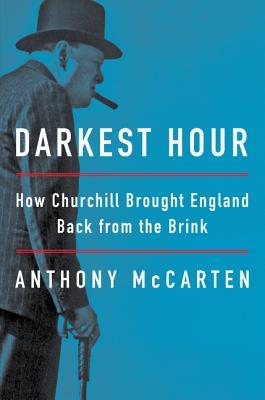
Darkest Hour: How Churchill Brought England Back from the Brink

Anthony McCarten

★★★★★
Read Biographies Military history WWII Biography Orthodox / theology ISBN 9780062749543

HarperCollins Publishers · 2017

From the acclaimed novelist and screenwriter of The Theory of Everything comes a revelatory look at the period immediately following Winston Churchill’s ascendancy to Prime Minister—soon to be a major motion picture starring Gary Oldman. “He was speaking to the nation, the world, and indeed to history...”  May, 1940. Britain is at war. The horrors of blitzkrieg have seen one western European democracy after another fall in rapid succession to Nazi boot and shell. Invasion seems mere hours away.  Just days after becoming Prime Minister, Winston Churchill must deal with this horror—as well as a skeptical King, a party plotting against him, and an unprepared public. Pen in hand and typist-secretary at the ready, how could he change the mood and shore up the will of a nervous people?  In this gripping day-by-day, often hour-by-hour account of how an often uncertain Churchill turned Britain around, the celebrated Bafta-winning writer Anthony McCarten exposes sides of the great man never seen before. He reveals how he practiced and re-wrote his key speeches, from ‘Blood, toil, tears and sweat’ to ‘We shall fight on the beaches’; his consideration of a peace treaty with Nazi Germany, and his underappreciated role in the Dunkirk evacuation; and, above all, how 25 days helped make one man an icon.  Using new archive material, McCarten reveals the crucial behind-the-scenes moments that changed the course of history. It’s a scarier—and more human—story than has ever been told.  “McCarten's pulse-pounding narrative transports the reader to those springtime weeks in 1940 when the fate of the world rested on the shoulders of Winston Churchill. A true story thrillingly told. Thoroughly researched and compulsively readable.”—Michael F. Bishop, Executive Director of the International Churchill Society

Death Traps: The Survival of an American Armored Division in World War II

Belton Y. Cooper

★★★★★
Read Military history WWII Vietnam Korea Armor Biography ISBN 9780891418146

Presidio Press · April 29, 2003

“An important contribution to the history of World War II . . . I have never before been able to learn so much about maintenance methods of an armored division, with precise details that underline the importance of the work, along with descriptions of how the job was done.”—Russell F. Weigley, author of  Eisenhower’s Lieutenants “Cooper saw more of the war than most junior officers, and he writes about it better than almost anyone. . . . His stories are vivid, enlightening, full of life—and of pain, sorrow, horror, and triumph.” —Stephen E. Ambrose, from his Foreword  “In a down-to-earth style, Death Traps tells the compelling story of one man’s assignment to the famous 3rd Armored Division that spearheaded the American advance from Normandy into Germany. Cooper served as an ordnance officer with the forward elements and was responsible for coordinating the recovery and repair of damaged American tanks. This was a dangerous job that often required him to travel alone through enemy territory, and the author recalls his service with pride, downplaying his role in the vast effort that kept the American forces well equipped and supplied. . . . [Readers] will be left with an indelible impression of the importance of the support troops and how dependent combat forces were on them.” — Library Journal “As an alumnus of the 3rd, I eagerly awaited this book’s coming out since I heard of its release . . . and the wait and the book have both been worth it. . . . Cooper is a very polished writer, and the book is very readable. But there is a certain quality of ‘you are there’ many other memoirs do not seem to have. . . . Nothing in recent times—ridgerunning in Korea, firebases in Vietnam, or even the one hundred hours of Desert Storm—pressed the ingenuity and resolve of American troops . . . like WWII. This book lays it out better than any other recent effort, and should be part of the library of any contemporary warrior.” —Stephen Sewell,  Armor Magazine “Cooper’s writing and recall of harrowing events is superb and engrossing. Highly recommended.” —Robert A. Lynn, The Stars and Stripes “This detailed story will become a classic of WWII history and required reading for anyone interested in armored warfare.” — Publishers Weekly (starred review) “[ Death Traps ] fills a critical gap in WWII literature. . . . It’s a truly unique and valuable work.” —G.I. Journal

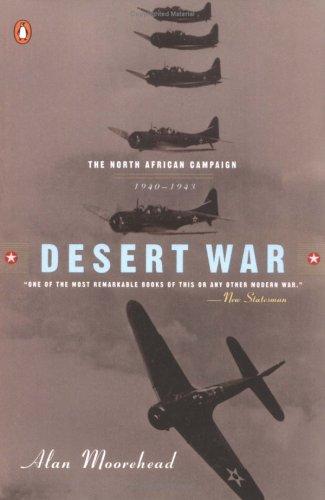
Desert War: The North African Campaign 1940-43

Alan Moorehead

★★★★★
Read Intel history Military history Advanced intel Logistics WWII Armor Logistics Biography ISBN 0140275142

Penguin Books · 2001

The seminal account of the battle between Montgomery’s Eighth Army and Rommel’s Afrika Corps, amidst the endless harsh wastes of the Western Desert. In 1940, Alan Moorehead was sent to cover the North Africa campaign by the Daily Express, and he followed its dramatic course all the way to 1943. The three books he subsequently wrote about the Desert War – later collected as his ‘African Trilogy’ – were swiftly acclaimed as a classic account of the tussle between Montgomery’s Eighth Army and Rommel’s Afrika Corps, under the beating sun of the Egyptian Sahara's Western Desert. Moorehead was responsible for the celebrated insight that tank battles in the desert are like battles at sea, the lumbering tanks like ships lost in a vast ocean of sand. The New Statesman could not have put it better when it described his achievement with this riveting book: ‘There is something of genius in the breadth and penetration of his vision , which encompasses the whole panorama of war and then narrows it down to the particular: the soldier stubbing out his cigarette before going into action, the expression on a tank commander’s face as he is hit… The story of the African campaigns will go down in history as one of the great epics of mankind, largely thanks to Mr Moorehead’s account.’

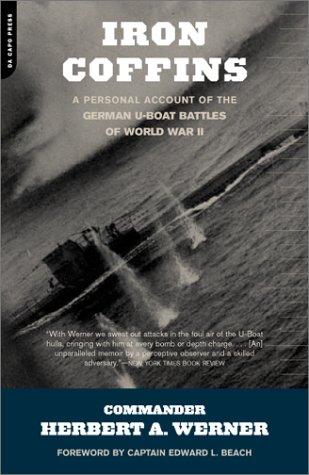
Iron Coffins: A Personal Account of the German U-boat Battles of World War II

Herbert A. Werner

★★★★★
Read Military history WWII Naval Biography Strategy / theory ISBN 9780306811609

Da Capo Press · June 2002

The Battle of the Atlantic was one of the most savage and strategically significant campaigns of World War II: 28,000 out of 39,000 men in the German U-boat force disappeared beneath the waves. Herbert A. Werner, one of the few surviving German U-boat commanders, served on five submarines from 1941 to 1945. From the Atlantic to the Mediterranean, from the English Channel to the North Sea, he takes the reader with him through the triumphant years of 1941 and 1942, when German U-boats nearly strangled England, to the apocalyptic final years of destruction, disillusionment, and defeat.

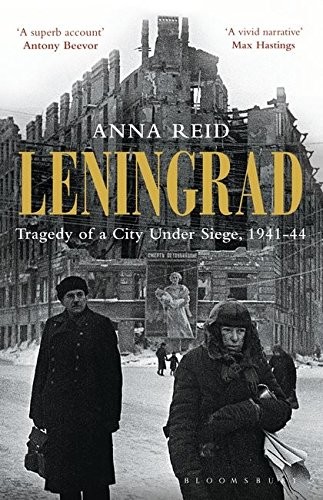
Leningrad: Tragedy of a City Under Siege, 1941-44.

Anna Reid

★★★★★
Read Advanced intel Military history Logistics WWII Cold War Russia / USSR Logistics Biography ISBN 9781408822418

Bloomsbury Publishing PLC · Nov 07, 2012

On September 8, 1941, eleven weeks after Hitler launched Operation Barbarossa, his brutal surprise attack on the Soviet Union, Leningrad was surrounded. The siege was not lifted for two and a half years, by which time some three quarters of a million Leningraders had died of starvation. Anna Reid's Leningrad is a gripping, authoritative narrative history of this dramatic moment in the twentieth century, interwoven with indelible personal accounts of daily siege life drawn from diarists on both sides. They reveal the Nazis' deliberate decision to starve Leningrad into surrender and Hitler's messianic miscalculation, the incompetence and cruelty of the Soviet war leadership, the horrors experienced by soldiers on the front lines, and, above all, the terrible details of life in the blockaded city: the relentless search for food and water; the withering of emotions and family ties; looting, murder, and cannibalism- and at the same time, extraordinary bravery and self-sacrifice. Stripping away decades of Soviet propaganda, and drawing on newly available diaries and government records, Leningrad also tackles a raft of unanswered questions: Was the size of the death toll as much the fault of Stalin as of Hitler? Why didn't the Germans capture the city? Why didn't it collapse into anarchy? What decided who lived and who died? Impressive in its originality and literary style, Leningrad gives voice to the dead and will rival Anthony Beevor's classic Stalingrad in its impact.

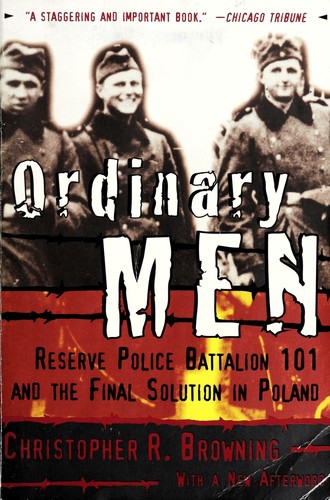
Ordinary Men: Reserve Police Battalion 101 and the Final Solution in Poland

Christopher R. Browning

★★★★★
Read Military history Logistics WWII Logistics Biography ISBN 0060995068

HarperPerennial · 1998

Christopher R. Browning’s shocking account of how a unit of average middle-aged Germans became the cold-blooded murderers of tens of thousands of Jews—now with a new afterword and additional photographs. Ordinary Men is the true story of Reserve Police Battalion 101 of the German Order Police, which was responsible for mass shootings as well as round-ups of Jewish people for deportation to Nazi death camps in Poland in 1942. Browning argues that most of the men of RPB 101 were not fanatical Nazis but, rather, ordinary middle-aged, working-class men who committed these atrocities out of a mixture of motives, including the group dynamics of conformity, deference to authority, role adaptation, and the altering of moral norms to justify their actions. Very quickly three groups emerged within the battalion: a core of eager killers, a plurality who carried out their duties reliably but without initiative, and a small minority who evaded participation in the acts of killing without diminishing the murderous efficiency of the battalion whatsoever. While this book discusses a specific Reserve Unit during WWII, the general argument Browning makes is that most people succumb to the pressures of a group setting and commit actions they would never do of their own volition.   Ordinary Men is a powerful, chilling, and important work, with themes and arguments that continue to resonate today.

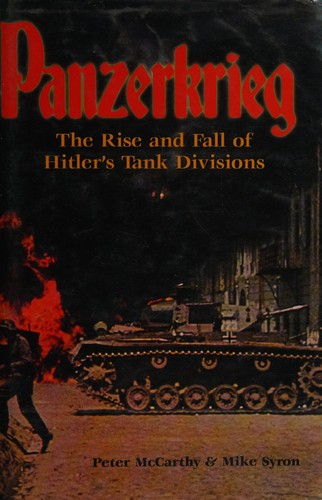
Panzerkrieg: The Rise and Fall of Hitler's Tank Divisions

Peter McCarthy

★★★★★
Read Advanced intel Intel history Logistics Technical warfare Military history WWII Cold War Armor Russia / USSR Logistics Biography ISBN 0786710098

Carroll & Graf Publishers · 2002

The image that defines the Nazis’ Blitzkrieg is that of the Panzerwaffe’s massed columns of tanks sweeping through Europe, all resistance smashed in their wake. The Panzers’ achievements in battle were largely responsible for Germany’s early successes in World War II, and once the tide had turned against the Reich, the Panzers became the backbone of its defense. But the dramatic story of Hitler’s tank divisions is more than one of mere mechanical efficiency. It hangs, too, on those who commanded and fought in them, and believed in their near invincibility. These are the men who come to life in this immensely readable narrative. Great generals like Guderian, Rommel, and Manstein, tank masters like Wittmann and Bake, and inspired commanders like Balck and Bayerlein dominate the story of Panzerkreig. Dispensing with jargon, but including explanatory maps, rare illustrations, and fascinating detail on uniforms, crew members, and the mechanical features of the machines, the authors give a comprehensive overview of all aspects of the subject, both human and technical. They have also benefited from new information available since the opening of Cold War archives. Emerging from the narrative is the whole vast canvas of the war, as it follows the titanic struggles that raged between France’s bocage country, North Africa’s desert wastes, and Russia’s limitless steppes. The development of German fighting vehicles and tactics is fully charted, and the many myths and misconceptions of the Panzerwaffe are exploded. Extensive research, maps, illustrations throughout, reference to the leading participants’ memoirs, and original new conclusions all contribute to this finely measured assessment of the evolution, exploits, and eventual destruction of this superlative fighting force.

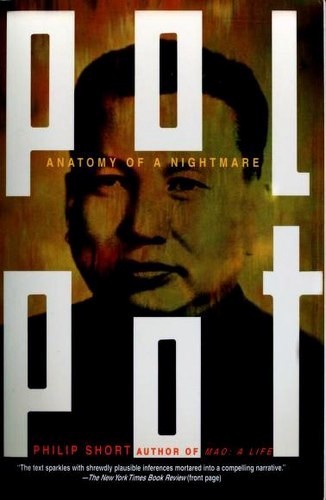
Pol Pot: Anatomy of a Nightmare

Philip Short

★★★★★
Read Military history Cold War Espionage China Biography ISBN 9780805080063

Henry Holt and Company · 2006

Philip Short observed Pol Pot at close quarters during the one and only official visit Pol ever made abroad, to China in 1975. He was struck by Pol Pot's charm and charisma, yet, soon after, the leader would emerge as the architect of one of the most radical and ruthless experiments in social engineering ever undertaken. His egalitarian utopia released a reign of terror that would result in one in every five Cambodians - more than a million people - perishing in the killing fields or from hunger. Why did it happen? How did an idealistic dream of justice and prosperity mutate into one of humanity's worst nightmares? To answer these questions, Short traveled through Cambodia, interviewing former Khmer Rouge leaders and sifting through previously closed archives around the world. Key figures, including Khlen Samphan and Ieng Sary, Pol Pot's brother-in-law and foreign minister, speak here for the first time. Philip Short's masterly narrative reveals how Pol Pot engineered his country's desolation, fashioning the definitive portrait of the man who headed one of the most enigmatic and terrifying regimes of modern times.

Red Sniper on the Eastern Front: The Memoirs of Joseph Pilyushin

Joseph Pilyushin

★★★★★
Read Biographies Technical warfare Military history WWII Russia / USSR Biography ISBN 9781848847170

Pen & Sword Books Limited · 2010

A gripping memoir of a Soviet sniper who fought against the Nazis during the siege of Leningrad and throughout World War II. Joseph Pilyushin, a top Red Army sniper in the ruthless fight against the Germans on the Eastern Front, was an exceptional soldier. His first-hand account of his wartime service gives a graphic insight into his lethal skill with a rifle and into the desperate fight put up by Soviet forces to defend Leningrad. Pilyushin, who lived in Leningrad with his family, was already 35 years-old when the war broke out and he was drafted. He started in the Red Army as a scout, but once he had demonstrated his marksmanship and steady nerve, he became a sniper. He served throughout the Leningrad siege, from the late 1941 when the Wehrmacht’s advance was halted just short of the city to its liberation during the Soviet offensive of 1944. His descriptions of grueling front-line life, of his fellow soldiers, and of his sniping missions are balanced by his vivid recollections of the protracted suffering of Leningrad’s imprisoned population and of the grief that was visited upon him and his family. His narrative will be fascinating reading for anyone eager to learn about the role and technique of the sniper during the Second World War. It is also a memorable eyewitness account of one man’s experience on the Eastern Front.

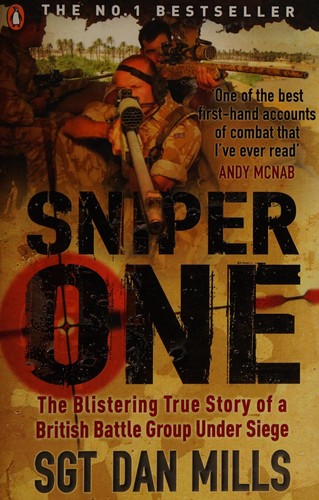
Sniper One: The Blistering True Story Of A British Battle Group Under Siege

Dan Mills

★★★★★
Read Biographies Intel history Technical warfare Advanced intel Military history GWOT Middle East Biography ISBN 9780141029016

Penguin · 2008

Sniper One is the gritty, awe-inspiring true story that takes you right into the heart of the Iraq war from Sunday Times No.1 bestseller Sgt. Dan Mills. 'One of the best first-hand accounts of combat that I've ever read' Andy McNab We all saw it at once. Half a dozen voices screamed 'Grenade!' simultaneously. Then everything went into slow motion. The grenade took an age to travel through its 20 metre arc. A dark, small oval-shaped package of misery the size of a peach ... April 2004: Dan Mills and his platoon of snipers fly into southern Iraq, part of an infantry battalion sent to win hearts and minds. They were soon fighting for their lives. Back home we were told they were peacekeeping. But there was no peace to keep. Because within days of arriving in theatre, Mills and his men were caught up in the longest, most sustained fire fight British troops had faced for over fifty years. This awe-inspiring account tells of total war in throat-burning winds and fifty-degree heat, blasted by mortars and surrounded by heavily armed militias. For six months, they fought isolated, besieged and under constant enemy fire. Their heroic stand a modern-day Rorke's Drift. ************** Dan Mills served for 24 years as an Infantry Soldier reaching the rank of Warrant Officer Class 2. During his long military career he served on operations in Northern Ireland, Bosnia, Kosovo, Iraq and Afghanistan. Dan was awarded a 'Mention In Despatches' for Gallantry for his services during The Iraq War. Since leaving the Army in 2010, he has forged a career as a writer and security consultant, amongst other things. Sniper One is his first book.

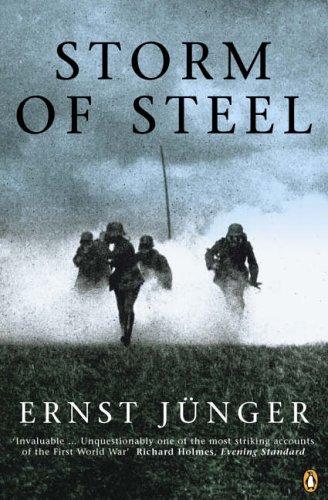
Storm of Steel

Ernst Jünger

★★★★★
Read Advanced intel Basic intel Military history WWI Biography ISBN 9780141186917

Penguin Books Ltd · June 3, 2004

A memoir of astonishing power, savagery, and ashen lyricism, 'Storm of Steel' illuminates not only the horrors but also the fascination of total war, seen through the eyes of an ordinary German soldier. Young, tough, patriotic, but also disturbingly self-aware, Jünger exulted in the Great War, which he saw not just as a great national conflict, but more importantly as a unique personal struggle. Leading raiding parties, defending trenches against murderous British incursions, simply enduring as shells tore his comrades apart, Jünger kept testing himself, braced for the death that will mark his failure. Published shortly after the war's end, 'Storm of Steel' was a worldwide bestseller and can now be rediscovered through Michael Hofmann's brilliant new translation.

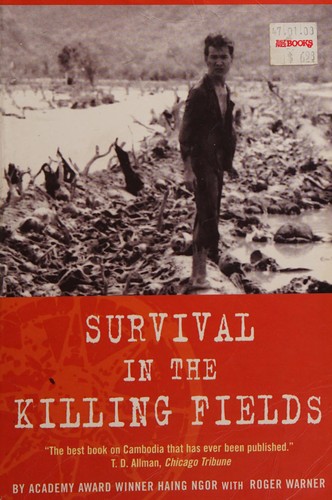
Survival in the Killing Fields

Haing Ngor

★★★★★
Read Military history WWII China Biography ISBN 0786713151

Carroll & Graf · 1987

Nothing has shaped my life as much as surviving the Pol Pot regime. I am a survivor of the Cambodian holocaust. That's who I am. He became famous through his academy award-winning performance as Dith Pran in the film The Killing Fields, but the key to Haing Ngor's screen success was the terrible truth of his own experiences in the rice paddies and labour camps of revolutionary Cambodia. Here, in a gripping memoir of life under the communist Khmer Rouge regime, he reveals the country's descent into a hell beyond our imaginings: a world of war slaves and senseless brutality, where family life simply ceases to be. But with the pain he also gives us hope and an illuminating example of how the best sort of love can actually be strengthened through the shared experience of a life-threatening ordeal. An eyewitness account of the real killing fields by an extraordinary survivor, this book is both a reminder of the horrors of war and a testament to the resilience of the human spirit.

The Gulag Archipelago 1918–1956 (Abridged)

Aleksandr Solzhenitsyn

★★★★★
Read Military history WWII Cold War Russia / USSR Biography ISBN 0060007761

Perennial · 2002

Drawing on his own incarceration and exile, as well as on evidence from more than 200 fellow prisoners and Soviet archives, Aleksandr I. Solzhenitsyn reveals the entire apparatus of Soviet repression—the state within the state that ruled all-powerfully. Through truly Shakespearean portraits of its victims—men, women, and children—we encounter secret police operations, labor camps and prisons; the uprooting or extermination of whole populations, the welcome that awaited Russian soldiers who had been German prisoners of war. Yet we also witness the astounding moral courage of the incorruptible, who, defenseless, endured great brutality and degradation. The Gulag Archipelago 1918–1956—a grisly indictment of a regime, fashioned here into a veritable literary miracle—has now been updated with a new introduction that includes the fall of the Soviet Union and Solzhenitsyn's move back to Russia.

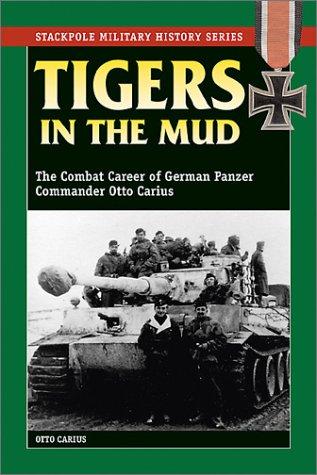
Tigers In The Mud: The Combat Career of German Panzer Commander Otto Carius

Otto Carius

★★★★★
Read Intel history Military history WWII Armor Intel history Biography ISBN 0811729117

Stackpole Books · 2003

WWII began with a metallic roar as the German Blitzkrieg raced across Europe, spearheaded by the most dreaded weapon of the 20th century: the Panzer. No German tank better represents that thundering power than the infamous Tiger, and Otto Carius was one of the most successful commanders to ever take a Tiger into battle, destroying well over 150 enemy tanks during his incredible career.

Vietnam: An Epic Tragedy, 1945-1975

Max Hastings

★★★★★
Read Intel history Military history Vietnam Special ops Guerrilla / COIN Biography ISBN 9780062405661

Harper · 2018

An absorbing and definitive modern history of the Vietnam War from the acclaimed New York Times bestselling author of The Secret War. Vietnam became the Western world’s most divisive modern conflict, precipitating a battlefield humiliation for France in 1954, then a vastly greater one for the United States in 1975. Max Hastings has spent the past three years interviewing scores of participants on both sides, as well as researching a multitude of American and Vietnamese documents and memoirs, to create an epic narrative of an epic struggle. He portrays the set pieces of Dienbienphu, the 1968 Tet offensive, the air blitz of North Vietnam, and also much less familiar miniatures such as the bloodbath at Daido, where a US Marine battalion was almost wiped out, together with extraordinary recollections of Ho Chi Minh’s warriors. Here are the vivid realities of strife amid jungle and paddies that killed two million people. Many writers treat the war as a US tragedy, yet Hastings sees it as overwhelmingly that of the Vietnamese people, of whom forty died for every American. US blunders and atrocities were matched by those committed by their enemies. While all the world has seen the image of a screaming, naked girl seared by napalm, it forgets countless eviscerations, beheadings, and murders carried out by the communists. The people of both former Vietnams paid a bitter price for the Northerners’ victory in privation and oppression. Here is testimony from Vietcong guerrillas, Southern paratroopers, Saigon bargirls, and Hanoi students alongside that of infantrymen from South Dakota, Marines from North Carolina, and Huey pilots from Arkansas. No past volume has blended a political and military narrative of the entire conflict with heart-stopping personal experiences, in the fashion that Max Hastings’ readers know so well. The author suggests that neither side deserved to win this struggle with so many lessons for the twenty-first century about the misuse of military might to confront intractable political and cultural challenges. He marshals testimony from warlords and peasants, statesmen and soldiers, to create an extraordinary record.

No cover · Amazon

Barren SEAD: USAF Defense Suppression Doctrine, 1953-1972

James L. Young Jr.

★★★★
Read Basic intel Military history Intel history Technical warfare Vietnam Cold War Special ops Naval Air power Cyber Biography Strategy / theory

Since 1972, the United States Air Force has argued that its operations against North Vietnam were unsuccessful primarily through a combination of civilian interference and poor strategic choices. Often citing the “success” of Operation Linebacker II as an example of what might have been had its leaders been given free rein, for almost fifty years the Air Force has maintained that its proper employment is the key to winning America’s wars. In Barren SEAD, award winning historian James L. Young Jr. propagates a different Instead of being a sign of what the Air Force was capable of, Linebacker II was a bitter failure that starkly outlined the USAF’s limitations. Furthermore, the meddling of the Johnson and Nixon Administrations played a minor role in this outcome. The USAF's defeat was not brought about by civilian meddling, but resulted from Air Force leaders’ refusal to develop a Suppression of Enemy Air Defenses (SEAD) doctrine from 1953-1972. Relying primarily on Air Force archival documents, memoirs, and contemporary doctrinal publications, Dr. Young illustrates just how dangerous the Air Force’s inability to nurture its SEAD capability was during this period of the Cold War. James L. Young Jr. holds a doctorate in U.S. History from Kansas State University and is a graduate of the United States Military Academy. Barren SEAD is his first non-fiction book. Previously he has won the United States Naval Institute's 2016 Cyberwarfare Essay Contest, runner up in the 2011 James Adams Cold War Essay Contest, and has had an essay selected by the U.S. Naval Heritage Command for its professional reading list. Dr. Young's other professional articles can be found in Armor Magazine, The Journal of Military History, and Proceedings. For those who prefer fiction, Dr. Young also writes alternate history (Usurper's War series / Phases of Mars anthologies) and military science fiction (Vergassy Universe).

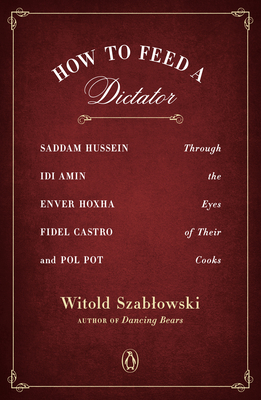
How to Feed a Dictator: Saddam Hussein, Idi Amin, Enver Hoxha, Fidel Castro, and Pol Pot Through the Eyes of Their Cooks

Witold Szabłowski

★★★★
Read Military history Middle East Intel history Biography Economics ISBN 9780143129752

Penguin Publishing Group · 2020

Anthony Bourdain meets Kapuściński in this chilling look from within the kitchen at the appetites of five of the twentieth century’s most infamous dictators, by the acclaimed author of Dancing Bears. What was Pol Pot eating while two million Cambodians were dying of hunger? Did Idi Amin really eat human flesh? And why was Fidel Castro obsessed with one particular cow? Traveling across four continents, from the ruins of Iraq to the savannahs of Kenya, Witold Szabłowski tracked down the personal chefs of five dictators known for the oppression and massacre of their own citizens—Iraq’s Saddam Hussein, Uganda’s Idi Amin, Albania’s Enver Hoxha, Cuba’s Fidel Castro, and Cambodia’s Pol Pot—and listened to their stories over sweet-and-sour soup, goat-meat pilaf, bottles of rum, and games of gin rummy. Dishy, deliciously readable, and dead serious, How to Feed a Dictator provides a knife’s-edge view of life under tyranny.

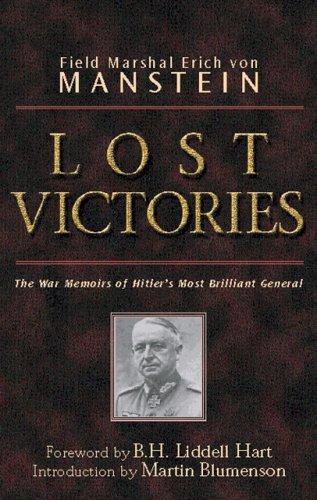
Lost Victories: The War Memoirs of Hitler's Most Brilliant General

Erich von Manstein

★★★★
Read Biographies Military history WWII Biography Strategy / theory ISBN 0760320543

Zenith Press · 2004

Originally published in Germany in 1955, and in England and the United States in 1958, this classic memoir of WWII by a man who was an acknowledged military genius and probably Germany's top WWII general, is now made available again. Field Marshal Erich von Manstein described his book as a personal narrative of a soldier, discussing only those matters that had direct bearing on events in the military field. The essential thing, as he wrote, is to "know how the main personalities thought and reacted to events." This is what he tells us in this book. His account is detailed, yet dispassionate and objective. "Nothing is certain in war, when all is said and done," But in Manstein's record, at least, we can see clearly what forces were in action. In retrospect, perhaps his book takes on an even greater significance.

Mussolini

Nicholas Farrell

★★★★
Read Biographies Military history WWII Russia / USSR Intel history Biography Orthodox / theology ISBN 9781731426970

Independently Published · 2003

‘The question of whether Italians had to pay too much in terms of loss of liberty has been answered by Farrell in a passionate and thought-provoking way...This highly spirited, opinionated and rather remarkable book.’ – Andrew Roberts, Daily Telegraph In his own time, the fascist dictator Benito Mussolini was one of the most admired figures of his age. Winston Churchill called him ‘the Roman Genius’ and Pope Pius XI said he was ‘sent by providence’ to save Italy. Yet Mussolini has gone down in history as nothing more than a grotesque buffoon. Drawing on freshly discovered material - including correspondence previously unavailable outside academia - this a revelatory biography of the Italian fascist leader and dictator puts him in a fresh light. How did Mussolini manage to take power and hold on to it for two decades? And how did he successfully curtail democracy without using mass murder to stay in command? Farrell answers these questions and more, focusing particularly on Mussolini's fatal error: his alliance with Hitler, whom he despised. Anyone interested in history, politics, and World War II will encounter an intriguing and startling picture of one of the 20th century's key figures. ‘A fascinating and at times wilfully revisionist work...Farrell’s account of Mussolini’s last days — his betrayal and his pitiful death — is masterly and surprisingly moving...In many ways a fine, thought-provoking book.’ – Glasgow Herald ‘What [Farrell] shows is what so many liberals want to suppress: that just because a dictator is Right-wing does not mean that he is as bad as Hitler, and that no dictator so far, apart from Hitler, was as bad as Stalin, for whom many a liberal was an apologist. Farrell has written much the most plausible biography of Mussolini.’ – Daily Telegraph ‘Nicholas Farrell has produced a fascinating biography of Mussolini which is bound to be controversial...It is inevitable that Farrell will have the adjective “revisionist” attached to his name, although surely the alternative to “revisionist” history is plagiarism?...Farrell’s greatest contribution is to ground [Mussolini] in his context as a very Italian phenomenon...The questions Mussolini was trying to answer are, Farrell makes clear, as pertinent now as they were then...this mammoth but highly readable work.’ – Spectator Nicholas Farrell read history at Cambridge University (Gonville and Caius College) and was for many years on the staff of the Sunday Telegraph.

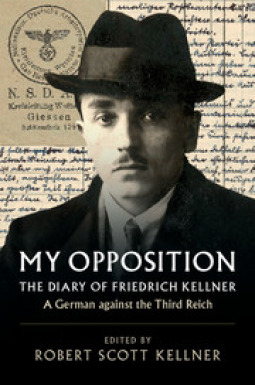
My Opposition: The Diary of Friedrich Kellner - A German against the Third Reich

Friedrich Kellner

★★★★
Read Advanced intel Logistics Military history WWII Logistics Biography ISBN 9781108418294

Cambridge University Press · 2018

This is a truly unique account of Nazi Germany at war and of one man's struggle against totalitarianism. A mid-level official in a provincial town, Friedrich Kellner kept a secret diary from 1939 to 1945, risking his life to record Germany's path to dictatorship and genocide and to protest his countrymen's complicity in the regime's brutalities. Just one month into the war he is aware that Jews are marked for extermination and later records how soldiers on leave spoke openly about the mass murder of Jews and the murder of POWs; he also documents the Gestapo's merciless rule at home from euthanasia campaigns against the handicapped and mentally ill to the execution of anyone found listening to foreign broadcasts. This essential testimony of everyday life under the Third Reich is accompanied by a foreword by Alan Steinweis and the remarkable story of how the diary was brought to light by Robert Scott Kellner, Friedrich's grandson.

One Bullet Away: The Making of a Marine Officer

Nathaniel Fick

★★★★
Read Basic intel Military history Vietnam GWOT Middle East Biography ISBN 9780618773435

Mariner Books · September 7, 2006

If the Marines are “the few, the proud,” Recon Marines are the fewest and the proudest. Nathaniel Fick’s career begins with a hellish summer at Quantico, after his junior year at Dartmouth. He leads a platoon in Afghanistan just after 9/11 and advances to the pinnacle—Recon— two years later, on the eve of war with Iraq. His vast skill set puts him in front of the front lines, leading twenty-two Marines into the deadliest conflict since Vietnam. He vows to bring all his men home safely, and to do so he’ll need more than his top-flight education. Fick unveils the process that makes Marine officers such legendary leaders and shares his hard-won insights into the differences between military ideals and military practice, which can mock those ideals. In this deeply thoughtful account of what it’s like to fight on today’s front lines, Fick reveals the crushing pressure on young leaders in combat. Split-second decisions might have national consequences or horrible immediate repercussions, but hesitation isn’t an option. One Bullet Away never shrinks from blunt truths, but ultimately it is an inspiring account of mastering the art of war.

Penalty Strike (Stackpole Military History Series)

Alexander V. Pyl'cyn

★★★★
Read Military history WWII Cold War Russia / USSR Biography ISBN 9780811735995

Stackpole Books · 2009

- Extremely rare (possibly the only) book-length account of a Soviet penal unit in World War II - Gritty, intense style conveys the brutality of war on the Eastern Front Composed of convicts--soldiers who conducted "unauthorized retreats," former Soviet POWs deemed untrustworthy, and Gulag prisoners--the Red Army's penal units received the most difficult, dangerous assignments, such as breaking through the enemy's defenses. So punishing was life in these units that officers in regular formations threatened to send recalcitrant troops to penal battalions. Alexander Pyl'cyn led his penal unit through the Soviets' massive offensive in the summer of 1944, the Vistula-Oder operation into eastern Germany, and the bitter assault on Berlin in 1945. He survived the war, but 80 percent of his men did not.

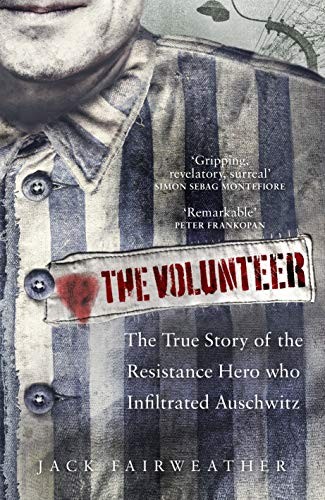
The Volunteer: The True Story of the Resistance Hero who Infiltrated Auschwitz

Jack Fairweather

★★★★
Read Advanced intel Military history Logistics WWII Espionage Logistics Biography ISBN 9780753545164

WH Allen · Mar 21, 2019

How do you keep fighting in the face of unimaginable horror? This is untold story of one of the greatest heroes of the Second World War. In the Summer of 1940, after the Nazi occupation of Poland, an underground operative called Witold Pilecki accepted a mission to uncover the fate of thousands of people being interred at a new concentration camp on the border of the Reich. His mission was to report on Nazi crimes and raise a secret army to stage an uprising. The name of the detention centre -- Auschwitz. It was only after arriving at the camp that he started to discover the Nazi’s terrifying designs. Over the next two and half years, Witold forged an underground army that smuggled evidence of Nazi atrocities to the West, culminating in the mass murder of over a million Jews. His reports from the camp were to shape the Allies response to the Holocaust - yet his story was all but forgotten for decades. This is the first major account of his amazing journey, drawing on exclusive family papers and recently declassified files as well as unpublished accounts from the camp’s fighters to show how he saved hundreds of thousands of lives. The result is a enthralling story of resistance and heroism against the most horrific circumstances, and one man’s attempt to change the course of history.