S2 Search · Reading list

S2 Actual reading list

Books from S2 Actual on Goodreads, organized by his shelves and topic buckets (intel lists, military history, logistics, etc.). Metadata filled via Open Library.

Not official S2 Underground. Independent fan index — not affiliated with or endorsed by S2. Official hub: linktr.ee/S2_underground. S2 materials are CC BY-NC-SA 4.0.

S2 topic buckets (Goodreads)

Subjects & genres

31 books · Intel history · subject Strategy / theory · page 1 of 2

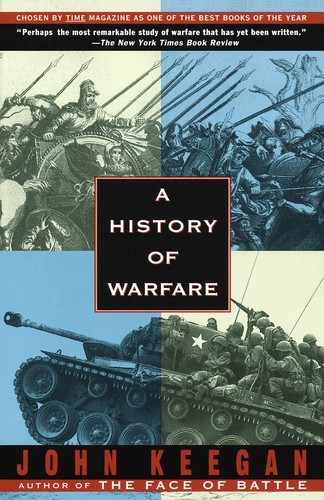
A History of Warfare

John Keegan

★★★★★
Read Intel history Strategy / theory ISBN 0679730826

Random House · 1994

The acclaimed author of The Face of Battle examines centures of conflict in a variety of diverse societies and cultures. "Keegan is at once the most readable and the most original of living military historians . . . A History of Warfare is perhaps the most remarkable study of warfare that has yet been written."--The New York Times Book Review.

No cover · Amazon

Crusade: The Untold Story of the Persian Gulf War

Rick Atkinson

★★★★★
Read Basic intel Advanced intel Technical warfare Logistics Intel history Military history Middle East Logistics Strategy / theory

A definitive account of the Gulf War told by Pulitzer Prize–winning correspondent Rick Atkinson. This previously untold story of the US war with Iraq in the early 1990s, Atkinson follows the 42-day war from the first night to the final day, providing vivid accounts of bombing runs, White House strategy sessions, firefights, and bitter internal conflicts.

No cover · Amazon

Fast Tanks and Heavy Bombers: Innovation in the U.S. Army, 1917-1945

David E. Johnson

★★★★★
Read Basic intel Military history Intel history Logistics WWII Air power Armor Guerrilla / COIN Logistics Strategy / theory

The U.S. Army entered World War II unprepared. In addition, lacking Germany's blitzkrieg approach of coordinated armor and air power, the army was organized to fight two wars: one on the ground and one in the air. Previous commentators have blamed Congressional funding and public apathy for the army's unprepared state. David E. Johnson believes instead that the principal causes were internal: army culture and bureaucracy, and their combined impact on the development of weapons and doctrine. Johnson examines the U.S. Army's innovations for both armor and aviation between the world wars, arguing that the tank became a captive of the conservative infantry and cavalry branches, while the airplane's development was channeled by air power insurgents bent on creating an independent air force. He maintains that as a consequence, the tank's potential was hindered by the traditional arms, while air power advocates focused mainly on proving the decisiveness of strategic bombing, neglecting the mission of tactical support for ground troops. Minimal interaction between ground and air officers resulted in insufficient cooperation between armored forces and air forces. Fast Tanks and Heavy Bombers makes a major contribution to a new understanding of both the creation of the modern U.S. Army and the Army's performance in World War II. The book also provides important insights for future military innovation.

Hybrid Warfare: Fighting Complex Opponents from the Ancient World to the Present

Williamson Murray

★★★★★
Read Military history Intel history Logistics Technical warfare GWOT Guerrilla / COIN Logistics Strategy / theory ISBN 9781107026087

Cambridge University Press · 2012

Hybrid warfare has been an integral part of the historical landscape since the ancient world, but only recently have analysts incorrectly categorized these conflicts as unique. Great powers throughout history have confronted opponents who used a combination of regular and irregular forces to negate the advantage of the great powers' superior conventional military strength. As this study shows, hybrid wars are labor-intensive and long-term affairs; they are difficult struggles that defy the domestic logic of opinion polls and election cycles. Hybrid wars are also the most likely conflicts of the twenty-first century, as competitors use hybrid forces to wear down America's military capabilities in extended campaigns of exhaustion. Nine historical examples of hybrid warfare, from ancient Rome to the modern world, provide readers with context by clarifying the various aspects of conflicts and examining how great powers have dealt with them in the past.

Silent Victory: The U.S. Submarine War Against Japan

Clay Blair Jr.

★★★★★
Read Military history Intel history WWII Espionage Naval Strategy / theory ISBN 155750217X

Naval Institute Press · 2001

The long-awaited publication of Silent Victory fills a major gap in the annals of World War II. Here for the first time is the definitive history of the submarine war against Japan--the only full-scale submarine war the United States ever fought--which has for the most part been shrouded in secrecy for three decades. Only recently have the codebreakers who played such a pivotal role in the submarine war been willing to talk about their work. And only recently have the private papers, diaries, and official reports of the submarine admirals and skippers been made available to historians. In preparing to write this book, Clay Blair, Jr. combed hundreds of thousands of pages of recently declassified documents and personal letters. In individual interviews he listened to scores of skippers, staff officers, and codebreakers speaking freely. He researched in depth the development of submarine and torpedo from prewar days down to the present time. The result is a revealing and immensely exciting book that sets the submarine war within the framework of history and the overall war in the Pacific. Silent Victory takes you into the submarine war at all levels--the highest strategy sessions in Washington, the terrifying moments in a submarine trapped on the bottom for hours as depth charges explode around it, the zany efforts of a torpedo crew coaxing an emaciated chicken to lay an egg. It tells of the jealous infighting of admirals vying for power . . . of "overcautious" skippers, trained in peacetime and ill suited for war, and the mutinies they provoked . . . of the shocking torpedo scandal and the toll it took . . . of the later breed of younger skippers whose daring was so effective against Japanese shipping that the war, as Blair argues, could have ended months earlier, saving thousands of lives. The complete saga that led to victory is here supplemented by ● 37 specially drawn maps showing submarine activity in the context of every important naval engagement in the Pacific ● 32 pages of photographs ● 12 appendixes, including a calendar of all submarine war patrols ● an index of over 2,000 entries. A work of great scholarship and scope, Silent Victory is a timeless contribution to the history of World War II.

No cover · Amazon

The Crucible of War Book 3: Montgomery and Alamein

Barrie Pitt

★★★★★
Read Advanced intel Intel history Military history Technical warfare Strategy / theory

The Crucible of War Book 3 ‘Masterly and lucid in its descriptions not only of the fighting and strategy, but of the political machinations’ Sunday Telegraph Throughout the first half of the Second World War, control of the inhospitable North African desert was strategically vital for the Allies. In the middle of 1942, the outcome hung in the balance. Rommel and his Afrika Korps had been fought to a standstill at the first battle of Alamein and were desperately short of fuel and equipment. But the British and Commonwealth forces were in little better shape. The next encounter between the two armies would however be decisive. Montgomery, the new Allied commander, set about rebuilding his weary army and establishing an overwhelming superiority in both men and material. The scene was set for a second, and bludgeoning, encounter at El Alamein in October. It was to prove Britain’s first decisive victory of the war. Montgomery and Alamein is the third volume of Barrie Pitt’s definitive history of the Desert War. The first and second volumes, Wavell’s Command and Auchinleck’s Command, are also published by Sharpe Books. Barrie Pitt is also the author of Zeebrugge, Coronel & Falkland the history of the Special Boat Squadron. Praise for the Crucible of War Trilogy: ‘Barrie Pitt tells this exciting history well. He has assembled a mass of information and organised it with admirable clarity. His narrative is scrupulously accurate in detail. The whole work will have great appeal for the general reader.’ Times Literary Supplement ‘The definitive work on the Desert War.’ Manchester Evening News ‘A magnificent book, Barrie Pitt has almost a novelist’s skill and perception of character.’ Daily Telegraph ‘Totally readable, Mr Pitt’s study depicts equally well the broad outlines of strategy, the confusions and hazards of the battlefield and the personalities of the generals or private soldiers fighting there.’ Oxford Times

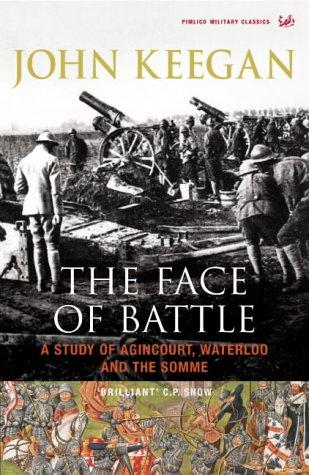
The Face of Battle: A Study of Agincourt, Waterloo and the Somme

John Keegan

★★★★★
Read Military history Intel history WWI Strategy / theory ISBN 9781844137480

Pimlico · 2004

The Face of Battle is military history from the battlefield: a look at the direct experience of individuals at 'the point of maximum danger'. It examines the physical conditions of fighting, the particular emotions and behaviour generated by battle, as well as the motives that impel soldiers to stand and fight rather than run away. In his scrupulous reassessment of three battles, John Keegan vividly conveys their reality for the participants, whether facing the arrow cloud of Agincourt, the levelled muskets of Waterloo or the steel rain of the Somme.

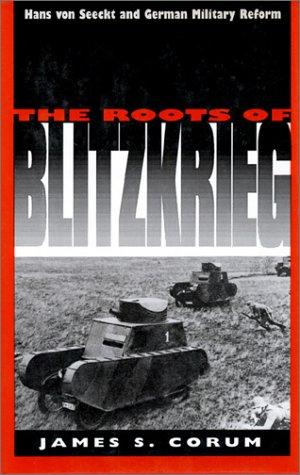
The Roots Of Blitzkrieg: Hans von Seeckt And German Military Reform

James S. Corum

★★★★★
Read Advanced intel Basic intel Military history Intel history Logistics WWII WWI Logistics Strategy / theory ISBN 9780700606283

University Press of Kansas · February 1994

Following Germany's defeat in World War I, the Germans signed the Versailles Treaty, superficially agreeing to limit their war powers. The Allies envisioned the future German army as a lightly armed border guard and international security force. The Germans had other plans. As early as 1919, James Corum contends, the tactical foundations were being laid for the Nazi Blitzkrieg. Between 1919 and 1933, German military leaders created and nurtured the Reichswehr, a new military organization built on the wreckage of the old Imperial Army. It was not being groomed for policing purposes. Focusing on Hans von Seeckt, General Staff Chief and Army Commander, Corum traces the crucial transformations in German military tactical doctrine, organization, and training that laid the foundations for fighting Germany's future wars. In doing so, he restores balance to prior assessment of von Seeckt's influence and demonstrates how the general, along with a few other "visionary" officers--including armor tactician Ernst Volckheim and air tactician Helmut Wilberg--collaborated to develop the core doctrine for what became the Blitzkrieg. The concepts of mobile war so essential to Germany's strength in World War II, Corum shows, were in place well before the tools became available. As an unforeseen consequence of the Versailles Treaty, the Germans were not saddled with a stockpile of outdated equipment as the Allies were. This, ironically, resulted in an advantage for the Germans, who were able to create doctrine first and design equipment to match it.

The Second World War

John Keegan

★★★★★
Read Intel history WWII Armor Strategy / theory ISBN 014011341X

Penguin Books · 1990

In this comprehensive history, John Keegan explores both the technical and the human impact of the greatest war of all time. He focuses on five crucial battles and offers new insights into the distinctive methods and motivations of modern warfare. In knowledgable, perceptive analysis of the airborne battle of Crete, the carrier battle of Midway, the tank battle of Falaise, the city battle of Berlin, and the amphibious battle of Okinawa, Keegan illuminates the strategic dilemmas faced by the leaders and the consequences of their decisions on the fighting men and the course of the war as a whole.

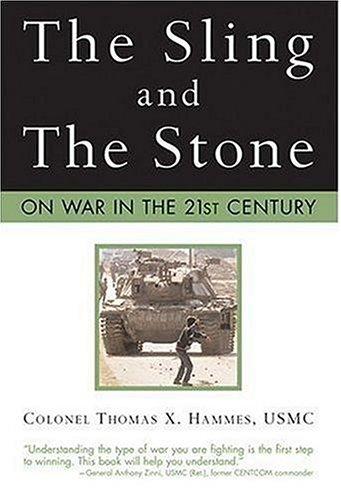
The Sling and the Stone: On War in the 21st Century

Thomas X. Hammes

★★★★★
Read Basic intel Advanced intel Military history Intel history Vietnam Cold War GWOT Guerrilla / COIN Russia / USSR Middle East Strategy / theory ISBN 9780760324073

Zenith Press · February 17, 2006

4GW (Fourth Generation Warfare) is the only kind of war America has ever lost. And we have done so three times - in Vietnam, Lebanon, and Somalia. This form of warfare has also defeated the French in Vietnam and Algeria, and the USSR in Afghanistan.As the only Goliath left in the world, we should be worried that the world's Davids have found a sling and stone that work." - Chapter 1, The Sling and the Stone: On War in the 21st Century. The War in Iraq. The War on Terror. These types of "asymmetrical" warfare are the conflicts of the 21st century - and show how difficult it is for the world's remaining superpower to battle insurgents and terrorists who will fight unconventionally in the face of superior military power. This change in military conflict may seem sudden.

No cover · Amazon

Weaving the Tangled Web: Military Deception in Large-Scale Combat Operations (Large-Scale Combat Operations Series Book 1)

Christopher M. Rein

★★★★★
Read Basic intel Military history Intel history WWII Korea Cold War GWOT Guerrilla / COIN China Russia / USSR Middle East Intel history Strategy / theory

This book is from Army University Press and is Volume 1 in it's Large-Scale Combat Operations Series. It has footnotes, maps, and pictures, and was originally published in 2018. “Since the Soviet Union’s fall in 1989, the specter of large-scale ground combat against a peer adversary was remote. During the years following, the US Army found itself increasingly called upon to lead multinational operations in the lower to middle tiers of the range of military operations and conflict continuum. The events of 11 September 2001 led to more than 15 years of intense focus on counterterrorism, counterinsurgency, and stability operations in Iraq and Afghanistan. An entire generation of Army leaders and Soldiers were culturally imprinted by this experience. We emerged as an Army more capable in limited contingency operations than at any time in our nation’s history, but the geopolitical landscape continues to shift and the risk of great power conflict is no longer a remote possibility. “While our Army focused on limited contingency operations in the Middle East and Southwest Asia, other regional and peer adversaries scrutinized US military processes and methods and adapted their own accordingly. As technology has proliferated and become accessible in even the most remote corners of the world, the US military’s competitive advantage is being challenged across all of the warfighting domains. In the last decade, we have witnessed an emergent China, a revanchist and aggressive Russia, a menacing North Korea, and a cavalier Iranian regime. Each of these adversaries seeks to change the world order in their favor and contest US strategic interests abroad. The chance for war against a peer or regional near-peer adversary has increased exponentially, and we must rapidly shift our focus to successfully compete in all domains and across the full range of military operations." Includes: Introduction: Multi-Domain Deception (Christopher M. Rein, General Editor); Chapter 1: The Belfort Ruse the American Deception plan for the battle of st. Mihiel, 1918 (Mark E. Grotelueschen); Chapter 2: From Beersheba To Megiddo British Deception Operations During The Palestine Campaign, 1917-1918; (Major Brian J. Drohan); Chapter 3: Operation Bertram British Deception At El Alamein (Gary W. Linhart); Chapter 4: Operations Barclay, Cascade, And Mincemeat Allied Deception In The Mediterranean, 1943 (Gregory S. Hospodor); Chapter 5: Operation Kreml German Strategic Deception On The Eastern Front In 1942 (Alan P. Donohue); Chapter 6: Red Star Resurgent Soviet Deception Operations At Stalingrad, 1942-1943 (First Lieutenant Kyle B. Vautrinot); Chapter 7: Operation Bagration Maskirovka At Its Height, Summer 1944 (Curtis S. King); Chapter 8: Deceive, Divert, And Delay Operation Fortitude In Support Of D-Day (Scott C. Farquhar); Chapter 9: Chinese Deception And The 1950 Intervention In The Korean War (Joseph G.D. Babb); Chapter 10: From Maneuvers To War The Egyptian Deception Plan On The Eve Of The Yom-Kippur War (Tal Tovy); Chapter 11: Target San Carlos British Deception During The Repossession Of The Falkland Islands (Steven Paget); Chapter 12: Deception In The Desert Deceiving Iraq In Operation Desert Storm (Donald P. Wright); Conclusion: The Future Of Military Deception Operations (Conrad C. Crane)

No cover · Amazon

Barren SEAD: USAF Defense Suppression Doctrine, 1953-1972

James L. Young Jr.

★★★★
Read Basic intel Military history Intel history Technical warfare Vietnam Cold War Special ops Naval Air power Cyber Biography Strategy / theory

Since 1972, the United States Air Force has argued that its operations against North Vietnam were unsuccessful primarily through a combination of civilian interference and poor strategic choices. Often citing the “success” of Operation Linebacker II as an example of what might have been had its leaders been given free rein, for almost fifty years the Air Force has maintained that its proper employment is the key to winning America’s wars. In Barren SEAD, award winning historian James L. Young Jr. propagates a different Instead of being a sign of what the Air Force was capable of, Linebacker II was a bitter failure that starkly outlined the USAF’s limitations. Furthermore, the meddling of the Johnson and Nixon Administrations played a minor role in this outcome. The USAF's defeat was not brought about by civilian meddling, but resulted from Air Force leaders’ refusal to develop a Suppression of Enemy Air Defenses (SEAD) doctrine from 1953-1972. Relying primarily on Air Force archival documents, memoirs, and contemporary doctrinal publications, Dr. Young illustrates just how dangerous the Air Force’s inability to nurture its SEAD capability was during this period of the Cold War. James L. Young Jr. holds a doctorate in U.S. History from Kansas State University and is a graduate of the United States Military Academy. Barren SEAD is his first non-fiction book. Previously he has won the United States Naval Institute's 2016 Cyberwarfare Essay Contest, runner up in the 2011 James Adams Cold War Essay Contest, and has had an essay selected by the U.S. Naval Heritage Command for its professional reading list. Dr. Young's other professional articles can be found in Armor Magazine, The Journal of Military History, and Proceedings. For those who prefer fiction, Dr. Young also writes alternate history (Usurper's War series / Phases of Mars anthologies) and military science fiction (Vergassy Universe).

Destiny in the Desert: The Story Behind El Alamein - the Battle That Turned the Tide

Jonathan Dimbleby

★★★★
Read Logistics Intel history Military history Economics WWII Russia / USSR Logistics Strategy / theory Economics Orthodox / theology ISBN 9781846684449

Profile Books Ltd · 2012

This is a unique single-volume history of the road to El Alamein - 'the end of the beginning' - and the bloody battle that followed...It was the British victory at the Battle of El Alamein in November 1942 that inspired one of Churchill's most famous aphorisms: 'it is not the end nor is it the beginning of the end, but it is the end of the beginning'. And yet the true significance of this iconic episode remains unrecognised. In this thrilling historical account, Jonathan Dimbleby describes the political and strategic realities that lay behind the battle, charting the nail-biting months that led to the victory at El Alamein in November 1942. It is a story of high drama, played out both in the war capitals of London, Washington, Berlin, Rome and Moscow, and at the front, in the command posts and foxholes in the desert. "El Alamein" is about politicians and generals, diplomats, civil servants and soldiers. It is about forceful characters and the tensions and rivalries between them. Drawing on official records and the personal insights of those involved at every level, Dimbleby creates a vivid portrait of a struggle which for Churchill marked the turn of the tide - and which for the soldiers on the ground involved fighting and dying in a foreign land.

Perfect Spy: The Incredible Double Life of Pham Xuan An - Time Magazine Reporter and Vietnamese Communist Agent

Larry Berman

★★★★
Read Advanced intel Biographies Intel history Vietnam Espionage Biography Strategy / theory ISBN 9780060888381

Collins · April 24, 2007

During the Vietnam War, Time reporter Pham Xuan An befriended everyone who was anyone in Saigon, including American journalists such as David Halberstam and Neil Sheehan, the CIA's William Colby, and the legendary Colonel Edward Lansdale—not to mention the most influential members of the South Vietnamese government and army. None of them ever guessed that he was also providing strategic intelligence to Hanoi, smuggling invisible ink messages into the jungle inside egg rolls. His early reports were so accurate that General Giap joked, "We are now in the U.S. war room." For more than twenty years, An lived a dangerous lie—and no one knew it because he was a master of both his jobs. After the war, An was named a Hero of the People's Army and was promoted to general—one of only two intelligence officers to ever achieve that rank. In Perfect Spy, Larry Berman, who An considered his official American biographer, chronicles the extraordinary life of one of the twentieth century's most fascinating spies. In doing so, he offers a new perspective on a war that continues to haunt us.

Stealth: The Secret Contest to Invent Invisible Aircraft

Peter Westwick

★★★★
Read Advanced intel Military history Intel history Cold War Russia / USSR Middle East Strategy / theory ISBN 9780190677442

Oxford University Press, Incorporated · 2020

The story behind the technology that revolutionized both aeronautics, and the course of history On a moonless night in January 1991, a dozen airplanes appeared in the skies over Baghdad. Or, rather, didn't appear. They arrived in the dark, their black outlines cloaking them from sight. More importantly, their odd, angular shapes, which made them look like flying origami, rendered them undetectable to Iraq's formidable air defenses. Stealth technology, developed during the decades before Desert Storm, had arrived. To American planners and strategists at the outset of the Cold War, this seemingly ultimate way to gain ascendance over the USSR was only a question. What if the United States could defend its airspace while at the same time send a plane through Soviet skies undetected? A craft with such capacity would have to be essentially invisible to radar - an apparently miraculous feat of physics and engineering. In Stealth, Peter Westwick unveils the process by which the impossible was achieved. At heart, Stealth is a tale of two aerospace companies, Lockheed and Northrop, and their fierce competition - with each other and with themselves - to obtain what was estimated one of the largest procurement contracts in history. Westwick's book fully explores the individual and collective ingenuity and determination required to make these planes and in the process provides a fresh view of the period leading up to the end of the Soviet Union. Taking into account the role of technology, as well as the art and science of physics and engineering, Westwick offers an engaging narrative, one that immerses readers in the race to produce a weapon that some thought might save the world, and which certainly changed it.

The Art of War

Sun Tzu

★★★★
Read Basic intel Military history Intel history China Strategy / theory ISBN 9781533142467

Pearson Education Asia · 1900

Twenty-Five Hundred years ago, Sun Tzu wrote this classic book of military strategy based on Chinese warfare and military thought. Since that time, all levels of military have used the teaching on Sun Tzu to warfare and civilization have adapted these teachings for use in politics, business and everyday life. The Art of War is a book which should be used to gain advantage of opponents in the boardroom and battlefield alike.

The Longest War: A History of the War on Terror and the Battles with Al Qaeda Since 9/11

Peter L. Bergen

★★★★
Read Advanced intel Military history Intel history Espionage GWOT Middle East Strategy / theory ISBN 9780743278935

Free Press · 2011

TEN YEARS HAVE PASSED since the shocking attacks on the World Trade Center, and after seven years of conflict, the last U.S. combat troops left Iraq—only to move into Afghanistan, where the ten-year-old fight the war on terror rages with no clear end in sight. In The Longest War Peter Bergen offers a comprehensive history of this war and its evolution, from the strategies devised in the wake of the 9/11 attacks to the fighting in Afghanistan, Pakistan, and beyond. Unlike any other book on this subject, here Bergen tells the story of this shifting war’s failures and successes from the perspectives of both the United States and al-Qaeda and its allies. He goes into the homes of al-Qaeda members, rooting into the source of their devotion to terrorist causes, and spends time in the offices of the major players shaping the U.S. strategic efforts in the region. At a time when many are frustrated or fatigued with what has become an enduring multigenerational conflict, this book will provide an illuminating narrative that not only traces the arc of the fight but projects its likely future. Weaving together internal documents from al-Qaeda and the U.S. offices of counterterrorism, first-person interviews with top-level jihadists and senior Washington officials, along with his own experiences on the ground in the Middle East, Bergen balances the accounts of each side, revealing how al-Qaeda has evolved since 9/11 and the specific ways the U.S. government has responded in the ongoing fight. Bergen also uncovers the strategic errors committed on both sides—the way that al-Qaeda’s bold attack on the United States on 9/11 actually undermined its objective and caused the collapse of the Taliban and the destruction of the organization’s safe haven in Afghanistan, and how al-Qaeda is actually losing the war of ideas in the Muslim world. The book also shows how the United States undermined its moral position in this war with its actions at Guantánamo and coercive interrogations—including the extraordinary rendition of Abu Omar, who was kidnapped by the CIA in Milan in 2003 and was tortured for four years in Egyptian prisons; his case represents the first and only time that CIA officials have been charged and convicted of the crime of kidnapping. In examining other strategic blunders the United States has committed, Bergen offers a scathing critique of the Clinton and Bush administrations’ inability to accurately assess and counter the al-Qaeda threat, Bush’s deeply misguided reasons for invading Iraq—including the story of how the invasion was launched based, in part, on the views of an obscure academic who put forth theories about Iraq’s involvement with al-Qaeda—and the Obama administration’s efforts in Afghanistan. At a critical moment in world history The Longest War provides the definitive account of the ongoing battle against terror.

War In The Shadows: The Guerrilla in History

Robert B. Asprey

★★★★
Read Intel history Advanced intel Vietnam Cold War Guerrilla / COIN Russia / USSR Middle East Strategy / theory Economics Revolution ISBN 9780595225934

Backinprint.com · May 2002

Ranging from Alexander the Great's battles with Asiatic Scythians, through the Russian Revolution, and on up to the turmoil in the Middle East and the battle in Northern Ireland, War in the Shadows is a book of monumental sweep and singular perspective. It also contains a comprehensive and hard-hitting strategic evaluation of the Vietnam War-one of the most significant analyses of "the war that won't go away." War in the Shadows tells the story of the countries currently torn by armed insurgencies and clarifies the causes of each conflict. It provides the broad viewpoint necessary for understanding them in the historical terms of guerilla warfare. With the collapse of the Soviet Union, the end of the Cold War, and a highly unstable "new world order," this brand of rebellion has never been more powerful and potentially disruptive. As the author states in his Foreword, "For a number of reasons guerilla warfare has evolved into an ideal instrument for the realization of social-political-economic aspirations of underprivileged peoples. This is so patently true as to allow one to suggest that we may be witnessing a transition to a new era in warfare, an era as radically different as those of which followed the writings of Sun Tzu, Machiavelli, Clausewitz, and Mahan." War in the Shadows is crucial to understanding the complex challenges of our new and dangerous era.

Air Force Advising and Assistance: Developing Airpower in Client States (Modern Military History)

Donald Stoker

★★★☆☆
Read Advanced intel Intel history GWOT Naval Air power Guerrilla / COIN Strategy / theory Economics ISBN 9781912390601

Helion and Company · Sep 20, 2018

The increased focus on counterinsurgency warfare and US nation building efforts after the attacks of 11 September 2001 reignited interest in military advising within military and other government organizations, private think tanks, and defense related contractors. Most studies on the subject, based on the chronological scope and numerical preponderance of ground advising missions, has quite naturally focused on these past efforts. Less attention has been given to air or naval advisory missions. This work seeks in part to help redress this current imbalance by examining a number of historical case studies dealing with air advisory efforts. By examining a number of historical case studies, this volume analyzes the challenges and opportunities inherent in aerial advisory efforts and offers insights into the methods by which such missions succeed or fail. Air advisory missions date almost to the first days of powered flight. Air advisory efforts have a number of unique elements based on the fundamental role of advanced technology and the extensive resource requirements associated with aviation operations. For example, air advisory efforts are profoundly influenced by the types of aircraft involved and the types of mission flown. Likewise, the issues of maintenance support and the infrastructure needed for these missions plays a key role in determining capabilities available to the host nation. In the case of infrastructure, airfields, fuelling depots, maintenance and repair facilities, and radar and communications equipment offer a few of the most obvious requirements to support flight operations. The early history of advisory efforts reveal issues that remain relevant today, including questions related to the nature of aerial technology to be shared, the type of training to be provided, and the potential economic benefits that might accrue to the donor nation as a result of the sale of aviation technology to the host country. In many respects, air advisory efforts raise a number of profound strategic questions for the donor nation. Among others, these questions relate to the type of technology to be shared, the nature of training to be given, the role of foreign advisors in operations, the issue of infrastructure development and auxiliary training programs, the preparation of foreign advisors for their duties, and perhaps most significantly the development of the type of capabilities required to address the host nation’s security environment. Via a series of historical case studies, this volume explores these questions and others.

No cover · Amazon

Military Deception: Hiding The Real - Showing The Fake - Denial Operations, Propaganda, Disinformation, Joint Doctrine, Soviet Maskirovka, Desert Storm Persian Gulf War Examples

U.S. Government

★★★☆☆
Read Advanced intel Military history Intel history Technical warfare WWII Russia / USSR Middle East Strategy / theory

Professionally converted for accurate flowing-text e-book format reproduction, this book discusses military deception techniques and history. "Military deception" is an umbrella term that includes both denial and deception. Denial hides the real and deception shows the fake. Denial and deception are operations; propaganda and disinformation are the products. Joint doctrine says that military deception, as applied by a joint force commander (JFC), targets an adversary's decision-making process. Ultimately, the intent is to shape the adversary's behavior in the JFC's favor or to cause an adversary to form an inaccurate impression of the battlespace. Consequently, planning for deception operations depends on intelligence and security for success. Obviously, a commander wants to conceal deception efforts from the enemy, but often he'll conceal all or some of his efforts from his own troops to prevent confusion and/or compromise of the plan. During the early years of Soviet involvement in World War II, mishandling of information by soldiers and planners resulted in the compromise of many maskirovka (or deception) operations. As a result, the Soviets implemented aggressive security measures to protect their deception plans. Specifically, Soviet commanders restricted the number of planners and documents involved in the deception operations and communicated to subordinates only what they needed to know, when they needed to know it. The general enjoyed his breakfast while reading his morning paper and listening to the international news channel. Hearing the Balkans mentioned—his area of responsibility—he looked up as a foreign correspondent began to comment on the aftermath of an Allied bombing mission from the day before. The gruesome details suddenly made the general's scrambled eggs a bit less appealing. The graphic pictures showed what appeared to be the remnants of an orphanage. There in the rubble lay a bloodstained, tattered doll. Those images left him wondering about the carnage that lay beneath the collapsed brick and mortar. Had his staff miscalculated and inadvertently struck an orphanage? A similar misstep had occurred a few weeks ago when another bombing mission resulted in civilian casualties in a marketplace. As the general bemoaned the potential ramifications of accidentally bombing an orphanage, a memory surfaced. Years of flying high-performance aircraft had sharpened his senses, and something about the scene seemed familiar. Could that be the same bloodstained doll he had seen in photographs of the earlier marketplace mishap? The general had been briefed on the enemy's rather low-tech yet successful use of deception. Was he, along with the rest of the world, a target of military deception? As he pondered this, his pager went off. This fictitious example illustrates both how easy it is to manipulate the media in deception operations and how a thorough understanding of deception can help prevent a military leader from falling victim to it. The U.S. military is transforming itself with technological advancements in warfighting capability. Weapon systems, force structure and training have all improved. The amount and kind of information available to the warfighter is also improving. But even a technologically advanced nation like the United States is susceptible to deception. Analysis of friendly and enemy deception techniques in Operations DESERT STORM and ALLIED FORCE shows the main U.S. vulnerabilities to include its insatiable appetite for "news," the lack of deception-detection expertise in the military, and the tendency to believe that technological advancements make a nation deception-proof. Therefore, the key to mitigating the U.S. vulnerabilities to deception lies in educating the media about the military and common deception practices, giving the military intensive deception-detection training, and abandoning the notion that technolo

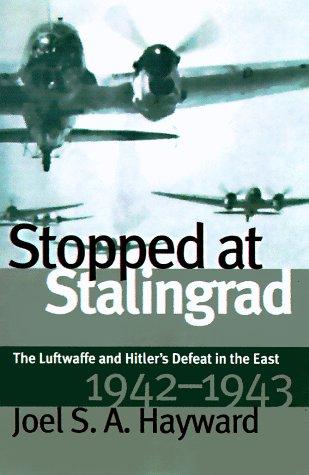
Stopped at Stalingrad: The Luftwaffe and Hitler's Defeat in the East, 1942-1943 (Modern War Studies)

Joel S.A. Hayward

★★★☆☆
Read Intel history Military history Advanced intel Logistics WWII Cold War Air power Russia / USSR Logistics Strategy / theory ISBN 9780700611461

University Press of Kansas · September 2001

By the time Hitler declared war on the Soviet Union in 1941, he knew that his military machine was running out of fuel. In response, he launched Operation Blau, a campaign designed to protect Nazi oilfields in Rumania while securing new ones in the Caucasus. All that stood in the way was Stalingrad. Most accounts of the Battle of Stalingrad have focused on the dismal fate of the German Army. Joel Hayward now chronicles Luftwaffe operations during that campaign, focusing on Hitler's use of the air force as a tactical rather than strategic weapon in close support of ground forces. He vividly details the Luftwaffe's key role as flying artillery, showing that the army relied on Luftwaffe support to a far greater degree than has been previously revealed and that its successes in the East occurred largely because of the effectiveness of that support. Hayward analyzes this major German offensive from the standpoint of cooperation between ground and air forces to attain mutually agreed objectives. He draws on diaries of both key commanders and regular airmen to recreate crucial battles and convey the drama of Hitler's frustrations and reckless leadership. Ultimately, Hayward shows, the poorly conceived strategies of Hitler, Goering, and others in Berlin doomed the efforts of air commander Wolfram von Richthofen, a courageous and resolute leader attempting to come to grips with an increasingly impossible situation. Stopped at Stalingrad is a dynamic case study in combined arms warfare that fills in many of the gaps left by other studies of the eastern war. By reconsidering the campaign in the light of a wider body of documentary sources and analyzing many previously ignored events, Hayward provides military historians and general readers a much deeper and more complete understanding of the Battle of Stalingrad and its impact on World War II.

From Troy to Entebbe

John Arquilla

unrated
Read Advanced intel Intel history Military history WWII WWI Special ops China Strategy / theory US Civil War ISBN 9780761801863

Univ.P.of America · 1996

Special operations, though most commonly associated with the period from the Second World War to the present, have played a key role throughout the history of conflict from the Trojan War to the great arms struggles of the 20th century. This volume introduces the reader to the broad sweep of the history of special operations, and also includes several excerpts from the classic literature on the subject. Contents: Origins: Robert Graves, 'The Wooden Horse', 'The Sack of Troy'; Raiding in the Age of Sail: G.M. Thomson, 'The Damage Done by this Corsair', 'The Wind Commands Me Away'; Ian Grimble, 'The Imp,^Rrieuse'; The Early American Tradition: Kenneth Roberts, 'The Raid on St. Francis'; Fred Cook, 'Struggle for the South'; R.E. Dupuy and W.H. Baumer, 'Wars With the Barbary Pirates'; 19th Century Colonial Warfare; Leo Tolstoy, The Raid; Wyatt Blassingame, 'How the Legion Began', 'The Legion Fights in Algeria'; The Civil War: Archer Hines, 'Military Means, Political Ends'; Bruce Catton, 'Total War and an Election'; World War I: Lowell Thomas, 'Trapped by a G-Ship..'; T.E. Lawrence, 'The Raid Upon the Bridges'; World War II in Western Europe and North Africa: Cajus Bekker, 'The Coup de Main at Eben Emael', 'The Blood-Bath of Crete'; Paul Carell, 'A British Commando Attempt to Capture Rommel', 'The British Raid on Tobruk', 'Brandenburgers in Action Behind the Front'; John Lodwick, Raiders from the Sea, Chapters 16-18; The Pacific War: Walter Lord, 'A Very Private War';Ronald Spector, 'The Road to Myitkyina'; Milton E. Miles, 'Chinese Pirates and the SACO Dragon'; Algeria, Round II: Jean Lart,^Rguy, 'The Leap of Leucadia'; The Ultimate Rescue: Chaim Herzog, 'Entebbe'; Bibliography; Index.