S2 Search · Reading list

S2 Actual reading list

Books from S2 Actual on Goodreads, organized by his shelves and topic buckets (intel lists, military history, logistics, etc.). Metadata filled via Open Library.

Not official S2 Underground. Independent fan index — not affiliated with or endorsed by S2. Official hub: linktr.ee/S2_underground. S2 materials are CC BY-NC-SA 4.0.

S2 topic buckets (Goodreads)

Subjects & genres

44 books · Intel history · subject WWII · page 1 of 2

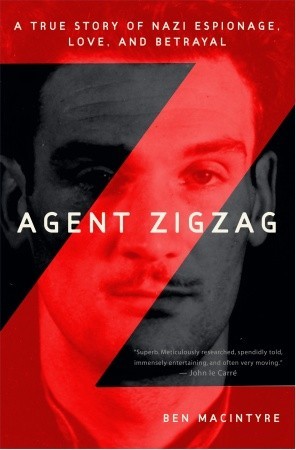
Agent Zigzag: A True Story of Nazi Espionage, Love, and Betrayal

Ben Macintyre

★★★★★
Read Basic intel Intel history WWII Espionage Intel history Biography ISBN 9780307353405

Harmony Books · 2007

Eddie Chapman was a charming criminal, a con man, and a philanderer. He was also one of the most remarkable double agents Britain has ever produced. Inside the traitor was a man of loyalty; inside the villain was a hero. The problem for Chapman, his spymasters, and his lovers was to know where one persona ended and the other began. In 1941, after training as a German spy in occupied France, Chapman was parachuted into Britain with a revolver, a wireless, and a cyanide pill, with orders from the Abwehr to blow up an airplane factory. Instead, he contacted MI5, the British Secret Service. For the next four years, Chapman worked as a double agent, a lone British spy at the heart of the German Secret Service who at one time volunteered to assassinate Hitler for his countrymen. Crisscrossing Europe under different names, all the while weaving plans, spreading disinformation, and, miraculously, keeping his stories straight under intense interrogation, he even managed to gain some profit and seduce beautiful women along the way. The Nazis feted Chapman as a hero and awarded him the Iron Cross. In Britain, he was pardoned for his crimes, becoming the only wartime agent to be thus rewarded. Both countries provided for the mother of his child and his mistress. Sixty years after the end of the war, and ten years after Chapman’s death, MI5 has now declassified all of Chapman’s files, releasing more than 1,800 pages of top secret material and allowing the full story of Agent Zigzag to be told for the first time. A gripping story of loyalty, love, and treachery, Agent Zigzag offers a unique glimpse into the psychology of espionage, with its thin and shifting line between fidelity and betrayal.
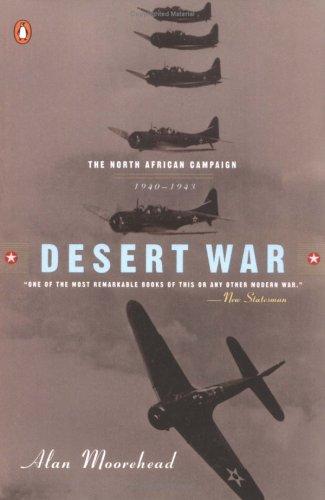
Desert War: The North African Campaign 1940-43

Alan Moorehead

★★★★★
Read Intel history Military history Advanced intel Logistics WWII Armor Logistics Biography ISBN 0140275142

Penguin Books · 2001

The seminal account of the battle between Montgomery’s Eighth Army and Rommel’s Afrika Corps, amidst the endless harsh wastes of the Western Desert. In 1940, Alan Moorehead was sent to cover the North Africa campaign by the Daily Express, and he followed its dramatic course all the way to 1943. The three books he subsequently wrote about the Desert War – later collected as his ‘African Trilogy’ – were swiftly acclaimed as a classic account of the tussle between Montgomery’s Eighth Army and Rommel’s Afrika Corps, under the beating sun of the Egyptian Sahara's Western Desert. Moorehead was responsible for the celebrated insight that tank battles in the desert are like battles at sea, the lumbering tanks like ships lost in a vast ocean of sand. The New Statesman could not have put it better when it described his achievement with this riveting book: ‘There is something of genius in the breadth and penetration of his vision , which encompasses the whole panorama of war and then narrows it down to the particular: the soldier stubbing out his cigarette before going into action, the expression on a tank commander’s face as he is hit… The story of the African campaigns will go down in history as one of the great epics of mankind, largely thanks to Mr Moorehead’s account.’

No cover · Amazon

Double Cross: The True Story of the D-Day Spies

Ben Macintyre

★★★★★
Read Basic intel Intel history WWII Espionage Intel history

In his celebrated bestsellers Agent Zigzag and Operation Mincemeat, Ben Macintyre told the dazzling true stories of a remarkable WWII double agent and of how the Allies employed a corpse to fool the Nazis and assure a decisive victory.  In Double Cross, Macintyre returns with the untold story of the grand final deception of the war and of the extraordinary spies who achieved it.    On June 6, 1944, 150,000 Allied troops landed on the beaches of Normandy and suffered an astonishingly low rate of casualties.  D-Day was a stunning military accomplishment, but it was also a masterpiece of trickery. Operation Fortitude, which protected and enabled the invasion, and the Double Cross system, which specialized in turning German spies into double agents, deceived the Nazis into believing that the Allies would attack at Calais and Norway rather than Normandy. It was the most sophisticated and successful deception operation ever carried out, ensuring that Hitler kept an entire army awaiting a fake invasion, saving thousands of lives, and securing an Allied victory at the most critical juncture in the war.    The story of D-Day has been told from the point of view of the soldiers who fought in it, the tacticians who planned it, and the generals who led it. But this epic event in world history has never before been told from the perspectives of the key individuals in the Double Cross System. These include its director (a brilliant, urbane intelligence officer), a colorful assortment of MI5 handlers (as well as their counterparts in Nazi intelligence), and the five spies who formed Double Cross’s nucleus: a dashing  Serbian playboy, a Polish fighter-pilot, a bisexual Peruvian party girl, a deeply eccentric Spaniard with a diploma in chicken farming and a volatile Frenchwoman, whose obsessive love for her pet dog very nearly wrecked the entire plan. The D-Day spies were, without question, one of the oddest military units ever assembled, and their success depended on the delicate, dubious relationship between spy and spymaster, both German and British. Their enterprise was saved from catastrophe by a shadowy sixth spy whose heroic sacrifice is revealed here for the first time.    With the same depth of research, eye for the absurd and masterful storytelling that have made Ben Macintyre an international bestseller,  Double Cross is a captivating narrative of the spies who wove a web so intricate it ensnared Hitler’s army and carried thousands of D-Day troops across the Channel in safety.

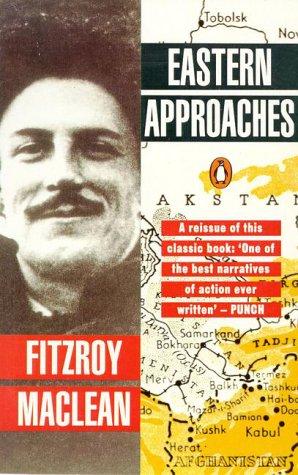
Eastern Approaches

Fitzroy Maclean

★★★★★
Read Basic intel Intel history Biographies WWII Cold War Special ops Russia / USSR Middle East Biography Orthodox / theology ISBN 9780140132717

Penguin Global · September 1, 2004

70th Anniversary Edition with a New Foreword by Sunday Times Bestselling Author Simon Sebag Montefiore 'A classic' Observer | 'A legend' Washington Post | 'The best book you will read this year' Colonel Tim Collins Posted to Moscow as a young diplomat before the Second World War, Fitzroy Maclean travelled widely, with or without permission, in some of the wildest and remotest parts of the Soviet Union, then virtually closed to foreigners. In 1942 he fought as a founder member of the SAS in North Africa. There Maclean specialised in hair-raising commando raids behind enemy lines, including the daring and outrageous kidnapping of the German Consul in Axis-controlled Iraq. In 1943 he parachuted into German-occupied Yugoslavia as Winston Churchill's personal representative to Josip Broz Tito and remained there until 1945, all enemy attempts to capture him proving unsuccessful. Eastern Approaches is Maclean's classic, gripping account of the sybaritic delights of diplomatic life, the thrill of remote travel in the then-forbidden zones of Central Asia, and the violence and adventure of world-changing tours in North Africa and Yugoslavia. Maclean is the original British action hero and this is blistering reading. 'This book literally changed my life' Simon Sebag Montefiore 'A man of daring character' Winston Churchill 'An absorbing mixture of military adventure, political judgement, urbane wit, cool humour and surprising incident' Financial Times 'One of the bravest men in the British army, and one of the funniest' Ben Macintyre 'Entertaining, important, the model for James Bond' New York Times

Enigma: The Battle for the Code

Hugh Sebag-Montefiore

★★★★★
Read Basic intel Cryptography Military history Intel history WWII Espionage Naval Air power Intel history Orthodox / theology ISBN 9780471490357

Wiley · February 12, 2004

Winston Churchill called the cracking of the German Enigma Code "the secret weapon that won the war." Now, for the first time, noted British journalist Hugh-Sebag-Montefiore reveals the complete story of the breaking of the code by the Allies--the breaking that played a crucial role in the outcome of World War II. This fascinating account relates the never-before-told, hair-raising stories of the heroic British and American sailors, spies, and secret agents who faced death in order to capture vital codebooks from sinking ships and snatch them from under the noses of Nazi officials. Sebag-Montefiore also relates new details about the genesis of the code, little-known facts about how the Poles first cracked the Luftwaffe's version of the code (and then passed it along to the British), and the feverish activities at Bletchley Park. Based in part on documents recently unearthed from American and British archives--including previously confidential government files--and in part on unforgettable, firsthand accounts of surviving witnesses, Enigma unearths the stunning truth about the brilliant piece of decryption that changed history.

No cover · Amazon

Fast Tanks and Heavy Bombers: Innovation in the U.S. Army, 1917-1945

David E. Johnson

★★★★★
Read Basic intel Military history Intel history Logistics WWII Air power Armor Guerrilla / COIN Logistics Strategy / theory

The U.S. Army entered World War II unprepared. In addition, lacking Germany's blitzkrieg approach of coordinated armor and air power, the army was organized to fight two wars: one on the ground and one in the air. Previous commentators have blamed Congressional funding and public apathy for the army's unprepared state. David E. Johnson believes instead that the principal causes were internal: army culture and bureaucracy, and their combined impact on the development of weapons and doctrine. Johnson examines the U.S. Army's innovations for both armor and aviation between the world wars, arguing that the tank became a captive of the conservative infantry and cavalry branches, while the airplane's development was channeled by air power insurgents bent on creating an independent air force. He maintains that as a consequence, the tank's potential was hindered by the traditional arms, while air power advocates focused mainly on proving the decisiveness of strategic bombing, neglecting the mission of tactical support for ground troops. Minimal interaction between ground and air officers resulted in insufficient cooperation between armored forces and air forces. Fast Tanks and Heavy Bombers makes a major contribution to a new understanding of both the creation of the modern U.S. Army and the Army's performance in World War II. The book also provides important insights for future military innovation.

Hitler's Foreign Executioners: Europe's Dirty Secret

Christopher Hale

★★★★★
Read Advanced intel Intel history Military history Logistics WWII Russia / USSR Logistics ISBN 9780752459745

The History Press · 2011

How and why more than one million non-Germans joined Hitler's "war of annihilation" Revealing for the first time Heinrich Himmler's master plan for Europe, this book discusses his dream of an SS empire with no place for either the Nazi Party or Adolf Hitler. His astonishingly ambitious plan depended on the recruitment of tens of thousands of "Germanic" peoples to build an "SS Europa." This book, researched in archives all over Europe and using first-hand testimony, exposes Europe's dirty secret—that nearly half a million Europeans and more than a million Soviet citizens enlisted in the armed forces of the Third Reich—to fight a crusade against "Jewish-Bolshevism." No other historian has examined the connections between these SS "foreign legions" (both police and Waffen-SS) and the Holocaust. Even today, some apologists claim that the foreign volunteers were merely soldiers "like any other" and fought a decent war against Stalin's Red Army. Christopher Hale demonstrates conclusively that these surprisingly common views are mistaken.

Intelligence in War: Knowledge of the Enemy from Napoleon to Al-Qaeda

John Keegan

★★★★★
Read Basic intel Intel history WWII Espionage GWOT Naval Air power Intel history Biography ISBN 0375400532

Knopf · 2003

In fiction, the spy is a glamorous figure whose secrets make or break peace, but, historically, has intelligence really been a vital step to military victories? In this breakthrough study, the preeminent war historian John Keegan goes to the heart of a series of important conflicts to develop a powerful argument about military intelligence. In his characteristically wry and perceptive prose, Keegan offers us nothing short of a new history of war through the prism of intelligence. He brings to life the split-second decisions that went into waging war before the benefit of aerial surveillance and electronic communications. The English admiral Horatio Nelson was hot on the heels of Napoleon’s fleet in the Mediterranean and never knew it, while Stonewall Jackson was able to compensate for the Confederacy’s disadvantage in firearms and manpower with detailed maps of the Appalachians. In the past century, espionage and decryption have changed the face of the Japanese surprise attack at the Battle of the Midway was thwarted by an early warning. Timely information, however, is only the beginning of the surprising and disturbing aspects of decisions that are made in war, where brute force is often more critical. Intelligence in War is a thought-provoking work that ranks among John Keegan’s finest achievements.

Nancy Wake

Peter FitzSimons

★★★★★
Read Biographies Basic intel Intel history WWII Espionage Special ops Intel history Biography ISBN 9780732269197

HarperCollins Publishers · 28 January 2001

'Freedom is the only thing worth living for. While I was doing that work I used to think that it didn't matter if I died, because without freedom there was no point in living'. Nancy Wake In the early 1930's, Nancy Wake was a young woman enjoying a bohemian life in Paris. By the end of the Second World War she was the Gestapo's most wanted person. As a naive, young journalist, Nancy Wake witnessed a horrific scene of Nazi violence in a Viennese street. From that moment, she declared that she would do everything in her power to rid Europe of the Nazi presence. What began as a courier job here and there, became a highly successful escape network for Allied soldiers, perfectly camouflaged by Nancy's high-society life in Marseille. Her network was soon so successful - and so notorious - that he had to flee France to escape the Gestapo who had dubbed her 'the white mouse' for her knack of slipping through its traps. But Nancy was a passionate enemy of the Nazis and refused to stay away. She trained with the British Special Operations Executive and parachuted back into France behind enemy lines. Again, this singular woman rallied to the cause, helping to lead a powerful underground fighting force, the Maquis. Supplying weapons and training the civilian Maquis, organising Allied parachute drops, cycling four hundred kilometres across a mountain range to find a new transmitting radio - nothing seemed too difficult in her fight against the Nazis. Peter FitzSimons reveals Nancy Wake's compelling story, a tale of an ordinary woman doing extraordinary things.

Operation Mincemeat: How a Dead Man and a Bizarre Plan Fooled the Nazis and Assured an Allied Victory

Ben Macintyre

★★★★★
Read Basic intel Intel history WWII Espionage Naval Biography Orthodox / theology ISBN 9780747598688

Bloomsbury · 2010

In 1943, from a windowless London basement office, two intelligence officers conceived a plan that was both simple & complicated—Operation Mincemeat. Purpose? To deceive the Nazis into thinking the Allies were planning to attack Europe by way of Greece or Sardinia, rather than Sicily, as the Nazis had assumed & the Allies ultimately chose. Charles Cholmondeley of MI5 and the British naval intelligence officer Ewen Montagu were very different. Cholmondeley was a dreamer seeking adventure. Montagu was an aristocratic, detail-oriented barrister. A perfect team, they created an ingenious plan: equip a corpse with secret (but false) papers concerning the invasion, then drop it off the coast of Spain where German spies would hopefully take the bait. The idea was approved by British intelligence officials, including Ian Fleming (007's creator). Winston Churchill believed it might ring true to the Axis & help bring victory. Filled with spies, double agents, rogues, heroes & a corpse, the story of Operation Mincemeat reads like an international thriller. Unveiling never-before-released material, Macintyre goes into the minds of intelligence officers, their moles & spies, & the German Abwehr agents who suffered the “twin frailties of wishfulness & yesmanship.” He weaves together the eccentric personalities of Cholmondeley & Montagu & their improbable feats into an adventure that saved thousands & paved the way for the conquest of Sicily.

Overlord: D-Day and the Battle for Normandy

Max Hastings

★★★★★
Read Intel history Military history WWII ISBN 9780307275714

Vintage · January 3, 2006

On June 6, 1944, American and British troops staged the greatest amphibious landing in history to begin Operation Overlord, the battle to liberate Europe from the scourge of the Third Reich. With gut-wrenching realism and immediacy, Hastings reveals the terrible human cost that this battle exacted. Moving beyond just the storming of Omaha beach and D-Day, he explores the Allies’ push inward, with many British and American infantry units suffering near 100 percent casualties during the course of that awful summer. Far from a gauzy romanticized remembrance, Hastings details a grueling ten week battle to overpower the superbly trained, geographically entrenched German Wehrmacht. Uncompromising and powerful in its depiction of wartime, this is the definitive book on D-Day and the Battle of Normandy.

Panzerkrieg: The Rise and Fall of Hitler's Tank Divisions

Peter McCarthy

★★★★★
Read Advanced intel Intel history Logistics Technical warfare Military history WWII Cold War Armor Russia / USSR Logistics Biography ISBN 0786710098

Carroll & Graf Publishers · 2002

The image that defines the Nazis’ Blitzkrieg is that of the Panzerwaffe’s massed columns of tanks sweeping through Europe, all resistance smashed in their wake. The Panzers’ achievements in battle were largely responsible for Germany’s early successes in World War II, and once the tide had turned against the Reich, the Panzers became the backbone of its defense. But the dramatic story of Hitler’s tank divisions is more than one of mere mechanical efficiency. It hangs, too, on those who commanded and fought in them, and believed in their near invincibility. These are the men who come to life in this immensely readable narrative. Great generals like Guderian, Rommel, and Manstein, tank masters like Wittmann and Bake, and inspired commanders like Balck and Bayerlein dominate the story of Panzerkreig. Dispensing with jargon, but including explanatory maps, rare illustrations, and fascinating detail on uniforms, crew members, and the mechanical features of the machines, the authors give a comprehensive overview of all aspects of the subject, both human and technical. They have also benefited from new information available since the opening of Cold War archives. Emerging from the narrative is the whole vast canvas of the war, as it follows the titanic struggles that raged between France’s bocage country, North Africa’s desert wastes, and Russia’s limitless steppes. The development of German fighting vehicles and tactics is fully charted, and the many myths and misconceptions of the Panzerwaffe are exploded. Extensive research, maps, illustrations throughout, reference to the leading participants’ memoirs, and original new conclusions all contribute to this finely measured assessment of the evolution, exploits, and eventual destruction of this superlative fighting force.

Rogue Heroes: The History of the SAS, Britain's Secret Special Forces Unit That Sabotaged the Nazis and Changed the Nature of War

Ben Macintyre

★★★★★
Read Basic intel Intel history Military history WWII Espionage Special ops Orthodox / theology ISBN 9781101904169

Crown · 2016

In the summer of 1941, at the height of the war in the Western Desert, a bored and eccentric young officer, David Stirling, came up with a plan that was radical and entirely against the rules: a small undercover unit that would inflict mayhem behind enemy lines. Despite intense opposition, Winston Churchill personally gave Stirling permission to recruit the toughest, brightest and most ruthless soldiers he could find. So began the most celebrated and mysterious military organisation in the world: the SAS. Now, 75 years later, the SAS has finally decided to tell its astonishing story. It has opened its secret archives for the first time, granting historian Ben Macintyre full access to a treasure trove of unseen reports, memos, diaries, letters, maps and photographs, as well as free rein to interview surviving Originals and those who knew them. The result is an exhilarating tale of fearlessness and heroism, recklessness and tragedy; of extraordinary men who were willing to take monumental risks. It is a story about the meaning of courage.

Silent Victory: The U.S. Submarine War Against Japan

Clay Blair Jr.

★★★★★
Read Military history Intel history WWII Espionage Naval Strategy / theory ISBN 155750217X

Naval Institute Press · 2001

The long-awaited publication of Silent Victory fills a major gap in the annals of World War II. Here for the first time is the definitive history of the submarine war against Japan--the only full-scale submarine war the United States ever fought--which has for the most part been shrouded in secrecy for three decades. Only recently have the codebreakers who played such a pivotal role in the submarine war been willing to talk about their work. And only recently have the private papers, diaries, and official reports of the submarine admirals and skippers been made available to historians. In preparing to write this book, Clay Blair, Jr. combed hundreds of thousands of pages of recently declassified documents and personal letters. In individual interviews he listened to scores of skippers, staff officers, and codebreakers speaking freely. He researched in depth the development of submarine and torpedo from prewar days down to the present time. The result is a revealing and immensely exciting book that sets the submarine war within the framework of history and the overall war in the Pacific. Silent Victory takes you into the submarine war at all levels--the highest strategy sessions in Washington, the terrifying moments in a submarine trapped on the bottom for hours as depth charges explode around it, the zany efforts of a torpedo crew coaxing an emaciated chicken to lay an egg. It tells of the jealous infighting of admirals vying for power . . . of "overcautious" skippers, trained in peacetime and ill suited for war, and the mutinies they provoked . . . of the shocking torpedo scandal and the toll it took . . . of the later breed of younger skippers whose daring was so effective against Japanese shipping that the war, as Blair argues, could have ended months earlier, saving thousands of lives. The complete saga that led to victory is here supplemented by ● 37 specially drawn maps showing submarine activity in the context of every important naval engagement in the Pacific ● 32 pages of photographs ● 12 appendixes, including a calendar of all submarine war patrols ● an index of over 2,000 entries. A work of great scholarship and scope, Silent Victory is a timeless contribution to the history of World War II.

No cover · Amazon

Sniping in France: Winning the Sniping War in the Trenches

H. Hesketh-Prichard

★★★★★
Read Advanced intel Intel history Military history Technical warfare WWII

“Now, if any one cares to do a mathematical sum, and to work out the number of battalions we had in the line, they will be surprised at the figures, and when they multiply these figures by thirty and look at the month’s losses, they will find that in a war of attrition the sniper on this count alone justifies his existence and wipes out large numbers of the enemy.” During the initial stages of the First World War in 1914, Allied forces lost breathtaking numbers of men on the Western Front to Germany’s highly efficient and superior snipers. However, the passion of Major Hesketh-Prichard – hunter and excellent marksman – for the promotion and advancement of sniping practices led to the implementation of brand new sniping methods by the British Army. These new practices contributed to the reversal of fortune of the Allied forces, tipping the balance in their favour towards victory in the sniping war. This excellent book, as told in the inimitable style of Major Hesketh-Prichard, recounts the genesis, development, and advancement of sniping style and practice, intermingled with a charming autobiographical style. Truly a classic account of war, this is a must read for avid military enthusiasts. Major Hesketh-Prichard, born in India in 1876, led a vibrant life as an explorer and adventurer, big-game hunter turned animal rights activist, novelist and travel writer, excellent cricket player, and marksman. He contributed significantly to the advancement of sniping practice in the British Army during the First World War, and the measures he introduced are credited as saving the lives of thousands of Allied soldiers.

No cover · Amazon

Stalingrad: How the Red Army Triumphed

Michael Jones

★★★★★
Read Intel history Logistics Military history WWII Cold War Russia / USSR Logistics

Michael K. Jones's new history of Stalingrad offers a radical reinterpretation of the most famous battle of the WW2. Combining eyewitness testimony of Red Army fighters with fresh archive material, the book gives a dramatic insight into the thinking of the Russian command and the mood of the ordinary soldiers. He focuses on the story of the Russian 62nd Army, which began the campaign in utter demoralization, yet turned the tables on the powerful German 6th Army. He explains the Red Army's extraordinary performance using battle psychology, emphasizing the vital role of leadership, morale and motivation in a triumph that turned the course of the war. Colonel-General Anatoly Mereshko fought throughout the battle as staff officer to the commander, Chuikov. Working with the author much of Mereshko's testimony is entirely new - and will astonish a western audience. It is backed up by accounts of other key veterans and the recently released war diary and combat journals. These show that the oft-repeated descriptions of Stalingrad's two critical days of fighting - 14 September 1942, when the Germans broke into the city, and 14 October, when they launched a massive attack on the factory district - disguise how desperate the plight of the defenders really was. In their place is a far more terrifying reality. Grasping this, we come to see Stalingrad as more than a victory of successful tactics - rather, as an astounding, improbable triumph of the human spirit.

The First World War

John Keegan

★★★★★
Read Intel history WWII WWI Armor Russia / USSR Economics ISBN 9780375700453

Vintage · 2000

The First World War created the modern world. A conflict of unprecedented ferocity, it abruptly ended the relative peace and prosperity of the Victorian era, unleashing such demons of the twentieth century as mechanized warfare and mass death. It also helped to usher in the ideas that have shaped our times--modernism in the arts, new approaches to psychology and medicine, radical thoughts about economics and society--and in so doing shattered the faith in rationalism and liberalism that had prevailed in Europe since the Enlightenment. With The First World War, John Keegan, one of our most eminent military historians, fulfills a lifelong ambition to write the definitive account of the Great War for our generation. Probing the mystery of how a civilization at the height of its achievement could have propelled itself into such a ruinous conflict, Keegan takes us behind the scenes of the negotiations among Europe's crowned heads (all of them related to one another by blood) and ministers, and their doomed efforts to defuse the crisis. He reveals how, by an astonishing failure of diplomacy and communication, a bilateral dispute grew to engulf an entire continent. But the heart of Keegan's superb narrative is, of course, his analysis of the military conflict. With unequalled authority and insight, he recreates the nightmarish engagements whose names have become legend--Verdun, the Somme and Gallipoli among them--and sheds new light on the strategies and tactics employed, particularly the contributions of geography and technology. No less central to Keegan's account is the human aspect. He acquaints us with the thoughts of the intriguing personalities who oversaw the tragically unnecessary catastrophe--from heads of state like Russia's hapless tsar, Nicholas II, to renowned warmakers such as Haig, Hindenburg and Joffre. But Keegan reserves his most affecting personal sympathy for those whose individual efforts history has not recorded--"the anonymous millions, indistinguishably drab, undifferentially deprived of any scrap of the glories that by tradition made the life of the man-at-arms tolerable." By the end of the war, three great empires--the Austro-Hungarian, the Russian and the Ottoman--had collapsed. But as Keegan shows, the devastation ex-tended over the entirety of Europe, and still profoundly informs the politics and culture of the continent today. His brilliant, panoramic account of this vast and terrible conflict is destined to take its place among the classics of world history. With 24 pages of photographs, 2 endpaper maps, and 15 maps in text

The Fujita Plan: Japanese Attacks on the United States and Australia during the Second World War

Mark Felton

★★★★★
Read Intel history WWII Espionage Naval Air power ISBN 1844154807

PEN & SWORD · Nov 14, 2006

After the staggering success of the Pearl Harbor surprise attack, the Japanese plotted to maintain the initiative and spread fear and panic among the civil population of the United States and Australia. With his usual skilled research the author has uncovered numerous plans. Some like the midget submarine attack on Sydney Harbour and the daring Seaplane air raids on Oregon were put into effect. Others never reached that stage due to either impracticality, bad luck or counter-espionage. The Fujita Plan throws fascinating new light on a little known aspect of the Second World War.

The Roots Of Blitzkrieg: Hans von Seeckt And German Military Reform

James S. Corum

★★★★★
Read Advanced intel Basic intel Military history Intel history Logistics WWII WWI Logistics Strategy / theory ISBN 9780700606283

University Press of Kansas · February 1994

Following Germany's defeat in World War I, the Germans signed the Versailles Treaty, superficially agreeing to limit their war powers. The Allies envisioned the future German army as a lightly armed border guard and international security force. The Germans had other plans. As early as 1919, James Corum contends, the tactical foundations were being laid for the Nazi Blitzkrieg. Between 1919 and 1933, German military leaders created and nurtured the Reichswehr, a new military organization built on the wreckage of the old Imperial Army. It was not being groomed for policing purposes. Focusing on Hans von Seeckt, General Staff Chief and Army Commander, Corum traces the crucial transformations in German military tactical doctrine, organization, and training that laid the foundations for fighting Germany's future wars. In doing so, he restores balance to prior assessment of von Seeckt's influence and demonstrates how the general, along with a few other "visionary" officers--including armor tactician Ernst Volckheim and air tactician Helmut Wilberg--collaborated to develop the core doctrine for what became the Blitzkrieg. The concepts of mobile war so essential to Germany's strength in World War II, Corum shows, were in place well before the tools became available. As an unforeseen consequence of the Versailles Treaty, the Germans were not saddled with a stockpile of outdated equipment as the Allies were. This, ironically, resulted in an advantage for the Germans, who were able to create doctrine first and design equipment to match it.

The Second World War

John Keegan

★★★★★
Read Intel history WWII Armor Strategy / theory ISBN 014011341X

Penguin Books · 1990

In this comprehensive history, John Keegan explores both the technical and the human impact of the greatest war of all time. He focuses on five crucial battles and offers new insights into the distinctive methods and motivations of modern warfare. In knowledgable, perceptive analysis of the airborne battle of Crete, the carrier battle of Midway, the tank battle of Falaise, the city battle of Berlin, and the amphibious battle of Okinawa, Keegan illuminates the strategic dilemmas faced by the leaders and the consequences of their decisions on the fighting men and the course of the war as a whole.

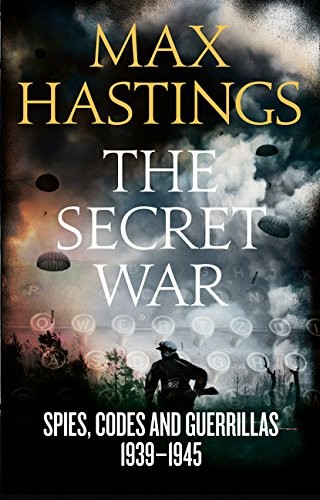
The Secret War: Spies, Codes and Guerrillas 1939-1945

Max Hastings

★★★★★
Read Basic intel Intel history WWII Espionage Guerrilla / COIN Russia / USSR ISBN 9780007503742

William Collins · Sep 10, 2015

Examining the espionage and intelligence stories in World War II, on a global basis, bringing together the British, American, German, Russian and Japanese histories. There were two Second World Wars: one fought on the battlefields, and another conducted by men and women few of whom ever fired a weapon in anger, but whose efforts vastly influenced the conflict. ‘The Secret War 1939-45’ examines that other war waged by British, American, German, Russian and Japanese intelligence-gathering personnel. Moving chronologically through the conflict, Max Hastings charts the successes and failures of allied and axis forces, espionage and counterespionage. Observing how the evolution of electronic communications dramatically increased the possibilities and significance of these secret battles, this is the story of intelligence beyond Bletchley to the FBI, Russia and the spies of axis dictatorships. For the first time since his best-selling ‘All Hell Let Loose’, Max Hastings returns to the Second World War, this time to chronicle its second, untold story.

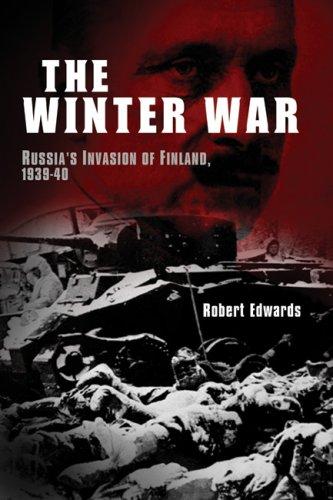
The Winter War: Russia's Invasion Of Finland, 1939-40

Robert Edwards

★★★★★
Read Advanced intel Basic intel Military history Intel history Logistics WWII Cold War Russia / USSR Logistics Economics ISBN 9781933648507

Pegasus Books · December 30, 2007

On November 30, 1939, the Soviet Union's Red Army invaded the young nation-state of Finland, in the full expectation of routing the small, ill-equipped Finnish army and annexing the former Russian territory by the end of the year. But Finland held out for 105 bitterly cold, fiercely combative days, until March 15, 1940, when a peace agreement ended the short, savage Winter War. At the stirring center of the story lie the resourcefulness and resolve of the Finnish people, who against all military odds—in want of ammunition, food, sleep, and troops—fought a blundering, ineptly commanded Red Army to a standstill. On March 15, they ceded to the Soviet 11 percent of their territory and 30 percent of their economic assets, but none of their national pride. The Russians meanwhile had markedly damaged their international standing and effectively ruined their military reputation-to such an extent, as this probing chapter in World War II history demonstrates, that Germany, with proud-blooded Finland as an ally, dared to launch its 1940 invasion of Russia. At the same time, though, the fiasco of the Winter War forced Stalin to acknowledge the shortcomings of the Red Army and to reform it: Germany would fall at Stalingrad in 1941. With authority, this skillfully narrated military history unfolds its story of the four-month Soviet-Finnish war and explores its consequences from London to Moscow, from Helsinki to Paris, to Washington, DC.