S2 Search · Reading list

S2 Actual reading list

Books from S2 Actual on Goodreads, organized by his shelves and topic buckets (intel lists, military history, logistics, etc.). Metadata filled via Open Library.

Not official S2 Underground. Independent fan index — not affiliated with or endorsed by S2. Official hub: linktr.ee/S2_underground. S2 materials are CC BY-NC-SA 4.0.

S2 topic buckets (Goodreads)

Subjects & genres

12 books · Logistics · subject Intel history

No cover · Amazon

Death of the Leaping Horseman: 24 Panzer-Division in Stalingrad 12th August-20th November 1942

Jason D. Mark

★★★★★
Read Military history Logistics WWII Air power Armor Russia / USSR Logistics Intel history

The gripping story of an elite panzer division and its battles in the shattered streets of Stalingrad. In "Death of the Leaping Horseman: 24th Panzer-Division in Stalingrad," the untold story of 24th Panzer-Division's savage fighting on Stalingrad's outskirts - and in the devastated ruins of the city itself - is revealed in a detailed day-by-day account. Beginning in the heady days of the victorious march toward Stalingrad in August 1942, the book follows the Division into Stalingrad's suburbs as it is slowly and inexorably suked into the fiery crucible that was Stalingrad. Panzer losses and casualties increased daily until finally, after three months of draining combat, the Division was reduced to a battlegroup consisting of a couple of panzers and a few hundred men. Woven through official combat reports and entries from the Division's war diaries are gripping accounts from the few remaining veterans - including an Oakleaves winner and several Knight's Cross winners. Contains over 200 photos and 85 maps and aerial photos.

No cover · Amazon

Into Oblivion: The Story of Pionier-Batallion 305

Jason D. Mark

★★★★★
Read Logistics Military history WWII Cold War Air power Russia / USSR Logistics Intel history

After 16 months of training and garrison duty in France, Pionier-Bataillon 305 – together with the rest of 305. Infanterie-Division – was sent to the Eastern Front. Little could they know that an inevitable train of events had been set in motion that would lead to their destruction at Stalingrad barely nine months later. An unprecedented discovery of original material has permitted an examination of the brutal fighting on the Eastern Front through the eyes of one German battalion. Commanded by apolitical officers, reservists mainly, its ranks were filled with older-than-normal recruits. When they arrived on the Eastern Front in May 1942, it was a first time visit for most of them, yet they sensed what awaited them. Everyone knew someone who had been killed in the Soviet Union. Stories about the ferocity of combat on the Eastern Front had reached them through the soldier’s grapevine. They were under no illusions, but still believed they would prevail. Weeks of monotonous, endless marching were interspersed with terrifying encounters and set-piece attacks. How would this fresh battalion compare with experienced units? Were its men less jaded and more inspired than those that had been at the front since Barbarossa began in June 1941? Was the arrival of a tough, battle-hardened commander enough to compensate for the unit’s lack of combat experience? What effect did the ongoing casualties have on both the soldiers and the battalion’s performance in battle? By exploring and answering these questions and others, this intimate analysis of an ordinary battalion enables the Eastern Front to be seen as never before. • 620 pages on a high-quality satin (semi-gloss) stock • 210 x 157mm • Hardcover only • 327 photos • 56 maps and sketches • 7 aerial photos • 5 tables • 3 appendices, including officer biographies and medal lists.

The Myth of the Robber Barons: A New Look at the Rise of Big Business in America

Burton W. Folsom Jr.

★★★★★
Read Logistics Logistics Intel history Economics ISBN 0963020307

Young America's Foundation · 1991

The Myth of the Robber Barons describes the role of key entrepreneurs in the economic growth of the United States from 1850 to 1910. The entrepreneurs studied are Cornelius Vanderbilt, John D. Rockefeller, James J. Hill, Andrew Mellon, Charles Schwab, and the Scranton family. Most historians argue that these men, and others like them, were Robber Barons. The story, however, is more complicated. The author, Burton Folsom, divides the entrepreneurs into two groups market entrepreneurs and political entrepreneurs. The market entrepreneurs, such as Hill, Vanderbilt, and Rockefeller, succeeded by producing a quality product at a competitive price. The political entrepreneurs such as Edward Collins in steamships and in railroads the leaders of the Union Pacific Railroad were men who used the power of government to succeed. They tried to gain subsidies, or in some way use government to stop competitors. The market entrepreneurs helped lead to the rise of the U. S. as a major economic power. By 1910, the U. S. dominated the world in oil, steel, and railroads led by Rockefeller, Schwab (and Carnegie), and Hill. The political entrepreneurs, by contrast, were a drain on the taxpayers and a thorn in the side of the market entrepreneurs. Interestingly, the political entrepreneurs often failed without help from government they could not produce competitive products. The author describes this clash of the market entrepreneurs and the political entrepreneurs. In the Mellon chapter, the author describes how Andrew Mellon an entrepreneur in oil and aluminum became Secretary of Treasury under Coolidge. In office, Mellon was the first American to practice supply-side economics. He supported cuts on income tax rates for all groups. The rate cut on the wealthiest Americans, from 73 percent to 25 percent, freed up investment capital and led to American economic growth during the 1920s. Also, the amount of revenue into the federal treasury increased sharply after tax rates were cut. The Myth of the Robber Barons has separate chapters on Vanderbilt, Hill, Schwab, Mellon, and the Scrantons. The author also has a conclusion, in which he looks at the textbook bias on the subject of Robber Barons and the rise of the U. S. in the late 1800s. This chapter explores three leading college texts in U. S. history and shows how they misread American history and disparage market entrepreneurs instead of the political entrepreneurs. This book is in its fifth edition, and is widely adopted in college and high school classrooms across the U. S.

Economics in One Lesson

Henry Hazlitt

★★★★
Read Basic intel Logistics Economics Logistics Intel history Economics Orthodox / theology ISBN 9780870004278

Blackstone Audiobooks · 1946

A million copy seller, Henry Hazlitt’s Economics in One Lesson is a classic economic primer. But it is also much more, having become a fundamental influence on modern “libertarian” economics of the type espoused by Ron Paul and others. Considered among the leading economic thinkers of the “Austrian School,” which includes Carl Menger, Ludwig von Mises, Friedrich (F.A.) Hayek, and others, Henry Hazlitt (1894-1993), was a libertarian philosopher, an economist, and a journalist. He was the founding vice-president of the Foundation for Economic Education and an early editor of The Freeman magazine, an influential libertarian publication.  Hazlitt wrote Economics in One Lesson, his seminal work, in 1946. Concise and instructive, it is also deceptively prescient and far-reaching in its efforts to dissemble economic fallacies that are so prevalent they have almost become a new orthodoxy. Many current economic commentators across the political spectrum have credited Hazlitt with foreseeing the collapse of the global economy which occurred more than 50 years after the initial publication of Economics in One Lesson. Hazlitt’s focus on non-governmental solutions, strong — and strongly reasoned — anti-deficit position, and general emphasis on free markets, economic liberty of individuals, and the dangers of government intervention make Economics in One Lesson, every bit as relevant and valuable today as it has been since publication.

Enemy at the Gates: The Battle for Stalingrad

William Craig

★★★★
Read Military history Logistics WWII Cold War Russia / USSR Logistics Intel history Orthodox / theology ISBN 9780760746776

Barnes & Noble Books · 2003

Stalingrad, the bloodiest battle in the history of warfare, cost the lives of nearly two million men and women. It signaled the beginning of the end for the Third Reich of Adolf Hitler; it foretold the Russian juggernaut that would destroy Berlin and make the Soviet Union a superpower. As Winston Churchill characterized the result of the conflict at Stalingrad: " the hinge of fate had turned." William Craig, author and historian, has painstakingly recreated the details of this great battle: from the hot summer of August 1942, when the German armies smashed their way across southern Russia toward the Volga River, through the struggle for Stalingrad-a city Hitler had never meant to capture and Stalin never meant to defend-on to the destruction of the supposedly invincible German Sixth Army and the terror of the Russian prison camps in frozen Siberia. Craig has interviewed hundreds of survivors of the battle-both Russian and German soldiers and civilians-and has woven their incredible experiences into the fabric of hitherto unknown documents. The resulting mosaic is epic in scope, and the human tragedy that unfolds is awesome.

No cover · Amazon

The Crucible of War Book 1: Wavell's Command

Barrie Pitt

★★★★
Read Military history Logistics WWII Middle East Logistics Intel history Strategy / theory Orthodox / theology

The Crucible of War: Book 1 ‘The definitive work on the Desert War.’ Manchester Evening News Wavell’s Command is the first of the three volumes of The Crucible of War. Volume 1 of The Crucible of War trilogy covers General Wavell’s command, a period that began triumphantly with the rout of the Italian Army and ended in catastrophe with the devastating entry of Rommel into the conflict. On 11th June 1940, Mussolini declared war on Britain and France. From their colony in Libya, the Italians began invading Egypt in an attempt to expand their African Empire. Thus began the Desert War – a battle to secure critical Middle East oil supplies which would last for three years. Commander-in-Chief of the Middle East was General Sir Archibald Wavell. By 1940, and with limited resources, he was responsible for all British land forces in Egypt, the Sudan, Palestine, Transjordan and Cyprus, as well as the Army formations in British Somaliland, Aden, Iraq and along the shores of the Persian Gulf. The area for which he had accepted military command thus included nine different countries in two continents. In December 1940 in Libya, Wavell’s Western Desert Force of 36,000 men attacked the Italians across desolate and inhospitable terrain in order to keep Egypt from falling to the Axis and shield access to the Red Sea, the Persian Gulf and possibly even India from Hitler. Attack was the only form of defense and under field commander General Richard O’Connor, an immensely successful and exhilarating campaign was carried out against Marshal Graziani’s forces. The Italians were pushed back hundreds of miles and 130,000 prisoners were taken. By February 1941 nearly all Axis forces had been expelled from North Africa. It was a remarkable triumph in one of the most dramatic theatres of the Second World War which paved the way for later victories, but not immediately – as Rommel’s Afrika Korps meant Wavell, with a now weakened Western Desert Force, was ordered to send men to Greece, despite his conviction that victory was close. The tide of war was about to turn once more. PRAISE FOR THE CRUCIBLE OF WAR TRILOGY: ‘A magnificent book, Barrie Pitt has almost a novelist’s skill and perception of character.’ Daily Telegraph ‘Totally readable, Mr Pitt’s study depicts equally well the broad outlines of strategy, the confusions and hazards of the battlefield and the personalities of the generals or private soldiers fighting there.’ Oxford Times Barrie Pitt (1918-2006) was well known as a military historian and editor of Purnell’s History of the Second World War and History of the First World War. His publications include Coronel and Falkland, Churchill and the Generals and The Crucible of War, a trilogy covering the North African campaign of the Second World War. He was born in Galway and later lived near Ilminster in Somerset.

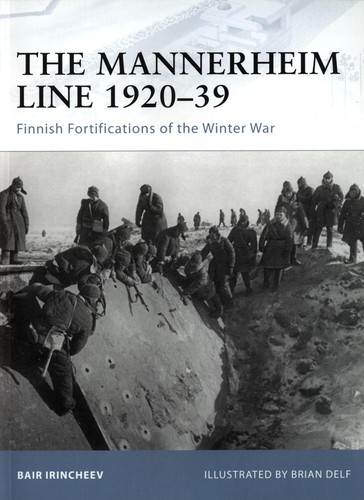
The Mannerheim Line 1920–39: Finnish Fortifications of the Winter War (Fortress, 88)

Bair Irincheev

★★★★
Read Advanced intel Military history Logistics Technical warfare Cold War Armor Russia / USSR Logistics Intel history US Civil War ISBN 9781846033841

Osprey · 2009

In the wake of the bloody civil war that followed Finland's independence from Russia in 1917, the border between the two countries was established across the Karelian Isthmus, an area long fought over by Russia, Finland and Sweden in their attempts to dominate the northern tip of Europe. Neither the Soviets nor the Finnish were comfortable with such a divide, which provided an open route for a potential invader to Helsinki on the Finnish side, and was only 32km from the important military and industrial city of Petrograd in Russia. As such, both sides began an intensive period of fortification and defensive planning. As the Winter War broke out in November 1939, the complex and heavily defended Mannerheim Line suffered intense bombardment and armored assaults. The armistice of May 1940 saw Finland cede control of the entire Karelian Isthmus to the USSR however, and a propaganda war ensued; the Russians emphasizing the strength of the line, and the Finnish downplaying its importance, accentuating instead the heroism and bravery of the common Finnish soldier. Through a detailed analysis of the background, design and operational history of the Mannerheim Line, Bair Irincheev attempts to dispel such myths and provide an accurate assessment of its immense historical importance.

The Wages of Destruction: The Making and Breaking of the Nazi Economy

Adam Tooze

★★★★
Read Advanced intel Logistics WWII Russia / USSR Logistics Intel history Economics ISBN 9780670038268

Viking · 2006

The idea that Nazi Germany was an unstoppable juggernaut, backed by an efficient, highly industrialized economy, has been central to all accounts of World War II. But what if this was not the case? What if the war had its roots in Germany's weakness, not its strength? This is the radical argument in this pathbreaking book, the first account of the Nazi era for the twenty-first century and our globalized world. There was no aspect of Nazi power untouched by economics, yet Adam Tooze is the first to place economics alongside race and politics at the heart of the story of the Third Reich. And America, in Tooze's view, is the true pivot for Hitler's epic challenge to a shift in the world order. Hitler intuitively understood how Germany's relative poverty in the 1930s was the result not just of global depression, but also of Germany's limited resources. He predicted the dawning of a globalized world in which Europe would be crushed by America's overwhelming power, against which he saw only one last chance: a German super-state dominating Europe. Doing what Europeans had done for three centuries, he sought to carve out an imperial hinterland through one last land grab to the east, to give him the self-sufficiency to prevail in the coming superpower competition. With the odds stacked against him, he launched his underresourced armies on their unprecedented and ultimately futile rampage across Europe. Hitler knew by the summer of 1939 that his efforts to prepare for a long war with the West were doomed to failure. Ideology drove him forward. Hitler became convinced that Jewish elements in Washington, London, and Paris were circling round him, and from 1938, the international "Jewish question: was synonymous with America in his mind. Even in the summer of 1940, at the moment of Germany's greatest triumphs, Hitler was still haunted by the looming threat of Anglo-American air and sea power, orchestrated by, he believed, the world Jewish conspiracy. Tooze also casts a stark new light on Albert Speer's role in sustaining the Third Reich to its bloody end, after the catastrophe of the Soviet invasion. Speer, Tooze proposes, was no apolitical agent of technocratic efficiency but a Hitler loyalist who would stop at nothing to continue a hopeless battle of attrition, at the cost of tens of millions of lives. The Wages of Destruction is a chilling work of originality and tremendous scholarship that will fundamentally change the way in which we view Nazi Germany and the Second World War.

No cover · Amazon

Alamein: War Without Hate

Colin Smith

unrated
Read Intel history Logistics Technical warfare Logistics Intel history

For the British, the battle fought at El Alamein in October 1942 became the turning point of the Second World War. In this study of the desert war, John Bierman and Colin Smith show why it is remembered by its survivors as a 'war without hate'. Through extensive research the authors provide a compellingly fresh perspective on the see-saw campaign in which the two sides chased each other back and forth across the unforgiving North African landscape.

Networks of Rebellion: Explaining Insurgent Cohesion and Collapse (Cornell Studies in Security Affairs)

Paul Staniland

unrated
Read Technical warfare Logistics Military history Cold War GWOT Guerrilla / COIN Logistics Intel history Strategy / theory US Civil War ISBN 9780801479298

Cornell University Press · Apr 18, 2014

Insurgent cohesion is central to explaining patterns of violence, the effectiveness of counterinsurgency, and civil war outcomes. Cohesive insurgent groups produce more effective war-fighting forces and are more credible negotiators; organizational cohesion shapes both the duration of wars and their ultimate resolution. In Networks of Rebellion , Paul Staniland explains why insurgent leaders differ so radically in their ability to build strong organizations and why the cohesion of armed groups changes over time during conflicts. He outlines a new way of thinking about the sources and structure of insurgent groups, distinguishing among integrated, vanguard, parochial, and fragmented groups. Staniland compares insurgent groups, their differing social bases, and how the nature of the coalitions and networks within which these armed groups were built has determined their discipline and internal control. He examines insurgent groups in Afghanistan, 1975 to the present day, Kashmir (1988–2003), Sri Lanka from the 1970s to the defeat of the Tamil Tigers in 2009, and several communist uprisings in Southeast Asia during the Cold War. The initial organization of an insurgent group depends on the position of its leaders in prewar political networks. These social bases shape what leaders can and cannot do when they build a new insurgent group. Counterinsurgency, insurgent strategy, and international intervention can cause organizational change. During war, insurgent groups are embedded in social ties that determine they how they organize, fight, and negotiate; as these ties shift, organizational structure changes as well.

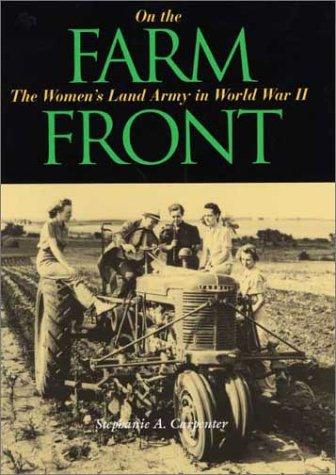
On the Farm Front: The Women's Land Army in World War II

Stephanie A. Carpenter

unrated
Read Economics Military history Logistics WWII Logistics Intel history Economics ISBN 0875803148

Northern Illinois University Press · 2003

Rosie the Riveter is an icon for women's industrial contribution to World War II, but history has largely overlooked the three million women who served on America's agricultural front. The Women's Land Army sent volunteers to farms, canneries, and dairies across the country, accounting for the majority of wartime agricultural labor. On the Farm Front tells for the first time the remarkable story of these women who worked to ensure both "Freedom from Want" at home and victory abroad. Formed in 1943 as part of the Emergency Farm Labor Program, the WLA placed its workers in areas where American farmers urgently needed assistance. Many farmers in even the most desperate areas, however, initially opposed women working their land. Rural administrators in the Midwest and the South yielded to necessity and employed several hundred thousand women as farm laborers by the end of the war, but those in the Great Plains and eastern Rocky Mountains remained hesitant, suffering serious agricultural and financial losses as a consequence. Carpenter reveals for the first time how the WLA revolutionized the national view of farming. By accepting all available women as agricultural workers, farmers abandoned traditional labor and stereotypical social practices. When the WLA officially disbanded in 1945, many of its women chose to remain in their agricultural jobs rather than return to a full-time home life or prewar employment. On the Farm Front illuminates the Women's Land Army's unique contribution to prosperity and victory, showing how this landmark organization changed the role of women in American society.

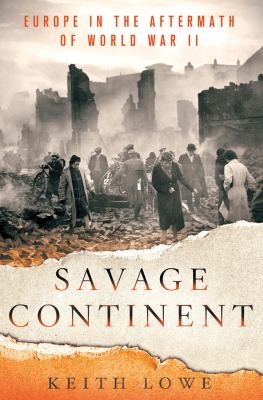
Savage Continent: Europe in the Aftermath of World War II

Keith Lowe

unrated
Read Advanced intel Military history Logistics WWII Logistics Intel history Economics US Civil War ISBN 9781250000200

St. Martin's Press · 2012

The Second World War might have officially ended in May 1945, but in reality it rumbled on for another ten years... The end of the Second World War in Europe is one of the twentieth century’s most iconic moments.  It is fondly remembered as a time when cheering crowds filled the streets, danced, drank and made love until the small hours.  These images of victory and celebration are so strong in our minds that the period of anarchy and civil war that followed has been forgotten.  Across Europe, landscapes had been ravaged, entire cities razed and more than thirty million people had been killed in the war. The institutions that we now take for granted - such as the police, the media, transport, local and national government - were either entirely absent or hopelessly compromised. Crime rates were soaring, economies collapsing, and the European population was hovering on the brink of starvation.  In Savage Continent, Keith Lowe describes a continent still racked by violence, where large sections of the population had yet to accept that the war was over.  Individuals, communities and sometimes whole nations sought vengeance for the wrongs that had been done to them during the war. Germans and collaborators everywhere were rounded up, tormented and summarily executed.  Concentration camps were reopened and filled with new victims who were tortured and starved.  Violent anti-Semitism was reborn, sparking murders and new pogroms across Europe.  Massacres were an integral part of the chaos and in some places – particularly Greece, Yugoslavia and Poland, as well as parts of Italy and France – they led to brutal civil wars. In some of the greatest acts of ethnic cleansing the world has ever seen, tens of millions were expelled from their ancestral homelands, often with the implicit blessing of the Allied authorities. Savage Continent is the story of post WWII Europe, in all its ugly detail, from the end of the war right up until the establishment of an uneasy stability across Europe towards the end of the 1940s.  Based principally on primary sources from a dozen countries, Savage Continent is a frightening and thrilling chronicle of a world gone mad, the standard history of post WWII Europe for years to come.