S2 Search · Reading list

S2 Actual reading list

Books from S2 Actual on Goodreads, organized by his shelves and topic buckets (intel lists, military history, logistics, etc.). Metadata filled via Open Library.

Not official S2 Underground. Independent fan index — not affiliated with or endorsed by S2. Official hub: linktr.ee/S2_underground. S2 materials are CC BY-NC-SA 4.0.

S2 topic buckets (Goodreads)

Subjects & genres

17 books · Logistics · subject Strategy / theory

No cover · Amazon

Crusade: The Untold Story of the Persian Gulf War

Rick Atkinson

★★★★★
Read Basic intel Advanced intel Technical warfare Logistics Intel history Military history Middle East Logistics Strategy / theory

A definitive account of the Gulf War told by Pulitzer Prize–winning correspondent Rick Atkinson. This previously untold story of the US war with Iraq in the early 1990s, Atkinson follows the 42-day war from the first night to the final day, providing vivid accounts of bombing runs, White House strategy sessions, firefights, and bitter internal conflicts.

No cover · Amazon

Fast Tanks and Heavy Bombers: Innovation in the U.S. Army, 1917-1945

David E. Johnson

★★★★★
Read Basic intel Military history Intel history Logistics WWII Air power Armor Guerrilla / COIN Logistics Strategy / theory

The U.S. Army entered World War II unprepared. In addition, lacking Germany's blitzkrieg approach of coordinated armor and air power, the army was organized to fight two wars: one on the ground and one in the air. Previous commentators have blamed Congressional funding and public apathy for the army's unprepared state. David E. Johnson believes instead that the principal causes were internal: army culture and bureaucracy, and their combined impact on the development of weapons and doctrine. Johnson examines the U.S. Army's innovations for both armor and aviation between the world wars, arguing that the tank became a captive of the conservative infantry and cavalry branches, while the airplane's development was channeled by air power insurgents bent on creating an independent air force. He maintains that as a consequence, the tank's potential was hindered by the traditional arms, while air power advocates focused mainly on proving the decisiveness of strategic bombing, neglecting the mission of tactical support for ground troops. Minimal interaction between ground and air officers resulted in insufficient cooperation between armored forces and air forces. Fast Tanks and Heavy Bombers makes a major contribution to a new understanding of both the creation of the modern U.S. Army and the Army's performance in World War II. The book also provides important insights for future military innovation.

Hybrid Warfare: Fighting Complex Opponents from the Ancient World to the Present

Williamson Murray

★★★★★
Read Military history Intel history Logistics Technical warfare GWOT Guerrilla / COIN Logistics Strategy / theory ISBN 9781107026087

Cambridge University Press · 2012

Hybrid warfare has been an integral part of the historical landscape since the ancient world, but only recently have analysts incorrectly categorized these conflicts as unique. Great powers throughout history have confronted opponents who used a combination of regular and irregular forces to negate the advantage of the great powers' superior conventional military strength. As this study shows, hybrid wars are labor-intensive and long-term affairs; they are difficult struggles that defy the domestic logic of opinion polls and election cycles. Hybrid wars are also the most likely conflicts of the twenty-first century, as competitors use hybrid forces to wear down America's military capabilities in extended campaigns of exhaustion. Nine historical examples of hybrid warfare, from ancient Rome to the modern world, provide readers with context by clarifying the various aspects of conflicts and examining how great powers have dealt with them in the past.

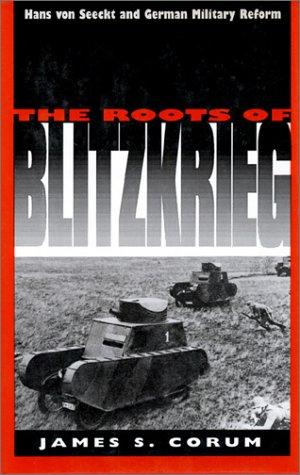
The Roots Of Blitzkrieg: Hans von Seeckt And German Military Reform

James S. Corum

★★★★★
Read Advanced intel Basic intel Military history Intel history Logistics WWII WWI Logistics Strategy / theory ISBN 9780700606283

University Press of Kansas · February 1994

Following Germany's defeat in World War I, the Germans signed the Versailles Treaty, superficially agreeing to limit their war powers. The Allies envisioned the future German army as a lightly armed border guard and international security force. The Germans had other plans. As early as 1919, James Corum contends, the tactical foundations were being laid for the Nazi Blitzkrieg. Between 1919 and 1933, German military leaders created and nurtured the Reichswehr, a new military organization built on the wreckage of the old Imperial Army. It was not being groomed for policing purposes. Focusing on Hans von Seeckt, General Staff Chief and Army Commander, Corum traces the crucial transformations in German military tactical doctrine, organization, and training that laid the foundations for fighting Germany's future wars. In doing so, he restores balance to prior assessment of von Seeckt's influence and demonstrates how the general, along with a few other "visionary" officers--including armor tactician Ernst Volckheim and air tactician Helmut Wilberg--collaborated to develop the core doctrine for what became the Blitzkrieg. The concepts of mobile war so essential to Germany's strength in World War II, Corum shows, were in place well before the tools became available. As an unforeseen consequence of the Versailles Treaty, the Germans were not saddled with a stockpile of outdated equipment as the Allies were. This, ironically, resulted in an advantage for the Germans, who were able to create doctrine first and design equipment to match it.

Destiny in the Desert: The Story Behind El Alamein - the Battle That Turned the Tide

Jonathan Dimbleby

★★★★
Read Logistics Intel history Military history Economics WWII Russia / USSR Logistics Strategy / theory Economics Orthodox / theology ISBN 9781846684449

Profile Books Ltd · 2012

This is a unique single-volume history of the road to El Alamein - 'the end of the beginning' - and the bloody battle that followed...It was the British victory at the Battle of El Alamein in November 1942 that inspired one of Churchill's most famous aphorisms: 'it is not the end nor is it the beginning of the end, but it is the end of the beginning'. And yet the true significance of this iconic episode remains unrecognised. In this thrilling historical account, Jonathan Dimbleby describes the political and strategic realities that lay behind the battle, charting the nail-biting months that led to the victory at El Alamein in November 1942. It is a story of high drama, played out both in the war capitals of London, Washington, Berlin, Rome and Moscow, and at the front, in the command posts and foxholes in the desert. "El Alamein" is about politicians and generals, diplomats, civil servants and soldiers. It is about forceful characters and the tensions and rivalries between them. Drawing on official records and the personal insights of those involved at every level, Dimbleby creates a vivid portrait of a struggle which for Churchill marked the turn of the tide - and which for the soldiers on the ground involved fighting and dying in a foreign land.

Supplying War: Logistics from Wallenstein to Patton

Martin van Creveld

★★★★
Read Basic intel Logistics Logistics Strategy / theory ISBN 0521837448

Cambridge University Press · 2004

Drawing on a very wide range of unpublished and previously unexploited sources, Martin van Creveld examines the "nuts and bolts" of war. He considers the formidable problems of movement and supply, transportation and administration, often mentioned (but rarely explored) by the vast majority of books on military history. By concentrating on logistics rather than on the more traditional tactics and strategy, van Creveld is also able to offer an original reinterpretation of military history. First Edition Hb (1977): 0-521-21730-X FIrst Edition Pb (1979): 0-521-29793-1

No cover · Amazon

The Crucible of War Book 1: Wavell's Command

Barrie Pitt

★★★★
Read Military history Logistics WWII Middle East Logistics Intel history Strategy / theory Orthodox / theology

The Crucible of War: Book 1 ‘The definitive work on the Desert War.’ Manchester Evening News Wavell’s Command is the first of the three volumes of The Crucible of War. Volume 1 of The Crucible of War trilogy covers General Wavell’s command, a period that began triumphantly with the rout of the Italian Army and ended in catastrophe with the devastating entry of Rommel into the conflict. On 11th June 1940, Mussolini declared war on Britain and France. From their colony in Libya, the Italians began invading Egypt in an attempt to expand their African Empire. Thus began the Desert War – a battle to secure critical Middle East oil supplies which would last for three years. Commander-in-Chief of the Middle East was General Sir Archibald Wavell. By 1940, and with limited resources, he was responsible for all British land forces in Egypt, the Sudan, Palestine, Transjordan and Cyprus, as well as the Army formations in British Somaliland, Aden, Iraq and along the shores of the Persian Gulf. The area for which he had accepted military command thus included nine different countries in two continents. In December 1940 in Libya, Wavell’s Western Desert Force of 36,000 men attacked the Italians across desolate and inhospitable terrain in order to keep Egypt from falling to the Axis and shield access to the Red Sea, the Persian Gulf and possibly even India from Hitler. Attack was the only form of defense and under field commander General Richard O’Connor, an immensely successful and exhilarating campaign was carried out against Marshal Graziani’s forces. The Italians were pushed back hundreds of miles and 130,000 prisoners were taken. By February 1941 nearly all Axis forces had been expelled from North Africa. It was a remarkable triumph in one of the most dramatic theatres of the Second World War which paved the way for later victories, but not immediately – as Rommel’s Afrika Korps meant Wavell, with a now weakened Western Desert Force, was ordered to send men to Greece, despite his conviction that victory was close. The tide of war was about to turn once more. PRAISE FOR THE CRUCIBLE OF WAR TRILOGY: ‘A magnificent book, Barrie Pitt has almost a novelist’s skill and perception of character.’ Daily Telegraph ‘Totally readable, Mr Pitt’s study depicts equally well the broad outlines of strategy, the confusions and hazards of the battlefield and the personalities of the generals or private soldiers fighting there.’ Oxford Times Barrie Pitt (1918-2006) was well known as a military historian and editor of Purnell’s History of the Second World War and History of the First World War. His publications include Coronel and Falkland, Churchill and the Generals and The Crucible of War, a trilogy covering the North African campaign of the Second World War. He was born in Galway and later lived near Ilminster in Somerset.

Stopped at Stalingrad: The Luftwaffe and Hitler's Defeat in the East, 1942-1943 (Modern War Studies)

Joel S.A. Hayward

★★★☆☆
Read Intel history Military history Advanced intel Logistics WWII Cold War Air power Russia / USSR Logistics Strategy / theory ISBN 9780700611461

University Press of Kansas · September 2001

By the time Hitler declared war on the Soviet Union in 1941, he knew that his military machine was running out of fuel. In response, he launched Operation Blau, a campaign designed to protect Nazi oilfields in Rumania while securing new ones in the Caucasus. All that stood in the way was Stalingrad. Most accounts of the Battle of Stalingrad have focused on the dismal fate of the German Army. Joel Hayward now chronicles Luftwaffe operations during that campaign, focusing on Hitler's use of the air force as a tactical rather than strategic weapon in close support of ground forces. He vividly details the Luftwaffe's key role as flying artillery, showing that the army relied on Luftwaffe support to a far greater degree than has been previously revealed and that its successes in the East occurred largely because of the effectiveness of that support. Hayward analyzes this major German offensive from the standpoint of cooperation between ground and air forces to attain mutually agreed objectives. He draws on diaries of both key commanders and regular airmen to recreate crucial battles and convey the drama of Hitler's frustrations and reckless leadership. Ultimately, Hayward shows, the poorly conceived strategies of Hitler, Goering, and others in Berlin doomed the efforts of air commander Wolfram von Richthofen, a courageous and resolute leader attempting to come to grips with an increasingly impossible situation. Stopped at Stalingrad is a dynamic case study in combined arms warfare that fills in many of the gaps left by other studies of the eastern war. By reconsidering the campaign in the light of a wider body of documentary sources and analyzing many previously ignored events, Hayward provides military historians and general readers a much deeper and more complete understanding of the Battle of Stalingrad and its impact on World War II.

No cover · Amazon

Merchant Shipping and the Demands of War

C.B.A. Behrens

unrated
Read Economics Military history Logistics WWII Logistics Strategy / theory Economics

This book is perhaps the most little read and yet at the same time the most important official history you will read about WW2. If you really want to understand the nature of second world war an understanding of how management of merchant shipping and the control of port clearance is essential. In most areas of the war FDR relegated management to his military commanders. The only aspect of the war which he maintained direct control of was the 'War Shipping Administration, such was its importance to Allied strategy. The 'Germany First' strategy was not a choice, but something forced upon the US Army. Eisehnower pointed out in a very influential paper that a campaign in the Pacific would take 4 times as many ships as a campaign Europe and that it was the shortage of shipping load that determined strategy. Many of the highly complex tables and appedencies have been removed from this edition to make it readable on smaller, A5 size readers

Networks of Rebellion: Explaining Insurgent Cohesion and Collapse (Cornell Studies in Security Affairs)

Paul Staniland

unrated
Read Technical warfare Logistics Military history Cold War GWOT Guerrilla / COIN Logistics Intel history Strategy / theory US Civil War ISBN 9780801479298

Cornell University Press · Apr 18, 2014

Insurgent cohesion is central to explaining patterns of violence, the effectiveness of counterinsurgency, and civil war outcomes. Cohesive insurgent groups produce more effective war-fighting forces and are more credible negotiators; organizational cohesion shapes both the duration of wars and their ultimate resolution. In Networks of Rebellion , Paul Staniland explains why insurgent leaders differ so radically in their ability to build strong organizations and why the cohesion of armed groups changes over time during conflicts. He outlines a new way of thinking about the sources and structure of insurgent groups, distinguishing among integrated, vanguard, parochial, and fragmented groups. Staniland compares insurgent groups, their differing social bases, and how the nature of the coalitions and networks within which these armed groups were built has determined their discipline and internal control. He examines insurgent groups in Afghanistan, 1975 to the present day, Kashmir (1988–2003), Sri Lanka from the 1970s to the defeat of the Tamil Tigers in 2009, and several communist uprisings in Southeast Asia during the Cold War. The initial organization of an insurgent group depends on the position of its leaders in prewar political networks. These social bases shape what leaders can and cannot do when they build a new insurgent group. Counterinsurgency, insurgent strategy, and international intervention can cause organizational change. During war, insurgent groups are embedded in social ties that determine they how they organize, fight, and negotiate; as these ties shift, organizational structure changes as well.

One Hundred Years of Sea Power: The U. S. Navy, 1890-1990

George W. Baer

unrated
Read Military history Logistics Naval Logistics Strategy / theory ISBN 9780804727945

Stanford University Press · July 1, 1996

A navy is a state's main instrument of maritime force. What it should do, what doctrine it holds, what ships it deploys, and how it fights are determined by practical political and military choices in relation to national needs. Choices are made according to the state's goals, perceived threat, maritime opportunity, technological capabilities, practical experience, and, not the least, the way the sea service defines itself and its way of war. This book is a history of the modern U.S. Navy. It explains how the Navy, in the century after 1890, was formed and reformed in the interaction of purpose, experience, and doctrine.

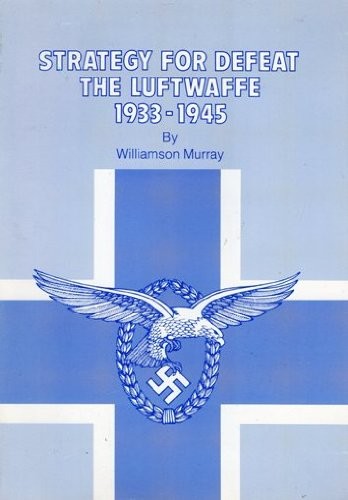
Strategy for Defeat: The Luftwaffe 1933-1945

Williamson Murray

unrated
Read Military history Logistics WWII Air power Logistics Strategy / theory ISBN 9780160021602

United States Government Printing Office · 1983

A penetrating and powerfully presented explanation of the successes and failures of the German air force in World War II. "Authoritative and thorough . . . an interesting and thought provoking book of real value to historians and military thinkers."--RUSI Journal.

The Battle of Guadalcanal: Land and Sea Warfare in the South Pacific (Graphic Battles of World War II)

Larry Hama

unrated
Read Military history Logistics WWII Logistics Strategy / theory ISBN 9781404274266

Rosen Publishing Group · 2006

America’s “island hopping” strategy to inch closer and closer to the Japanese mainland was kicked into high gear after the Allied victory on and around the island of Guadalcanal in the southern Solomon Islands in early 1943. The six-month campaign was the first important combined arms Allied victory in the Pacific, putting Japan on the defensive for the rest of the war, resulting in repeated victories for America and its allies, until the Japan’s surrender in August 1945.

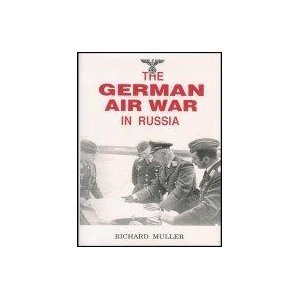
The German Air War in Russia

Richard R. Muller

unrated
Read Advanced intel Military history Logistics WWII Air power Russia / USSR Logistics Strategy / theory ISBN 1877853135

Nautical & Aviation Pub. Co. of America · 1992

Dr. Richard Muller has produced a new interpretation of the longest continous air offensive waged by the Luftwaffe. He delineates the shifts in German air strategy as well as the relationship between operational art, aviation technology, and the strategy of the German air force's general staff.

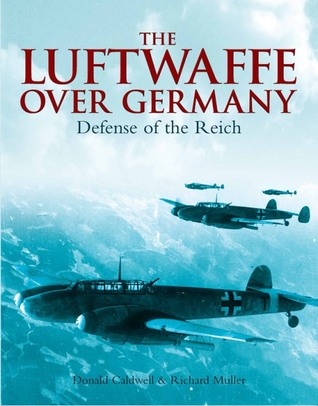
The Luftwaffe over Germany: Defense of the Reich

Donald Caldwell

unrated
Read Military history Logistics WWII Air power Russia / USSR Logistics Strategy / theory ISBN 1853677124

GREENHILL · 2007

The Luftwaffe over Germany tells the story of one of the longest and most intense air battles in history. The daylight air struggles over Germany during World War II involved thousands of aircraft, dozens of units, and hundreds of aerial engagements. Until now, there has been no single book that covers the complete story, from the highest levels of air strategy to the individual tales of Fw 190s, Bf 109s and Me 262s in air combat against the American bomber streams. This work explores the German air defense system until its collapse in 1945. It examines the detrimental effect of Luftwaffe theory and doctrine on the German air arms ability to defend the homeland once the Allied Combined Bomber Offensive began in earnest. The hard-pressed Luftwaffe leadership attempted to cobble together an air-defense network while at the same time tending to the combat fronts in Russia and the Mediterranean. Units developed specialized tactics and weapons for dealing with heavily defended bomber formations, while senior commanders sought to construct an elaborate command and control system integrating radar, observers, anti-aircraft guns, and fighters. By mid-1944, they had lost the battle - but had exacted a terrible price from the Americans in the process. The product of a ten-year collaboration between two noted Luftwaffe historians, this work fills a major gap in the literature of World War II. The authors have examined original war diaries, logbooks, doctrine manuals, after-action reports, and interviews with many combat veterans to produce a richly detailed account. Illustrated with nearly two hundred photographs, as well as new maps and diagrams, Luftwaffe Over Germany is certain to become the standard work on the subject.

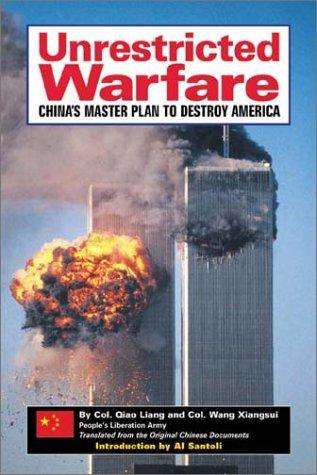
Unrestricted Warfare: China's Master Plan to Destroy America

Qiao Liang

unrated
Read Advanced intel Military history Logistics Technical warfare Espionage GWOT Cyber China Logistics Strategy / theory Economics Orthodox / theology ISBN 9780971680722

Pan American Publishing Company · August 22, 2002

As incredible as it may be to believe, three years before the Sept. 11 bombing of the World Trade Center a Chinese military manual titled Unrestricted Warfare touted such an attack – suggesting it would be difficult for the U.S. military to cope with. Here is an excerpt from Unrestricted "Whether it be the intrusions of hackers, a major explosion at the World Trade Center, or a bombing attack by bin Laden, all of these greatly exceed the frequency bandwidths understood by the American military..." Surprisingly, Osama bin Laden is mentioned frequently in this book. Now NewsMax.com is making the CIA translation of this shocking book available to all Americans. On Sept. 11, 2001, Americans and the world witnessed one of the most horrific acts ever to take place on American soil. Our media and government were quick to declare the acts of that day as simply terrorism by a nationless group known as al-Qaeda. In reading China’s military manual Unrestricted Warfare, you will learn that the events of Sept. 11 were not a random act perpetrated by independent agents. Instead, Chinese military planners believe that terrorism is just one of the many tools at the hands of nations and their terrorist allies to wage total war against the United States. You will be surprised to · The two PLA colonels who authored Unrestricted Warfare have been hailed as heroes in China since Sept. 11 · The Chinese state-run propaganda machine is cashing in on the terror attacks ... producing books, films and video games glorifying the strikes as a humbling blow against an arrogant nation. · Chinese Communist Party officials are saying that President Jiang Zemin has obsessively and gleefully watched and re-watched pictures of the aircraft crashing into the World Trade Center. · The CIA’s own translation agency reported that this book identifies the U.S. as China’s main enemy, and details how a weak nation can destroy America using unorthodox attacks – like the 9-11 attacks. · China is preparing itself and encouraging others to engage the U.S. in total war. The book is chock full of plans and strategies, from using computers, to smuggling illegal immigrants, to manipulating the stock markets, to influencing the U.S. media, to using weapons of mass destruction – all to destroy America. Recent press reports indicate that China has assisted and continues to assist militarily and economically the Taliban and al-Qaeda – even after Sept. 11. The doctrine of total war outlined in Unrestricted Warfare clearly demonstrates that the People’s Republic of China is preparing to confront the United States and our allies by conducting "asymmetrical" or multidimensional attacks on almost every aspect of our social, economic and political life. The media and Congress are keeping a lid on this book because of the implications of U.S.-China economic and trade relations. But now you can bypass them by getting a copy yourself!