S2 Search · Reading list

S2 Actual reading list

Books from S2 Actual on Goodreads, organized by his shelves and topic buckets (intel lists, military history, logistics, etc.). Metadata filled via Open Library.

Not official S2 Underground. Independent fan index — not affiliated with or endorsed by S2. Official hub: linktr.ee/S2_underground. S2 materials are CC BY-NC-SA 4.0.

S2 topic buckets (Goodreads)

Subjects & genres

20 books · Read · subject US Civil War

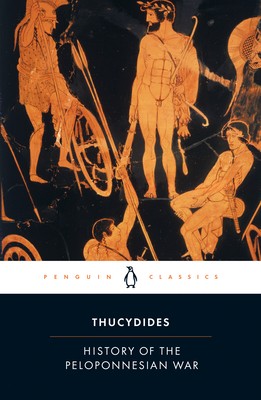
History of the Peloponnesian War

Thucydides

★★★★★
Read Strategy / theory US Civil War ISBN 9780140440393

Penguin Group · 30 September 1954

A definitive and refreshingly readable new translation of Thucydides's History of the Peloponnesian War, paired with a brilliant introduction on how to read and understand Thucydides. Thucydides called his work a "possession for all time," and his History of the Peloponnesian War has been essential reading for generals and politicians for centuries. Robin Waterfield's translation of Thucydides's sweeping narrative vividly depicts the events of the war between Athens and Sparta that began in 431 BCE and would continue until 404, a conflict that embroiled not only mainland Greece but Greek states from the eastern Mediterranean and as far west as Italy and Sicily. The only extant contemporary narrative of this conflict, Thucydides's History brims with military, moral, and political reflections, offering critical commentary on challenges that still dominate our world today, from the strife of civil war to the devastation of widespread plague to the nature of political power. Thucydides died before completing the account-it ends in 410-but his legacy is timeless. One of the great masterpieces of classical Greece, The History of the Peloponnesian War offers an incisive and timely window into the conflicts of the past.

The American Civil War: A Military History

John Keegan

★★★★★
Read Strategy / theory Economics US Civil War ISBN 9780091794835

Hutchinson · 2009

In this magesterial history and national bestseller, John Keegan shares his original and perceptive insights into the psychology, ideology, demographics, and economics of the American Civil War. Illuminated by Keegan’s knowledge of military history he provides a fascinating look at how command and the slow evolution of its strategic logic influenced the course of the war. Above all, The American Civil War gives an intriguing account of how the scope of the conflict combined with American geography to present a uniquely complex and challenging battle space. Irresistibly written and incisive in its analysis, this is an indispensable account of America’s greatest conflict.

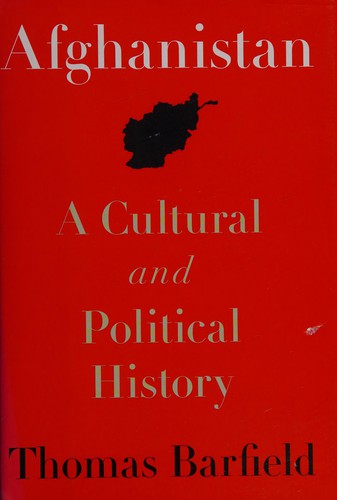
Afghanistan: A Cultural and Political History (Princeton Studies in Muslim Politics)

Thomas Barfield

★★★★
Read Advanced intel Military history Intel history GWOT Guerrilla / COIN Russia / USSR US Civil War ISBN 9780691145686

Princeton University Press · 2010

Afghanistan traces the historic struggles and the changing nature of political authority in this volatile region of the world, from the Mughal Empire in the sixteenth century to the Taliban resurgence today. Thomas Barfield introduces readers to the bewildering diversity of tribal and ethnic groups in Afghanistan, explaining what unites them as Afghans despite the regional, cultural, and political differences that divide them. He shows how governing these peoples was relatively easy when power was concentrated in a small dynastic elite, but how this delicate political order broke down in the nineteenth and twentieth centuries when Afghanistan's rulers mobilized rural militias to expel first the British and later the Soviets. Armed insurgency proved remarkably successful against the foreign occupiers, but it also undermined the Afghan government's authority and rendered the country ever more difficult to govern as time passed. Barfield vividly describes how Afghanistan's armed factions plunged the country into a civil war, giving rise to clerical rule by the Taliban and Afghanistan's isolation from the world. He examines why the American invasion in the wake of September 11 toppled the Taliban so quickly, and how this easy victory lulled the United States into falsely believing that a viable state could be built just as easily. Afghanistan is essential reading for anyone who wants to understand how a land conquered and ruled by foreign dynasties for more than a thousand years became the graveyard of empires for the British and Soviets, and what the United States must do to avoid a similar fate.

Out of Nowhere: A History of the Military Sniper

Martin Pegler

★★★★
Read Military history Technical warfare Advanced intel Basic intel Vietnam Russia / USSR US Civil War Revolution ISBN 9781846031403

Osprey Publishing · October 31, 2006

From the American Revolution to World War Two, the history of the military combat marksman is one of indifference, unpreparedness and cost cutting. Despite the proven effectiveness of the rifleman in battle, the sniper in the 20th century has been regarded as little more than a paid assassin, whose life if captured was forfeit. However, since the Vietnam War the undeniably effective use of such men in combat means that the value of the sniper has gradually become more appreciated by the military, and their prominence on the modern battlefield has increased significantly. In the 21st century they are now regarded as one of the most vital battlefield specialists. Illustrated throughout with colour and black and white photographs, this is a chronological study of snipers, detailing their evolution, training, weaponry and actions. There are also unique contributions from the men and women whose skill and extraordinary courage have made them the most greatly feared specialist in warfare. From the Foreword by Harry Furness, decorated Sniper-Sergeant, British Army Wold War II We will always need to deploy our new age warrior, that highly trained specialist, the military sniper.... Factual books on snipers are few and far between, so I find it refreshing and timely that this new book has been published which will provide the reader with the true facts about these unique soldiers; and readers of this excellent, deeply researched book will now be more knowledgeable about a rarely discussed subject. You have to dig deep to bypass the many half truths in order to reach any conclusion as to why manking continues to wage wars that kill off the cream of our young society, but it might be said that if it is the fate of a soldier to die in battle, then a sniper's swift killing bullet must be preferable to dying from devastating wounds. Chapter Heads The sniper in perspective. The rifleman emerges 1500-1854. The American Civil War and European wars 1854-1914. The First World War, the watershed 1914-16. The First World War, the fight back 1916-18. Russian sniping 1936-45. The German sniper and the war with Russia 1941-45. The war against Japan 1941-45. The war in Western Europe 1940-45. Limited wars 1945-85. Vietnam, America's nemesis. Into the 21st century.

The Mannerheim Line 1920–39: Finnish Fortifications of the Winter War (Fortress, 88)

Bair Irincheev

★★★★
Read Advanced intel Military history Logistics Technical warfare Cold War Armor Russia / USSR Logistics Intel history US Civil War ISBN 9781846033841

Osprey · 2009

In the wake of the bloody civil war that followed Finland's independence from Russia in 1917, the border between the two countries was established across the Karelian Isthmus, an area long fought over by Russia, Finland and Sweden in their attempts to dominate the northern tip of Europe. Neither the Soviets nor the Finnish were comfortable with such a divide, which provided an open route for a potential invader to Helsinki on the Finnish side, and was only 32km from the important military and industrial city of Petrograd in Russia. As such, both sides began an intensive period of fortification and defensive planning. As the Winter War broke out in November 1939, the complex and heavily defended Mannerheim Line suffered intense bombardment and armored assaults. The armistice of May 1940 saw Finland cede control of the entire Karelian Isthmus to the USSR however, and a propaganda war ensued; the Russians emphasizing the strength of the line, and the Finnish downplaying its importance, accentuating instead the heroism and bravery of the common Finnish soldier. Through a detailed analysis of the background, design and operational history of the Mannerheim Line, Bair Irincheev attempts to dispel such myths and provide an accurate assessment of its immense historical importance.

The Sovereign Individual: Mastering the Transition to the Information Age

James Dale Davidson

★★★★
Read Advanced intel Logistics Technical warfare Cold War Russia / USSR Logistics Economics US Civil War ISBN 9780684832722

Touchstone · 1999-08-26

Two renowned investment advisors and authors of the bestseller The Great Reckoning bring to light both currents of disaster and the potential for prosperity and renewal in the face of radical changes in human history as we move into the next century. The Sovereign Individual details strategies necessary for adapting financially to the next phase of Western civilization. Few observers of the late twentieth century have their fingers so presciently on the pulse of the global political and economic realignment ushering in the new millennium as do James Dale Davidson and Lord William Rees-Mogg. Their bold prediction of disaster on Wall Street in Blood in the Streets was borne out by Black Tuesday. In their ensuing bestseller, The Great Reckoning, published just weeks before the coup attempt against Gorbachev, they analyzed the pending collapse of the Soviet Union and foretold the civil war in Yugoslavia and other events that have proved to be among the most searing developments of the past few years. In The Sovereign Individual, Davidson and Rees-Mogg explore the greatest economic and political transition in centuries—the shift from an industrial to an information-based society. This transition, which they have termed "the fourth stage of human society," will liberate individuals as never before, irrevocably altering the power of government. This outstanding book will replace false hopes and fictions with new understanding and clarified values.

No cover · Amazon

Black Flags: The Rise of ISIS

Joby Warrick

★★★☆☆
Read Basic intel Intel history Espionage GWOT Guerrilla / COIN Middle East Intel history US Civil War

Pulitzer Prize-winning reporter Joby Warrick reveals how the strain of militant Islam now raising its banner across Iraq and Syria spread from a remote Jordanian prison with the unwitting aid of American military intervention.      When he succeeded his father in 1999, King Abdullah of Jordan released a batch of political prisoners in the hopes of smoothing his transition to power. Little did he know that among those released was Abu Musab al-Zarqawi, a man who would go on to become a terrorist mastermind too dangerous even for al-Qaeda and give rise to an Islamist movement bent on dominating the Middle East.      Zarqawi began by directing hotel bombings and assassinations in Jordan from a base in northern Iraq, but it was the American invasion of that country in 2003 that catapulted him to the head of a vast insurgency. By identifying him as the link between Saddam and bin Laden, the CIA inadvertently created a monster. Like-minded radicals saw him as a hero resisting the infidel occupiers and rallied to his cause. Their wave of brutal beheadings and suicide bombings continued for years until Jordanian intelligence provided the Americans with the crucial intelligence needed to eliminate Zarqawi in a 2006 airstrike.      But his movement endured, first called al-Qaeda in Iraq, then renamed Islamic State of Iraq and Syria, or ISIS, seeking refuge in unstable, ungoverned pockets on the Iraq-Syria border. And as the Syrian civil war broke out in 2011, ISIS seized its chance to pursue Zarqawi's dream of a sweeping, ultra-conservative Islamic caliphate.       Drawing on unique access to CIA and Jordanian sources, Joby Warrick weaves together heart-pounding, moment-by-moment operational details with overarching historical perspectives to reveal the long trajectory of today's most dangerous Islamic extremist threat. From the Hardcover edition.

No cover · Amazon

Brother Number One: A Political Biography of Pol Pot

David P. Chandler

★★★☆☆
Read Biographies WWII Vietnam Espionage Guerrilla / COIN Biography US Civil War

In the tragic recent history of Cambodia—a past scarred by a long occupation by Vietnamese forces and by the preceding three-year reign of terror by the brutal Khmer Rouge—no figure looms larger or more ominously than that of Pol Pot. As secretary of the Central Committee of the Communist Party of Kampuchea (CPK) since 1962 and as prime minister of Democratic Kampuchea (DK), he has been widely blamed for trying to destroy Cambodian society. By implementing policies whose effects were genocidal, he oversaw the deaths of more than one million of his nation’s people.The political career of Saloth Sar, better known by his nom de guerre Pol Pot, forms a critical but largely inaccessible portion of twentieth-century Cambodian history. What we know about his life is sketchy: a comfortable childhood, three years of study in France, and a short career as a schoolteacher preceded several years—spent mostly in hiding—as a guerrilla and the commander of the victorious army in Cambodia’s civil war. His career reached a climax when he and his associates, coming to power, attempted to transform their country along lines more radical than any attempted by a modern regime. Driven into hiding in 1979 by invading Vietnamese forces, Pol Pot maintained his leadership of a Khmer Rouge guerrilla army in exile, remaining a power and a threat.In this political biography, David P. Chandler throws light on the shadowy figure of Pol Pot. Basing his study on interviews and on a wide range of sources in English, Cambodian, and French, the author illuminates the ideas and behavior of this enigmatic man and his entourage against the background of post–World War II events, providing a key to understanding this horrific, pivotal period of Cambodian history. In this revised edition, Chandler provides new information on the state of Cambodia and the Khmer Rouge following the death of Pol Pot in 1997.

Grant

Ron Chernow

★★★☆☆
Read Military history Biography Strategy / theory US Civil War ISBN 9780143110637

Books on Tape · 2017

Ulysses S. Grant's life has typically been misunderstood. All too often he is caricatured as a chronic loser and inept businessman, fond of drinking to excess; or as the triumphant but brutal Union general of the Civil War; or as a credulous and hapless president whose tenure came to symbolize the worst excesses of the Gilded Age. These stereotypes don't come close to capturing adequately his spirit and the sheer magnitude of his monumental accomplishments. A biographer at the height of his powers, Chernow has produced a portrait of Grant that is a masterpiece, the first to provide a complete understanding of the general and president whose fortunes rose and fell with dizzying speed and frequency. Before the Civil War, Grant was flailing. His business ventures had been dismal, and despite distinguished service in the Mexican War, he ended up resigning from the army in disgrace amid recurring accusations of drunkenness. But in the Civil War, Grant began to realize his remarkable potential, soaring through the ranks of the Union army, prevailing at the Battle of Shiloh and in the Vicksburg campaign and ultimately defeating the legendary Confederate general Robert E. Lee after a series of unbelievably bloody battles in Virginia. Along the way Grant endeared himself to President Lincoln and became his most trusted general and the strategic genius of the war effort. His military fame translated into a two-term presidency, but one plagued by corruption scandals involving his closest staff. All the while Grant himself remained more or less above reproach. But, more importantly, he never failed to seek freedom and justice for black Americans, working to crush the Ku Klux Klan and earning the admiration of Frederick Douglass, who called him 'the vigilant, firm, impartial, and wise protector of my race." After his presidency, he was again brought low by a trusted colleague, this time a dashing young swindler on Wall Street, but he resuscitated his image by working with Mark Twain to publish his memoirs, which are recognized as a masterpiece of the genre. With his famous lucidity, breadth, and meticulousness, Chernow finds the threads that bind these disparate stories together, shedding new light on the man whom Walt Whitman described as "nothing heroic... and yet the greatest hero." His probing portrait of Grant's lifelong struggle with alcoholism transforms our understanding of the man at the deepest level. This is America's greatest biographer, bringing movingly to life one of America's finest but most underappreciated presidents. The definitive biography, Grant is a grand synthesis of painstaking research and literary brilliance that makes sense of all sides of Grant's life, explaining how this simple Midwesterner could at once be so ordinary and so extraordinary.

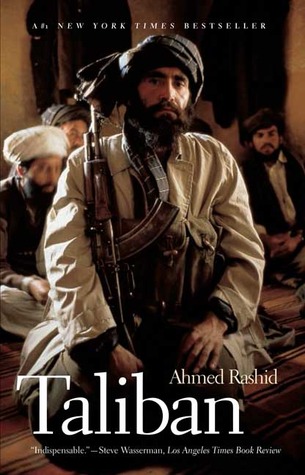
Taliban: Militant Islam, Oil and Fundamentalism in Central Asia

Ahmed Rashid

★★★☆☆
Read Basic intel Intel history GWOT Russia / USSR Middle East US Civil War ISBN 0300089023

Yale Nota Bene · 2001

Shrouding themselves and their aims in deepest secrecy, the leaders of the Taliban movement control Afghanistan with an inflexible, crushing fundamentalism. The most extreme and radical of all Islamic organizations, the Taliban inspires fascination, controversy, and especially fear in both the Muslim world and the West. Correspondent Ahmed Rashid brings the shadowy world of the Taliban into sharp focus in this enormously interesting and revealing book. It is the only authoritative account of the Taliban and modern day Afghanistan available to English language readers. Based on his experiences as a journalist covering the civil war in Afghanistan for twenty years, traveling and living with the Taliban, and interviewing most of the Taliban leaders since their emergence to power in 1994, Rashid offers unparalleled firsthand information. He explains how the growth of Taliban power has already created severe instability in Russia, Iran, Pakistan, and five Central Asian republics. He describes the Taliban's role as a major player in a new "Great Game"—a competition among Western countries and companies to build oil and gas pipelines from Central Asia to Western and Asian markets. The author also discusses the controversial changes in American attitudes toward the Taliban—from early support to recent bombings of Osama Bin Laden's hideaway and other Taliban-protected terrorist bases—and how they have influenced the stability of the region.

The Bottom Billion: Why the Poorest Countries Are Failing and What Can Be Done About It

Paul Collier

★★★☆☆
Read Basic intel Economics US Civil War ISBN 9780195311457

Oxford University Press · 2007

In the universally acclaimed and award-winning The Bottom Billion, Paul Collier reveals that fifty failed states--home to the poorest one billion people on Earth--pose the central challenge of the developing world in the twenty-first century. The book shines much-needed light on this group of small nations, largely unnoticed by the industrialized West, that are dropping further and further behind the majority of the world's people, often falling into an absolute decline in living standards. A struggle rages within each of these nations between reformers and corrupt leaders--and the corrupt are winning. Collier analyzes the causes of failure, pointing to a set of traps that ensnare these countries, including civil war, a dependence on the extraction and export of natural resources, and bad governance. Standard solutions do not work, he writes; aid is often ineffective, and globalization can actually make matters worse, driving development to more stable nations. What the bottom billion need, Collier argues, is a bold new plan supported by the Group of Eight industrialized nations. If failed states are ever to be helped, the G8 will have to adopt preferential trade policies, new laws against corruption, new international charters, and even conduct carefully calibrated military interventions. Collier has spent a lifetime working to end global poverty. In The Bottom Billion, he offers real hope for solving one of the great humanitarian crises facing the world today.

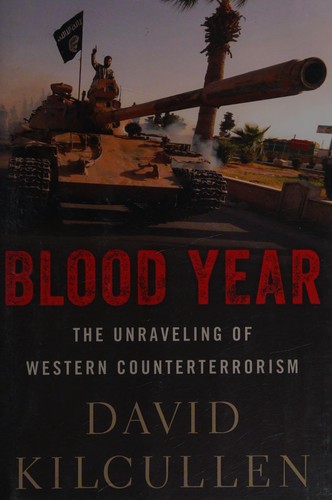
Blood Year: The Unraveling of Western Counterterrorism

David Kilcullen

unrated
Read Advanced intel Cold War GWOT Russia / USSR Middle East Strategy / theory US Civil War ISBN 9780190600549

Oxford University Press · 2016

2014 has the potential to go down as a crucial year in modern world history. A resurgent and bellicose Russia took over Crimea and fueled a civil war in Eastern Ukraine. Post-Saddam Iraq, in many respects a creature of the United States because of the war that began in 2003, lost a third of its territory to an army of hyper-violent millennialists. The peace process in Israel seemed to completely collapse. Finally, after coalescing in Syria as a territorial entity, the Islamic State swept into northern Iraq and through northeastern Syria, attracting legions of recruits from Europe and the Middle East. In short, the post-Cold War security order that the US had constructed after 1991 seemed to be coming apart at the seams. David Kilcullen was one of the architects of America's strategy in the late phases of the second Gulf War, and also spent time in Afghanistan and other hotspots. In Blood Year, he provides a wide-angle view of the current situation in the Middle East and analyzes how America and the West ended up in such dire circumstances. Whereas in 2008 it appeared that the U.S. might pull a modest stalemate from the jaws of defeat in Iraq, six years later the situation had reversed. After America pulled out of Iraq completely in 2011, the Shi'ite president cut Sunnis out of the power structure and allowed Iranian influence to grow. And from the debris of Assad's Syria arose an extremist Sunni organization even more radical than Al Qaeda. Unlike Al Qaeda, ISIS was intent on establishing its own state, and within a remarkably short time they did. Interestingly, Kilcullen highlights how embittered former Iraqi Ba'athist military officers were key contributors to ISIS's military successes. Kilcullen lays much of the blame on Bush's initial decision to invade Iraq (which had negative secondary effects in Afghanistan), but also takes Obama to task for simply withdrawing and adopting a "leading from behind" strategy. As events have proven, Kilcullen contends, withdrawal was a fundamentally misguided plan. The U.S. had uncorked the genie, and it had a responsibility to at least attempt to keep it under control. Instead, the U.S. is at a point where administration officials state that the losses of Ramadi and Palmyra are manageable setbacks. Kilcullen argues that the U.S. needs to re-engage in the region, whether it wants to or not, because it is largely responsible for the situation that is now unfolding. Blood Year is an essential read for anyone interested in understanding not only why the region that the U.S. invaded a dozen years ago has collapsed into utter chaos, but also what it can do to alleviate the grim situation.

No cover · Amazon

Bracketing the Enemy: Forward Observers in World War II

John R. Walker

unrated
Read Advanced intel Intel history Military history Technical warfare WWII US Civil War

After the end of World War II, General George Patton declared that artillery had won the war. Yet howitzers did not achieve victory on their own. Crucial to the success of these big guns were forward observers, artillerymen on the front lines who directed the artillery fire. Until now, the vital role of forward observers in ground combat has received little scholarly attention. In Bracketing the Enemy, John R. Walker remedies this oversight by offering the first full-length history of forward observer teams during World War II. As early as the U.S. Civil War, artillery fire could reach as far as two miles, but without an “FO” (forward observer) to report where the first shot had landed in relation to the target, and to direct subsequent fire by outlining or “bracketing” the targeted range, many of the advantages of longer-range fire were wasted. During World War II, FOs accompanied infantrymen on the front lines. Now, for the first time, gun crews could bring deadly accurate fire on enemy positions immediately as advancing riflemen encountered these enemy strongpoints. According to Walker, this transition from direct to indirect fire was one of the most important innovations to have occurred in ground combat in centuries. Using the 37th Division in the Pacific Theater and the 87th in Europe as case studies, Walker presents a vivid picture of the dangers involved in FO duty and shows how vitally important forward observers were to the success of ground operations in a variety of scenarios. FO personnel not only performed a vital support function as artillerymen but often transcended their combat role by fighting as infantrymen, sometimes even leading soldiers into battle. And yet, although forward observers lived, fought, and bled with the infantry, they were ineligible to wear the Combat Infantryman’s Badge awarded to the riflemen they supported. Forward observers are thus among the unsung heroes of World War II. Bracketing the Enemy signals a long-overdue recognition of their distinguished service.

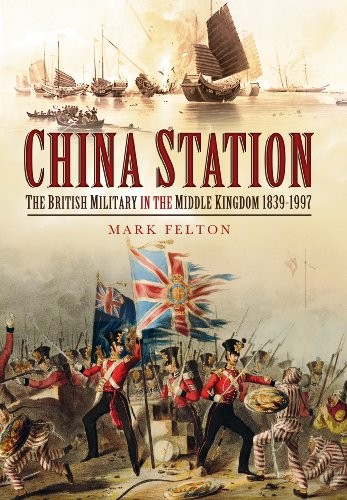
China Station: The British Military in the Middle Kingdom 1839 – 1997

Mark Felton

unrated
Read Military history Naval China Economics US Civil War ISBN 9781781590690

Pen and Sword Military · Oct 19, 2013

The author, who lives in Shanghai, sets out to demonstrate that the British military has been at the forefront of many of the great changes that have swept China over the last two centuries. The author, who lives in Shanghai, sets out to demonstrate that the British military has been at the forefront of many of the great changes that have swept China over the last two centuries. He devotes chapters to the various wars, military adventures and rebellions that regularly punctuated Sino/British relationships since the 1st Opium War 1839-1842. This classic example of Imperial intervention saw the establishment of Hong Kong and Shanghai as key trading centers. The Second Opium War and the Taiping and Boxer Rebellions saw the advancement of British influence despite determined but unsuccessful efforts by the Chinese to loosen the grip of Western domination. The Royal Navy's might ensured that, by gunboat diplomacy, trading rights and new posts were established and great fortunes made. But in the 1940s the British grossly underestimated Japanese military might and intentions with disastrous results. After the Second World War the British returned to find that the Americans had supplanted them. The Communists victory in the Civil War sealed British and Western fates and, while Hong Kong remained under British control until 1997, the end of British rule was almost inevitable. But the handover was a masterly piece of pragmatic capitalism and the former Colony remains an economic powerhouse with strong British influence.

From Troy to Entebbe

John Arquilla

unrated
Read Advanced intel Intel history Military history WWII WWI Special ops China Strategy / theory US Civil War ISBN 9780761801863

Univ.P.of America · 1996

Special operations, though most commonly associated with the period from the Second World War to the present, have played a key role throughout the history of conflict from the Trojan War to the great arms struggles of the 20th century. This volume introduces the reader to the broad sweep of the history of special operations, and also includes several excerpts from the classic literature on the subject. Contents: Origins: Robert Graves, 'The Wooden Horse', 'The Sack of Troy'; Raiding in the Age of Sail: G.M. Thomson, 'The Damage Done by this Corsair', 'The Wind Commands Me Away'; Ian Grimble, 'The Imp,^Rrieuse'; The Early American Tradition: Kenneth Roberts, 'The Raid on St. Francis'; Fred Cook, 'Struggle for the South'; R.E. Dupuy and W.H. Baumer, 'Wars With the Barbary Pirates'; 19th Century Colonial Warfare; Leo Tolstoy, The Raid; Wyatt Blassingame, 'How the Legion Began', 'The Legion Fights in Algeria'; The Civil War: Archer Hines, 'Military Means, Political Ends'; Bruce Catton, 'Total War and an Election'; World War I: Lowell Thomas, 'Trapped by a G-Ship..'; T.E. Lawrence, 'The Raid Upon the Bridges'; World War II in Western Europe and North Africa: Cajus Bekker, 'The Coup de Main at Eben Emael', 'The Blood-Bath of Crete'; Paul Carell, 'A British Commando Attempt to Capture Rommel', 'The British Raid on Tobruk', 'Brandenburgers in Action Behind the Front'; John Lodwick, Raiders from the Sea, Chapters 16-18; The Pacific War: Walter Lord, 'A Very Private War';Ronald Spector, 'The Road to Myitkyina'; Milton E. Miles, 'Chinese Pirates and the SACO Dragon'; Algeria, Round II: Jean Lart,^Rguy, 'The Leap of Leucadia'; The Ultimate Rescue: Chaim Herzog, 'Entebbe'; Bibliography; Index.

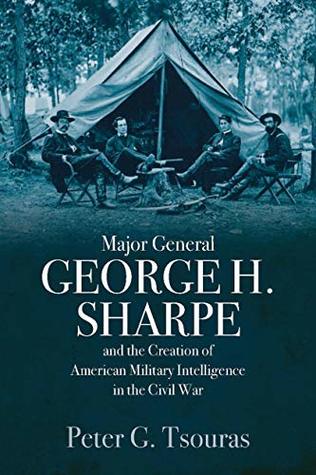
Major General George H. Sharpe and the Creation of American Military Intelligence in the Civil War

Peter G. Tsouras

unrated
Read Advanced intel Intel history Intel history Biography US Civil War ISBN 9781612006482

Casemate Publishers & Book Distributors, LLC · 2018

This biography of the Civil War officer who established the Union’s intelligence network “is an absolute treasure trove of . . . operational information” (Military History Magazine).   In this biography of George H. Sharpe, acclaimed historian Peter Tsouras recounts the significance of Sharpe’s grand contribution to the Union war the creation of an all-source intelligence operation known as the Bureau of Military Information. Tsouras contends that, under Sharpe’s leadership, the BMI was the combat multiplier that ultimately brought the Union to victory.   By early 1863, in the two-and-half months before the Chancellorsville Campaign, Sharpe had compiled a thorough and accurate Intelligence Preparation of the Battlefield. His reports identified every brigade and its location in Lee’s army, provided an order-of-battle down to the regiment level, and a complete analysis of the railroad. Beyond this, Sharpe assembled a staff of thirty to fifty scouts and support personnel to run the military intelligence operation of the Army of the Potomac. He later supported Grant’s armies operating against Richmond during the Siege of Petersburg, where the BMI played a fundamental role in the victory.   After the war, Sharpe became one of the most powerful Republican politicians in New York State, had close friendships with presidents Grant and Arthur, and was a champion of African American civil rights. With a wealth of newly discovered primary documents, including the diaries of Sharpe’s deputy John C. Babcock, Tsouras sheds significant new light on the evolution of Civil War intelligence reporting.

Networks of Rebellion: Explaining Insurgent Cohesion and Collapse (Cornell Studies in Security Affairs)

Paul Staniland

unrated
Read Technical warfare Logistics Military history Cold War GWOT Guerrilla / COIN Logistics Intel history Strategy / theory US Civil War ISBN 9780801479298

Cornell University Press · Apr 18, 2014

Insurgent cohesion is central to explaining patterns of violence, the effectiveness of counterinsurgency, and civil war outcomes. Cohesive insurgent groups produce more effective war-fighting forces and are more credible negotiators; organizational cohesion shapes both the duration of wars and their ultimate resolution. In Networks of Rebellion , Paul Staniland explains why insurgent leaders differ so radically in their ability to build strong organizations and why the cohesion of armed groups changes over time during conflicts. He outlines a new way of thinking about the sources and structure of insurgent groups, distinguishing among integrated, vanguard, parochial, and fragmented groups. Staniland compares insurgent groups, their differing social bases, and how the nature of the coalitions and networks within which these armed groups were built has determined their discipline and internal control. He examines insurgent groups in Afghanistan, 1975 to the present day, Kashmir (1988–2003), Sri Lanka from the 1970s to the defeat of the Tamil Tigers in 2009, and several communist uprisings in Southeast Asia during the Cold War. The initial organization of an insurgent group depends on the position of its leaders in prewar political networks. These social bases shape what leaders can and cannot do when they build a new insurgent group. Counterinsurgency, insurgent strategy, and international intervention can cause organizational change. During war, insurgent groups are embedded in social ties that determine they how they organize, fight, and negotiate; as these ties shift, organizational structure changes as well.

Savage Continent: Europe in the Aftermath of World War II

Keith Lowe

unrated
Read Advanced intel Military history Logistics WWII Logistics Intel history Economics US Civil War ISBN 9781250000200

St. Martin's Press · 2012

The Second World War might have officially ended in May 1945, but in reality it rumbled on for another ten years... The end of the Second World War in Europe is one of the twentieth century’s most iconic moments.  It is fondly remembered as a time when cheering crowds filled the streets, danced, drank and made love until the small hours.  These images of victory and celebration are so strong in our minds that the period of anarchy and civil war that followed has been forgotten.  Across Europe, landscapes had been ravaged, entire cities razed and more than thirty million people had been killed in the war. The institutions that we now take for granted - such as the police, the media, transport, local and national government - were either entirely absent or hopelessly compromised. Crime rates were soaring, economies collapsing, and the European population was hovering on the brink of starvation.  In Savage Continent, Keith Lowe describes a continent still racked by violence, where large sections of the population had yet to accept that the war was over.  Individuals, communities and sometimes whole nations sought vengeance for the wrongs that had been done to them during the war. Germans and collaborators everywhere were rounded up, tormented and summarily executed.  Concentration camps were reopened and filled with new victims who were tortured and starved.  Violent anti-Semitism was reborn, sparking murders and new pogroms across Europe.  Massacres were an integral part of the chaos and in some places – particularly Greece, Yugoslavia and Poland, as well as parts of Italy and France – they led to brutal civil wars. In some of the greatest acts of ethnic cleansing the world has ever seen, tens of millions were expelled from their ancestral homelands, often with the implicit blessing of the Allied authorities. Savage Continent is the story of post WWII Europe, in all its ugly detail, from the end of the war right up until the establishment of an uneasy stability across Europe towards the end of the 1940s.  Based principally on primary sources from a dozen countries, Savage Continent is a frightening and thrilling chronicle of a world gone mad, the standard history of post WWII Europe for years to come.

No cover · Amazon

Team of Rivals: The Political Genius of Abraham Lincoln

Doris Kearns Goodwin

unrated
Read Basic intel Military history Biographies Biography US Civil War

Winner of the Lincoln Prize Acclaimed historian Doris Kearns Goodwin illuminates Lincoln's political genius in this highly original work, as the one-term congressman and prairie lawyer rises from obscurity to prevail over three gifted rivals of national reputation to become president. On May 18, 1860, William H. Seward, Salmon P. Chase, Edward Bates, and Abraham Lincoln waited in their hometowns for the results from the Republican National Convention in Chicago. When Lincoln emerged as the victor, his rivals were dismayed and angry. Throughout the turbulent 1850s, each had energetically sought the presidency as the conflict over slavery was leading inexorably to secession and civil war. That Lincoln succeeded, Goodwin demonstrates, was the result of a character that had been forged by experiences that raised him above his more privileged and accomplished rivals. He won because he possessed an extraordinary ability to put himself in the place of other men, to experience what they were feeling, to understand their motives and desires. It was this capacity that enabled Lincoln as president to bring his disgruntled opponents together, create the most unusual cabinet in history, and marshal their talents to the task of preserving the Union and winning the war. We view the long, horrifying struggle from the vantage of the White House as Lincoln copes with incompetent generals, hostile congressmen, and his raucous cabinet. He overcomes these obstacles by winning the respect of his former competitors, and in the case of Seward, finds a loyal and crucial friend to see him through. This brilliant multiple biography is centered on Lincoln's mastery of men and how it shaped the most significant presidency in the nation's history.

The Secret War For The Union: The Untold Story of Military Intelligence in the Civil War – How Intelligence Shaped Victory, Defeat, and the Decisions of Commanders

Edwin C. Fishel

unrated
Read Basic intel Intel history Espionage Intel history US Civil War ISBN 9780395901366

Mariner Books · June 22, 1998

Most histories of the Civil War explain victory and defeat in terms of the skill of commanders and their troops. Intelligence records disappeared after the war, and thus a critically important element has largely been ignored. Fishel has unearthed substantial collections of such records, and his "intelligence explanation" radically alters history's understanding of the campaigns. The Secret War for the Union is one of the most important Civil War works ever published.