S2 Search · Reading list

S2 Actual reading list

Books from S2 Actual on Goodreads, organized by his shelves and topic buckets (intel lists, military history, logistics, etc.). Metadata filled via Open Library.

Not official S2 Underground. Independent fan index — not affiliated with or endorsed by S2. Official hub: linktr.ee/S2_underground. S2 materials are CC BY-NC-SA 4.0.

S2 topic buckets (Goodreads)

Subjects & genres

49 books · Read · subject Middle East · page 1 of 3

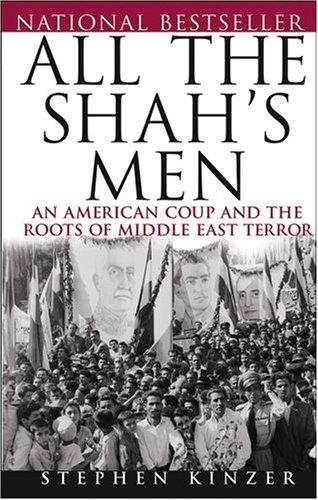
All the Shah's Men: An American Coup and the Roots of Middle East Terror

Stephen Kinzer

★★★★★
Read Advanced intel Intel history Military history Espionage GWOT Middle East Intel history Orthodox / theology ISBN 9780471678786

Wiley · August 12, 2004

Half a century ago, the United States overthrew a Middle Eastern government for the first time. The victim was Mohammad Mossadegh, the democratically elected prime minister of Iran. Although the coup seemed a success at first, today it serves as a chilling lesson about the dangers of foreign intervention.In this book, veteran New York Times correspondent Stephen Kinzer gives the first full account of this fateful operation. His account is centered around an hour-by-hour reconstruction of the events of August 1953, and concludes with an assessment of the coup's "haunting and terrible legacy." Operation Ajax, as the plot was code-named, reshaped the history of Iran, the Middle East, and the world. It restored Mohammad Reza Shah to the Peacock Throne, allowing him to impose a tyranny that ultimately sparked the Islamic Revolution of 1979. The Islamic Revolution, in turn, inspired fundamentalists throughout the Muslim world, including the Taliban and terrorists who thrived under its protection."It is not far-fetched," Kinzer asserts in this book, "to draw a line from Operation Ajax through the Shah's repressive regime and the Islamic Revolution to the fireballs that engulfed the World Trade Center in New York."Drawing on research in the United States and Iran, and using material from a long-secret CIA report, Kinzer explains the background of the coup and tells how it was carried out. It is a cloak-and-dagger story of spies, saboteurs, and secret agents. There are accounts of bribes, staged riots, suitcases full of cash, and midnight meetings between the Shah and CIA agent Kermit Roosevelt, who was smuggled in and out of the royal palace under a blanket in the back seat of a car. Roosevelt,the grandson of President Theodore Roosevelt, was a real-life James Bond in an era when CIA agents operated mainly by their wits. After his first coup attempt failed, he organized a second attempt that succeeded three days later.The colorful cast of characters includes the terrified young Shah, who fled his country at the first sign of trouble; General H. Norman Schwarzkopf, father of the Gulf War commander and the radio voice of "Gang Busters," who flew to Tehran on a secret mission that helped set the coup in motion; and the fiery Prime Minister Mossadegh, who outraged the West by nationalizing the immensely profitable Anglo-Iranian Oil Company. The British, outraged by the seizure of their oil company, persuaded President Dwight Eisenhower that Mossadegh was leading Iran toward Communism. Eisenhower and Prime Minister Winston Churchill of Great Britain became the coup's main sponsors. Brimming with insights into Middle Eastern history and American foreign policy, this book is an eye-opening look at an event whose unintended consequences - Islamic revolution and violent anti-Americanism--have shaped the modern world. As the United States assumes an ever-widening role in the Middle East, it is essential reading.

Argo: How the CIA & Hollywood Pulled Off the Most Audacious Rescue in History

Antonio J. Méndez

★★★★★
Read Basic intel Biographies Intel history Espionage Middle East Intel history ISBN 9780670026227

Viking · 2012

The true account of the 1979 rescue of six American hostages from Iran On November 4, 1979, Iranian militants stormed the American embassy in Tehran and held dozens of Americans hostage, sparking a 444-day ordeal and a quake in global politics that still reverberates today. Beaneath this crisis another shocking story was known by only a select few: six Americans escaped the embassy and hid within a city roiling with suspicion and fear. A top-level CIA officer named Antonio Mendez devised an ingenious yet incredibly risky plan to rescue them before they were detected. Disguising himself as a Hollywood producer, and supported by a cast of expert forgers, deep-cover CIA operatives, foreign agents, and Hollywood special-effects artists, Mendez traveled to Tehran under the guise of scouting locations for a fake science fiction film called "Argo." While pretending to find the ideal film backdrops, Mendez and a colleague succeeded in contacting the escapees and eventually smuggled them out of Iran. After more than three decades, Antonio Mendez finally details the extraordinarily complex and dangerous operation he led. A riveting story of secret identities, international intrigue, and good old-fashioned American ingenuity, Argo is the pulse-pounding account of the history-making collusion between Hollywood and high-stakes espionage.

No cover · Amazon

Crusade: The Untold Story of the Persian Gulf War

Rick Atkinson

★★★★★
Read Basic intel Advanced intel Technical warfare Logistics Intel history Military history Middle East Logistics Strategy / theory

A definitive account of the Gulf War told by Pulitzer Prize–winning correspondent Rick Atkinson. This previously untold story of the US war with Iraq in the early 1990s, Atkinson follows the 42-day war from the first night to the final day, providing vivid accounts of bombing runs, White House strategy sessions, firefights, and bitter internal conflicts.

No cover · Amazon

Dragon Days: Time for "Unconventional" Tactics

H. John Poole

★★★★★
Read Advanced intel Vietnam Korea Guerrilla / COIN Middle East Strategy / theory

This book shows how to control a contested region with squad-sized outposts . North Vietnam and Iran have done it. Now, North Korea may try to consolidate the South with such a strategy. Scores of tiny Western outposts could do this too. After a short threat assessment, Dragon Days describes what a single U.S. rifle squad must do to safely accomplish such a mission in Asia. It will need the following Unconventional Warfare (UW) (1) some police procedure; (2) obscurely defending; (3) finding an enemy weakness; (4) making a secret approach; (5) disguising the attack; (6) precluding a counterstroke; (7) rural E&E; (8) enhancing rural terrain (9) urban E&E; and (10) enhancing urban terrain . Because of Asia's bottom-up culture, the little picture is where such an ability originates. This heavily illustrated book contains more small-unit perspective than any U.S. govt. publication. In fact, it may still constitute America's only UW tactical-technique manual .

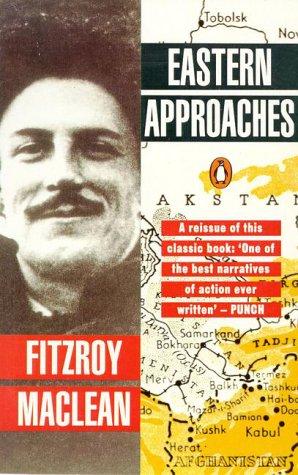
Eastern Approaches

Fitzroy Maclean

★★★★★
Read Basic intel Intel history Biographies WWII Cold War Special ops Russia / USSR Middle East Biography Orthodox / theology ISBN 9780140132717

Penguin Global · September 1, 2004

70th Anniversary Edition with a New Foreword by Sunday Times Bestselling Author Simon Sebag Montefiore 'A classic' Observer | 'A legend' Washington Post | 'The best book you will read this year' Colonel Tim Collins Posted to Moscow as a young diplomat before the Second World War, Fitzroy Maclean travelled widely, with or without permission, in some of the wildest and remotest parts of the Soviet Union, then virtually closed to foreigners. In 1942 he fought as a founder member of the SAS in North Africa. There Maclean specialised in hair-raising commando raids behind enemy lines, including the daring and outrageous kidnapping of the German Consul in Axis-controlled Iraq. In 1943 he parachuted into German-occupied Yugoslavia as Winston Churchill's personal representative to Josip Broz Tito and remained there until 1945, all enemy attempts to capture him proving unsuccessful. Eastern Approaches is Maclean's classic, gripping account of the sybaritic delights of diplomatic life, the thrill of remote travel in the then-forbidden zones of Central Asia, and the violence and adventure of world-changing tours in North Africa and Yugoslavia. Maclean is the original British action hero and this is blistering reading. 'This book literally changed my life' Simon Sebag Montefiore 'A man of daring character' Winston Churchill 'An absorbing mixture of military adventure, political judgement, urbane wit, cool humour and surprising incident' Financial Times 'One of the bravest men in the British army, and one of the funniest' Ben Macintyre 'Entertaining, important, the model for James Bond' New York Times

Militant Tricks: Battlefield Ruses of the Islamic Insurgent

H. John Poole

★★★★★
Read Advanced intel GWOT Guerrilla / COIN China Middle East Strategy / theory ISBN 9780963869586

Posterity Press · October 17, 2005

THIS BOOK WAS ON THE U.S. ARMY'S MOST PRESTIGIOUS READING LIST. Since 9/11, our deployed troops have learned many things. Though the war in Afghanistan has just ended, many of their hard-won lessons have yet to be assimilated by the Stateside bureaucracy. To help, "Militant Tricks" has recounted America's progress in Iraq and Afghanistan from the standpoint of East Asian BATTLEFIELD DECEPTION. Both countries were part of the Mongol Empire for over 200 years and thus prone to every sort of ancient Chinese illusion. "Militant Tricks" also contains the TACTICAL TECHNIQUES WITH WHICH TO COUNTER AN ISLAMIC EXTREMIST'S URBAN OFFENSIVE. While some of these nontraditional techniques were risked during the Baghdad Surge, they may soon be forgotten.

Relentless Strike: The Secret History of Joint Special Operations Command

Sean Naylor

★★★★★
Read Basic intel Advanced intel Military history Intel history Technical warfare GWOT Special ops Naval Air power Nuclear Middle East ISBN 9781250014542

St. Martin's Press · 2015

The New York Times Bestseller and Winner of the 2015 Army Historical Foundation Distinguished Writing Award for Unit History Since the attacks of September 11, one organization has been at the forefront of America's military response. Its efforts turned the tide against al-Qaida in Iraq, killed Bin Laden and Zarqawi, rescued Captain Phillips and captured Saddam Hussein. Its commander can direct cruise missile strikes from nuclear submarines and conduct special operations raids anywhere in the world. Relentless Strike tells the inside story of Joint Special Operations Command, the secret military organization that during the past decade has revolutionized counterterrorism, seamlessly fusing intelligence and operational skills to conduct missions that hit the headlines, and those that have remained in the shadows-until now. Because JSOC includes the military's most storied special operations units-Delta Force, SEAL Team 6, the 75th Ranger Regiment-as well as America's most secret aviation and intelligence units, this is their story, too. Relentless Strike reveals tension-drenched meetings in war rooms from the Pentagon to Iraq and special operations battles from the cabin of an MH-60 Black Hawk to the driver's seat of Delta Force's Pinzgauer vehicles as they approach their targets. Through exclusive interviews, reporter Sean Naylor uses his unique access to reveal how an organization designed in the 1980s for a very limited mission set transformed itself after 9/11 to become the military's premier weapon in the war against terrorism and how it continues to evolve today.

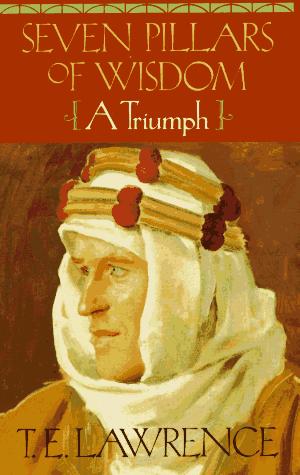
Seven Pillars of Wisdom: A Triumph

T.E. Lawrence

★★★★★
Read Intel history Basic intel WWI Espionage Middle East Biography ISBN 0385418957

Anchor Books · 1991

In his classic book, T.E. Lawrence—forever known as Lawrence of Arabia—recounts his role in the origin of the modern Arab world. At first a shy Oxford scholar and archaeologist with a facility for languages, he joined and went on to lead the Arab revolt against the Ottoman Turks while the rest of the world was enmeshed in World War I. With its richly detailed evocation of the land and the people Lawrence passionately believed in, its incisive portraits of key players, from Faisal ibn Hussein, the future Hashemite king of Syria and Iraq, to General Sir Edmund Allenby and other members of the British imperial forces, The Seven Pillars of Wisdom is an indispensible primary historical source. It helps us to understand today’s Middle East, while giving us thrilling accounts of military exploits (including the liberation of Aqaba and Damascus), clandestine activities, and human foibles.

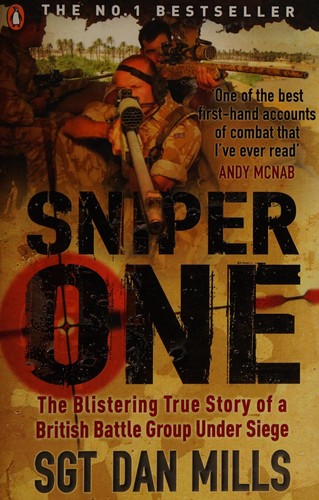
Sniper One: The Blistering True Story Of A British Battle Group Under Siege

Dan Mills

★★★★★
Read Biographies Intel history Technical warfare Advanced intel Military history GWOT Middle East Biography ISBN 9780141029016

Penguin · 2008

Sniper One is the gritty, awe-inspiring true story that takes you right into the heart of the Iraq war from Sunday Times No.1 bestseller Sgt. Dan Mills. 'One of the best first-hand accounts of combat that I've ever read' Andy McNab We all saw it at once. Half a dozen voices screamed 'Grenade!' simultaneously. Then everything went into slow motion. The grenade took an age to travel through its 20 metre arc. A dark, small oval-shaped package of misery the size of a peach ... April 2004: Dan Mills and his platoon of snipers fly into southern Iraq, part of an infantry battalion sent to win hearts and minds. They were soon fighting for their lives. Back home we were told they were peacekeeping. But there was no peace to keep. Because within days of arriving in theatre, Mills and his men were caught up in the longest, most sustained fire fight British troops had faced for over fifty years. This awe-inspiring account tells of total war in throat-burning winds and fifty-degree heat, blasted by mortars and surrounded by heavily armed militias. For six months, they fought isolated, besieged and under constant enemy fire. Their heroic stand a modern-day Rorke's Drift. ************** Dan Mills served for 24 years as an Infantry Soldier reaching the rank of Warrant Officer Class 2. During his long military career he served on operations in Northern Ireland, Bosnia, Kosovo, Iraq and Afghanistan. Dan was awarded a 'Mention In Despatches' for Gallantry for his services during The Iraq War. Since leaving the Army in 2010, he has forged a career as a writer and security consultant, amongst other things. Sniper One is his first book.

Tactics of the Crescent Moon: Militant Muslim Combat Methods

H. John Poole

★★★★★
Read Basic intel Intel history GWOT Guerrilla / COIN Middle East ISBN 9780963869579

Posterity Press · November 2004

This book focuses on how Iran and its various proxies fight. It is on the most prestigious pre-deployment reading lists for both the U.S. Army and the U.S. Marine Corps, because it fully details the Islamists' yet-to-be-defeated 4GW method. That method is best countered by "truly light" infantry tactics, but America has had only "line" infantry since 1943. Its members travel mostly by truck and fight mostly with supporting arms. That's because the Pentagon is still practicing a "higher-tech" version of 2GW (killing as many enemy as possible). How to operate the latest equipment takes up so much of the young infantryman's day that he never learns how to sneak up on an expert defender. He and his buddies don't become any less visible by donning advanced electronics, so their traditional small-unit maneuvers remain as predictable as before. All Posterity Press books should be viewed as instruments of long-overdue change.

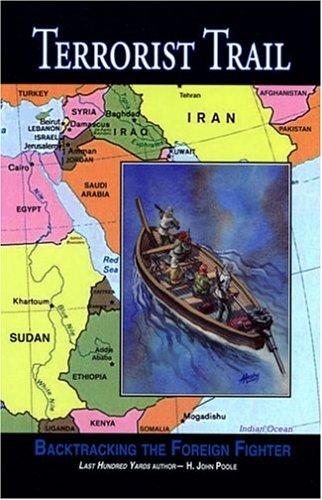
Terrorist Trail: Backtracking the Foreign Fighter

H. John Poole

★★★★★
Read Basic intel GWOT Guerrilla / COIN Middle East Strategy / theory ISBN 9780963869593

Posterity Press (NC); Illustrate · September 20, 2006

This book is about covertly penetrating the enemy heartland along the ground. At the height of the Iraq War, it was selling to Marines in the Euphrates Valley at a rate of 200 per month. That's because it helped them to seize the initiative. First, it describes the West's most effective counter-guerrilla force. This was not the British in Malaysia, but Rhodesia's Selous Scouts. Their ability to operate safely as tiny teams deep in enemy territory is the model to which all U.S. special operators should aspire. Never fond of apartheid, they regularly converted former foes into loyal members. Then, it shows how to follow enemy footprints in urban terrain. Finally, it provides a spellbinding history of "terrorism" in Africa--the most recent arena for Islamist and Communist expansion.

No cover · Amazon

The Crucible of War: The Complete Volumes

Barrie Pitt

★★★★★
Read Advanced intel WWII Middle East Strategy / theory

‘The definitive work on the Desert War.’ Manchester Evening News WAVELL’S Volume 1 of The Crucible of War trilogy covers General Wavell’s command, a period that began triumphantly with the rout of the Italian Army and ended in catastrophe with the devastating entry of Rommel into the conflict. On 11th June 1940, Mussolini declared war on Britain and France. From their colony in Libya, the Italians began invading Egypt in an attempt to expand their African Empire. Thus began the Desert War – a battle to secure critical Middle East oil supplies which would last for three years. Commander-in-Chief of the Middle East was General Sir Archibald Wavell. By 1940, and with limited resources, he was responsible for all British land forces in Egypt, the Sudan, Palestine, Transjordan and Cyprus, as well as the Army formations in British Somaliland, Aden, Iraq and along the shores of the Persian Gulf. Attack was the only form of defence and under field commander General Richard O’Connor, an immensely successful and exhilarating campaign was carried out against Marshal Graziani’s forces. The Italians were pushed back hundreds of miles and 130,000 prisoners were taken. By February 1941 nearly all Axis forces had been expelled from North Africa. It was a remarkable triumph in one of the most dramatic theatres of the Second World War. AUCHINLECK’S Volume Two of The Crucible of War trilogy covers General Auchinleck’s command — a period of disaster and defeat for the British Army, driven back towards Cairo by the Africa Korps under the tactical genius of Rommel. The book ends however with the replacing of Auchinleck by Montgomery in August 1942. Auchinleck's Command is essential reading for anyone interested in WW2, the British Army (it's strengths and weaknesses) and military leadership. MONTGOMERY AND Throughout the first half of the Second World War, control of the inhospitable North African desert was strategically vital for the Allies. In the middle of 1942, the outcome hung in the balance. Rommel and his Afrika Korps had been fought to a standstill at the first battle of Alamein and were desperately short of fuel and equipment. The next encounter between the two armies would be decisive. The scene was set for a second, and bludgeoning, encounter at El Alamein in October. It was to prove Britain’s first decisive victory of the war. Praise for the Crucible of War ‘Barrie Pitt tells this exciting history well. He has assembled a mass of information and organised it with admirable clarity. His narrative is scrupulously accurate in detail. The whole work will have great appeal for the general reader.’ Times Literary Supplement ‘Masterly and lucid in its descriptions not only of the fighting and strategy, but of the political machinations’ Sunday Telegraph ‘A magnificent book, Barrie Pitt has almost a novelist’s skill and perception of character.’ Daily Telegraph ‘Comes as close as any work yet published to being a definitive account of the battles between German and Allied armies in the Sahara.’ Financial Times Barrie Pitt (1918-2006) was well known as a military historian and editor of Purnell’s History of the Second Wor

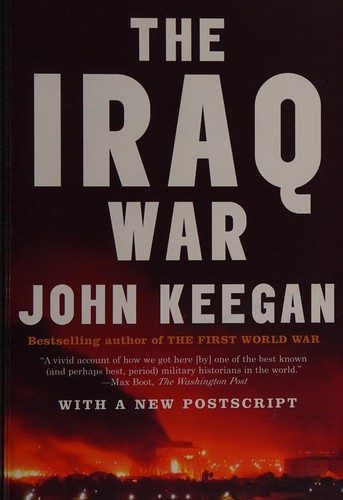
The Iraq War

John Keegan

★★★★★
Read Basic intel GWOT Middle East Strategy / theory ISBN 1400079209

Vintage Books · 2005

The 2003 Iraq war remains among the most mysterious armed conflicts of modernity. In The Iraq War , John Keegan offers a sharp and lucid appraisal of the military campaign, explaining just how the coalition forces defeated an Iraqi army twice its size and addressing such questions as whether Saddam Hussein ever possessed weapons of mass destruction and how it is possible to fight a war that is not, by any conventional measure, a war at all. Drawing on exclusive interviews with Donald Rumsfeld and General Tommy Franks, Keegan retraces the steps that led to the showdown in Iraq, from the highlights of Hussein’s murderous rule to the diplomatic crossfire that preceded the invasion. His account of the combat in the desert is unparalleled in its grasp of strategy and tactics. The result is an urgently needed and up-to-date book that adds immeasurably to our understanding of those twenty-one days of war and their long, uncertain aftermath.

The Persian Expedition

Xenophon

★★★★★
Read Middle East Biography Strategy / theory ISBN 0140440070

Penguin Books · 1972

In The Persian Expedition, Xenophon, a young Athenian noble who sought his destiny abroad, provides an enthralling eyewitness account of the attempt by a Greek mercenary army - the Ten Thousand - to help Prince Cyrus overthrow his brother and take the Persian throne. When the Greeks were then betrayed by their Persian employers, they were forced to march home through hundreds of miles of difficult terrain - adrift in a hostile country and under constant attack from the unforgiving Persians and warlike tribes. In this outstanding description of endurance and individual bravery, Xenophon, one of those chosen to lead the retreating army, provides a vivid narrative of the campaign and its aftermath, and his account remains one of the best pictures we have of Greeks confronting a 'barbarian' world.

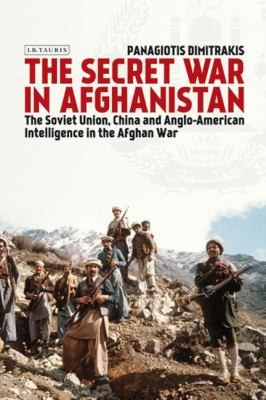
The Secret War in Afghanistan: The Soviet Union, China and Anglo-American Intelligence in the Afghan War (Library of Middle East History)

Panagiotis Dimitrakis

★★★★★
Read Basic intel Intel history Cold War Espionage GWOT China Russia / USSR Middle East Intel history ISBN 9781780764191

I.B.Tauris & Co Ltd · 2013

The Soviet invasion of Afghanistan, in support of a Marxist-Leninist government, and the subsequent nine-year conflict with the indigenous Afghan Mujahedeen was one of the bloodiest conflicts of the Cold War. Key details of the circumstances surrounding the invasion and its ultimate conclusion only months before the fall of the Berlin Wall in November 1989 have long remained unclear; it is a confidential narrative of clandestine correspondence, covert operations and failed intelligence. The Secret War in Afghanistan undertakes a full analysis of recently declassified intelligence archives in order to asses Anglo-American secret intelligence and diplomacy relating to the invasion of Afghanistan and unveil the Cold War realities behind the rhetoric. Rooted at every turn in close examination of the primary evidence, it outlines the secret operations of the CIA, MI6 and the KGB, and the full extent of the aid and intelligence from the West which armed and trained the Afghan fighters. Drawing from US, UK and Russian archives, Panagiotis Dimitrakis analyses the Chinese arms deals with the CIA, the multiple recorded intelligence failures of KGB intelligence and secret letters from the office of Margaret Thatcher to Jimmy Carter. In so doing, this study brings a new scholarly perspective to some of the most controversial events of Cold War history. Dimitrakis also outlines the full extent of China's involvement in arming the Mujahedeen, which led to the PRC effectively fighting the Soviet Union by proxy. This will be essential reading for scholars and students of the Cold War, American History and the Modern Middle East.

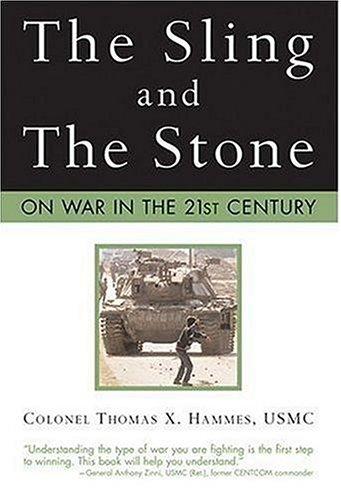
The Sling and the Stone: On War in the 21st Century

Thomas X. Hammes

★★★★★
Read Basic intel Advanced intel Military history Intel history Vietnam Cold War GWOT Guerrilla / COIN Russia / USSR Middle East Strategy / theory ISBN 9780760324073

Zenith Press · February 17, 2006

4GW (Fourth Generation Warfare) is the only kind of war America has ever lost. And we have done so three times - in Vietnam, Lebanon, and Somalia. This form of warfare has also defeated the French in Vietnam and Algeria, and the USSR in Afghanistan.As the only Goliath left in the world, we should be worried that the world's Davids have found a sling and stone that work." - Chapter 1, The Sling and the Stone: On War in the 21st Century. The War in Iraq. The War on Terror. These types of "asymmetrical" warfare are the conflicts of the 21st century - and show how difficult it is for the world's remaining superpower to battle insurgents and terrorists who will fight unconventionally in the face of superior military power. This change in military conflict may seem sudden.

No cover · Amazon

Weaving the Tangled Web: Military Deception in Large-Scale Combat Operations (Large-Scale Combat Operations Series Book 1)

Christopher M. Rein

★★★★★
Read Basic intel Military history Intel history WWII Korea Cold War GWOT Guerrilla / COIN China Russia / USSR Middle East Intel history Strategy / theory

This book is from Army University Press and is Volume 1 in it's Large-Scale Combat Operations Series. It has footnotes, maps, and pictures, and was originally published in 2018. “Since the Soviet Union’s fall in 1989, the specter of large-scale ground combat against a peer adversary was remote. During the years following, the US Army found itself increasingly called upon to lead multinational operations in the lower to middle tiers of the range of military operations and conflict continuum. The events of 11 September 2001 led to more than 15 years of intense focus on counterterrorism, counterinsurgency, and stability operations in Iraq and Afghanistan. An entire generation of Army leaders and Soldiers were culturally imprinted by this experience. We emerged as an Army more capable in limited contingency operations than at any time in our nation’s history, but the geopolitical landscape continues to shift and the risk of great power conflict is no longer a remote possibility. “While our Army focused on limited contingency operations in the Middle East and Southwest Asia, other regional and peer adversaries scrutinized US military processes and methods and adapted their own accordingly. As technology has proliferated and become accessible in even the most remote corners of the world, the US military’s competitive advantage is being challenged across all of the warfighting domains. In the last decade, we have witnessed an emergent China, a revanchist and aggressive Russia, a menacing North Korea, and a cavalier Iranian regime. Each of these adversaries seeks to change the world order in their favor and contest US strategic interests abroad. The chance for war against a peer or regional near-peer adversary has increased exponentially, and we must rapidly shift our focus to successfully compete in all domains and across the full range of military operations." Includes: Introduction: Multi-Domain Deception (Christopher M. Rein, General Editor); Chapter 1: The Belfort Ruse the American Deception plan for the battle of st. Mihiel, 1918 (Mark E. Grotelueschen); Chapter 2: From Beersheba To Megiddo British Deception Operations During The Palestine Campaign, 1917-1918; (Major Brian J. Drohan); Chapter 3: Operation Bertram British Deception At El Alamein (Gary W. Linhart); Chapter 4: Operations Barclay, Cascade, And Mincemeat Allied Deception In The Mediterranean, 1943 (Gregory S. Hospodor); Chapter 5: Operation Kreml German Strategic Deception On The Eastern Front In 1942 (Alan P. Donohue); Chapter 6: Red Star Resurgent Soviet Deception Operations At Stalingrad, 1942-1943 (First Lieutenant Kyle B. Vautrinot); Chapter 7: Operation Bagration Maskirovka At Its Height, Summer 1944 (Curtis S. King); Chapter 8: Deceive, Divert, And Delay Operation Fortitude In Support Of D-Day (Scott C. Farquhar); Chapter 9: Chinese Deception And The 1950 Intervention In The Korean War (Joseph G.D. Babb); Chapter 10: From Maneuvers To War The Egyptian Deception Plan On The Eve Of The Yom-Kippur War (Tal Tovy); Chapter 11: Target San Carlos British Deception During The Repossession Of The Falkland Islands (Steven Paget); Chapter 12: Deception In The Desert Deceiving Iraq In Operation Desert Storm (Donald P. Wright); Conclusion: The Future Of Military Deception Operations (Conrad C. Crane)

Counterinsurgency Warfare: Theory and Practice (PSI Classics of the Counterinsurgency Era)

David Galula

★★★★
Read Basic intel Vietnam GWOT Guerrilla / COIN Middle East Strategy / theory ISBN 9780275993030

Praeger Security International Paperback · August 30, 2006

This volume in the Praeger Security International (PSI) series Classics of the Counterinsurgency Era defines the laws of insurgency and outlines the strategy and tactics to combat such threats. Drawn from the observations of a French officer, David Galula, who witnessed guerrilla warfare on three continents, the book remains relevant today as American policymakers, military analysts, and members of the public look to the counterinsurgency era of the 1960s for lessons to apply to the current situation in Iraq and Afghanistan. With a new foreword by John A. Nagl, author of Counterinsurgency Lessons from Malaya and Vietnam (Praeger, 2002).

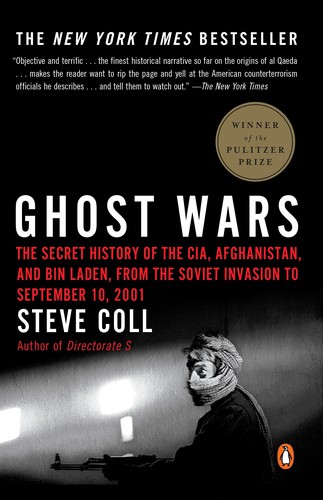
Ghost Wars: The Secret History of the CIA, Afghanistan, and Bin Laden from the Soviet Invasion to September 10, 2001

Steve Coll

★★★★
Read Basic intel Intel history Espionage GWOT Russia / USSR Middle East Intel history ISBN 0143034669

Penguin Books · 2005

The news-breaking book that has sent shockwaves through the Bush White House, Ghost Wars is the most accurate and revealing account yet of the CIA's secret involvement in al-Qaeda's evolution. It won the Pulitzer Prize in 2005.Prize-winning journalist Steve Coll has spent years reporting from the Middle East, accessed previously classified government files and interviewed senior US officials and foreign spymasters. Here he gives the full inside story of the CIA's covert funding of an Islamic jihad against Soviet forces in Afghanistan, explores how this sowed the seeds of Bin Laden's rise, traces how he built his global network and brings to life the dramatic battles within the US government over national security. Above all, he lays bare American intelligence's continual failure to grasp the rising threat of terrorism in the years leading to 9/11 - and its devastating consequences.

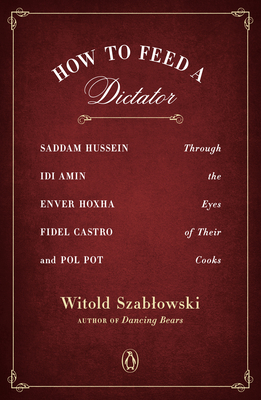
How to Feed a Dictator: Saddam Hussein, Idi Amin, Enver Hoxha, Fidel Castro, and Pol Pot Through the Eyes of Their Cooks

Witold Szabłowski

★★★★
Read Military history Middle East Intel history Biography Economics ISBN 9780143129752

Penguin Publishing Group · 2020

Anthony Bourdain meets Kapuściński in this chilling look from within the kitchen at the appetites of five of the twentieth century’s most infamous dictators, by the acclaimed author of Dancing Bears. What was Pol Pot eating while two million Cambodians were dying of hunger? Did Idi Amin really eat human flesh? And why was Fidel Castro obsessed with one particular cow? Traveling across four continents, from the ruins of Iraq to the savannahs of Kenya, Witold Szabłowski tracked down the personal chefs of five dictators known for the oppression and massacre of their own citizens—Iraq’s Saddam Hussein, Uganda’s Idi Amin, Albania’s Enver Hoxha, Cuba’s Fidel Castro, and Cambodia’s Pol Pot—and listened to their stories over sweet-and-sour soup, goat-meat pilaf, bottles of rum, and games of gin rummy. Dishy, deliciously readable, and dead serious, How to Feed a Dictator provides a knife’s-edge view of life under tyranny.

One Bullet Away: The Making of a Marine Officer

Nathaniel Fick

★★★★
Read Basic intel Military history Vietnam GWOT Middle East Biography ISBN 9780618773435

Mariner Books · September 7, 2006

If the Marines are “the few, the proud,” Recon Marines are the fewest and the proudest. Nathaniel Fick’s career begins with a hellish summer at Quantico, after his junior year at Dartmouth. He leads a platoon in Afghanistan just after 9/11 and advances to the pinnacle—Recon— two years later, on the eve of war with Iraq. His vast skill set puts him in front of the front lines, leading twenty-two Marines into the deadliest conflict since Vietnam. He vows to bring all his men home safely, and to do so he’ll need more than his top-flight education. Fick unveils the process that makes Marine officers such legendary leaders and shares his hard-won insights into the differences between military ideals and military practice, which can mock those ideals. In this deeply thoughtful account of what it’s like to fight on today’s front lines, Fick reveals the crushing pressure on young leaders in combat. Split-second decisions might have national consequences or horrible immediate repercussions, but hesitation isn’t an option. One Bullet Away never shrinks from blunt truths, but ultimately it is an inspiring account of mastering the art of war.

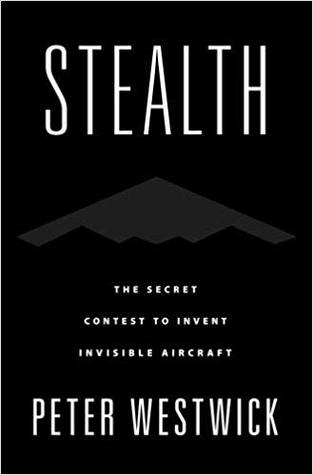
Stealth: The Secret Contest to Invent Invisible Aircraft

Peter Westwick

★★★★
Read Advanced intel Military history Intel history Cold War Russia / USSR Middle East Strategy / theory ISBN 9780190677442

Oxford University Press, Incorporated · 2020

The story behind the technology that revolutionized both aeronautics, and the course of history On a moonless night in January 1991, a dozen airplanes appeared in the skies over Baghdad. Or, rather, didn't appear. They arrived in the dark, their black outlines cloaking them from sight. More importantly, their odd, angular shapes, which made them look like flying origami, rendered them undetectable to Iraq's formidable air defenses. Stealth technology, developed during the decades before Desert Storm, had arrived. To American planners and strategists at the outset of the Cold War, this seemingly ultimate way to gain ascendance over the USSR was only a question. What if the United States could defend its airspace while at the same time send a plane through Soviet skies undetected? A craft with such capacity would have to be essentially invisible to radar - an apparently miraculous feat of physics and engineering. In Stealth, Peter Westwick unveils the process by which the impossible was achieved. At heart, Stealth is a tale of two aerospace companies, Lockheed and Northrop, and their fierce competition - with each other and with themselves - to obtain what was estimated one of the largest procurement contracts in history. Westwick's book fully explores the individual and collective ingenuity and determination required to make these planes and in the process provides a fresh view of the period leading up to the end of the Soviet Union. Taking into account the role of technology, as well as the art and science of physics and engineering, Westwick offers an engaging narrative, one that immerses readers in the race to produce a weapon that some thought might save the world, and which certainly changed it.

No cover · Amazon

The Crucible of War Book 1: Wavell's Command

Barrie Pitt

★★★★
Read Military history Logistics WWII Middle East Logistics Intel history Strategy / theory Orthodox / theology

The Crucible of War: Book 1 ‘The definitive work on the Desert War.’ Manchester Evening News Wavell’s Command is the first of the three volumes of The Crucible of War. Volume 1 of The Crucible of War trilogy covers General Wavell’s command, a period that began triumphantly with the rout of the Italian Army and ended in catastrophe with the devastating entry of Rommel into the conflict. On 11th June 1940, Mussolini declared war on Britain and France. From their colony in Libya, the Italians began invading Egypt in an attempt to expand their African Empire. Thus began the Desert War – a battle to secure critical Middle East oil supplies which would last for three years. Commander-in-Chief of the Middle East was General Sir Archibald Wavell. By 1940, and with limited resources, he was responsible for all British land forces in Egypt, the Sudan, Palestine, Transjordan and Cyprus, as well as the Army formations in British Somaliland, Aden, Iraq and along the shores of the Persian Gulf. The area for which he had accepted military command thus included nine different countries in two continents. In December 1940 in Libya, Wavell’s Western Desert Force of 36,000 men attacked the Italians across desolate and inhospitable terrain in order to keep Egypt from falling to the Axis and shield access to the Red Sea, the Persian Gulf and possibly even India from Hitler. Attack was the only form of defense and under field commander General Richard O’Connor, an immensely successful and exhilarating campaign was carried out against Marshal Graziani’s forces. The Italians were pushed back hundreds of miles and 130,000 prisoners were taken. By February 1941 nearly all Axis forces had been expelled from North Africa. It was a remarkable triumph in one of the most dramatic theatres of the Second World War which paved the way for later victories, but not immediately – as Rommel’s Afrika Korps meant Wavell, with a now weakened Western Desert Force, was ordered to send men to Greece, despite his conviction that victory was close. The tide of war was about to turn once more. PRAISE FOR THE CRUCIBLE OF WAR TRILOGY: ‘A magnificent book, Barrie Pitt has almost a novelist’s skill and perception of character.’ Daily Telegraph ‘Totally readable, Mr Pitt’s study depicts equally well the broad outlines of strategy, the confusions and hazards of the battlefield and the personalities of the generals or private soldiers fighting there.’ Oxford Times Barrie Pitt (1918-2006) was well known as a military historian and editor of Purnell’s History of the Second World War and History of the First World War. His publications include Coronel and Falkland, Churchill and the Generals and The Crucible of War, a trilogy covering the North African campaign of the Second World War. He was born in Galway and later lived near Ilminster in Somerset.

The Longest War: A History of the War on Terror and the Battles with Al Qaeda Since 9/11

Peter L. Bergen

★★★★
Read Advanced intel Military history Intel history Espionage GWOT Middle East Strategy / theory ISBN 9780743278935

Free Press · 2011

TEN YEARS HAVE PASSED since the shocking attacks on the World Trade Center, and after seven years of conflict, the last U.S. combat troops left Iraq—only to move into Afghanistan, where the ten-year-old fight the war on terror rages with no clear end in sight. In The Longest War Peter Bergen offers a comprehensive history of this war and its evolution, from the strategies devised in the wake of the 9/11 attacks to the fighting in Afghanistan, Pakistan, and beyond. Unlike any other book on this subject, here Bergen tells the story of this shifting war’s failures and successes from the perspectives of both the United States and al-Qaeda and its allies. He goes into the homes of al-Qaeda members, rooting into the source of their devotion to terrorist causes, and spends time in the offices of the major players shaping the U.S. strategic efforts in the region. At a time when many are frustrated or fatigued with what has become an enduring multigenerational conflict, this book will provide an illuminating narrative that not only traces the arc of the fight but projects its likely future. Weaving together internal documents from al-Qaeda and the U.S. offices of counterterrorism, first-person interviews with top-level jihadists and senior Washington officials, along with his own experiences on the ground in the Middle East, Bergen balances the accounts of each side, revealing how al-Qaeda has evolved since 9/11 and the specific ways the U.S. government has responded in the ongoing fight. Bergen also uncovers the strategic errors committed on both sides—the way that al-Qaeda’s bold attack on the United States on 9/11 actually undermined its objective and caused the collapse of the Taliban and the destruction of the organization’s safe haven in Afghanistan, and how al-Qaeda is actually losing the war of ideas in the Muslim world. The book also shows how the United States undermined its moral position in this war with its actions at Guantánamo and coercive interrogations—including the extraordinary rendition of Abu Omar, who was kidnapped by the CIA in Milan in 2003 and was tortured for four years in Egyptian prisons; his case represents the first and only time that CIA officials have been charged and convicted of the crime of kidnapping. In examining other strategic blunders the United States has committed, Bergen offers a scathing critique of the Clinton and Bush administrations’ inability to accurately assess and counter the al-Qaeda threat, Bush’s deeply misguided reasons for invading Iraq—including the story of how the invasion was launched based, in part, on the views of an obscure academic who put forth theories about Iraq’s involvement with al-Qaeda—and the Obama administration’s efforts in Afghanistan. At a critical moment in world history The Longest War provides the definitive account of the ongoing battle against terror.