S2 Search · Reading list

S2 Actual reading list

Books from S2 Actual on Goodreads, organized by his shelves and topic buckets (intel lists, military history, logistics, etc.). Metadata filled via Open Library.

Not official S2 Underground. Independent fan index — not affiliated with or endorsed by S2. Official hub: linktr.ee/S2_underground. S2 materials are CC BY-NC-SA 4.0.

S2 topic buckets (Goodreads)

Subjects & genres

85 books · Read · subject Strategy / theory · page 1 of 4

A History of Warfare

John Keegan

★★★★★
Read Intel history Strategy / theory ISBN 0679730826

Random House · 1994

The acclaimed author of The Face of Battle examines centures of conflict in a variety of diverse societies and cultures. "Keegan is at once the most readable and the most original of living military historians . . . A History of Warfare is perhaps the most remarkable study of warfare that has yet been written."--The New York Times Book Review.

No cover · Amazon

Colossus Reborn: The Red Army at War (Modern War Studies)

David M. Glantz

★★★★★
Read Military history WWII Russia / USSR Strategy / theory

In Stumbling Colossus , David Glantz explored why the Red Army was unprepared for the German blitzkrieg that nearly destroyed it and left more than four million of its soldiers dead by the end of 1941. In Colossus Reborn he recounts the miraculous resurrection of the Red Army, which, with a dazzling display of military strategy and operational prowess, stopped the Wehrmacht in its tracks and turned the tide of war. A major achievement in the recovery and preservation of an entire nation's military experience, Colossus Reborn is marked by Glantz's unrivaled access to and use of Soviet archival sources. This allows him to illuminate not only Russian victories in the Battles of Moscow, Stalingrad, and Kursk, but also to rescue a host of major "forgotten battles," many of which had been suppressed to preserve reputations and national pride. As he reveals in unprecedented detail, disastrous defeats vied with resounding victories throughout the early years of the conflict, as the Red Army struggled to find itself in the "Great Patriotic War." Beyond the battles themselves, Glantz also presents an in-depth portrait of the Red Army as an evolving military institution. Assessing more clearly than ever before the army's size, strength, and force structure, he provides keen insights into its doctrine, strategy, tactics, weaponry, training, officer corps, and political leadership. In the process, he puts a human face on the Red Army's commanders and soldiers, including women and those who served in units—security (NKVD), engineer, railroad, auto-transport, construction, and penal forces—that have till now remained poorly understood. The world's top authority on the Soviet military, Glantz has produced a remarkable study that adds immeasurably to our understanding of the one part of World War II that's still struggling to emerge from the shadows of history.

No cover · Amazon

Crusade: The Untold Story of the Persian Gulf War

Rick Atkinson

★★★★★
Read Basic intel Advanced intel Technical warfare Logistics Intel history Military history Middle East Logistics Strategy / theory

A definitive account of the Gulf War told by Pulitzer Prize–winning correspondent Rick Atkinson. This previously untold story of the US war with Iraq in the early 1990s, Atkinson follows the 42-day war from the first night to the final day, providing vivid accounts of bombing runs, White House strategy sessions, firefights, and bitter internal conflicts.

No cover · Amazon

Dragon Days: Time for "Unconventional" Tactics

H. John Poole

★★★★★
Read Advanced intel Vietnam Korea Guerrilla / COIN Middle East Strategy / theory

This book shows how to control a contested region with squad-sized outposts . North Vietnam and Iran have done it. Now, North Korea may try to consolidate the South with such a strategy. Scores of tiny Western outposts could do this too. After a short threat assessment, Dragon Days describes what a single U.S. rifle squad must do to safely accomplish such a mission in Asia. It will need the following Unconventional Warfare (UW) (1) some police procedure; (2) obscurely defending; (3) finding an enemy weakness; (4) making a secret approach; (5) disguising the attack; (6) precluding a counterstroke; (7) rural E&E; (8) enhancing rural terrain (9) urban E&E; and (10) enhancing urban terrain . Because of Asia's bottom-up culture, the little picture is where such an ability originates. This heavily illustrated book contains more small-unit perspective than any U.S. govt. publication. In fact, it may still constitute America's only UW tactical-technique manual .

Expeditionary Eagles: Outmaneuvering the Taliban

H. John Poole

★★★★★
Read Advanced intel GWOT Guerrilla / COIN Strategy / theory ISBN 9780981865928

Posterity Press · 2010

The Afghan War is still salvagable. For America, it has been about denying sanctuary to al-Qaeda. For local factions and governments, a traditional fund raiser--heroin--is more important. Only with less smuggling of drugs out and ordnance in, can the insurgency be limited. Both have been broken down into more easily concealable "pieces." All traffic along the 14 entrance highways must be better inspected to curtail their movement. Herein lies the most detailed study in existence of Pakistan's drug and militant madrasa networks. Also discussed is how a lone U.S. squad could--without a single artillery round or drone missile--rely on deception to defend a roadside outpost against hundreds of attacking narco-insurgents.

No cover · Amazon

Fast Tanks and Heavy Bombers: Innovation in the U.S. Army, 1917-1945

David E. Johnson

★★★★★
Read Basic intel Military history Intel history Logistics WWII Air power Armor Guerrilla / COIN Logistics Strategy / theory

The U.S. Army entered World War II unprepared. In addition, lacking Germany's blitzkrieg approach of coordinated armor and air power, the army was organized to fight two wars: one on the ground and one in the air. Previous commentators have blamed Congressional funding and public apathy for the army's unprepared state. David E. Johnson believes instead that the principal causes were internal: army culture and bureaucracy, and their combined impact on the development of weapons and doctrine. Johnson examines the U.S. Army's innovations for both armor and aviation between the world wars, arguing that the tank became a captive of the conservative infantry and cavalry branches, while the airplane's development was channeled by air power insurgents bent on creating an independent air force. He maintains that as a consequence, the tank's potential was hindered by the traditional arms, while air power advocates focused mainly on proving the decisiveness of strategic bombing, neglecting the mission of tactical support for ground troops. Minimal interaction between ground and air officers resulted in insufficient cooperation between armored forces and air forces. Fast Tanks and Heavy Bombers makes a major contribution to a new understanding of both the creation of the modern U.S. Army and the Army's performance in World War II. The book also provides important insights for future military innovation.

Genesis, Creation and Early Man: The Orthodox Christian Vision

Seraphim Rose

★★★★★
Read Strategy / theory Orthodox / theology ISBN 1887904026

Saint Herman of Alaska Brotherhood · 2000

Amidst the creation/evolution debate that is now raging, with evidence being offered for both sides, few have made use of what Fr. Seraphim Rose called "the missing evidence": the teaching of the ancient Orthodox Holy Fathers on the events of creation, the first-created world, the natures of created things, and the original nature of man. Now for the first time in the English language, this teaching has been gathered together and set forth in a thorough, detailed, and above all honest manner. Perhaps more than anyone else in our times, Fr. Seraphim Rose searched, studied, prayed and suffered to understand how the ancients noetically apprehended the creation in the light of the God-inspired book of Genesis. Having acquired their mind, he has presented to the modern world the harmonious Patristic vision of the cosmos. A vital answer to the contemporary "crisis of meaning," this book sheds startling new light on the mysteries of our origin. The Divine vision of the ancient Fathers opens up unforeseen dimensions of the creation: deeper levels of reality that cannot be reached through rational or scientific means.

History of the Peloponnesian War

Thucydides

★★★★★
Read Strategy / theory US Civil War ISBN 9780140440393

Penguin Group · 30 September 1954

A definitive and refreshingly readable new translation of Thucydides's History of the Peloponnesian War, paired with a brilliant introduction on how to read and understand Thucydides. Thucydides called his work a "possession for all time," and his History of the Peloponnesian War has been essential reading for generals and politicians for centuries. Robin Waterfield's translation of Thucydides's sweeping narrative vividly depicts the events of the war between Athens and Sparta that began in 431 BCE and would continue until 404, a conflict that embroiled not only mainland Greece but Greek states from the eastern Mediterranean and as far west as Italy and Sicily. The only extant contemporary narrative of this conflict, Thucydides's History brims with military, moral, and political reflections, offering critical commentary on challenges that still dominate our world today, from the strife of civil war to the devastation of widespread plague to the nature of political power. Thucydides died before completing the account-it ends in 410-but his legacy is timeless. One of the great masterpieces of classical Greece, The History of the Peloponnesian War offers an incisive and timely window into the conflicts of the past.

Hybrid Warfare: Fighting Complex Opponents from the Ancient World to the Present

Williamson Murray

★★★★★
Read Military history Intel history Logistics Technical warfare GWOT Guerrilla / COIN Logistics Strategy / theory ISBN 9781107026087

Cambridge University Press · 2012

Hybrid warfare has been an integral part of the historical landscape since the ancient world, but only recently have analysts incorrectly categorized these conflicts as unique. Great powers throughout history have confronted opponents who used a combination of regular and irregular forces to negate the advantage of the great powers' superior conventional military strength. As this study shows, hybrid wars are labor-intensive and long-term affairs; they are difficult struggles that defy the domestic logic of opinion polls and election cycles. Hybrid wars are also the most likely conflicts of the twenty-first century, as competitors use hybrid forces to wear down America's military capabilities in extended campaigns of exhaustion. Nine historical examples of hybrid warfare, from ancient Rome to the modern world, provide readers with context by clarifying the various aspects of conflicts and examining how great powers have dealt with them in the past.

Iron Coffins: A Personal Account of the German U-boat Battles of World War II

Herbert A. Werner

★★★★★
Read Military history WWII Naval Biography Strategy / theory ISBN 9780306811609

Da Capo Press · June 2002

The Battle of the Atlantic was one of the most savage and strategically significant campaigns of World War II: 28,000 out of 39,000 men in the German U-boat force disappeared beneath the waves. Herbert A. Werner, one of the few surviving German U-boat commanders, served on five submarines from 1941 to 1945. From the Atlantic to the Mediterranean, from the English Channel to the North Sea, he takes the reader with him through the triumphant years of 1941 and 1942, when German U-boats nearly strangled England, to the apocalyptic final years of destruction, disillusionment, and defeat.

Militant Tricks: Battlefield Ruses of the Islamic Insurgent

H. John Poole

★★★★★
Read Advanced intel GWOT Guerrilla / COIN China Middle East Strategy / theory ISBN 9780963869586

Posterity Press · October 17, 2005

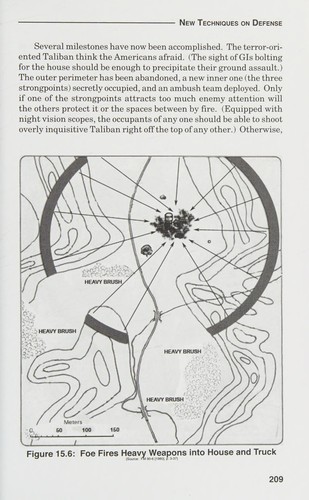
THIS BOOK WAS ON THE U.S. ARMY'S MOST PRESTIGIOUS READING LIST. Since 9/11, our deployed troops have learned many things. Though the war in Afghanistan has just ended, many of their hard-won lessons have yet to be assimilated by the Stateside bureaucracy. To help, "Militant Tricks" has recounted America's progress in Iraq and Afghanistan from the standpoint of East Asian BATTLEFIELD DECEPTION. Both countries were part of the Mongol Empire for over 200 years and thus prone to every sort of ancient Chinese illusion. "Militant Tricks" also contains the TACTICAL TECHNIQUES WITH WHICH TO COUNTER AN ISLAMIC EXTREMIST'S URBAN OFFENSIVE. While some of these nontraditional techniques were risked during the Baghdad Surge, they may soon be forgotten.

Military Innovation in the Interwar Period

Williamson Murray

★★★★★
Read Advanced intel Military history WWII Strategy / theory ISBN 9780521637602

Cambridge University Press · 1998

This study of major military innovations in the 1920s and 1930s explores differences in innovating exploitation by the seven major military powers. This volume of comparative essays investigates how and why innovation occurred or did not occur, and explains much of the strategic and operative performance of the Axis and Allies in World War II.

On Marriage and Family Life

John Chrysostom

★★★★★
Read Strategy / theory Orthodox / theology ISBN 9780913836866

St. Vladimir's Seminary Press · 2003

Christian tradition often seems to give only grudging approval to the married life, particularly its sexual aspect. In these sermons of St John Chrysostom we find an important corrective to this view. Although himself a monk, Chrysostom had a profound understanding of the needs of his congregation. Inspired by the epistles to the Corinthians and Ephesians, he discusses the reasons God instituted primarily to promote holiness of the husband and wife, and only secondarily to produce children. Chrysostom goes on to discuss sexual relations, the mutual responsibilities of marriage, and parenting. While parts of Chrysostom's sermons may seem limited to his own time, the vast majority of his advice has timeless relevance for the Christian family.

Orthodoxy and the Religion of the Future

Seraphim Rose

★★★★★
Read Strategy / theory Orthodox / theology ISBN 188790400X

Saint Herman of Alaska Brotherhood · 1999

The psychic phenomena of today are symptoms of the emergence of a new spirituality that is molding the world religion of the future—phenomena such as Yoga, Zen, Tantra, Transcendental Meditation, Guru Maharaj-ji, Hare Krishna, UFO’s, the Charismatic Movement, and Jonestown. “None of these by itself … has a crucial significance in the spiritual makeup of contemporary man; but each one in its own way typifies the striving of men today to find a new spiritual path, distinct from the Christianity of yesterday, and the sum of them together reveals a frightening unity of purpose whose final end seems just now to be looming above the horizon.” –Fr. Seraphim Rose This work is a concise and unequivocal Orthodox statement on contemporary trends; its urgent message rings loud and clear. Viewed from the foundation of patristic teaching, many of the spiritual movements of today are seen to be spiritual deceptions which have existed since the beginning of the Church—and not achievements of a “new religious consciousness.” Addressing soberly and directly the trends of pseudo-spirituality which appear enticing today, ORTHODOXY AND THE RELIGION OF THE FUTURE provides a beacon of discernment in these times of widespread deception. ORTHODOXY AND THE RELIGION OF THE FUTURE examines a broad spectrum of issues facing modern Christians—each from the perspective of the early Church Fathers. As the “New Age” is becoming a household concept and is moving into wider acceptance by mainstream society, the “new religious consciousness” can be seen progressing precisely along the lines described by the late Fr. Seraphim. Included in this edition is an epilogue that chronicles the signs of the religion of the future that have made their appearance since this book was first published.

Silent Victory: The U.S. Submarine War Against Japan

Clay Blair Jr.

★★★★★
Read Military history Intel history WWII Espionage Naval Strategy / theory ISBN 155750217X

Naval Institute Press · 2001

The long-awaited publication of Silent Victory fills a major gap in the annals of World War II. Here for the first time is the definitive history of the submarine war against Japan--the only full-scale submarine war the United States ever fought--which has for the most part been shrouded in secrecy for three decades. Only recently have the codebreakers who played such a pivotal role in the submarine war been willing to talk about their work. And only recently have the private papers, diaries, and official reports of the submarine admirals and skippers been made available to historians. In preparing to write this book, Clay Blair, Jr. combed hundreds of thousands of pages of recently declassified documents and personal letters. In individual interviews he listened to scores of skippers, staff officers, and codebreakers speaking freely. He researched in depth the development of submarine and torpedo from prewar days down to the present time. The result is a revealing and immensely exciting book that sets the submarine war within the framework of history and the overall war in the Pacific. Silent Victory takes you into the submarine war at all levels--the highest strategy sessions in Washington, the terrifying moments in a submarine trapped on the bottom for hours as depth charges explode around it, the zany efforts of a torpedo crew coaxing an emaciated chicken to lay an egg. It tells of the jealous infighting of admirals vying for power . . . of "overcautious" skippers, trained in peacetime and ill suited for war, and the mutinies they provoked . . . of the shocking torpedo scandal and the toll it took . . . of the later breed of younger skippers whose daring was so effective against Japanese shipping that the war, as Blair argues, could have ended months earlier, saving thousands of lives. The complete saga that led to victory is here supplemented by ● 37 specially drawn maps showing submarine activity in the context of every important naval engagement in the Pacific ● 32 pages of photographs ● 12 appendixes, including a calendar of all submarine war patrols ● an index of over 2,000 entries. A work of great scholarship and scope, Silent Victory is a timeless contribution to the history of World War II.

Sledgehammers: Strengths and Flaws of Tiger Tank Battalions in World War II

Christopher W. Wilbeck

★★★★★
Read Technical warfare Military history WWII Armor Russia / USSR Intel history Strategy / theory ISBN 9780971765023

The Aberjona Press · March 2004

The Tiger and King Tiger tanks gained legendary status during World War II. Numerous tank commanders attained phenomenal tallies of kills and accomplished extraordinary feats during combat in these tanks, building the legend to near mythic proportions after the war. During WWII, the Germans created eleven Army and three Waffen-SS heavy tank battalions. These heavy tank battalions were employed in nearly every part of Europe against almost every enemy of Germany. As vast in breadth and scope as the employment of Tiger battalions themselves, Sledgehammers provides historical examples and analysis of heavy tank battalions’ actions in North Africa, Normandy, Italy, the Ardennes Offensive, and numerous battles on the Eastern Front including Operation ZITADELLE/the Battle of Kursk, Operation BAGRATION, the battle of the Cherkassy Pocket, late war attacks to relieve Budapest, and many other more minor engagements. Although a great deal has already been published about Tiger tanks’ technical details and some of the units which used them, until now, very little has been written concerning the organization and tactical employment of these tanks throughout the German armed forces and across the theaters in which they were employed. Sledgehammers provides an in-depth look at heavy tank battalions’ organizations and tactics, including the tactical doctrine by which these elite units were supposed to fight and how they were actually employed on the battlefield by their commanders and crews. Even given the Tiger’s reputation, many readers will be amazed by the fearsome casualties inflicted by the crews of many of these behemoth armored vehicles. It is safe to say that no other armored vehicle of the war wreaked as much havoc among enemy formations as Tigers. Many will, however, also find it equally stunning to learn of the Tigers’ many technical and tactical vulnerabilities. Through the systematic use of extremely detailed primary source and other impeccably reliable research, Sledgehammers demolishes several major myths about Tigers in World War II. Meticulously researched and written with the perspective and respect for Tigers' crews that only a professional tanker can bring to the subject, Sledgehammers synthesizes information to provide new and definitive insights into the strengths and flaws of World War II’s most feared and legendary tanks. Prologue by famed Tiger ace Otto Carius. Epilogue by Tiger killers Viktor Iskrov and Ray Holt. 35 original maps. 42 photos.

Terrorist Trail: Backtracking the Foreign Fighter

H. John Poole

★★★★★
Read Basic intel GWOT Guerrilla / COIN Middle East Strategy / theory ISBN 9780963869593

Posterity Press (NC); Illustrate · September 20, 2006

This book is about covertly penetrating the enemy heartland along the ground. At the height of the Iraq War, it was selling to Marines in the Euphrates Valley at a rate of 200 per month. That's because it helped them to seize the initiative. First, it describes the West's most effective counter-guerrilla force. This was not the British in Malaysia, but Rhodesia's Selous Scouts. Their ability to operate safely as tiny teams deep in enemy territory is the model to which all U.S. special operators should aspire. Never fond of apartheid, they regularly converted former foes into loyal members. Then, it shows how to follow enemy footprints in urban terrain. Finally, it provides a spellbinding history of "terrorism" in Africa--the most recent arena for Islamist and Communist expansion.

The American Civil War: A Military History

John Keegan

★★★★★
Read Strategy / theory Economics US Civil War ISBN 9780091794835

Hutchinson · 2009

In this magesterial history and national bestseller, John Keegan shares his original and perceptive insights into the psychology, ideology, demographics, and economics of the American Civil War. Illuminated by Keegan’s knowledge of military history he provides a fascinating look at how command and the slow evolution of its strategic logic influenced the course of the war. Above all, The American Civil War gives an intriguing account of how the scope of the conflict combined with American geography to present a uniquely complex and challenging battle space. Irresistibly written and incisive in its analysis, this is an indispensable account of America’s greatest conflict.

No cover · Amazon

The Crucible of War Book 3: Montgomery and Alamein

Barrie Pitt

★★★★★
Read Advanced intel Intel history Military history Technical warfare Strategy / theory

The Crucible of War Book 3 ‘Masterly and lucid in its descriptions not only of the fighting and strategy, but of the political machinations’ Sunday Telegraph Throughout the first half of the Second World War, control of the inhospitable North African desert was strategically vital for the Allies. In the middle of 1942, the outcome hung in the balance. Rommel and his Afrika Korps had been fought to a standstill at the first battle of Alamein and were desperately short of fuel and equipment. But the British and Commonwealth forces were in little better shape. The next encounter between the two armies would however be decisive. Montgomery, the new Allied commander, set about rebuilding his weary army and establishing an overwhelming superiority in both men and material. The scene was set for a second, and bludgeoning, encounter at El Alamein in October. It was to prove Britain’s first decisive victory of the war. Montgomery and Alamein is the third volume of Barrie Pitt’s definitive history of the Desert War. The first and second volumes, Wavell’s Command and Auchinleck’s Command, are also published by Sharpe Books. Barrie Pitt is also the author of Zeebrugge, Coronel & Falkland the history of the Special Boat Squadron. Praise for the Crucible of War Trilogy: ‘Barrie Pitt tells this exciting history well. He has assembled a mass of information and organised it with admirable clarity. His narrative is scrupulously accurate in detail. The whole work will have great appeal for the general reader.’ Times Literary Supplement ‘The definitive work on the Desert War.’ Manchester Evening News ‘A magnificent book, Barrie Pitt has almost a novelist’s skill and perception of character.’ Daily Telegraph ‘Totally readable, Mr Pitt’s study depicts equally well the broad outlines of strategy, the confusions and hazards of the battlefield and the personalities of the generals or private soldiers fighting there.’ Oxford Times

No cover · Amazon

The Crucible of War: The Complete Volumes

Barrie Pitt

★★★★★
Read Advanced intel WWII Middle East Strategy / theory

‘The definitive work on the Desert War.’ Manchester Evening News WAVELL’S Volume 1 of The Crucible of War trilogy covers General Wavell’s command, a period that began triumphantly with the rout of the Italian Army and ended in catastrophe with the devastating entry of Rommel into the conflict. On 11th June 1940, Mussolini declared war on Britain and France. From their colony in Libya, the Italians began invading Egypt in an attempt to expand their African Empire. Thus began the Desert War – a battle to secure critical Middle East oil supplies which would last for three years. Commander-in-Chief of the Middle East was General Sir Archibald Wavell. By 1940, and with limited resources, he was responsible for all British land forces in Egypt, the Sudan, Palestine, Transjordan and Cyprus, as well as the Army formations in British Somaliland, Aden, Iraq and along the shores of the Persian Gulf. Attack was the only form of defence and under field commander General Richard O’Connor, an immensely successful and exhilarating campaign was carried out against Marshal Graziani’s forces. The Italians were pushed back hundreds of miles and 130,000 prisoners were taken. By February 1941 nearly all Axis forces had been expelled from North Africa. It was a remarkable triumph in one of the most dramatic theatres of the Second World War. AUCHINLECK’S Volume Two of The Crucible of War trilogy covers General Auchinleck’s command — a period of disaster and defeat for the British Army, driven back towards Cairo by the Africa Korps under the tactical genius of Rommel. The book ends however with the replacing of Auchinleck by Montgomery in August 1942. Auchinleck's Command is essential reading for anyone interested in WW2, the British Army (it's strengths and weaknesses) and military leadership. MONTGOMERY AND Throughout the first half of the Second World War, control of the inhospitable North African desert was strategically vital for the Allies. In the middle of 1942, the outcome hung in the balance. Rommel and his Afrika Korps had been fought to a standstill at the first battle of Alamein and were desperately short of fuel and equipment. The next encounter between the two armies would be decisive. The scene was set for a second, and bludgeoning, encounter at El Alamein in October. It was to prove Britain’s first decisive victory of the war. Praise for the Crucible of War ‘Barrie Pitt tells this exciting history well. He has assembled a mass of information and organised it with admirable clarity. His narrative is scrupulously accurate in detail. The whole work will have great appeal for the general reader.’ Times Literary Supplement ‘Masterly and lucid in its descriptions not only of the fighting and strategy, but of the political machinations’ Sunday Telegraph ‘A magnificent book, Barrie Pitt has almost a novelist’s skill and perception of character.’ Daily Telegraph ‘Comes as close as any work yet published to being a definitive account of the battles between German and Allied armies in the Sahara.’ Financial Times Barrie Pitt (1918-2006) was well known as a military historian and editor of Purnell’s History of the Second Wor

The Face of Battle: A Study of Agincourt, Waterloo and the Somme

John Keegan

★★★★★
Read Military history Intel history WWI Strategy / theory ISBN 9781844137480

Pimlico · 2004

The Face of Battle is military history from the battlefield: a look at the direct experience of individuals at 'the point of maximum danger'. It examines the physical conditions of fighting, the particular emotions and behaviour generated by battle, as well as the motives that impel soldiers to stand and fight rather than run away. In his scrupulous reassessment of three battles, John Keegan vividly conveys their reality for the participants, whether facing the arrow cloud of Agincourt, the levelled muskets of Waterloo or the steel rain of the Somme.

The Iraq War

John Keegan

★★★★★
Read Basic intel GWOT Middle East Strategy / theory ISBN 1400079209

Vintage Books · 2005

The 2003 Iraq war remains among the most mysterious armed conflicts of modernity. In The Iraq War , John Keegan offers a sharp and lucid appraisal of the military campaign, explaining just how the coalition forces defeated an Iraqi army twice its size and addressing such questions as whether Saddam Hussein ever possessed weapons of mass destruction and how it is possible to fight a war that is not, by any conventional measure, a war at all. Drawing on exclusive interviews with Donald Rumsfeld and General Tommy Franks, Keegan retraces the steps that led to the showdown in Iraq, from the highlights of Hussein’s murderous rule to the diplomatic crossfire that preceded the invasion. His account of the combat in the desert is unparalleled in its grasp of strategy and tactics. The result is an urgently needed and up-to-date book that adds immeasurably to our understanding of those twenty-one days of war and their long, uncertain aftermath.

The Orthodox Way

Kallistos Ware

★★★★★
Read Russia / USSR Strategy / theory Orthodox / theology ISBN 0913836583

St. Vladimir's Seminary Press · 1995

This book is a general account of the doctrine, worship and life of Orthodox Christians by the author of the now classic THE ORTHODOX CHURCH. It raises the basic issues of theology: God as hidden yet revealed; the problem of evil; the nature of salvation; the meaning of faith; prayer; death and what lies beyond. In so doing, it helps to fill the need for a modern Orthodox catechism. Yet this book is not a mere manual, a dry-as-dust repository of information. Throughout the book, Father Ware shows the meaning of Orthodox doctrine for the life of the individual Christian. Doctrinal issues are seen not as abstract propositions for thological debate but as affecting the whole of life. A wealth of texts drawn from theologians and spiritual writers of all ages accompanies Father Ware's presentation. They too reveal Orthodoxy not just as a system of beliefs, practices and customs but indeed as the Way.

The Persian Expedition

Xenophon

★★★★★
Read Middle East Biography Strategy / theory ISBN 0140440070

Penguin Books · 1972

In The Persian Expedition, Xenophon, a young Athenian noble who sought his destiny abroad, provides an enthralling eyewitness account of the attempt by a Greek mercenary army - the Ten Thousand - to help Prince Cyrus overthrow his brother and take the Persian throne. When the Greeks were then betrayed by their Persian employers, they were forced to march home through hundreds of miles of difficult terrain - adrift in a hostile country and under constant attack from the unforgiving Persians and warlike tribes. In this outstanding description of endurance and individual bravery, Xenophon, one of those chosen to lead the retreating army, provides a vivid narrative of the campaign and its aftermath, and his account remains one of the best pictures we have of Greeks confronting a 'barbarian' world.