S2 Search · Reading list

S2 Actual reading list

Books from S2 Actual on Goodreads, organized by his shelves and topic buckets (intel lists, military history, logistics, etc.). Metadata filled via Open Library.

Not official S2 Underground. Independent fan index — not affiliated with or endorsed by S2. Official hub: linktr.ee/S2_underground. S2 materials are CC BY-NC-SA 4.0.

S2 topic buckets (Goodreads)

Subjects & genres

42 books · Advanced intel · subject Logistics · page 2 of 2

The Wages of Destruction: The Making and Breaking of the Nazi Economy

Adam Tooze

★★★★
Read Advanced intel Logistics WWII Russia / USSR Logistics Intel history Economics ISBN 9780670038268

Viking · 2006

The idea that Nazi Germany was an unstoppable juggernaut, backed by an efficient, highly industrialized economy, has been central to all accounts of World War II. But what if this was not the case? What if the war had its roots in Germany's weakness, not its strength? This is the radical argument in this pathbreaking book, the first account of the Nazi era for the twenty-first century and our globalized world. There was no aspect of Nazi power untouched by economics, yet Adam Tooze is the first to place economics alongside race and politics at the heart of the story of the Third Reich. And America, in Tooze's view, is the true pivot for Hitler's epic challenge to a shift in the world order. Hitler intuitively understood how Germany's relative poverty in the 1930s was the result not just of global depression, but also of Germany's limited resources. He predicted the dawning of a globalized world in which Europe would be crushed by America's overwhelming power, against which he saw only one last chance: a German super-state dominating Europe. Doing what Europeans had done for three centuries, he sought to carve out an imperial hinterland through one last land grab to the east, to give him the self-sufficiency to prevail in the coming superpower competition. With the odds stacked against him, he launched his underresourced armies on their unprecedented and ultimately futile rampage across Europe. Hitler knew by the summer of 1939 that his efforts to prepare for a long war with the West were doomed to failure. Ideology drove him forward. Hitler became convinced that Jewish elements in Washington, London, and Paris were circling round him, and from 1938, the international "Jewish question: was synonymous with America in his mind. Even in the summer of 1940, at the moment of Germany's greatest triumphs, Hitler was still haunted by the looming threat of Anglo-American air and sea power, orchestrated by, he believed, the world Jewish conspiracy. Tooze also casts a stark new light on Albert Speer's role in sustaining the Third Reich to its bloody end, after the catastrophe of the Soviet invasion. Speer, Tooze proposes, was no apolitical agent of technocratic efficiency but a Hitler loyalist who would stop at nothing to continue a hopeless battle of attrition, at the cost of tens of millions of lives. The Wages of Destruction is a chilling work of originality and tremendous scholarship that will fundamentally change the way in which we view Nazi Germany and the Second World War.
Nazi Economics: Ideology, Theory, and Policy

Avraham Barkai

★★★☆☆
Read Advanced intel Logistics WWII Middle East Logistics Economics ISBN 0300044666

Yale University Press · 1990

This respected Israeli scholar argues that fundamental ideological and political goals of Nazi leaders made them receptive to revolutionary economic theories such as those of J. M. Keynes. He examines how the economic system of the Third Reich was based on an anti-liberal philosophy that proved extraordinarily effective in bringing about the 'German Economic Miracle' by 1937.

Russia's War: A History of the Soviet Effort, 1941-1945

Richard Overy

★★★☆☆
Read Advanced intel Military history Logistics WWII Cold War Russia / USSR Logistics ISBN 0140271694

Penguin Books · 1998

A penetrating and compassionate book on the most gigantic military struggle in world history.--The New York Times Book Review An extraordinary tale... Overy's engrossing book provides extensive details of teh slaughter, brutality, bitterness and destruction on the massive front from the White Sea to the flank of Asia.--Chicago Tribune The Russian war effort to defeat invading Axis powers, an effort that assembled the largest military force in recorded history and that cost the lives of more than 25 million Soviet soldiers and civilians, was the decisive factor for securing an Allied victory. Now with access to the wealth of film archives and interview material from Russia used to produce the ten-hour television documentary Russia's War, Richard Overy tackles the many persuasive questions surrounding this conflict. Was Stalin a military genius? Was the defense of Mother Russia a product of something greater than numbers of tanks and planes--of something deep within the Russian soul?

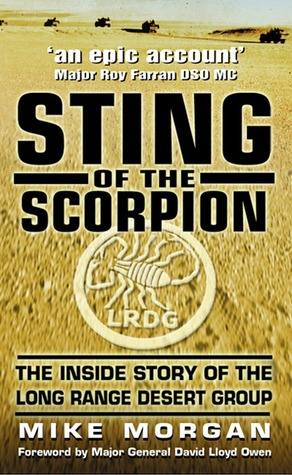
Sting of the Scorpion: The Inside Story of the Long Range Desert Group

Mike Morgan

★★★☆☆
Read Advanced intel Military history Logistics WWII Special ops Logistics ISBN 0750937041

Sutton Pub. · 2003

The Long Range Desert Group was Britain's original Special Force in the Western Desert long before the SAS burst onto the scene. Sting of the Scorpion is the exclusive, authorised, inside story of the tough LRDG raiders of the Second World War, drawn from the unpublished records of the famous force. The unit won unrivalled mastery of the North African desert in their wide-ranging and heavily armed trucks, earning grudging praise even from Rommel, the Desert Fox himself, for their skilful reconnaissance, punishing raids and powers of evasion.

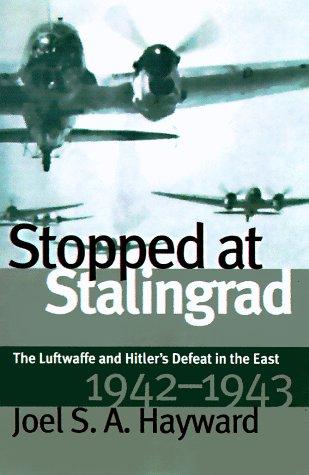
Stopped at Stalingrad: The Luftwaffe and Hitler's Defeat in the East, 1942-1943 (Modern War Studies)

Joel S.A. Hayward

★★★☆☆
Read Intel history Military history Advanced intel Logistics WWII Cold War Air power Russia / USSR Logistics Strategy / theory ISBN 9780700611461

University Press of Kansas · September 2001

By the time Hitler declared war on the Soviet Union in 1941, he knew that his military machine was running out of fuel. In response, he launched Operation Blau, a campaign designed to protect Nazi oilfields in Rumania while securing new ones in the Caucasus. All that stood in the way was Stalingrad. Most accounts of the Battle of Stalingrad have focused on the dismal fate of the German Army. Joel Hayward now chronicles Luftwaffe operations during that campaign, focusing on Hitler's use of the air force as a tactical rather than strategic weapon in close support of ground forces. He vividly details the Luftwaffe's key role as flying artillery, showing that the army relied on Luftwaffe support to a far greater degree than has been previously revealed and that its successes in the East occurred largely because of the effectiveness of that support. Hayward analyzes this major German offensive from the standpoint of cooperation between ground and air forces to attain mutually agreed objectives. He draws on diaries of both key commanders and regular airmen to recreate crucial battles and convey the drama of Hitler's frustrations and reckless leadership. Ultimately, Hayward shows, the poorly conceived strategies of Hitler, Goering, and others in Berlin doomed the efforts of air commander Wolfram von Richthofen, a courageous and resolute leader attempting to come to grips with an increasingly impossible situation. Stopped at Stalingrad is a dynamic case study in combined arms warfare that fills in many of the gaps left by other studies of the eastern war. By reconsidering the campaign in the light of a wider body of documentary sources and analyzing many previously ignored events, Hayward provides military historians and general readers a much deeper and more complete understanding of the Battle of Stalingrad and its impact on World War II.

Rhodesian SAS Combat Manual

Rhodesian Forces

★★☆☆☆
Read Basic intel Advanced intel Intel history Military history Logistics Special ops Guerrilla / COIN Logistics ISBN 9798610200842

Independently Published · 2020

The "Rhodesian SAS Combat Manual" is a significant historical look of the small unit tactics employed by the elite unit during the Rhodesian Bush War. Not only is it a glimpse back at how this unit operated, but a lot of the material is still relevant today fighting counter-insurgencies. This book covers tactical follow-ups, ambush tactics, infiltration methods and combat tracking and more!

Burma: The Longest War 1941-45

Louis Allen

unrated
Read Advanced intel Military history Logistics WWII Logistics ISBN 1842122606

Phoenix Press · 2000

Charting the whole Burma war, this book flows like a novel from the high command to the sharp end setting out a myriad of facts and considerations in a clear and coherent narrative. Ranging far beyond pure military history the story is multi-layered, combining objective analysis with a sensitive account of human reaction in the face of bitter, cruel warfare, disease and an inhospitable terrain. Military events are painstakingly detailed, and set in their political and cultural context. Equal attention is paid to both sides of the conflict and the insights made into Japanese plans and responses make the book uniquely informative, exciting and moving. 'If one had to select one book about the Burma War, this fine work is the best' Dekho, magazine of the Burma Star Association 'There will be few more thorough chronicles of World War Two's most dreaded front than Louis Allen's The Longest War' The Listener

Japan's Gestapo: Murder, Mayhem and Torture in Wartime Asia

Mark Felton

unrated
Read Military history Logistics Technical warfare Advanced intel WWII Espionage Logistics ISBN 9781844159123

Pen & Sword Military · 2009

Japan's military and secret police, the Kempetai, carried out a reign of terror against captive Asian nations, Allied POWs, and Japanese citizens throughout World War II. This history explains the origins, command structure, and role of the Kempetai apparatus, revealing their criminal and collaborationist networks. It examines biological and chemical experiments on live subjects, the gulags for POWs, and slave labor, including the so-called "comfort women," as well as their campaign of revenge after the 1942 Doolittle raid on Tokyo. Calling their actions genocide on a grand scale, the author backs up his text with firsthand testimonies from survivors.

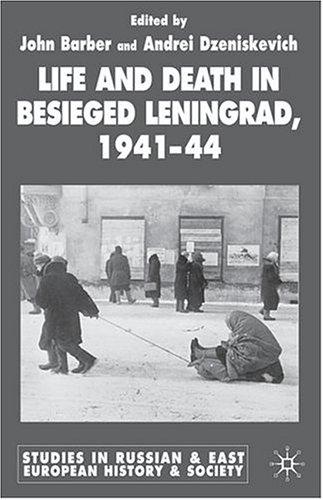
Life and Death in Besieged Leningrad, 1941-1944 (Studies in Russian and East European History and Society)

John Barber

unrated
Read Advanced intel Military history Logistics Technical warfare WWII Cold War Russia / USSR Logistics ISBN 1403901422

Palgrave Macmillan · 2005

From 1941-1944 Leningrad saw by far the largest-scale famine ever to occur in a developed society. This book examines the nature and consequences of the extreme conditions created by the German blockade of Leningrad between September 1941 and January 1944. Using declassified documents from Party and State archives in Moscow and St Petersburg and interviews with survivors, the authors have produced the most informed and detailed analysis to date of the impact of the siege on the lives and health of the people of Leningrad.

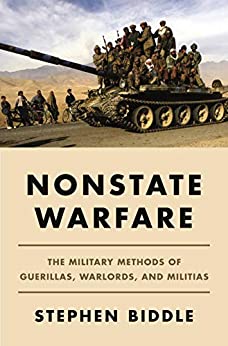
Nonstate Warfare: The Military Methods of Guerillas, Warlords, and Militias

Stephen D. Biddle

unrated
Read Advanced intel Military history Logistics Technical warfare GWOT Guerrilla / COIN Middle East Logistics ISBN 9780691207513

Princeton University Press · 2021

Since September 11th, 2001, armed nonstate actors have received increased attention and discussion from scholars, policymakers, and the military. Underlying debates about nonstate warfare and how it should be countered is one crucial assumption: that state and nonstate actors fight very differently. In Nonstate Warfare, Stephen Biddle upturns this distinction, arguing that there is actually nothing intrinsic separating state or nonstate military behavior. Through an in-depth look at nonstate military conduct, Biddle shows that many nonstate armies now fight more conventionally than many state armies. Biddle frames nonstate and state methods along a continuum, spanning Fabian-style irregular warfare to Napoleonic-style warfare involving massed armies, and he presents a systematic theory to explain any given nonstate actor's position on this spectrum. Showing that most warfare for at least a century has kept to the blended middle of the spectrum, Biddle argues that material and tribal culture explanations for nonstate warfare methods do not adequately explain observed patterns of warmaking. Investigating a range of historical examples from Lebanon and Iraq to Somalia, Croatia, and the Vietcong, Biddle demonstrates that viewing state and nonstate warfighting as mutually exclusive can lead to errors in policy and scholarship.

Ostkrieg: Hitler's War of Extermination in the East

Stephen G. Fritz

unrated
Read Basic intel Advanced intel Military history Logistics WWII Cold War Russia / USSR Logistics Economics ISBN 9780813134161

University Press of Kentucky · 2011

On June 22, 1941, Germany launched the greatest land assault in history on the Soviet Union, an attack that Adolf Hitler deemed crucial to ensure German economic and political survival. As the key theater of the war for the Germans, the eastern front consumed enormous levels of resources and accounted for 75 percent of all German casualties. Despite the significance of this campaign to Germany and to the war as a whole, few English-language publications of the last thirty-five years have addressed these pivotal events. In Ostkrieg: Hitler's War of Extermination in the East , Stephen G. Fritz bridges the gap in scholarship by incorporating historical research from the last several decades into an accessible, comprehensive, and coherent narrative. His analysis of the Russo-German War from a German perspective covers all aspects of the eastern front, demonstrating the interrelation of military events, economic policy, resource exploitation, and racial policy that first motivated the invasion. This in-depth account challenges accepted notions about World War II and promotes greater understanding of a topic that has been neglected by historians.

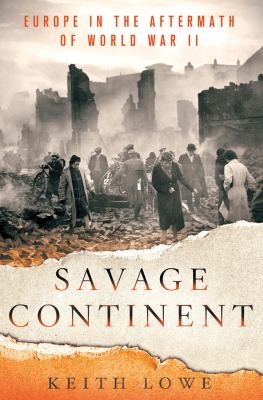
Savage Continent: Europe in the Aftermath of World War II

Keith Lowe

unrated
Read Advanced intel Military history Logistics WWII Logistics Intel history Economics US Civil War ISBN 9781250000200

St. Martin's Press · 2012

The Second World War might have officially ended in May 1945, but in reality it rumbled on for another ten years... The end of the Second World War in Europe is one of the twentieth century’s most iconic moments.  It is fondly remembered as a time when cheering crowds filled the streets, danced, drank and made love until the small hours.  These images of victory and celebration are so strong in our minds that the period of anarchy and civil war that followed has been forgotten.  Across Europe, landscapes had been ravaged, entire cities razed and more than thirty million people had been killed in the war. The institutions that we now take for granted - such as the police, the media, transport, local and national government - were either entirely absent or hopelessly compromised. Crime rates were soaring, economies collapsing, and the European population was hovering on the brink of starvation.  In Savage Continent, Keith Lowe describes a continent still racked by violence, where large sections of the population had yet to accept that the war was over.  Individuals, communities and sometimes whole nations sought vengeance for the wrongs that had been done to them during the war. Germans and collaborators everywhere were rounded up, tormented and summarily executed.  Concentration camps were reopened and filled with new victims who were tortured and starved.  Violent anti-Semitism was reborn, sparking murders and new pogroms across Europe.  Massacres were an integral part of the chaos and in some places – particularly Greece, Yugoslavia and Poland, as well as parts of Italy and France – they led to brutal civil wars. In some of the greatest acts of ethnic cleansing the world has ever seen, tens of millions were expelled from their ancestral homelands, often with the implicit blessing of the Allied authorities. Savage Continent is the story of post WWII Europe, in all its ugly detail, from the end of the war right up until the establishment of an uneasy stability across Europe towards the end of the 1940s.  Based principally on primary sources from a dozen countries, Savage Continent is a frightening and thrilling chronicle of a world gone mad, the standard history of post WWII Europe for years to come.

The German Air War in Russia

Richard R. Muller

unrated
Read Advanced intel Military history Logistics WWII Air power Russia / USSR Logistics Strategy / theory ISBN 1877853135

Nautical & Aviation Pub. Co. of America · 1992

Dr. Richard Muller has produced a new interpretation of the longest continous air offensive waged by the Luftwaffe. He delineates the shifts in German air strategy as well as the relationship between operational art, aviation technology, and the strategy of the German air force's general staff.

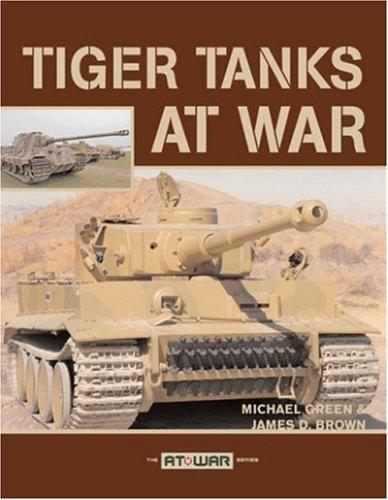
Tiger Tanks at War

Michael Green

unrated
Read Advanced intel Military history Logistics WWII Armor Russia / USSR Logistics ISBN 9780760331125

Zenith Press · February 15, 2008

The first prototype for the Tiger tank was set to be ready for Hitlers birthday on April 20, 1942. The Henschel Company, competing with Porsche, produced the superior model, and by August of that year the formidable Tiger-or Panzerkampfwagen VI Tiger Ausf. H. -was in full production. This book takes us behind the scenes with the Tiger tank, reviewing the full history, the design and mechanics, and the mixed record of this machine, which was designed to outgun its Russian counterparts. Military writer Michael Green offers a close-up account-accompanied by photographs, diagrams, and maps-of how the Tiger tank operated, how it was armed, and where it succeeded brilliantly, as well as where it failed miserably. His book fills a fascinating niche in the history of military technology, and of the impact of technology on history itself.

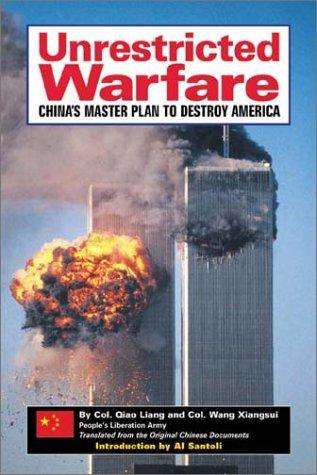
Unrestricted Warfare: China's Master Plan to Destroy America

Qiao Liang

unrated
Read Advanced intel Military history Logistics Technical warfare Espionage GWOT Cyber China Logistics Strategy / theory Economics Orthodox / theology ISBN 9780971680722

Pan American Publishing Company · August 22, 2002

As incredible as it may be to believe, three years before the Sept. 11 bombing of the World Trade Center a Chinese military manual titled Unrestricted Warfare touted such an attack – suggesting it would be difficult for the U.S. military to cope with. Here is an excerpt from Unrestricted "Whether it be the intrusions of hackers, a major explosion at the World Trade Center, or a bombing attack by bin Laden, all of these greatly exceed the frequency bandwidths understood by the American military..." Surprisingly, Osama bin Laden is mentioned frequently in this book. Now NewsMax.com is making the CIA translation of this shocking book available to all Americans. On Sept. 11, 2001, Americans and the world witnessed one of the most horrific acts ever to take place on American soil. Our media and government were quick to declare the acts of that day as simply terrorism by a nationless group known as al-Qaeda. In reading China’s military manual Unrestricted Warfare, you will learn that the events of Sept. 11 were not a random act perpetrated by independent agents. Instead, Chinese military planners believe that terrorism is just one of the many tools at the hands of nations and their terrorist allies to wage total war against the United States. You will be surprised to · The two PLA colonels who authored Unrestricted Warfare have been hailed as heroes in China since Sept. 11 · The Chinese state-run propaganda machine is cashing in on the terror attacks ... producing books, films and video games glorifying the strikes as a humbling blow against an arrogant nation. · Chinese Communist Party officials are saying that President Jiang Zemin has obsessively and gleefully watched and re-watched pictures of the aircraft crashing into the World Trade Center. · The CIA’s own translation agency reported that this book identifies the U.S. as China’s main enemy, and details how a weak nation can destroy America using unorthodox attacks – like the 9-11 attacks. · China is preparing itself and encouraging others to engage the U.S. in total war. The book is chock full of plans and strategies, from using computers, to smuggling illegal immigrants, to manipulating the stock markets, to influencing the U.S. media, to using weapons of mass destruction – all to destroy America. Recent press reports indicate that China has assisted and continues to assist militarily and economically the Taliban and al-Qaeda – even after Sept. 11. The doctrine of total war outlined in Unrestricted Warfare clearly demonstrates that the People’s Republic of China is preparing to confront the United States and our allies by conducting "asymmetrical" or multidimensional attacks on almost every aspect of our social, economic and political life. The media and Congress are keeping a lid on this book because of the implications of U.S.-China economic and trade relations. But now you can bypass them by getting a copy yourself!