S2 Search · Reading list

S2 Actual reading list

Books from S2 Actual on Goodreads, organized by his shelves and topic buckets (intel lists, military history, logistics, etc.). Metadata filled via Open Library.

Not official S2 Underground. Independent fan index — not affiliated with or endorsed by S2. Official hub: linktr.ee/S2_underground. S2 materials are CC BY-NC-SA 4.0.

S2 topic buckets (Goodreads)

Subjects & genres

14 books · Advanced intel · subject Economics

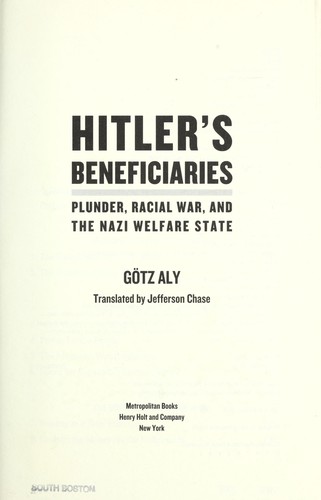
Hitler's Beneficiaries: Plunder, Racial War, and the Nazi Welfare State

Götz Aly

★★★★★
Read Advanced intel Military history Logistics WWII Logistics Economics ISBN 9780805079265

Metropolitan · 2007

A "provocative" account of great "intellectual significance," illuminating the economic workings of the Third Reich—and the reasons ordinary Germans supported the Nazi state (The New York Times Book Review) In this groundbreaking book, historian Götz Aly addresses one of modern history's greatest conundrums: How did Hitler win the allegiance of ordinary Germans? The answer is as shocking as it is persuasive: by engaging in a campaign of theft on an almost unimaginable scale—and by channeling the proceeds into generous social programs—Hitler literally "bought" his people's consent. Drawing on secret files and financial records, Aly shows that while Jews and citizens of occupied lands suffered crippling taxation, mass looting, enslavement, and destruction, most Germans enjoyed an improved standard of living. Buoyed by millions of packages soldiers sent from the front, Germans also benefited from the systematic plunder of Jewish possessions. Any qualms were swept away by waves of tax breaks and government handouts. Hitler's Beneficiaries has been hailed as "startling" by Richard Evans, and as "fascinating and important" by Christopher Browning. Above all, as Omer Bartov testifies, this remarkable book "irreversibly transforms our understanding of the Third Reich."

The Winter War: Russia's Invasion Of Finland, 1939-40

Robert Edwards

★★★★★
Read Advanced intel Basic intel Military history Intel history Logistics WWII Cold War Russia / USSR Logistics Economics ISBN 9781933648507

Pegasus Books · December 30, 2007

On November 30, 1939, the Soviet Union's Red Army invaded the young nation-state of Finland, in the full expectation of routing the small, ill-equipped Finnish army and annexing the former Russian territory by the end of the year. But Finland held out for 105 bitterly cold, fiercely combative days, until March 15, 1940, when a peace agreement ended the short, savage Winter War. At the stirring center of the story lie the resourcefulness and resolve of the Finnish people, who against all military odds—in want of ammunition, food, sleep, and troops—fought a blundering, ineptly commanded Red Army to a standstill. On March 15, they ceded to the Soviet 11 percent of their territory and 30 percent of their economic assets, but none of their national pride. The Russians meanwhile had markedly damaged their international standing and effectively ruined their military reputation-to such an extent, as this probing chapter in World War II history demonstrates, that Germany, with proud-blooded Finland as an ally, dared to launch its 1940 invasion of Russia. At the same time, though, the fiasco of the Winter War forced Stalin to acknowledge the shortcomings of the Red Army and to reform it: Germany would fall at Stalingrad in 1941. With authority, this skillfully narrated military history unfolds its story of the four-month Soviet-Finnish war and explores its consequences from London to Moscow, from Helsinki to Paris, to Washington, DC.

When Money Dies: The Nightmare of the Weimar Hyper-inflation

Adam Fergusson

★★★★★
Read Advanced intel Military history Logistics Logistics Economics ISBN 9781906964443

Old Street Publishing · Apr 23, 2010

When Money Dies is the classic history of what happens when a nation’s currency depreciates beyond recovery. In 1923, with its currency effectively worthless (the exchange rate in December of that year was one dollar to 4,200,000,000,000 marks), the German republic was all but reduced to a barter economy. Expensive cigars, artworks, and jewels were routinely exchanged for staples such as bread; a cinema ticket could be bought for a lump of coal; and a bottle of paraffin for a silk shirt. People watched helplessly as their life savings disappeared and their loved ones starved. Germany’s finances descended into chaos, with severe social unrest in its wake.Money may no longer be physically printed and distributed in the voluminous quantities of 1923. However, “quantitative easing,” that modern euphemism for surreptitious deficit financing in an electronic era, can no less become an assault on monetary discipline. Whatever the reason for a country’s deficit necessity or profligacy, unwillingness to tax or blindness to expenditure it is beguiling to suppose that if the day of reckoning is postponed economic recovery will come in time to prevent higher unemployment or deeper recession. What if it does not? Germany in 1923 provides a vivid, compelling, sobering moral tale.

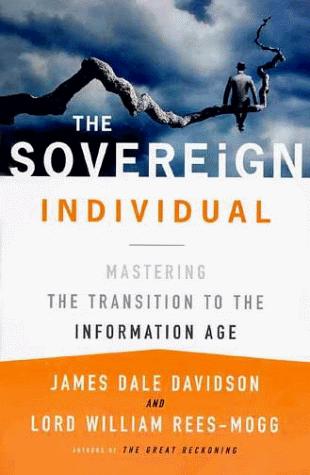
The Sovereign Individual: Mastering the Transition to the Information Age

James Dale Davidson

★★★★
Read Advanced intel Logistics Technical warfare Cold War Russia / USSR Logistics Economics US Civil War ISBN 9780684832722

Touchstone · 1999-08-26

Two renowned investment advisors and authors of the bestseller The Great Reckoning bring to light both currents of disaster and the potential for prosperity and renewal in the face of radical changes in human history as we move into the next century. The Sovereign Individual details strategies necessary for adapting financially to the next phase of Western civilization. Few observers of the late twentieth century have their fingers so presciently on the pulse of the global political and economic realignment ushering in the new millennium as do James Dale Davidson and Lord William Rees-Mogg. Their bold prediction of disaster on Wall Street in Blood in the Streets was borne out by Black Tuesday. In their ensuing bestseller, The Great Reckoning, published just weeks before the coup attempt against Gorbachev, they analyzed the pending collapse of the Soviet Union and foretold the civil war in Yugoslavia and other events that have proved to be among the most searing developments of the past few years. In The Sovereign Individual, Davidson and Rees-Mogg explore the greatest economic and political transition in centuries—the shift from an industrial to an information-based society. This transition, which they have termed "the fourth stage of human society," will liberate individuals as never before, irrevocably altering the power of government. This outstanding book will replace false hopes and fictions with new understanding and clarified values.

No cover · Amazon

The Vampire Economy: Doing Business Under Fascism

Günter Reimann

★★★★
Read Logistics Advanced intel WWII Logistics Economics

Here is a study of the actual workings of business under national socialism. Written in 1939, Reimann discusses the effects of heavy regulation, inflation, price controls, trade interference, national economic planning, and attacks on private property, and what consequences they had for human rights and economic development. This is a subject rarely discussed and for reasons that are discomforting,: as much as the left hated the social and cultural agenda of the Nazis, the economic agenda fit straight into a pattern of statism that had emerged in Europe and the United States, and in this area, the world has not be de-Nazified. This books makes for alarming reading, as one discovers the extent to which the Nazi economic agenda of totalitarian control--without finally abolishing private property--has become the norm. The author is by no means an Austrian but his study provides historical understanding and frightening look at the consequences of state economic management.

The Wages of Destruction: The Making and Breaking of the Nazi Economy

Adam Tooze

★★★★
Read Advanced intel Logistics WWII Russia / USSR Logistics Intel history Economics ISBN 9780670038268

Viking · 2006

The idea that Nazi Germany was an unstoppable juggernaut, backed by an efficient, highly industrialized economy, has been central to all accounts of World War II. But what if this was not the case? What if the war had its roots in Germany's weakness, not its strength? This is the radical argument in this pathbreaking book, the first account of the Nazi era for the twenty-first century and our globalized world. There was no aspect of Nazi power untouched by economics, yet Adam Tooze is the first to place economics alongside race and politics at the heart of the story of the Third Reich. And America, in Tooze's view, is the true pivot for Hitler's epic challenge to a shift in the world order. Hitler intuitively understood how Germany's relative poverty in the 1930s was the result not just of global depression, but also of Germany's limited resources. He predicted the dawning of a globalized world in which Europe would be crushed by America's overwhelming power, against which he saw only one last chance: a German super-state dominating Europe. Doing what Europeans had done for three centuries, he sought to carve out an imperial hinterland through one last land grab to the east, to give him the self-sufficiency to prevail in the coming superpower competition. With the odds stacked against him, he launched his underresourced armies on their unprecedented and ultimately futile rampage across Europe. Hitler knew by the summer of 1939 that his efforts to prepare for a long war with the West were doomed to failure. Ideology drove him forward. Hitler became convinced that Jewish elements in Washington, London, and Paris were circling round him, and from 1938, the international "Jewish question: was synonymous with America in his mind. Even in the summer of 1940, at the moment of Germany's greatest triumphs, Hitler was still haunted by the looming threat of Anglo-American air and sea power, orchestrated by, he believed, the world Jewish conspiracy. Tooze also casts a stark new light on Albert Speer's role in sustaining the Third Reich to its bloody end, after the catastrophe of the Soviet invasion. Speer, Tooze proposes, was no apolitical agent of technocratic efficiency but a Hitler loyalist who would stop at nothing to continue a hopeless battle of attrition, at the cost of tens of millions of lives. The Wages of Destruction is a chilling work of originality and tremendous scholarship that will fundamentally change the way in which we view Nazi Germany and the Second World War.

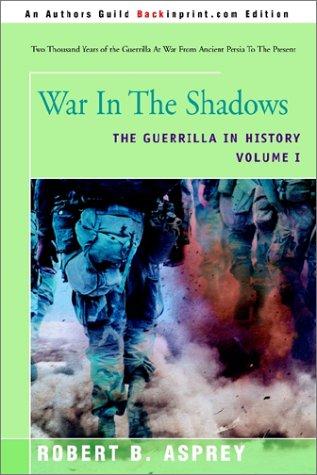
War In The Shadows: The Guerrilla in History

Robert B. Asprey

★★★★
Read Intel history Advanced intel Vietnam Cold War Guerrilla / COIN Russia / USSR Middle East Strategy / theory Economics Revolution ISBN 9780595225934

Backinprint.com · May 2002

Ranging from Alexander the Great's battles with Asiatic Scythians, through the Russian Revolution, and on up to the turmoil in the Middle East and the battle in Northern Ireland, War in the Shadows is a book of monumental sweep and singular perspective. It also contains a comprehensive and hard-hitting strategic evaluation of the Vietnam War-one of the most significant analyses of "the war that won't go away." War in the Shadows tells the story of the countries currently torn by armed insurgencies and clarifies the causes of each conflict. It provides the broad viewpoint necessary for understanding them in the historical terms of guerilla warfare. With the collapse of the Soviet Union, the end of the Cold War, and a highly unstable "new world order," this brand of rebellion has never been more powerful and potentially disruptive. As the author states in his Foreword, "For a number of reasons guerilla warfare has evolved into an ideal instrument for the realization of social-political-economic aspirations of underprivileged peoples. This is so patently true as to allow one to suggest that we may be witnessing a transition to a new era in warfare, an era as radically different as those of which followed the writings of Sun Tzu, Machiavelli, Clausewitz, and Mahan." War in the Shadows is crucial to understanding the complex challenges of our new and dangerous era.

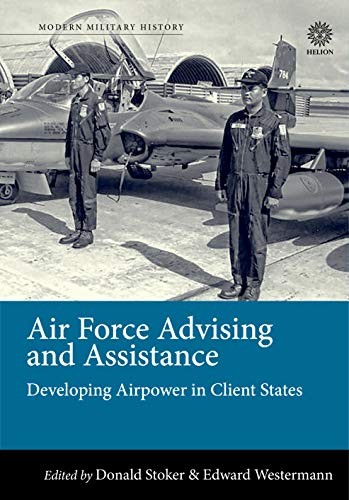
Air Force Advising and Assistance: Developing Airpower in Client States (Modern Military History)

Donald Stoker

★★★☆☆
Read Advanced intel Intel history GWOT Naval Air power Guerrilla / COIN Strategy / theory Economics ISBN 9781912390601

Helion and Company · Sep 20, 2018

The increased focus on counterinsurgency warfare and US nation building efforts after the attacks of 11 September 2001 reignited interest in military advising within military and other government organizations, private think tanks, and defense related contractors. Most studies on the subject, based on the chronological scope and numerical preponderance of ground advising missions, has quite naturally focused on these past efforts. Less attention has been given to air or naval advisory missions. This work seeks in part to help redress this current imbalance by examining a number of historical case studies dealing with air advisory efforts. By examining a number of historical case studies, this volume analyzes the challenges and opportunities inherent in aerial advisory efforts and offers insights into the methods by which such missions succeed or fail. Air advisory missions date almost to the first days of powered flight. Air advisory efforts have a number of unique elements based on the fundamental role of advanced technology and the extensive resource requirements associated with aviation operations. For example, air advisory efforts are profoundly influenced by the types of aircraft involved and the types of mission flown. Likewise, the issues of maintenance support and the infrastructure needed for these missions plays a key role in determining capabilities available to the host nation. In the case of infrastructure, airfields, fuelling depots, maintenance and repair facilities, and radar and communications equipment offer a few of the most obvious requirements to support flight operations. The early history of advisory efforts reveal issues that remain relevant today, including questions related to the nature of aerial technology to be shared, the type of training to be provided, and the potential economic benefits that might accrue to the donor nation as a result of the sale of aviation technology to the host country. In many respects, air advisory efforts raise a number of profound strategic questions for the donor nation. Among others, these questions relate to the type of technology to be shared, the nature of training to be given, the role of foreign advisors in operations, the issue of infrastructure development and auxiliary training programs, the preparation of foreign advisors for their duties, and perhaps most significantly the development of the type of capabilities required to address the host nation’s security environment. Via a series of historical case studies, this volume explores these questions and others.

Nazi Economics: Ideology, Theory, and Policy

Avraham Barkai

★★★☆☆
Read Advanced intel Logistics WWII Middle East Logistics Economics ISBN 0300044666

Yale University Press · 1990

This respected Israeli scholar argues that fundamental ideological and political goals of Nazi leaders made them receptive to revolutionary economic theories such as those of J. M. Keynes. He examines how the economic system of the Third Reich was based on an anti-liberal philosophy that proved extraordinarily effective in bringing about the 'German Economic Miracle' by 1937.

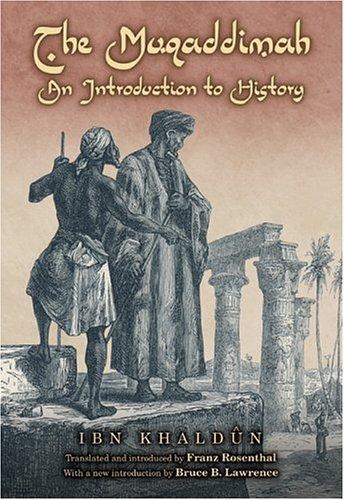
The Muqaddimah: An Introduction to History

Ibn Khaldun

★★★☆☆
Read Advanced intel Military history Middle East Biography Economics ISBN 9789953432540

Commission internationale pour la traduction des chefs-d'oeuvre · 1858

كتاب في التاريخ وعلم الإجتماع، هذا الكتاب مقدمة لكتاب في التاريخ، أراد فيه ابن خلدون أن يشرح علم التاريخ وأحوال المجتمعات وسياستها وأسباب نشوئها، فإن كان علم الإجتماع يعود لمؤسس فلا شك أنه يعود لابن خلدون، وتعتبر المقدمة مرجعا مهما لكل باحث في التاريخ أو علم الإجتماع أو باحث في أسباب نشوء الأمم أو جغرافية وحدود كثير من الدول في تلك الفترة، سواء كان الباحث عربي أو أجنبي

Failed States and Fragile Societies: A New World Disorder? (Baker Series in Peace and Conflict Stud)

Ingo Trauschweizer

unrated
Read Advanced intel Cold War Middle East Economics ISBN 9780821420904

Ohio University Press · 2014

Since the end of the Cold War, a new dynamic has arisen within the international system, one that does not conform to established notions of the state’s monopoly on war. In this changing environment, the global community must decide how to respond to the challenges posed to the state by military threats, political and economic decline, and social fragmentation. This insightful work considers the phenomenon of state failure and asks how the international community might better detect signs of state decay at an early stage and devise legally and politically legitimate responses. This collection of essays brings military and social historians into conversation with political and social scientists and former military officers. In case studies from the former Yugoslavia, Somalia, Iraq, and Colombia, the distinguished contributors argue that early intervention to stabilize social, economic, and political systems offers the greatest promise, whereas military intervention at a later stage is both costlier and less likely to succeed. Contributors : David Carment, Yiagadeesen Samy, David Curp, Jonathan House, James Carter, Vanda Felbab-Brown, Robert Rotberg, and Ken Menkhaus.

Ostkrieg: Hitler's War of Extermination in the East

Stephen G. Fritz

unrated
Read Basic intel Advanced intel Military history Logistics WWII Cold War Russia / USSR Logistics Economics ISBN 9780813134161

University Press of Kentucky · 2011

On June 22, 1941, Germany launched the greatest land assault in history on the Soviet Union, an attack that Adolf Hitler deemed crucial to ensure German economic and political survival. As the key theater of the war for the Germans, the eastern front consumed enormous levels of resources and accounted for 75 percent of all German casualties. Despite the significance of this campaign to Germany and to the war as a whole, few English-language publications of the last thirty-five years have addressed these pivotal events. In Ostkrieg: Hitler's War of Extermination in the East , Stephen G. Fritz bridges the gap in scholarship by incorporating historical research from the last several decades into an accessible, comprehensive, and coherent narrative. His analysis of the Russo-German War from a German perspective covers all aspects of the eastern front, demonstrating the interrelation of military events, economic policy, resource exploitation, and racial policy that first motivated the invasion. This in-depth account challenges accepted notions about World War II and promotes greater understanding of a topic that has been neglected by historians.

Savage Continent: Europe in the Aftermath of World War II

Keith Lowe

unrated
Read Advanced intel Military history Logistics WWII Logistics Intel history Economics US Civil War ISBN 9781250000200

St. Martin's Press · 2012

The Second World War might have officially ended in May 1945, but in reality it rumbled on for another ten years... The end of the Second World War in Europe is one of the twentieth century’s most iconic moments.  It is fondly remembered as a time when cheering crowds filled the streets, danced, drank and made love until the small hours.  These images of victory and celebration are so strong in our minds that the period of anarchy and civil war that followed has been forgotten.  Across Europe, landscapes had been ravaged, entire cities razed and more than thirty million people had been killed in the war. The institutions that we now take for granted - such as the police, the media, transport, local and national government - were either entirely absent or hopelessly compromised. Crime rates were soaring, economies collapsing, and the European population was hovering on the brink of starvation.  In Savage Continent, Keith Lowe describes a continent still racked by violence, where large sections of the population had yet to accept that the war was over.  Individuals, communities and sometimes whole nations sought vengeance for the wrongs that had been done to them during the war. Germans and collaborators everywhere were rounded up, tormented and summarily executed.  Concentration camps were reopened and filled with new victims who were tortured and starved.  Violent anti-Semitism was reborn, sparking murders and new pogroms across Europe.  Massacres were an integral part of the chaos and in some places – particularly Greece, Yugoslavia and Poland, as well as parts of Italy and France – they led to brutal civil wars. In some of the greatest acts of ethnic cleansing the world has ever seen, tens of millions were expelled from their ancestral homelands, often with the implicit blessing of the Allied authorities. Savage Continent is the story of post WWII Europe, in all its ugly detail, from the end of the war right up until the establishment of an uneasy stability across Europe towards the end of the 1940s.  Based principally on primary sources from a dozen countries, Savage Continent is a frightening and thrilling chronicle of a world gone mad, the standard history of post WWII Europe for years to come.

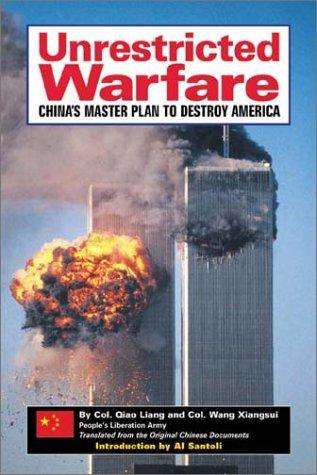
Unrestricted Warfare: China's Master Plan to Destroy America

Qiao Liang

unrated
Read Advanced intel Military history Logistics Technical warfare Espionage GWOT Cyber China Logistics Strategy / theory Economics Orthodox / theology ISBN 9780971680722

Pan American Publishing Company · August 22, 2002

As incredible as it may be to believe, three years before the Sept. 11 bombing of the World Trade Center a Chinese military manual titled Unrestricted Warfare touted such an attack – suggesting it would be difficult for the U.S. military to cope with. Here is an excerpt from Unrestricted "Whether it be the intrusions of hackers, a major explosion at the World Trade Center, or a bombing attack by bin Laden, all of these greatly exceed the frequency bandwidths understood by the American military..." Surprisingly, Osama bin Laden is mentioned frequently in this book. Now NewsMax.com is making the CIA translation of this shocking book available to all Americans. On Sept. 11, 2001, Americans and the world witnessed one of the most horrific acts ever to take place on American soil. Our media and government were quick to declare the acts of that day as simply terrorism by a nationless group known as al-Qaeda. In reading China’s military manual Unrestricted Warfare, you will learn that the events of Sept. 11 were not a random act perpetrated by independent agents. Instead, Chinese military planners believe that terrorism is just one of the many tools at the hands of nations and their terrorist allies to wage total war against the United States. You will be surprised to · The two PLA colonels who authored Unrestricted Warfare have been hailed as heroes in China since Sept. 11 · The Chinese state-run propaganda machine is cashing in on the terror attacks ... producing books, films and video games glorifying the strikes as a humbling blow against an arrogant nation. · Chinese Communist Party officials are saying that President Jiang Zemin has obsessively and gleefully watched and re-watched pictures of the aircraft crashing into the World Trade Center. · The CIA’s own translation agency reported that this book identifies the U.S. as China’s main enemy, and details how a weak nation can destroy America using unorthodox attacks – like the 9-11 attacks. · China is preparing itself and encouraging others to engage the U.S. in total war. The book is chock full of plans and strategies, from using computers, to smuggling illegal immigrants, to manipulating the stock markets, to influencing the U.S. media, to using weapons of mass destruction – all to destroy America. Recent press reports indicate that China has assisted and continues to assist militarily and economically the Taliban and al-Qaeda – even after Sept. 11. The doctrine of total war outlined in Unrestricted Warfare clearly demonstrates that the People’s Republic of China is preparing to confront the United States and our allies by conducting "asymmetrical" or multidimensional attacks on almost every aspect of our social, economic and political life. The media and Congress are keeping a lid on this book because of the implications of U.S.-China economic and trade relations. But now you can bypass them by getting a copy yourself!