S2 Search · Reading list

S2 Actual reading list

Books from S2 Actual on Goodreads, organized by his shelves and topic buckets (intel lists, military history, logistics, etc.). Metadata filled via Open Library.

Not official S2 Underground. Independent fan index — not affiliated with or endorsed by S2. Official hub: linktr.ee/S2_underground. S2 materials are CC BY-NC-SA 4.0.

S2 topic buckets (Goodreads)

Subjects & genres

2 books · Advanced intel · subject Korea

No cover · Amazon

Dragon Days: Time for "Unconventional" Tactics

H. John Poole

★★★★★
Read Advanced intel Vietnam Korea Guerrilla / COIN Middle East Strategy / theory

This book shows how to control a contested region with squad-sized outposts . North Vietnam and Iran have done it. Now, North Korea may try to consolidate the South with such a strategy. Scores of tiny Western outposts could do this too. After a short threat assessment, Dragon Days describes what a single U.S. rifle squad must do to safely accomplish such a mission in Asia. It will need the following Unconventional Warfare (UW) (1) some police procedure; (2) obscurely defending; (3) finding an enemy weakness; (4) making a secret approach; (5) disguising the attack; (6) precluding a counterstroke; (7) rural E&E; (8) enhancing rural terrain (9) urban E&E; and (10) enhancing urban terrain . Because of Asia's bottom-up culture, the little picture is where such an ability originates. This heavily illustrated book contains more small-unit perspective than any U.S. govt. publication. In fact, it may still constitute America's only UW tactical-technique manual .
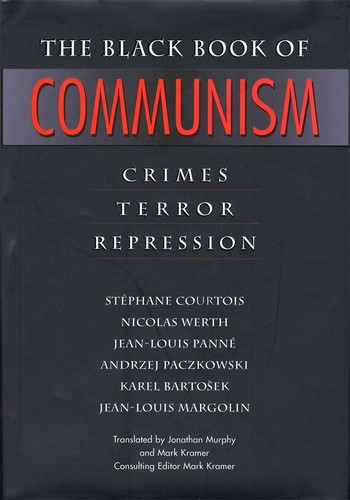
The Black Book of Communism: Crimes, Terror, Repression

Stéphane Courtois

★★★★★
Read Military history Advanced intel Vietnam Korea Cold War GWOT Guerrilla / COIN China Russia / USSR Orthodox / theology ISBN 0674076087

Harvard University Press · 1999

Already famous throughout Europe, this international bestseller plumbs recently opened archives in the former Soviet bloc to reveal the actual, practical accomplishments of Communism around the terror, torture, famine, mass deportations, and massacres. Astonishing in the sheer detail it amasses, the book is the first comprehensive attempt to catalogue and analyze the crimes of Communism over seventy years. "Revolutions, like trees, must be judged by their fruit," Ignazio Silone wrote, and this is the standard the authors apply to the Communist experience―in the China of "the Great Helmsman," Kim Il Sung's Korea, Vietnam under "Uncle Ho" and Cuba under Castro, Ethiopia under Mengistu, Angola under Neto, and Afghanistan under Najibullah. The authors, all distinguished scholars based in Europe, document Communist crimes against humanity, but also crimes against national and universal culture, from Stalin's destruction of hundreds of churches in Moscow to Ceausescu's leveling of the historic heart of Bucharest to the widescale devastation visited on Chinese culture by Mao's Red Guards. As the death toll mounts―as many as 25 million in the former Soviet Union, 65 million in China, 1.7 million in Cambodia, and on and on―the authors systematically show how and why, wherever the millenarian ideology of Communism was established, it quickly led to crime, terror, and repression. An extraordinary accounting, this book amply documents the unparalleled position and significance of Communism in the hierarchy of violence that is the history of the twentieth century.