S2 Search · Reading list

S2 Actual reading list

Books from S2 Actual on Goodreads, organized by his shelves and topic buckets (intel lists, military history, logistics, etc.). Metadata filled via Open Library.

Not official S2 Underground. Independent fan index — not affiliated with or endorsed by S2. Official hub: linktr.ee/S2_underground. S2 materials are CC BY-NC-SA 4.0.

S2 topic buckets (Goodreads)

Subjects & genres

20 books · Basic intel · subject Intel history

Agent Zigzag: A True Story of Nazi Espionage, Love, and Betrayal

Ben Macintyre

★★★★★
Read Basic intel Intel history WWII Espionage Intel history Biography ISBN 9780307353405

Harmony Books · 2007

Eddie Chapman was a charming criminal, a con man, and a philanderer. He was also one of the most remarkable double agents Britain has ever produced. Inside the traitor was a man of loyalty; inside the villain was a hero. The problem for Chapman, his spymasters, and his lovers was to know where one persona ended and the other began. In 1941, after training as a German spy in occupied France, Chapman was parachuted into Britain with a revolver, a wireless, and a cyanide pill, with orders from the Abwehr to blow up an airplane factory. Instead, he contacted MI5, the British Secret Service. For the next four years, Chapman worked as a double agent, a lone British spy at the heart of the German Secret Service who at one time volunteered to assassinate Hitler for his countrymen. Crisscrossing Europe under different names, all the while weaving plans, spreading disinformation, and, miraculously, keeping his stories straight under intense interrogation, he even managed to gain some profit and seduce beautiful women along the way. The Nazis feted Chapman as a hero and awarded him the Iron Cross. In Britain, he was pardoned for his crimes, becoming the only wartime agent to be thus rewarded. Both countries provided for the mother of his child and his mistress. Sixty years after the end of the war, and ten years after Chapman’s death, MI5 has now declassified all of Chapman’s files, releasing more than 1,800 pages of top secret material and allowing the full story of Agent Zigzag to be told for the first time. A gripping story of loyalty, love, and treachery, Agent Zigzag offers a unique glimpse into the psychology of espionage, with its thin and shifting line between fidelity and betrayal.

Argo: How the CIA & Hollywood Pulled Off the Most Audacious Rescue in History

Antonio J. Méndez

★★★★★
Read Basic intel Biographies Intel history Espionage Middle East Intel history ISBN 9780670026227

Viking · 2012

The true account of the 1979 rescue of six American hostages from Iran On November 4, 1979, Iranian militants stormed the American embassy in Tehran and held dozens of Americans hostage, sparking a 444-day ordeal and a quake in global politics that still reverberates today. Beaneath this crisis another shocking story was known by only a select few: six Americans escaped the embassy and hid within a city roiling with suspicion and fear. A top-level CIA officer named Antonio Mendez devised an ingenious yet incredibly risky plan to rescue them before they were detected. Disguising himself as a Hollywood producer, and supported by a cast of expert forgers, deep-cover CIA operatives, foreign agents, and Hollywood special-effects artists, Mendez traveled to Tehran under the guise of scouting locations for a fake science fiction film called "Argo." While pretending to find the ideal film backdrops, Mendez and a colleague succeeded in contacting the escapees and eventually smuggled them out of Iran. After more than three decades, Antonio Mendez finally details the extraordinarily complex and dangerous operation he led. A riveting story of secret identities, international intrigue, and good old-fashioned American ingenuity, Argo is the pulse-pounding account of the history-making collusion between Hollywood and high-stakes espionage.

No cover · Amazon

Double Cross: The True Story of the D-Day Spies

Ben Macintyre

★★★★★
Read Basic intel Intel history WWII Espionage Intel history

In his celebrated bestsellers Agent Zigzag and Operation Mincemeat, Ben Macintyre told the dazzling true stories of a remarkable WWII double agent and of how the Allies employed a corpse to fool the Nazis and assure a decisive victory.  In Double Cross, Macintyre returns with the untold story of the grand final deception of the war and of the extraordinary spies who achieved it.    On June 6, 1944, 150,000 Allied troops landed on the beaches of Normandy and suffered an astonishingly low rate of casualties.  D-Day was a stunning military accomplishment, but it was also a masterpiece of trickery. Operation Fortitude, which protected and enabled the invasion, and the Double Cross system, which specialized in turning German spies into double agents, deceived the Nazis into believing that the Allies would attack at Calais and Norway rather than Normandy. It was the most sophisticated and successful deception operation ever carried out, ensuring that Hitler kept an entire army awaiting a fake invasion, saving thousands of lives, and securing an Allied victory at the most critical juncture in the war.    The story of D-Day has been told from the point of view of the soldiers who fought in it, the tacticians who planned it, and the generals who led it. But this epic event in world history has never before been told from the perspectives of the key individuals in the Double Cross System. These include its director (a brilliant, urbane intelligence officer), a colorful assortment of MI5 handlers (as well as their counterparts in Nazi intelligence), and the five spies who formed Double Cross’s nucleus: a dashing  Serbian playboy, a Polish fighter-pilot, a bisexual Peruvian party girl, a deeply eccentric Spaniard with a diploma in chicken farming and a volatile Frenchwoman, whose obsessive love for her pet dog very nearly wrecked the entire plan. The D-Day spies were, without question, one of the oddest military units ever assembled, and their success depended on the delicate, dubious relationship between spy and spymaster, both German and British. Their enterprise was saved from catastrophe by a shadowy sixth spy whose heroic sacrifice is revealed here for the first time.    With the same depth of research, eye for the absurd and masterful storytelling that have made Ben Macintyre an international bestseller,  Double Cross is a captivating narrative of the spies who wove a web so intricate it ensnared Hitler’s army and carried thousands of D-Day troops across the Channel in safety.

Enigma: The Battle for the Code

Hugh Sebag-Montefiore

★★★★★
Read Basic intel Cryptography Military history Intel history WWII Espionage Naval Air power Intel history Orthodox / theology ISBN 9780471490357

Wiley · February 12, 2004

Winston Churchill called the cracking of the German Enigma Code "the secret weapon that won the war." Now, for the first time, noted British journalist Hugh-Sebag-Montefiore reveals the complete story of the breaking of the code by the Allies--the breaking that played a crucial role in the outcome of World War II. This fascinating account relates the never-before-told, hair-raising stories of the heroic British and American sailors, spies, and secret agents who faced death in order to capture vital codebooks from sinking ships and snatch them from under the noses of Nazi officials. Sebag-Montefiore also relates new details about the genesis of the code, little-known facts about how the Poles first cracked the Luftwaffe's version of the code (and then passed it along to the British), and the feverish activities at Bletchley Park. Based in part on documents recently unearthed from American and British archives--including previously confidential government files--and in part on unforgettable, firsthand accounts of surviving witnesses, Enigma unearths the stunning truth about the brilliant piece of decryption that changed history.

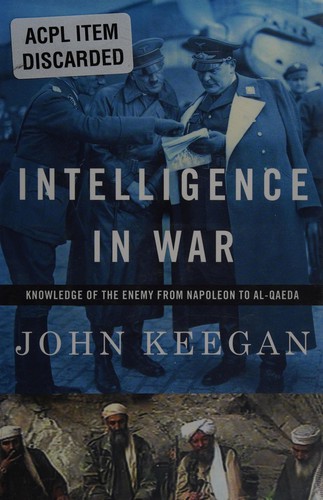
Intelligence in War: Knowledge of the Enemy from Napoleon to Al-Qaeda

John Keegan

★★★★★
Read Basic intel Intel history WWII Espionage GWOT Naval Air power Intel history Biography ISBN 0375400532

Knopf · 2003

In fiction, the spy is a glamorous figure whose secrets make or break peace, but, historically, has intelligence really been a vital step to military victories? In this breakthrough study, the preeminent war historian John Keegan goes to the heart of a series of important conflicts to develop a powerful argument about military intelligence. In his characteristically wry and perceptive prose, Keegan offers us nothing short of a new history of war through the prism of intelligence. He brings to life the split-second decisions that went into waging war before the benefit of aerial surveillance and electronic communications. The English admiral Horatio Nelson was hot on the heels of Napoleon’s fleet in the Mediterranean and never knew it, while Stonewall Jackson was able to compensate for the Confederacy’s disadvantage in firearms and manpower with detailed maps of the Appalachians. In the past century, espionage and decryption have changed the face of the Japanese surprise attack at the Battle of the Midway was thwarted by an early warning. Timely information, however, is only the beginning of the surprising and disturbing aspects of decisions that are made in war, where brute force is often more critical. Intelligence in War is a thought-provoking work that ranks among John Keegan’s finest achievements.

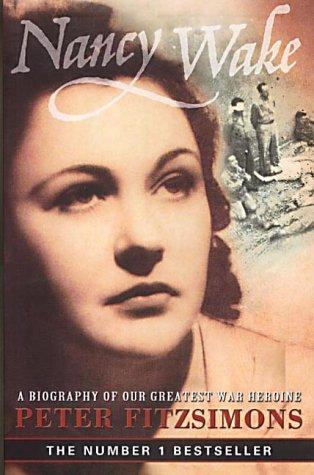
Nancy Wake

Peter FitzSimons

★★★★★
Read Biographies Basic intel Intel history WWII Espionage Special ops Intel history Biography ISBN 9780732269197

HarperCollins Publishers · 28 January 2001

'Freedom is the only thing worth living for. While I was doing that work I used to think that it didn't matter if I died, because without freedom there was no point in living'. Nancy Wake In the early 1930's, Nancy Wake was a young woman enjoying a bohemian life in Paris. By the end of the Second World War she was the Gestapo's most wanted person. As a naive, young journalist, Nancy Wake witnessed a horrific scene of Nazi violence in a Viennese street. From that moment, she declared that she would do everything in her power to rid Europe of the Nazi presence. What began as a courier job here and there, became a highly successful escape network for Allied soldiers, perfectly camouflaged by Nancy's high-society life in Marseille. Her network was soon so successful - and so notorious - that he had to flee France to escape the Gestapo who had dubbed her 'the white mouse' for her knack of slipping through its traps. But Nancy was a passionate enemy of the Nazis and refused to stay away. She trained with the British Special Operations Executive and parachuted back into France behind enemy lines. Again, this singular woman rallied to the cause, helping to lead a powerful underground fighting force, the Maquis. Supplying weapons and training the civilian Maquis, organising Allied parachute drops, cycling four hundred kilometres across a mountain range to find a new transmitting radio - nothing seemed too difficult in her fight against the Nazis. Peter FitzSimons reveals Nancy Wake's compelling story, a tale of an ordinary woman doing extraordinary things.

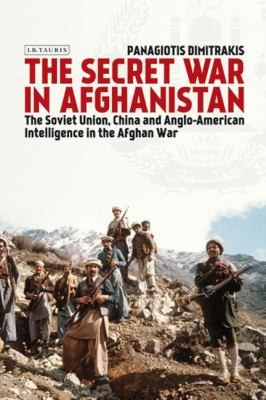
The Secret War in Afghanistan: The Soviet Union, China and Anglo-American Intelligence in the Afghan War (Library of Middle East History)

Panagiotis Dimitrakis

★★★★★
Read Basic intel Intel history Cold War Espionage GWOT China Russia / USSR Middle East Intel history ISBN 9781780764191

I.B.Tauris & Co Ltd · 2013

The Soviet invasion of Afghanistan, in support of a Marxist-Leninist government, and the subsequent nine-year conflict with the indigenous Afghan Mujahedeen was one of the bloodiest conflicts of the Cold War. Key details of the circumstances surrounding the invasion and its ultimate conclusion only months before the fall of the Berlin Wall in November 1989 have long remained unclear; it is a confidential narrative of clandestine correspondence, covert operations and failed intelligence. The Secret War in Afghanistan undertakes a full analysis of recently declassified intelligence archives in order to asses Anglo-American secret intelligence and diplomacy relating to the invasion of Afghanistan and unveil the Cold War realities behind the rhetoric. Rooted at every turn in close examination of the primary evidence, it outlines the secret operations of the CIA, MI6 and the KGB, and the full extent of the aid and intelligence from the West which armed and trained the Afghan fighters. Drawing from US, UK and Russian archives, Panagiotis Dimitrakis analyses the Chinese arms deals with the CIA, the multiple recorded intelligence failures of KGB intelligence and secret letters from the office of Margaret Thatcher to Jimmy Carter. In so doing, this study brings a new scholarly perspective to some of the most controversial events of Cold War history. Dimitrakis also outlines the full extent of China's involvement in arming the Mujahedeen, which led to the PRC effectively fighting the Soviet Union by proxy. This will be essential reading for scholars and students of the Cold War, American History and the Modern Middle East.

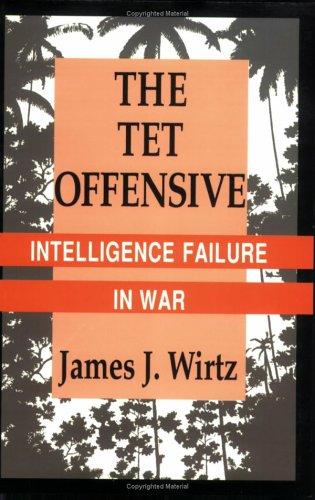
The Tet Offensive: Intelligence Failure in War

James J. Wirtz

★★★★★
Read Basic intel Vietnam Intel history Strategy / theory ISBN 9780801482090

Cornell University Press · July 1994

In this account of one of the worst intelligence failures in American history, James J. Wirtz explains why U.S. forces were surprised by the North Vietnamese Tet Offensive in 1968. Wirtz reconstructs the turning point of the Vietnam War in unprecedented detail. Drawing upon Vietcong and recently declassified U.S. sources, he is able to trace the strategy and unfolding of the Tet campaign as well as the U.S. response.

No cover · Amazon

Weaving the Tangled Web: Military Deception in Large-Scale Combat Operations (Large-Scale Combat Operations Series Book 1)

Christopher M. Rein

★★★★★
Read Basic intel Military history Intel history WWII Korea Cold War GWOT Guerrilla / COIN China Russia / USSR Middle East Intel history Strategy / theory

This book is from Army University Press and is Volume 1 in it's Large-Scale Combat Operations Series. It has footnotes, maps, and pictures, and was originally published in 2018. “Since the Soviet Union’s fall in 1989, the specter of large-scale ground combat against a peer adversary was remote. During the years following, the US Army found itself increasingly called upon to lead multinational operations in the lower to middle tiers of the range of military operations and conflict continuum. The events of 11 September 2001 led to more than 15 years of intense focus on counterterrorism, counterinsurgency, and stability operations in Iraq and Afghanistan. An entire generation of Army leaders and Soldiers were culturally imprinted by this experience. We emerged as an Army more capable in limited contingency operations than at any time in our nation’s history, but the geopolitical landscape continues to shift and the risk of great power conflict is no longer a remote possibility. “While our Army focused on limited contingency operations in the Middle East and Southwest Asia, other regional and peer adversaries scrutinized US military processes and methods and adapted their own accordingly. As technology has proliferated and become accessible in even the most remote corners of the world, the US military’s competitive advantage is being challenged across all of the warfighting domains. In the last decade, we have witnessed an emergent China, a revanchist and aggressive Russia, a menacing North Korea, and a cavalier Iranian regime. Each of these adversaries seeks to change the world order in their favor and contest US strategic interests abroad. The chance for war against a peer or regional near-peer adversary has increased exponentially, and we must rapidly shift our focus to successfully compete in all domains and across the full range of military operations." Includes: Introduction: Multi-Domain Deception (Christopher M. Rein, General Editor); Chapter 1: The Belfort Ruse the American Deception plan for the battle of st. Mihiel, 1918 (Mark E. Grotelueschen); Chapter 2: From Beersheba To Megiddo British Deception Operations During The Palestine Campaign, 1917-1918; (Major Brian J. Drohan); Chapter 3: Operation Bertram British Deception At El Alamein (Gary W. Linhart); Chapter 4: Operations Barclay, Cascade, And Mincemeat Allied Deception In The Mediterranean, 1943 (Gregory S. Hospodor); Chapter 5: Operation Kreml German Strategic Deception On The Eastern Front In 1942 (Alan P. Donohue); Chapter 6: Red Star Resurgent Soviet Deception Operations At Stalingrad, 1942-1943 (First Lieutenant Kyle B. Vautrinot); Chapter 7: Operation Bagration Maskirovka At Its Height, Summer 1944 (Curtis S. King); Chapter 8: Deceive, Divert, And Delay Operation Fortitude In Support Of D-Day (Scott C. Farquhar); Chapter 9: Chinese Deception And The 1950 Intervention In The Korean War (Joseph G.D. Babb); Chapter 10: From Maneuvers To War The Egyptian Deception Plan On The Eve Of The Yom-Kippur War (Tal Tovy); Chapter 11: Target San Carlos British Deception During The Repossession Of The Falkland Islands (Steven Paget); Chapter 12: Deception In The Desert Deceiving Iraq In Operation Desert Storm (Donald P. Wright); Conclusion: The Future Of Military Deception Operations (Conrad C. Crane)

Economics in One Lesson

Henry Hazlitt

★★★★
Read Basic intel Logistics Economics Logistics Intel history Economics Orthodox / theology ISBN 9780870004278

Blackstone Audiobooks · 1946

A million copy seller, Henry Hazlitt’s Economics in One Lesson is a classic economic primer. But it is also much more, having become a fundamental influence on modern “libertarian” economics of the type espoused by Ron Paul and others. Considered among the leading economic thinkers of the “Austrian School,” which includes Carl Menger, Ludwig von Mises, Friedrich (F.A.) Hayek, and others, Henry Hazlitt (1894-1993), was a libertarian philosopher, an economist, and a journalist. He was the founding vice-president of the Foundation for Economic Education and an early editor of The Freeman magazine, an influential libertarian publication.  Hazlitt wrote Economics in One Lesson, his seminal work, in 1946. Concise and instructive, it is also deceptively prescient and far-reaching in its efforts to dissemble economic fallacies that are so prevalent they have almost become a new orthodoxy. Many current economic commentators across the political spectrum have credited Hazlitt with foreseeing the collapse of the global economy which occurred more than 50 years after the initial publication of Economics in One Lesson. Hazlitt’s focus on non-governmental solutions, strong — and strongly reasoned — anti-deficit position, and general emphasis on free markets, economic liberty of individuals, and the dangers of government intervention make Economics in One Lesson, every bit as relevant and valuable today as it has been since publication.

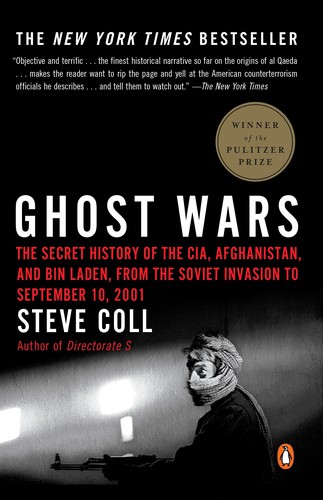
Ghost Wars: The Secret History of the CIA, Afghanistan, and Bin Laden from the Soviet Invasion to September 10, 2001

Steve Coll

★★★★
Read Basic intel Intel history Espionage GWOT Russia / USSR Middle East Intel history ISBN 0143034669

Penguin Books · 2005

The news-breaking book that has sent shockwaves through the Bush White House, Ghost Wars is the most accurate and revealing account yet of the CIA's secret involvement in al-Qaeda's evolution. It won the Pulitzer Prize in 2005.Prize-winning journalist Steve Coll has spent years reporting from the Middle East, accessed previously classified government files and interviewed senior US officials and foreign spymasters. Here he gives the full inside story of the CIA's covert funding of an Islamic jihad against Soviet forces in Afghanistan, explores how this sowed the seeds of Bin Laden's rise, traces how he built his global network and brings to life the dramatic battles within the US government over national security. Above all, he lays bare American intelligence's continual failure to grasp the rising threat of terrorism in the years leading to 9/11 - and its devastating consequences.

No cover · Amazon

Black Flags: The Rise of ISIS

Joby Warrick

★★★☆☆
Read Basic intel Intel history Espionage GWOT Guerrilla / COIN Middle East Intel history US Civil War

Pulitzer Prize-winning reporter Joby Warrick reveals how the strain of militant Islam now raising its banner across Iraq and Syria spread from a remote Jordanian prison with the unwitting aid of American military intervention.      When he succeeded his father in 1999, King Abdullah of Jordan released a batch of political prisoners in the hopes of smoothing his transition to power. Little did he know that among those released was Abu Musab al-Zarqawi, a man who would go on to become a terrorist mastermind too dangerous even for al-Qaeda and give rise to an Islamist movement bent on dominating the Middle East.      Zarqawi began by directing hotel bombings and assassinations in Jordan from a base in northern Iraq, but it was the American invasion of that country in 2003 that catapulted him to the head of a vast insurgency. By identifying him as the link between Saddam and bin Laden, the CIA inadvertently created a monster. Like-minded radicals saw him as a hero resisting the infidel occupiers and rallied to his cause. Their wave of brutal beheadings and suicide bombings continued for years until Jordanian intelligence provided the Americans with the crucial intelligence needed to eliminate Zarqawi in a 2006 airstrike.      But his movement endured, first called al-Qaeda in Iraq, then renamed Islamic State of Iraq and Syria, or ISIS, seeking refuge in unstable, ungoverned pockets on the Iraq-Syria border. And as the Syrian civil war broke out in 2011, ISIS seized its chance to pursue Zarqawi's dream of a sweeping, ultra-conservative Islamic caliphate.       Drawing on unique access to CIA and Jordanian sources, Joby Warrick weaves together heart-pounding, moment-by-moment operational details with overarching historical perspectives to reveal the long trajectory of today's most dangerous Islamic extremist threat. From the Hardcover edition.

No cover · Amazon

Extreme Ownership: How U.S. Navy SEALs Lead and Win

Jocko Willink

★★★☆☆
Read Basic intel Military history Special ops Naval Middle East Intel history

The #1 New York Times bestseller Sent to the most violent battlefield in Iraq, Jocko Willink and Leif Babin’s SEAL task unit faced a seemingly impossible help U.S. forces secure Ramadi, a city deemed “all but lost.” In gripping firsthand accounts of heroism, tragic loss, and hard-won victories in SEAL Team Three’s Task Unit Bruiser, they learned that leadership―at every level―is the most important factor in whether a team succeeds or fails.Willink and Babin returned home from deployment and instituted SEAL leadership training that helped forge the next generation of SEAL leaders. After departing the SEAL Teams, they launched Echelon Front, a company that teaches these same leadership principles to businesses and organizations. From promising startups to Fortune 500 companies, Babin and Willink have helped scores of clients across a broad range of industries build their own high-performance teams and dominate their battlefields. Now, detailing the mind-set and principles that enable SEAL units to accomplish the most difficult missions in combat, Extreme Ownership shows how to apply them to any team, family or organization. Each chapter focuses on a specific topic such as Cover and Move, Decentralized Command, and Leading Up the Chain, explaining what they are, why they are important, and how to implement them in any leadership environment. A compelling narrative with powerful instruction and direct application, Extreme Ownership revolutionizes business management and challenges leaders everywhere to fulfill their ultimate lead and win.

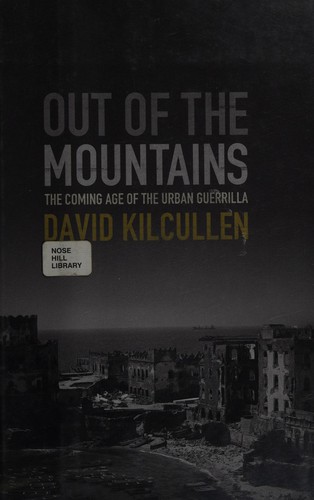
Out of the Mountains: The Coming Age of the Urban Guerrilla

David Kilcullen

★★☆☆☆
Read Basic intel GWOT Guerrilla / COIN Middle East Intel history Strategy / theory ISBN 9780199737505

Oxford University Press · 2013

When Americans think of modern warfare, what comes to mind is the US army skirmishing with terrorists and insurgents in the mountains of Afghanistan. But the face of global conflict is ever-changing. In Out of the Mountains , David Kilcullen, one of the world's leading experts on current and future conflict, offers a groundbreaking look at what may happen after today's wars end. This is a book about future conflicts and future cities, and about the challenges and opportunities that four powerful megatrends--population, urbanization, coastal settlement, and connectedness--are creating across the planet. And it is about what cities, communities and businesses can do to prepare for a future in which all aspects of human society--including, but not limited to, conflict, crime and violence--are changing at an unprecedented pace. Kilcullen argues that conflict is increasingly likely to occur in sprawling coastal cities, in peri-urban slum settlements that are enveloping many regions of the Middle East, Africa, Latin America and Asia, and in highly connected, electronically networked settings. He suggests that cities, rather than countries, are the critical unit of analysis for future conflict and that resiliency, not stability, will be the key objective. Ranging across the globe--from Kingston to Mogadishu to Lagos to Benghazi to Mumbai--he offers a unified theory of "competitive control" that explains how non-state armed groups such as drug cartels, street gangs, and warlords draw their strength from local populations, providing useful ideas for dealing with these groups and with diffuse social conflicts in general. His extensive fieldwork on the ground in a series of urban conflicts suggests that there will be no military solution for many of the struggles we will face in the future. We will need to involve local people deeply to address problems that neither outsiders nor locals alone can solve, drawing on the insight only locals can bring, together with outsider knowledge from fields like urban planning, systems engineering, renewable energy, conflict resolution and mediation. This deeply researched and compellingly argued book provides an invaluable roadmap to a future that will increasingly be crowded, urban, coastal, connected--and dangerous.

No cover · Amazon

Huế 1968: A Turning Point of the American War in Vietnam

Mark Bowden

unrated
Read Advanced intel Basic intel Military history Intel history WWII Vietnam Intel history Strategy / theory

In the early hours of January 31, 1968, the North Vietnamese launched over one hundred attacks across South Vietnam in what would become known as the Tet Offensive. The lynchpin of Tet was the capture of Hue, Vietnam?s intellectual and cultural capital, by 10,000 National Liberation Front troops who descended from hidden camps and surged across the city of 140,000. Within hours the entire city was in their hands save for two small military outposts. American commanders refused to believe the size and scope of the Front?s presence, ordering small companies of marines against thousands of entrenched enemy troops. After several futile and deadly days, Lieutenant Colonel Ernie Cheatham would finally come up with a strategy to retake the city, block by block and building by building, in some of the most intense urban combat since World War II. With unprecedented access to war archives in the U.S. and Vietnam and interviews with participants from both sides, Bowden narrates each stage of this crucial battle through multiple viewpoints. Played out over 24 days and ultimately costing 10,000 lives, the Battle of Hue was by far the bloodiest of the entire war. When it ended, the American debate was never again about winning, only about how to leave. Hue 1968 is a gripping and moving account of this pivotal moment.

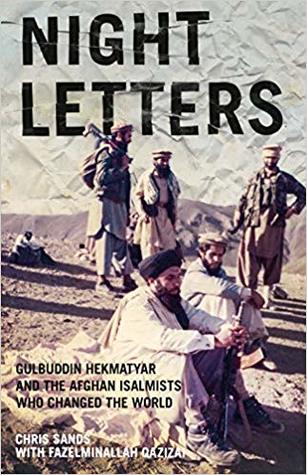
Night Letters: Gulbuddin Hekmatyar and the Afghan Islamists Who Changed the World

Chris Sands

unrated
Read Advanced intel Basic intel Biographies Intel history Military history GWOT Guerrilla / COIN Russia / USSR Intel history Biography Strategy / theory ISBN 9781787381964

C. Hurst and Company (Publishers) Limited · 2019

In 1969, several young men met on a rainy night in Kabul to form an Islamist student group. Their aim was laid out in a simple typewritten statement: to halt the spread of Soviet and American influence in Afghanistan. They went on to change the world. 'Night Letters' tells the extraordinary story of the group’s most notorious member, Gulbuddin Hekmatyar, and the guerrilla organisation he came to lead, Hizb-e Islami. By the late 1980s, tens of thousands were drawn to Hekmatyar’s vision of a radical Islamic state that would sow unrest from Kashmir to Jerusalem. His doctrine of violent global jihad culminated in 9/11 and the birth of ISIS, yet he never achieved his dream of ruling Afghanistan. The peace deal he signed with Kabul in 2016 was yet another controversial twist in an astonishing life. Sands and Qazizai delve into the secret history of Hekmatyar and Hizb-e Islami: their wars against Russian and American troops, and their bloody and bitter feuds with domestic enemies. Based on hundreds of exclusive interviews carried out across the region and beyond, this is the definitive account of the most important, yet poorly understood, international Islamist movement of the last fifty years.

The Fighting Bunch: The Battle of Athens and How World War II Veterans Won the Only Successful Armed Rebellion Since the Revolution

Chris DeRose

unrated
Read Basic intel Military history Technical warfare WWII Guerrilla / COIN Intel history ISBN 9781250266194

St. Martin's Press · Nov 03, 2020

The incredible, untold story of the WWII veterans who destroyed a corrupt political machine―the only successful armed rebellion on US soil since the War of Independence. They fought for freedom abroad and returned to find that they had lost it at home. A corrupt political machine was in charge, kept in power by violence and stolen elections - the worst allegations of vote fraud ever brought to the attention of the Department of Justice, according to the Attorney General. The GIs formed a nonpartisan, all-veteran ticket. On Election Day, the GIs and their supporters found themselves assaulted, intimidated, arrested, and even shot. A small band of veterans - the Fighting Bunch - armed themselves and marched on the jail to demand an honest count. The sheriff and his men refused. These men who thought they had seen the last of war returned to the battlefield, one last time. This episode in U.S. history has never been more relevant, but has never been fully told. At the time of the rebellion, national news outlets jammed the phone lines into town, asking questions before the shooting had stopped. Journalists beat a path to Athens from across the country. Hollywood came calling, but the people of McMinn County had moved on. After years of research, including exclusive interviews with the remaining witnesses, archival radio broadcast and interview tapes, scrapbooks, letters, and diaries, author Chris DeRose has reconstructed one of the seminal―yet untold―events in American election history.

The Secret War For The Union: The Untold Story of Military Intelligence in the Civil War – How Intelligence Shaped Victory, Defeat, and the Decisions of Commanders

Edwin C. Fishel

unrated
Read Basic intel Intel history Espionage Intel history US Civil War ISBN 9780395901366

Mariner Books · June 22, 1998

Most histories of the Civil War explain victory and defeat in terms of the skill of commanders and their troops. Intelligence records disappeared after the war, and thus a critically important element has largely been ignored. Fishel has unearthed substantial collections of such records, and his "intelligence explanation" radically alters history's understanding of the campaigns. The Secret War for the Union is one of the most important Civil War works ever published.

Unmanned: Drones, Data, and the Illusion of Perfect Warfare

William M. Arkin

unrated
Read Basic intel Cryptography Intel history Espionage Intel history ISBN 9780316323352

Little, Brown and Company · 2015

Unmanned is an in-depth examination of why seemingly successful wars never seem to end. The problem centers on drones, now accumulated in the thousands, the front end of a spying and killing machine that is disconnected from either security or safety. Drones, however, are only part of the problem. William Arkin shows that security is actually undermined by an impulse to gather as much data as possible, the appetite and the theory both skewed towards the notion that no amount is too much. And yet the very endeavor of putting fewer human in potential danger places everyone in greater danger. Wars officially end, but the Data Machine lives on forever. Throughout his career, Arkin has exposed powerful secrets of so-called national security and intelligence. Now he continues that tradition. The most alarming book about warfare in years, Unmanned is essential reading for anyone who cares about the future of mankind.