S2 Search · Reading list

S2 Actual reading list

Books from S2 Actual on Goodreads, organized by his shelves and topic buckets (intel lists, military history, logistics, etc.). Metadata filled via Open Library.

Not official S2 Underground. Independent fan index — not affiliated with or endorsed by S2. Official hub: linktr.ee/S2_underground. S2 materials are CC BY-NC-SA 4.0.

S2 topic buckets (Goodreads)

Subjects & genres

7 books · Biographies · subject Espionage

Argo: How the CIA & Hollywood Pulled Off the Most Audacious Rescue in History

Antonio J. Méndez

★★★★★
Read Basic intel Biographies Intel history Espionage Middle East Intel history ISBN 9780670026227

Viking · 2012

The true account of the 1979 rescue of six American hostages from Iran On November 4, 1979, Iranian militants stormed the American embassy in Tehran and held dozens of Americans hostage, sparking a 444-day ordeal and a quake in global politics that still reverberates today. Beaneath this crisis another shocking story was known by only a select few: six Americans escaped the embassy and hid within a city roiling with suspicion and fear. A top-level CIA officer named Antonio Mendez devised an ingenious yet incredibly risky plan to rescue them before they were detected. Disguising himself as a Hollywood producer, and supported by a cast of expert forgers, deep-cover CIA operatives, foreign agents, and Hollywood special-effects artists, Mendez traveled to Tehran under the guise of scouting locations for a fake science fiction film called "Argo." While pretending to find the ideal film backdrops, Mendez and a colleague succeeded in contacting the escapees and eventually smuggled them out of Iran. After more than three decades, Antonio Mendez finally details the extraordinarily complex and dangerous operation he led. A riveting story of secret identities, international intrigue, and good old-fashioned American ingenuity, Argo is the pulse-pounding account of the history-making collusion between Hollywood and high-stakes espionage.
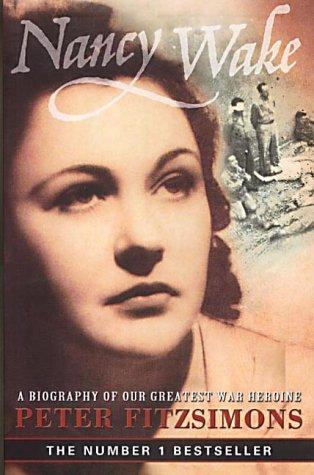
Nancy Wake

Peter FitzSimons

★★★★★
Read Biographies Basic intel Intel history WWII Espionage Special ops Intel history Biography ISBN 9780732269197

HarperCollins Publishers · 28 January 2001

'Freedom is the only thing worth living for. While I was doing that work I used to think that it didn't matter if I died, because without freedom there was no point in living'. Nancy Wake In the early 1930's, Nancy Wake was a young woman enjoying a bohemian life in Paris. By the end of the Second World War she was the Gestapo's most wanted person. As a naive, young journalist, Nancy Wake witnessed a horrific scene of Nazi violence in a Viennese street. From that moment, she declared that she would do everything in her power to rid Europe of the Nazi presence. What began as a courier job here and there, became a highly successful escape network for Allied soldiers, perfectly camouflaged by Nancy's high-society life in Marseille. Her network was soon so successful - and so notorious - that he had to flee France to escape the Gestapo who had dubbed her 'the white mouse' for her knack of slipping through its traps. But Nancy was a passionate enemy of the Nazis and refused to stay away. She trained with the British Special Operations Executive and parachuted back into France behind enemy lines. Again, this singular woman rallied to the cause, helping to lead a powerful underground fighting force, the Maquis. Supplying weapons and training the civilian Maquis, organising Allied parachute drops, cycling four hundred kilometres across a mountain range to find a new transmitting radio - nothing seemed too difficult in her fight against the Nazis. Peter FitzSimons reveals Nancy Wake's compelling story, a tale of an ordinary woman doing extraordinary things.

Perfect Spy: The Incredible Double Life of Pham Xuan An - Time Magazine Reporter and Vietnamese Communist Agent

Larry Berman

★★★★
Read Advanced intel Biographies Intel history Vietnam Espionage Biography Strategy / theory ISBN 9780060888381

Collins · April 24, 2007

During the Vietnam War, Time reporter Pham Xuan An befriended everyone who was anyone in Saigon, including American journalists such as David Halberstam and Neil Sheehan, the CIA's William Colby, and the legendary Colonel Edward Lansdale—not to mention the most influential members of the South Vietnamese government and army. None of them ever guessed that he was also providing strategic intelligence to Hanoi, smuggling invisible ink messages into the jungle inside egg rolls. His early reports were so accurate that General Giap joked, "We are now in the U.S. war room." For more than twenty years, An lived a dangerous lie—and no one knew it because he was a master of both his jobs. After the war, An was named a Hero of the People's Army and was promoted to general—one of only two intelligence officers to ever achieve that rank. In Perfect Spy, Larry Berman, who An considered his official American biographer, chronicles the extraordinary life of one of the twentieth century's most fascinating spies. In doing so, he offers a new perspective on a war that continues to haunt us.

No cover · Amazon

Brother Number One: A Political Biography of Pol Pot

David P. Chandler

★★★☆☆
Read Biographies WWII Vietnam Espionage Guerrilla / COIN Biography US Civil War

In the tragic recent history of Cambodia—a past scarred by a long occupation by Vietnamese forces and by the preceding three-year reign of terror by the brutal Khmer Rouge—no figure looms larger or more ominously than that of Pol Pot. As secretary of the Central Committee of the Communist Party of Kampuchea (CPK) since 1962 and as prime minister of Democratic Kampuchea (DK), he has been widely blamed for trying to destroy Cambodian society. By implementing policies whose effects were genocidal, he oversaw the deaths of more than one million of his nation’s people.The political career of Saloth Sar, better known by his nom de guerre Pol Pot, forms a critical but largely inaccessible portion of twentieth-century Cambodian history. What we know about his life is sketchy: a comfortable childhood, three years of study in France, and a short career as a schoolteacher preceded several years—spent mostly in hiding—as a guerrilla and the commander of the victorious army in Cambodia’s civil war. His career reached a climax when he and his associates, coming to power, attempted to transform their country along lines more radical than any attempted by a modern regime. Driven into hiding in 1979 by invading Vietnamese forces, Pol Pot maintained his leadership of a Khmer Rouge guerrilla army in exile, remaining a power and a threat.In this political biography, David P. Chandler throws light on the shadowy figure of Pol Pot. Basing his study on interviews and on a wide range of sources in English, Cambodian, and French, the author illuminates the ideas and behavior of this enigmatic man and his entourage against the background of post–World War II events, providing a key to understanding this horrific, pivotal period of Cambodian history. In this revised edition, Chandler provides new information on the state of Cambodia and the Khmer Rouge following the death of Pol Pot in 1997.

Hirohito and the Making of Modern Japan

Herbert P. Bix

unrated
Read Biographies Military history WWII Espionage China Russia / USSR Biography Strategy / theory ISBN 9780060931308

Harper Perennial · September 4, 2001

Winner of the Pulitzer PrizeIn this groundbreaking biography of the Japanese emperor Hirohito, Herbert P. Bix offers the first complete, unvarnished look at the enigmatic leader whose sixty-three-year reign ushered Japan into the modern world. Never before has the full life of this controversial figure been revealed with such clarity and vividness. Bix shows what it was like to be trained from birth for a lone position at the apex of the nation's political hierarchy and as a revered symbol of divine status. Influenced by an unusual combination of the Japanese imperial tradition and a modern scientific worldview, the young emperor gradually evolves into his preeminent role, aligning himself with the growing ultranationalist movement, perpetuating a cult of religious emperor worship, resisting attempts to curb his power, and all the while burnishing his image as a reluctant, passive monarch. Here we see Hirohito as he truly was: a man of strong will and real authority. Supported by a vast array of previously untapped primary documents, Hirohito and the Making of Modern Japan is perhaps most illuminating in lifting the veil on the mythology surrounding the emperor's impact on the world stage. Focusing closely on Hirohito's interactions with his advisers and successive Japanese governments, Bix sheds new light on the causes of the China War in 1937 and the start of the Asia-Pacific War in 1941. And while conventional wisdom has had it that the nation's increasing foreign aggression was driven and maintained not by the emperor but by an elite group of Japanese militarists, the reality, as witnessed here, is quite different. Bix documents in detail the strong, decisive role Hirohito played in wartime operations, from the takeover of Manchuria in 1931 through the attack on Pearl Harbor and ultimately the fateful decision in 1945 to accede to an unconditional surrender. In fact, the emperor stubbornly prolonged the war effort and then used the horrifying bombings of Hiroshima and Nagasaki, together with the Soviet entrance into the war, as his exit strategy from a no-win situation. From the moment of capitulation, we see how American and Japanese leaders moved to justify the retention of Hirohito as emperor by whitewashing his wartime role and reshaping the historical consciousness of the Japanese people. The key to this strategy was Hirohito's alliance with General MacArthur, who helped him maintain his stature and shed his militaristic image, while MacArthur used the emperor as a figurehead to assist him in converting Japan into a peaceful nation. Their partnership ensured that the emperor's image would loom large over the postwar years and later decades, as Japan began to make its way in the modern age and struggled -- as it still does -- to come to terms with its past. Until the very end of a career that embodied the conflicting aims of Japan's development as a nation, Hirohito remained preoccupied with politics and with his place in history. Hirohito and the Making of Modern Japan provides the definitive account of his rich life and legacy. Meticulously researched and utterly engaging, this book is proof that the history of twentieth-century Japan cannot be understood apart from the life of its most remarkable and enduring leader.

The Spy in Moscow Station: A Counterspy's Hunt for a Deadly Cold War Threat

Eric Haseltine

unrated
Read Advanced intel Biographies Cryptography Intel history Cold War Espionage Russia / USSR Orthodox / theology ISBN 9781250301161

Thomas Dunne Books · Apr 30, 2019

The thrilling, true story of the race to find a leak in the United States Embassy in Moscow--before more American assets are rounded up and killed. Foreword by Gen. Michael V. Hayden (Retd.), Former Director of NSA & CIA In the late 1970s, the National Security Agency still did not officially exist--those in the know referred to it dryly as the No Such Agency. So why, when NSA engineer Charles Gandy filed for a visa to visit Moscow, did the Russian Foreign Ministry assert with confidence that he was a spy? Outsmarting honey traps and encroaching deep enough into enemy territory to perform complicated technical investigations, Gandy accomplished his mission in Russia, but discovered more than State and CIA wanted him to know. Eric Haseltine's The Spy in Moscow Station tells of a time when--much like today--Russian spycraft had proven itself far beyond the best technology the U.S. had to offer. The perils of American arrogance mixed with bureaucratic infighting left the country unspeakably vulnerable to ultra-sophisticated Russian electronic surveillance and espionage. This is the true story of unorthodox, underdog intelligence officers who fought an uphill battle against their own government to prove that the KGB had pulled off the most devastating penetration of U.S. national security in history. If you think The Americans isn't riveting enough, you'll love this toe-curling nonfiction thriller.