S2 Search · Reading list

S2 Actual reading list

Books from S2 Actual on Goodreads, organized by his shelves and topic buckets (intel lists, military history, logistics, etc.). Metadata filled via Open Library.

Not official S2 Underground. Independent fan index — not affiliated with or endorsed by S2. Official hub: linktr.ee/S2_underground. S2 materials are CC BY-NC-SA 4.0.

S2 topic buckets (Goodreads)

Subjects & genres

2 books · Economics · subject Intel history

Economics in One Lesson

Henry Hazlitt

★★★★
Read Basic intel Logistics Economics Logistics Intel history Economics Orthodox / theology ISBN 9780870004278

Blackstone Audiobooks · 1946

A million copy seller, Henry Hazlitt’s Economics in One Lesson is a classic economic primer. But it is also much more, having become a fundamental influence on modern “libertarian” economics of the type espoused by Ron Paul and others. Considered among the leading economic thinkers of the “Austrian School,” which includes Carl Menger, Ludwig von Mises, Friedrich (F.A.) Hayek, and others, Henry Hazlitt (1894-1993), was a libertarian philosopher, an economist, and a journalist. He was the founding vice-president of the Foundation for Economic Education and an early editor of The Freeman magazine, an influential libertarian publication.  Hazlitt wrote Economics in One Lesson, his seminal work, in 1946. Concise and instructive, it is also deceptively prescient and far-reaching in its efforts to dissemble economic fallacies that are so prevalent they have almost become a new orthodoxy. Many current economic commentators across the political spectrum have credited Hazlitt with foreseeing the collapse of the global economy which occurred more than 50 years after the initial publication of Economics in One Lesson. Hazlitt’s focus on non-governmental solutions, strong — and strongly reasoned — anti-deficit position, and general emphasis on free markets, economic liberty of individuals, and the dangers of government intervention make Economics in One Lesson, every bit as relevant and valuable today as it has been since publication.
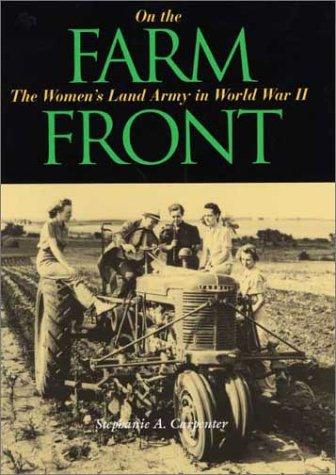
On the Farm Front: The Women's Land Army in World War II

Stephanie A. Carpenter

unrated
Read Economics Military history Logistics WWII Logistics Intel history Economics ISBN 0875803148

Northern Illinois University Press · 2003

Rosie the Riveter is an icon for women's industrial contribution to World War II, but history has largely overlooked the three million women who served on America's agricultural front. The Women's Land Army sent volunteers to farms, canneries, and dairies across the country, accounting for the majority of wartime agricultural labor. On the Farm Front tells for the first time the remarkable story of these women who worked to ensure both "Freedom from Want" at home and victory abroad. Formed in 1943 as part of the Emergency Farm Labor Program, the WLA placed its workers in areas where American farmers urgently needed assistance. Many farmers in even the most desperate areas, however, initially opposed women working their land. Rural administrators in the Midwest and the South yielded to necessity and employed several hundred thousand women as farm laborers by the end of the war, but those in the Great Plains and eastern Rocky Mountains remained hesitant, suffering serious agricultural and financial losses as a consequence. Carpenter reveals for the first time how the WLA revolutionized the national view of farming. By accepting all available women as agricultural workers, farmers abandoned traditional labor and stereotypical social practices. When the WLA officially disbanded in 1945, many of its women chose to remain in their agricultural jobs rather than return to a full-time home life or prewar employment. On the Farm Front illuminates the Women's Land Army's unique contribution to prosperity and victory, showing how this landmark organization changed the role of women in American society.