S2 Search · Reading list

S2 Actual reading list

Books from S2 Actual on Goodreads, organized by his shelves and topic buckets (intel lists, military history, logistics, etc.). Metadata filled via Open Library.

Not official S2 Underground. Independent fan index — not affiliated with or endorsed by S2. Official hub: linktr.ee/S2_underground. S2 materials are CC BY-NC-SA 4.0.

S2 topic buckets (Goodreads)

Subjects & genres

19 books · Military history · subject Air power

A Bridge Too Far

Cornelius Ryan

★★★★★
Read Military history WWII Air power ISBN 9780450837319

Popular Library · Apr 05, 1974

Another classic WWII Book This book is a powerful and well documented account of Operation Marker Garden. Mr. Ryan gives a vivid desciption and analysis of why Monty's ambitious plan failed. He covers both sides of the story (Allies and Axis) at such great lengths that you almost feel as if you are right in the middle of the action yourself. The most compelling part of Mr. Ryan's book is his perspective of this disaster from the individual soldier level, both officer and enlisted. The drama that resulted from this opeartion, especially in Arnhem, will keep you turning the pages to find out what happens in the end. I definitely recommend this book for anyone who has read Mr. Ryan's other books (The Longest Day, The Last Battle), or has an interest in WWII, and airborne operations. The movie that was made based on this book is also a classic.
No cover · Amazon

Besieged: The Epic Battle For Cholm

Jason D. Mark

★★★★★
Read Advanced intel Military history Logistics WWII Naval Air power Guerrilla / COIN Russia / USSR Logistics

Kampfgruppe Scherer’s outstanding feat of arms was one of Germany’s most famous military achievements during the Second World War. With only a few thousand men from all branches of the service, including mountain troopers, elderly reservists, police officers, navy drivers, SS partisan hunters and supply troops, Generalmajor Theodor Scherer was ordered to hold Cholm in the face of a superior enemy force. That Scherer and his men prevailed is now an historical fact but analysis of daily radio traffic and combat reports reveals that the pocket’s survival was precarious; at times, even senior commanders doubted if it could be saved. On several occasions the Soviet onslaught looked poised to inflict the death blow but somehow the exhausted men of Cholm grimly clung to a few resistance nests upon which a new line was anchored. General Scherer, a popular leader and inspiration to all his soldiers, despaired many times and was forced to continually plead for more men, more supplies and more aerial support. Urgent demands by other sectors meant Kampfgruppe Scherer was drip-fed just enough supplies and reinforcements to stay alive until, eventually, a relief force forged a permanent link and freed the exhausted survivors. After a catastrophic winter of setbacks and resounding defeats for the Wehrmacht, the General and his men were lauded as heroes and recognised with an arm shield that marked them as “Cholmkämpfer,” men of exceptional courage who had prevailed despite overwhelming odds. Primary sources have been utilised for the first time to present this battle in a detailed day-by-day format, from the forlorn days of January and February to liberation in early May.

No cover · Amazon

Death of the Leaping Horseman: 24 Panzer-Division in Stalingrad 12th August-20th November 1942

Jason D. Mark

★★★★★
Read Military history Logistics WWII Air power Armor Russia / USSR Logistics Intel history

The gripping story of an elite panzer division and its battles in the shattered streets of Stalingrad. In "Death of the Leaping Horseman: 24th Panzer-Division in Stalingrad," the untold story of 24th Panzer-Division's savage fighting on Stalingrad's outskirts - and in the devastated ruins of the city itself - is revealed in a detailed day-by-day account. Beginning in the heady days of the victorious march toward Stalingrad in August 1942, the book follows the Division into Stalingrad's suburbs as it is slowly and inexorably suked into the fiery crucible that was Stalingrad. Panzer losses and casualties increased daily until finally, after three months of draining combat, the Division was reduced to a battlegroup consisting of a couple of panzers and a few hundred men. Woven through official combat reports and entries from the Division's war diaries are gripping accounts from the few remaining veterans - including an Oakleaves winner and several Knight's Cross winners. Contains over 200 photos and 85 maps and aerial photos.

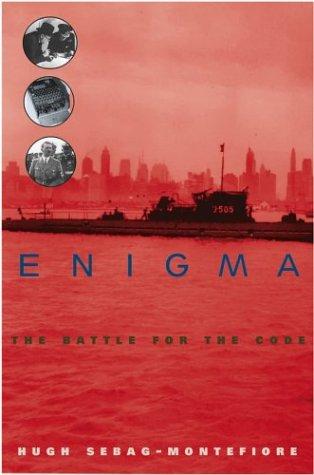
Enigma: The Battle for the Code

Hugh Sebag-Montefiore

★★★★★
Read Basic intel Cryptography Military history Intel history WWII Espionage Naval Air power Intel history ISBN 9780471490357

Wiley · February 12, 2004

Winston Churchill called the cracking of the German Enigma Code "the secret weapon that won the war." Now, for the first time, noted British journalist Hugh-Sebag-Montefiore reveals the complete story of the breaking of the code by the Allies--the breaking that played a crucial role in the outcome of World War II. This fascinating account relates the never-before-told, hair-raising stories of the heroic British and American sailors, spies, and secret agents who faced death in order to capture vital codebooks from sinking ships and snatch them from under the noses of Nazi officials. Sebag-Montefiore also relates new details about the genesis of the code, little-known facts about how the Poles first cracked the Luftwaffe's version of the code (and then passed it along to the British), and the feverish activities at Bletchley Park. Based in part on documents recently unearthed from American and British archives--including previously confidential government files--and in part on unforgettable, firsthand accounts of surviving witnesses, Enigma unearths the stunning truth about the brilliant piece of decryption that changed history.

No cover · Amazon

Fast Tanks and Heavy Bombers: Innovation in the U.S. Army, 1917-1945

David E. Johnson

★★★★★
Read Basic intel Military history Intel history Logistics WWII Air power Armor Guerrilla / COIN Logistics Strategy / theory

The U.S. Army entered World War II unprepared. In addition, lacking Germany's blitzkrieg approach of coordinated armor and air power, the army was organized to fight two wars: one on the ground and one in the air. Previous commentators have blamed Congressional funding and public apathy for the army's unprepared state. David E. Johnson believes instead that the principal causes were internal: army culture and bureaucracy, and their combined impact on the development of weapons and doctrine. Johnson examines the U.S. Army's innovations for both armor and aviation between the world wars, arguing that the tank became a captive of the conservative infantry and cavalry branches, while the airplane's development was channeled by air power insurgents bent on creating an independent air force. He maintains that as a consequence, the tank's potential was hindered by the traditional arms, while air power advocates focused mainly on proving the decisiveness of strategic bombing, neglecting the mission of tactical support for ground troops. Minimal interaction between ground and air officers resulted in insufficient cooperation between armored forces and air forces. Fast Tanks and Heavy Bombers makes a major contribution to a new understanding of both the creation of the modern U.S. Army and the Army's performance in World War II. The book also provides important insights for future military innovation.

No cover · Amazon

Into Oblivion: The Story of Pionier-Batallion 305

Jason D. Mark

★★★★★
Read Logistics Military history WWII Cold War Air power Russia / USSR Logistics Intel history

After 16 months of training and garrison duty in France, Pionier-Bataillon 305 – together with the rest of 305. Infanterie-Division – was sent to the Eastern Front. Little could they know that an inevitable train of events had been set in motion that would lead to their destruction at Stalingrad barely nine months later. An unprecedented discovery of original material has permitted an examination of the brutal fighting on the Eastern Front through the eyes of one German battalion. Commanded by apolitical officers, reservists mainly, its ranks were filled with older-than-normal recruits. When they arrived on the Eastern Front in May 1942, it was a first time visit for most of them, yet they sensed what awaited them. Everyone knew someone who had been killed in the Soviet Union. Stories about the ferocity of combat on the Eastern Front had reached them through the soldier’s grapevine. They were under no illusions, but still believed they would prevail. Weeks of monotonous, endless marching were interspersed with terrifying encounters and set-piece attacks. How would this fresh battalion compare with experienced units? Were its men less jaded and more inspired than those that had been at the front since Barbarossa began in June 1941? Was the arrival of a tough, battle-hardened commander enough to compensate for the unit’s lack of combat experience? What effect did the ongoing casualties have on both the soldiers and the battalion’s performance in battle? By exploring and answering these questions and others, this intimate analysis of an ordinary battalion enables the Eastern Front to be seen as never before. • 620 pages on a high-quality satin (semi-gloss) stock • 210 x 157mm • Hardcover only • 327 photos • 56 maps and sketches • 7 aerial photos • 5 tables • 3 appendices, including officer biographies and medal lists.

No cover · Amazon

Panzerkrieg: Volume 1 - German Armoured Operations at Stalingrad

Jason D. Mark

★★★★★
Read Military history Advanced intel WWII Air power Armor Russia / USSR Intel history

For the first time ever, the operations of panzer formations at Stalingrad are examined in detail, from formation until demise. Stalingrad is perceived as a fierce man-versus-man struggle in the ruins of a major metropolis and the surrounding steppe; yet, 6. Armee possessed formidable armoured assets that helped it reach the Volga, defended its flanks and even supported assault groups within the claustrophobic confines of the city. In this first volume of a series dedicated to studying German armoured operations at Stalingrad, the combat histories of Panzer-Abteilungen 103, 129 and 160 will be examined in detail. These panzer battalions were drawn from panzer regiments on the quieter central sector of the Eastern Front. They were incorporated into motorized divisions for the 1942 summer campaign, and though most of their men thought they were headed to the Caucasus, all roads ultimately led to Stalingrad. As manpower levels dropped in their parent formations, the panzer battalions assumed a greater role in holding lengthy flanks while the main body of 6. Armee laid siege to Stalingrad. After encirclement in November 1942, the panzers assembled for a break-out operation, and when that failed to eventuate, they supported their struggling infantry brethren with plucky counterattacks and steadfast defense until fuel, ammunition and morale were depleted. Unprecedented access to Deutsche Dienststelle (WASt), a government agency that maintains records of former Wehrmacht personnel, has permitted the life and death of each battalion to be analysed in incredible detail. The narrative is enhanced by hundreds of rare photos drawn from official archives, private collections and the albums of veterans themselves. -280 x 216 Portrait format -568 Pages on high-quality gloss paper -Hardcover only -559 Photos -12 Aerial photos -50 Maps -12 Tables -3 appendices showing the daily panzer strengths of each battalion

Relentless Strike: The Secret History of Joint Special Operations Command

Sean Naylor

★★★★★
Read Basic intel Advanced intel Military history Intel history Technical warfare GWOT Special ops Naval Air power Nuclear Middle East ISBN 9781250014542

St. Martin's Press · 2015

The New York Times Bestseller and Winner of the 2015 Army Historical Foundation Distinguished Writing Award for Unit History Since the attacks of September 11, one organization has been at the forefront of America's military response. Its efforts turned the tide against al-Qaida in Iraq, killed Bin Laden and Zarqawi, rescued Captain Phillips and captured Saddam Hussein. Its commander can direct cruise missile strikes from nuclear submarines and conduct special operations raids anywhere in the world. Relentless Strike tells the inside story of Joint Special Operations Command, the secret military organization that during the past decade has revolutionized counterterrorism, seamlessly fusing intelligence and operational skills to conduct missions that hit the headlines, and those that have remained in the shadows-until now. Because JSOC includes the military's most storied special operations units-Delta Force, SEAL Team 6, the 75th Ranger Regiment-as well as America's most secret aviation and intelligence units, this is their story, too. Relentless Strike reveals tension-drenched meetings in war rooms from the Pentagon to Iraq and special operations battles from the cabin of an MH-60 Black Hawk to the driver's seat of Delta Force's Pinzgauer vehicles as they approach their targets. Through exclusive interviews, reporter Sean Naylor uses his unique access to reveal how an organization designed in the 1980s for a very limited mission set transformed itself after 9/11 to become the military's premier weapon in the war against terrorism and how it continues to evolve today.

No cover · Amazon

The Bridge Busters : The First Dambusters and the Race to Save Britain

Mark Felton

★★★★★
Read Military history WWII Air power

August 1940. Britain faces German invasion. A race is on to wreck Hitler's plans led by RAF Bomber Command's No. 5 Group, commanded by the famous 'Bomber' Harris. Two aqueducts, huge water bridges on the Dortmund-Ems Canal, along which the Germans are bringing invasion barges and supplies to the Channel coast, are identified as crucial to stopping Hitler. Can they be destroyed? A motley collection of daredevil British and Australian airmen are ordered to try, including Guy Gibson of later Dambusters fame. They are in a race against time, for every day that the aqueducts remain standing, the Germans gather to invade. At the same time, the British race to develop a new kind of bomb that can be dropped on the aqueducts, and scientists face almost insurmountable technical and obstacles. By mid-August 1940 eleven aircrews, flying old, slow and poorly armed Hampden bombers, have completed training for the raid. On the night of 12 August they launch from Lincolnshire, split into an attacking and diversionary force. They face desperate odds against a huge concentration of German flak guns, enemy night fighters and searchlights, and must fly suicidally low, slow and level to release the new bombs. In a raid with many similarities in personnel, target and weapon to the much more famous Dambusters Raid of 1943, the plucky band of outnumbered and outgunned airmen press home their assault on the aqueducts. If they fail, the Germans will probably be landing on the coast of southern England within a few weeks, but if they succeed, they may change the course of history and help to save their country from invasion and occupation. This is the untold and completely forgotten story of 'The Bridge Busters', the first Dambusters and their suicide mission just before the Battle of Britain began.

No cover · Amazon

Barren SEAD: USAF Defense Suppression Doctrine, 1953-1972

James L. Young Jr.

★★★★
Read Basic intel Military history Intel history Technical warfare Vietnam Cold War Special ops Naval Air power Cyber Biography Strategy / theory

Since 1972, the United States Air Force has argued that its operations against North Vietnam were unsuccessful primarily through a combination of civilian interference and poor strategic choices. Often citing the “success” of Operation Linebacker II as an example of what might have been had its leaders been given free rein, for almost fifty years the Air Force has maintained that its proper employment is the key to winning America’s wars. In Barren SEAD, award winning historian James L. Young Jr. propagates a different Instead of being a sign of what the Air Force was capable of, Linebacker II was a bitter failure that starkly outlined the USAF’s limitations. Furthermore, the meddling of the Johnson and Nixon Administrations played a minor role in this outcome. The USAF's defeat was not brought about by civilian meddling, but resulted from Air Force leaders’ refusal to develop a Suppression of Enemy Air Defenses (SEAD) doctrine from 1953-1972. Relying primarily on Air Force archival documents, memoirs, and contemporary doctrinal publications, Dr. Young illustrates just how dangerous the Air Force’s inability to nurture its SEAD capability was during this period of the Cold War. James L. Young Jr. holds a doctorate in U.S. History from Kansas State University and is a graduate of the United States Military Academy. Barren SEAD is his first non-fiction book. Previously he has won the United States Naval Institute's 2016 Cyberwarfare Essay Contest, runner up in the 2011 James Adams Cold War Essay Contest, and has had an essay selected by the U.S. Naval Heritage Command for its professional reading list. Dr. Young's other professional articles can be found in Armor Magazine, The Journal of Military History, and Proceedings. For those who prefer fiction, Dr. Young also writes alternate history (Usurper's War series / Phases of Mars anthologies) and military science fiction (Vergassy Universe).

Phantom Soldier: The Enemy's Answer to U.S. Firepower

H. John Poole

★★★★
Read Advanced intel Military history WWII GWOT Air power Guerrilla / COIN Strategy / theory ISBN 9780963869555

Posterity Press · August 9, 2001

"Phantom Soldier" is now on the U.S. Army's most prestigious pre-deployment reading list for a reason. It won't please those who have come to believe that wars are won and casualties limited through technology, or that the victor's version of one is always correct. But, all U.S. security personnel should read it. Possibly the West's best treatise on Oriental warfare, it sheds new light on what Asian infantry can do: (1) alternate between guerrilla, mobile, and positional warfare; (2) use "ordinary forces" to engage and "extraordinary forces [infiltrators]" to defeat; and then (3) retreat to save lives. What occurred in history doesn't change, but one's perception of it does--as he comes to better understand his former foe. Here's what really happened at Guadalcanal, Iwo Jima, Chosin Reservoir, and Hue City. Those who believe this book's cover art to be fantasy have only to google the term "dac cong." Through how the NVA held their own without resupply, tanks, artillery, or air power, U.S. grunts could better survive the more lethal enemy weaponry of the 21st Century.

We Were One: Shoulder to Shoulder with the Marines Who Took Fallujah

Patrick K. O'Donnell

★★★★
Read Military history WWII GWOT Air power Guerrilla / COIN Middle East Biography ISBN 9780306814693

Da Capo Press · October 30, 2006

The platoon included four pairs of best friends. Each of the four would lose a best friend forever.Five months after being deployed to Iraq, Lima Company’s 1st Platoon found itself in Fallujah, embroiled in some of the most intense house-to-house, hand-to-hand combat since World War II. Civilians were used as human shields or as bait to lure soldiers into buildings rigged with explosives; suicide bombers approached from every corner hoping to die and take Americans with them; radical insurgents, high on adrenaline, fought to the death. The Marines of the 1st Platoon (part of 3rd Battalion, 1st Marine Regiment) were among the first to fight in Fallujah, and they bore the brunt of this epic battle. When it was over, the platoon had suffered thirty-five casualties, including four dead.This is their story.Award-winning author and historian Patrick O’Donnell stood shoulder-to-shoulder with this modern band of brothers as they marched and fought through the streets of Fallujah, and he stayed with them as the casualties mounted. O’Donnell captures not only the sights, sounds, and smells of the gritty street combat, but also the human drama of young men in a close-knit platoon fighting for their lives-and the lives of their buddies. We Were One chronicles the 1st Platoon’s story, from its formation at Camp Pendleton in California to its near destruction in the smoldering ruins of Fallujah.We Were One is an unforgettable portrait of the new “Greatest Generation.”With 16 pages of extraordinary photographs from the front lines of the Battle for Fallujah.

Stopped at Stalingrad: The Luftwaffe and Hitler's Defeat in the East, 1942-1943 (Modern War Studies)

Joel S.A. Hayward

★★★☆☆
Read Intel history Military history Advanced intel Logistics WWII Cold War Air power Russia / USSR Logistics Strategy / theory ISBN 9780700611461

University Press of Kansas · September 2001

By the time Hitler declared war on the Soviet Union in 1941, he knew that his military machine was running out of fuel. In response, he launched Operation Blau, a campaign designed to protect Nazi oilfields in Rumania while securing new ones in the Caucasus. All that stood in the way was Stalingrad. Most accounts of the Battle of Stalingrad have focused on the dismal fate of the German Army. Joel Hayward now chronicles Luftwaffe operations during that campaign, focusing on Hitler's use of the air force as a tactical rather than strategic weapon in close support of ground forces. He vividly details the Luftwaffe's key role as flying artillery, showing that the army relied on Luftwaffe support to a far greater degree than has been previously revealed and that its successes in the East occurred largely because of the effectiveness of that support. Hayward analyzes this major German offensive from the standpoint of cooperation between ground and air forces to attain mutually agreed objectives. He draws on diaries of both key commanders and regular airmen to recreate crucial battles and convey the drama of Hitler's frustrations and reckless leadership. Ultimately, Hayward shows, the poorly conceived strategies of Hitler, Goering, and others in Berlin doomed the efforts of air commander Wolfram von Richthofen, a courageous and resolute leader attempting to come to grips with an increasingly impossible situation. Stopped at Stalingrad is a dynamic case study in combined arms warfare that fills in many of the gaps left by other studies of the eastern war. By reconsidering the campaign in the light of a wider body of documentary sources and analyzing many previously ignored events, Hayward provides military historians and general readers a much deeper and more complete understanding of the Battle of Stalingrad and its impact on World War II.

Desert Sniper: How One Ordinary Brit Went to War Against ISIS

Ed Nash

unrated
Read Advanced intel Military history Technical warfare Biographies GWOT Air power Middle East Intel history ISBN 9781408711330

Little, Brown Book Group Limited · 2018

What makes an ordinary but highly educated Englishman, with no previous military training, decide to travel and fight in one of the most brutal conflicts on the planet? Desert Sniper is an extraordinary, true account of one man's journey from well-meaning volunteer to battle-scarred combat sniper, placing himself daily in the line of fire to fight one of the greatest evils of this new century. Ed Nash has travelled across the globe, and is working with refugees in Burma, when he first becomes aware of the terrible atrocities being committed under ISIS's newly established 'Caliphate', covering vast tracts of Iraq and Syria. In June 2015, he chooses to undertake the hazardous journey, via Northern Iraq, to Syria, to join ill-equipped and poorly trained but battle-hardened Kurdish forces as they attempt to halt Daesh's relentless advance. Nash is an articulate, insightful and refreshingly honest companion as he unpacks the shifting complexities of the political and military situation in which he finds himself. As one of a motley band of foreign volunteer fighters - veterans of other conflicts, adventurers and misfits, from many different countries - we follow him through his rudimentary training and early combat operations as he and his companions slowly gain the trust and respect of their Kurdish colleagues. Nash shows us the realities of the war on the ground in Syria in fascinating detail; the privations of the ordinary Kurdish soldiers, the terrible price paid by civilians caught in the cross-fire, the ever-present danger of lethal suicide bombers and occasional moments of striking beauty in amongst the carnage. A modern classic in the making, Desert Sniper will prove to be one of the most unforgettable accounts to emerge from the war against ISIS.

Strategy for Defeat: The Luftwaffe 1933-1945

Williamson Murray

unrated
Read Military history Logistics WWII Air power Logistics Strategy / theory ISBN 9780160021602

United States Government Printing Office · 1983

A penetrating and powerfully presented explanation of the successes and failures of the German air force in World War II. "Authoritative and thorough . . . an interesting and thought provoking book of real value to historians and military thinkers."--RUSI Journal.

The German Air War in Russia

Richard R. Muller

unrated
Read Advanced intel Military history Logistics WWII Air power Russia / USSR Logistics Strategy / theory ISBN 1877853135

Nautical & Aviation Pub. Co. of America · 1992

Dr. Richard Muller has produced a new interpretation of the longest continous air offensive waged by the Luftwaffe. He delineates the shifts in German air strategy as well as the relationship between operational art, aviation technology, and the strategy of the German air force's general staff.

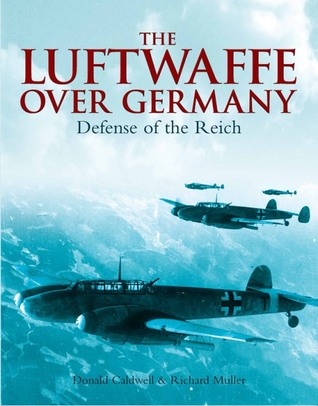
The Luftwaffe over Germany: Defense of the Reich

Donald Caldwell

unrated
Read Military history Logistics WWII Air power Russia / USSR Logistics Strategy / theory ISBN 1853677124

GREENHILL · 2007

The Luftwaffe over Germany tells the story of one of the longest and most intense air battles in history. The daylight air struggles over Germany during World War II involved thousands of aircraft, dozens of units, and hundreds of aerial engagements. Until now, there has been no single book that covers the complete story, from the highest levels of air strategy to the individual tales of Fw 190s, Bf 109s and Me 262s in air combat against the American bomber streams. This work explores the German air defense system until its collapse in 1945. It examines the detrimental effect of Luftwaffe theory and doctrine on the German air arms ability to defend the homeland once the Allied Combined Bomber Offensive began in earnest. The hard-pressed Luftwaffe leadership attempted to cobble together an air-defense network while at the same time tending to the combat fronts in Russia and the Mediterranean. Units developed specialized tactics and weapons for dealing with heavily defended bomber formations, while senior commanders sought to construct an elaborate command and control system integrating radar, observers, anti-aircraft guns, and fighters. By mid-1944, they had lost the battle - but had exacted a terrible price from the Americans in the process. The product of a ten-year collaboration between two noted Luftwaffe historians, this work fills a major gap in the literature of World War II. The authors have examined original war diaries, logbooks, doctrine manuals, after-action reports, and interviews with many combat veterans to produce a richly detailed account. Illustrated with nearly two hundred photographs, as well as new maps and diagrams, Luftwaffe Over Germany is certain to become the standard work on the subject.

Under the Bombs: The German Home Front, 1942-1945

Earl R. Beck

unrated
Read Economics Military history Logistics WWII Air power Logistics Economics ISBN 0813109779

University Pressof Kentucky · 1986

Under the Bombs tells the story of the civilian population of German cities devastated by Allied bombing in World War II. These people went to work, tried to keep a home (though in many cases it was just a pile of rubble where a house once stood), and attempted to live life as normally as possible amid the chaos of war. Earl Beck also looks at the food and fuel rationing the German people endured and the problems of trying to make a public complaint while living in a totalitarian state.