S2 Search · Reading list

S2 Actual reading list

Books from S2 Actual on Goodreads, organized by his shelves and topic buckets (intel lists, military history, logistics, etc.). Metadata filled via Open Library.

Not official S2 Underground. Independent fan index — not affiliated with or endorsed by S2. Official hub: linktr.ee/S2_underground. S2 materials are CC BY-NC-SA 4.0.

S2 topic buckets (Goodreads)

Subjects & genres

3 books · Intel history · subject Cyber

Networks and Netwars: The Future of Terror, Crime, and Militancy

John Arquilla

★★★★★
Read Advanced intel Cryptography Intel history Privacy Espionage Cyber ISBN 0833030302

Rand · 2001

Netwar―like cyberwar―describes a new spectrum of conflict that is emerging in the wake of the information revolution. What distinguished netwar is the networked organizational structure of its practitioners and their quickness in coming together in swarming attacks. To confront this new type of conflict, it is crucial for governments, military, and law enforcement to begin networking themselves.
No cover · Amazon

Barren SEAD: USAF Defense Suppression Doctrine, 1953-1972

James L. Young Jr.

★★★★
Read Basic intel Military history Intel history Technical warfare Vietnam Cold War Special ops Naval Air power Cyber Biography Strategy / theory

Since 1972, the United States Air Force has argued that its operations against North Vietnam were unsuccessful primarily through a combination of civilian interference and poor strategic choices. Often citing the “success” of Operation Linebacker II as an example of what might have been had its leaders been given free rein, for almost fifty years the Air Force has maintained that its proper employment is the key to winning America’s wars. In Barren SEAD, award winning historian James L. Young Jr. propagates a different Instead of being a sign of what the Air Force was capable of, Linebacker II was a bitter failure that starkly outlined the USAF’s limitations. Furthermore, the meddling of the Johnson and Nixon Administrations played a minor role in this outcome. The USAF's defeat was not brought about by civilian meddling, but resulted from Air Force leaders’ refusal to develop a Suppression of Enemy Air Defenses (SEAD) doctrine from 1953-1972. Relying primarily on Air Force archival documents, memoirs, and contemporary doctrinal publications, Dr. Young illustrates just how dangerous the Air Force’s inability to nurture its SEAD capability was during this period of the Cold War. James L. Young Jr. holds a doctorate in U.S. History from Kansas State University and is a graduate of the United States Military Academy. Barren SEAD is his first non-fiction book. Previously he has won the United States Naval Institute's 2016 Cyberwarfare Essay Contest, runner up in the 2011 James Adams Cold War Essay Contest, and has had an essay selected by the U.S. Naval Heritage Command for its professional reading list. Dr. Young's other professional articles can be found in Armor Magazine, The Journal of Military History, and Proceedings. For those who prefer fiction, Dr. Young also writes alternate history (Usurper's War series / Phases of Mars anthologies) and military science fiction (Vergassy Universe).

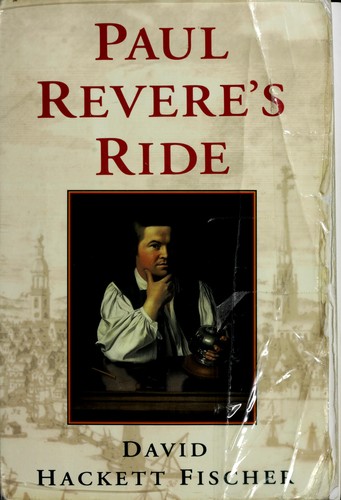
Paul Revere's Ride

David Hackett Fischer

★★★★
Read Basic intel Advanced intel Military history Intel history Logistics Technical warfare Espionage Cyber Logistics Revolution ISBN 0195098315

Oxford University Press · 1995

Paul Revere's midnight ride is a legendary event in American history - yet it has been largely ignored by scholars, and left to patriotic writers and debunkers. Now one of the foremost American historians offers the first serious study of this event - what led to it, what really happened, what followed - uncovering a truth more remarkable than the many myths it has inspired. In Paul Revere's Ride, David Hackett Fischer has created an exciting narrative that offers new insight into the coming of the American Revolution. From research in British and American archives, the author unravels a plot that no novelist would dare invent - a true story of high drama and deep suspense, of old-fashioned heroes and unvarnished villains, of a beautiful American spy who betrayed her aristocratic British husband, of violent mobs and marching armies, of brave men dying on their doorsteps, of high courage, desperate fear, and the destiny of nations. The narrative is constructed around two thematic lines. One story centers on the American patriot Paul Revere; the other, on British General Thomas Gage. Both were men of high principle who played larger roles than recent historiography has recognized. Thomas Gage was not the Tory tyrant of patriot legend, but an English Whig who believed in liberty and the rule of law. In 1774 and 1775, General Gage's advice shaped the fatal choices of British leaders, and his actions guided the course of American events. Paul Revere was more than a "simple artizan, " as his most recent biographer described him fifty years ago. The author presents new evidence that revolutionary Boston was a world of many circles - more complex than we have known. Paul Revere and his friend Joseph Warren ranged more widely through those circles than any other leaders. They became the linchpins of the Whig movement. On April 18th, 1775, Paul Revere played that role in a manner that has never been told before. He and William Dawes were not the only midnight riders to ca