S2 Search · Reading list

S2 Actual reading list

Books from S2 Actual on Goodreads, organized by his shelves and topic buckets (intel lists, military history, logistics, etc.). Metadata filled via Open Library.

Not official S2 Underground. Independent fan index — not affiliated with or endorsed by S2. Official hub: linktr.ee/S2_underground. S2 materials are CC BY-NC-SA 4.0.

S2 topic buckets (Goodreads)

Subjects & genres

2 books · Logistics · subject Revolution

No cover · Amazon

Harvest of Despair: Life and Death in Ukraine under Nazi Rule

Karel C. Berkhoff

★★★★
Read Advanced intel Military history Logistics WWII Guerrilla / COIN Russia / USSR Logistics Revolution

"If I find a Ukrainian who is worthy of sitting at the same table with me, I must have him shot," declared Nazi commissar Erich Koch. To the Nazi leaders, the Ukrainians were Untermenschen—subhumans. But the rich land was deemed prime territory for Lebensraum expansion. Once the Germans rid the country of Jews, Roma, and Bolsheviks, the Ukrainians would be used to harvest the land for the master race. Karel Berkhoff provides a searing portrait of life in the Third Reich's largest colony. Under the Nazis, a blend of German nationalism, anti-Semitism, and racist notions about the Slavs produced a reign of terror and genocide. But it is impossible to understand fully Ukraine's response to this assault without addressing the impact of decades of repressive Soviet rule. Berkhoff shows how a pervasive Soviet mentality worked against solidarity, which helps explain why the vast majority of the population did not resist the Germans. He also challenges standard views of wartime eastern Europe by treating in a more nuanced way issues of collaboration and local anti-Semitism. Berkhoff offers a multifaceted discussion that includes the brutal nature of the Nazi administration; the genocide of the Jews and Roma; the deliberate starving of Kiev; mass deportations within and beyond Ukraine; the role of ethnic Germans; religion and national culture; partisans and the German response; and the desperate struggle to stay alive. Harvest of Despair is a gripping depiction of ordinary people trying to survive extraordinary events.
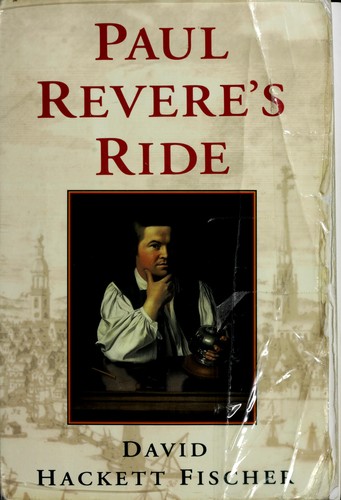
Paul Revere's Ride

David Hackett Fischer

★★★★
Read Basic intel Advanced intel Military history Intel history Logistics Technical warfare Espionage Cyber Logistics Revolution ISBN 0195098315

Oxford University Press · 1995

Paul Revere's midnight ride is a legendary event in American history - yet it has been largely ignored by scholars, and left to patriotic writers and debunkers. Now one of the foremost American historians offers the first serious study of this event - what led to it, what really happened, what followed - uncovering a truth more remarkable than the many myths it has inspired. In Paul Revere's Ride, David Hackett Fischer has created an exciting narrative that offers new insight into the coming of the American Revolution. From research in British and American archives, the author unravels a plot that no novelist would dare invent - a true story of high drama and deep suspense, of old-fashioned heroes and unvarnished villains, of a beautiful American spy who betrayed her aristocratic British husband, of violent mobs and marching armies, of brave men dying on their doorsteps, of high courage, desperate fear, and the destiny of nations. The narrative is constructed around two thematic lines. One story centers on the American patriot Paul Revere; the other, on British General Thomas Gage. Both were men of high principle who played larger roles than recent historiography has recognized. Thomas Gage was not the Tory tyrant of patriot legend, but an English Whig who believed in liberty and the rule of law. In 1774 and 1775, General Gage's advice shaped the fatal choices of British leaders, and his actions guided the course of American events. Paul Revere was more than a "simple artizan, " as his most recent biographer described him fifty years ago. The author presents new evidence that revolutionary Boston was a world of many circles - more complex than we have known. Paul Revere and his friend Joseph Warren ranged more widely through those circles than any other leaders. They became the linchpins of the Whig movement. On April 18th, 1775, Paul Revere played that role in a manner that has never been told before. He and William Dawes were not the only midnight riders to ca