S2 Search · Reading list

S2 Actual reading list

Books from S2 Actual on Goodreads, organized by his shelves and topic buckets (intel lists, military history, logistics, etc.). Metadata filled via Open Library.

Not official S2 Underground. Independent fan index — not affiliated with or endorsed by S2. Official hub: linktr.ee/S2_underground. S2 materials are CC BY-NC-SA 4.0.

S2 topic buckets (Goodreads)

Subjects & genres

67 books · Logistics · subject WWII · page 1 of 3

No cover · Amazon

Besieged: The Epic Battle For Cholm

Jason D. Mark

★★★★★
Read Advanced intel Military history Logistics WWII Naval Air power Guerrilla / COIN Russia / USSR Logistics

Kampfgruppe Scherer’s outstanding feat of arms was one of Germany’s most famous military achievements during the Second World War. With only a few thousand men from all branches of the service, including mountain troopers, elderly reservists, police officers, navy drivers, SS partisan hunters and supply troops, Generalmajor Theodor Scherer was ordered to hold Cholm in the face of a superior enemy force. That Scherer and his men prevailed is now an historical fact but analysis of daily radio traffic and combat reports reveals that the pocket’s survival was precarious; at times, even senior commanders doubted if it could be saved. On several occasions the Soviet onslaught looked poised to inflict the death blow but somehow the exhausted men of Cholm grimly clung to a few resistance nests upon which a new line was anchored. General Scherer, a popular leader and inspiration to all his soldiers, despaired many times and was forced to continually plead for more men, more supplies and more aerial support. Urgent demands by other sectors meant Kampfgruppe Scherer was drip-fed just enough supplies and reinforcements to stay alive until, eventually, a relief force forged a permanent link and freed the exhausted survivors. After a catastrophic winter of setbacks and resounding defeats for the Wehrmacht, the General and his men were lauded as heroes and recognised with an arm shield that marked them as “Cholmkämpfer,” men of exceptional courage who had prevailed despite overwhelming odds. Primary sources have been utilised for the first time to present this battle in a detailed day-by-day format, from the forlorn days of January and February to liberation in early May.
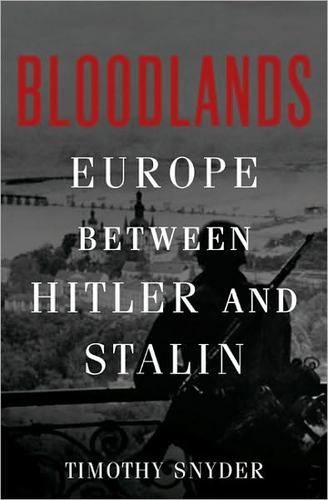
Bloodlands: Europe Between Hitler and Stalin

Timothy Snyder

★★★★★
Read Military history Advanced intel Logistics WWII Cold War Russia / USSR Logistics ISBN 9780465002399

Basic Books · 2010

Americans call the Second World War “The Good War.” But before it even began, America’s wartime ally Josef Stalin had killed millions of his own citizens—and kept killing them during and after the war. Before Hitler was finally defeated, he had murdered six million Jews and nearly as many other Europeans. At war’s end, both the German and the Soviet killing sites fell behind the iron curtain, leaving the history of mass killing in darkness. Bloodlands is a new kind of European history, presenting the mass murders committed by the Nazi and Stalinist regimes as two aspects of a single history, in the time and place where they occurred: between Germany and Russia, when Hitler and Stalin both held power. Assiduously researched, deeply humane, and utterly definitive, Bloodlands will be required reading for anyone seeking to understand the central tragedy of modern history. From Booklist If there is an explanation for the political killing perpetrated in eastern Europe in the 1930s and 1940s, historian Snyder roots it in agriculture. Stalin wanted to collectivize farmers; Hitler wanted to eliminate them so Germans could colonize the land. The dictators wielded frightening power to advance such fantasies toward reality, and the despots toted up about 14 million corpses between them, so stupefying a figure that Snyder sets himself three goals here: to break down the number into the various actions of murder that comprise it, from liquidation of the kulaks to the final solution; to restore humanity to the victims via surviving testimony to their fates; and to deny Hitler and Stalin any historical justification for their policies, which at the time had legions of supporters and have some even today. Such scope may render Snyder’s project too imposing to casual readers, but it would engage those exposed to the period’s chronology and major interpretive issues, such as the extent to which the Nazi and Soviet systems may be compared. Solid and judicious scholarship for large WWII collections.

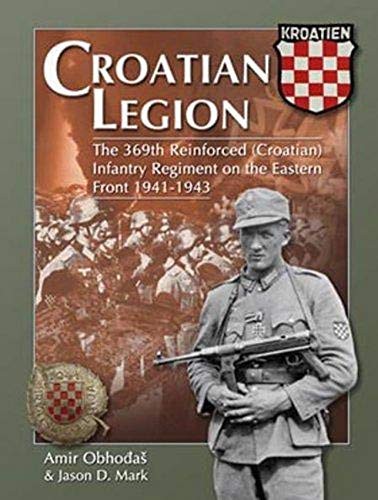
Croatian Legion: The 369th Reinforced (Croation) Infantry Regiment on the Eastern Front 1941-1943

Amir Obhođaš

★★★★★
Read Military history Logistics WWII Cold War Russia / USSR Logistics ISBN 9780975107683

Leaping Horseman Books · Mar 01, 2011

Soon after Germany invaded the Soviet Union, the leadership of the newly founded Independent State of Croatia expressed its desire to participate in this "crusade against Bolshevism". Hitler approved the request and so the Croatian Legion, consisting of volunteers from all three branches of the Croatian Armed Forces, was created. Its ground component, the 369th Reinforced (Croatian) Infantry Regiment, was the first to be formed. The Croatian legionaries participated in some of the most famous engagements of World War 2, including the first battle of Kharkov, Operation Fridericus, Plan Blau and finally the grim struggle for Stalingrad. The Regiment was the only non-German unit to participate in the attack on Stalin's city... the other allies were relegated to holding flanks. Initially, this was viewed as a great honour, a reward for its sacrifices and successes, proof that the Wehrmacht had full trust in the Regiment. However, this "honour" would demand the ultimate price. Croatian blood soaked Stalingrad's soil and four months later the unit's pitiful remnants were herded into captivity. Two Croatian sergeants managed to preserve the regimental archive by taking it with them on one of the last flights out of besieged Stalingrad. This unique collection, which includes war diaries, daily orders, combat reports and award recommendations, was the primary resource used to create this book. Additional records from German and Russian archives complete the picture. The Regiment's origins, formation, training and battles are examined in detail. Croatian Legion: The 369th Reinforced (Croatian) Infantry Regiment on the Eastern Front, 1941-1943 offers a unique perspective of the fighting on the Eastern Front through the eyes of a foreign volunteer unit.

No cover · Amazon

Death of the Leaping Horseman: 24 Panzer-Division in Stalingrad 12th August-20th November 1942

Jason D. Mark

★★★★★
Read Military history Logistics WWII Air power Armor Russia / USSR Logistics Intel history

The gripping story of an elite panzer division and its battles in the shattered streets of Stalingrad. In "Death of the Leaping Horseman: 24th Panzer-Division in Stalingrad," the untold story of 24th Panzer-Division's savage fighting on Stalingrad's outskirts - and in the devastated ruins of the city itself - is revealed in a detailed day-by-day account. Beginning in the heady days of the victorious march toward Stalingrad in August 1942, the book follows the Division into Stalingrad's suburbs as it is slowly and inexorably suked into the fiery crucible that was Stalingrad. Panzer losses and casualties increased daily until finally, after three months of draining combat, the Division was reduced to a battlegroup consisting of a couple of panzers and a few hundred men. Woven through official combat reports and entries from the Division's war diaries are gripping accounts from the few remaining veterans - including an Oakleaves winner and several Knight's Cross winners. Contains over 200 photos and 85 maps and aerial photos.

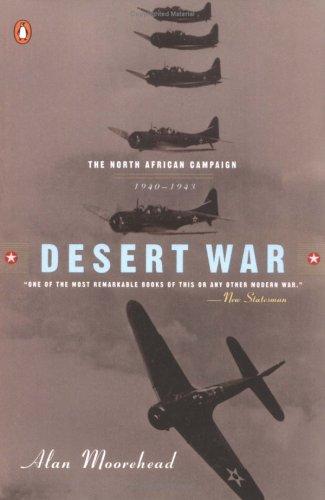
Desert War: The North African Campaign 1940-43

Alan Moorehead

★★★★★
Read Intel history Military history Advanced intel Logistics WWII Armor Logistics Biography ISBN 0140275142

Penguin Books · 2001

The seminal account of the battle between Montgomery’s Eighth Army and Rommel’s Afrika Corps, amidst the endless harsh wastes of the Western Desert. In 1940, Alan Moorehead was sent to cover the North Africa campaign by the Daily Express, and he followed its dramatic course all the way to 1943. The three books he subsequently wrote about the Desert War – later collected as his ‘African Trilogy’ – were swiftly acclaimed as a classic account of the tussle between Montgomery’s Eighth Army and Rommel’s Afrika Corps, under the beating sun of the Egyptian Sahara's Western Desert. Moorehead was responsible for the celebrated insight that tank battles in the desert are like battles at sea, the lumbering tanks like ships lost in a vast ocean of sand. The New Statesman could not have put it better when it described his achievement with this riveting book: ‘There is something of genius in the breadth and penetration of his vision , which encompasses the whole panorama of war and then narrows it down to the particular: the soldier stubbing out his cigarette before going into action, the expression on a tank commander’s face as he is hit… The story of the African campaigns will go down in history as one of the great epics of mankind, largely thanks to Mr Moorehead’s account.’

No cover · Amazon

Fast Tanks and Heavy Bombers: Innovation in the U.S. Army, 1917-1945

David E. Johnson

★★★★★
Read Basic intel Military history Intel history Logistics WWII Air power Armor Guerrilla / COIN Logistics Strategy / theory

The U.S. Army entered World War II unprepared. In addition, lacking Germany's blitzkrieg approach of coordinated armor and air power, the army was organized to fight two wars: one on the ground and one in the air. Previous commentators have blamed Congressional funding and public apathy for the army's unprepared state. David E. Johnson believes instead that the principal causes were internal: army culture and bureaucracy, and their combined impact on the development of weapons and doctrine. Johnson examines the U.S. Army's innovations for both armor and aviation between the world wars, arguing that the tank became a captive of the conservative infantry and cavalry branches, while the airplane's development was channeled by air power insurgents bent on creating an independent air force. He maintains that as a consequence, the tank's potential was hindered by the traditional arms, while air power advocates focused mainly on proving the decisiveness of strategic bombing, neglecting the mission of tactical support for ground troops. Minimal interaction between ground and air officers resulted in insufficient cooperation between armored forces and air forces. Fast Tanks and Heavy Bombers makes a major contribution to a new understanding of both the creation of the modern U.S. Army and the Army's performance in World War II. The book also provides important insights for future military innovation.

Hitler's Beneficiaries: Plunder, Racial War, and the Nazi Welfare State

Götz Aly

★★★★★
Read Advanced intel Military history Logistics WWII Logistics Economics ISBN 9780805079265

Metropolitan · 2007

A "provocative" account of great "intellectual significance," illuminating the economic workings of the Third Reich—and the reasons ordinary Germans supported the Nazi state (The New York Times Book Review) In this groundbreaking book, historian Götz Aly addresses one of modern history's greatest conundrums: How did Hitler win the allegiance of ordinary Germans? The answer is as shocking as it is persuasive: by engaging in a campaign of theft on an almost unimaginable scale—and by channeling the proceeds into generous social programs—Hitler literally "bought" his people's consent. Drawing on secret files and financial records, Aly shows that while Jews and citizens of occupied lands suffered crippling taxation, mass looting, enslavement, and destruction, most Germans enjoyed an improved standard of living. Buoyed by millions of packages soldiers sent from the front, Germans also benefited from the systematic plunder of Jewish possessions. Any qualms were swept away by waves of tax breaks and government handouts. Hitler's Beneficiaries has been hailed as "startling" by Richard Evans, and as "fascinating and important" by Christopher Browning. Above all, as Omer Bartov testifies, this remarkable book "irreversibly transforms our understanding of the Third Reich."

Hitler's Foreign Executioners: Europe's Dirty Secret

Christopher Hale

★★★★★
Read Advanced intel Intel history Military history Logistics WWII Russia / USSR Logistics ISBN 9780752459745

The History Press · 2011

How and why more than one million non-Germans joined Hitler's "war of annihilation" Revealing for the first time Heinrich Himmler's master plan for Europe, this book discusses his dream of an SS empire with no place for either the Nazi Party or Adolf Hitler. His astonishingly ambitious plan depended on the recruitment of tens of thousands of "Germanic" peoples to build an "SS Europa." This book, researched in archives all over Europe and using first-hand testimony, exposes Europe's dirty secret—that nearly half a million Europeans and more than a million Soviet citizens enlisted in the armed forces of the Third Reich—to fight a crusade against "Jewish-Bolshevism." No other historian has examined the connections between these SS "foreign legions" (both police and Waffen-SS) and the Holocaust. Even today, some apologists claim that the foreign volunteers were merely soldiers "like any other" and fought a decent war against Stalin's Red Army. Christopher Hale demonstrates conclusively that these surprisingly common views are mistaken.

No cover · Amazon

Into Oblivion: The Story of Pionier-Batallion 305

Jason D. Mark

★★★★★
Read Logistics Military history WWII Cold War Air power Russia / USSR Logistics Intel history

After 16 months of training and garrison duty in France, Pionier-Bataillon 305 – together with the rest of 305. Infanterie-Division – was sent to the Eastern Front. Little could they know that an inevitable train of events had been set in motion that would lead to their destruction at Stalingrad barely nine months later. An unprecedented discovery of original material has permitted an examination of the brutal fighting on the Eastern Front through the eyes of one German battalion. Commanded by apolitical officers, reservists mainly, its ranks were filled with older-than-normal recruits. When they arrived on the Eastern Front in May 1942, it was a first time visit for most of them, yet they sensed what awaited them. Everyone knew someone who had been killed in the Soviet Union. Stories about the ferocity of combat on the Eastern Front had reached them through the soldier’s grapevine. They were under no illusions, but still believed they would prevail. Weeks of monotonous, endless marching were interspersed with terrifying encounters and set-piece attacks. How would this fresh battalion compare with experienced units? Were its men less jaded and more inspired than those that had been at the front since Barbarossa began in June 1941? Was the arrival of a tough, battle-hardened commander enough to compensate for the unit’s lack of combat experience? What effect did the ongoing casualties have on both the soldiers and the battalion’s performance in battle? By exploring and answering these questions and others, this intimate analysis of an ordinary battalion enables the Eastern Front to be seen as never before. • 620 pages on a high-quality satin (semi-gloss) stock • 210 x 157mm • Hardcover only • 327 photos • 56 maps and sketches • 7 aerial photos • 5 tables • 3 appendices, including officer biographies and medal lists.

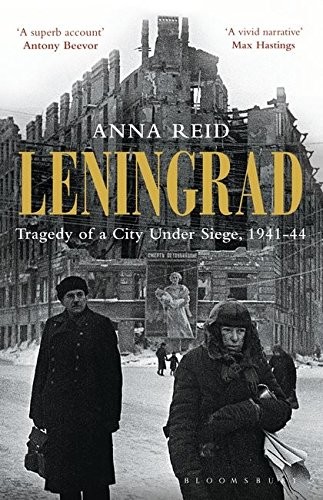
Leningrad: Tragedy of a City Under Siege, 1941-44.

Anna Reid

★★★★★
Read Advanced intel Military history Logistics WWII Cold War Russia / USSR Logistics Biography ISBN 9781408822418

Bloomsbury Publishing PLC · Nov 07, 2012

On September 8, 1941, eleven weeks after Hitler launched Operation Barbarossa, his brutal surprise attack on the Soviet Union, Leningrad was surrounded. The siege was not lifted for two and a half years, by which time some three quarters of a million Leningraders had died of starvation. Anna Reid's Leningrad is a gripping, authoritative narrative history of this dramatic moment in the twentieth century, interwoven with indelible personal accounts of daily siege life drawn from diarists on both sides. They reveal the Nazis' deliberate decision to starve Leningrad into surrender and Hitler's messianic miscalculation, the incompetence and cruelty of the Soviet war leadership, the horrors experienced by soldiers on the front lines, and, above all, the terrible details of life in the blockaded city: the relentless search for food and water; the withering of emotions and family ties; looting, murder, and cannibalism- and at the same time, extraordinary bravery and self-sacrifice. Stripping away decades of Soviet propaganda, and drawing on newly available diaries and government records, Leningrad also tackles a raft of unanswered questions: Was the size of the death toll as much the fault of Stalin as of Hitler? Why didn't the Germans capture the city? Why didn't it collapse into anarchy? What decided who lived and who died? Impressive in its originality and literary style, Leningrad gives voice to the dead and will rival Anthony Beevor's classic Stalingrad in its impact.

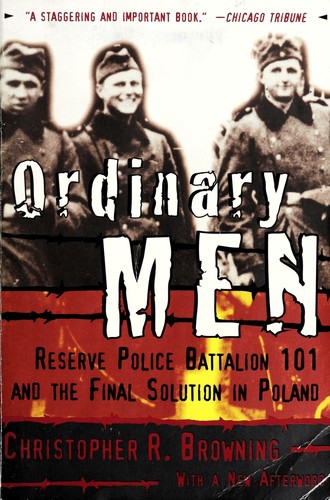
Ordinary Men: Reserve Police Battalion 101 and the Final Solution in Poland

Christopher R. Browning

★★★★★
Read Military history Logistics WWII Logistics Biography ISBN 0060995068

HarperPerennial · 1998

Christopher R. Browning’s shocking account of how a unit of average middle-aged Germans became the cold-blooded murderers of tens of thousands of Jews—now with a new afterword and additional photographs. Ordinary Men is the true story of Reserve Police Battalion 101 of the German Order Police, which was responsible for mass shootings as well as round-ups of Jewish people for deportation to Nazi death camps in Poland in 1942. Browning argues that most of the men of RPB 101 were not fanatical Nazis but, rather, ordinary middle-aged, working-class men who committed these atrocities out of a mixture of motives, including the group dynamics of conformity, deference to authority, role adaptation, and the altering of moral norms to justify their actions. Very quickly three groups emerged within the battalion: a core of eager killers, a plurality who carried out their duties reliably but without initiative, and a small minority who evaded participation in the acts of killing without diminishing the murderous efficiency of the battalion whatsoever. While this book discusses a specific Reserve Unit during WWII, the general argument Browning makes is that most people succumb to the pressures of a group setting and commit actions they would never do of their own volition.   Ordinary Men is a powerful, chilling, and important work, with themes and arguments that continue to resonate today.

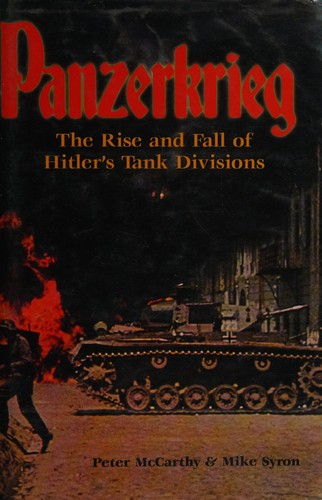
Panzerkrieg: The Rise and Fall of Hitler's Tank Divisions

Peter McCarthy

★★★★★
Read Advanced intel Intel history Logistics Technical warfare Military history WWII Cold War Armor Russia / USSR Logistics Biography ISBN 0786710098

Carroll & Graf Publishers · 2002

The image that defines the Nazis’ Blitzkrieg is that of the Panzerwaffe’s massed columns of tanks sweeping through Europe, all resistance smashed in their wake. The Panzers’ achievements in battle were largely responsible for Germany’s early successes in World War II, and once the tide had turned against the Reich, the Panzers became the backbone of its defense. But the dramatic story of Hitler’s tank divisions is more than one of mere mechanical efficiency. It hangs, too, on those who commanded and fought in them, and believed in their near invincibility. These are the men who come to life in this immensely readable narrative. Great generals like Guderian, Rommel, and Manstein, tank masters like Wittmann and Bake, and inspired commanders like Balck and Bayerlein dominate the story of Panzerkreig. Dispensing with jargon, but including explanatory maps, rare illustrations, and fascinating detail on uniforms, crew members, and the mechanical features of the machines, the authors give a comprehensive overview of all aspects of the subject, both human and technical. They have also benefited from new information available since the opening of Cold War archives. Emerging from the narrative is the whole vast canvas of the war, as it follows the titanic struggles that raged between France’s bocage country, North Africa’s desert wastes, and Russia’s limitless steppes. The development of German fighting vehicles and tactics is fully charted, and the many myths and misconceptions of the Panzerwaffe are exploded. Extensive research, maps, illustrations throughout, reference to the leading participants’ memoirs, and original new conclusions all contribute to this finely measured assessment of the evolution, exploits, and eventual destruction of this superlative fighting force.

No cover · Amazon

Stalingrad: How the Red Army Triumphed

Michael Jones

★★★★★
Read Intel history Logistics Military history WWII Cold War Russia / USSR Logistics

Michael K. Jones's new history of Stalingrad offers a radical reinterpretation of the most famous battle of the WW2. Combining eyewitness testimony of Red Army fighters with fresh archive material, the book gives a dramatic insight into the thinking of the Russian command and the mood of the ordinary soldiers. He focuses on the story of the Russian 62nd Army, which began the campaign in utter demoralization, yet turned the tables on the powerful German 6th Army. He explains the Red Army's extraordinary performance using battle psychology, emphasizing the vital role of leadership, morale and motivation in a triumph that turned the course of the war. Colonel-General Anatoly Mereshko fought throughout the battle as staff officer to the commander, Chuikov. Working with the author much of Mereshko's testimony is entirely new - and will astonish a western audience. It is backed up by accounts of other key veterans and the recently released war diary and combat journals. These show that the oft-repeated descriptions of Stalingrad's two critical days of fighting - 14 September 1942, when the Germans broke into the city, and 14 October, when they launched a massive attack on the factory district - disguise how desperate the plight of the defenders really was. In their place is a far more terrifying reality. Grasping this, we come to see Stalingrad as more than a victory of successful tactics - rather, as an astounding, improbable triumph of the human spirit.

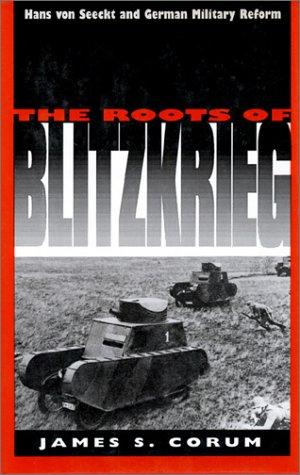
The Roots Of Blitzkrieg: Hans von Seeckt And German Military Reform

James S. Corum

★★★★★
Read Advanced intel Basic intel Military history Intel history Logistics WWII WWI Logistics Strategy / theory ISBN 9780700606283

University Press of Kansas · February 1994

Following Germany's defeat in World War I, the Germans signed the Versailles Treaty, superficially agreeing to limit their war powers. The Allies envisioned the future German army as a lightly armed border guard and international security force. The Germans had other plans. As early as 1919, James Corum contends, the tactical foundations were being laid for the Nazi Blitzkrieg. Between 1919 and 1933, German military leaders created and nurtured the Reichswehr, a new military organization built on the wreckage of the old Imperial Army. It was not being groomed for policing purposes. Focusing on Hans von Seeckt, General Staff Chief and Army Commander, Corum traces the crucial transformations in German military tactical doctrine, organization, and training that laid the foundations for fighting Germany's future wars. In doing so, he restores balance to prior assessment of von Seeckt's influence and demonstrates how the general, along with a few other "visionary" officers--including armor tactician Ernst Volckheim and air tactician Helmut Wilberg--collaborated to develop the core doctrine for what became the Blitzkrieg. The concepts of mobile war so essential to Germany's strength in World War II, Corum shows, were in place well before the tools became available. As an unforeseen consequence of the Versailles Treaty, the Germans were not saddled with a stockpile of outdated equipment as the Allies were. This, ironically, resulted in an advantage for the Germans, who were able to create doctrine first and design equipment to match it.

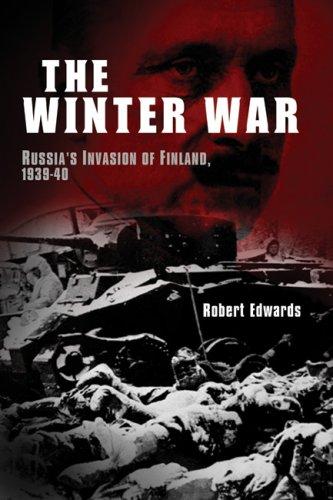
The Winter War: Russia's Invasion Of Finland, 1939-40

Robert Edwards

★★★★★
Read Advanced intel Basic intel Military history Intel history Logistics WWII Cold War Russia / USSR Logistics Economics ISBN 9781933648507

Pegasus Books · December 30, 2007

On November 30, 1939, the Soviet Union's Red Army invaded the young nation-state of Finland, in the full expectation of routing the small, ill-equipped Finnish army and annexing the former Russian territory by the end of the year. But Finland held out for 105 bitterly cold, fiercely combative days, until March 15, 1940, when a peace agreement ended the short, savage Winter War. At the stirring center of the story lie the resourcefulness and resolve of the Finnish people, who against all military odds—in want of ammunition, food, sleep, and troops—fought a blundering, ineptly commanded Red Army to a standstill. On March 15, they ceded to the Soviet 11 percent of their territory and 30 percent of their economic assets, but none of their national pride. The Russians meanwhile had markedly damaged their international standing and effectively ruined their military reputation-to such an extent, as this probing chapter in World War II history demonstrates, that Germany, with proud-blooded Finland as an ally, dared to launch its 1940 invasion of Russia. At the same time, though, the fiasco of the Winter War forced Stalin to acknowledge the shortcomings of the Red Army and to reform it: Germany would fall at Stalingrad in 1941. With authority, this skillfully narrated military history unfolds its story of the four-month Soviet-Finnish war and explores its consequences from London to Moscow, from Helsinki to Paris, to Washington, DC.

Cry Havoc: How the Arms Race Drove the World to War, 1931-1941

Joseph A. Maiolo

★★★★
Read Advanced intel Military history Logistics WWII Nuclear Russia / USSR Logistics ISBN 9780465011148

Basic Books · 2010

Did the arms race of the 1930s cause the Second World War? In Cry Havoc , historian Joseph Maiolo shows, in rich and fascinating detail, how the deadly game of the arms race was played out in the decade prior to the outbreak of the Second World War. In this exhaustively researched account, he explores how nations reacted to the moves of their rivals, revealing the thinking of those making the key decisions—Hitler, Mussolini, Chamberlain, Stalin, Roosevelt—and the dilemmas of democratic leaders who seemed to be faced with a choice between defending their nations and preserving their democratic way of life. An unparalleled account of an era of extreme political tension, Cry Havoc shows how the interwar arms race shaped the outcome of World War II before the shooting even began.

Destiny in the Desert: The Story Behind El Alamein - the Battle That Turned the Tide

Jonathan Dimbleby

★★★★
Read Logistics Intel history Military history Economics WWII Russia / USSR Logistics Strategy / theory Economics Orthodox / theology ISBN 9781846684449

Profile Books Ltd · 2012

This is a unique single-volume history of the road to El Alamein - 'the end of the beginning' - and the bloody battle that followed...It was the British victory at the Battle of El Alamein in November 1942 that inspired one of Churchill's most famous aphorisms: 'it is not the end nor is it the beginning of the end, but it is the end of the beginning'. And yet the true significance of this iconic episode remains unrecognised. In this thrilling historical account, Jonathan Dimbleby describes the political and strategic realities that lay behind the battle, charting the nail-biting months that led to the victory at El Alamein in November 1942. It is a story of high drama, played out both in the war capitals of London, Washington, Berlin, Rome and Moscow, and at the front, in the command posts and foxholes in the desert. "El Alamein" is about politicians and generals, diplomats, civil servants and soldiers. It is about forceful characters and the tensions and rivalries between them. Drawing on official records and the personal insights of those involved at every level, Dimbleby creates a vivid portrait of a struggle which for Churchill marked the turn of the tide - and which for the soldiers on the ground involved fighting and dying in a foreign land.

No cover · Amazon

Enduring the Whirlwind: The German Army and the Russo-German War 1941-1943 (Wolverhampton Military Studies Book 21)

Gregory Liedtke

★★★★
Read Advanced intel Military history Logistics WWII Cold War Russia / USSR Logistics

Despite the best efforts of a number of historians, many aspects of the ferocious struggle between Nazi Germany and the Soviet Union during the Second World War remain obscure or shrouded in myth. One of the most persistent of these is the notion - largely created by many former members of its own officer corps in the immediate postwar period - that the German Army was a paragon of military professionalism and operational proficiency whose defeat on the Eastern Front was solely attributable to the amateurish meddling of a crazed former Corporal and the overwhelming numerical superiority of the Red Army. A key pillar upon which the argument of German numerical-weakness vis-à-vis the Red Army has been constructed is the assertion that Germany was simply incapable of providing its army with the necessary quantities of men and equipment needed to replace its losses. In consequence, as their losses outstripped the availability of replacements, German field formations became progressively weaker until they were incapable of securing their objectives or, eventually, of holding back the swelling might of the Red Army. This work seeks to address the notion of German numerical-weakness in terms of Germany's ability to replace its losses and regenerate its military strength, and assess just how accurate this argument was during the crucial first half of the Russo-German War (June 1941-June 1943). Employing a host of primary documents and secondary literature, it traces the development and many challenges of the German Army from the prewar period until the invasion of the Soviet Union in June 1941. It continues on to chart the first two years of the struggle between Germany and the Soviet Union, with a particular emphasis upon the scale of German personnel and equipment losses, and how well these were replaced. It also includes extensive examinations into the host of mitigating factors that both dictated the course of Germany's campaign in the East and its replacement and regeneration capabilities. In contrast to most accounts of the conflict, this study finds that numerical-weakness being the primary factor in the defeat of the Ostheer - specifically as it relates to the strength and condition of the German units involved - has been overemphasized and frequently exaggerated. In fact, Germany was actually able to regenerate its forces to a remarkable degree with a steady flow of fresh men and equipment, and German field divisions on the Eastern Front were usually far stronger than the accepted narratives of the war would have one believe.

Enemy at the Gates: The Battle for Stalingrad

William Craig

★★★★
Read Military history Logistics WWII Cold War Russia / USSR Logistics Intel history Orthodox / theology ISBN 9780760746776

Barnes & Noble Books · 2003

Stalingrad, the bloodiest battle in the history of warfare, cost the lives of nearly two million men and women. It signaled the beginning of the end for the Third Reich of Adolf Hitler; it foretold the Russian juggernaut that would destroy Berlin and make the Soviet Union a superpower. As Winston Churchill characterized the result of the conflict at Stalingrad: " the hinge of fate had turned." William Craig, author and historian, has painstakingly recreated the details of this great battle: from the hot summer of August 1942, when the German armies smashed their way across southern Russia toward the Volga River, through the struggle for Stalingrad-a city Hitler had never meant to capture and Stalin never meant to defend-on to the destruction of the supposedly invincible German Sixth Army and the terror of the Russian prison camps in frozen Siberia. Craig has interviewed hundreds of survivors of the battle-both Russian and German soldiers and civilians-and has woven their incredible experiences into the fabric of hitherto unknown documents. The resulting mosaic is epic in scope, and the human tragedy that unfolds is awesome.

Finland's War Of Choice: The Troubled German-Finnish Coalition in World War II

Henrik O. Lunde

★★★★
Read Advanced intel Military history Logistics WWII Cold War Russia / USSR Logistics ISBN 9781935149484

Casemate Publishers and Book Distributors · 2011

This book describes the odd coalition between Germany and Finland in World War II, and their joint military operations from 1941 to 1945. This is a topic often missing in English, though in stark contrast to the numerous books on the shorter and less bloody Winter War. That conflict represented a gallant fight of a democratic "David" against a totalitarian "Goliath" that caught the imagination of the world. The story of Finland fighting alongside a "Goliath" of its own has not brought pride to that nation and was a period many Finns would rather forget. The prologue of this book brings the reader up to speed by briefly examining the difficult history of Finland, from its separation from the Soviet Union in 1917 to its isolation after being bludgeoned in 1939-40. It then examines both Finnish and German motives for forming a coalition against the USSR, and how--as logical as a common enemy would seem--the lack of true planning and preparation would doom the alliance.

No cover · Amazon

Harvest of Despair: Life and Death in Ukraine under Nazi Rule

Karel C. Berkhoff

★★★★
Read Advanced intel Military history Logistics WWII Guerrilla / COIN Russia / USSR Logistics Revolution

"If I find a Ukrainian who is worthy of sitting at the same table with me, I must have him shot," declared Nazi commissar Erich Koch. To the Nazi leaders, the Ukrainians were Untermenschen—subhumans. But the rich land was deemed prime territory for Lebensraum expansion. Once the Germans rid the country of Jews, Roma, and Bolsheviks, the Ukrainians would be used to harvest the land for the master race. Karel Berkhoff provides a searing portrait of life in the Third Reich's largest colony. Under the Nazis, a blend of German nationalism, anti-Semitism, and racist notions about the Slavs produced a reign of terror and genocide. But it is impossible to understand fully Ukraine's response to this assault without addressing the impact of decades of repressive Soviet rule. Berkhoff shows how a pervasive Soviet mentality worked against solidarity, which helps explain why the vast majority of the population did not resist the Germans. He also challenges standard views of wartime eastern Europe by treating in a more nuanced way issues of collaboration and local anti-Semitism. Berkhoff offers a multifaceted discussion that includes the brutal nature of the Nazi administration; the genocide of the Jews and Roma; the deliberate starving of Kiev; mass deportations within and beyond Ukraine; the role of ethnic Germans; religion and national culture; partisans and the German response; and the desperate struggle to stay alive. Harvest of Despair is a gripping depiction of ordinary people trying to survive extraordinary events.

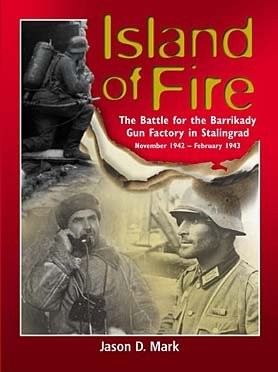
Island of Fire: The Battle for the Barrikady Gun Factory in Stalingrad

Jason D. Mark

★★★★
Read Military history Logistics Advanced intel WWII Russia / USSR Logistics ISBN 0975107631

Leaping Horseman Books · 2006

Stalingrad symbolises many the ideological clash between Nazism and Communism, the battle of wills between Hitler and Stalin, and the absolute fortitude of the Soviet people. In many people's minds, however, it represents the savagery, folly and utter waste of urban combat, a city where dozens of lives were readily exchanged for a ruined building. And nowhere did this senselessness manifest itself more than in the Barrikady Gun Factory and its housing settlement. The men of the German 305. Infanterie-Division had captured all of the factory's massive workhalls by the end of October 1942. The only obstacles standing between them and the Volga were a few battered houses and the remnants of the Soviet 138th Rifle Division. Five fresh pioneer battalions were brought in to help the Germans and the 'final' attack in Stalingrad (known erroneously as Operation 'Hubertus') was launched on 11 November, 1942. The push to the river cut off the Soviet troops and left a tiny bridgehead. Grim fighting raged around this fiery perimeter for three months. To the Soviet soldiers, this bridgehead was known as 'Lyudnikov's Island', or 'Ognenniy ostrov' - 'Island of Fire'. Painstakingly compiled from German and Russian sources such as war diaries, combat reports, published works, eyewitness accounts, letters and photos, this book presents an unbiased chronicle of the pitiless struggle from both perspectives.