S2 Search · Reading list

S2 Actual reading list

Books from S2 Actual on Goodreads, organized by his shelves and topic buckets (intel lists, military history, logistics, etc.). Metadata filled via Open Library.

Not official S2 Underground. Independent fan index — not affiliated with or endorsed by S2. Official hub: linktr.ee/S2_underground. S2 materials are CC BY-NC-SA 4.0.

S2 topic buckets (Goodreads)

Subjects & genres

24 books · Read · subject Armor

No cover · Amazon

Death of the Leaping Horseman: 24 Panzer-Division in Stalingrad 12th August-20th November 1942

Jason D. Mark

★★★★★
Read Military history Logistics WWII Air power Armor Russia / USSR Logistics Intel history

The gripping story of an elite panzer division and its battles in the shattered streets of Stalingrad. In "Death of the Leaping Horseman: 24th Panzer-Division in Stalingrad," the untold story of 24th Panzer-Division's savage fighting on Stalingrad's outskirts - and in the devastated ruins of the city itself - is revealed in a detailed day-by-day account. Beginning in the heady days of the victorious march toward Stalingrad in August 1942, the book follows the Division into Stalingrad's suburbs as it is slowly and inexorably suked into the fiery crucible that was Stalingrad. Panzer losses and casualties increased daily until finally, after three months of draining combat, the Division was reduced to a battlegroup consisting of a couple of panzers and a few hundred men. Woven through official combat reports and entries from the Division's war diaries are gripping accounts from the few remaining veterans - including an Oakleaves winner and several Knight's Cross winners. Contains over 200 photos and 85 maps and aerial photos.

Death Traps: The Survival of an American Armored Division in World War II

Belton Y. Cooper

★★★★★
Read Military history WWII Vietnam Korea Armor Biography ISBN 9780891418146

Presidio Press · April 29, 2003

“An important contribution to the history of World War II . . . I have never before been able to learn so much about maintenance methods of an armored division, with precise details that underline the importance of the work, along with descriptions of how the job was done.”—Russell F. Weigley, author of  Eisenhower’s Lieutenants “Cooper saw more of the war than most junior officers, and he writes about it better than almost anyone. . . . His stories are vivid, enlightening, full of life—and of pain, sorrow, horror, and triumph.” —Stephen E. Ambrose, from his Foreword  “In a down-to-earth style, Death Traps tells the compelling story of one man’s assignment to the famous 3rd Armored Division that spearheaded the American advance from Normandy into Germany. Cooper served as an ordnance officer with the forward elements and was responsible for coordinating the recovery and repair of damaged American tanks. This was a dangerous job that often required him to travel alone through enemy territory, and the author recalls his service with pride, downplaying his role in the vast effort that kept the American forces well equipped and supplied. . . . [Readers] will be left with an indelible impression of the importance of the support troops and how dependent combat forces were on them.” — Library Journal “As an alumnus of the 3rd, I eagerly awaited this book’s coming out since I heard of its release . . . and the wait and the book have both been worth it. . . . Cooper is a very polished writer, and the book is very readable. But there is a certain quality of ‘you are there’ many other memoirs do not seem to have. . . . Nothing in recent times—ridgerunning in Korea, firebases in Vietnam, or even the one hundred hours of Desert Storm—pressed the ingenuity and resolve of American troops . . . like WWII. This book lays it out better than any other recent effort, and should be part of the library of any contemporary warrior.” —Stephen Sewell,  Armor Magazine “Cooper’s writing and recall of harrowing events is superb and engrossing. Highly recommended.” —Robert A. Lynn, The Stars and Stripes “This detailed story will become a classic of WWII history and required reading for anyone interested in armored warfare.” — Publishers Weekly (starred review) “[ Death Traps ] fills a critical gap in WWII literature. . . . It’s a truly unique and valuable work.” —G.I. Journal

Desert War: The North African Campaign 1940-43

Alan Moorehead

★★★★★
Read Intel history Military history Advanced intel Logistics WWII Armor Logistics Biography ISBN 0140275142

Penguin Books · 2001

The seminal account of the battle between Montgomery’s Eighth Army and Rommel’s Afrika Corps, amidst the endless harsh wastes of the Western Desert. In 1940, Alan Moorehead was sent to cover the North Africa campaign by the Daily Express, and he followed its dramatic course all the way to 1943. The three books he subsequently wrote about the Desert War – later collected as his ‘African Trilogy’ – were swiftly acclaimed as a classic account of the tussle between Montgomery’s Eighth Army and Rommel’s Afrika Corps, under the beating sun of the Egyptian Sahara's Western Desert. Moorehead was responsible for the celebrated insight that tank battles in the desert are like battles at sea, the lumbering tanks like ships lost in a vast ocean of sand. The New Statesman could not have put it better when it described his achievement with this riveting book: ‘There is something of genius in the breadth and penetration of his vision , which encompasses the whole panorama of war and then narrows it down to the particular: the soldier stubbing out his cigarette before going into action, the expression on a tank commander’s face as he is hit… The story of the African campaigns will go down in history as one of the great epics of mankind, largely thanks to Mr Moorehead’s account.’

No cover · Amazon

Fast Tanks and Heavy Bombers: Innovation in the U.S. Army, 1917-1945

David E. Johnson

★★★★★
Read Basic intel Military history Intel history Logistics WWII Air power Armor Guerrilla / COIN Logistics Strategy / theory

The U.S. Army entered World War II unprepared. In addition, lacking Germany's blitzkrieg approach of coordinated armor and air power, the army was organized to fight two wars: one on the ground and one in the air. Previous commentators have blamed Congressional funding and public apathy for the army's unprepared state. David E. Johnson believes instead that the principal causes were internal: army culture and bureaucracy, and their combined impact on the development of weapons and doctrine. Johnson examines the U.S. Army's innovations for both armor and aviation between the world wars, arguing that the tank became a captive of the conservative infantry and cavalry branches, while the airplane's development was channeled by air power insurgents bent on creating an independent air force. He maintains that as a consequence, the tank's potential was hindered by the traditional arms, while air power advocates focused mainly on proving the decisiveness of strategic bombing, neglecting the mission of tactical support for ground troops. Minimal interaction between ground and air officers resulted in insufficient cooperation between armored forces and air forces. Fast Tanks and Heavy Bombers makes a major contribution to a new understanding of both the creation of the modern U.S. Army and the Army's performance in World War II. The book also provides important insights for future military innovation.

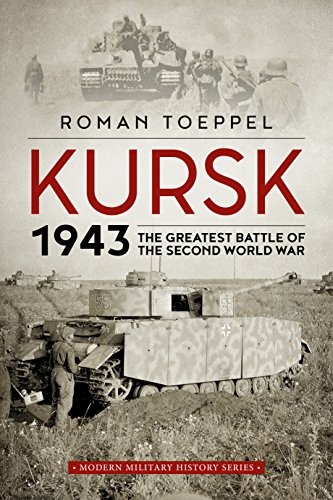
Kursk 1943: The Greatest Battle of the Second World War (Modern Military History)

Roman Töppel

★★★★★
Read Military history Technical warfare WWII Armor Russia / USSR ISBN 9781912390038

Helion and Company · Oct 09, 2018

The Battle of Kursk in the summer of 1943 was one of the greatest battles in military history involving more than 3 million soldiers, 10,000 tanks and 8,000 aircraft. While many books have been written on this allegedly most decisive battle of the Second World War, many legends live on, above all because of misleading information that recur in most publications - even in the most recent ones. Based on almost 20 years of research reassessing the primary sources, Roman Toeppel sheds light on the phase of decision-making, the preparations and the development of the battle in an engaging style that grips the reader's attention from the first page on. The author concentrates on little-known developments and events leading the reader to astonishing results. He also gives entirely new insights into the historiographic appraisal of this battle, putting thoroughly researched facts against erroneous popular beliefs, myths and legends that have been passed down among historians for generations.

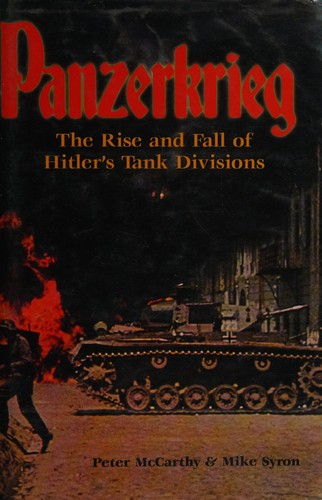
Panzerkrieg: The Rise and Fall of Hitler's Tank Divisions

Peter McCarthy

★★★★★
Read Advanced intel Intel history Logistics Technical warfare Military history WWII Cold War Armor Russia / USSR Logistics Biography ISBN 0786710098

Carroll & Graf Publishers · 2002

The image that defines the Nazis’ Blitzkrieg is that of the Panzerwaffe’s massed columns of tanks sweeping through Europe, all resistance smashed in their wake. The Panzers’ achievements in battle were largely responsible for Germany’s early successes in World War II, and once the tide had turned against the Reich, the Panzers became the backbone of its defense. But the dramatic story of Hitler’s tank divisions is more than one of mere mechanical efficiency. It hangs, too, on those who commanded and fought in them, and believed in their near invincibility. These are the men who come to life in this immensely readable narrative. Great generals like Guderian, Rommel, and Manstein, tank masters like Wittmann and Bake, and inspired commanders like Balck and Bayerlein dominate the story of Panzerkreig. Dispensing with jargon, but including explanatory maps, rare illustrations, and fascinating detail on uniforms, crew members, and the mechanical features of the machines, the authors give a comprehensive overview of all aspects of the subject, both human and technical. They have also benefited from new information available since the opening of Cold War archives. Emerging from the narrative is the whole vast canvas of the war, as it follows the titanic struggles that raged between France’s bocage country, North Africa’s desert wastes, and Russia’s limitless steppes. The development of German fighting vehicles and tactics is fully charted, and the many myths and misconceptions of the Panzerwaffe are exploded. Extensive research, maps, illustrations throughout, reference to the leading participants’ memoirs, and original new conclusions all contribute to this finely measured assessment of the evolution, exploits, and eventual destruction of this superlative fighting force.

No cover · Amazon

Panzerkrieg: Volume 1 - German Armoured Operations at Stalingrad

Jason D. Mark

★★★★★
Read Military history Advanced intel WWII Air power Armor Russia / USSR Intel history

For the first time ever, the operations of panzer formations at Stalingrad are examined in detail, from formation until demise. Stalingrad is perceived as a fierce man-versus-man struggle in the ruins of a major metropolis and the surrounding steppe; yet, 6. Armee possessed formidable armoured assets that helped it reach the Volga, defended its flanks and even supported assault groups within the claustrophobic confines of the city. In this first volume of a series dedicated to studying German armoured operations at Stalingrad, the combat histories of Panzer-Abteilungen 103, 129 and 160 will be examined in detail. These panzer battalions were drawn from panzer regiments on the quieter central sector of the Eastern Front. They were incorporated into motorized divisions for the 1942 summer campaign, and though most of their men thought they were headed to the Caucasus, all roads ultimately led to Stalingrad. As manpower levels dropped in their parent formations, the panzer battalions assumed a greater role in holding lengthy flanks while the main body of 6. Armee laid siege to Stalingrad. After encirclement in November 1942, the panzers assembled for a break-out operation, and when that failed to eventuate, they supported their struggling infantry brethren with plucky counterattacks and steadfast defense until fuel, ammunition and morale were depleted. Unprecedented access to Deutsche Dienststelle (WASt), a government agency that maintains records of former Wehrmacht personnel, has permitted the life and death of each battalion to be analysed in incredible detail. The narrative is enhanced by hundreds of rare photos drawn from official archives, private collections and the albums of veterans themselves. -280 x 216 Portrait format -568 Pages on high-quality gloss paper -Hardcover only -559 Photos -12 Aerial photos -50 Maps -12 Tables -3 appendices showing the daily panzer strengths of each battalion

Sledgehammers: Strengths and Flaws of Tiger Tank Battalions in World War II

Christopher W. Wilbeck

★★★★★
Read Technical warfare Military history WWII Armor Russia / USSR Intel history Strategy / theory ISBN 9780971765023

The Aberjona Press · March 2004

The Tiger and King Tiger tanks gained legendary status during World War II. Numerous tank commanders attained phenomenal tallies of kills and accomplished extraordinary feats during combat in these tanks, building the legend to near mythic proportions after the war. During WWII, the Germans created eleven Army and three Waffen-SS heavy tank battalions. These heavy tank battalions were employed in nearly every part of Europe against almost every enemy of Germany. As vast in breadth and scope as the employment of Tiger battalions themselves, Sledgehammers provides historical examples and analysis of heavy tank battalions’ actions in North Africa, Normandy, Italy, the Ardennes Offensive, and numerous battles on the Eastern Front including Operation ZITADELLE/the Battle of Kursk, Operation BAGRATION, the battle of the Cherkassy Pocket, late war attacks to relieve Budapest, and many other more minor engagements. Although a great deal has already been published about Tiger tanks’ technical details and some of the units which used them, until now, very little has been written concerning the organization and tactical employment of these tanks throughout the German armed forces and across the theaters in which they were employed. Sledgehammers provides an in-depth look at heavy tank battalions’ organizations and tactics, including the tactical doctrine by which these elite units were supposed to fight and how they were actually employed on the battlefield by their commanders and crews. Even given the Tiger’s reputation, many readers will be amazed by the fearsome casualties inflicted by the crews of many of these behemoth armored vehicles. It is safe to say that no other armored vehicle of the war wreaked as much havoc among enemy formations as Tigers. Many will, however, also find it equally stunning to learn of the Tigers’ many technical and tactical vulnerabilities. Through the systematic use of extremely detailed primary source and other impeccably reliable research, Sledgehammers demolishes several major myths about Tigers in World War II. Meticulously researched and written with the perspective and respect for Tigers' crews that only a professional tanker can bring to the subject, Sledgehammers synthesizes information to provide new and definitive insights into the strengths and flaws of World War II’s most feared and legendary tanks. Prologue by famed Tiger ace Otto Carius. Epilogue by Tiger killers Viktor Iskrov and Ray Holt. 35 original maps. 42 photos.

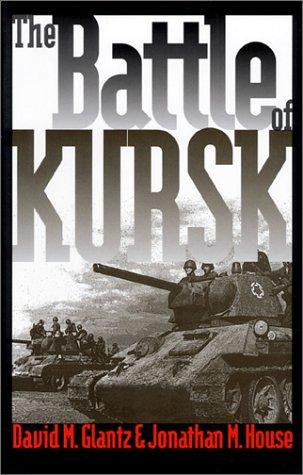
The Battle of Kursk (Modern War Studies)

David M. Glantz

★★★★★
Read Military history WWII Armor Russia / USSR ISBN 0700609784

University Press of Kansas · 1999

Immense in scope, ferocious in nature, and epic in consequence, the Battle of Kursk witnessed (at Prokhorovka) one of the largest tank engagements in world history and led to staggering losses-including nearly 200,000 Soviet and 50,000 German casualties-within the first ten days of fighting. Going well beyond all previous accounts, David Glantz and Jonathan House now offer the definitive work on arguably the greatest battle of World War II. Drawing on both German and Soviet sources, Glantz and House separate myth from fact to show what really happened at Kursk and how it affected the outcome of the war. Their access to newly released Soviet archival material adds unprecedented detail to what is known about this legendary conflict, enabling them to reconstruct events from both perspectives and describe combat down to the tactical level. The Battle of Kursk takes readers behind Soviet lines for the first time to discover what the Red Army knew about the plans for Hitler's offensive (Operation Citadel), relive tank warfare and hand-to-hand combat, and learn how the tide of battle turned. Its vivid portrayals of fighting in all critical sectors place the famous tank battle in its proper context. Prokhorovka here is not a well-organized set piece but a confused series of engagements and hasty attacks, with each side committing its forces piecemeal. Glantz and House's fresh interpretations demolish many of the myths that suggest Hitler might have triumphed if Operation Citadel had been conducted differently. Their account is the first to provide accurate figures of combat strengths and losses, and it includes 32 maps that clarify troop and tank movements. Shrouded in obscurity and speculation for more than half a century, the Battle of Kursk finally gets its due in this dramatic retelling of the confrontation that marked the turning point of the war on the Eastern Front and brought Hitler's blitzkrieg to a crashing halt.

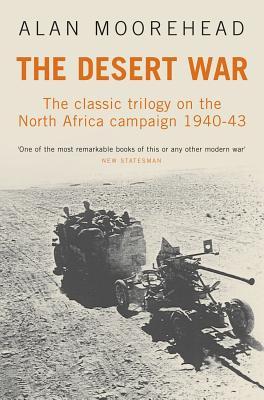
The Desert War Trilogy

Alan Moorehead

★★★★★
Read Advanced intel Intel history Military history Logistics Armor Logistics ISBN 9781845133917

Quarto Publishing Group UK · 2009

The seminal account of the battle between Montgomery’s Eighth Army and Rommel’s Afrika Corps, amidst the endless harsh wastes of the Western Desert. In 1940, Alan Moorehead was sent to cover the North Africa campaign by the Daily Express, and he followed its dramatic course all the way to 1943. The three books he subsequently wrote about the Desert War – later collected as his ‘African Trilogy’ – were swiftly acclaimed as a classic account of the tussle between Montgomery’s Eighth Army and Rommel’s Afrika Corps, under the beating sun of the Egyptian Sahara's Western Desert. Moorehead was responsible for the celebrated insight that tank battles in the desert are like battles at sea, the lumbering tanks like ships lost in a vast ocean of sand. The New Statesman could not have put it better when it described his achievement with this riveting book: ‘There is something of genius in the breadth and penetration of his vision , which encompasses the whole panorama of war and then narrows it down to the particular: the soldier stubbing out his cigarette before going into action, the expression on a tank commander’s face as he is hit… The story of the African campaigns will go down in history as one of the great epics of mankind, largely thanks to Mr Moorehead’s account.’

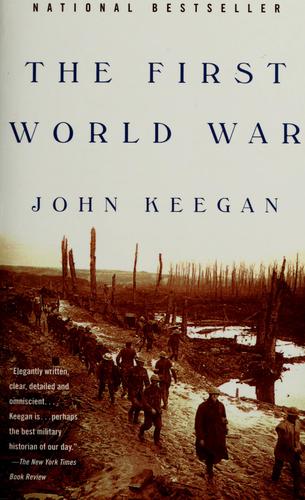
The First World War

John Keegan

★★★★★
Read Intel history WWII WWI Armor Russia / USSR Economics ISBN 9780375700453

Vintage · 2000

The First World War created the modern world. A conflict of unprecedented ferocity, it abruptly ended the relative peace and prosperity of the Victorian era, unleashing such demons of the twentieth century as mechanized warfare and mass death. It also helped to usher in the ideas that have shaped our times--modernism in the arts, new approaches to psychology and medicine, radical thoughts about economics and society--and in so doing shattered the faith in rationalism and liberalism that had prevailed in Europe since the Enlightenment. With The First World War, John Keegan, one of our most eminent military historians, fulfills a lifelong ambition to write the definitive account of the Great War for our generation. Probing the mystery of how a civilization at the height of its achievement could have propelled itself into such a ruinous conflict, Keegan takes us behind the scenes of the negotiations among Europe's crowned heads (all of them related to one another by blood) and ministers, and their doomed efforts to defuse the crisis. He reveals how, by an astonishing failure of diplomacy and communication, a bilateral dispute grew to engulf an entire continent. But the heart of Keegan's superb narrative is, of course, his analysis of the military conflict. With unequalled authority and insight, he recreates the nightmarish engagements whose names have become legend--Verdun, the Somme and Gallipoli among them--and sheds new light on the strategies and tactics employed, particularly the contributions of geography and technology. No less central to Keegan's account is the human aspect. He acquaints us with the thoughts of the intriguing personalities who oversaw the tragically unnecessary catastrophe--from heads of state like Russia's hapless tsar, Nicholas II, to renowned warmakers such as Haig, Hindenburg and Joffre. But Keegan reserves his most affecting personal sympathy for those whose individual efforts history has not recorded--"the anonymous millions, indistinguishably drab, undifferentially deprived of any scrap of the glories that by tradition made the life of the man-at-arms tolerable." By the end of the war, three great empires--the Austro-Hungarian, the Russian and the Ottoman--had collapsed. But as Keegan shows, the devastation ex-tended over the entirety of Europe, and still profoundly informs the politics and culture of the continent today. His brilliant, panoramic account of this vast and terrible conflict is destined to take its place among the classics of world history. With 24 pages of photographs, 2 endpaper maps, and 15 maps in text

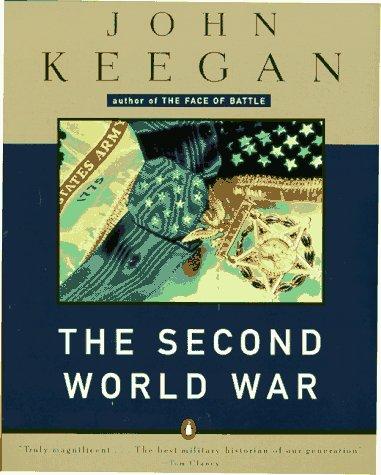
The Second World War

John Keegan

★★★★★
Read Intel history WWII Armor Strategy / theory ISBN 014011341X

Penguin Books · 1990

In this comprehensive history, John Keegan explores both the technical and the human impact of the greatest war of all time. He focuses on five crucial battles and offers new insights into the distinctive methods and motivations of modern warfare. In knowledgable, perceptive analysis of the airborne battle of Crete, the carrier battle of Midway, the tank battle of Falaise, the city battle of Berlin, and the amphibious battle of Okinawa, Keegan illuminates the strategic dilemmas faced by the leaders and the consequences of their decisions on the fighting men and the course of the war as a whole.

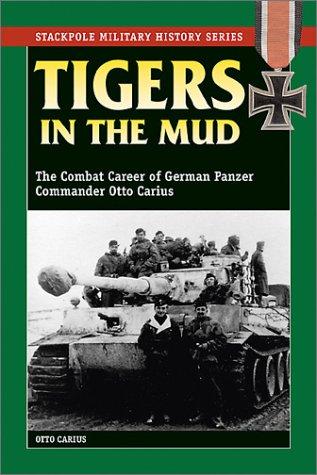
Tigers In The Mud: The Combat Career of German Panzer Commander Otto Carius

Otto Carius

★★★★★
Read Intel history Military history WWII Armor Intel history Biography ISBN 0811729117

Stackpole Books · 2003

WWII began with a metallic roar as the German Blitzkrieg raced across Europe, spearheaded by the most dreaded weapon of the 20th century: the Panzer. No German tank better represents that thundering power than the infamous Tiger, and Otto Carius was one of the most successful commanders to ever take a Tiger into battle, destroying well over 150 enemy tanks during his incredible career.

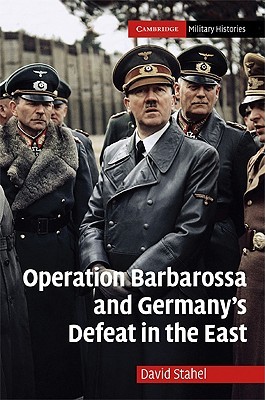
Operation Barbarossa and Germany's Defeat in the East

David Stahel

★★★★
Read Military history WWII Cold War Armor Russia / USSR ISBN 9780521768474

Cambridge University Press · 2009

Operation Barbarossa, the German invasion of the Soviet Union, began the largest and most costly campaign in military history. Its failure was a key turning point of the Second World War. The operation was planned as a Blitzkrieg to win Germany its Lebensraum in the East, and the summer of 1941 is well-known for the German army's unprecedented victories and advances. Yet the German Blitzkrieg depended almost entirely upon the motorised Panzer groups, particularly those of Army Group Centre. Using previously unpublished archival records, David Stahel presents a new history of Germany's summer campaign from the perspective of the two largest and most powerful Panzer groups on the Eastern front. Stahel's research provides a fundamental reassessment of Germany's war against the Soviet Union, highlighting the prodigious internal problems of the vital Panzer forces and revealing that their demise in the earliest phase of the war undermined the whole German invasion.

Tank Rider: Into the Reich With the Red Army

Evgeni Bessonov

★★★★
Read WWII Cold War Armor Russia / USSR Biography ISBN 1853675547

Stackpole Books · 2003

Tank Rider is the atmospheric memoir of Evgeni Bessonov telling of his years of service in the vanguard of the Red Army and daily encounters with the German foe. He brings large-scale battles alive, recounts the sniping and skirmishing which tried and tested soldiers on both sides and narrates the overwhelming tragedy and horror of apocalyptic warfare on the Eastern Front.

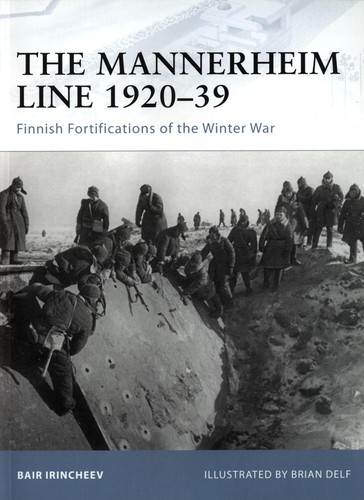
The Mannerheim Line 1920–39: Finnish Fortifications of the Winter War (Fortress, 88)

Bair Irincheev

★★★★
Read Advanced intel Military history Logistics Technical warfare Cold War Armor Russia / USSR Logistics Intel history US Civil War ISBN 9781846033841

Osprey · 2009

In the wake of the bloody civil war that followed Finland's independence from Russia in 1917, the border between the two countries was established across the Karelian Isthmus, an area long fought over by Russia, Finland and Sweden in their attempts to dominate the northern tip of Europe. Neither the Soviets nor the Finnish were comfortable with such a divide, which provided an open route for a potential invader to Helsinki on the Finnish side, and was only 32km from the important military and industrial city of Petrograd in Russia. As such, both sides began an intensive period of fortification and defensive planning. As the Winter War broke out in November 1939, the complex and heavily defended Mannerheim Line suffered intense bombardment and armored assaults. The armistice of May 1940 saw Finland cede control of the entire Karelian Isthmus to the USSR however, and a propaganda war ensued; the Russians emphasizing the strength of the line, and the Finnish downplaying its importance, accentuating instead the heroism and bravery of the common Finnish soldier. Through a detailed analysis of the background, design and operational history of the Mannerheim Line, Bair Irincheev attempts to dispel such myths and provide an accurate assessment of its immense historical importance.

No cover · Amazon

World War 1: A History From Beginning to End

Henry Freeman

★★★★
Read Military history WWI Armor

World War IWorld War 1 was one of the bloodiest wars in modern history. At its end, it had claimed over seventeen million lives. It led to the collapse of nations, the abdication of monarchies and ended empires. Entire divisions of men perished in the pursuit of mere miles of uninhabitable wasteland –– towns were pulverized and millions displaced. It became a horrendous war of attrition, each side competing to kill as many of their foe as possible.Inside you will read about... ✓ 1914 - Blood is spilled ✓ 1915 - The dawn of the industrialized war ✓ 1916 - Unrelenting bloodshed ✓ 1917 - Revolution, revelation and catastrophe ✓ 1918 - The great war at an endIt became the first industrialized war in history and introduced revolutionary technology into the fray. The airplane, the tank and the machine gun first saw action collectively during the conflict. It was also the first war in which poison gas was used to choke young men out of their trenches.This book is a timeline account of the important events that shaped the First World War. It details the events and causes that led the world to war. This book covers the milestone moments, important battles, and how the outcome changed the world forever.

No cover · Amazon

Churchill: Walking with Destiny

Andrew Roberts

★★★☆☆
Read Biographies WWII Armor Biography Orthodox / theology

A landmark reconsideration of the iconoclastic war leader, based on extensive new material, from private letters to war cabinet meetings, by the bestselling, award-winning author of Napoleon and The Storm of War. When we seek an example of unalloyed courage, the man who comes to mind is Winston Churchill: the visionary leader, immune from the consensus of the day, who stood firmly for his beliefs when everyone doubted him. But how did young Winston become Churchill? What gave him the strength to take on the superior force of Nazi Germany when bombs rained on London and so many others had caved? In The Storm of War, Andrew Roberts gave us a tantalizing glimpse of Churchill the war leader. Now, at last, we have the full and definitive biography, as personally revealing as it is compulsively readable, about one of the great leaders of all time. Roberts was granted exclusive access to extensive new material: the transcripts of war cabinet meetings - the equivalent of the Nixon and JFK tapes - diaries, letters, unpublished memoirs, and detailed notes taken by the king after their bi-weekly meetings. Having read every one of Churchill's letters, including deeply personal ones that Churchill's son Randolph had previously chosen to withhold, and spoken to more than one hundred people who knew or worked with him, Roberts identifies the hidden forces fueling Churchill's drive. Churchill put his faith in the British Empire and fought as hard to preserve it as he did to defend London. Having started his career in India and South Africa, he understood better than most idealists how hard it can be to pacify reluctant people far from home. We think of Churchill as a hero of the age of mechanized warfare, but Roberts's masterwork reveals that he has as much to teach us about the challenges we face today and the fundamental values of courage, tenacity, leadership, and moral conviction.

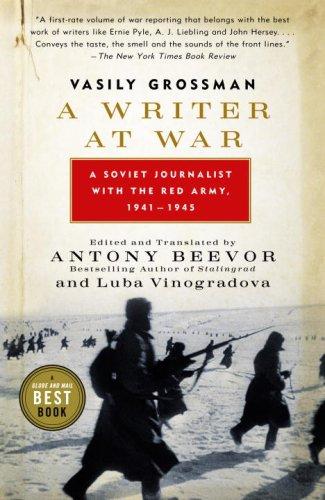
A Writer at War: Vasily Grossman with the Red Army

Vasily Grossman

unrated
Read Military history WWII Cold War Armor Russia / USSR Biography ISBN 9780676978117

Vintage Canada · March 13, 2007

Edited and translated from the Russian by Antony Beevor and Luba Vinogradova Knopf Canada is proud to present a masterpiece of the Second World War, never before published in English, from one of the great Russian writers of the 20th century – a vivid eyewitness account of the Eastern Front and “the ruthless truth of war.” When the Germans invaded Russia in 1941, Vasily Grossman became a special correspondent for the Red Star, the Red Army’s newspaper. A Writer at War – based on the notebooks in which Grossman gathered raw material for his articles – depicts the crushing conditions on the Eastern Front, and the lives and deaths of soldiers and civilians alike. It also includes some of the earliest reportage on the Holocaust. In the three years he spent on assignment, Grossman witnessed some of the most savage fighting of the war: the appalling defeats of the Red Army, the brutal street fighting in Stalingrad, the Battle of Kursk (the largest tank engagement in history), the defense of Moscow, the battles in Ukraine, and much more. Historian Antony Beevor has taken Grossman’s raw notebooks, and fashioned them into a narrative providing one of the most even-handed descriptions – at once unflinching and sensitive – we have ever had of what he called “the ruthless truth of war.” From the Hardcover edition.

No cover · Amazon

Book of the Blockade

Alieś Adamovič

unrated
Read Logistics Armor Russia / USSR Logistics Biography

Leningrad was under siege for almost three years, and the first winter of that siege was one of the coldest on record. The Russians had been taken by surprise by the Germans' sudden onslaught in June 1941. This book tells the story of that long, bitter siege in the words of those who were there. It vividly describes how ordinary Leningraders struggled to stay alive and to defend their beloved city in the most appalling conditions. They were bombed, shelled, starved and frozen. They dug tank-traps and trenches, built shelters and fortifications, fought fires, cleared rubble, tended the wounded and, for as long as they had strength to do so, buried their dead. Many were killed by German bombs or shells, but most of them died of hunger and cold. Based on interviews with survivors of the siege and on contemporary diaries and personal memoirs. The primary focus is on three a young mother with two small children, a boy of sixteen at the outbreak of war, and an elderly academic. We see the siege through their eyes as its horrors unfold and as they struggle to survive.

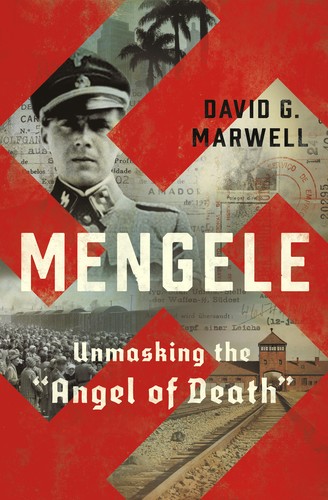
Mengele: Unmasking the "Angel of Death"

David G. Marwell

unrated
Read Military history WWII Armor Biography ISBN 9780393609530

W. W. Norton Company · 2020

A gripping account of the infamous Nazi doctor, from a former Justice Department official tasked with uncovering his fate. One of the most notorious war criminals of all time, Dr. Josef Mengele has come to symbolize both the evil of the Nazi regime and the failure of justice in the postwar world. Drawing on new scholarship and sources, historian David G. Marwell examines Mengele’s life and career, chronicling his university studies, which led to two PhDs and a promising career as a scientist; his wartime service, in combat and at Auschwitz, where his “selections” determined the fate of countless innocents and his “scientific” pursuits resulted in the traumatization and death of thousands more; and his postwar refuge in Germany and South America. Mengele describes the international search in 1985, which ended in a cemetery in Sao Paulo, Brazil, and the dogged forensic investigation that produced overwhelming evidence that Mengele had died―but failed to convince those who, arguably, most wanted him dead. This is a story of science without limits, escape without freedom, and resolution without justice.

Supplying the British Army in the Second World War

Janet MacDonald

unrated
Read Military history Logistics WWII Armor Logistics ISBN 9781526725356

Pen & Sword Books Limited · 2020

The noted military historian reveals the fascinating history of British Army logistics during WWII in this scholarly study.Armies have always required large amounts of material, but by the Second World War the numbers of men involved had grown exponentially, their equipment had become mechanized, and their deployment was global. Elaborate planning and administration at every level had to ensure that items of all kinds were collected, transported and handed out in every theatre of the war. But how were these items selected, ordered, produced, and delivered? Following her previous volume, Supplying the British Army in the First World War, Janet MacDonald continues her study of how the British Army kept its soldiers fed, clothed, and ready to fight. The scale of the operation was enormous, and it had to be performed to critical timetables. Often threatened by enemy action, it was vital to the army’s success. MacDonald describes the necessity for central advanced planning for each expeditionary force as well as those engaged in home defense. She then elucidates the complex organization of personnel who performed these tasks, from the government and military command in London to those who distributed the equipment on the battlefield.

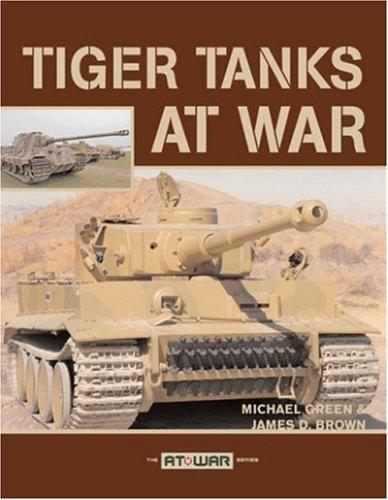
Tiger Tanks at War

Michael Green

unrated
Read Advanced intel Military history Logistics WWII Armor Russia / USSR Logistics ISBN 9780760331125

Zenith Press · February 15, 2008

The first prototype for the Tiger tank was set to be ready for Hitlers birthday on April 20, 1942. The Henschel Company, competing with Porsche, produced the superior model, and by August of that year the formidable Tiger-or Panzerkampfwagen VI Tiger Ausf. H. -was in full production. This book takes us behind the scenes with the Tiger tank, reviewing the full history, the design and mechanics, and the mixed record of this machine, which was designed to outgun its Russian counterparts. Military writer Michael Green offers a close-up account-accompanied by photographs, diagrams, and maps-of how the Tiger tank operated, how it was armed, and where it succeeded brilliantly, as well as where it failed miserably. His book fills a fascinating niche in the history of military technology, and of the impact of technology on history itself.

Worst Enemy: The Reluctant Transformation of the American Military

John Arquilla

unrated
Read Military history GWOT Naval Armor Guerrilla / COIN Strategy / theory ISBN 9781566637503

320 · May 25, 2008

Despite staggering defense costs, the U.S. military has not learned how to confront terrorist and insurgent networks. Traditional thinking and special interests have concentrated on potentially outdated systems, like aircraft carriers and heavily armored vehicles. Our ability to wage irregular warfare against networked forces has been stunted. Meanwhile other nations have innovated and developed techniques that will surpass the capabilities of the hidebound American armed forces.... Worst Enemy offers an inside analysis of the events that have derailed our efforts to transform the nation's military into a leaner, lighter, and much more "networked" force. Mr. Arquilla places these events in historical context and assesses Donald Rumsfeld's role as secretary of defense of the post-9/11 era.