S2 Search · Reading list

S2 Actual reading list

Books from S2 Actual on Goodreads, organized by his shelves and topic buckets (intel lists, military history, logistics, etc.). Metadata filled via Open Library.

Not official S2 Underground. Independent fan index — not affiliated with or endorsed by S2. Official hub: linktr.ee/S2_underground. S2 materials are CC BY-NC-SA 4.0.

S2 topic buckets (Goodreads)

Subjects & genres

67 books · Read · subject Cold War · page 1 of 3

A Spy Among Friends: Kim Philby and the Great Betrayal

Ben Macintyre

★★★★★
Read Cold War Espionage Russia / USSR Biography ISBN 9780804136631

Crown · 2014

Master storyteller Ben Macintyre’s most ambitious work to date brings to life the twentieth century’s greatest spy story. Kim Philby was the greatest spy in history, a brilliant and charming man who rose to head Britain’s counterintelligence against the Soviet Union during the height of the Cold War—while he was secretly working for the enemy. And nobody thought he knew Philby like Nicholas Elliott, Philby’s best friend and fellow officer in MI6. The two men had gone to the same schools, belonged to the same exclusive clubs, grown close through the crucible of wartime intelligence work and long nights of drink and revelry. It was madness for one to think the other might be a communist spy, bent on subverting Western values and the power of the free world. But Philby was secretly betraying his friend. Every word Elliott breathed to Philby was transmitted back to Moscow—and not just Elliott’s words, for in America, Philby had made another powerful friend: James Jesus Angleton, the crafty, paranoid head of CIA counterintelligence. Angleton's and Elliott’s unwitting disclosures helped Philby sink almost every important Anglo-American spy operation for twenty years, leading countless operatives to their doom. Even as the web of suspicion closed around him, and Philby was driven to greater lies to protect his cover, his two friends never abandoned him—until it was too late. The stunning truth of his betrayal would have devastating consequences on the two men who thought they knew him best, and on the intelligence services he left crippled in his wake. Told with heart-pounding suspense and keen psychological insight, and based on personal papers and never-before-seen British intelligence files, A Spy Among Friends is Ben Macintyre’s best book yet, a high-water mark in Cold War history telling.
Barbarossa: Hitler's Invasion of Russia 1941

David M. Glantz

★★★★★
Read Military history WWII Cold War Russia / USSR ISBN 075241979X

Tempus · 2001

From a world expert on Hitler's war in Russia's western borders to the immediate outskirts of Leningrad, Moscow and Rostov in the shockingly brief period of less than six months. The sudden, deep, relentless German advance virtually destroyed the entire peacetime Red Army and captured almost 40 percent of European Russia before expiring inexplicably at the gates of Moscow and Leningrad. An invasion designed to achieve victory in three to six weeks failed and, four years later, resulted in unprecedented and total German defeat.

Bloodlands: Europe Between Hitler and Stalin

Timothy Snyder

★★★★★
Read Military history Advanced intel Logistics WWII Cold War Russia / USSR Logistics ISBN 9780465002399

Basic Books · 2010

Americans call the Second World War “The Good War.” But before it even began, America’s wartime ally Josef Stalin had killed millions of his own citizens—and kept killing them during and after the war. Before Hitler was finally defeated, he had murdered six million Jews and nearly as many other Europeans. At war’s end, both the German and the Soviet killing sites fell behind the iron curtain, leaving the history of mass killing in darkness. Bloodlands is a new kind of European history, presenting the mass murders committed by the Nazi and Stalinist regimes as two aspects of a single history, in the time and place where they occurred: between Germany and Russia, when Hitler and Stalin both held power. Assiduously researched, deeply humane, and utterly definitive, Bloodlands will be required reading for anyone seeking to understand the central tragedy of modern history. From Booklist If there is an explanation for the political killing perpetrated in eastern Europe in the 1930s and 1940s, historian Snyder roots it in agriculture. Stalin wanted to collectivize farmers; Hitler wanted to eliminate them so Germans could colonize the land. The dictators wielded frightening power to advance such fantasies toward reality, and the despots toted up about 14 million corpses between them, so stupefying a figure that Snyder sets himself three goals here: to break down the number into the various actions of murder that comprise it, from liquidation of the kulaks to the final solution; to restore humanity to the victims via surviving testimony to their fates; and to deny Hitler and Stalin any historical justification for their policies, which at the time had legions of supporters and have some even today. Such scope may render Snyder’s project too imposing to casual readers, but it would engage those exposed to the period’s chronology and major interpretive issues, such as the extent to which the Nazi and Soviet systems may be compared. Solid and judicious scholarship for large WWII collections.

Croatian Legion: The 369th Reinforced (Croation) Infantry Regiment on the Eastern Front 1941-1943

Amir Obhođaš

★★★★★
Read Military history Logistics WWII Cold War Russia / USSR Logistics ISBN 9780975107683

Leaping Horseman Books · Mar 01, 2011

Soon after Germany invaded the Soviet Union, the leadership of the newly founded Independent State of Croatia expressed its desire to participate in this "crusade against Bolshevism". Hitler approved the request and so the Croatian Legion, consisting of volunteers from all three branches of the Croatian Armed Forces, was created. Its ground component, the 369th Reinforced (Croatian) Infantry Regiment, was the first to be formed. The Croatian legionaries participated in some of the most famous engagements of World War 2, including the first battle of Kharkov, Operation Fridericus, Plan Blau and finally the grim struggle for Stalingrad. The Regiment was the only non-German unit to participate in the attack on Stalin's city... the other allies were relegated to holding flanks. Initially, this was viewed as a great honour, a reward for its sacrifices and successes, proof that the Wehrmacht had full trust in the Regiment. However, this "honour" would demand the ultimate price. Croatian blood soaked Stalingrad's soil and four months later the unit's pitiful remnants were herded into captivity. Two Croatian sergeants managed to preserve the regimental archive by taking it with them on one of the last flights out of besieged Stalingrad. This unique collection, which includes war diaries, daily orders, combat reports and award recommendations, was the primary resource used to create this book. Additional records from German and Russian archives complete the picture. The Regiment's origins, formation, training and battles are examined in detail. Croatian Legion: The 369th Reinforced (Croatian) Infantry Regiment on the Eastern Front, 1941-1943 offers a unique perspective of the fighting on the Eastern Front through the eyes of a foreign volunteer unit.

Eastern Approaches

Fitzroy Maclean

★★★★★
Read Basic intel Intel history Biographies WWII Cold War Special ops Russia / USSR Middle East Biography Orthodox / theology ISBN 9780140132717

Penguin Global · September 1, 2004

70th Anniversary Edition with a New Foreword by Sunday Times Bestselling Author Simon Sebag Montefiore 'A classic' Observer | 'A legend' Washington Post | 'The best book you will read this year' Colonel Tim Collins Posted to Moscow as a young diplomat before the Second World War, Fitzroy Maclean travelled widely, with or without permission, in some of the wildest and remotest parts of the Soviet Union, then virtually closed to foreigners. In 1942 he fought as a founder member of the SAS in North Africa. There Maclean specialised in hair-raising commando raids behind enemy lines, including the daring and outrageous kidnapping of the German Consul in Axis-controlled Iraq. In 1943 he parachuted into German-occupied Yugoslavia as Winston Churchill's personal representative to Josip Broz Tito and remained there until 1945, all enemy attempts to capture him proving unsuccessful. Eastern Approaches is Maclean's classic, gripping account of the sybaritic delights of diplomatic life, the thrill of remote travel in the then-forbidden zones of Central Asia, and the violence and adventure of world-changing tours in North Africa and Yugoslavia. Maclean is the original British action hero and this is blistering reading. 'This book literally changed my life' Simon Sebag Montefiore 'A man of daring character' Winston Churchill 'An absorbing mixture of military adventure, political judgement, urbane wit, cool humour and surprising incident' Financial Times 'One of the bravest men in the British army, and one of the funniest' Ben Macintyre 'Entertaining, important, the model for James Bond' New York Times

For Your Eyes Only: Ian Fleming and James Bond

Ben Macintyre

★★★★★
Read Military history Cold War Espionage ISBN 9780747595274

Bloomsbury · 2008

Published to coincide with the 2008 Imperial War Museum exhibition of the same name, this is a thrilling stand-alone book that looks into the entwined worlds of James Bond and Ian Fleming. The book and exhibition will explore how Fleming's 007 emerged against the background of the Second World War and the Cold War, and how Bond's world was based on the realities (and fantasies) of Fleming's life as a wartime spy-master and peacetime bon viveur. They will show how the film version of Bond evolved for a later age, and answer a question that has obsessed generations of Bond fans over the where does the world of Ian Fleming end, and that of James Bond begin? Stylishly illustrated, For Your Eyes Only will incorporate a treasure-trove of gadgets, costumes, props, and storyboards from the films - Daniel Craig's blood-stained shirt from Casino Royale, the Aston Martin DB5, complete with weaponry - as well as memorabilia from Fleming's personal his smoking jacket, the manuscript for Casino Royale, his golden typewriter, his guns, and much more. Alongside this array of extraordinary visuals, Ben Macintyre tells the story of how Fleming created the most popular legend of all time. On the centenary of Fleming's birth, he looks at the real people on whom the writer based his fictional creations - friends, colleagues, lovers, and of course, the notorious villains. Exploring the tradition of spy fiction past and present - with specific attention to the Cold War - Macintyre explains the astonishing legacy of the Bond books and the enduring appeal of a fictional secret agent who not only lived twice, but proved to be immortal.

God's Revelation to the Human Heart

Seraphim Rose

★★★★★
Read Cold War Orthodox / theology ISBN 0938635034

St. Herman of Alaska Brotherhood · 1987

What does man seek in religion, and what should he seek in it? How does God reveal Himself in order to bring man to a knowledge of the Truth? How does suffering help this revelation to occur?These and other questions were discussed by Fr. Seraphim Rose, an Orthodox Christian monk from the mountains of northern California, during a lecture he gave at the University of California, Santa Cruz, in 1981. The contents of this lecture comprise God's Revelation to the Human Heart. Drawing from a variety of sources -- the Holy Scriptures, patristic writings, the lives of both ancient and modern saints, and accounts of persecuted Christians behind the Iron Curtain -- Fr. Seraphim goes to the core of all Christian life: the conversion of the heart of man, which causes it to bum with love for Christ and transforms one into a new being.

No cover · Amazon

Into Oblivion: The Story of Pionier-Batallion 305

Jason D. Mark

★★★★★
Read Logistics Military history WWII Cold War Air power Russia / USSR Logistics Intel history

After 16 months of training and garrison duty in France, Pionier-Bataillon 305 – together with the rest of 305. Infanterie-Division – was sent to the Eastern Front. Little could they know that an inevitable train of events had been set in motion that would lead to their destruction at Stalingrad barely nine months later. An unprecedented discovery of original material has permitted an examination of the brutal fighting on the Eastern Front through the eyes of one German battalion. Commanded by apolitical officers, reservists mainly, its ranks were filled with older-than-normal recruits. When they arrived on the Eastern Front in May 1942, it was a first time visit for most of them, yet they sensed what awaited them. Everyone knew someone who had been killed in the Soviet Union. Stories about the ferocity of combat on the Eastern Front had reached them through the soldier’s grapevine. They were under no illusions, but still believed they would prevail. Weeks of monotonous, endless marching were interspersed with terrifying encounters and set-piece attacks. How would this fresh battalion compare with experienced units? Were its men less jaded and more inspired than those that had been at the front since Barbarossa began in June 1941? Was the arrival of a tough, battle-hardened commander enough to compensate for the unit’s lack of combat experience? What effect did the ongoing casualties have on both the soldiers and the battalion’s performance in battle? By exploring and answering these questions and others, this intimate analysis of an ordinary battalion enables the Eastern Front to be seen as never before. • 620 pages on a high-quality satin (semi-gloss) stock • 210 x 157mm • Hardcover only • 327 photos • 56 maps and sketches • 7 aerial photos • 5 tables • 3 appendices, including officer biographies and medal lists.

Kharkov 1942: Anatomy of a Military Disaster

David M. Glantz

★★★★★
Read Military history WWII Cold War Russia / USSR ISBN 9781885119544

Sarpedon Publishers · June 1998

Kharkov was one of the last German victories on the Russian Front; this is a detailed examination of Soviet command decisions and German battlefield innovations in an important but neglected battle. In this eagerly anticipated book, America's foremost expert in Russian military studies addresses this neglected. Sandwiched as it is between more famous battles, every military history reader knows "about" Kharkov, but there has never been a book that focused exclusively on that campaign. David M. Glantz has now filled the gap.

Leningrad: Tragedy of a City Under Siege, 1941-44.

Anna Reid

★★★★★
Read Advanced intel Military history Logistics WWII Cold War Russia / USSR Logistics Biography ISBN 9781408822418

Bloomsbury Publishing PLC · Nov 07, 2012

On September 8, 1941, eleven weeks after Hitler launched Operation Barbarossa, his brutal surprise attack on the Soviet Union, Leningrad was surrounded. The siege was not lifted for two and a half years, by which time some three quarters of a million Leningraders had died of starvation. Anna Reid's Leningrad is a gripping, authoritative narrative history of this dramatic moment in the twentieth century, interwoven with indelible personal accounts of daily siege life drawn from diarists on both sides. They reveal the Nazis' deliberate decision to starve Leningrad into surrender and Hitler's messianic miscalculation, the incompetence and cruelty of the Soviet war leadership, the horrors experienced by soldiers on the front lines, and, above all, the terrible details of life in the blockaded city: the relentless search for food and water; the withering of emotions and family ties; looting, murder, and cannibalism- and at the same time, extraordinary bravery and self-sacrifice. Stripping away decades of Soviet propaganda, and drawing on newly available diaries and government records, Leningrad also tackles a raft of unanswered questions: Was the size of the death toll as much the fault of Stalin as of Hitler? Why didn't the Germans capture the city? Why didn't it collapse into anarchy? What decided who lived and who died? Impressive in its originality and literary style, Leningrad gives voice to the dead and will rival Anthony Beevor's classic Stalingrad in its impact.

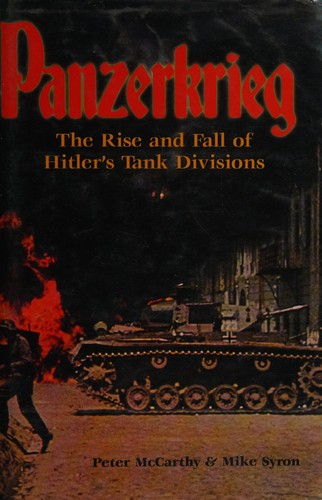
Panzerkrieg: The Rise and Fall of Hitler's Tank Divisions

Peter McCarthy

★★★★★
Read Advanced intel Intel history Logistics Technical warfare Military history WWII Cold War Armor Russia / USSR Logistics Biography ISBN 0786710098

Carroll & Graf Publishers · 2002

The image that defines the Nazis’ Blitzkrieg is that of the Panzerwaffe’s massed columns of tanks sweeping through Europe, all resistance smashed in their wake. The Panzers’ achievements in battle were largely responsible for Germany’s early successes in World War II, and once the tide had turned against the Reich, the Panzers became the backbone of its defense. But the dramatic story of Hitler’s tank divisions is more than one of mere mechanical efficiency. It hangs, too, on those who commanded and fought in them, and believed in their near invincibility. These are the men who come to life in this immensely readable narrative. Great generals like Guderian, Rommel, and Manstein, tank masters like Wittmann and Bake, and inspired commanders like Balck and Bayerlein dominate the story of Panzerkreig. Dispensing with jargon, but including explanatory maps, rare illustrations, and fascinating detail on uniforms, crew members, and the mechanical features of the machines, the authors give a comprehensive overview of all aspects of the subject, both human and technical. They have also benefited from new information available since the opening of Cold War archives. Emerging from the narrative is the whole vast canvas of the war, as it follows the titanic struggles that raged between France’s bocage country, North Africa’s desert wastes, and Russia’s limitless steppes. The development of German fighting vehicles and tactics is fully charted, and the many myths and misconceptions of the Panzerwaffe are exploded. Extensive research, maps, illustrations throughout, reference to the leading participants’ memoirs, and original new conclusions all contribute to this finely measured assessment of the evolution, exploits, and eventual destruction of this superlative fighting force.

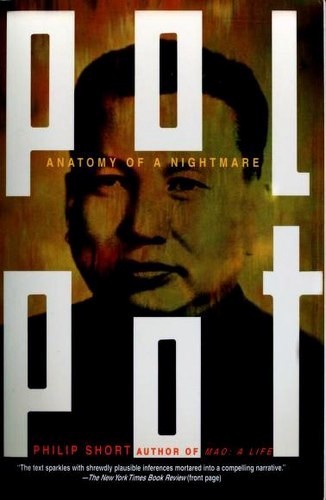
Pol Pot: Anatomy of a Nightmare

Philip Short

★★★★★
Read Military history Cold War Espionage China Biography ISBN 9780805080063

Henry Holt and Company · 2006

Philip Short observed Pol Pot at close quarters during the one and only official visit Pol ever made abroad, to China in 1975. He was struck by Pol Pot's charm and charisma, yet, soon after, the leader would emerge as the architect of one of the most radical and ruthless experiments in social engineering ever undertaken. His egalitarian utopia released a reign of terror that would result in one in every five Cambodians - more than a million people - perishing in the killing fields or from hunger. Why did it happen? How did an idealistic dream of justice and prosperity mutate into one of humanity's worst nightmares? To answer these questions, Short traveled through Cambodia, interviewing former Khmer Rouge leaders and sifting through previously closed archives around the world. Key figures, including Khlen Samphan and Ieng Sary, Pol Pot's brother-in-law and foreign minister, speak here for the first time. Philip Short's masterly narrative reveals how Pol Pot engineered his country's desolation, fashioning the definitive portrait of the man who headed one of the most enigmatic and terrifying regimes of modern times.

No cover · Amazon

Stalingrad: How the Red Army Triumphed

Michael Jones

★★★★★
Read Intel history Logistics Military history WWII Cold War Russia / USSR Logistics

Michael K. Jones's new history of Stalingrad offers a radical reinterpretation of the most famous battle of the WW2. Combining eyewitness testimony of Red Army fighters with fresh archive material, the book gives a dramatic insight into the thinking of the Russian command and the mood of the ordinary soldiers. He focuses on the story of the Russian 62nd Army, which began the campaign in utter demoralization, yet turned the tables on the powerful German 6th Army. He explains the Red Army's extraordinary performance using battle psychology, emphasizing the vital role of leadership, morale and motivation in a triumph that turned the course of the war. Colonel-General Anatoly Mereshko fought throughout the battle as staff officer to the commander, Chuikov. Working with the author much of Mereshko's testimony is entirely new - and will astonish a western audience. It is backed up by accounts of other key veterans and the recently released war diary and combat journals. These show that the oft-repeated descriptions of Stalingrad's two critical days of fighting - 14 September 1942, when the Germans broke into the city, and 14 October, when they launched a massive attack on the factory district - disguise how desperate the plight of the defenders really was. In their place is a far more terrifying reality. Grasping this, we come to see Stalingrad as more than a victory of successful tactics - rather, as an astounding, improbable triumph of the human spirit.

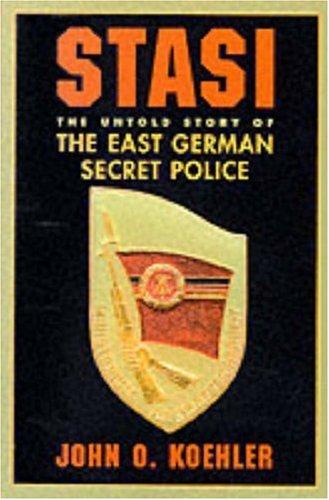
Stasi: The Untold Story Of The East German Secret Police

John O. Koehler

★★★★★
Read Basic intel Intel history Cold War Espionage Special ops Russia / USSR ISBN 9780813337449

Westview Press · November 2000

In this gripping narrative, John Koehler details the widespread activities of East Germany’s Ministry for State Security, or “Stasi.” The Stasi, which infiltrated every walk of East German life, suppressed political opposition, and caused the imprisonment of hundreds of thousands of citizens, proved to be one of the most powerful secret police and espionage services in the world. Koehler methodically reviews the Stasi’s activities within East Germany and overseas, including its programs for internal repression, international espionage, terrorism and terrorist training, art theft, and special operations in Latin America and Africa.Koehler was both Berlin bureau chief of the Associated Press during the height of the Cold War and a U.S. Army Intelligence officer. His insider’s account is based on primary sources, such as U.S. intelligence files, Stasi documents made available only to the author, and extensive interviews with victims of political oppression, former Stasi officers, and West German government officials. Drawing from these sources, Koehler recounts tales that rival the most outlandish Hollywood spy thriller and, at the same time, offers the definitive contribution to our understanding of this still largely unwritten aspect of the history of the Cold War and modern Germany.

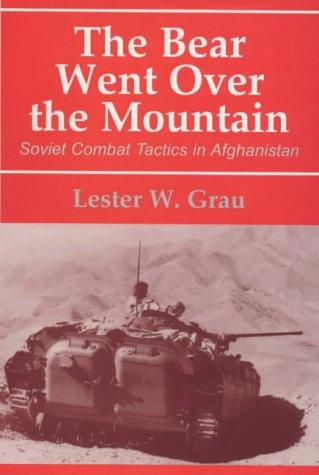
The Bear Went Over the Mountain: Soviet Combat Tactics in Afghanistan

Lester W. Grau

★★★★★
Read Basic intel Cold War GWOT Guerrilla / COIN Russia / USSR ISBN 0714648574

Frank Cass · 1998

This collection of vignettes was written by Soviet junior officers describing their experiences fighting the Mujahideen guerillas. It is not a history of the Soviet-Afghan war, but snapshots of combat as seen by young platoon leaders, company commanders, battalion commanders and military advisers.

The Black Book of Communism: Crimes, Terror, Repression

Stéphane Courtois

★★★★★
Read Military history Advanced intel Vietnam Korea Cold War GWOT Guerrilla / COIN China Russia / USSR Orthodox / theology ISBN 0674076087

Harvard University Press · 1999

Already famous throughout Europe, this international bestseller plumbs recently opened archives in the former Soviet bloc to reveal the actual, practical accomplishments of Communism around the terror, torture, famine, mass deportations, and massacres. Astonishing in the sheer detail it amasses, the book is the first comprehensive attempt to catalogue and analyze the crimes of Communism over seventy years. "Revolutions, like trees, must be judged by their fruit," Ignazio Silone wrote, and this is the standard the authors apply to the Communist experience―in the China of "the Great Helmsman," Kim Il Sung's Korea, Vietnam under "Uncle Ho" and Cuba under Castro, Ethiopia under Mengistu, Angola under Neto, and Afghanistan under Najibullah. The authors, all distinguished scholars based in Europe, document Communist crimes against humanity, but also crimes against national and universal culture, from Stalin's destruction of hundreds of churches in Moscow to Ceausescu's leveling of the historic heart of Bucharest to the widescale devastation visited on Chinese culture by Mao's Red Guards. As the death toll mounts―as many as 25 million in the former Soviet Union, 65 million in China, 1.7 million in Cambodia, and on and on―the authors systematically show how and why, wherever the millenarian ideology of Communism was established, it quickly led to crime, terror, and repression. An extraordinary accounting, this book amply documents the unparalleled position and significance of Communism in the hierarchy of violence that is the history of the twentieth century.

The Gulag Archipelago 1918–1956 (Abridged)

Aleksandr Solzhenitsyn

★★★★★
Read Military history WWII Cold War Russia / USSR Biography ISBN 0060007761

Perennial · 2002

Drawing on his own incarceration and exile, as well as on evidence from more than 200 fellow prisoners and Soviet archives, Aleksandr I. Solzhenitsyn reveals the entire apparatus of Soviet repression—the state within the state that ruled all-powerfully. Through truly Shakespearean portraits of its victims—men, women, and children—we encounter secret police operations, labor camps and prisons; the uprooting or extermination of whole populations, the welcome that awaited Russian soldiers who had been German prisoners of war. Yet we also witness the astounding moral courage of the incorruptible, who, defenseless, endured great brutality and degradation. The Gulag Archipelago 1918–1956—a grisly indictment of a regime, fashioned here into a veritable literary miracle—has now been updated with a new introduction that includes the fall of the Soviet Union and Solzhenitsyn's move back to Russia.

The Gulag Archipelago, 1918-1956: An Experiment in Literary Investigation, Books III-IV

Aleksandr Solzhenitsyn

★★★★★
Read Cold War Russia / USSR ISBN 006092103X

HarperPerennial · 1992

Drawing on his own incarceration and exile, as well as on evidence from more than 200 fellow prisoners and Soviet archives, Aleksandr I. Solzhenitsyn reveals the entire apparatus of Soviet repression -- the state within the state that ruled all-powerfully. Through truly Shakespearean portraits of its victims -- men, women, and children -- we encounter secret police operations, labor camps and prisons; the uprooting or extermination of whole populations, the "welcome" that awaited Russian soldiers who had been German prisoners of war. Yet we also witness the astounding moral courage of the incorruptible, who, defenseless, endured great brutality and degradation. The Gulag Archipelago 1918-1956 -- a grisly indictment of a regime, fashioned here into a veritable literary miracle -- has now been updated with a new introduction that includes the fall of the Soviet Union and Solzhenitsyn's move back to Russia.

The Secret War in Afghanistan: The Soviet Union, China and Anglo-American Intelligence in the Afghan War (Library of Middle East History)

Panagiotis Dimitrakis

★★★★★
Read Basic intel Intel history Cold War Espionage GWOT China Russia / USSR Middle East Intel history ISBN 9781780764191

I.B.Tauris & Co Ltd · 2013

The Soviet invasion of Afghanistan, in support of a Marxist-Leninist government, and the subsequent nine-year conflict with the indigenous Afghan Mujahedeen was one of the bloodiest conflicts of the Cold War. Key details of the circumstances surrounding the invasion and its ultimate conclusion only months before the fall of the Berlin Wall in November 1989 have long remained unclear; it is a confidential narrative of clandestine correspondence, covert operations and failed intelligence. The Secret War in Afghanistan undertakes a full analysis of recently declassified intelligence archives in order to asses Anglo-American secret intelligence and diplomacy relating to the invasion of Afghanistan and unveil the Cold War realities behind the rhetoric. Rooted at every turn in close examination of the primary evidence, it outlines the secret operations of the CIA, MI6 and the KGB, and the full extent of the aid and intelligence from the West which armed and trained the Afghan fighters. Drawing from US, UK and Russian archives, Panagiotis Dimitrakis analyses the Chinese arms deals with the CIA, the multiple recorded intelligence failures of KGB intelligence and secret letters from the office of Margaret Thatcher to Jimmy Carter. In so doing, this study brings a new scholarly perspective to some of the most controversial events of Cold War history. Dimitrakis also outlines the full extent of China's involvement in arming the Mujahedeen, which led to the PRC effectively fighting the Soviet Union by proxy. This will be essential reading for scholars and students of the Cold War, American History and the Modern Middle East.

The Sling and the Stone: On War in the 21st Century

Thomas X. Hammes

★★★★★
Read Basic intel Advanced intel Military history Intel history Vietnam Cold War GWOT Guerrilla / COIN Russia / USSR Middle East Strategy / theory ISBN 9780760324073

Zenith Press · February 17, 2006

4GW (Fourth Generation Warfare) is the only kind of war America has ever lost. And we have done so three times - in Vietnam, Lebanon, and Somalia. This form of warfare has also defeated the French in Vietnam and Algeria, and the USSR in Afghanistan.As the only Goliath left in the world, we should be worried that the world's Davids have found a sling and stone that work." - Chapter 1, The Sling and the Stone: On War in the 21st Century. The War in Iraq. The War on Terror. These types of "asymmetrical" warfare are the conflicts of the 21st century - and show how difficult it is for the world's remaining superpower to battle insurgents and terrorists who will fight unconventionally in the face of superior military power. This change in military conflict may seem sudden.

The Spy and the Traitor: The Greatest Espionage Story of the Cold War

Ben Macintyre

★★★★★
Read Basic intel Intel history Cold War Espionage Nuclear Russia / USSR Biography ISBN 9780771060335

Signal · Sep 18, 2018

If anyone could be considered a Russian counterpart to the infamous British double-agent Kim Philby, it was Oleg Gordievsky. The son of two KGB agents and the product of the best Soviet institutions, the savvy, sophisticated Gordievsky grew to see his nation’s communism as both criminal and philistine. He took his first posting for Russian intelligence in 1968 and eventually became the Soviet Union’s top man in London, but from 1973 on he was secretly working for MI6. For nearly a decade, as the Cold War reached its twilight, Gordievsky helped the West turn the tables on the KGB, exposing Russian spies and helping to foil countless intelligence plots, as the Soviet leadership grew increasingly paranoid at the United States’s nuclear first-strike capabilities and brought the world closer to the brink of war. Desperate to keep the circle of trust close, MI6 never revealed Gordievsky’s name to its counterparts in the CIA, which in turn grew obsessed with figuring out the identity of Britain’s obviously top-level source. Their obsession ultimately doomed Gordievsky: the CIA officer assigned to identify him was none other than Aldrich Ames, the man who would become infamous for secretly spying for the Soviets. Unfolding the delicious three-way gamesmanship between America, Britain, and the Soviet Union, and culminating in the gripping cinematic beat-by-beat of Gordievsky’s nail-biting escape from Moscow in 1985, Ben Macintyre has crafted an electrifying account of an international hero. Like the greatest novels of John le Carré, The Spy and the Traitor brings readers deep into a world of treachery and betrayal, where the lines bleed between the personal and the professional, and one man’s hatred of communism had the power to change the future of nations.

The Winter War: Russia's Invasion Of Finland, 1939-40

Robert Edwards

★★★★★
Read Advanced intel Basic intel Military history Intel history Logistics WWII Cold War Russia / USSR Logistics Economics ISBN 9781933648507

Pegasus Books · December 30, 2007

On November 30, 1939, the Soviet Union's Red Army invaded the young nation-state of Finland, in the full expectation of routing the small, ill-equipped Finnish army and annexing the former Russian territory by the end of the year. But Finland held out for 105 bitterly cold, fiercely combative days, until March 15, 1940, when a peace agreement ended the short, savage Winter War. At the stirring center of the story lie the resourcefulness and resolve of the Finnish people, who against all military odds—in want of ammunition, food, sleep, and troops—fought a blundering, ineptly commanded Red Army to a standstill. On March 15, they ceded to the Soviet 11 percent of their territory and 30 percent of their economic assets, but none of their national pride. The Russians meanwhile had markedly damaged their international standing and effectively ruined their military reputation-to such an extent, as this probing chapter in World War II history demonstrates, that Germany, with proud-blooded Finland as an ally, dared to launch its 1940 invasion of Russia. At the same time, though, the fiasco of the Winter War forced Stalin to acknowledge the shortcomings of the Red Army and to reform it: Germany would fall at Stalingrad in 1941. With authority, this skillfully narrated military history unfolds its story of the four-month Soviet-Finnish war and explores its consequences from London to Moscow, from Helsinki to Paris, to Washington, DC.

To the Gates of Stalingrad: Soviet-German Combat Operations, April-August 1942

David M. Glantz

★★★★★
Read Military history WWII Cold War Russia / USSR ISBN 9780700616305

University Press of Kansas · 2009

The confrontation between German and Soviet forces at Stalingrad was a titanic clash of armies on an unprecedented scale--a campaign that was both a turning point in the Second World War and a lasting symbol of that war's power and devastation. Yet despite the attention lavished on this epic battle by historians, much about it has been greatly misunderstood or hidden from view--as David Glantz, the world's foremost authority on the Red Army in World War II, now shows. This first volume in Glantz's masterly trilogy draws on previously unseen or neglected sources to provide the definitive account of the opening phase of this iconic Eastern Front campaign. Glantz has combed daily official records from both sides--including the Red Army General Staff, the People's Commissariat of Internal Affairs, the German Sixth Army, and the Soviet 62nd Army--to produce a work of unparalleled detail and fresh interpretations. Jonathan House, an authority on twentieth-century warfare, adds further insight and context. Hitler's original objective was not Stalingrad but the Caucasus oilfields to the south of the city. So he divided his Army Group South into two parts--one to secure the city on his flank, one to capture the oilfields. Glantz reveals for the first time how Stalin, in response, demanded that the Red Army stand and fight rather than withdraw, leading to the numerous little-known combat engagements that seriously eroded the Wehrmacht's strength before it even reached Stalingrad. He shows that, although advancing German forces essentially destroyed the armies of the Soviet Southwestern and Southern Fronts, the Soviets resisted the German advance much more vigorously than has been thought through constant counterattacks, ultimately halting the German offensive at the gates of Stalingrad. This fresh, eye-opening account and the subsequent companion volumes--on the actual battle for the city itself and the successful Soviet counteroffensive that followed--will dramatically revise and expand our understanding of what remains a military campaign for the ages.

War and Peace

Leo Tolstoy

★★★★★
Read Cold War Russia / USSR ISBN 9780192833983

Oxford University Press, USA · March 31, 1998

In Russia's struggle with Napoleon, Tolstoy saw a tragedy that involved all mankind. War and Peace broadly focuses on Napoleon’s invasion of Russia in 1812 and follows three of the most well-known characters in literature: Pierre Bezukhov, the illegitimate son of a count who is fighting for his inheritance and yearning for spiritual fulfillment; Prince Andrei Bolkonsky, who leaves his family behind to fight in the war against Napoleon; and Natasha Rostov, the beautiful young daughter of a nobleman who intrigues both men. As Napoleon’s army invades, Tolstoy brilliantly follows characters from diverse backgrounds—peasants and nobility, civilians and soldiers—as they struggle with the problems unique to their era, their history, and their culture. And as the novel progresses, these characters transcend their specificity, becoming some of the most moving—and human—figures in world literature. Tolstoy gave his personal approval to this translation, published here in a new single volume edition, which includes an introduction by Henry Gifford, and Tolstoy's important essay `Some Words about War and Peace'.