S2 Search · Reading list

S2 Actual reading list

Books from S2 Actual on Goodreads, organized by his shelves and topic buckets (intel lists, military history, logistics, etc.). Metadata filled via Open Library.

Not official S2 Underground. Independent fan index — not affiliated with or endorsed by S2. Official hub: linktr.ee/S2_underground. S2 materials are CC BY-NC-SA 4.0.

S2 topic buckets (Goodreads)

Subjects & genres

14 books · Read · subject WWI

Seven Pillars of Wisdom: A Triumph

T.E. Lawrence

★★★★★
Read Intel history Basic intel WWI Espionage Middle East Biography ISBN 0385418957

Anchor Books · 1991

In his classic book, T.E. Lawrence—forever known as Lawrence of Arabia—recounts his role in the origin of the modern Arab world. At first a shy Oxford scholar and archaeologist with a facility for languages, he joined and went on to lead the Arab revolt against the Ottoman Turks while the rest of the world was enmeshed in World War I. With its richly detailed evocation of the land and the people Lawrence passionately believed in, its incisive portraits of key players, from Faisal ibn Hussein, the future Hashemite king of Syria and Iraq, to General Sir Edmund Allenby and other members of the British imperial forces, The Seven Pillars of Wisdom is an indispensible primary historical source. It helps us to understand today’s Middle East, while giving us thrilling accounts of military exploits (including the liberation of Aqaba and Damascus), clandestine activities, and human foibles.
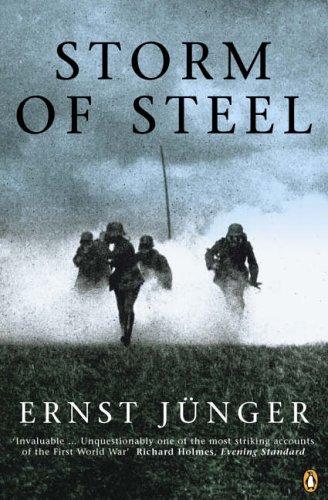
Storm of Steel

Ernst Jünger

★★★★★
Read Advanced intel Basic intel Military history WWI Biography ISBN 9780141186917

Penguin Books Ltd · June 3, 2004

A memoir of astonishing power, savagery, and ashen lyricism, 'Storm of Steel' illuminates not only the horrors but also the fascination of total war, seen through the eyes of an ordinary German soldier. Young, tough, patriotic, but also disturbingly self-aware, Jünger exulted in the Great War, which he saw not just as a great national conflict, but more importantly as a unique personal struggle. Leading raiding parties, defending trenches against murderous British incursions, simply enduring as shells tore his comrades apart, Jünger kept testing himself, braced for the death that will mark his failure. Published shortly after the war's end, 'Storm of Steel' was a worldwide bestseller and can now be rediscovered through Michael Hofmann's brilliant new translation.

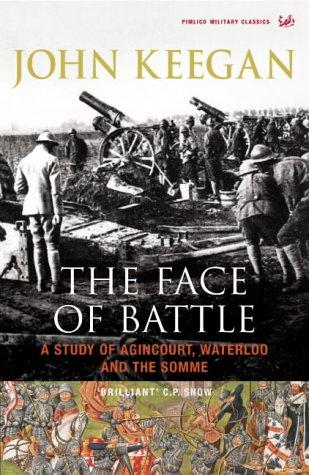
The Face of Battle: A Study of Agincourt, Waterloo and the Somme

John Keegan

★★★★★
Read Military history Intel history WWI Strategy / theory ISBN 9781844137480

Pimlico · 2004

The Face of Battle is military history from the battlefield: a look at the direct experience of individuals at 'the point of maximum danger'. It examines the physical conditions of fighting, the particular emotions and behaviour generated by battle, as well as the motives that impel soldiers to stand and fight rather than run away. In his scrupulous reassessment of three battles, John Keegan vividly conveys their reality for the participants, whether facing the arrow cloud of Agincourt, the levelled muskets of Waterloo or the steel rain of the Somme.

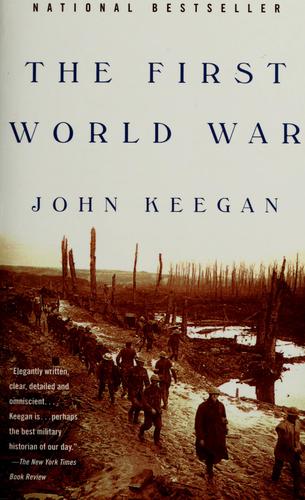
The First World War

John Keegan

★★★★★
Read Intel history WWII WWI Armor Russia / USSR Economics ISBN 9780375700453

Vintage · 2000

The First World War created the modern world. A conflict of unprecedented ferocity, it abruptly ended the relative peace and prosperity of the Victorian era, unleashing such demons of the twentieth century as mechanized warfare and mass death. It also helped to usher in the ideas that have shaped our times--modernism in the arts, new approaches to psychology and medicine, radical thoughts about economics and society--and in so doing shattered the faith in rationalism and liberalism that had prevailed in Europe since the Enlightenment. With The First World War, John Keegan, one of our most eminent military historians, fulfills a lifelong ambition to write the definitive account of the Great War for our generation. Probing the mystery of how a civilization at the height of its achievement could have propelled itself into such a ruinous conflict, Keegan takes us behind the scenes of the negotiations among Europe's crowned heads (all of them related to one another by blood) and ministers, and their doomed efforts to defuse the crisis. He reveals how, by an astonishing failure of diplomacy and communication, a bilateral dispute grew to engulf an entire continent. But the heart of Keegan's superb narrative is, of course, his analysis of the military conflict. With unequalled authority and insight, he recreates the nightmarish engagements whose names have become legend--Verdun, the Somme and Gallipoli among them--and sheds new light on the strategies and tactics employed, particularly the contributions of geography and technology. No less central to Keegan's account is the human aspect. He acquaints us with the thoughts of the intriguing personalities who oversaw the tragically unnecessary catastrophe--from heads of state like Russia's hapless tsar, Nicholas II, to renowned warmakers such as Haig, Hindenburg and Joffre. But Keegan reserves his most affecting personal sympathy for those whose individual efforts history has not recorded--"the anonymous millions, indistinguishably drab, undifferentially deprived of any scrap of the glories that by tradition made the life of the man-at-arms tolerable." By the end of the war, three great empires--the Austro-Hungarian, the Russian and the Ottoman--had collapsed. But as Keegan shows, the devastation ex-tended over the entirety of Europe, and still profoundly informs the politics and culture of the continent today. His brilliant, panoramic account of this vast and terrible conflict is destined to take its place among the classics of world history. With 24 pages of photographs, 2 endpaper maps, and 15 maps in text

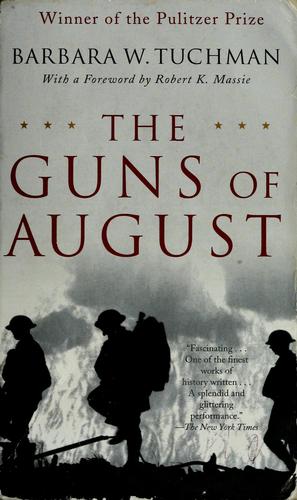
The Guns of August

Barbara W. Tuchman

★★★★★
Read WWII WWI Orthodox / theology ISBN 9788490061626

Little, Brown Book Group Limited · 1962

The Pulitzer Prize-winning classic about the outbreak of World War I. Selected by the Modern Library as one of the 100 best nonfiction books of all time. In this landmark, Pulitzer Prize–winning account, renowned historian Barbara W. Tuchman re-creates the first month of World War I: thirty days in the summer of 1914 that determined the course of the conflict, the century, and ultimately our present world. Beginning with the funeral of Edward VII, Tuchman traces each step that led to the inevitable clash. And inevitable it was, with all sides plotting their war for a generation. Dizzyingly comprehensive and spectacularly portrayed with her famous talent for evoking the characters of the war’s key players, Tuchman’s magnum opus is a classic for the ages. Praise for The Guns of August “A brilliant piece of military history which proves up to the hilt the force of Winston Churchill’s statement that the first month of World War I was ‘a drama never surpassed.’”—Newsweek “More dramatic than fiction . . . a magnificent narrative—beautifully organized, elegantly phrased, skillfully paced and sustained.”—Chicago Tribune “A fine demonstration that with sufficient art rather specialized history can be raised to the level of literature.”—The New York Times “[The Guns of August] has a vitality that transcends its narrative virtues, which are considerable, and its feel for characterizations, which is excellent.” —The Wall Street Journal

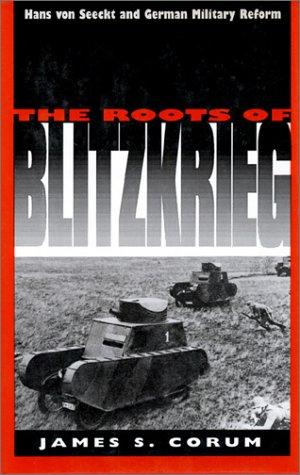
The Roots Of Blitzkrieg: Hans von Seeckt And German Military Reform

James S. Corum

★★★★★
Read Advanced intel Basic intel Military history Intel history Logistics WWII WWI Logistics Strategy / theory ISBN 9780700606283

University Press of Kansas · February 1994

Following Germany's defeat in World War I, the Germans signed the Versailles Treaty, superficially agreeing to limit their war powers. The Allies envisioned the future German army as a lightly armed border guard and international security force. The Germans had other plans. As early as 1919, James Corum contends, the tactical foundations were being laid for the Nazi Blitzkrieg. Between 1919 and 1933, German military leaders created and nurtured the Reichswehr, a new military organization built on the wreckage of the old Imperial Army. It was not being groomed for policing purposes. Focusing on Hans von Seeckt, General Staff Chief and Army Commander, Corum traces the crucial transformations in German military tactical doctrine, organization, and training that laid the foundations for fighting Germany's future wars. In doing so, he restores balance to prior assessment of von Seeckt's influence and demonstrates how the general, along with a few other "visionary" officers--including armor tactician Ernst Volckheim and air tactician Helmut Wilberg--collaborated to develop the core doctrine for what became the Blitzkrieg. The concepts of mobile war so essential to Germany's strength in World War II, Corum shows, were in place well before the tools became available. As an unforeseen consequence of the Versailles Treaty, the Germans were not saddled with a stockpile of outdated equipment as the Allies were. This, ironically, resulted in an advantage for the Germans, who were able to create doctrine first and design equipment to match it.

Hitler's War

David Irving

★★★★
Read WWII WWI Biography Economics ISBN 9780333357910

Macmillan · 1977

Beginning in 1933 with Hitler's economic and military rebuilding of Germany following World War I, and concluding in 1945 with the events surrounding his alleged Hitler's War is an insider's view of the events from the point of view of the man who held Europe in thrall for more than a decade. 16 pages of photographs.

No cover · Amazon

World War 1: A History From Beginning to End

Henry Freeman

★★★★
Read Military history WWI Armor

World War IWorld War 1 was one of the bloodiest wars in modern history. At its end, it had claimed over seventeen million lives. It led to the collapse of nations, the abdication of monarchies and ended empires. Entire divisions of men perished in the pursuit of mere miles of uninhabitable wasteland –– towns were pulverized and millions displaced. It became a horrendous war of attrition, each side competing to kill as many of their foe as possible.Inside you will read about... ✓ 1914 - Blood is spilled ✓ 1915 - The dawn of the industrialized war ✓ 1916 - Unrelenting bloodshed ✓ 1917 - Revolution, revelation and catastrophe ✓ 1918 - The great war at an endIt became the first industrialized war in history and introduced revolutionary technology into the fray. The airplane, the tank and the machine gun first saw action collectively during the conflict. It was also the first war in which poison gas was used to choke young men out of their trenches.This book is a timeline account of the important events that shaped the First World War. It details the events and causes that led the world to war. This book covers the milestone moments, important battles, and how the outcome changed the world forever.

Hitler: 1889-1936 Hubris

Ian Kershaw

★★★☆☆
Read Biographies WWII WWI Biography Economics ISBN 0393320359

W.W. Norton · 2000

From his illegitimate birth in a small Austrian village to his fiery death in a bunker under the Reich chancellery in Berlin, Adolf Hitler left a murky trail, strewn with contradictory tales & overgrown with self-created myths. One truth prevails: the sheer scale of the evils that he unleashed on the world has made him a demonic figure without equal in this century. Kershaw's Hitler brings us closer than ever before to the character of the bizarre misfit in his 30-year ascent from a Viennese shelter for the indigent to uncontested rule over the German nation that had tried & rejected democracy in the crippling aftermath of WWI. With extraordinary vividness, Kershaw recreates the settings that made Hitler's rise possible: the virulent anti-Semitism of prewar Vienna, the crucible of a war with immense casualties, the toxic nationalism that gripped Bavaria in the 20s, the undermining of the Weimar Republic by extremists of the Right & the Left, the hysteria that accompanied Hitler's seizure of power in 1933 & then mounted in brutal attacks by his storm troopers on Jews & others condemned as enemies of the Aryan race. In an account drawing on many previously untapped sources, Hitler metamorphoses from an obscure fantasist, a drummer sounding an insistent beat of hatred in Munich beer halls, to the instigator of an infamous failed putsch &, ultimately, to the leadership of a ragtag alliance of right-wing parties fused into a movement that enthralled the German people. This volume, 1st of two, ends with the promulgation of the infamous Nuremberg laws that pushed German Jews to the outer fringes of society, & with the march of the German army into the Rhineland, Hitler's initial move toward the abyss of war.

Mein Kampf

Adolf Hitler

★★☆☆☆
Read Advanced intel Military history Biographies WWII WWI Biography ISBN 0395078016

Houghton Mifflin · 1971

Mi lucha, con título original en alemán Mein Kampf, es un libro escrito por Adolf Hitler en el que plasmó su ideología y el manifiesto de la política del nacionalsocialismo entremezclado con una serie de elementos autobiográficos. El libro es un documento interesante ya que describe cómo y por qué Hitler, el dictador de la Alemania nazi de 1933 a 1945, se volvió antisemita, además de detallar sus planes futuros para Alemania. Mein Kampf fue publicado en 1925, tras la etapa en prisión de Hitler tras su golpe de Estado fallido en Múnich en 1923. A grandes rasgos, expone el programa ideológico de Hitler, en el cual identifica a los judíos y a los «bolcheviques» como racial e ideológicamente inferiores y un peligro para la nación. Por el contrario, establece a los «arios» y a los nacionalsocialistas como racialmente superiores y políticamente progresistas. El gran objetivo de Hitler era la unificación de los pueblos alemanes en una sola Gran Alemania y la expulsión de los judíos de la nación. Desde Elejandría, aunque sabemos que es una obra polémica y controvertida, optamos por mantener este libro en el catálogo ya que es un documento histórico y creemos que la historia hay que conocerla para que no se vuelva a repetir.

Codes, Ciphers and Spies: Tales of Military Intelligence in World War I

John F. Dooley

unrated
Read Cryptography WWI Espionage Intel history ISBN 9783319294148

Springer · 2016

When the United States declared war on Germany in April 1917, it was woefully unprepared to wage a modern war. Whereas their European counterparts already had three years of experience in using code and cipher systems in the war, American cryptologists had to help in the building of a military intelligence unit from scratch. This book relates the personal experiences of one such character, providing a uniquely American perspective on the Great War. It is a story of spies, coded letters, plots to blow up ships and munitions plants, secret inks, arms smuggling, treason, and desperate battlefield messages. Yet it all begins with a college English professor and Chaucer scholar named John Mathews Manly. In 1927, John Manly wrote a series of articles on his service in the Code and Cipher Section (MI-8) of the U.S. Army’s Military Intelligence Division (MID) during World War I. Published here for the first time, enhanced with references and annotations for additional context, these articles form the basis of an exciting exploration of American military intelligence and counter-espionage in 1917-1918. Illustrating the thoughts of prisoners of war, draftees, German spies, and ordinary Americans with secrets to hide, the messages deciphered by Manly provide a fascinating insight into the state of mind of a nation at war.

From Troy to Entebbe

John Arquilla

unrated
Read Advanced intel Intel history Military history WWII WWI Special ops China Strategy / theory US Civil War ISBN 9780761801863

Univ.P.of America · 1996

Special operations, though most commonly associated with the period from the Second World War to the present, have played a key role throughout the history of conflict from the Trojan War to the great arms struggles of the 20th century. This volume introduces the reader to the broad sweep of the history of special operations, and also includes several excerpts from the classic literature on the subject. Contents: Origins: Robert Graves, 'The Wooden Horse', 'The Sack of Troy'; Raiding in the Age of Sail: G.M. Thomson, 'The Damage Done by this Corsair', 'The Wind Commands Me Away'; Ian Grimble, 'The Imp,^Rrieuse'; The Early American Tradition: Kenneth Roberts, 'The Raid on St. Francis'; Fred Cook, 'Struggle for the South'; R.E. Dupuy and W.H. Baumer, 'Wars With the Barbary Pirates'; 19th Century Colonial Warfare; Leo Tolstoy, The Raid; Wyatt Blassingame, 'How the Legion Began', 'The Legion Fights in Algeria'; The Civil War: Archer Hines, 'Military Means, Political Ends'; Bruce Catton, 'Total War and an Election'; World War I: Lowell Thomas, 'Trapped by a G-Ship..'; T.E. Lawrence, 'The Raid Upon the Bridges'; World War II in Western Europe and North Africa: Cajus Bekker, 'The Coup de Main at Eben Emael', 'The Blood-Bath of Crete'; Paul Carell, 'A British Commando Attempt to Capture Rommel', 'The British Raid on Tobruk', 'Brandenburgers in Action Behind the Front'; John Lodwick, Raiders from the Sea, Chapters 16-18; The Pacific War: Walter Lord, 'A Very Private War';Ronald Spector, 'The Road to Myitkyina'; Milton E. Miles, 'Chinese Pirates and the SACO Dragon'; Algeria, Round II: Jean Lart,^Rguy, 'The Leap of Leucadia'; The Ultimate Rescue: Chaim Herzog, 'Entebbe'; Bibliography; Index.

SIGINT: The Secret History of Signals Intelligence in the World Wars

Peter F. Matthews

unrated
Read Intel history WWII WWI Espionage Russia / USSR Intel history ISBN 9780752487342

The History Press · 2013

From MORSE to ENIGMA, ULTRA to PURPLE, Room 40 to Bletchley—the story of secret signals in both of the World Wars Communicating in the chaos of war is complicated, but vital. Signals intelligence makes it possible. In World War I, a vast network of signals rapidly expanded across the globe, spawning a new breed of spies and intelligence operatives to code, decode, and analyze thousands of messages. Signalers and cryptographers in the Admiralty's famous Room 40 paved the way for the code breakers of Bletchley Park during World War II. In the ensuing war years, the world battled against a web of signals intelligence that gave birth to ENIGMA and ULTRA, and saw agents from Britain, France, Germany, Russia, America, and Japan race to outwit each other through infinitely complex codes. For the first time, the secret history of global signals intelligence in the world wars is revealed.

Supplying the British Army in the First World War

Janet MacDonald

unrated
Read Military history Logistics WWI Logistics ISBN 9781526725394

Pen & Sword Books Limited · 2019

An in-depth look at the logistics of keeping the British Army fed, clothed, armed, and supplied during World War I.   Napoleon famously said that an army marches on its stomach, but it also marches in its boots and its uniforms, carrying or driving its weapons and other equipment, and all this material has to be ordered from headquarters, produced and delivered. Janet Macdonald’s detailed and scholarly new study explains how this enormously complex task of organization and labour was carried out by the British army during the First World War.   She describes the personnel who performed these tasks, from the government and military command in London to those who handled the items in the field. They were responsible for clothing, accommodation, medicine, transport, hand weapons, armament, and communications—a vast logistical network that had evolved to keep millions of men in the field.   This meticulously researched account of this important subject—one which has hitherto been neglected by military historians—will be essential reading and reference for anyone who is interested in the modern British army, in particular in its organization and performance in the First World War.