S2 Search · Reading list

S2 Actual reading list

Books from S2 Actual on Goodreads, organized by his shelves and topic buckets (intel lists, military history, logistics, etc.). Metadata filled via Open Library.

Not official S2 Underground. Independent fan index — not affiliated with or endorsed by S2. Official hub: linktr.ee/S2_underground. S2 materials are CC BY-NC-SA 4.0.

S2 topic buckets (Goodreads)

Subjects & genres

10 books · Technical warfare · subject Cold War

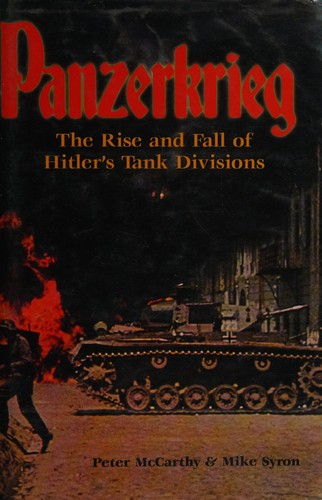
Panzerkrieg: The Rise and Fall of Hitler's Tank Divisions

Peter McCarthy

★★★★★
Read Advanced intel Intel history Logistics Technical warfare Military history WWII Cold War Armor Russia / USSR Logistics Biography ISBN 0786710098

Carroll & Graf Publishers · 2002

The image that defines the Nazis’ Blitzkrieg is that of the Panzerwaffe’s massed columns of tanks sweeping through Europe, all resistance smashed in their wake. The Panzers’ achievements in battle were largely responsible for Germany’s early successes in World War II, and once the tide had turned against the Reich, the Panzers became the backbone of its defense. But the dramatic story of Hitler’s tank divisions is more than one of mere mechanical efficiency. It hangs, too, on those who commanded and fought in them, and believed in their near invincibility. These are the men who come to life in this immensely readable narrative. Great generals like Guderian, Rommel, and Manstein, tank masters like Wittmann and Bake, and inspired commanders like Balck and Bayerlein dominate the story of Panzerkreig. Dispensing with jargon, but including explanatory maps, rare illustrations, and fascinating detail on uniforms, crew members, and the mechanical features of the machines, the authors give a comprehensive overview of all aspects of the subject, both human and technical. They have also benefited from new information available since the opening of Cold War archives. Emerging from the narrative is the whole vast canvas of the war, as it follows the titanic struggles that raged between France’s bocage country, North Africa’s desert wastes, and Russia’s limitless steppes. The development of German fighting vehicles and tactics is fully charted, and the many myths and misconceptions of the Panzerwaffe are exploded. Extensive research, maps, illustrations throughout, reference to the leading participants’ memoirs, and original new conclusions all contribute to this finely measured assessment of the evolution, exploits, and eventual destruction of this superlative fighting force.
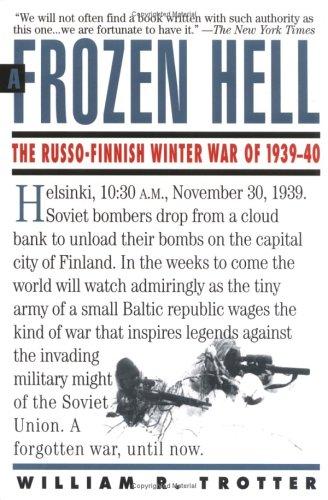
A Frozen Hell: The Russo-Finnish Winter War of 1939-1940

William R. Trotter

★★★★
Read Advanced intel Military history Technical warfare Cold War Guerrilla / COIN Russia / USSR ISBN 9781565122499

Algonquin Books of Chapel Hill, a division of Workman Publishing · January 2000

In 1939, tiny Finland waged war - the kind of war that spawns legends - against the mighty Soviet Union, and yet their epic struggle has been largely ignored. Guerrillas on skis, heroic single-handed attacks on tanks, unfathomable endurance, and the charismatic leadership of one of this century's true military geniuses - these are the elements of both the Finnish victory and a gripping tale of war.

No cover · Amazon

Barren SEAD: USAF Defense Suppression Doctrine, 1953-1972

James L. Young Jr.

★★★★
Read Basic intel Military history Intel history Technical warfare Vietnam Cold War Special ops Naval Air power Cyber Biography Strategy / theory

Since 1972, the United States Air Force has argued that its operations against North Vietnam were unsuccessful primarily through a combination of civilian interference and poor strategic choices. Often citing the “success” of Operation Linebacker II as an example of what might have been had its leaders been given free rein, for almost fifty years the Air Force has maintained that its proper employment is the key to winning America’s wars. In Barren SEAD, award winning historian James L. Young Jr. propagates a different Instead of being a sign of what the Air Force was capable of, Linebacker II was a bitter failure that starkly outlined the USAF’s limitations. Furthermore, the meddling of the Johnson and Nixon Administrations played a minor role in this outcome. The USAF's defeat was not brought about by civilian meddling, but resulted from Air Force leaders’ refusal to develop a Suppression of Enemy Air Defenses (SEAD) doctrine from 1953-1972. Relying primarily on Air Force archival documents, memoirs, and contemporary doctrinal publications, Dr. Young illustrates just how dangerous the Air Force’s inability to nurture its SEAD capability was during this period of the Cold War. James L. Young Jr. holds a doctorate in U.S. History from Kansas State University and is a graduate of the United States Military Academy. Barren SEAD is his first non-fiction book. Previously he has won the United States Naval Institute's 2016 Cyberwarfare Essay Contest, runner up in the 2011 James Adams Cold War Essay Contest, and has had an essay selected by the U.S. Naval Heritage Command for its professional reading list. Dr. Young's other professional articles can be found in Armor Magazine, The Journal of Military History, and Proceedings. For those who prefer fiction, Dr. Young also writes alternate history (Usurper's War series / Phases of Mars anthologies) and military science fiction (Vergassy Universe).

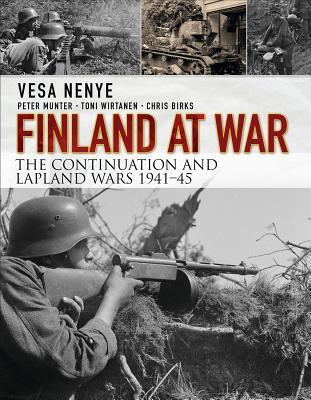
Finland at War: The Continuation and Lapland Wars 1941–45 (General Military)

Vesa Nenye

★★★★
Read Military history Technical warfare WWII Cold War Russia / USSR ISBN 9781472815262

Bloomsbury Publishing Plc · 2016

Having foiled the Soviet invasion of the Winter War, the Finns found themselves embroiled in an ongoing conflict to maintain their borders as the Soviets recovered from the initial advances made by the Germans during the Barbarossa campaign. Yet as the red tide of Soviet forces pushed back the German army, the Finnish forces--despite their lack of equipment, obsolete machinery and miniscule manpower--held firm against the Soviets throughout the continuation of the war, ensuring their post-war independence on the Western side of the Iron curtain. But that was not the end of hostilities for the exhausted Finnish nation as they turned their attentions to the Nazi forces embedded within their territory, calling up brigades populated with teenagers to force German forces inexorably back. Featuring some incredible, never-before-seen photographs and firsthand accounts, this is the history of one of the most incredible moments in modern military history.

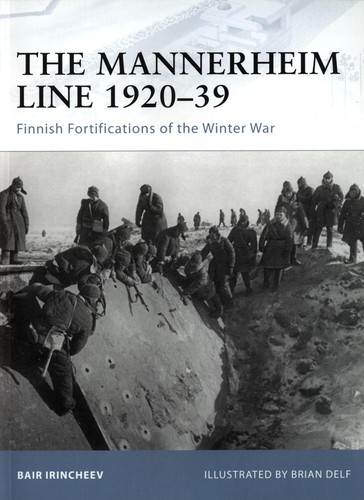
The Mannerheim Line 1920–39: Finnish Fortifications of the Winter War (Fortress, 88)

Bair Irincheev

★★★★
Read Advanced intel Military history Logistics Technical warfare Cold War Armor Russia / USSR Logistics Intel history US Civil War ISBN 9781846033841

Osprey · 2009

In the wake of the bloody civil war that followed Finland's independence from Russia in 1917, the border between the two countries was established across the Karelian Isthmus, an area long fought over by Russia, Finland and Sweden in their attempts to dominate the northern tip of Europe. Neither the Soviets nor the Finnish were comfortable with such a divide, which provided an open route for a potential invader to Helsinki on the Finnish side, and was only 32km from the important military and industrial city of Petrograd in Russia. As such, both sides began an intensive period of fortification and defensive planning. As the Winter War broke out in November 1939, the complex and heavily defended Mannerheim Line suffered intense bombardment and armored assaults. The armistice of May 1940 saw Finland cede control of the entire Karelian Isthmus to the USSR however, and a propaganda war ensued; the Russians emphasizing the strength of the line, and the Finnish downplaying its importance, accentuating instead the heroism and bravery of the common Finnish soldier. Through a detailed analysis of the background, design and operational history of the Mannerheim Line, Bair Irincheev attempts to dispel such myths and provide an accurate assessment of its immense historical importance.

The Sovereign Individual: Mastering the Transition to the Information Age

James Dale Davidson

★★★★
Read Advanced intel Logistics Technical warfare Cold War Russia / USSR Logistics Economics US Civil War ISBN 9780684832722

Touchstone · 1999-08-26

Two renowned investment advisors and authors of the bestseller The Great Reckoning bring to light both currents of disaster and the potential for prosperity and renewal in the face of radical changes in human history as we move into the next century. The Sovereign Individual details strategies necessary for adapting financially to the next phase of Western civilization. Few observers of the late twentieth century have their fingers so presciently on the pulse of the global political and economic realignment ushering in the new millennium as do James Dale Davidson and Lord William Rees-Mogg. Their bold prediction of disaster on Wall Street in Blood in the Streets was borne out by Black Tuesday. In their ensuing bestseller, The Great Reckoning, published just weeks before the coup attempt against Gorbachev, they analyzed the pending collapse of the Soviet Union and foretold the civil war in Yugoslavia and other events that have proved to be among the most searing developments of the past few years. In The Sovereign Individual, Davidson and Rees-Mogg explore the greatest economic and political transition in centuries—the shift from an industrial to an information-based society. This transition, which they have termed "the fourth stage of human society," will liberate individuals as never before, irrevocably altering the power of government. This outstanding book will replace false hopes and fictions with new understanding and clarified values.

War of the Rats (WWII, #1)

David L. Robbins

★★★★
Read Biographies Military history Technical warfare WWII Cold War Russia / USSR ISBN 9780553581355

Bantam · 2000

For six months in 1942, Stalingrad is the center of a titanic struggle between the Russian and German armies—the bloodiest campaign in mankind's long history of warfare. The outcome is pivotal. If Hitler's forces are not stopped, Russia will fall. And with it, the world.... German soldiers call the battle Rattenkrieg, War of the Rats . The combat is horrific, as soldiers die in the smoking cellars and trenches of a ruined city. Through this twisted carnage stalk two men—one Russian, one German—each the top sniper in his respective army. These two marksmen are equally matched in both skill and tenacity. Each man has his own to find his counterpart—and kill him. But an American woman trapped in Russia complicates this extraordinary duel. Joining the Russian sniper's cadre, she soon becomes one of his most talented assassins—and perhaps his greatest weakness. Based on a true story, this is the harrowing tale of two adversaries enmeshed in their own private war—and whose fortunes will help decide the fate of the world.

Hunger Disease (Current concepts in nutrition, vol. 7)

Martha Osnos

unrated
Read Military history Logistics Technical warfare WWII Cold War Logistics ISBN 0471050032

Wiley · 1979

A translation from the Polish of a manuscript smuggled out of the Warsaw Ghetto that details studies performed by resident Jewish physicians on patients suffering from starvation. Topics include: clinical changes in adults and children, metabolic adaptations, circulatory changes, changes in the eye and in vision, changes in the blood and bone marrow, and pathologic anatomy.

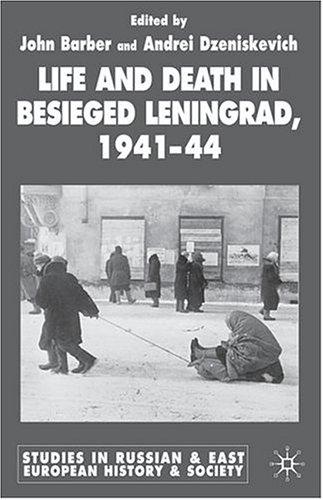
Life and Death in Besieged Leningrad, 1941-1944 (Studies in Russian and East European History and Society)

John Barber

unrated
Read Advanced intel Military history Logistics Technical warfare WWII Cold War Russia / USSR Logistics ISBN 1403901422

Palgrave Macmillan · 2005

From 1941-1944 Leningrad saw by far the largest-scale famine ever to occur in a developed society. This book examines the nature and consequences of the extreme conditions created by the German blockade of Leningrad between September 1941 and January 1944. Using declassified documents from Party and State archives in Moscow and St Petersburg and interviews with survivors, the authors have produced the most informed and detailed analysis to date of the impact of the siege on the lives and health of the people of Leningrad.

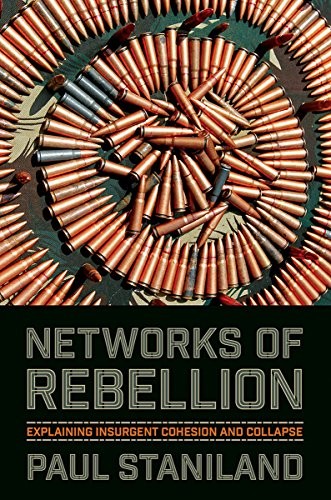
Networks of Rebellion: Explaining Insurgent Cohesion and Collapse (Cornell Studies in Security Affairs)

Paul Staniland

unrated
Read Technical warfare Logistics Military history Cold War GWOT Guerrilla / COIN Logistics Intel history Strategy / theory US Civil War ISBN 9780801479298

Cornell University Press · Apr 18, 2014

Insurgent cohesion is central to explaining patterns of violence, the effectiveness of counterinsurgency, and civil war outcomes. Cohesive insurgent groups produce more effective war-fighting forces and are more credible negotiators; organizational cohesion shapes both the duration of wars and their ultimate resolution. In Networks of Rebellion , Paul Staniland explains why insurgent leaders differ so radically in their ability to build strong organizations and why the cohesion of armed groups changes over time during conflicts. He outlines a new way of thinking about the sources and structure of insurgent groups, distinguishing among integrated, vanguard, parochial, and fragmented groups. Staniland compares insurgent groups, their differing social bases, and how the nature of the coalitions and networks within which these armed groups were built has determined their discipline and internal control. He examines insurgent groups in Afghanistan, 1975 to the present day, Kashmir (1988–2003), Sri Lanka from the 1970s to the defeat of the Tamil Tigers in 2009, and several communist uprisings in Southeast Asia during the Cold War. The initial organization of an insurgent group depends on the position of its leaders in prewar political networks. These social bases shape what leaders can and cannot do when they build a new insurgent group. Counterinsurgency, insurgent strategy, and international intervention can cause organizational change. During war, insurgent groups are embedded in social ties that determine they how they organize, fight, and negotiate; as these ties shift, organizational structure changes as well.