S2 Search · Reading list

S2 Actual reading list

Books from S2 Actual on Goodreads, organized by his shelves and topic buckets (intel lists, military history, logistics, etc.). Metadata filled via Open Library.

Not official S2 Underground. Independent fan index — not affiliated with or endorsed by S2. Official hub: linktr.ee/S2_underground. S2 materials are CC BY-NC-SA 4.0.

S2 topic buckets (Goodreads)

Subjects & genres

18 books · Technical warfare · subject WWII

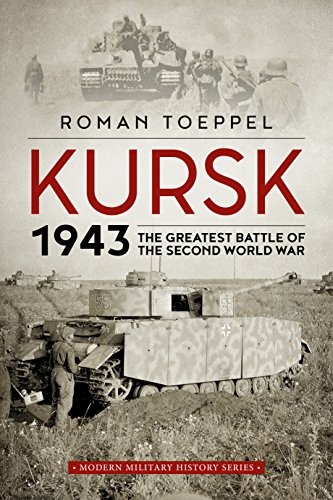
Kursk 1943: The Greatest Battle of the Second World War (Modern Military History)

Roman Töppel

★★★★★
Read Military history Technical warfare WWII Armor Russia / USSR ISBN 9781912390038

Helion and Company · Oct 09, 2018

The Battle of Kursk in the summer of 1943 was one of the greatest battles in military history involving more than 3 million soldiers, 10,000 tanks and 8,000 aircraft. While many books have been written on this allegedly most decisive battle of the Second World War, many legends live on, above all because of misleading information that recur in most publications - even in the most recent ones. Based on almost 20 years of research reassessing the primary sources, Roman Toeppel sheds light on the phase of decision-making, the preparations and the development of the battle in an engaging style that grips the reader's attention from the first page on. The author concentrates on little-known developments and events leading the reader to astonishing results. He also gives entirely new insights into the historiographic appraisal of this battle, putting thoroughly researched facts against erroneous popular beliefs, myths and legends that have been passed down among historians for generations.
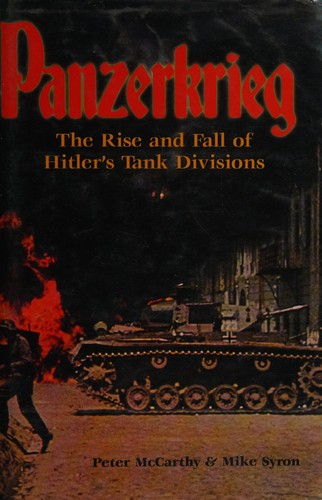
Panzerkrieg: The Rise and Fall of Hitler's Tank Divisions

Peter McCarthy

★★★★★
Read Advanced intel Intel history Logistics Technical warfare Military history WWII Cold War Armor Russia / USSR Logistics Biography ISBN 0786710098

Carroll & Graf Publishers · 2002

The image that defines the Nazis’ Blitzkrieg is that of the Panzerwaffe’s massed columns of tanks sweeping through Europe, all resistance smashed in their wake. The Panzers’ achievements in battle were largely responsible for Germany’s early successes in World War II, and once the tide had turned against the Reich, the Panzers became the backbone of its defense. But the dramatic story of Hitler’s tank divisions is more than one of mere mechanical efficiency. It hangs, too, on those who commanded and fought in them, and believed in their near invincibility. These are the men who come to life in this immensely readable narrative. Great generals like Guderian, Rommel, and Manstein, tank masters like Wittmann and Bake, and inspired commanders like Balck and Bayerlein dominate the story of Panzerkreig. Dispensing with jargon, but including explanatory maps, rare illustrations, and fascinating detail on uniforms, crew members, and the mechanical features of the machines, the authors give a comprehensive overview of all aspects of the subject, both human and technical. They have also benefited from new information available since the opening of Cold War archives. Emerging from the narrative is the whole vast canvas of the war, as it follows the titanic struggles that raged between France’s bocage country, North Africa’s desert wastes, and Russia’s limitless steppes. The development of German fighting vehicles and tactics is fully charted, and the many myths and misconceptions of the Panzerwaffe are exploded. Extensive research, maps, illustrations throughout, reference to the leading participants’ memoirs, and original new conclusions all contribute to this finely measured assessment of the evolution, exploits, and eventual destruction of this superlative fighting force.

Red Sniper on the Eastern Front: The Memoirs of Joseph Pilyushin

Joseph Pilyushin

★★★★★
Read Biographies Technical warfare Military history WWII Russia / USSR Biography ISBN 9781848847170

Pen & Sword Books Limited · 2010

A gripping memoir of a Soviet sniper who fought against the Nazis during the siege of Leningrad and throughout World War II. Joseph Pilyushin, a top Red Army sniper in the ruthless fight against the Germans on the Eastern Front, was an exceptional soldier. His first-hand account of his wartime service gives a graphic insight into his lethal skill with a rifle and into the desperate fight put up by Soviet forces to defend Leningrad. Pilyushin, who lived in Leningrad with his family, was already 35 years-old when the war broke out and he was drafted. He started in the Red Army as a scout, but once he had demonstrated his marksmanship and steady nerve, he became a sniper. He served throughout the Leningrad siege, from the late 1941 when the Wehrmacht’s advance was halted just short of the city to its liberation during the Soviet offensive of 1944. His descriptions of grueling front-line life, of his fellow soldiers, and of his sniping missions are balanced by his vivid recollections of the protracted suffering of Leningrad’s imprisoned population and of the grief that was visited upon him and his family. His narrative will be fascinating reading for anyone eager to learn about the role and technique of the sniper during the Second World War. It is also a memorable eyewitness account of one man’s experience on the Eastern Front.

Sledgehammers: Strengths and Flaws of Tiger Tank Battalions in World War II

Christopher W. Wilbeck

★★★★★
Read Technical warfare Military history WWII Armor Russia / USSR Intel history Strategy / theory ISBN 9780971765023

The Aberjona Press · March 2004

The Tiger and King Tiger tanks gained legendary status during World War II. Numerous tank commanders attained phenomenal tallies of kills and accomplished extraordinary feats during combat in these tanks, building the legend to near mythic proportions after the war. During WWII, the Germans created eleven Army and three Waffen-SS heavy tank battalions. These heavy tank battalions were employed in nearly every part of Europe against almost every enemy of Germany. As vast in breadth and scope as the employment of Tiger battalions themselves, Sledgehammers provides historical examples and analysis of heavy tank battalions’ actions in North Africa, Normandy, Italy, the Ardennes Offensive, and numerous battles on the Eastern Front including Operation ZITADELLE/the Battle of Kursk, Operation BAGRATION, the battle of the Cherkassy Pocket, late war attacks to relieve Budapest, and many other more minor engagements. Although a great deal has already been published about Tiger tanks’ technical details and some of the units which used them, until now, very little has been written concerning the organization and tactical employment of these tanks throughout the German armed forces and across the theaters in which they were employed. Sledgehammers provides an in-depth look at heavy tank battalions’ organizations and tactics, including the tactical doctrine by which these elite units were supposed to fight and how they were actually employed on the battlefield by their commanders and crews. Even given the Tiger’s reputation, many readers will be amazed by the fearsome casualties inflicted by the crews of many of these behemoth armored vehicles. It is safe to say that no other armored vehicle of the war wreaked as much havoc among enemy formations as Tigers. Many will, however, also find it equally stunning to learn of the Tigers’ many technical and tactical vulnerabilities. Through the systematic use of extremely detailed primary source and other impeccably reliable research, Sledgehammers demolishes several major myths about Tigers in World War II. Meticulously researched and written with the perspective and respect for Tigers' crews that only a professional tanker can bring to the subject, Sledgehammers synthesizes information to provide new and definitive insights into the strengths and flaws of World War II’s most feared and legendary tanks. Prologue by famed Tiger ace Otto Carius. Epilogue by Tiger killers Viktor Iskrov and Ray Holt. 35 original maps. 42 photos.

No cover · Amazon

Sniping in France: Winning the Sniping War in the Trenches

H. Hesketh-Prichard

★★★★★
Read Advanced intel Intel history Military history Technical warfare WWII

“Now, if any one cares to do a mathematical sum, and to work out the number of battalions we had in the line, they will be surprised at the figures, and when they multiply these figures by thirty and look at the month’s losses, they will find that in a war of attrition the sniper on this count alone justifies his existence and wipes out large numbers of the enemy.” During the initial stages of the First World War in 1914, Allied forces lost breathtaking numbers of men on the Western Front to Germany’s highly efficient and superior snipers. However, the passion of Major Hesketh-Prichard – hunter and excellent marksman – for the promotion and advancement of sniping practices led to the implementation of brand new sniping methods by the British Army. These new practices contributed to the reversal of fortune of the Allied forces, tipping the balance in their favour towards victory in the sniping war. This excellent book, as told in the inimitable style of Major Hesketh-Prichard, recounts the genesis, development, and advancement of sniping style and practice, intermingled with a charming autobiographical style. Truly a classic account of war, this is a must read for avid military enthusiasts. Major Hesketh-Prichard, born in India in 1876, led a vibrant life as an explorer and adventurer, big-game hunter turned animal rights activist, novelist and travel writer, excellent cricket player, and marksman. He contributed significantly to the advancement of sniping practice in the British Army during the First World War, and the measures he introduced are credited as saving the lives of thousands of Allied soldiers.

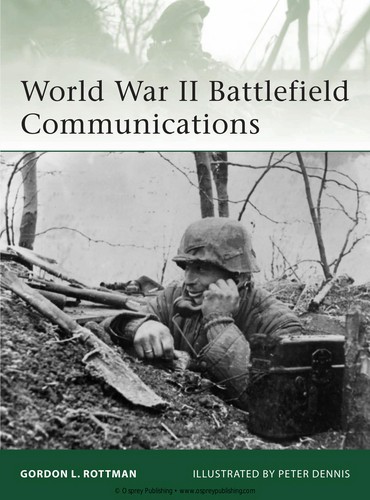
World War II Battlefield Communications (Elite, 181)

Gordon L. Rottman

★★★★★
Read Intel history Military history Technical warfare WWII ISBN 9781846038471

Osprey · 2010

Osprey's examination of technological advances in communications during World War II (1939-1945). Perhaps the biggest difference in the fighting between the two World Wars lay in the invention of the man-portable radio that allowed for a greater degree of tactical coordination than ever before. Gordon L. Rottman provides an informative study of the use of small radios, field telephones, signal flares and ground-to-air signaling that revolutionized the battlefield.

Finland at War: The Continuation and Lapland Wars 1941–45 (General Military)

Vesa Nenye

★★★★
Read Military history Technical warfare WWII Cold War Russia / USSR ISBN 9781472815262

Bloomsbury Publishing Plc · 2016

Having foiled the Soviet invasion of the Winter War, the Finns found themselves embroiled in an ongoing conflict to maintain their borders as the Soviets recovered from the initial advances made by the Germans during the Barbarossa campaign. Yet as the red tide of Soviet forces pushed back the German army, the Finnish forces--despite their lack of equipment, obsolete machinery and miniscule manpower--held firm against the Soviets throughout the continuation of the war, ensuring their post-war independence on the Western side of the Iron curtain. But that was not the end of hostilities for the exhausted Finnish nation as they turned their attentions to the Nazi forces embedded within their territory, calling up brigades populated with teenagers to force German forces inexorably back. Featuring some incredible, never-before-seen photographs and firsthand accounts, this is the history of one of the most incredible moments in modern military history.

War of the Rats (WWII, #1)

David L. Robbins

★★★★
Read Biographies Military history Technical warfare WWII Cold War Russia / USSR ISBN 9780553581355

Bantam · 2000

For six months in 1942, Stalingrad is the center of a titanic struggle between the Russian and German armies—the bloodiest campaign in mankind's long history of warfare. The outcome is pivotal. If Hitler's forces are not stopped, Russia will fall. And with it, the world.... German soldiers call the battle Rattenkrieg, War of the Rats . The combat is horrific, as soldiers die in the smoking cellars and trenches of a ruined city. Through this twisted carnage stalk two men—one Russian, one German—each the top sniper in his respective army. These two marksmen are equally matched in both skill and tenacity. Each man has his own to find his counterpart—and kill him. But an American woman trapped in Russia complicates this extraordinary duel. Joining the Russian sniper's cadre, she soon becomes one of his most talented assassins—and perhaps his greatest weakness. Based on a true story, this is the harrowing tale of two adversaries enmeshed in their own private war—and whose fortunes will help decide the fate of the world.

No cover · Amazon

Military Deception: Hiding The Real - Showing The Fake - Denial Operations, Propaganda, Disinformation, Joint Doctrine, Soviet Maskirovka, Desert Storm Persian Gulf War Examples

U.S. Government

★★★☆☆
Read Advanced intel Military history Intel history Technical warfare WWII Russia / USSR Middle East Strategy / theory

Professionally converted for accurate flowing-text e-book format reproduction, this book discusses military deception techniques and history. "Military deception" is an umbrella term that includes both denial and deception. Denial hides the real and deception shows the fake. Denial and deception are operations; propaganda and disinformation are the products. Joint doctrine says that military deception, as applied by a joint force commander (JFC), targets an adversary's decision-making process. Ultimately, the intent is to shape the adversary's behavior in the JFC's favor or to cause an adversary to form an inaccurate impression of the battlespace. Consequently, planning for deception operations depends on intelligence and security for success. Obviously, a commander wants to conceal deception efforts from the enemy, but often he'll conceal all or some of his efforts from his own troops to prevent confusion and/or compromise of the plan. During the early years of Soviet involvement in World War II, mishandling of information by soldiers and planners resulted in the compromise of many maskirovka (or deception) operations. As a result, the Soviets implemented aggressive security measures to protect their deception plans. Specifically, Soviet commanders restricted the number of planners and documents involved in the deception operations and communicated to subordinates only what they needed to know, when they needed to know it. The general enjoyed his breakfast while reading his morning paper and listening to the international news channel. Hearing the Balkans mentioned—his area of responsibility—he looked up as a foreign correspondent began to comment on the aftermath of an Allied bombing mission from the day before. The gruesome details suddenly made the general's scrambled eggs a bit less appealing. The graphic pictures showed what appeared to be the remnants of an orphanage. There in the rubble lay a bloodstained, tattered doll. Those images left him wondering about the carnage that lay beneath the collapsed brick and mortar. Had his staff miscalculated and inadvertently struck an orphanage? A similar misstep had occurred a few weeks ago when another bombing mission resulted in civilian casualties in a marketplace. As the general bemoaned the potential ramifications of accidentally bombing an orphanage, a memory surfaced. Years of flying high-performance aircraft had sharpened his senses, and something about the scene seemed familiar. Could that be the same bloodstained doll he had seen in photographs of the earlier marketplace mishap? The general had been briefed on the enemy's rather low-tech yet successful use of deception. Was he, along with the rest of the world, a target of military deception? As he pondered this, his pager went off. This fictitious example illustrates both how easy it is to manipulate the media in deception operations and how a thorough understanding of deception can help prevent a military leader from falling victim to it. The U.S. military is transforming itself with technological advancements in warfighting capability. Weapon systems, force structure and training have all improved. The amount and kind of information available to the warfighter is also improving. But even a technologically advanced nation like the United States is susceptible to deception. Analysis of friendly and enemy deception techniques in Operations DESERT STORM and ALLIED FORCE shows the main U.S. vulnerabilities to include its insatiable appetite for "news," the lack of deception-detection expertise in the military, and the tendency to believe that technological advancements make a nation deception-proof. Therefore, the key to mitigating the U.S. vulnerabilities to deception lies in educating the media about the military and common deception practices, giving the military intensive deception-detection training, and abandoning the notion that technolo

All Hell Let Loose: The World at War, 1939-1945

Max Hastings

unrated
Read Technical warfare WWII Russia / USSR ISBN 9780007338092

HarperPress · 2011

HardCover. Pub Date :2011-09-29 768 English HarperPress A magisterial history of the greatest and most terrible event in history. from one of the finest historians of the Second World War A book which shows the impact. of war upon hundreds of millions of people around the world-soldiers. sailors and airmen; housewives. farm workers and children.Reflecting Max Hastingss thirty-five years of research on World War II. All Hell Let Loose describes the course of events. but focuses chiefly upon human experience. which varied immensely from campaign to campaign. continent to continent.The author emphasises the Russian front. where more than 90% of all German soldiers who perished met their fate. He argues that. while Hitlers army often fought its battles brilliantly well. the Nazis conducted their war effort with stunning incompetence. He suggests that ...

No cover · Amazon

Bracketing the Enemy: Forward Observers in World War II

John R. Walker

unrated
Read Advanced intel Intel history Military history Technical warfare WWII US Civil War

After the end of World War II, General George Patton declared that artillery had won the war. Yet howitzers did not achieve victory on their own. Crucial to the success of these big guns were forward observers, artillerymen on the front lines who directed the artillery fire. Until now, the vital role of forward observers in ground combat has received little scholarly attention. In Bracketing the Enemy, John R. Walker remedies this oversight by offering the first full-length history of forward observer teams during World War II. As early as the U.S. Civil War, artillery fire could reach as far as two miles, but without an “FO” (forward observer) to report where the first shot had landed in relation to the target, and to direct subsequent fire by outlining or “bracketing” the targeted range, many of the advantages of longer-range fire were wasted. During World War II, FOs accompanied infantrymen on the front lines. Now, for the first time, gun crews could bring deadly accurate fire on enemy positions immediately as advancing riflemen encountered these enemy strongpoints. According to Walker, this transition from direct to indirect fire was one of the most important innovations to have occurred in ground combat in centuries. Using the 37th Division in the Pacific Theater and the 87th in Europe as case studies, Walker presents a vivid picture of the dangers involved in FO duty and shows how vitally important forward observers were to the success of ground operations in a variety of scenarios. FO personnel not only performed a vital support function as artillerymen but often transcended their combat role by fighting as infantrymen, sometimes even leading soldiers into battle. And yet, although forward observers lived, fought, and bled with the infantry, they were ineligible to wear the Combat Infantryman’s Badge awarded to the riflemen they supported. Forward observers are thus among the unsung heroes of World War II. Bracketing the Enemy signals a long-overdue recognition of their distinguished service.

Hunger Disease (Current concepts in nutrition, vol. 7)

Martha Osnos

unrated
Read Military history Logistics Technical warfare WWII Cold War Logistics ISBN 0471050032

Wiley · 1979

A translation from the Polish of a manuscript smuggled out of the Warsaw Ghetto that details studies performed by resident Jewish physicians on patients suffering from starvation. Topics include: clinical changes in adults and children, metabolic adaptations, circulatory changes, changes in the eye and in vision, changes in the blood and bone marrow, and pathologic anatomy.

Japan's Gestapo: Murder, Mayhem and Torture in Wartime Asia

Mark Felton

unrated
Read Military history Logistics Technical warfare Advanced intel WWII Espionage Logistics ISBN 9781844159123

Pen & Sword Military · 2009

Japan's military and secret police, the Kempetai, carried out a reign of terror against captive Asian nations, Allied POWs, and Japanese citizens throughout World War II. This history explains the origins, command structure, and role of the Kempetai apparatus, revealing their criminal and collaborationist networks. It examines biological and chemical experiments on live subjects, the gulags for POWs, and slave labor, including the so-called "comfort women," as well as their campaign of revenge after the 1942 Doolittle raid on Tokyo. Calling their actions genocide on a grand scale, the author backs up his text with firsthand testimonies from survivors.

Life and Death in Besieged Leningrad, 1941-1944 (Studies in Russian and East European History and Society)

John Barber

unrated
Read Advanced intel Military history Logistics Technical warfare WWII Cold War Russia / USSR Logistics ISBN 1403901422

Palgrave Macmillan · 2005

From 1941-1944 Leningrad saw by far the largest-scale famine ever to occur in a developed society. This book examines the nature and consequences of the extreme conditions created by the German blockade of Leningrad between September 1941 and January 1944. Using declassified documents from Party and State archives in Moscow and St Petersburg and interviews with survivors, the authors have produced the most informed and detailed analysis to date of the impact of the siege on the lives and health of the people of Leningrad.

Paths to Victory: Lessons from Modern Insurgencies

Christopher Paul

unrated
Read Technical warfare Military history Intel history Advanced intel WWII GWOT Guerrilla / COIN Intel history ISBN 9780833080547

RAND CORPORATION · 2013

Building on a 2010 RAND study of the 30 insurgencies begun and completed between 1978 and 2008, this study added 41 new cases to the data set, allowing comparisons across all 71 insurgencies begun and completed worldwide since World War II to distill the paths to victory. With many more cases to compare, the study was able to more rigorously test the previous findings and address several critical questions that the earlier study could not.

The Deceivers: Allied Military Deception in the Second World War

Thaddeus Holt

unrated
Read Military history Intel history Technical warfare Advanced intel WWII Espionage ISBN 0743250427

Scribner · 2004

A chronological analysis of the use of systematic deception by allied forces during World War II covers the development of deception techniques, explores the groundbreaking work of double agents, and reveals specific tactics that were used at key moments during the war. 30,000 first printing.

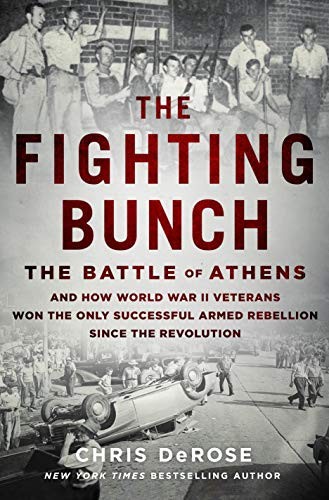
The Fighting Bunch: The Battle of Athens and How World War II Veterans Won the Only Successful Armed Rebellion Since the Revolution

Chris DeRose

unrated
Read Basic intel Military history Technical warfare WWII Guerrilla / COIN Intel history ISBN 9781250266194

St. Martin's Press · Nov 03, 2020

The incredible, untold story of the WWII veterans who destroyed a corrupt political machine―the only successful armed rebellion on US soil since the War of Independence. They fought for freedom abroad and returned to find that they had lost it at home. A corrupt political machine was in charge, kept in power by violence and stolen elections - the worst allegations of vote fraud ever brought to the attention of the Department of Justice, according to the Attorney General. The GIs formed a nonpartisan, all-veteran ticket. On Election Day, the GIs and their supporters found themselves assaulted, intimidated, arrested, and even shot. A small band of veterans - the Fighting Bunch - armed themselves and marched on the jail to demand an honest count. The sheriff and his men refused. These men who thought they had seen the last of war returned to the battlefield, one last time. This episode in U.S. history has never been more relevant, but has never been fully told. At the time of the rebellion, national news outlets jammed the phone lines into town, asking questions before the shooting had stopped. Journalists beat a path to Athens from across the country. Hollywood came calling, but the people of McMinn County had moved on. After years of research, including exclusive interviews with the remaining witnesses, archival radio broadcast and interview tapes, scrapbooks, letters, and diaries, author Chris DeRose has reconstructed one of the seminal―yet untold―events in American election history.