AFDD 2-1.9, page 37
Targeting
Air Force Doctrine Document: Targeting
DTIC ADA454614 public copy
Searchable page text (OCR / PDF)
27
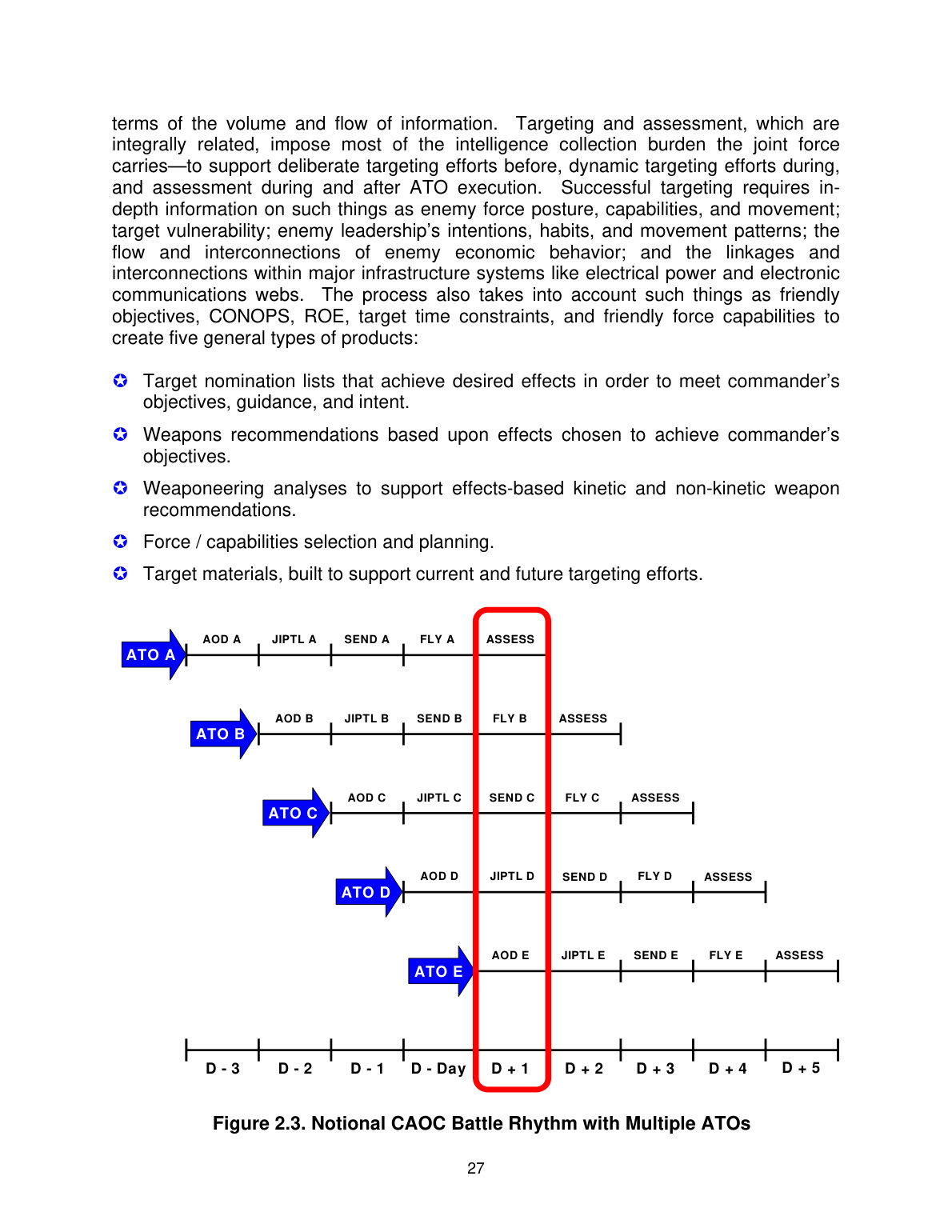
Figure 2.3. Notional CAOC Battle Rhythm with Multiple ATOs
D - 3
D - 2
D - 1
D - Day
D + 1
D + 2
D + 3
D + 4
ATO B
ATO C
ATO D
ATO E
ATO A
AOD A
JIPTL A
SEND A
FLY A
ASSESS
AOD B
JIPTL B
SEND B
FLY B
ASSESS
AOD C
JIPTL C
SEND C
FLY C
ASSESS
AOD D
JIPTL D
SEND D
FLY D
ASSESS
AOD E
JIPTL E
SEND E
FLY E
ASSESS
D + 5
terms of the volume and flow of information. Targeting and assessment, which are
integrally related, impose most of the intelligence collection burden the joint force
carries—to support deliberate targeting efforts before, dynamic targeting efforts during,
and assessment during and after ATO execution. Successful targeting requires in-
depth information on such things as enemy force posture, capabilities, and movement;
target vulnerability; enemy leadership’s intentions, habits, and movement patterns; the
flow and interconnections of enemy economic behavior; and the linkages and
interconnections within major infrastructure systems like electrical power and electronic
communications webs. The process also takes into account such things as friendly
objectives, CONOPS, ROE, target time constraints, and friendly force capabilities to
create five general types of products:
Target nomination lists that achieve desired effects in order to meet commander’s
objectives, guidance, and intent.
Weapons recommendations based upon effects chosen to achieve commander’s
objectives.
Weaponeering analyses to support effects-based kinetic and non-kinetic weapon
recommendations.
Force / capabilities selection and planning.
Target materials, built to support current and future targeting efforts.