ATP 2-33.4, page 96
Intelligence Analysis
Army Techniques Publication: Intelligence Analysis
2014 public edition (Archive.org)
Searchable page text (OCR / PDF)
Chapter 6
6-10
ATP 2-33.4
18 August 2014
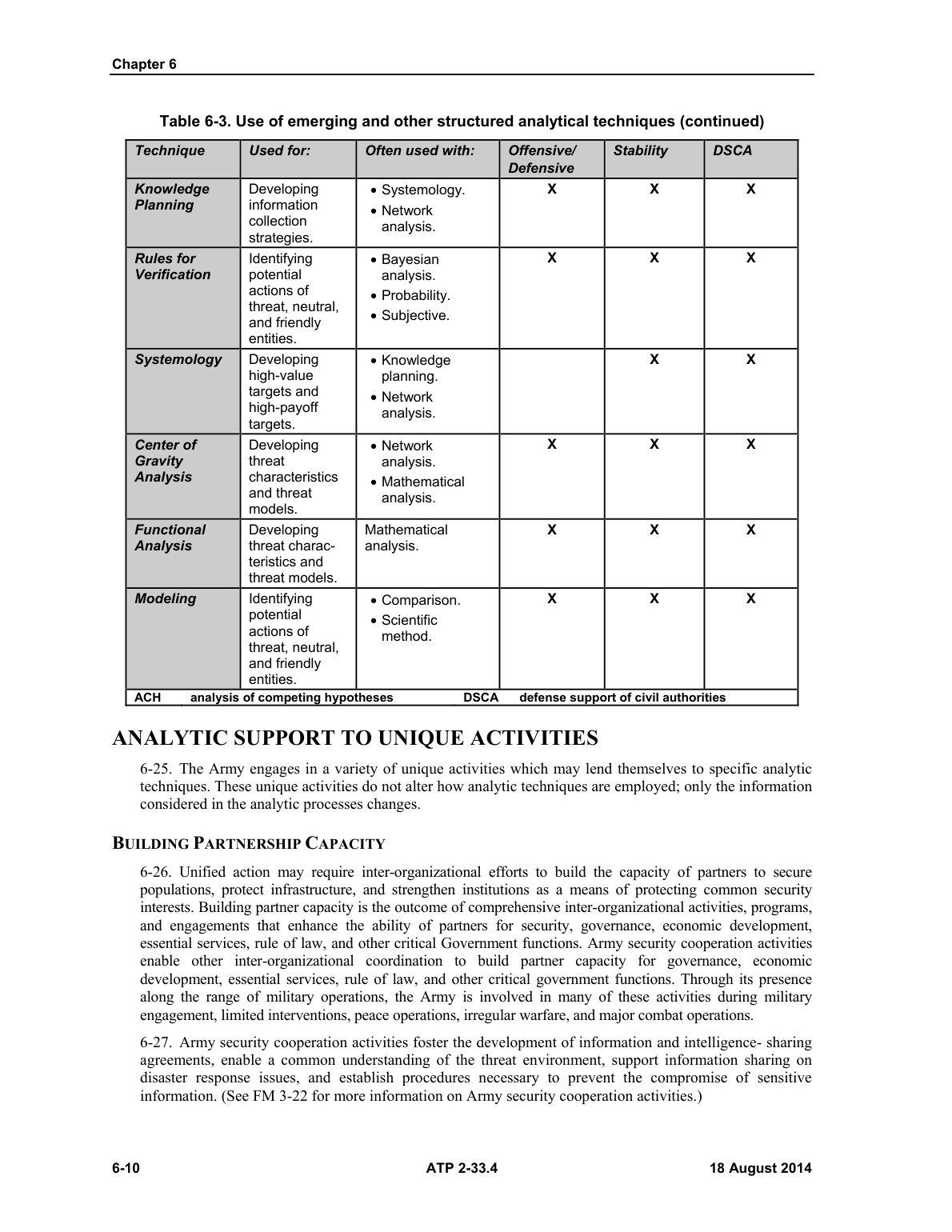
Table 6-3. Use of emerging and other structured analytical techniques (continued)
Technique
Used for:
Often used with:
Offensive/
Defensive
Stability
DSCA
Knowledge
Planning
Developing
information
collection
strategies.
• Systemology.
• Network
analysis.
X
X
X
Rules for
Verification
Identifying
potential
actions of
threat, neutral,
and friendly
entities.
• Bayesian
analysis.
• Probability.
• Subjective.
X
X
X
Systemology
Developing
high-value
targets and
high-payoff
targets.
• Knowledge
planning.
• Network
analysis.
X
X
Center of
Gravity
Analysis
Developing
threat
characteristics
and threat
models.
• Network
analysis.
• Mathematical
analysis.
X
X
X
Functional
Analysis
Developing
threat charac-
teristics and
threat models.
Mathematical
analysis.
X
X
X
Modeling
Identifying
potential
actions of
threat, neutral,
and friendly
entities.
• Comparison.
• Scientific
method.
X
X
X
ACH
analysis of competing hypotheses
DSCA
defense support of civil authorities
ANALYTIC SUPPORT TO UNIQUE ACTIVITIES
6-25. The Army engages in a variety of unique activities which may lend themselves to specific analytic
techniques. These unique activities do not alter how analytic techniques are employed; only the information
considered in the analytic processes changes.
BUILDING PARTNERSHIP CAPACITY
6-26. Unified action may require inter-organizational efforts to build the capacity of partners to secure
populations, protect infrastructure, and strengthen institutions as a means of protecting common security
interests. Building partner capacity is the outcome of comprehensive inter-organizational activities, programs,
and engagements that enhance the ability of partners for security, governance, economic development,
essential services, rule of law, and other critical Government functions. Army security cooperation activities
enable other inter-organizational coordination to build partner capacity for governance, economic
development, essential services, rule of law, and other critical government functions. Through its presence
along the range of military operations, the Army is involved in many of these activities during military
engagement, limited interventions, peace operations, irregular warfare, and major combat operations.
6-27. Army security cooperation activities foster the development of information and intelligence- sharing
agreements, enable a common understanding of the threat environment, support information sharing on
disaster response issues, and establish procedures necessary to prevent the compromise of sensitive
information. (See FM 3-22 for more information on Army security cooperation activities.)