GhostNet 1.5, page 4
GhostNet Guide
S2 Underground field guide: GhostNet Guide
Version 1.5 — Stopgap Comms Solutions (CC BY-NC-SA 4.0)
Searchable page text (OCR / PDF)
4
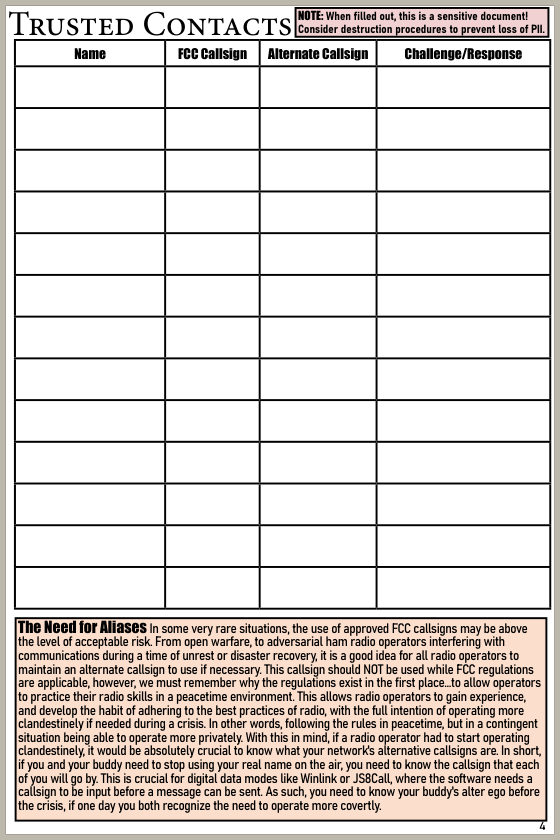
Trusted Contacts
Name
FCC Callsign
Alternate Callsign
Challenge/Response
The Need for Aliases In some very rare situations, the use of approved FCC callsigns may be above
the level of acceptable risk. From open warfare, to adversarial ham radio operators interfering with
communications during a time of unrest or disaster recovery, it is a good idea for all radio operators to
maintain an alternate callsign to use if necessary. This callsign should NOT be used while FCC regulations
are applicable, however, we must remember why the regulations exist in the first place...to allow operators
to practice their radio skills in a peacetime environment. This allows radio operators to gain experience,
and develop the habit of adhering to the best practices of radio, with the full intention of operating more
clandestinely if needed during a crisis. In other words, following the rules in peacetime, but in a contingent
situation being able to operate more privately. With this in mind, if a radio operator had to start operating
clandestinely, it would be absolutely crucial to know what your network's alternative callsigns are. In short,
if you and your buddy need to stop using your real name on the air, you need to know the callsign that each
of you will go by. This is crucial for digital data modes like Winlink or JS8Call, where the software needs a
callsign to be input before a message can be sent. As such, you need to know your buddy's alter ego before
the crisis, if one day you both recognize the need to operate more covertly.
NOTE: When filled out, this is a sensitive document!
Consider destruction procedures to prevent loss of PII.