S2 Search · Reading list

S2 Actual reading list

Books from S2 Actual on Goodreads, organized by his shelves and topic buckets (intel lists, military history, logistics, etc.). Metadata filled via Open Library.

Not official S2 Underground. Independent fan index — not affiliated with or endorsed by S2. Official hub: linktr.ee/S2_underground. S2 materials are CC BY-NC-SA 4.0.

S2 topic buckets (Goodreads)

Subjects & genres

21 books · Advanced intel · subject Espionage

All the Shah's Men: An American Coup and the Roots of Middle East Terror

Stephen Kinzer

★★★★★
Read Advanced intel Intel history Military history Espionage GWOT Middle East Intel history Orthodox / theology ISBN 9780471678786

Wiley · August 12, 2004

Half a century ago, the United States overthrew a Middle Eastern government for the first time. The victim was Mohammad Mossadegh, the democratically elected prime minister of Iran. Although the coup seemed a success at first, today it serves as a chilling lesson about the dangers of foreign intervention.In this book, veteran New York Times correspondent Stephen Kinzer gives the first full account of this fateful operation. His account is centered around an hour-by-hour reconstruction of the events of August 1953, and concludes with an assessment of the coup's "haunting and terrible legacy." Operation Ajax, as the plot was code-named, reshaped the history of Iran, the Middle East, and the world. It restored Mohammad Reza Shah to the Peacock Throne, allowing him to impose a tyranny that ultimately sparked the Islamic Revolution of 1979. The Islamic Revolution, in turn, inspired fundamentalists throughout the Muslim world, including the Taliban and terrorists who thrived under its protection."It is not far-fetched," Kinzer asserts in this book, "to draw a line from Operation Ajax through the Shah's repressive regime and the Islamic Revolution to the fireballs that engulfed the World Trade Center in New York."Drawing on research in the United States and Iran, and using material from a long-secret CIA report, Kinzer explains the background of the coup and tells how it was carried out. It is a cloak-and-dagger story of spies, saboteurs, and secret agents. There are accounts of bribes, staged riots, suitcases full of cash, and midnight meetings between the Shah and CIA agent Kermit Roosevelt, who was smuggled in and out of the royal palace under a blanket in the back seat of a car. Roosevelt,the grandson of President Theodore Roosevelt, was a real-life James Bond in an era when CIA agents operated mainly by their wits. After his first coup attempt failed, he organized a second attempt that succeeded three days later.The colorful cast of characters includes the terrified young Shah, who fled his country at the first sign of trouble; General H. Norman Schwarzkopf, father of the Gulf War commander and the radio voice of "Gang Busters," who flew to Tehran on a secret mission that helped set the coup in motion; and the fiery Prime Minister Mossadegh, who outraged the West by nationalizing the immensely profitable Anglo-Iranian Oil Company. The British, outraged by the seizure of their oil company, persuaded President Dwight Eisenhower that Mossadegh was leading Iran toward Communism. Eisenhower and Prime Minister Winston Churchill of Great Britain became the coup's main sponsors. Brimming with insights into Middle Eastern history and American foreign policy, this book is an eye-opening look at an event whose unintended consequences - Islamic revolution and violent anti-Americanism--have shaped the modern world. As the United States assumes an ever-widening role in the Middle East, it is essential reading.
Networks and Netwars: The Future of Terror, Crime, and Militancy

John Arquilla

★★★★★
Read Advanced intel Cryptography Intel history Privacy Espionage Cyber ISBN 0833030302

Rand · 2001

Netwar―like cyberwar―describes a new spectrum of conflict that is emerging in the wake of the information revolution. What distinguished netwar is the networked organizational structure of its practitioners and their quickness in coming together in swarming attacks. To confront this new type of conflict, it is crucial for governments, military, and law enforcement to begin networking themselves.

The Man Who Would Be King: The First American in Afghanistan

Ben Macintyre

★★★★★
Read Advanced intel Intel history Espionage GWOT Intel history Biography ISBN 9780374529574

Farrar, Straus and Giroux · April 14, 2005

The riveting story that inspired Kipling's classic tale and a John Huston movie The true story of Josiah Harlan, a Pennsylvania Quaker and the first American ever to enter Afghanistan, has never been told before. Soldier, spy, doctor, naturalist, traveler and writer, Josiah Harlan wanted to be a king, with all the imperialist hubris of his times. In an amazing twenty-year journey around Central Asia, he was variously employed as surgeon to the Maharaja of Punjab, revolutionary agent for the exiled Afghan King, and then commander-in-chief of the Afghan armies. In 1838, he set off in the footsteps of Alexander the Great across the Hindu Kush and forged his own kingdom, only to be ejected from Afghanistan a few months later by the invading British. Using a trove of newly-discovered documents, Harlan's own unpublished journals, and with a revised Preface detailing the unexpected discovery of Harlan's descendents, Ben Macintyre's The Man Who Would Be King tells the astonishing tale of the man who would be the first and last American king.

Between Silk and Cyanide: A Codemaker's War, 1941-1945

Leo Marks

★★★★
Read Advanced intel Cryptography WWII Espionage Special ops Intel history Biography ISBN 9780684867809

Free Press · September 12, 2000

In 1942, Leo Marks left his father's famous bookshop, 84 Charing Cross Road, and went off to fight the war. He was twenty-two. Soon recognized as a cryptographer of genius, he became head of communications at the Special Operations Executive (SOE), where he revolutionized the codemaking techniques of the Allies and trained some of the most famous agents dropped into occupied Europe, including "the White Rabbit" and Violette Szabo. As a top codemaker, Marks had a unique perspective on one of the most fascinating and, until now, little-known aspects of the Second World War. Writing with the narrative flair and vivid characterization of his famous screenplays, Marks gives free rein to his keen sense of the absurd and his wry wit, resulting in a thrilling and poignant memoir that celebrates individual courage and endeavor, without losing sight of the human cost and horror of war.

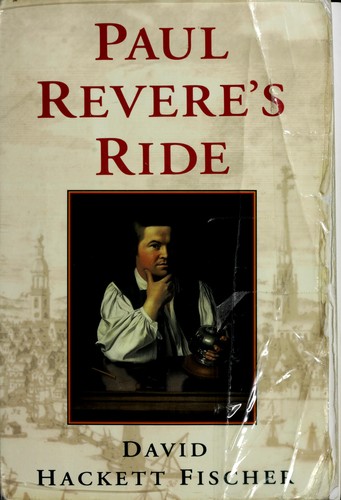
Paul Revere's Ride

David Hackett Fischer

★★★★
Read Basic intel Advanced intel Military history Intel history Logistics Technical warfare Espionage Cyber Logistics Revolution ISBN 0195098315

Oxford University Press · 1995

Paul Revere's midnight ride is a legendary event in American history - yet it has been largely ignored by scholars, and left to patriotic writers and debunkers. Now one of the foremost American historians offers the first serious study of this event - what led to it, what really happened, what followed - uncovering a truth more remarkable than the many myths it has inspired. In Paul Revere's Ride, David Hackett Fischer has created an exciting narrative that offers new insight into the coming of the American Revolution. From research in British and American archives, the author unravels a plot that no novelist would dare invent - a true story of high drama and deep suspense, of old-fashioned heroes and unvarnished villains, of a beautiful American spy who betrayed her aristocratic British husband, of violent mobs and marching armies, of brave men dying on their doorsteps, of high courage, desperate fear, and the destiny of nations. The narrative is constructed around two thematic lines. One story centers on the American patriot Paul Revere; the other, on British General Thomas Gage. Both were men of high principle who played larger roles than recent historiography has recognized. Thomas Gage was not the Tory tyrant of patriot legend, but an English Whig who believed in liberty and the rule of law. In 1774 and 1775, General Gage's advice shaped the fatal choices of British leaders, and his actions guided the course of American events. Paul Revere was more than a "simple artizan, " as his most recent biographer described him fifty years ago. The author presents new evidence that revolutionary Boston was a world of many circles - more complex than we have known. Paul Revere and his friend Joseph Warren ranged more widely through those circles than any other leaders. They became the linchpins of the Whig movement. On April 18th, 1775, Paul Revere played that role in a manner that has never been told before. He and William Dawes were not the only midnight riders to ca

Perfect Spy: The Incredible Double Life of Pham Xuan An - Time Magazine Reporter and Vietnamese Communist Agent

Larry Berman

★★★★
Read Advanced intel Biographies Intel history Vietnam Espionage Biography Strategy / theory ISBN 9780060888381

Collins · April 24, 2007

During the Vietnam War, Time reporter Pham Xuan An befriended everyone who was anyone in Saigon, including American journalists such as David Halberstam and Neil Sheehan, the CIA's William Colby, and the legendary Colonel Edward Lansdale—not to mention the most influential members of the South Vietnamese government and army. None of them ever guessed that he was also providing strategic intelligence to Hanoi, smuggling invisible ink messages into the jungle inside egg rolls. His early reports were so accurate that General Giap joked, "We are now in the U.S. war room." For more than twenty years, An lived a dangerous lie—and no one knew it because he was a master of both his jobs. After the war, An was named a Hero of the People's Army and was promoted to general—one of only two intelligence officers to ever achieve that rank. In Perfect Spy, Larry Berman, who An considered his official American biographer, chronicles the extraordinary life of one of the twentieth century's most fascinating spies. In doing so, he offers a new perspective on a war that continues to haunt us.

The Longest War: A History of the War on Terror and the Battles with Al Qaeda Since 9/11

Peter L. Bergen

★★★★
Read Advanced intel Military history Intel history Espionage GWOT Middle East Strategy / theory ISBN 9780743278935

Free Press · 2011

TEN YEARS HAVE PASSED since the shocking attacks on the World Trade Center, and after seven years of conflict, the last U.S. combat troops left Iraq—only to move into Afghanistan, where the ten-year-old fight the war on terror rages with no clear end in sight. In The Longest War Peter Bergen offers a comprehensive history of this war and its evolution, from the strategies devised in the wake of the 9/11 attacks to the fighting in Afghanistan, Pakistan, and beyond. Unlike any other book on this subject, here Bergen tells the story of this shifting war’s failures and successes from the perspectives of both the United States and al-Qaeda and its allies. He goes into the homes of al-Qaeda members, rooting into the source of their devotion to terrorist causes, and spends time in the offices of the major players shaping the U.S. strategic efforts in the region. At a time when many are frustrated or fatigued with what has become an enduring multigenerational conflict, this book will provide an illuminating narrative that not only traces the arc of the fight but projects its likely future. Weaving together internal documents from al-Qaeda and the U.S. offices of counterterrorism, first-person interviews with top-level jihadists and senior Washington officials, along with his own experiences on the ground in the Middle East, Bergen balances the accounts of each side, revealing how al-Qaeda has evolved since 9/11 and the specific ways the U.S. government has responded in the ongoing fight. Bergen also uncovers the strategic errors committed on both sides—the way that al-Qaeda’s bold attack on the United States on 9/11 actually undermined its objective and caused the collapse of the Taliban and the destruction of the organization’s safe haven in Afghanistan, and how al-Qaeda is actually losing the war of ideas in the Muslim world. The book also shows how the United States undermined its moral position in this war with its actions at Guantánamo and coercive interrogations—including the extraordinary rendition of Abu Omar, who was kidnapped by the CIA in Milan in 2003 and was tortured for four years in Egyptian prisons; his case represents the first and only time that CIA officials have been charged and convicted of the crime of kidnapping. In examining other strategic blunders the United States has committed, Bergen offers a scathing critique of the Clinton and Bush administrations’ inability to accurately assess and counter the al-Qaeda threat, Bush’s deeply misguided reasons for invading Iraq—including the story of how the invasion was launched based, in part, on the views of an obscure academic who put forth theories about Iraq’s involvement with al-Qaeda—and the Obama administration’s efforts in Afghanistan. At a critical moment in world history The Longest War provides the definitive account of the ongoing battle against terror.

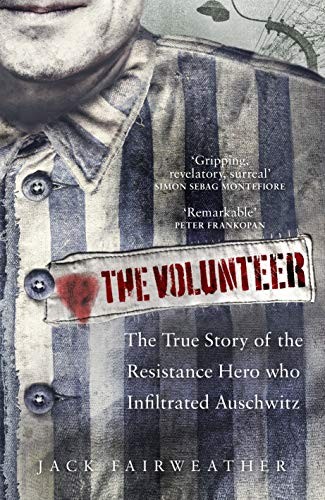
The Volunteer: The True Story of the Resistance Hero who Infiltrated Auschwitz

Jack Fairweather

★★★★
Read Advanced intel Military history Logistics WWII Espionage Logistics Biography ISBN 9780753545164

WH Allen · Mar 21, 2019

How do you keep fighting in the face of unimaginable horror? This is untold story of one of the greatest heroes of the Second World War. In the Summer of 1940, after the Nazi occupation of Poland, an underground operative called Witold Pilecki accepted a mission to uncover the fate of thousands of people being interred at a new concentration camp on the border of the Reich. His mission was to report on Nazi crimes and raise a secret army to stage an uprising. The name of the detention centre -- Auschwitz. It was only after arriving at the camp that he started to discover the Nazi’s terrifying designs. Over the next two and half years, Witold forged an underground army that smuggled evidence of Nazi atrocities to the West, culminating in the mass murder of over a million Jews. His reports from the camp were to shape the Allies response to the Holocaust - yet his story was all but forgotten for decades. This is the first major account of his amazing journey, drawing on exclusive family papers and recently declassified files as well as unpublished accounts from the camp’s fighters to show how he saved hundreds of thousands of lives. The result is a enthralling story of resistance and heroism against the most horrific circumstances, and one man’s attempt to change the course of history.

No cover · Amazon

Behind the battle: Intelligence in the war with Germany, 1939-45

Ralph Bennett

unrated
Read Advanced intel Intel history WWII Espionage Naval Air power Intel history

By the end of 1942, Ultra had become the richest and most reliable of the many different sources of intelligence, however, the relation between their individual contributions requires analysis. Ralph Bennett's study aims to present a succinct survey and analysis of the military intelligence available to Britain and her allies during World War II. When war began, Britain was as ill-prepared in intelligence as in armaments. Civilian scientists had discovered the principle of radar in the mid-1930s, but everything else had to be learned from scratch in the heat of emergency. In 1939, all three armed services lacked staff trained to appraise and distribute intelligence. Because it had so often been unreliable in the past, field commanders were reluctant to accept it and had to learn new ways. First signs of improvement came in mid-1941, when Ultra targeted naval vessels and bomber aircraft onto so many of Rommel's supply ships that the Afrika Korps almost withered on the vine. From then on intelligence played an increasingly indispensable part in final victory. Ultra won the Battle of the Atlantic, driving the U-boats back to coastal waters by June 1943. A lower grade code gave Montgomery the vital first news of the whereabouts of the German tanks as he planned the breakthrough at Alamein. Only "Bomber" Harris refused to give intelligence the credit it deserved, for reasons investigated in "Behind the Battle".

German Military Intelligence in World War II: The Abwehr

Lauran Paine

unrated
Read Advanced intel WWII Cold War Espionage Russia / USSR Intel history ISBN 0812829662

Stein and Day · 1984

The astonishing true story of the German military intelligence organization dedicated to Nazi victory - commanded by a man who was dedicated to Nazi defeat. It was primarily from the Abwehr that Hitler and his top generals got the information they used in planning the subjugation of Europe. But to this day few people know the full story of how the commander of that organization, Admiral Wilhelm Canaris, and some of his trusted subordinates, deliberately and secretly contributed to the downfall of Nazi Germany. high treason against Hitler's government originated within the Abwehr; at least three attempts on the Fuhrer's life were secretly planned, ordered, and carried out by its personnel. From 1938 until the last months of the war, Abwehr officers balanced on the sword's edge and did it so well that detection and terrible retribution came only when the armies of America and the Soviet Union were approaching Berlin. After peace came, strict orders were issued against revealing much that is now detailed in this book. Lauran Paine was associated with U.S. intelligence operations for over thirty years. He was also the author of "The CIA At Work" and several other books on intelligence matters.

Japan's Gestapo: Murder, Mayhem and Torture in Wartime Asia

Mark Felton

unrated
Read Military history Logistics Technical warfare Advanced intel WWII Espionage Logistics ISBN 9781844159123

Pen & Sword Military · 2009

Japan's military and secret police, the Kempetai, carried out a reign of terror against captive Asian nations, Allied POWs, and Japanese citizens throughout World War II. This history explains the origins, command structure, and role of the Kempetai apparatus, revealing their criminal and collaborationist networks. It examines biological and chemical experiments on live subjects, the gulags for POWs, and slave labor, including the so-called "comfort women," as well as their campaign of revenge after the 1942 Doolittle raid on Tokyo. Calling their actions genocide on a grand scale, the author backs up his text with firsthand testimonies from survivors.

Japanese Intelligence in World War II (General Military)

Ken Kotani

unrated
Read Advanced intel Intel history WWII Espionage Naval China Russia / USSR Intel history ISBN 9781846034251

Osprey · 2009

In the eyes of history, Japanese intelligence in World War II has fared very poorly. However, these historians have most often concentrated on the later years of the war, when Japan was fighting a multi-front war against numerous opponents. In this groundbreaking new study, Japanese scholar Ken Kotani re-examines the Japanese Intelligence department, beginning with the early phase of the war. He points out that without the intelligence gathered by the Japanese Army and Navy they would have been unable to achieve their long string of victories against the forces of Russia, China, and Great Britain. Notable in these early campaigns were the successful strikes against both Singapore and Pearl Harbor. Yet as these victories expanded the sphere of Japanese control, they also made it harder for the intelligence services to gather accurate information about their growing list of adversaries. At the battle of Midway in 1942, Japanese intelligence suffered its worst mishap when the Americans broke their code and tricked the Japanese into revealing the target of their attack. It was a mistake from which they would never recover. As the military might of Japan was forced to retreat and her forces deteriorated, so too did her intelligence services.

Reset: Iran, Turkey, and America's Future

Stephen Kinzer

unrated
Read Advanced intel Military history Espionage Middle East Strategy / theory ISBN 9780805091274

Times Books · 2010

The bestselling author of Overthrow offers a new and surprising vision for rebuilding America's strategic partnerships in the Middle East What can the United States do to help realize its dream of a peaceful, democratic Middle East? Stephen Kinzer offers a surprising answer in this paradigm-shifting book. Two countries in the region, he argues, are America's logical partners in the twenty-first Turkey and Iran. Besides proposing this new "power triangle," Kinzer also recommends that the United States reshape relations with its two traditional Middle East allies, Israel and Saudi Arabia. This book provides a penetrating, timely critique of America's approach to the world's most volatile region, and offers a startling alternative. Kinzer is a master storyteller with an eye for grand characters and illuminating historical detail. In this book he introduces us to larger-than-life figures, like a Nebraska schoolteacher who became a martyr to democracy in Iran, a Turkish radical who transformed his country and Islam forever, and a colorful parade of princes, politicians, women of the world, spies, oppressors, liberators, and dreamers. Kinzer's provocative new view of the Middle East is the rare book that will richly entertain while moving a vital policy debate beyond the stale alternatives of the last fifty years.

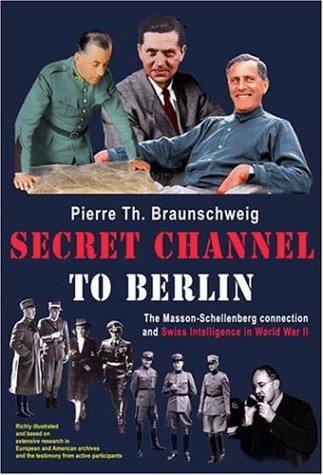
Secret Channel to Berlin: The Masson-Schellenberg Connection and Swiss Intelligence in World War II

Pierre-Th. Braunschweig

unrated
Read Intel history Advanced intel WWII Espionage Strategy / theory ISBN 1932033394

Casemate · 2004

This book focuses on the delicate connection between the head of Swiss Intelligence, Colonel Roger Masson, and the German Chief of Espionage, SS General Walter Schellenberg. The author had access to hitherto inaccessible documents, including newly discovered material in American archives, to fully illuminate this secret connection for the first time. The book also includes surprising new details about the alarming military threats Switzerland faced in March 1943. Masson's extraordinary secret channel to Berlin was not, of course, the only Swiss intelligence operation during the war. Braunschweig outlines in detail the gradual buildup, tasks and functions of Swiss Intelligence during World War II. He furthermore describes conflicts between Swiss Intelligence and the Federal government in Bern and within the Intelligence service itself. During World War II, Switzerland was famous as a center of spies and espionage fielded by Allies and Axis alike. Less has been known, however, about Switzerland's own Intelligence activities, including its secret sources in Hitler's councils and its counterespionage program at home. With this intensely researched, scholarly, yet exciting book, that gap in the history of wartime Intelligence operations has been filled. PIERRE-TH. BRAUNSCHWEIG earned a Ph.D. in history from the University of Bern and later served as an assistant to Hans Senn, the Chief of Staff of the Swiss Army. He is a member of the United States Strategic Institute in Washinton DC, the International Institute for Strategic Studies in London, and the National Intelligence Study Center in Washington.

Soldier Spies: Israeli Military Intelligence

Samuel M. Katz

unrated
Read Advanced intel Espionage Middle East Intel history ISBN 089141357X

Presidio Press · 1992

Chronicling the spectacular successes of Israel's often overlooked military intelligence service, the first full length history of A'man discusses the agency's role in Israel's history, from the War of Independence to the present. 10,000 first printing.

Spying for Wellington: British Military Intelligence in the Peninsular War

Huw J. Davies

unrated
Read Intel history Advanced intel Espionage Intel history Strategy / theory ISBN 9780806161730

University of Oklahoma Press · Nov 08, 2018

Intelligence is often the critical factor in a successful military campaign. This was certainly the case for Arthur Wellesley, the Duke of Wellington, in the Peninsular War. In this book, author Huw J. Davies offers the first full account of the scope, complexity, and importance of Wellington’s intelligence department, describing a highly organized, multifaceted series of networks of agents and spies throughout Spain and Portugal—an organization that is at once a microcosm of British intelligence at the time and a sophisticated forebear to intelligence developments in the twentieth century. Spying for Wellington shows us an organization that was, in effect, two parallel networks: one made up of Foreign Office agents “run” by British ambassadors in Spain and Portugal, the other comprising military spies controlled by Wellington himself. The network of agents supplied strategic intelligence, giving the British army advance warning of the arrival, destinations, and likely intentions of French reinforcements. The military network supplied operational intelligence, which confirmed the accuracy of the strategic intelligence and provided greater detail on the strengths, arms, and morale of the French forces. Davies reveals how, by integrating these two forms of intelligence, Wellington was able to develop an extremely accurate and reliable estimate of French movements and intentions not only in his own theater of operations but also in other theaters across the Iberian Peninsula. The reliability and accuracy of this intelligence, as Davies demonstrates, was central to Wellington’s decision-making and, ultimately, to his overall success against the French. Correcting past, incomplete accounts, this is the definitive book on Wellington’s use of intelligence. As such, it contributes to a clearer, more comprehensive understanding of Wellington at war and of his place in the history of British military intelligence.

The Deceivers: Allied Military Deception in the Second World War

Thaddeus Holt

unrated
Read Military history Intel history Technical warfare Advanced intel WWII Espionage ISBN 0743250427

Scribner · 2004

A chronological analysis of the use of systematic deception by allied forces during World War II covers the development of deception techniques, explores the groundbreaking work of double agents, and reveals specific tactics that were used at key moments during the war. 30,000 first printing.

The Spy in Moscow Station: A Counterspy's Hunt for a Deadly Cold War Threat

Eric Haseltine

unrated
Read Advanced intel Biographies Cryptography Intel history Cold War Espionage Russia / USSR Orthodox / theology ISBN 9781250301161

Thomas Dunne Books · Apr 30, 2019

The thrilling, true story of the race to find a leak in the United States Embassy in Moscow--before more American assets are rounded up and killed. Foreword by Gen. Michael V. Hayden (Retd.), Former Director of NSA & CIA In the late 1970s, the National Security Agency still did not officially exist--those in the know referred to it dryly as the No Such Agency. So why, when NSA engineer Charles Gandy filed for a visa to visit Moscow, did the Russian Foreign Ministry assert with confidence that he was a spy? Outsmarting honey traps and encroaching deep enough into enemy territory to perform complicated technical investigations, Gandy accomplished his mission in Russia, but discovered more than State and CIA wanted him to know. Eric Haseltine's The Spy in Moscow Station tells of a time when--much like today--Russian spycraft had proven itself far beyond the best technology the U.S. had to offer. The perils of American arrogance mixed with bureaucratic infighting left the country unspeakably vulnerable to ultra-sophisticated Russian electronic surveillance and espionage. This is the true story of unorthodox, underdog intelligence officers who fought an uphill battle against their own government to prove that the KGB had pulled off the most devastating penetration of U.S. national security in history. If you think The Americans isn't riveting enough, you'll love this toe-curling nonfiction thriller.

Unrestricted Warfare: China's Master Plan to Destroy America

Qiao Liang

unrated
Read Advanced intel Military history Logistics Technical warfare Espionage GWOT Cyber China Logistics Strategy / theory Economics Orthodox / theology ISBN 9780971680722

Pan American Publishing Company · August 22, 2002

As incredible as it may be to believe, three years before the Sept. 11 bombing of the World Trade Center a Chinese military manual titled Unrestricted Warfare touted such an attack – suggesting it would be difficult for the U.S. military to cope with. Here is an excerpt from Unrestricted "Whether it be the intrusions of hackers, a major explosion at the World Trade Center, or a bombing attack by bin Laden, all of these greatly exceed the frequency bandwidths understood by the American military..." Surprisingly, Osama bin Laden is mentioned frequently in this book. Now NewsMax.com is making the CIA translation of this shocking book available to all Americans. On Sept. 11, 2001, Americans and the world witnessed one of the most horrific acts ever to take place on American soil. Our media and government were quick to declare the acts of that day as simply terrorism by a nationless group known as al-Qaeda. In reading China’s military manual Unrestricted Warfare, you will learn that the events of Sept. 11 were not a random act perpetrated by independent agents. Instead, Chinese military planners believe that terrorism is just one of the many tools at the hands of nations and their terrorist allies to wage total war against the United States. You will be surprised to · The two PLA colonels who authored Unrestricted Warfare have been hailed as heroes in China since Sept. 11 · The Chinese state-run propaganda machine is cashing in on the terror attacks ... producing books, films and video games glorifying the strikes as a humbling blow against an arrogant nation. · Chinese Communist Party officials are saying that President Jiang Zemin has obsessively and gleefully watched and re-watched pictures of the aircraft crashing into the World Trade Center. · The CIA’s own translation agency reported that this book identifies the U.S. as China’s main enemy, and details how a weak nation can destroy America using unorthodox attacks – like the 9-11 attacks. · China is preparing itself and encouraging others to engage the U.S. in total war. The book is chock full of plans and strategies, from using computers, to smuggling illegal immigrants, to manipulating the stock markets, to influencing the U.S. media, to using weapons of mass destruction – all to destroy America. Recent press reports indicate that China has assisted and continues to assist militarily and economically the Taliban and al-Qaeda – even after Sept. 11. The doctrine of total war outlined in Unrestricted Warfare clearly demonstrates that the People’s Republic of China is preparing to confront the United States and our allies by conducting "asymmetrical" or multidimensional attacks on almost every aspect of our social, economic and political life. The media and Congress are keeping a lid on this book because of the implications of U.S.-China economic and trade relations. But now you can bypass them by getting a copy yourself!