S2 Search · Reading list

S2 Actual reading list

Books from S2 Actual on Goodreads, organized by his shelves and topic buckets (intel lists, military history, logistics, etc.). Metadata filled via Open Library.

Not official S2 Underground. Independent fan index — not affiliated with or endorsed by S2. Official hub: linktr.ee/S2_underground. S2 materials are CC BY-NC-SA 4.0.

S2 topic buckets (Goodreads)

Subjects & genres

23 books · Advanced intel · subject GWOT

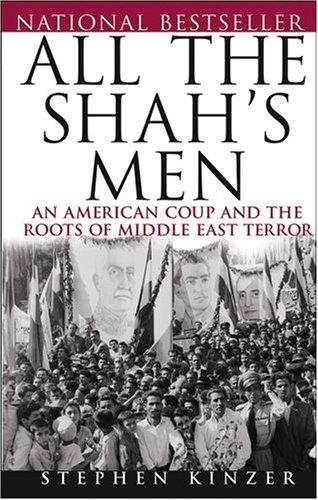
All the Shah's Men: An American Coup and the Roots of Middle East Terror

Stephen Kinzer

★★★★★
Read Advanced intel Intel history Military history Espionage GWOT Middle East Intel history Orthodox / theology ISBN 9780471678786

Wiley · August 12, 2004

Half a century ago, the United States overthrew a Middle Eastern government for the first time. The victim was Mohammad Mossadegh, the democratically elected prime minister of Iran. Although the coup seemed a success at first, today it serves as a chilling lesson about the dangers of foreign intervention.In this book, veteran New York Times correspondent Stephen Kinzer gives the first full account of this fateful operation. His account is centered around an hour-by-hour reconstruction of the events of August 1953, and concludes with an assessment of the coup's "haunting and terrible legacy." Operation Ajax, as the plot was code-named, reshaped the history of Iran, the Middle East, and the world. It restored Mohammad Reza Shah to the Peacock Throne, allowing him to impose a tyranny that ultimately sparked the Islamic Revolution of 1979. The Islamic Revolution, in turn, inspired fundamentalists throughout the Muslim world, including the Taliban and terrorists who thrived under its protection."It is not far-fetched," Kinzer asserts in this book, "to draw a line from Operation Ajax through the Shah's repressive regime and the Islamic Revolution to the fireballs that engulfed the World Trade Center in New York."Drawing on research in the United States and Iran, and using material from a long-secret CIA report, Kinzer explains the background of the coup and tells how it was carried out. It is a cloak-and-dagger story of spies, saboteurs, and secret agents. There are accounts of bribes, staged riots, suitcases full of cash, and midnight meetings between the Shah and CIA agent Kermit Roosevelt, who was smuggled in and out of the royal palace under a blanket in the back seat of a car. Roosevelt,the grandson of President Theodore Roosevelt, was a real-life James Bond in an era when CIA agents operated mainly by their wits. After his first coup attempt failed, he organized a second attempt that succeeded three days later.The colorful cast of characters includes the terrified young Shah, who fled his country at the first sign of trouble; General H. Norman Schwarzkopf, father of the Gulf War commander and the radio voice of "Gang Busters," who flew to Tehran on a secret mission that helped set the coup in motion; and the fiery Prime Minister Mossadegh, who outraged the West by nationalizing the immensely profitable Anglo-Iranian Oil Company. The British, outraged by the seizure of their oil company, persuaded President Dwight Eisenhower that Mossadegh was leading Iran toward Communism. Eisenhower and Prime Minister Winston Churchill of Great Britain became the coup's main sponsors. Brimming with insights into Middle Eastern history and American foreign policy, this book is an eye-opening look at an event whose unintended consequences - Islamic revolution and violent anti-Americanism--have shaped the modern world. As the United States assumes an ever-widening role in the Middle East, it is essential reading.
Expeditionary Eagles: Outmaneuvering the Taliban

H. John Poole

★★★★★
Read Advanced intel GWOT Guerrilla / COIN Strategy / theory ISBN 9780981865928

Posterity Press · 2010

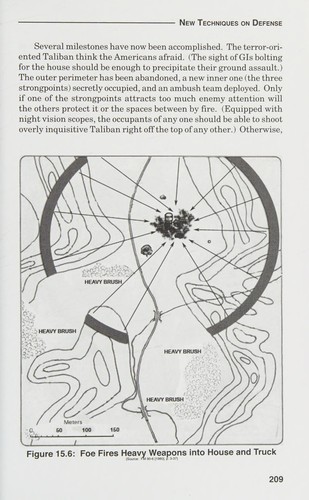
The Afghan War is still salvagable. For America, it has been about denying sanctuary to al-Qaeda. For local factions and governments, a traditional fund raiser--heroin--is more important. Only with less smuggling of drugs out and ordnance in, can the insurgency be limited. Both have been broken down into more easily concealable "pieces." All traffic along the 14 entrance highways must be better inspected to curtail their movement. Herein lies the most detailed study in existence of Pakistan's drug and militant madrasa networks. Also discussed is how a lone U.S. squad could--without a single artillery round or drone missile--rely on deception to defend a roadside outpost against hundreds of attacking narco-insurgents.

Homeland Siege: Tactics for Police and Military

H. John Poole

★★★★★
Read Advanced intel GWOT China ISBN 9780981865911

Posterity Press · 2009

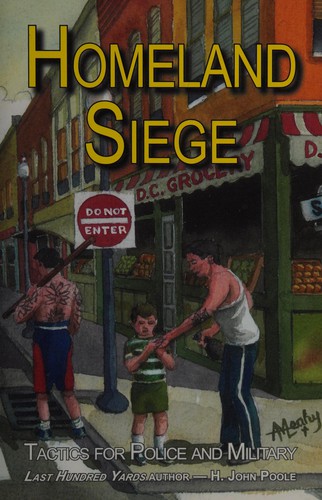
America is still in serious trouble. There's no way all of her internal problems have been self-inflicted. Yet, many still (1) ISIS and al-Qaeda are her only foes; (2) her intelligence agencies see every threat coming; and (3) her military is the best in the world at all things. This book reassesses the breakdown from a "bottom-up" perspective, as that's how Islamists, Communists, and criminals like to take over. Such "qualitative research" is regularly used by U.S. police departments. After detailing the subversion, this book (1) the most extensive study of hostage rescue ever attempted; (2) a safer way for grunts and SWATs to quickly seize any contested building; and (3) how Nepal was finally taken over by China at the ballot box.

Militant Tricks: Battlefield Ruses of the Islamic Insurgent

H. John Poole

★★★★★
Read Advanced intel GWOT Guerrilla / COIN China Middle East Strategy / theory ISBN 9780963869586

Posterity Press · October 17, 2005

THIS BOOK WAS ON THE U.S. ARMY'S MOST PRESTIGIOUS READING LIST. Since 9/11, our deployed troops have learned many things. Though the war in Afghanistan has just ended, many of their hard-won lessons have yet to be assimilated by the Stateside bureaucracy. To help, "Militant Tricks" has recounted America's progress in Iraq and Afghanistan from the standpoint of East Asian BATTLEFIELD DECEPTION. Both countries were part of the Mongol Empire for over 200 years and thus prone to every sort of ancient Chinese illusion. "Militant Tricks" also contains the TACTICAL TECHNIQUES WITH WHICH TO COUNTER AN ISLAMIC EXTREMIST'S URBAN OFFENSIVE. While some of these nontraditional techniques were risked during the Baghdad Surge, they may soon be forgotten.

Relentless Strike: The Secret History of Joint Special Operations Command

Sean Naylor

★★★★★
Read Basic intel Advanced intel Military history Intel history Technical warfare GWOT Special ops Naval Air power Nuclear Middle East ISBN 9781250014542

St. Martin's Press · 2015

The New York Times Bestseller and Winner of the 2015 Army Historical Foundation Distinguished Writing Award for Unit History Since the attacks of September 11, one organization has been at the forefront of America's military response. Its efforts turned the tide against al-Qaida in Iraq, killed Bin Laden and Zarqawi, rescued Captain Phillips and captured Saddam Hussein. Its commander can direct cruise missile strikes from nuclear submarines and conduct special operations raids anywhere in the world. Relentless Strike tells the inside story of Joint Special Operations Command, the secret military organization that during the past decade has revolutionized counterterrorism, seamlessly fusing intelligence and operational skills to conduct missions that hit the headlines, and those that have remained in the shadows-until now. Because JSOC includes the military's most storied special operations units-Delta Force, SEAL Team 6, the 75th Ranger Regiment-as well as America's most secret aviation and intelligence units, this is their story, too. Relentless Strike reveals tension-drenched meetings in war rooms from the Pentagon to Iraq and special operations battles from the cabin of an MH-60 Black Hawk to the driver's seat of Delta Force's Pinzgauer vehicles as they approach their targets. Through exclusive interviews, reporter Sean Naylor uses his unique access to reveal how an organization designed in the 1980s for a very limited mission set transformed itself after 9/11 to become the military's premier weapon in the war against terrorism and how it continues to evolve today.

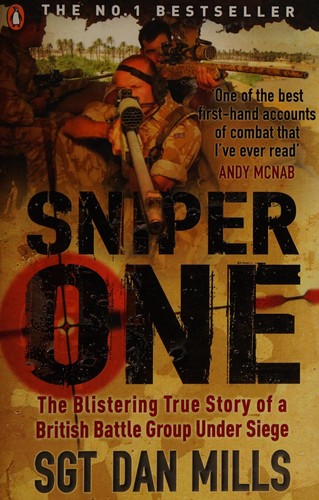
Sniper One: The Blistering True Story Of A British Battle Group Under Siege

Dan Mills

★★★★★
Read Biographies Intel history Technical warfare Advanced intel Military history GWOT Middle East Biography ISBN 9780141029016

Penguin · 2008

Sniper One is the gritty, awe-inspiring true story that takes you right into the heart of the Iraq war from Sunday Times No.1 bestseller Sgt. Dan Mills. 'One of the best first-hand accounts of combat that I've ever read' Andy McNab We all saw it at once. Half a dozen voices screamed 'Grenade!' simultaneously. Then everything went into slow motion. The grenade took an age to travel through its 20 metre arc. A dark, small oval-shaped package of misery the size of a peach ... April 2004: Dan Mills and his platoon of snipers fly into southern Iraq, part of an infantry battalion sent to win hearts and minds. They were soon fighting for their lives. Back home we were told they were peacekeeping. But there was no peace to keep. Because within days of arriving in theatre, Mills and his men were caught up in the longest, most sustained fire fight British troops had faced for over fifty years. This awe-inspiring account tells of total war in throat-burning winds and fifty-degree heat, blasted by mortars and surrounded by heavily armed militias. For six months, they fought isolated, besieged and under constant enemy fire. Their heroic stand a modern-day Rorke's Drift. ************** Dan Mills served for 24 years as an Infantry Soldier reaching the rank of Warrant Officer Class 2. During his long military career he served on operations in Northern Ireland, Bosnia, Kosovo, Iraq and Afghanistan. Dan was awarded a 'Mention In Despatches' for Gallantry for his services during The Iraq War. Since leaving the Army in 2010, he has forged a career as a writer and security consultant, amongst other things. Sniper One is his first book.

Tequila Junction: 4th-Generation Counterinsurgency

H. John Poole

★★★★★
Read Advanced intel GWOT Special ops Guerrilla / COIN ISBN 9780963869517

Posterity Press · 2008

Don't recognize this drug-funded Maoist army ? Its operatives have been busy in at least nine Latin American countries. Bringing an end to America's white-heroin deluge may take temporarily reinforcing -- with a lone U.S. infantry squad -- a few police outposts in Colombia, Panama, and Mexico. After briefly noting the extent of criminal, Communist, and Islamist subversion throughout the region, this book shows the Unconventional Warfare (UW) techniques that 14 isolated GIs might need to vie with many times their number of drug runners and revolutionaries. Among the "how-to" chapters (1) "Best 4GW Defense Is Locally Tailored;" (2) "Deep Interdiction;" (3) "Buffer Zones"; and (4) "Working a Heavily Populated Area." well illustrated, full of tiny element maneuvers, and quite exciting to read. One even shows how to blanket an area with secretly occupied fire team zones. Such an advanced UW concept would also work in other parts of the world. According to Australian Army Journal, "Poole's methods in Tequila Junction are an example of a decentralised approach to counterinsurgency that may provide a tactical level solution ... [to] keep the insurgents off balance in Uruzgan [Afghanistan]." As a final bonus , this book's appendix shows a fully tested way for any U.S. infantry or special operations company to develop its own state-of-the-art techniques for any intensity of combat.

The Black Book of Communism: Crimes, Terror, Repression

Stéphane Courtois

★★★★★
Read Military history Advanced intel Vietnam Korea Cold War GWOT Guerrilla / COIN China Russia / USSR Orthodox / theology ISBN 0674076087

Harvard University Press · 1999

Already famous throughout Europe, this international bestseller plumbs recently opened archives in the former Soviet bloc to reveal the actual, practical accomplishments of Communism around the terror, torture, famine, mass deportations, and massacres. Astonishing in the sheer detail it amasses, the book is the first comprehensive attempt to catalogue and analyze the crimes of Communism over seventy years. "Revolutions, like trees, must be judged by their fruit," Ignazio Silone wrote, and this is the standard the authors apply to the Communist experience―in the China of "the Great Helmsman," Kim Il Sung's Korea, Vietnam under "Uncle Ho" and Cuba under Castro, Ethiopia under Mengistu, Angola under Neto, and Afghanistan under Najibullah. The authors, all distinguished scholars based in Europe, document Communist crimes against humanity, but also crimes against national and universal culture, from Stalin's destruction of hundreds of churches in Moscow to Ceausescu's leveling of the historic heart of Bucharest to the widescale devastation visited on Chinese culture by Mao's Red Guards. As the death toll mounts―as many as 25 million in the former Soviet Union, 65 million in China, 1.7 million in Cambodia, and on and on―the authors systematically show how and why, wherever the millenarian ideology of Communism was established, it quickly led to crime, terror, and repression. An extraordinary accounting, this book amply documents the unparalleled position and significance of Communism in the hierarchy of violence that is the history of the twentieth century.

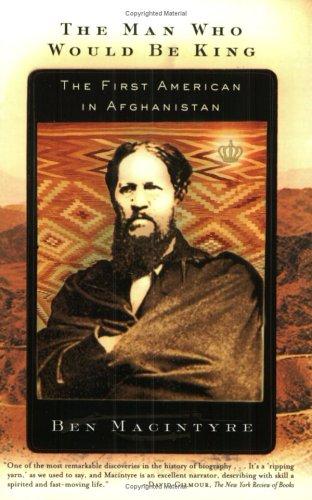
The Man Who Would Be King: The First American in Afghanistan

Ben Macintyre

★★★★★
Read Advanced intel Intel history Espionage GWOT Intel history Biography ISBN 9780374529574

Farrar, Straus and Giroux · April 14, 2005

The riveting story that inspired Kipling's classic tale and a John Huston movie The true story of Josiah Harlan, a Pennsylvania Quaker and the first American ever to enter Afghanistan, has never been told before. Soldier, spy, doctor, naturalist, traveler and writer, Josiah Harlan wanted to be a king, with all the imperialist hubris of his times. In an amazing twenty-year journey around Central Asia, he was variously employed as surgeon to the Maharaja of Punjab, revolutionary agent for the exiled Afghan King, and then commander-in-chief of the Afghan armies. In 1838, he set off in the footsteps of Alexander the Great across the Hindu Kush and forged his own kingdom, only to be ejected from Afghanistan a few months later by the invading British. Using a trove of newly-discovered documents, Harlan's own unpublished journals, and with a revised Preface detailing the unexpected discovery of Harlan's descendents, Ben Macintyre's The Man Who Would Be King tells the astonishing tale of the man who would be the first and last American king.

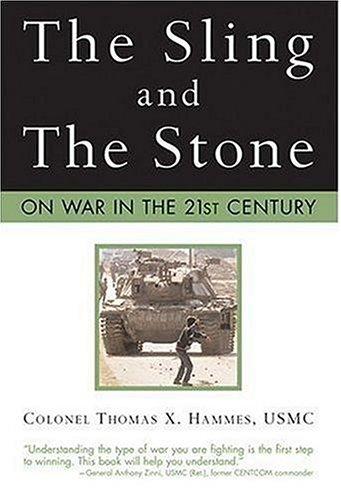
The Sling and the Stone: On War in the 21st Century

Thomas X. Hammes

★★★★★
Read Basic intel Advanced intel Military history Intel history Vietnam Cold War GWOT Guerrilla / COIN Russia / USSR Middle East Strategy / theory ISBN 9780760324073

Zenith Press · February 17, 2006

4GW (Fourth Generation Warfare) is the only kind of war America has ever lost. And we have done so three times - in Vietnam, Lebanon, and Somalia. This form of warfare has also defeated the French in Vietnam and Algeria, and the USSR in Afghanistan.As the only Goliath left in the world, we should be worried that the world's Davids have found a sling and stone that work." - Chapter 1, The Sling and the Stone: On War in the 21st Century. The War in Iraq. The War on Terror. These types of "asymmetrical" warfare are the conflicts of the 21st century - and show how difficult it is for the world's remaining superpower to battle insurgents and terrorists who will fight unconventionally in the face of superior military power. This change in military conflict may seem sudden.

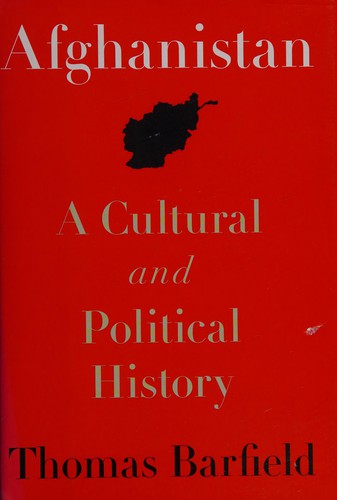
Afghanistan: A Cultural and Political History (Princeton Studies in Muslim Politics)

Thomas Barfield

★★★★
Read Advanced intel Military history Intel history GWOT Guerrilla / COIN Russia / USSR US Civil War ISBN 9780691145686

Princeton University Press · 2010

Afghanistan traces the historic struggles and the changing nature of political authority in this volatile region of the world, from the Mughal Empire in the sixteenth century to the Taliban resurgence today. Thomas Barfield introduces readers to the bewildering diversity of tribal and ethnic groups in Afghanistan, explaining what unites them as Afghans despite the regional, cultural, and political differences that divide them. He shows how governing these peoples was relatively easy when power was concentrated in a small dynastic elite, but how this delicate political order broke down in the nineteenth and twentieth centuries when Afghanistan's rulers mobilized rural militias to expel first the British and later the Soviets. Armed insurgency proved remarkably successful against the foreign occupiers, but it also undermined the Afghan government's authority and rendered the country ever more difficult to govern as time passed. Barfield vividly describes how Afghanistan's armed factions plunged the country into a civil war, giving rise to clerical rule by the Taliban and Afghanistan's isolation from the world. He examines why the American invasion in the wake of September 11 toppled the Taliban so quickly, and how this easy victory lulled the United States into falsely believing that a viable state could be built just as easily. Afghanistan is essential reading for anyone who wants to understand how a land conquered and ruled by foreign dynasties for more than a thousand years became the graveyard of empires for the British and Soviets, and what the United States must do to avoid a similar fate.

Phantom Soldier: The Enemy's Answer to U.S. Firepower

H. John Poole

★★★★
Read Advanced intel Military history WWII GWOT Air power Guerrilla / COIN Strategy / theory ISBN 9780963869555

Posterity Press · August 9, 2001

"Phantom Soldier" is now on the U.S. Army's most prestigious pre-deployment reading list for a reason. It won't please those who have come to believe that wars are won and casualties limited through technology, or that the victor's version of one is always correct. But, all U.S. security personnel should read it. Possibly the West's best treatise on Oriental warfare, it sheds new light on what Asian infantry can do: (1) alternate between guerrilla, mobile, and positional warfare; (2) use "ordinary forces" to engage and "extraordinary forces [infiltrators]" to defeat; and then (3) retreat to save lives. What occurred in history doesn't change, but one's perception of it does--as he comes to better understand his former foe. Here's what really happened at Guadalcanal, Iwo Jima, Chosin Reservoir, and Hue City. Those who believe this book's cover art to be fantasy have only to google the term "dac cong." Through how the NVA held their own without resupply, tanks, artillery, or air power, U.S. grunts could better survive the more lethal enemy weaponry of the 21st Century.

The Longest War: A History of the War on Terror and the Battles with Al Qaeda Since 9/11

Peter L. Bergen

★★★★
Read Advanced intel Military history Intel history Espionage GWOT Middle East Strategy / theory ISBN 9780743278935

Free Press · 2011

TEN YEARS HAVE PASSED since the shocking attacks on the World Trade Center, and after seven years of conflict, the last U.S. combat troops left Iraq—only to move into Afghanistan, where the ten-year-old fight the war on terror rages with no clear end in sight. In The Longest War Peter Bergen offers a comprehensive history of this war and its evolution, from the strategies devised in the wake of the 9/11 attacks to the fighting in Afghanistan, Pakistan, and beyond. Unlike any other book on this subject, here Bergen tells the story of this shifting war’s failures and successes from the perspectives of both the United States and al-Qaeda and its allies. He goes into the homes of al-Qaeda members, rooting into the source of their devotion to terrorist causes, and spends time in the offices of the major players shaping the U.S. strategic efforts in the region. At a time when many are frustrated or fatigued with what has become an enduring multigenerational conflict, this book will provide an illuminating narrative that not only traces the arc of the fight but projects its likely future. Weaving together internal documents from al-Qaeda and the U.S. offices of counterterrorism, first-person interviews with top-level jihadists and senior Washington officials, along with his own experiences on the ground in the Middle East, Bergen balances the accounts of each side, revealing how al-Qaeda has evolved since 9/11 and the specific ways the U.S. government has responded in the ongoing fight. Bergen also uncovers the strategic errors committed on both sides—the way that al-Qaeda’s bold attack on the United States on 9/11 actually undermined its objective and caused the collapse of the Taliban and the destruction of the organization’s safe haven in Afghanistan, and how al-Qaeda is actually losing the war of ideas in the Muslim world. The book also shows how the United States undermined its moral position in this war with its actions at Guantánamo and coercive interrogations—including the extraordinary rendition of Abu Omar, who was kidnapped by the CIA in Milan in 2003 and was tortured for four years in Egyptian prisons; his case represents the first and only time that CIA officials have been charged and convicted of the crime of kidnapping. In examining other strategic blunders the United States has committed, Bergen offers a scathing critique of the Clinton and Bush administrations’ inability to accurately assess and counter the al-Qaeda threat, Bush’s deeply misguided reasons for invading Iraq—including the story of how the invasion was launched based, in part, on the views of an obscure academic who put forth theories about Iraq’s involvement with al-Qaeda—and the Obama administration’s efforts in Afghanistan. At a critical moment in world history The Longest War provides the definitive account of the ongoing battle against terror.

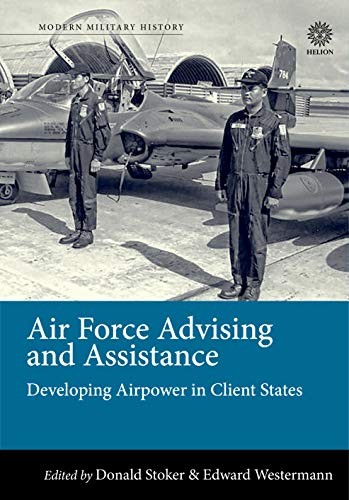
Air Force Advising and Assistance: Developing Airpower in Client States (Modern Military History)

Donald Stoker

★★★☆☆
Read Advanced intel Intel history GWOT Naval Air power Guerrilla / COIN Strategy / theory Economics ISBN 9781912390601

Helion and Company · Sep 20, 2018

The increased focus on counterinsurgency warfare and US nation building efforts after the attacks of 11 September 2001 reignited interest in military advising within military and other government organizations, private think tanks, and defense related contractors. Most studies on the subject, based on the chronological scope and numerical preponderance of ground advising missions, has quite naturally focused on these past efforts. Less attention has been given to air or naval advisory missions. This work seeks in part to help redress this current imbalance by examining a number of historical case studies dealing with air advisory efforts. By examining a number of historical case studies, this volume analyzes the challenges and opportunities inherent in aerial advisory efforts and offers insights into the methods by which such missions succeed or fail. Air advisory missions date almost to the first days of powered flight. Air advisory efforts have a number of unique elements based on the fundamental role of advanced technology and the extensive resource requirements associated with aviation operations. For example, air advisory efforts are profoundly influenced by the types of aircraft involved and the types of mission flown. Likewise, the issues of maintenance support and the infrastructure needed for these missions plays a key role in determining capabilities available to the host nation. In the case of infrastructure, airfields, fuelling depots, maintenance and repair facilities, and radar and communications equipment offer a few of the most obvious requirements to support flight operations. The early history of advisory efforts reveal issues that remain relevant today, including questions related to the nature of aerial technology to be shared, the type of training to be provided, and the potential economic benefits that might accrue to the donor nation as a result of the sale of aviation technology to the host country. In many respects, air advisory efforts raise a number of profound strategic questions for the donor nation. Among others, these questions relate to the type of technology to be shared, the nature of training to be given, the role of foreign advisors in operations, the issue of infrastructure development and auxiliary training programs, the preparation of foreign advisors for their duties, and perhaps most significantly the development of the type of capabilities required to address the host nation’s security environment. Via a series of historical case studies, this volume explores these questions and others.

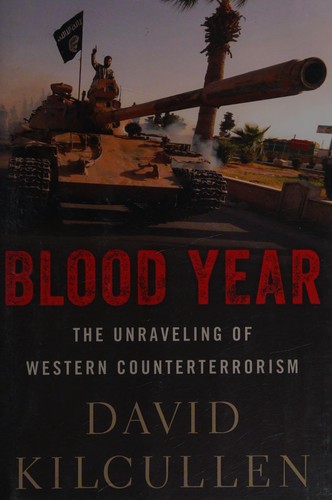
Blood Year: The Unraveling of Western Counterterrorism

David Kilcullen

unrated
Read Advanced intel Cold War GWOT Russia / USSR Middle East Strategy / theory US Civil War ISBN 9780190600549

Oxford University Press · 2016

2014 has the potential to go down as a crucial year in modern world history. A resurgent and bellicose Russia took over Crimea and fueled a civil war in Eastern Ukraine. Post-Saddam Iraq, in many respects a creature of the United States because of the war that began in 2003, lost a third of its territory to an army of hyper-violent millennialists. The peace process in Israel seemed to completely collapse. Finally, after coalescing in Syria as a territorial entity, the Islamic State swept into northern Iraq and through northeastern Syria, attracting legions of recruits from Europe and the Middle East. In short, the post-Cold War security order that the US had constructed after 1991 seemed to be coming apart at the seams. David Kilcullen was one of the architects of America's strategy in the late phases of the second Gulf War, and also spent time in Afghanistan and other hotspots. In Blood Year, he provides a wide-angle view of the current situation in the Middle East and analyzes how America and the West ended up in such dire circumstances. Whereas in 2008 it appeared that the U.S. might pull a modest stalemate from the jaws of defeat in Iraq, six years later the situation had reversed. After America pulled out of Iraq completely in 2011, the Shi'ite president cut Sunnis out of the power structure and allowed Iranian influence to grow. And from the debris of Assad's Syria arose an extremist Sunni organization even more radical than Al Qaeda. Unlike Al Qaeda, ISIS was intent on establishing its own state, and within a remarkably short time they did. Interestingly, Kilcullen highlights how embittered former Iraqi Ba'athist military officers were key contributors to ISIS's military successes. Kilcullen lays much of the blame on Bush's initial decision to invade Iraq (which had negative secondary effects in Afghanistan), but also takes Obama to task for simply withdrawing and adopting a "leading from behind" strategy. As events have proven, Kilcullen contends, withdrawal was a fundamentally misguided plan. The U.S. had uncorked the genie, and it had a responsibility to at least attempt to keep it under control. Instead, the U.S. is at a point where administration officials state that the losses of Ramadi and Palmyra are manageable setbacks. Kilcullen argues that the U.S. needs to re-engage in the region, whether it wants to or not, because it is largely responsible for the situation that is now unfolding. Blood Year is an essential read for anyone interested in understanding not only why the region that the U.S. invaded a dozen years ago has collapsed into utter chaos, but also what it can do to alleviate the grim situation.

No cover · Amazon

COUNTERINSURGENCY

David Kilcullen

unrated
Read Advanced intel GWOT Guerrilla / COIN Middle East Strategy / theory

David Kilcullen is one of the world's most influential experts on counterinsurgency and modern warfare, a ground-breaking theorist whose ideas "are revolutionizing military thinking throughout the west" ( Washington Post ). Indeed, his vision of modern warfare powerfully influenced the United States' decision to rethink its military strategy in Iraq and implement "the Surge," now recognized as a dramatic success. In Counterinsurgency , Kilcullen brings together his most salient writings on this vitally important topic. Here is a picture of modern warfare by someone who has had his boots on the ground in some of today's worst trouble spots-including Iraq and Afghanistan-and who has been studying counterinsurgency since 1985. Filled with down-to-earth, common-sense insights, this book is the definitive account of counterinsurgency, indispensable for all those interested in making sense of our world in an age of terror.

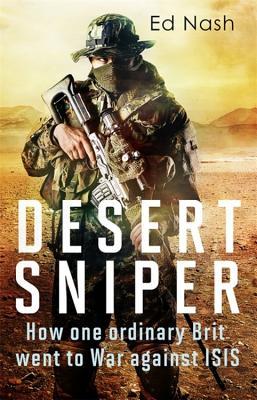
Desert Sniper: How One Ordinary Brit Went to War Against ISIS

Ed Nash

unrated
Read Advanced intel Military history Technical warfare Biographies GWOT Air power Middle East Intel history ISBN 9781408711330

Little, Brown Book Group Limited · 2018

What makes an ordinary but highly educated Englishman, with no previous military training, decide to travel and fight in one of the most brutal conflicts on the planet? Desert Sniper is an extraordinary, true account of one man's journey from well-meaning volunteer to battle-scarred combat sniper, placing himself daily in the line of fire to fight one of the greatest evils of this new century. Ed Nash has travelled across the globe, and is working with refugees in Burma, when he first becomes aware of the terrible atrocities being committed under ISIS's newly established 'Caliphate', covering vast tracts of Iraq and Syria. In June 2015, he chooses to undertake the hazardous journey, via Northern Iraq, to Syria, to join ill-equipped and poorly trained but battle-hardened Kurdish forces as they attempt to halt Daesh's relentless advance. Nash is an articulate, insightful and refreshingly honest companion as he unpacks the shifting complexities of the political and military situation in which he finds himself. As one of a motley band of foreign volunteer fighters - veterans of other conflicts, adventurers and misfits, from many different countries - we follow him through his rudimentary training and early combat operations as he and his companions slowly gain the trust and respect of their Kurdish colleagues. Nash shows us the realities of the war on the ground in Syria in fascinating detail; the privations of the ordinary Kurdish soldiers, the terrible price paid by civilians caught in the cross-fire, the ever-present danger of lethal suicide bombers and occasional moments of striking beauty in amongst the carnage. A modern classic in the making, Desert Sniper will prove to be one of the most unforgettable accounts to emerge from the war against ISIS.

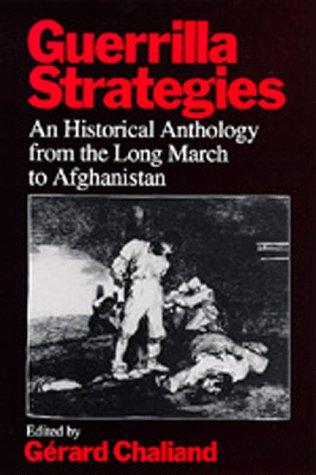
Guerrilla Strategies: An Historical Anthology from the Long March to Afghanistan

Gérard Chaliand

unrated
Read Advanced intel Technical warfare Basic intel GWOT Guerrilla / COIN ISBN 0520044444

University of California Press · 1982

This unique anthology of writings on revolutionary warfare and counterinsurgency covers almost all the major struggles of the modern world. Chaliand, who has had firsthand experience with guerrilla movements in Afghanistan, Africa, and Latin America, provides a concise yet panoramic overview of political and military strategies in revolutionary warfare, noting their strengths, limitations, and pathologies.

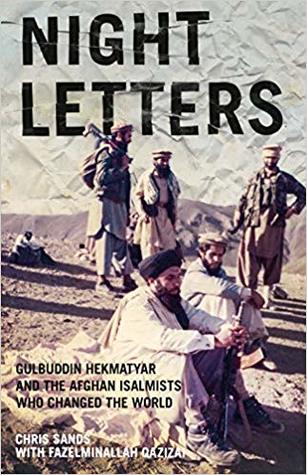
Night Letters: Gulbuddin Hekmatyar and the Afghan Islamists Who Changed the World

Chris Sands

unrated
Read Advanced intel Basic intel Biographies Intel history Military history GWOT Guerrilla / COIN Russia / USSR Intel history Biography Strategy / theory ISBN 9781787381964

C. Hurst and Company (Publishers) Limited · 2019

In 1969, several young men met on a rainy night in Kabul to form an Islamist student group. Their aim was laid out in a simple typewritten statement: to halt the spread of Soviet and American influence in Afghanistan. They went on to change the world. 'Night Letters' tells the extraordinary story of the group’s most notorious member, Gulbuddin Hekmatyar, and the guerrilla organisation he came to lead, Hizb-e Islami. By the late 1980s, tens of thousands were drawn to Hekmatyar’s vision of a radical Islamic state that would sow unrest from Kashmir to Jerusalem. His doctrine of violent global jihad culminated in 9/11 and the birth of ISIS, yet he never achieved his dream of ruling Afghanistan. The peace deal he signed with Kabul in 2016 was yet another controversial twist in an astonishing life. Sands and Qazizai delve into the secret history of Hekmatyar and Hizb-e Islami: their wars against Russian and American troops, and their bloody and bitter feuds with domestic enemies. Based on hundreds of exclusive interviews carried out across the region and beyond, this is the definitive account of the most important, yet poorly understood, international Islamist movement of the last fifty years.

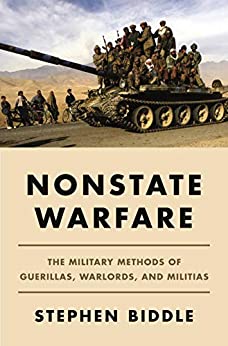
Nonstate Warfare: The Military Methods of Guerillas, Warlords, and Militias

Stephen D. Biddle

unrated
Read Advanced intel Military history Logistics Technical warfare GWOT Guerrilla / COIN Middle East Logistics ISBN 9780691207513

Princeton University Press · 2021

Since September 11th, 2001, armed nonstate actors have received increased attention and discussion from scholars, policymakers, and the military. Underlying debates about nonstate warfare and how it should be countered is one crucial assumption: that state and nonstate actors fight very differently. In Nonstate Warfare, Stephen Biddle upturns this distinction, arguing that there is actually nothing intrinsic separating state or nonstate military behavior. Through an in-depth look at nonstate military conduct, Biddle shows that many nonstate armies now fight more conventionally than many state armies. Biddle frames nonstate and state methods along a continuum, spanning Fabian-style irregular warfare to Napoleonic-style warfare involving massed armies, and he presents a systematic theory to explain any given nonstate actor's position on this spectrum. Showing that most warfare for at least a century has kept to the blended middle of the spectrum, Biddle argues that material and tribal culture explanations for nonstate warfare methods do not adequately explain observed patterns of warmaking. Investigating a range of historical examples from Lebanon and Iraq to Somalia, Croatia, and the Vietcong, Biddle demonstrates that viewing state and nonstate warfighting as mutually exclusive can lead to errors in policy and scholarship.

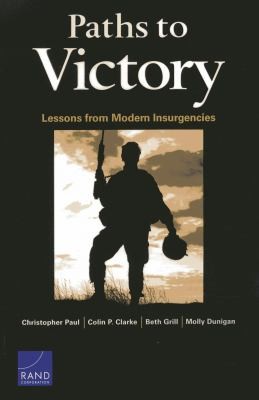
Paths to Victory: Lessons from Modern Insurgencies

Christopher Paul

unrated
Read Technical warfare Military history Intel history Advanced intel WWII GWOT Guerrilla / COIN Intel history ISBN 9780833080547

RAND CORPORATION · 2013

Building on a 2010 RAND study of the 30 insurgencies begun and completed between 1978 and 2008, this study added 41 new cases to the data set, allowing comparisons across all 71 insurgencies begun and completed worldwide since World War II to distill the paths to victory. With many more cases to compare, the study was able to more rigorously test the previous findings and address several critical questions that the earlier study could not.

The Accidental Guerrilla: Fighting Small Wars in the Midst of a Big One

David Kilcullen

unrated
Read Advanced intel GWOT Guerrilla / COIN Middle East Intel history Strategy / theory ISBN 9780195368345

Oxford University Press · 2009

David Kilcullen is one of the world's most influential experts on counterinsurgency and modern warfare. A Senior Counterinsurgency Advisor to General David Petraeus in Iraq, his vision of war dramatically influenced America's decision to rethink its military strategy in Iraq and implement "the surge." Now, in The Accidental Guerrilla , Kilcullen provides a remarkably fresh perspective on the War on Terror. Kilcullen takes us "on the ground" to uncover the face of modern warfare, illuminating both the big global war (the "War on Terrorism") and its relation to the associated "small wars" across the Iraq, Afghanistan, the Philippines, Indonesia, Thailand, Chechnya, Pakistan and North Africa. Kilcullen sees today's conflicts as a complex pairing of contrasting local social networks and worldwide movements; traditional and postmodern culture; local insurgencies seeking autonomy and a broader pan-Islamic campaign. He warns that America's actions in the war on terrorism have tended to conflate these trends, blurring the distinction between local and global struggles and thus enormously complicating our challenges. Indeed, the US had done a poor job of applying different tactics to these very different situations, continually misidentifying insurgents with limited aims and legitimate grievances (whom he calls "accidental guerrillas") as part of a coordinated worldwide terror network. We must learn how to disentangle these strands, develop strategies that deal with global threats, avoid local conflicts where possible, and win them where necessary. Colored with gripping battlefield experiences that range from the jungles and highlands of Southeast Asia to the mountains of the Afghanistan-Pakistan border to the dusty towns of the Middle East, The Accidental Guerrilla will, quite simply, change the way we think about war. This much anticipated book will be a must read for everyone concerned about the war on terror.

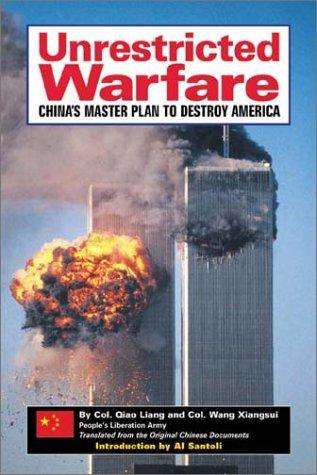
Unrestricted Warfare: China's Master Plan to Destroy America

Qiao Liang

unrated
Read Advanced intel Military history Logistics Technical warfare Espionage GWOT Cyber China Logistics Strategy / theory Economics Orthodox / theology ISBN 9780971680722

Pan American Publishing Company · August 22, 2002

As incredible as it may be to believe, three years before the Sept. 11 bombing of the World Trade Center a Chinese military manual titled Unrestricted Warfare touted such an attack – suggesting it would be difficult for the U.S. military to cope with. Here is an excerpt from Unrestricted "Whether it be the intrusions of hackers, a major explosion at the World Trade Center, or a bombing attack by bin Laden, all of these greatly exceed the frequency bandwidths understood by the American military..." Surprisingly, Osama bin Laden is mentioned frequently in this book. Now NewsMax.com is making the CIA translation of this shocking book available to all Americans. On Sept. 11, 2001, Americans and the world witnessed one of the most horrific acts ever to take place on American soil. Our media and government were quick to declare the acts of that day as simply terrorism by a nationless group known as al-Qaeda. In reading China’s military manual Unrestricted Warfare, you will learn that the events of Sept. 11 were not a random act perpetrated by independent agents. Instead, Chinese military planners believe that terrorism is just one of the many tools at the hands of nations and their terrorist allies to wage total war against the United States. You will be surprised to · The two PLA colonels who authored Unrestricted Warfare have been hailed as heroes in China since Sept. 11 · The Chinese state-run propaganda machine is cashing in on the terror attacks ... producing books, films and video games glorifying the strikes as a humbling blow against an arrogant nation. · Chinese Communist Party officials are saying that President Jiang Zemin has obsessively and gleefully watched and re-watched pictures of the aircraft crashing into the World Trade Center. · The CIA’s own translation agency reported that this book identifies the U.S. as China’s main enemy, and details how a weak nation can destroy America using unorthodox attacks – like the 9-11 attacks. · China is preparing itself and encouraging others to engage the U.S. in total war. The book is chock full of plans and strategies, from using computers, to smuggling illegal immigrants, to manipulating the stock markets, to influencing the U.S. media, to using weapons of mass destruction – all to destroy America. Recent press reports indicate that China has assisted and continues to assist militarily and economically the Taliban and al-Qaeda – even after Sept. 11. The doctrine of total war outlined in Unrestricted Warfare clearly demonstrates that the People’s Republic of China is preparing to confront the United States and our allies by conducting "asymmetrical" or multidimensional attacks on almost every aspect of our social, economic and political life. The media and Congress are keeping a lid on this book because of the implications of U.S.-China economic and trade relations. But now you can bypass them by getting a copy yourself!