S2 Search · Reading list

S2 Actual reading list

Books from S2 Actual on Goodreads, organized by his shelves and topic buckets (intel lists, military history, logistics, etc.). Metadata filled via Open Library.

Not official S2 Underground. Independent fan index — not affiliated with or endorsed by S2. Official hub: linktr.ee/S2_underground. S2 materials are CC BY-NC-SA 4.0.

S2 topic buckets (Goodreads)

Subjects & genres

3 books · Cryptography · subject Cyber

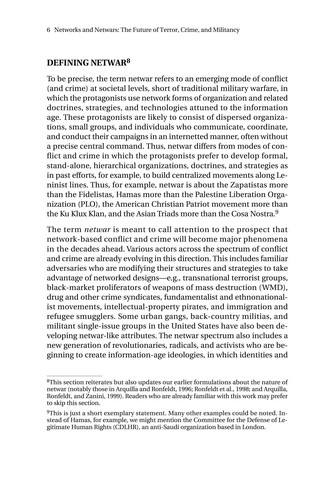
Networks and Netwars: The Future of Terror, Crime, and Militancy

John Arquilla

★★★★★
Read Advanced intel Cryptography Intel history Privacy Espionage Cyber ISBN 0833030302

Rand · 2001

Netwar―like cyberwar―describes a new spectrum of conflict that is emerging in the wake of the information revolution. What distinguished netwar is the networked organizational structure of its practitioners and their quickness in coming together in swarming attacks. To confront this new type of conflict, it is crucial for governments, military, and law enforcement to begin networking themselves.

Bitskrieg: The New Challenge of Cyberwarfare

John Arquilla

unrated
Read Cryptography Espionage Nuclear Cyber Strategy / theory ISBN 9781509543649

Polity Press · 2021

New technologies are changing how we protect our citizens and wage our wars. Among militaries, everything taken for granted about the ability to maneuver and fight is now undermined by vulnerability to “weapons of mass disruption”: cutting-edge computer worms, viruses, and invasive robot networks. At home, billions of household appliances and other “smart” items that form the Internet of Things risk being taken over, then added to the ranks of massive, malicious “zombie” armies. The age of Bitskrieg is here, bringing vexing threats that range from the business sector to the battlefield. In this new book, world-renowned cybersecurity expert John Arquilla looks unflinchingly at the challenges posed by cyberwarfare – which he argues have been neither met nor mastered. He offers fresh solutions for protecting against enemies that are often anonymous, unpredictable, and capable of projecting force and influence vastly disproportionate to their size, strength, or wealth. The changes called for require radical rethinking of military and security affairs, diplomacy, and even the routines of our daily lives.

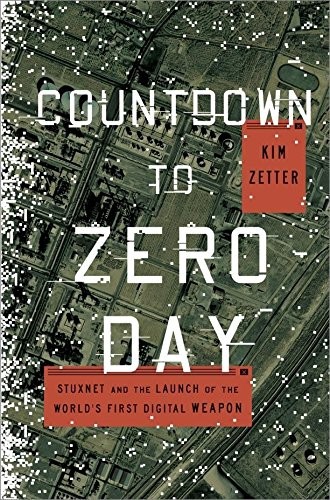
Countdown to Zero Day: Stuxnet and the Launch of the World's First Digital Weapon

Kim Zetter

unrated
Read Cryptography Espionage Nuclear Cyber Middle East ISBN 9780770436179

Crown Publishers · 2014

In January 2010, inspectors with the International Atomic Energy Agency noticed that centrifuges at a uranium enrichment plant in Iran were failing and being replaced at an unprecedented rate. The cause of their failure was a complete mystery. Five months later, a seemingly unrelated event occurred. A computer security firm in Belarus was called in to troubleshoot some computers in Iran that were caught in a reboot loop—crashing and rebooting repeatedly. At first, technicians with the firm believed the malicious code they found on the machines was a simple, routine piece of malware. But as they and other experts around the world investigated, they discovered a virus of unparalleled complexity and mysterious provenance and intent. They had, they soon learned, stumbled upon the world’s first digital weapon. Stuxnet, as it came to be known, was unlike any other virus or worm built before: It was the first attack that reached beyond the computers it targeted to physically destroy the equipment those computers controlled. It was an ingenious attack, jointly engineered by the United States and Israel, that worked exactly as planned, until the rebooting machines gave it all away. And the discovery of Stuxnet was just the beginning: Once the digital weapon was uncovered and deciphered, it provided clues to other tools lurking in the wild. Soon, security experts found and exposed not one but three highly sophisticated digital spy tools that came from the same labs that created Stuxnet. The discoveries gave the world its first look at the scope and sophistication of nation-state surveillance and warfare in the digital age. Kim Zetter, a senior reporter at Wired, has covered hackers and computer security since 1999 and is one of the top journalists in the world on this beat. She was among the first reporters to cover Stuxnet after its discovery and has authored many of the most comprehensive articles about it. In COUNTDOWN TO ZERO DAY: Stuxnet and the Launch of the World’s First Digital Weapon, Zetter expands on this work to show how the code was designed and unleashed and how its use opened a Pandora’s Box, ushering in an age of digital warfare in which any country’s infrastructure—power grids, nuclear plants, oil pipelines, dams—is vulnerable to the same kind of attack with potentially devastating results. A sophisticated digital strike on portions of the power grid, for example, could plunge half the U.S. into darkness for weeks or longer, having a domino effect on all other critical infrastructures dependent on electricity.