S2 Search · Reading list

S2 Actual reading list

Books from S2 Actual on Goodreads, organized by his shelves and topic buckets (intel lists, military history, logistics, etc.). Metadata filled via Open Library.

Not official S2 Underground. Independent fan index — not affiliated with or endorsed by S2. Official hub: linktr.ee/S2_underground. S2 materials are CC BY-NC-SA 4.0.

S2 topic buckets (Goodreads)

Subjects & genres

8 books · Cryptography

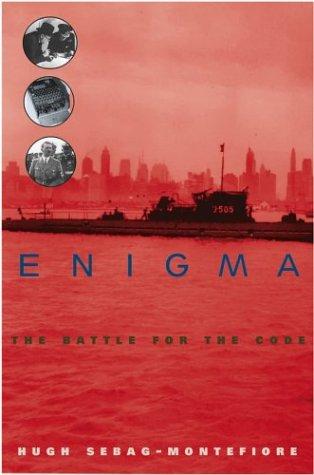
Enigma: The Battle for the Code

Hugh Sebag-Montefiore

★★★★★
Read Basic intel Cryptography Military history Intel history WWII Espionage Naval Air power Intel history Orthodox / theology ISBN 9780471490357

Wiley · February 12, 2004

Winston Churchill called the cracking of the German Enigma Code "the secret weapon that won the war." Now, for the first time, noted British journalist Hugh-Sebag-Montefiore reveals the complete story of the breaking of the code by the Allies--the breaking that played a crucial role in the outcome of World War II. This fascinating account relates the never-before-told, hair-raising stories of the heroic British and American sailors, spies, and secret agents who faced death in order to capture vital codebooks from sinking ships and snatch them from under the noses of Nazi officials. Sebag-Montefiore also relates new details about the genesis of the code, little-known facts about how the Poles first cracked the Luftwaffe's version of the code (and then passed it along to the British), and the feverish activities at Bletchley Park. Based in part on documents recently unearthed from American and British archives--including previously confidential government files--and in part on unforgettable, firsthand accounts of surviving witnesses, Enigma unearths the stunning truth about the brilliant piece of decryption that changed history.
Networks and Netwars: The Future of Terror, Crime, and Militancy

John Arquilla

★★★★★
Read Advanced intel Cryptography Intel history Privacy Espionage Cyber ISBN 0833030302

Rand · 2001

Netwar―like cyberwar―describes a new spectrum of conflict that is emerging in the wake of the information revolution. What distinguished netwar is the networked organizational structure of its practitioners and their quickness in coming together in swarming attacks. To confront this new type of conflict, it is crucial for governments, military, and law enforcement to begin networking themselves.

Between Silk and Cyanide: A Codemaker's War, 1941-1945

Leo Marks

★★★★
Read Advanced intel Cryptography WWII Espionage Special ops Intel history Biography ISBN 9780684867809

Free Press · September 12, 2000

In 1942, Leo Marks left his father's famous bookshop, 84 Charing Cross Road, and went off to fight the war. He was twenty-two. Soon recognized as a cryptographer of genius, he became head of communications at the Special Operations Executive (SOE), where he revolutionized the codemaking techniques of the Allies and trained some of the most famous agents dropped into occupied Europe, including "the White Rabbit" and Violette Szabo. As a top codemaker, Marks had a unique perspective on one of the most fascinating and, until now, little-known aspects of the Second World War. Writing with the narrative flair and vivid characterization of his famous screenplays, Marks gives free rein to his keen sense of the absurd and his wry wit, resulting in a thrilling and poignant memoir that celebrates individual courage and endeavor, without losing sight of the human cost and horror of war.

Bitskrieg: The New Challenge of Cyberwarfare

John Arquilla

unrated
Read Cryptography Espionage Nuclear Cyber Strategy / theory ISBN 9781509543649

Polity Press · 2021

New technologies are changing how we protect our citizens and wage our wars. Among militaries, everything taken for granted about the ability to maneuver and fight is now undermined by vulnerability to “weapons of mass disruption”: cutting-edge computer worms, viruses, and invasive robot networks. At home, billions of household appliances and other “smart” items that form the Internet of Things risk being taken over, then added to the ranks of massive, malicious “zombie” armies. The age of Bitskrieg is here, bringing vexing threats that range from the business sector to the battlefield. In this new book, world-renowned cybersecurity expert John Arquilla looks unflinchingly at the challenges posed by cyberwarfare – which he argues have been neither met nor mastered. He offers fresh solutions for protecting against enemies that are often anonymous, unpredictable, and capable of projecting force and influence vastly disproportionate to their size, strength, or wealth. The changes called for require radical rethinking of military and security affairs, diplomacy, and even the routines of our daily lives.

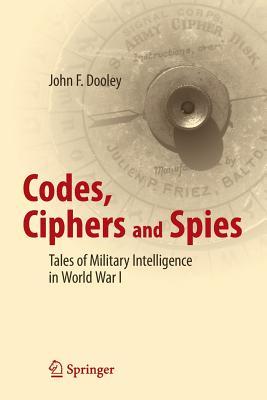
Codes, Ciphers and Spies: Tales of Military Intelligence in World War I

John F. Dooley

unrated
Read Cryptography WWI Espionage Intel history ISBN 9783319294148

Springer · 2016

When the United States declared war on Germany in April 1917, it was woefully unprepared to wage a modern war. Whereas their European counterparts already had three years of experience in using code and cipher systems in the war, American cryptologists had to help in the building of a military intelligence unit from scratch. This book relates the personal experiences of one such character, providing a uniquely American perspective on the Great War. It is a story of spies, coded letters, plots to blow up ships and munitions plants, secret inks, arms smuggling, treason, and desperate battlefield messages. Yet it all begins with a college English professor and Chaucer scholar named John Mathews Manly. In 1927, John Manly wrote a series of articles on his service in the Code and Cipher Section (MI-8) of the U.S. Army’s Military Intelligence Division (MID) during World War I. Published here for the first time, enhanced with references and annotations for additional context, these articles form the basis of an exciting exploration of American military intelligence and counter-espionage in 1917-1918. Illustrating the thoughts of prisoners of war, draftees, German spies, and ordinary Americans with secrets to hide, the messages deciphered by Manly provide a fascinating insight into the state of mind of a nation at war.

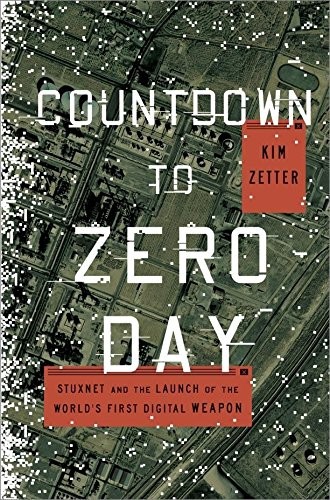
Countdown to Zero Day: Stuxnet and the Launch of the World's First Digital Weapon

Kim Zetter

unrated
Read Cryptography Espionage Nuclear Cyber Middle East ISBN 9780770436179

Crown Publishers · 2014

In January 2010, inspectors with the International Atomic Energy Agency noticed that centrifuges at a uranium enrichment plant in Iran were failing and being replaced at an unprecedented rate. The cause of their failure was a complete mystery. Five months later, a seemingly unrelated event occurred. A computer security firm in Belarus was called in to troubleshoot some computers in Iran that were caught in a reboot loop—crashing and rebooting repeatedly. At first, technicians with the firm believed the malicious code they found on the machines was a simple, routine piece of malware. But as they and other experts around the world investigated, they discovered a virus of unparalleled complexity and mysterious provenance and intent. They had, they soon learned, stumbled upon the world’s first digital weapon. Stuxnet, as it came to be known, was unlike any other virus or worm built before: It was the first attack that reached beyond the computers it targeted to physically destroy the equipment those computers controlled. It was an ingenious attack, jointly engineered by the United States and Israel, that worked exactly as planned, until the rebooting machines gave it all away. And the discovery of Stuxnet was just the beginning: Once the digital weapon was uncovered and deciphered, it provided clues to other tools lurking in the wild. Soon, security experts found and exposed not one but three highly sophisticated digital spy tools that came from the same labs that created Stuxnet. The discoveries gave the world its first look at the scope and sophistication of nation-state surveillance and warfare in the digital age. Kim Zetter, a senior reporter at Wired, has covered hackers and computer security since 1999 and is one of the top journalists in the world on this beat. She was among the first reporters to cover Stuxnet after its discovery and has authored many of the most comprehensive articles about it. In COUNTDOWN TO ZERO DAY: Stuxnet and the Launch of the World’s First Digital Weapon, Zetter expands on this work to show how the code was designed and unleashed and how its use opened a Pandora’s Box, ushering in an age of digital warfare in which any country’s infrastructure—power grids, nuclear plants, oil pipelines, dams—is vulnerable to the same kind of attack with potentially devastating results. A sophisticated digital strike on portions of the power grid, for example, could plunge half the U.S. into darkness for weeks or longer, having a domino effect on all other critical infrastructures dependent on electricity.

The Spy in Moscow Station: A Counterspy's Hunt for a Deadly Cold War Threat

Eric Haseltine

unrated
Read Advanced intel Biographies Cryptography Intel history Cold War Espionage Russia / USSR Orthodox / theology ISBN 9781250301161

Thomas Dunne Books · Apr 30, 2019

The thrilling, true story of the race to find a leak in the United States Embassy in Moscow--before more American assets are rounded up and killed. Foreword by Gen. Michael V. Hayden (Retd.), Former Director of NSA & CIA In the late 1970s, the National Security Agency still did not officially exist--those in the know referred to it dryly as the No Such Agency. So why, when NSA engineer Charles Gandy filed for a visa to visit Moscow, did the Russian Foreign Ministry assert with confidence that he was a spy? Outsmarting honey traps and encroaching deep enough into enemy territory to perform complicated technical investigations, Gandy accomplished his mission in Russia, but discovered more than State and CIA wanted him to know. Eric Haseltine's The Spy in Moscow Station tells of a time when--much like today--Russian spycraft had proven itself far beyond the best technology the U.S. had to offer. The perils of American arrogance mixed with bureaucratic infighting left the country unspeakably vulnerable to ultra-sophisticated Russian electronic surveillance and espionage. This is the true story of unorthodox, underdog intelligence officers who fought an uphill battle against their own government to prove that the KGB had pulled off the most devastating penetration of U.S. national security in history. If you think The Americans isn't riveting enough, you'll love this toe-curling nonfiction thriller.

Unmanned: Drones, Data, and the Illusion of Perfect Warfare

William M. Arkin

unrated
Read Basic intel Cryptography Intel history Espionage Intel history ISBN 9780316323352

Little, Brown and Company · 2015

Unmanned is an in-depth examination of why seemingly successful wars never seem to end. The problem centers on drones, now accumulated in the thousands, the front end of a spying and killing machine that is disconnected from either security or safety. Drones, however, are only part of the problem. William Arkin shows that security is actually undermined by an impulse to gather as much data as possible, the appetite and the theory both skewed towards the notion that no amount is too much. And yet the very endeavor of putting fewer human in potential danger places everyone in greater danger. Wars officially end, but the Data Machine lives on forever. Throughout his career, Arkin has exposed powerful secrets of so-called national security and intelligence. Now he continues that tradition. The most alarming book about warfare in years, Unmanned is essential reading for anyone who cares about the future of mankind.