S2 Search · Reading list

S2 Actual reading list

Books from S2 Actual on Goodreads, organized by his shelves and topic buckets (intel lists, military history, logistics, etc.). Metadata filled via Open Library.

Not official S2 Underground. Independent fan index — not affiliated with or endorsed by S2. Official hub: linktr.ee/S2_underground. S2 materials are CC BY-NC-SA 4.0.

S2 topic buckets (Goodreads)

Subjects & genres

13 books · To read

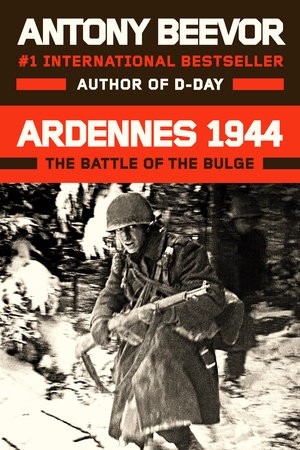
Ardennes 1944: The Battle of the Bulge

Antony Beevor

unrated
To read WWII Russia / USSR ISBN 9780670025312

Viking · 2015

El sábado 16 de diciembre de 1944, Hitler inició su «última apuesta» en los bosques nevados de las Ardenas. Su intención era realizar un ataque por sorpresa que, al dirigirse hacia Amberes, dividiese los ejércitos aliados e hiciese posible infligirles una severa derrota: un nuevo Dunquerque que cambiase el curso de una guerra que había llegado a una situación angustiosa, con los ejércitos soviéticos avanzando en suelo alemán. La ofensiva, en la que intervendrían dos ejércitos blindados, se complementaba con la actuación en la retaguardia de un comando de soldados alemanes, con uniformes y vehículos norteamericanos. Como hiciera en Stalingrado, Beevor consigue aquí combinar una visión épica de la que fue la mayor batalla de la guerra en el frente occidental —una batalla librada en condiciones extremas, que llegó a implicar a un millón de hombres y en la que los dos bandos cometieron crímenes brutales— con una aproximación directa al heroísmo, el miedo y el sufrimiento de los seres humanos.

No cover · Amazon

Arnhem: The Battle for the Bridges, 1944

Antony Beevor

unrated
To read WWII

The great airborne battle for the bridges in 1944 by Britain's Number One bestselling historian On 17 September 1944, General Kurt Student, the founder of Nazi Germany's parachute forces, heard the growing roar of aeroplane engines. He went out on to his balcony above the flat landscape of southern Holland to watch the air armada of Dakotas and gliders carrying the British 1st Airborne and the American 101st and 82nd Airborne divisions. He gazed up in envy at this massive demonstration of paratroop power. Operation Market Garden, the plan to end the war by capturing the bridges leading to the Lower Rhine and beyond, was a bold concept: the Americans thought it unusually bold for Field Marshal Montgomery. But could it ever have worked? The cost of failure was horrendous, above all for the Dutch, who risked everything to help. German reprisals were pitiless and cruel, and lasted until the end of the war. The British fascination with heroic failure has clouded the story of Arnhem in myths. Antony Beevor, using often overlooked sources from Dutch, British, American, Polish and German archives, has reconstructed the terrible reality of the fighting, which General Student himself called 'The Last German Victory'. Yet this book, written in Beevor's inimitable and gripping narrative style, is about much more than a single, dramatic battle. It looks into the very heart of war.

No cover · Amazon

Beyond Band of Brothers: The War Memoirs of Major Dick Winters

Dick Winters

unrated
To read WWII Korea Intel history Biography

They were called Easy Company—but their mission was never easy. Immortalized as the Band of Brothers, they suffered 150% casualties while liberating Europe—an unparalleled record of bravery under fire. Dick Winters was their commander—"the best combat leader in World War II" to his men. This is his story—told in his own words for the first time.On D-Day, Dick Winters parachuted into France and assumed leadership of the Band of Brothers when their commander was killed. He led them through the Battle of the Bulge and into Germany, by which time each member had been wounded. They liberated an S.S. death camp from the horrors of the Holocaust and captured Berchtesgaden, Hitler's alpine retreat. After briefly serving during the Korean War, Winters was a highly successful businessman. Made famous by Stephen Ambrose's book Band of Brothers—and the subsequent award-winning HBO miniseries—he is the object of worldwide adulation, Beyond Band of Brothers is Winters's memoir—based on his wartime diary—but it also includes his comrades' untold stories. Virtually all this material is being released for the first time. Only Winters was present from the activation of Easy Company until the war's end. Winner of the Distinguished Service Cross, only he could pen this moving tribute to the human spirit.

D-Day: The Battle for Normandy

Antony Beevor

unrated
To read WWII Naval Russia / USSR ISBN 9780670887033

Viking · 2009

The Normandy Landings that took place on D-Day involved by far the largest invasion fleet ever known. The scale of the undertaking was simply awesome. What followed them was some of the most cunning and ferocious fighting of the war, at times as savage as anything seen on the Eastern Front. As casualties mounted, so too did the tensions between the principal commanders on both sides. Meanwhile, French civilians caught in the middle of these battlefields or under Allied bombing endured terrible suffering. Even the joys of Liberation had their darker side. The war in northern France marked not just a generation but the whole of the post-war world, profoundly influencing relations between America and Europe. Making use of overlooked and new material from over thirty archives in half a dozen countries, "D-Day" is the most vivid and well-researched account yet of the battle of Normandy. As with Stalingrad and Berlin, Antony Beevor's gripping narrative conveys the true experience of war.

No cover · Amazon

Panzer Commander: The Memoirs of Colonel Hans von Luck

Hans von Luck

unrated
To read WWII Armor Russia / USSR Intel history Biography

A stunning look at World War II from the other side... From the turret of a German tank, Colonel Hans von Luck commanded Rommel's 7th and then 21st Panzer Division. El Alamein, Kasserine Pass, Poland, Belgium, Normandy on D-Day, the disastrous Russian front--von Luck fought there with some of the best soldiers in the world. German soldiers. Awarded the German Cross in Gold and the Knight's Cross, von Luck writes as an officer and a gentleman. Told with the vivid detail of an impassioned eyewitness, his rare and moving memoir has become a classic in the literature of World War II, a first-person chronicle of the glory--and the inevitable tragedy--of a superb soldier fighting Hitler's war.

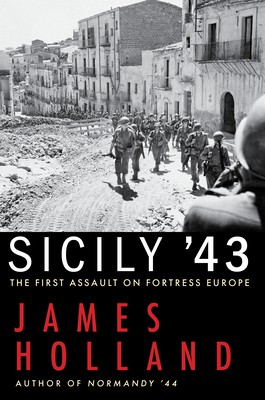
Sicily '43: The First Assault on Fortress Europe

James Holland

unrated
To read WWII Naval Air power Intel history ISBN 9780802157188

Atlantic Monthly Press · November 3, 2020

On July 10, 1943, the largest amphibious invasion ever mounted took place, larger even than the Normandy invasion eleven months later: 160,000 American, British, and Canadian troops came ashore or were parachuted onto Sicily, signaling the start of the campaign to defeat Nazi Germany on European soil. Operation HUSKY, as it was known, was enormously complex, involving dramatic battles on land, in the air, and at sea. Yet, despite its paramount importance to ultimate Allied victory, and its drama, very little has been written about the 38-day Battle for Sicily. Based on his own battlefield studies in Sicily and on much new research, James Holland's Sicily '43 offers a vital new perspective on a major turning point in World War II and a chronicle of a multi-pronged campaign in a uniquely diverse and contained geographical location. The characters involved--Generals George Patton and Bernard Montgomery among many--were as colorful as the air and naval battles and the fighting on the ground across the scorching plains and mountaintop of Sicily were brutal. But among Holland's great skills is incorporating the experience of on-the-ground participants on all sides--from American privates Tom and Dee Bowles and Tuskegee fighter pilot Charlie Dryden to British major Hedley Verity and Canadian lieutenant Farley Mowat (later a celebrated author), to German and Italian participants such as Wilhelm Schmalz, brigade commander in the Hermann G�ring Division, or Luftwaffe fighter pilot major Johannes "Macky" Steinhoff and to Italian combatants, civilians and mafiosi alike--which gives readers an intimate sense of what occurred in July and August 1943. Emphasizing the significance of Allied air superiority, Holland overturns conventional narratives that have criticized the Sicily campaign for the vacillations over the plan, the slowness of the Allied advance and that so many German and Italian soldiers escaped to the mainland; rather, he shows that clearing the island in 38 days against geographical challenges and fierce resistance was an impressive achievement. A powerful and dramatic account by a master military historian, Sicily '43 fills a major gap in the narrative history of World War II.

The Korean War

Max Hastings

unrated
To read WWII Vietnam Korea Cold War China ISBN 9780330392884

Pan Books · January 7, 2000

It was the first war we could not win. At no other time since World War II have two superpowers met in battle. Now Max Hastings, preeminent military historian, takes us back to the bloody, bitter, struggle to restore South Korean independence after the Communist invasion of June 1950. Using personal accounts from interviews with more than 200 vets - including the Chinese - Hasting follows real officers and soldiers through the battles. He brilliantly captures the Cold War crisis at home - the strategies and politics of Truman, Acheson, Marshall, MacArthur, Ridgeway, and Bradley - and shows what we should have learned in the war that was the prelude to Vietnam.

The Pentagon's Brain: An Uncensored History of DARPA, America's Top-Secret Military Research Agency

Annie Jacobsen

unrated
To read Cold War Espionage Strategy / theory ISBN 9780316371766

2015

The definitive history of DARPA, the Defense Advanced Research Project Agency, from the author of the New York Times bestseller Area 51 No one has ever written the history of the Defense Department's most secret, most powerful, and most controversial military science R&D agency. In the first-ever history about the organization, New York Times bestselling author Annie Jacobsen draws on inside sources, exclusive interviews, private documents, and declassified memos to paint a picture of DARPA, or "the Pentagon's brain," from its Cold War inception in 1958 to the present. This is the book on DARPA--a compelling narrative about this clandestine intersection of science and the American military and the often frightening results.

The Russian Revolution: A New History

Sean McMeekin

unrated
To read Cold War Russia / USSR Economics Revolution ISBN 9780465039906

Basic Books · 2017

In The Russian Revolution, historian Sean McMeekin traces the origins and events of the Russian Revolution, which ended Romanov rule, ushered the Bolsheviks into power, and changed the course of world history. Between 1900 and 1920, Russia underwent a complete and irreversible transformation: by the end of these two decades, a new regime was in place, the economy had collapsed, and over 20 million Russians had died during the revolution and what followed. Still, Bolshevik power remained intact due to a remarkable combination of military prowess, violent terror tactics, and the failures of their opposition. And as McMeekin shows, Russia's revolutionaries were aided at nearly every step by countries like Germany and Sweden who sought to benefit—politically and economically—from the chaotic changes overtaking the country. The first comprehensive history of these momentous events in a decade, The Russian Revolution combines cutting-edge scholarship and a fast-paced narrative to shed new light on a great turning point of the twentieth century.

The Taliban Shuffle: Strange Days in Afghanistan and Pakistan

Kim Barker

unrated
To read Cold War GWOT Biography ISBN 9780385533317

Doubleday · 2011

A true-life Catch-22 set in the deeply dysfunctional countries of Afghanistan and Pakistan, by one of the region’s longest-serving correspondents. Kim Barker is not your typical, impassive foreign correspondent—she is candid, self-deprecating, laugh-out-loud funny. At first an awkward newbie in Afghanistan, she grows into a wisecracking, seasoned reporter with grave concerns about our ability to win hearts and minds in the region. In The Taliban Shuffle, Barker offers an insider’s account of the “forgotten war” in Afghanistan and Pakistan, chronicling the years after America’s initial routing of the Taliban, when we failed to finish the job. When Barker arrives in Kabul, foreign aid is at a record low, electricity is a pipe dream, and of the few remaining foreign troops, some aren’t allowed out after dark. Meanwhile, in the vacuum left by the U.S. and NATO, the Taliban is regrouping as the Afghan and Pakistani governments floun­der. Barker watches Afghan police recruits make a travesty of practice drills and observes the disorienting turnover of diplomatic staff. She is pursued romantically by the former prime minister of Pakistan and sees adrenaline-fueled col­leagues disappear into the clutches of the Taliban. And as her love for these hapless countries grows, her hopes for their stability and security fade. Swift, funny, and wholly original, The Taliban Shuffle unforgettably captures the absurdities and tragedies of life in a war zone.

The Western Front: A History of the Great War, 1914-1918

Nick Lloyd

unrated
To read WWII WWI Orthodox / theology ISBN 9781631497940

Liveright Publishing Corporation · 2021

A SUNDAY TIMES BOOK OF THE YEAR A TELEGRAPH BOOK OF THE YEAR 'A tour de force of scholarship, analysis and narration . . . Lloyd is well on the way to writing a definitive history of the First World War' Lawrence James, The Times 'This well-researched, well-written and cogently argued new analysis . . . will undoubtedly now take its rightful place as the standard account of this vital theatre of the conflict' Andrew Roberts, author of Churchill: Walking with Destiny _________________ In the annals of military history, the Western Front stands as an enduring symbol of the folly and futility of war. However, as bestselling military historian Nick Lloyd reveals in this highly-praised history - the first of an epic trilogy -- the story is not one of pointlessness and stupidity, but rather a heroic triumph against the odds. With a cast of hundreds and a huge canvas of places and events, Lloyd tells the whole tale, revealing what happened in France and Belgium between August 1914 and November 1918 from the perspective of all the main combatants - including French, British, Belgian, US and, most importantly, German forces. Lloyd examines the most decisive campaigns of the Great War and explains the unprecedented innovation, adaptation and tactical development that have been too long obscured by legends of mud, blood and futility, drawing upon the latest scholarship on the war, wrongly overlooked first-person accounts, and archival material from every angle. Conveying the visceral assault of the battlefield with vivid detail, Lloyd ultimately redefines our understanding of a crucial theatre in this monumental tragedy. _________________ 'Excellent on detail . . . Lloyd's book will be cherished by military history buffs' Max Hastings, Sunday Times 'It is the best modern single-volume history of war on the Western Front and is likely to remain the standard account for some time' Jonathan Boff, The Spectator

This Republic of Suffering: Death and the American Civil War

Drew Gilpin Faust

unrated
To read Logistics US Civil War ISBN 9780375404047

Alfred A. Knopf · January 8, 2008

An illuminating study of the American struggle to comprehend the meaning and practicalities of death in the face of the unprecedented carnage of the Civil War. During the war, approximately 620,000 soldiers lost their lives. An equivalent proportion of today's population would be six million. This Republic of Suffering explores the impact of this enormous death toll from every angle: material, political, intellectual, and spiritual. The eminent historian Drew Gilpin Faust delineates the ways death changed not only individual lives but the life of the nation and its understanding of the rights and responsibilities of citizenship. She describes how survivors mourned and how a deeply religious culture struggled to reconcile the slaughter with its belief in a benevolent God, pondered who should die and under what circumstances, and reconceived its understanding of life after death. Faust details the logistical challenges involved when thousands were left dead, many with their identities unknown, on the fields of places like Bull Run, Shiloh, Antietam, and Gettysburg. She chronicles the efforts to identify, reclaim, preserve, and bury battlefield dead, the resulting rise of undertaking as a profession, the first widespread use of embalming, the gradual emergence of military graves registration procedures, the development of a federal system of national cemeteries for Union dead, and the creation of private cemeteries in the South that contributed to the cult of the Lost Cause. She shows, too, how the war victimized civilians through violence that extended beyond battlefields-from disease, displacement, hardships, shortages, emotional wounds, and conflicts connected to the disintegration of slavery.

Waterloo: The True Story of Four Days, Three Armies and Three Battles

Bernard Cornwell

unrated
To read ISBN 9780007539383

William Collins · 2014

‘Some battles change nothing. Waterloo changed almost everything.’ Bestselling author Bernard Cornwell is celebrated for his ability to bring history to life. Here, in his first work of non-fiction, he has written the true story of the epic battle of Waterloo – a momentous turning point in European history – a tale of one campaign, four days and three armies. He focuses on what it was like to be fighting in that long battle, whether officer or private, whether British, Prussian or French; he makes you feel you are present at the scene. The combination of his vivid, gripping style and detailed historical research make this, his first non-fiction book, the number one book for the upcoming 200th anniversary of the Battle of Waterloo. It is a magnificent story. There was heroism on both sides, tragedy too and much misery. Bernard Cornwell brings those combatants back to life, using their memories to recreate what it must have been like to fight in one of the most ghastly battles of history. It was given extra piquancy because all of Europe reckoned that the two greatest soldiers of the age were Napoleon and Wellington, yet the two had never faced each other in battle. Both were acutely aware of that, and aware that history would judge them by the result. In the end it was a victory for Wellington, but when he saw the casualty lists he wept openly. ‘I pray to God,’ he said, ‘I have fought my last battle.’ He had, and it is a story for the ages.