AFDD 2-1.9, page 30
Targeting
Air Force Doctrine Document: Targeting
DTIC ADA454614 public copy
Searchable page text (OCR / PDF)
20
discussion of effects, with examples of the types mentioned above, see AFDD 2,
Chapter Five.
TARGETING RESPONSIBILITIES DURING FORMAL PLANNING
Targeteers and other planners should keep the foregoing effects-based concepts in
mind while building formal plans and conducting ongoing deliberate targeting once
operations begin. Targeting supports every form of employment planning for joint
operations. Joint operations planning employs an integrated process for orderly and
coordinated problem solving and decision-making. In its peacetime application, the
process is highly structured to support the thorough and fully coordinated development
of contingency plans. In crisis, the process is shortened as needed to support the
dynamic requirements of changing events. In wartime, the process adapts to
accommodate greater decentralization of joint operation planning activities. Joint
operation planning is conducted through one of the three following processes.
Contingency planning is conducted principally in peacetime to develop joint
operation plans for contingencies identified in strategic planning documents. It
prepares for possible contingencies based on the best available information and
uses forces and resources apportioned in strategic planning documents. It relies
heavily on assumptions about political and military circumstances that will exist
when the plan is implemented.
Crisis action planning (CAP) is based on current events and is conducted in time-
sensitive situations and emergencies using assigned, attached, and allocated forces
and resources (i.e., is based on actual circumstances vice assumptions). This
planning is more flexible
and
responsive
to
changing events.
Operational Design/Cam-
paign
Planning
tran-
slates
national
and
theater
strategy
into
strategic and operational
concepts through develop-
ment of plans for theater
campaigns.They embody
that commander's stra-
tegic
vision
for
the
arrangement of related
operations necessary to
attain theater strategic
objectives. Portions of
this process are often
delegated
to
compo-
nents,
which
create
plans to support the
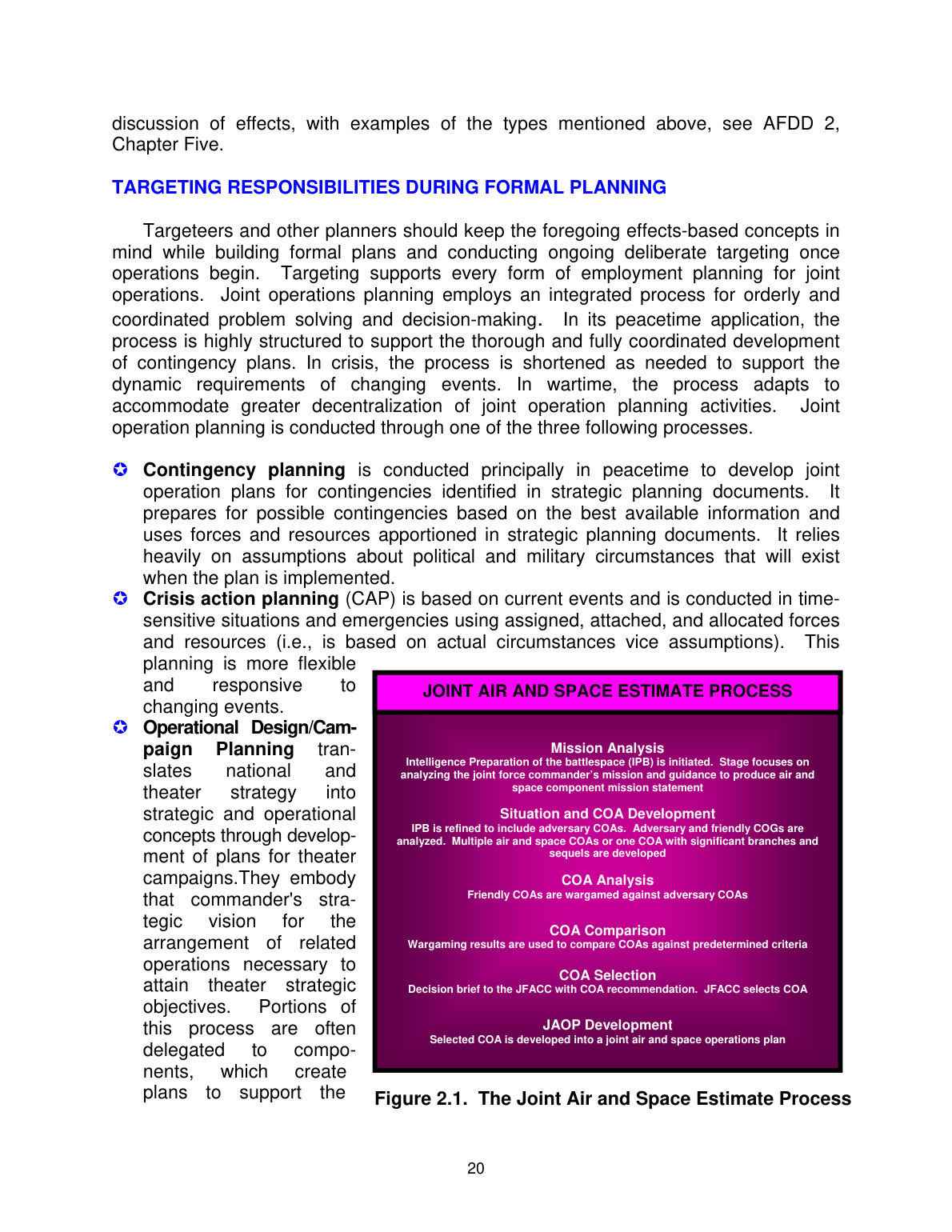
Figure 2.1. The Joint Air and Space Estimate Process
Mission Analysis
Intelligence Preparation of the battlespace (IPB) is initiated. Stage focuses on
analyzing the joint force commander’s mission and guidance to produce air and
space component mission statement
Situation and COA Development
IPB is refined to include adversary COAs. Adversary and friendly COGs are
analyzed. Multiple air and space COAs or one COA with significant branches and
sequels are developed
COA Analysis
Friendly COAs are wargamed against adversary COAs
COA Comparison
Wargaming results are used to compare COAs against predetermined criteria
COA Selection
Decision brief to the JFACC with COA recommendation. JFACC selects COA
JAOP Development
Selected COA is developed into a joint air and space operations plan
JOINT AIR AND SPACE ESTIMATE PROCESS